 Write to the booksellers
-
Type
Autograph (15)
Book (52714)
Magazine (289)
Manuscript (2)
Maps (1)
New book (1)
Old papers (1)
Photographs (1)
-
Latest
Last 24h (28)
Last 3 days (18)
Last month (249)
Last week (24)
-
Language
Dutch (5)
English (37)
Finnish (1)
French (52904)
German (18)
Greek (5)
Italian (20)
Japanese (2)
Latin (20)
Portuguese (3)
Spanish (7)
Swedish (2)
-
Century
16th (60)
17th (199)
18th (1310)
19th (3672)
20th (23112)
21st (4134)
-
Countries
Belgium (6748)
Brazil (24)
Canada (6)
China (2)
Côte d'Ivoire (68)
Denmark (1009)
France (40472)
Germany (3)
Greece (3)
Netherlands (272)
Switzerland (4417)
-
Syndicate
ALAC (6)
CLAM (29)
CNE (6)
ILAB (20410)
NVVA (998)
SLACES (907)
SLAM (18123)
SNCAO (41)
Introduction à la Science de l'Histoire, ou Science du développement de l'Humanité.
Paris, Paulin, Libraire-Éditeur, 1833. (4), 568, (4, Table des Matières, errata) pp. 8vo. Contemporary half calf, corners, marbled boards, spine gilt in compartments, label with gilt lettering. Walch 683; Stammhammer, i, p. 40; Dolléans & Crozier, p. 38; DBMOF, i, pp. 318-321. First edition. Philippe-Joseph-Benjamin Buchez (1796-1865), philosopher, historian and social reformer who from the early 1830s on attempted to draw together in a new synthesis apparently disparate traditions: the Catholic, the democratic, and the Saint-Simonian. Most historians (with the notable exception of François-André Isambert) have underestimated the originality and the importance of Philippe Buchez. Although his works are difficult to penetrate and little read, his writings contain much more than the proposal for worker's producer cooperatives and the idealistic Christian socialism for which Buchez is usually remembered. They contain, above all, his brave attempt to create a science of society -the most elaborate after that of Comte- and to understand society in a historical perspective. What sets him apart from the other socialist theorists who flourished in the Paris of the July Monarchy, is less the evolution of his thought than the synthesis he attempted. During the early years of the July Monarchy, Buchez quickly developed and propagated his ideas. He gave a series of lectures, he founded a newspaper, the Européen, and he began to publish philosophical and historical studies. He is best remembered by his concern to improve the worker's lot and his proposal for the establishment of workers' producer cooperatives. (See the elaborate article by Barrie M. Ratcliffe in the Historical Dictionary of France from the 1815 Restoration to the Second Empire). - Some scattered spotting, somewhat heavier in the first few pages of the book, small stamp in blank portion of title-page, a good copy.


(NVVA, )
Phone number : 31 20 698 13 75
Die Krise der Luzerner Regeneration 1839-1841.
Zürich, Joris Drück, 1967, in-8vo, 174 S., Ex libris, brochure originale.
(SLACES, NVVA)
Phone number : 41 (0)26 3223808
Un philosophe amateur. Essai biographique sur Léon Dumont (1837-1877), avec des extraits de sa correspondance
Paris, Felix Alcan 1884 185pp., br.orig., 19cm., non coupé, bon état, F80353
L’Homme selon la science, son passé, son présent, son avenir, ou D’où venons-nous – Qui sommes-nous – Ou allons-nous.
Paris, Reinwald, 1870-1872, 3 volumes in-8, 438 pp. (pagination continue), gravures sur bois dans le texte, brochés. (dos abimés).
Edition originale. (H.3)
_Copie de Force et matière
1906 Paris,Schleicher frères, 1906, In huit, 327 pp, reliure en demi-chagrin vert foncé, dos passé,bon état,
Traduit sur la 17 ème édition allemande par Victor Dave.
Plotins Möglichkeitslehre
Munchen-Salzburg, Anton Pustet 1970 158pp., 22cm., softcover, in the series "Epimeleia. Beiträge zur Philosophie" volume 16, very good condition, F104699
FORCE ET MATIERE - ETUDES POPULAIRES D'HISTOIRE ET DE PHILOSOPHIE NATURELLES /
REINWALD C. 1865. In-12. Relié demi-cuir. Etat d'usage, Coins frottés, Dos frotté, Quelques rousseurs. 272 pages - Rousseurs principalement en tout début et fin d'ouvrage - Coins et tranches frottés - Plats et contre-plats marbrés - Auteur, titre et filet dorés - Signet.. . . . Classification Dewey : 100-PHILOSOPHIE ET DISCIPLINES CONNEXES
Classification Dewey : 100-PHILOSOPHIE ET DISCIPLINES CONNEXES
FORCE ET MATIERE - ETUDES POPULAIRES D'HISTOIRE ET DE PHILOSOPHIE NATURELLES
Paris, Bruxelles , Leipzig , 1865 , in8 carré 1/2 chagrin rouge à coins , caissons ornés , XIV -272 pp . Langue: Français
FORCE ET MATIERE / IMMORTALITE DE LA MATIERE - IMMORTALITE DE LA FORCE - INFINI DE LA MATIERE - ETERNITE DU MOUVEMENT - UNIVERSALITE DES LOIS DE LA NATURE - PERIODES DE CREATION DE LA TERRE....
SCHLEICHER FRERES. 1906. In-8. Broché. Etat d'usage, Plats abîmés, Dos abîmé, Papier jauni. 327 pages - nombreuses annotations en marge du texte au crayon a papier. Coiffes abimées - Salissures sur les plats. 1 annotation en 1er plat et page de titre.. . . . Classification Dewey : 100-PHILOSOPHIE ET DISCIPLINES CONNEXES
Classification Dewey : 100-PHILOSOPHIE ET DISCIPLINES CONNEXES
Force et Matière. Etudes Populaires d'Histoire et de Philosophie Naturelles.
REINWALD C. 2ème édition. 1865. In-12. Relié demi-cuir. Bon état, Couv. fraîche, Mors fendus, Quelques rousseurs. 272 pages.. . . . Classification Dewey : 190-Philosophie occidentale moderne
Revue d'après la 8ème édition de l'allemand, par A. Gros-Claude. Classification Dewey : 190-Philosophie occidentale moderne
Force et matière. Etudes populaires d'histoire et de philosophie naturelles
Paris/ Leipzig, C. Reinwald/ Theodore Thomas 1876 xiii + 385pp., Avec biographie et portrait de l'auteur, 5e édition revue et augmentée par l'auteur même d'après la treizième édition allemande, 22cm., reliure cart. (plats marbrés, dos en cuir avec titre et faux-nerfs dorés), feuilles de garde marbrées, peu de rousseurs, bel état, F80533
Force et matière. Etudes populaires d'histoire et de philosophie naturelles
Paris/ Leipzig, C. Reinwald/ Theodore Thomas 1876 xiii + 385pp., Avec biographie et portrait de l'auteur, 5e édition revue et augmentée par l'auteur même d'après la treizième édition allemande, 22cm., peu de rousseurs, bon état, F80534
Force et Matière, ou Principes de l'ordre naturel mis à la portée de tous. Traduit sur la dix-septième édition allemande et précédé d'une notice bio-bibliographique par Victor Dave.
1906 P., Schleicher Frères, 1906, in 8° broché, XIX-329 pages ; couverture fanée.
Immortalité de la matière - Immortalité de la force - Infini de la matière - Eternité du muvement - Universalité des lois de la nature - Périodes de création de la terre - Cerveau et âme - La pensée est une fonction du cerveau - La conscience - Siège de l'âme - Dieu créé par l'homme à son image - Impossibilité du libre arbitre - La morale opposée à la religion. Fermeture du 1er au 23 Août
Phone number : 04 77 32 63 69
LUMIERE ET VIE . Trois leçons populaires d'histoire naturelle sur le soleil dans ses rapports avec la vie, sur la circulation des forces et la fin du monde, sur la philosophie de la Génération
1883 1883 Turin , Loescher , Leipzig , Thomas , 1883 , in8 1/2 chagrin vert foncé à nerfs , XII - 327 -LXI pp . Un plat décoloré , Mouillure sur la page de titre , tampon . Langue: Français
SCIENCE ET NATURE - Essais de philosophie et de Science Naturelle. TOME SECOND
GERMER BAILLIERE. 1866. In-12. Broché. Etat d'usage, Couv. défraîchie, Dos abîmé, Quelques rousseurs. 241 pages - Dos bruni - Legeres salissures sur le 1er plat. 1 petite etiquette collée au dos.. . . . Classification Dewey : 100-PHILOSOPHIE ET DISCIPLINES CONNEXES
BIBLIOTHEQUE DE PHILOSOPHIE CIONTEMPORAINE. // Traduit de l'allemand par Augustin Delondre. Classification Dewey : 100-PHILOSOPHIE ET DISCIPLINES CONNEXES
Force et matière. Etudes philosophiques et empiriques de sciences naturelles, mises à la portée de tout le monde
Paris/ Brussel/ Leipzig, Reinwald/ Muquardt/ Theodor Thomas 1863 xi + 264pp., br.orig., 19cm., quelques rousseurs dans le texte (toujours bien lisible), bon état, F80656
Kraft und Stoff. Empirisch-naturphilosophische Studien. In allgemein-verständlicher Darstellung
Leipzig, Theodor Thomas 1867 xci + 267pp.+ author's portrait, 19cm., original softcover, German text in Gotic script, good, F80523
Nature et science. Etudes critiques et Mémoires. Traduit sur la troisième édition allemande par le Dr Gustave Lauth.
In-8, broché, (6), 424 p. et 32 p. de catalogue, auréole en tête des prem. ff. Paris, Germer Baillière, 1882.
Première traduction française de "Aus Natur und Wissenschaft" par Gustave Lauth.
La folie du voir, une esthétique du virtuel
2002 Ed. Galilée - Coll. Débats (dirigée par Michel Delorme) - 2002 - In-8 broché - 272 p.
Bon état - Légers accros et tassements sur le haut du dos - Mots au stylo sur la page de garde
L'ENJEU DU BEAU, MUSIQUE ET PASSION
Galilée. 1992. In-8. Broché. Bon état, Couv. convenable, Dos satisfaisant, Intérieur frais. 200 pages.. . . . Classification Dewey : 100-PHILOSOPHIE ET DISCIPLINES CONNEXES
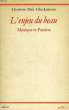
Collection 'Débats', dir; par Michel Delorme. Classification Dewey : 100-PHILOSOPHIE ET DISCIPLINES CONNEXES
The nature and unity of metaphysics
Washington D.C., The Catholic University of America Press 1946 xv + 261pp., Original 1946-edition, 23cm., Academic dissertation (submitted to the Faculty of the School of Philosophy of the Catholic University of America in partial fulfillment of the requirements for the degree of doctor of Philosophy)
Neuf chaînes pour la lune. Collection : Hachette Littérature.
Paris, Hachette, 1973. 15 x 23, 330 pp., quelques dessins, broché, couverture à rabats, très bon état.
Traduit de l'américain et préface par Claude Yelnick.
Voir le capital théorie critique et culture visuelle - Collection penser/croiser.
Les prairies ordinaires. 2010. In-8. Broché. Bon état, Couv. convenable, Dos satisfaisant, Intérieur frais. 218 pages.. . . . Classification Dewey : 100-PHILOSOPHIE ET DISCIPLINES CONNEXES

Traduit de l'anglais (Etats-Unis) et préface par Maxime Boidy et Stéphane Roth - Collection penser/croiser. Classification Dewey : 100-PHILOSOPHIE ET DISCIPLINES CONNEXES
Théocrite
Paris, les belles lettres 1960 1 In 12 Broché 213[p.p]
Bon état, quelques tampons de bibliothéques Disponibilité sous réserve de vente en boutique, prix valable, frais de port en plus, La Poste ou Mondial Relay
Compendium historiae philosophicae, observationibus illustratum. - [ONE OF THE EARLIEST HISTORIES OF PHILOSOPHY TO APPEAR IN GERMANY]
Halae Saxonum, Orphanotrophii, 1731. 8vo. In a nice contemporary Cambridge-style mirror binding with four raised bands and richly gilt spine. Small paper-label pasted on to top of spine. Leather on boards cracked, with a few holes in the leather, making the wooden boards underneath visible. Internally very nice and clean. (16), 542, (46) pp.
![Compendium historiae philosophicae, observationibus illustratum. - [ONE OF THE EARLIEST HISTORIES OF PHILOSOPHY TO APPEAR IN GERMANY]. "BUDDEUS, ...](https://static.livre-rare-book.com/pictures/LLX/61449_1_thumb.jpg)
![Compendium historiae philosophicae, observationibus illustratum. - [ONE OF THE EARLIEST HISTORIES OF PHILOSOPHY TO APPEAR IN GERMANY]. "BUDDEUS, ...](https://static.livre-rare-book.com/pictures/LLX/61449_2_thumb.jpg)
![Compendium historiae philosophicae, observationibus illustratum. - [ONE OF THE EARLIEST HISTORIES OF PHILOSOPHY TO APPEAR IN GERMANY]. "BUDDEUS, ...](https://static.livre-rare-book.com/pictures/LLX/61449_3_thumb.jpg)
First edition of one of the earliest histories of philosophy to appear in Germany, ""Buddeus (1731: p. 25) begins his history with “the philosophy of the Hebrews”, identifying Adam as its ultimate progenitor, “for although he lost a large part of human wisdom [in the fall], it is very probable that he retained some fragments and remnants of it”. After Adam, Buddeus discusses the wisdom of later patriarchs such as Noah, Jacob, and Moses, eventually culminating in the teachings of the Cabbala. The second stage of philosophy’s history begins with “the philosophy of the gentiles, especially the barbarians” (Buddeus, 1731: p. 37), under which he groups the ancient Chaldeans, Persians, Phoenicians, Sabeans, Indians, Muslims, and Africans. About the last, Buddeus (1731: p. 64) writes: “In Africa, besides the Egyptians, the Libyans, and the Ethiopians, they are said to have been unacquainted with philosophy. But there are a few obscure and uncertain things that have become known to us about it” (these “obscure and uncertain things” turn out to be merely ancient reports of gymnosophists and astronomical learning in Ethiopia). The third stage of philosophy’s history is Greek philosophy, followed by medieval philosophy (in which Buddeus mentions a number of Islamic philosophers, but says little about their teachings). The final stage is “more recent philosophy” (Buddeus, 1731: p. 363), which curiously ends not with any European philosopher but with an ancient Chinese one: Confucius. Buddeus appears to have included Confucius because of the great interest in him in Europe that followed the publication in 1687 of Confucius Sinarum philosophus, sive scientia Sinensis latine exposita [Confucius, philosopher of China, or Chinese knowledge expounded in Latin] (Intorcetta, Herdtrick, de Rougemont, & Couplet, 1687)."" (Wang, Racism and Eurocentrism in Histories of Philosophy).Johann Franz Buddeus (1667-1729), born in Pomerania, was professor of Greek and Latin, moral philosophy and theology at Leipzig and Halle.

