Previous 1 ... 1992 1993 1994 1995 ... 2000 Next Exact page number ? OK

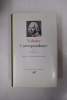
‎THEMISTIUS ‎

Reference : 178328

(1999)

ISBN : 2711614115

‎Paraphrase de la métaphysique d'Aristote. (livre Lambda)‎

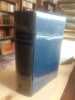
‎ Vrin Vrin, 1999. In-8 broché de 172 pages. Traduit de l'hébreu et de l'arabe, introduction, notes et indices par Rémi Brague. Très bon état‎


‎ Toutes les expéditions sont faites en suivi au-dessus de 25 euros. Expédition quotidienne pour les envois simples, suivis, recommandés ou Colissimo. ‎

Phone number : 05 65 42 95 21

EUR20.00 (€20.00 )

‎"THEMISTIUS PERIPATETICUS (THEMISTIOS).‎

Reference : 42313

‎Libri Paraphraseos. In Posteriora Aristotelis. In Physica. In libros de Anima. In commentarios de Memoria & Reminiscentia. De Somno & Vigilia. De Insomniis. De Diuinatione per Somnum. Interprete Hermolao Barbaro... - [A KEY PUBLICATION OF THE RENAISSANCE]‎

‎[On the final colophon:] Venice, Bartholomeus de de Zanis for Octavianus Scotus, 1499. [at the end of first leaf and of each section: Vale. Venetiis. 1480, except for the second last (de Insoniis, which says: Vale. Venetiis. 1478). Small folio. Nice, elegant late 18th century half calf. Binding with a few traces of wear. A very nice, clean, and fresh copy with just a bit of light dampstaining to upper margin of about 20 leaves. Numerous pretty, woodcut initials throughout. Woodcut printer's devise to colophon. Last leaves with tiny, barely noticeable wormhole. Contemporary handwritten inscription to title-page: ""Ex libris advocati Dunis = 1480"". (1), 115 ff. (pagination erroneous at end: 113, 116, 114). Without final blank.‎


‎The very rare second printing of Ermolao Barbaro's seminal Latin translation of Themistios' paraphrases of Aristotle's ""Posterior Analytics"", ""Physics"", ""De Anima"", ""On Memory"", and ""On Dreams"", a groundbreaking key text of the Renaissance, ""which opened a new period in the interpretation of the Greek philosopher [i.e. Aristotle]"" (Lohr, p. 25). The work was partly responsible for the development of Renaissance Aristotelianism and thus Renaissance thought in general. The combination of the fact that we here have the paraphrases by one of the greatest ancient Greek commentators of the key texts of the most significant philosopher of all times, rendered into Latin by perhaps the most significant translator of the period and printed at the most crucial time for the development of early modern thought, makes this one of the most significant philosophical publications of the Renaissance. There can be no doubt as to the influence that the present publication came to have on the development Renaissance philosophy. ""The publication of Barbaro's translation of Themistius inaugurated a new period in the study of Aristotelian philosophy. In his version of Themistius' ""Paraphrases"" we encounter not simply a translation occasioned by contemporary controversies, as was often the case in the Middle Ages. Rather, Barbaro's version brings together a corpus of the commentaries of Themistius on Aristotelian philosophy: the ""Posterior Analytis"", ""Physics"", ""De anima"" and ""Parva naturalia"". (Lohr, p. 26).The first printing of the work appeared in 1480 (the same year stated at the end of each section in the present edition), and in 1499 this second printing appeared. Both printings are of the utmost scarcity and almost impossible to find. After these two incunable-editions, at least 9 new printings appeared before 1560, bearing witness to the great impact of the text, and in 1570 Hieronymus Scotos printed a new edition. ""With reference to those works of Aristotle which were and remained the center of instruction in logic and natural philosophy [i.e. The Posterior Analytics, Physics, etc.], the most important changes derived from the fact that the works of the ancient Greek commentators became completely available in Latin between the late fifteenth and the end of the sixteenth centuries and were more and more used to balance the interpretations of the medieval Arabic and Latin commentators. The Middle ages had known their works only in a very limited selection or through quotations in Averroes. Ermolao Barbaro's complete translation of Themistius and Girolamo Donato's version of Alexander's ""De Anima"" were among the most important ones in a long line of others. When modern historians speak of Alexandrism as a current within Renaissance Aristotelianism that was opposed to Averroism, they are justified in part by the fact that the Greek commentators, that is, Alexander and also Themistius, Simplicius, and many others, were increasingly drawn upon for the exposition of Aristotle."" (Kristeller, p. 45).""Equally important [as the recovery of Aristotle's ""Mechanics"" and ""Poetics""] for the continued growth of the Peripatetic synthesis was the recovery and diffusion of the Greek commentaries on Aristotle... The most important of the two dozen commentators were Alexander of Aphrodisias, Ammonius, Simplicius, Themistius, and John Philoponus. Of these five, only Alexander and Themistius were Aristotelians..."" (Copenhaver & Schmitt, p.68).Already in the Middle Ages, scholars had been aware of and used commentaries on and paraphrases of the key texts of Aristotle, but their knowledge of this was primarily based on some Latin translations and allusions, fragments, and summaries in the writings of the Muslim philosophers, e.g. Averroes. But with the emergence and translations into Latin of the ancient Greek commentators [Alexander and Themistios being the primary ones] and their paraphrases of Aristotle's texts, the Renaissance came to discover an Aristotle that would influence almost all thought of the period. The ancient Greek commentators not only had a much more thorough knowledge of classical Greek thought than would have been possible for a medieval writer, but they also had access to works that were later lost and through these ancient commentators rediscovered in the Renaissance. By the middle of the 16th century, almost all of these texts had been printed in both Greek and Latin, and these publications were of the utmost importance to the development of almost all Renaissance thought. ""Their recovery, publication, and translation took some time, but almost all circulated in Greek and Latin by the 1530'ies. They do not cover all of Aristotle, but several treat such key texts as the ""Organon"", the ""Physics"", and ""De anima"", thus making them useful ammunition in such controversies as the immortality dispute provoked by Pietro Pomponazzi and his colleagues."" (Copenhaver & Schmitt, p. 69).Among the most important texts in this tradition that influenced all thought of the era, were Themistios' paraphrases of Aristotle's seminal texts, in particular ""De Anima"", ""Posterior Analytics"", and Book Lambda (XII) of the ""Metaphysics"". ""We possess part of his [Themistios'] early work, his ""Paraphrases of Aristotle"", the portion still extant being a somewhat prolix exposition of the ""Later Analytics"", the ""Physics"", the ""De Anima"", and some minor treatises."" His paraphrase of the ""Metaphysics"", Book ""lambda"" [i.e. XII], was translated into Arabic (in century IX), and hence into Hebrew (1255), and Latin (1576)."" (Sandys, I:352).There can be no doubt about the groundbreaking character of Hermolao Barbaro's translation into Latin of almost all of Themistios' paraphrases of Aristotelian texts. Not only was Themistios considered one of the most important renderers of Aristotle's text, but Barbaro was perhaps the most influential translator of the time. His translation of Themistios' paraphrases came to dominate, directly or indirectly, almost all Aristotelian thought of the high Renaissance (from late 15th century) and he was responsible for many of the most important and influential positions on the seminal question of the immortality of the soul that dominated philosophical thought at the time. ""Through the first two-thirds of the fifteenth century, Pomponazzi's predecessors at Padua seem not to have used the ancient commentators, but philosophers of the next generation - most notably Nicoletto Vernia and Agosto Nifo - began to consult them in new translations by Ermolao Barbaro and others. Barbaro's charge that Averroes had lifted his doctrines of the soul from the commentators surely helped excite interest in them."" (Copenhaver & Schmitt p. 69). See: Kristeller, Renaissance Thought and its Sources, 1979" Copenhaver & Schmitt, Renaissance Philosophy, 1992" Charles C. Lohr, ""Latin Translations of the Greek Commentaries on Aristotle"", in: Humanism and Early Modern Philosophy, Edt. byKraye and Stone, 2000.Graesse VII:112 (erroneously stating 1491 in stead of 1499)" Brunet V:778 Hain-Copinger: 15464.‎

Logo ILAB

Phone number : +45 33 155 335

DKK75,000.00 (€10,059.15 )

‎THEOBALD SUSS‎

Reference : ABE-1541323067201

(1969)

‎LUTHER‎

‎COLLECTION PHILOSOPHES-136 PAGES-11,5 CM X 18 CM-PORTRAIT EN COUVERTURE-(19A)‎


‎PUF-(PRESSES UNIVERSITAIRES DE FRANCE) COUVERTURE SOUPLE ETAT NEUF‎

EUR8.00 (€8.00 )

‎THEOCRITE.‎

Reference : 76349

‎Oeuvres qui nous sont parvenues sous son nom. Traduites de nouveau par Paul Desjardins. Gravures sur bois de Constant Le Breton. Collection Classique des Editions de la Pléiade.‎

‎ Paris, J. Schiffrin 1927, 215x150mm, 223pages, broché. Exemplaire sur papier vélin de Marais numéroté N.° 518 / 700. Bon état. ‎


‎ Couverture rempliée. Pour un paiement via PayPal, veuillez nous en faire la demande et nous vous enverrons une facture PayPal‎

Phone number : 41 26 323 23 43

CHF25.00 (€26.80 )

‎THEOCRITE (GEOFFROY Julien-Louis)‎

Reference : 72573

‎"Ydilles de Théocrite; traduites en français avec des remarques par Julien-Louis Geoffroy (ci-devant professeur de Rhétorique en l'Université de Paris)."‎

‎Paris, Chez H. Nicole, Libraire, An VII (1798-1799). "13 x 20, 314 pp., reliure plein cuir d'époque (dos et plats décorés), bon état (reliure état d'usage; coins émoussés; quasi pas de rousseurs)."‎


Librairie Ausone - Bruxelles

Phone number : 32 (0)2 410 33 27

EUR40.00 (€40.00 )

‎Theod. Doehner‎

Reference : 100101029

(1846)

‎Plutarchi vitae. Secundum codices parisinos recognovit - Graece et Latine VOLUMEN PRIMUM‎

‎Ambrosio Firmin Didot 1846 624 pages in4. 1846. Relié. 624 pages. textes grec et latin en regard‎


‎bords frottés coins émoussés charnières fragilisées intérieur jauni globalement propre cependant quelques rousseurs‎

Un Autre Monde - Val Couoesnon

Phone number : 07.69.73.87.31

EUR100.00 (€100.00 )

‎THEODORE MONOD‎

Reference : R260121710

(2001)

ISBN : 2246610117

‎ET SI L'AVENTURE HUMAINE DEVAIT ECHOUER.‎

‎GRASSET. 2001. In-8. Broché. Etat d'usage, Couv. convenable, Dos plié, Intérieur frais. 265 pages. Premier plat illustré en couleurs.. . . . Classification Dewey : 100-PHILOSOPHIE ET DISCIPLINES CONNEXES‎


‎ Classification Dewey : 100-PHILOSOPHIE ET DISCIPLINES CONNEXES‎

Logo SLAM Logo ILAB

Phone number : 05 57 411 411

EUR14.90 (€14.90 )

‎THEODORE REDPATH‎

Reference : ABE-3359613298

(2001)

ISBN : 2914280041

‎WITTGENSTEIN A CAMBRIDGE Souvenirs d'un disciple‎

‎TRADUIT DE L'ANGLAIS PAR GABRIEL VILLADA-IN 8 BROCHE-128 PAGES-COUVERTURE ILLUSTREE-(5B)‎


‎SCIENCE INFUSE COUVERTURE SOUPLE ETAT NEUF‎

EUR18.00 (€18.00 )

‎THEODORE-VIBERT Paul‎

Reference : RO80066853

(1914)

‎Pour lire en Sous-Marin. Nouvelles ennivrantes. TOME VI : Le musée des Horreurs, Scénarios, Moeurs Américaines.‎

‎BERGER-LEVRAULT & Cie. 1914. In-12. Broché. Bon état, Couv. convenable, Dos satisfaisant, Intérieur frais. 504 pages.. . . . Classification Dewey : 190-Philosophie occidentale moderne‎


‎Nouvelles Philosophiques. Classification Dewey : 190-Philosophie occidentale moderne‎

Logo SLAM Logo ILAB

Phone number : 05 57 411 411

EUR149.00 (€149.00 )

‎THEODORIDES A., NASTER P., RIES J. & VAN TONGERLOO A. (eds.)‎

Reference : X74849

(1992)

‎Acta Orientalia Belgica VII: Philosophy - Philosophy, Tolerance‎

‎Bruxelles / Louvain-la-Neuve / Leuven, La Société Belge d'Etudes Orientales 1992 vi + 368pp., 24cm., softcover, very good condition, texts in French & German and English, X74849, [contient e.a.: VAN TONGERLOO A.: Ecce magi ab Oriente venerunt (pp.57-74), HANJOUL P.: L'apport de l'islam à la franc-maçonnerie (pp.93-104), LIMET H.: Les déesses sumériennes. Femmes modèles, modèles de femmes (pp.131-146), VAN LAER Z.: Averroès et l'Averroïsme est-ce vraiment si terrible? (pp.201-218), RAMPELBERG D.: À propos de la formule du volume du tronc de pyramide chez les Egyptiens pharaoniques (pp.271-292), TRYJARSKI E.: Das gemeinsame kiptschakische Substrat des Krimtartarischen und des Armeno-Kiptschakischen (pp.325-350), ]‎


Phone number : +32476917667

EUR30.00 (€30.00 )

‎THEODORIDES A., NASTER P., VAN TONGERLOO A., et alii‎

Reference : 81356

‎Acta orientalia Belgica, VI : Humana condicio/La condition humaine.‎

‎Bruxelles/Louvain-La-Neuve/Leuven, Société Belge d'Etudes Orientales, 1991. 16 x 24, 401 pp., broché, illustrations tableaux et cartes, très bon état (sauf légères traces d'adhésif sur les pages de garde).‎


Librairie Ausone - Bruxelles

Phone number : 32 (0)2 410 33 27

EUR28.00 (€28.00 )

‎THEODORIDES A., NASTER P., VAN TONGERLOO A., et alii‎

Reference : 81357

‎Acta orientalia Belgica, VII : Philosophie, philosophy, tolérance.‎

‎Bruxelles/Louvain-La-Neuve/Leuven, Société Belge d'Etudes Orientales, 1992. 16 x 24, 368 pp., broché, illustrations tableaux et cartes, très bon état (sauf légères traces d'adhésif sur les pages de garde).‎


Librairie Ausone - Bruxelles

Phone number : 32 (0)2 410 33 27

EUR28.00 (€28.00 )

‎Theodor W. Adorno.‎

Reference : 15922

(1957)

‎Aspekte der Hegelschen Philosophie.‎

‎Berlin und Frankfurt am Main., Suhrkamp Verlag., 1957, in-8°., broché, 60 pages. Broschiert mit Schutzumschlag, in guter Verfassung. ‎


‎ NB Le délai d'acheminement vers la France est de 48h.‎

Phone number : (+32) 470 87 87 88

EUR15.00 (€15.00 )

‎Theodor W. Adorno‎

Reference : 100137755

(1962)

‎Filosofia y Supersticion‎

‎Alianza / Taurus 1962 182 pages in12. 1962. Broché. 182 pages.‎


‎bon état couverture défraîchie intérieur propre‎

Un Autre Monde - Val Couoesnon

Phone number : 07.69.73.87.31

EUR16.00 (€16.00 )

‎Theodor W. Adorno‎

Reference : RO40053082

(1985)

ISBN : 2070287041

‎Philosophie de la nouvelle musique. Collection tel‎

‎gallimard. 1985. In-12. Broché. Etat d'usage, Couv. convenable, Dos satisfaisant, Intérieur frais. 222 pages.. . . . Classification Dewey : 190-Philosophie occidentale moderne‎


‎ Classification Dewey : 190-Philosophie occidentale moderne‎

Logo SLAM Logo ILAB

Phone number : 05 57 411 411

EUR10.95 (€10.95 )

‎THEOGNIS, PHOCYLIDE, PYTHAGORE / LEVESQUE (Pierre-Charles)‎

Reference : 1825

(1783)

‎Sentences de Théognis, de Phocylide, de Pythagore, et des sages de la Grèce, recueillies et traduites par M. Levesque.‎

‎Paris, Didot l'aîné, De Bure l'aîné, "Collection des moralistes anciens", 1783 1 volume 7,3 x 12,2cm Reliure plein maroquin vert foncé; dos lisse orné d'un fer doré central entre un titre doré et un petit fleuron doré, en alternance avec des bandes de filets et pointillés dorés, fleurons à froid et roulettes dorées en tête et en queue; plats encadrés d'une petite frise dorée; frises dorées sur les chasses et les bords; tranches dorées; gardes marbrées. 1feuillet, 219p., 1feuillet; 1vignette de titre et 1bandeau. Bon état.‎


‎Sentences du poète gnomique THEOGNIS DE MEGARE, du poète moraliste PHOCYLIDE, et de "sages de la Grèce" (THALES, "Les Vers dorés attribués à PYTHAGORE", "Sentences de DEMOPHILE et de DEMOCRATE", "Lettre de THEANO à Eubule", "Lettre de THEANO à Nicostrate", "Lettre de la pythagoricienne MELISSE à Cléarete", "Lettre de MYIA à Phyllis") recueillies, présentées et traduites par Pierre-Charles LEVESQUE, helléniste et historien de vaste érudition (1737-1812). 8è volume de la "Collection des moralistes anciens, dédiée au roi" (dont l'intitulé est inscrit en page de titre du volume et le titre "Sentences de [...]" en page suivante). Bel exemplaire, bien relié. ‎

Librairie Paroles - Avignon

Phone number : 06 09 18 58 78

EUR80.00 (€80.00 )

‎[THEOLOGIE] - MANOLESCU (Anca) - ‎

Reference : 201610296

‎Nicolas de cues ou l'autre modernité. ‎

‎Paris, L'harmattan, 2010; in-8, 135 pp., br. Etiquette sur le dos, tampons sur la page de titre, bon état général.‎


‎Etiquette sur le dos, tampons sur la page de titre, bon état général.‎

Phone number : 03 89 24 16 78

EUR10.00 (€10.00 )

‎[THEOLOGIE UND PHILOSOPHIE] - ABY (Dr. Heinrich) - ‎

Reference : 200611967

‎Schopenhauer und die scholastik. ‎

‎Colmar, Alsatia , 1930; in-8, 110 pp., broché . Schriften der elsass-lothringischen wissenschaftlichen gesellschaft - reihe B - théologie und philosophie - band III.‎


‎Schriften der elsass-lothringischen wissenschaftlichen gesellschaft - reihe B - théologie und philosophie - band III.‎

Phone number : 03 89 24 16 78

EUR16.00 (€16.00 )

‎[THEOLOGIE UND PHILOSOPHIE] - BRAUN (Dr. Luc) - ‎

Reference : 200909454

‎Die personlichkeit gottes. ‎

‎Colmar, Alsatia - schritten der elsas-lothringischen wissenschaftlichen geselschaff, 1929; in-8, 210- pp., broché. Eine auseinandersetzung swischen Eduard von Hartmanns Philosophie des Unbewussten und dem kritischen theismus - teil I.‎


‎Eine auseinandersetzung swischen Eduard von Hartmanns Philosophie des Unbewussten und dem kritischen theismus - teil I.‎

Phone number : 03 89 24 16 78

EUR25.00 (€25.00 )

‎[THEOLOGIE UND PHILOSOPHIE] - BRAUN (Dr. Luc) - ‎

Reference : 200800229

‎Die personlichkeit gottes. ‎

‎Colmar, Alsatia - schritten der elsas-lothringischen wissenschaftlichen geselschaff, 1929; in-8, 210- pp., broché. Eine auseinandersetzung swischen Eduard von Hartmanns Philosophie des Unbewussten und dem kritischen theismus - teil I.‎


‎Eine auseinandersetzung swischen Eduard von Hartmanns Philosophie des Unbewussten und dem kritischen theismus - teil I.‎

Phone number : 03 89 24 16 78

EUR25.00 (€25.00 )

‎[THEOLOGIE UND PHILOSOPHIE] - BRAUN (Dr. Luc) - ‎

Reference : 200800228

‎Die personlichkeit gottes. ‎

‎Colmar, Alsatia - schritten der elsas-lothringischen wissenschaftlichen geselschaff, 1929; in-8, 210-200 pp., broché. Les 2 volumes. Eine auseinandersetzung swischen Eduard von Hartmanns Philosophie des Unbewussten und dem kritischen theismus - teil I un II.‎


‎Eine auseinandersetzung swischen Eduard von Hartmanns Philosophie des Unbewussten und dem kritischen theismus - teil I un II.‎

Phone number : 03 89 24 16 78

EUR45.00 (€45.00 )

‎[THEOLOGIE UND PHILOSOPHIE] - BRAUN (Dr. Luc) - ‎

Reference : 200611968

‎Die personlichkeit gottes. ‎

‎Colmar, Alsatia , 1931; in-8, 210 pp., broché ( petit manque sur le 1er plat). Eine auseinandersetzung swischen Eduard von Hartmanns Philosophie des Unbewussten und dem kritischen theismus - sweiter teil.‎


‎Eine auseinandersetzung swischen Eduard von Hartmanns Philosophie des Unbewussten und dem kritischen theismus - sweiter teil.‎

Phone number : 03 89 24 16 78

EUR16.00 (€16.00 )

‎THEOPHRASTE.‎

Reference : 95667

‎Caractères. Texte établi et traduit par Octave Navarre. Troisième tirage. Collection des Universités de France, publiée sous le patronnage de l’association Guillaume Budé.‎

‎ Paris, Société d’édition Les Belles Lettres 1964, 205x130mm, 104pages, broché. Cachet de possesseur sur le haut de la page garde supérieure. Non coupé. Très bel exemplaire.‎


‎ édition bilingue: grec ancien - français, Pour un paiement via PayPal, veuillez nous en faire la demande et nous vous enverrons une facture PayPal‎

Phone number : 41 26 323 23 43

CHF25.00 (€26.80 )

‎THEOPHRASTE / CASAUBON (Isaac, annot.) ‎

Reference : 231

(1612)

‎Theophrasti Notationes morum. Isaacus Casaubonus recensuit, in latinum sermonem vertit, & libro commentario illustravit. Editio tertia recognita, ac infinitis in locis ultra præcedentes aucta & locupletata. Cum indice necessario.‎

‎Lugduni viduam Ant. de Hardy 1612 In-8° (174 x 112 mm) de [8] ff. - 367 - [13] pp. et 7 pp. manuscrites à l'encre brune en grec, latin et français ; basane havane, dos lisse richement orné, encadrements de dentelles, encadrement sur les plats avec fer à l'éventail en écoinçons et armes au centre, filet sur les coupes, tranches dorées. (Reliure légèrement postérieure, vers 1630)‎


‎Une superbe « reliure d'agonothète » au décor « à l'éventail » Édition définitive de la version donnée par le grand helléniste protestant Isaac Casaubon des Caractères de Théophraste, avec ses commentaires. Casaubon (1559-1614) avait d'abord publié en 1592 une édition partielle du texte grec de Théophraste contenant 23 caractères, accompagnée de la traduction latine et de commentaires. La présente édition offre, pour la première fois, la version définitive de son travail avec 5 caractères supplémentaires et un commentaire beaucoup plus étendu, qui occupe les pp. 81 à 350. La première édition du texte grec des célèbres « Caractères » du philosophe grec, vit le jour à Nuremberg en 1527, accompagnée de la version latine par Pirkheimer. Mais c'est cette traduction commentée de Casaubon qui fit autorité. Le savant Scaliger lui écrivait notamment, après en avoir pris connaissance : « A peine j'eus gouté à tes Charactères de Théophraste' j'en fus transporté. Je ne pus m'empêcher de faire ton éloge avec toute la chaleur que donne l'amitié et cependant tout ce que j'ai pu dire reste très en dessous de ce que mérite ton génie ». Le travail de Casaubon a servi de modèle aux études ultérieures et notamment à La Bruyère qui traduisit d'abord Théophraste, avant de l'imiter et d'ajouter à ceux du philosophe grec, ses propres « Caractères » inspirés des moeurs de son temps. « Il semble établi que la traduction de Théophraste a été faite par La Bruyère surtout d'après la traduction latine de Casaubon complétée par le commentaire de cet érudit » (Julien Benda). On notera in-fine 6 pp. et demi de notes manuscrites en grec, latin et français qui semblent être au moins en partie un vocabulaire. Dans l'antiquité grecque les agonothètes étaient des magistrats qui garantissaient le bon déroulement des concours, le plus souvent ils se transformèrent en mécènes soutenant de leur générosité et de leurs libéralités bénévoles (au sens premier du terme) les réalisations. La reliure d'agonothète est donc le fruit de ce généreux donateur. Le donateur est un protecteur de l'établissement scolaire. Les évêques, archevêques, cardinaux sont bien représentés, ainsi que les gouverneurs, baillis voire seigneurs influents du lieu. Des corps constitués peuvent aussi tenir ce rôle, comme le parlement de Rouen. La présente reliure porte les armes de Charles Faucon (1573-1647), vicomte d'Aÿ, seigneur de Ris, de Frainville, de Charleval, etc., chevalier, conseiller du roi puis premier président au Parlement de Normandie. Il épousa Charlotte du Drac d'Aÿ, dont il eut notamment Charles Faucon de Ris, marquis de Charleval (1612-1693), poète qui fut un des beaux-esprits du XVIIe siècle. Nommé en 1640 capitaine et gouverneur de Fécamp, il cultiva les lettres par plaisir, fut lié avec Voiture, Scarron, Sarrasin ou encore Ninon de Lenclos. PROVENANCE : « Mullot », inscription manuscrite à l'encre brune au titre, XVIIIe siècle, non identifiée. Amédée Rigaud avec sa vignette ex-libris imprimée en caractères dorés sur fond noir à la devise « Bona fine sine fraude » contrecollé au contreplat supérieur. Quelques frottements et taches à la reliure, 1ère garde volante blanche qui devait supporter l'ex-praemio supprimée et remplacée tardivement. ‎

Logo SLAM Logo ILAB

Phone number : +336 72 05 01 03

EUR2,500.00 (€2,500.00 )

‎"THEOPHRAST. -THEOPHRASTUS, THEOPHRASTOS, TEOFRAST, TEOFRASTOS.‎

Reference : 28328

(1561)

‎(Charakteres - Characters). Libellus continens notas atque descriptiones morum qvorvundam vitiosorium, conuersus in linguam Latinam & annotationibus illustratus a Leonharto Lycio. Ex uitio sapiens emendat suum. - [SKETCHING THE CHARACTER OF MAN]‎

‎Lipsiae, Excudebat Iohannes Rhamba, 1561. Small 8vo. Later blue boards (ab. 1800). Spine with minor loss and a few cracks. First few leaves with minor soiling, but otherwise a nice and clean copy. 19th century owner's inscription to inside of front cover: ""Colegii Thomani"". Lovely woodcut opening initial. Beautiful Greek script. 48 ff.‎


‎Extremely scarce first edition thus, containing all of Theophrastus' 23 characters in Greek and Latin, being the first edition of Auberius' excellent Latin translation and first edition with Lycio's interesting commentaries. ""This very rare edition, which presents us with the Greek text of H. Stephan (Stephanus), contains a new Latin version by Claudius Auberius, who was scarcely twenty years of age when he composed it. The notes are critical and historical"" sometimes bold, but always erudite... This version and these notes were republished in Zuinger's edition of Aristotle's ""Ethics"" at Basil. fol. 1582."" (Dibdin II:500). This version of Theophrastus' milestone work, the first recorded attempt at systematic character writing, became hugely influential and is still referred to in modern editions of the text, as Auberius' translation is regarded as one of the best and most important interpretations of the text. Claude Aubery or Claudius Auberius (ca. 1540-1596) was a noted philosopher and medical doctor, professor of Philosophy in Lausanne. He translated several Greek texts into Latin, but is best remembered for his excellent version of Theophrastus' ""Characters"", which was highly influential throughout the Renaissance and which was incorporated into later Renaissance Aristotle-editions as the standard-version of Theophrastus' text. Theophrastus (ca. 371- ca. 287 BC), Aristotle's successor at the Lyceum, and probably the most famous Aristotelian of all times, successfully presided over the Peripatetic School for 36 years and here wrote a number of works. The most famous of them is arguably his great moral opus ""The Characters"", which continues to amaze readers to this day. It introduced the ""character sketch"", which became the core of the Character as a genre, and as such it influenced the entire literay tradition of the Western world. The fabulous, very witty, astute, harsh, and insightful characteristics of type characters of the human race have been formative for our understanding of moral virtues and vices and how they come to be expressed in man, for our understanding of human nature in general. It is no wonder that the work became so popular and widely read during the Renaissance, the era of man as the centre of the universe. ""Le texte est le celui de Henri Estienne (insére dans l'édition d'Aristote de 1557), mais dans la version il suit pour la plupart ses propres conjectures"" (Graesse 7: 125). Dibdin II:500, Graesse VII:125.‎

Logo ILAB

Phone number : +45 33 155 335

DKK20,000.00 (€2,682.44 )
Previous 1 ... 1992 1993 1994 1995 ... 2000 Next Exact page number ? OK
Get it on Google Play Get it on AppStore
Philosophy
The item was added to your cart
You have just added :

-

There are/is 0 item(s) in your cart.
Total : €0.00
(without shipping fees)
What can I do with a user account ?

What can I do with a user account ?

  • All your searches are memorised in your history which allows you to find and redo anterior searches.
  • You may manage a list of your favourite, regular searches.
  • Your preferences (language, search parameters, etc.) are memorised.
  • You may send your search results on your e-mail address without having to fill in each time you need it.
  • Get in touch with booksellers, order books and see previous orders.
  • Publish Events related to books.

And much more that you will discover browsing Livre Rare Book !