 Write to the booksellers
-
Type
Autograph (15)
Book (51437)
Magazine (288)
Manuscript (2)
Maps (1)
New book (1)
Old papers (1)
Photographs (1)
-
Latest
Last 24h (11)
Last 3 days (35)
Last month (1324)
Last week (29)
-
Language
Dutch (6)
English (43)
Finnish (1)
French (51616)
German (19)
Greek (5)
Italian (20)
Japanese (2)
Latin (21)
Polish (1)
Portuguese (3)
Spanish (7)
Swedish (2)
-
Century
16th (62)
17th (194)
18th (1298)
19th (3621)
20th (22121)
21st (4010)
-
Countries
Belgium (6718)
Brazil (24)
Canada (6)
China (2)
Côte d'Ivoire (69)
Denmark (1046)
France (39207)
Germany (3)
Greece (3)
Netherlands (269)
Switzerland (4399)
-
Syndicate
ALAC (6)
CLAM (37)
CNE (6)
ILAB (19985)
NVVA (998)
SLACES (907)
SLAM (17652)
SNCAO (41)
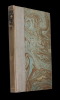
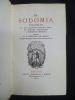
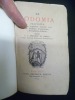
De sodomia tractatus in quo exponitur doctrina nova de Sodomia Foeminarum a Tribadismo distincta traité du R. P. Sinistrati par Isidore Liseux
Liseux Isidore Relié 1879 PREMIERE EDITION RARE TIREE A PETIT NOMBRE SUR BEAU PAPIER. In-16 (10x15 cm), reliure de l'époque demi-toile grise, couvertures conservées, 89 pages, titre imprimé en rouge et noir, belle impression sur papier Vergé, tirage à petit nombre (non justifié), imprimé à Dole par Blind, première édition séparée dont l'éditeur Isidore Liseux dit dans sa préface : 'Cet opuscule de Sodomia contient à lui seul plus de faits piquants, plus de hardis aperçu qu'il n'en faudrait pour faire la fortune d'un gros volume. Et dire que personne n'avait encore songé à la déterrer dans l'in-folio qui l'étouffe.' Il est donc extrait du grand ouvrage du père Sinistrati, De delectis et voenis, publié à Rome en 1754, texte en latin ce qui lui a surement évité de subir la sensure, exemplaire de la bilbiothèque de Jacques Boulenger (romancier historien connu pour son édition des romans de la table ronde) que l'on reconnait à son ex-libris manuscrit sur la première garde ; coiffes, mors et coins légèrement frottés, pièce de titre frottée, dos jauni, intérieur frais, bel état pour cet ouvrage rare. Livraison a domicile (La Poste) ou en Mondial Relay sur simple demande.

Vivre avec la ville
Le Centurion 1976 in8. 1976. Broché. illustrations en noir et blanc
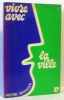
Etat Correct bords ternis intérieur propre ex libris
Matter and infinity in the Presocratic schools and Plato. 2nd edition.
Assen, van Gorcum, 1971.
(VI),252 p. 24 cm. Cloth, with dustjacket.
Matter and infinity in the presocratic schools and Plato
Assen, Van Gorcum / Prakke 1971 252pp., 25cm., 2nd edition, in the series "Wijsgerige teksten en studies / Philosophical texts and studies" vol.17, cloth, good condition, F76968
Matter and infinity in the presocratic schools and Plato
Assen, Van Gorcum / Prakke [1968] [8] + 252pp., 25cm., softcover (with small label), Doctoral Dissertation (Rijksuniversiteit te Utrecht, Netherlands), stamp at verso of title page, text is clean and bright, F109821
Oratio De Studiis on the philosophical studies necessary for student of theology 1545
Museum Tusculanum Press 1994 128 pages 15x20x2cm. 1994. Cartonné. 128 pages.
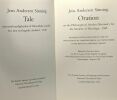
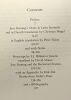
Bon état couverture un peu ternie intérieur propre
La biologie de l'esprit (The biology of spirit). Traduit de l'américain par Renée Villoteau
,Paris, Gallimard Coll. 'Aux frontières de la science' 1957, 237 pp., 1 vol. in 8 br.
Avicenne, ou La route d'Ispahan. Collection : Folio, N° 2212.
Paris, Denoël, Folio, 1999. 11 x 18, 533 pp., 1 carte, broché, bon état.
Des idoles mortes et muettes au Dieu vivant: Joseph, Aseneth et le fils de Pharaon dans un roman du Judaisme hellenise,
Turnhout, Brepols, 2003 Paperback, 122 p., 14,8 x 21 cm. ISBN 9782503510392.
Le Roman d'Aseneth etait, jusqu'il y a peu, designe sous le titre de Joseph et Aseneth. Les premieres etudes relevant des "gender studies" ont toutefois demontre la predominance du personnage d'Aseneth par rapport a celui de Joseph. Le titre de Roman d'Aseneth s'avere donc justifie. L'appellation Joseph et Aseneth, qui ne provient pas des manuscrits, marquait implicitement l'idee que ce texte appartenait a la meme sphere, pour ne pas dire au meme genre, que celle illustree par des romans tels que Chaireas et Callirhoe, ou Habrocomes et Anthia, pour ne citer que ceux-la. Le changement de titre qui a ete adopte ici indique donc d'emblee la parti pris (qui sera justifie plus loin) de ne pas mette l'ecrit sur le meme pied qu'un roman d'amour grec. Le Roman d'Aseneth fait partie de cette litterature dite apocryphe ou pseudepigraphique qui pose tant de problemes aux chercheurs et aux simples lecteurs d'aujourd'hui. Il suscite de nombreuses difficultes tant d'edition, de datation, d'attribution et d'origine que d'interpretation. On parvient meme difficilement a donner a la question fondamentale des buts poursuivis par son auteur anonyme une reponse entierement satisfaisante. Ainsi, ce petit recit plein de mystere ne cesse-t-il, depuis la publication de ses editions modernes, de faire l'objet de nouvelles interpretations, suggestions, et analyses en tout genre. Languages : French.
BONHEUR RETROUVE.
LES EDITIONS OUVRIERES. 1976. In-16. Broché. Bon état, Couv. convenable, Dos satisfaisant, Intérieur frais. 158 pages.. . . . Classification Dewey : 210-Philosophie et théorie
"COLLECTION "" A PLEINE VIE"" Classification Dewey : 210-Philosophie et théorie"
Elpizon, oder Ueber meine Fortdauer im Tode. 3., verbesserte Ausgabe. In 2 Bänden.
Danzig, Troschel (Bd. 1), und Leipzig, Gerhard Fleischer d.J. (Bd. 2), 1803-1810, kl. in-8°, 1 Bl. + 382 S. / 374 S., 1 Vorsatzblatt fehlt, Bibl.-Stempel auf verso Titel, Pappbände mit Kiebitzpapier’, Rotschnitt.
Holzmann-Bohatta, Deutsches Anonymen-Lexikon II/654 (gibt verschied. Ausgaben ab 1795).

(SLACES, NVVA)
Phone number : 41 (0)26 3223808
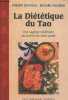
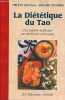
La diététique du Tao : Une sagesse millénaire au service de votre santé.
Guy Trédaniel. Non daté. In-8. Broché. Bon état, Couv. convenable, Dos satisfaisant, Intérieur frais. 227 pages.. . . . Classification Dewey : 180-Philosophie antique, médiévale, orientale
Classification Dewey : 180-Philosophie antique, médiévale, orientale
La diététique du Tao une sagesse millénaire au service de votre santé.
Guy Trédaniel. 2001. In-8. Broché. Bon état, Couv. convenable, Dos satisfaisant, Intérieur frais. 227 pages.. . . . Classification Dewey : 180-Philosophie antique, médiévale, orientale
Classification Dewey : 180-Philosophie antique, médiévale, orientale
Schopenhauer et la force du pessimisme?.
?Editions du Rocher, 1988, in-8°, 279 pp, broché, couv. illustrée, traces de scotch sur les gardes, bon état (Coll. Les Cahiers du Rocher)
Désormais les frais d'envoi sont de 6 € seulement pour les livres jusqu'à 1 kg (colissimo suivi), pour la France métropolitaine.
L'art et la révolution. Réflexions à partir du muralisme mexicain. Choix réalisé par Raquel Tibol. Traduction sous la direction de Georges Fournial.
Paris Editions Sociales 1973 In-8 (h. 21,5 cm.) 317 pp. couverture souple. Quelques planches hors-textes d'illustrations.
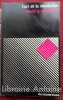
Très bon état. Libraire membre du S.L.A.M. (Syndicat national de la Librairie Ancienne et Moderne) et de la L.I.L.A. (Ligue Internationale de la Librairie Ancienne). N'hésitez pas à prendre contact par mail pour des photographies et des détails supplémentaires, pour des recherches ou des estimations de livres anciens et rares.
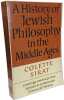
A history of Jewish philosophy in the Middle Ages
Cambridge / Paris, Cambridge University Press / Editions de la maison des sciences de l'homme 1996 x + 485pp., 23cm., previous owner's name on first page, softcover, VG, ISBN 0-521-39727-8
A History of Jewish Philosophy in the Middle Ages.
Cambridge, 1985. Orig. boards with dustjacket. X,477 pp. With stamp.
A History of Jewish Philosophy in the Middle Ages
Cambridge University Press 1990 496 pages 9 144x4 064x23 368cm. 1990. Broché. 496 pages. Cet ouvrage de Colette Sirat propose une synthèse historique de la philosophie juive médiévale couvrant la période du IXe au XVe siècle. Il présente les principales figures comme Saadiah Gaon Maïmonide Juda Halevi et d'autres tout en intégrant l'état de la recherche contemporaine dans le domaine
Bon état bonne tenue
La Philosophie juive médiévale en pays de chrétienté
Presses du Cnrs Presses du Cnrs, 1980. Grand In-8 broché de 300 pages. Premières pages un peu jaunies sinon bon état
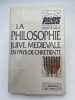
Toutes les expéditions sont faites en suivi au-dessus de 25 euros. Expédition quotidienne pour les envois simples, suivis, recommandés ou Colissimo.
La philosophie juive médiévale en terre d'islam
Paris CNRS Paris, Éditions des Presses du CNRS, 1988. Collection : CNRS PLUS. In-8 broché de 278 pages. Couverture défraîchie, légères traces de scotch en contreplats, faibles salissures en feuillets de gardes, premier feuillet légèrement fendu. Sinon bon état
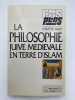
Toutes les expéditions sont faites en suivi au-dessus de 25 euros. Expédition quotidienne pour les envois simples, suivis, recommandés ou Colissimo.
Les chemins de l'humanité : L'homme et son langage - L'homme et sa pensée
Tallandier. 1968. In-4. Relié. Bon état, Couv. convenable, Dos satisfaisant, Intérieur frais. 365 + 367 pages augmentées de nombreuses photos et illustrations en couleurs et en noir et blanc dans et hors texte. Jaquettes légèrement déchirées.. Avec Jaquette. . . Classification Dewey : 100-PHILOSOPHIE ET DISCIPLINES CONNEXES
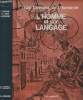
Illustrations de Hans Erni. Classification Dewey : 100-PHILOSOPHIE ET DISCIPLINES CONNEXES
Man on his Nature
Pelican book 1955 in12. 1955. Broché.
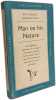
Bon Etat couverture défraîchie intérieur propre ex-libris
Les derniers jours d'un philosophe - entretien sur le nature, les sciences, les métamorphoses de la terre et du ciel, l'Humanité, l'âme et la vie éternelle
Didier et cie/ C. Marpon et E.Flammarion. 1883. In-12. Relié demi-cuir. Bon état, Couv. convenable, Dos satisfaisant, Rousseurs. 370 pages. Tampon en pzge titre. Fleurons, auteur et titre en doré au dos+ 4 nerfs.. . . . Classification Dewey : 100-PHILOSOPHIE ET DISCIPLINES CONNEXES
Traduit de l'anglais, préface et notes par Camille Flammarion. Classification Dewey : 100-PHILOSOPHIE ET DISCIPLINES CONNEXES
"Communication ou manipulation; la vie quotidienne vue à la lumière du fonctionnement du cerveau. Siric (Société Internationale des Recherches Interdisciplinaire sur la Communication)."
Saint-Erme (France), Editions Empirika, 1982. 14 x 22, 346 pp., broché, bon état (quelques traces d'adhésif).

