 Write to the booksellers
-
Type
Autograph (15)
Book (50968)
Magazine (288)
Manuscript (2)
Maps (1)
New book (1)
Old papers (1)
Photographs (1)
-
Latest
Last 24h (13)
Last 3 days (80)
Last month (1161)
Last week (69)
-
Language
Dutch (6)
English (43)
Finnish (1)
French (51147)
German (19)
Greek (5)
Italian (20)
Japanese (2)
Latin (21)
Polish (1)
Portuguese (3)
Spanish (7)
Swedish (2)
-
Century
16th (61)
17th (194)
18th (1294)
19th (3643)
20th (22023)
21st (3738)
-
Countries
Belgium (6728)
Brazil (24)
Canada (6)
China (2)
Côte d'Ivoire (66)
Denmark (1046)
France (38734)
Germany (3)
Greece (3)
Netherlands (268)
Switzerland (4397)
-
Syndicate
ALAC (6)
CLAM (37)
CNE (6)
ILAB (20021)
NVVA (998)
SLACES (907)
SLAM (17688)
SNCAO (41)
Tome XXIX. Jacques Maritain (1882-1973).
Couverture souple. Broché. 116 pages.
Livre en portugais. Sans mention d'éditeur, 1973.
LA NOUVEAUTE DANS L'HISTOIRE DE LA NATURE , HERMENEUTIQUE PHILOSOPHIQUE DE LA CREATIVITE NATURELLE
PARIS ET LYON LIBRAIRIE PHILOSOPHIQUE VRIN ET INSTITUT INTERDISCIPLINAIRE D'ETUDES EPISTEMOLOGIQUES 2015 Un volume grand in-8 broché de 291 pages , ENVOI , bon à très bon exemplaire . Très bon Couverture souple
La nouveauté dans l'histoire de la nature. Herméneutique philosophique de la créativité naturelle
Vrin Vrin 2015, In-8 broché de 292 pages. Très bon état
Toutes les expéditions sont faites en suivi au-dessus de 25 euros. Expédition quotidienne pour les envois simples, suivis, recommandés ou Colissimo.
L'Homme ! ... aujourd'hui - I. L'Athée - L'athéisme est-il possible ?
Chez l'auteur. Non daté. In-4. Broché. Etat d'usage, Couv. partiel. décollorée, Dos satisfaisant, Papier jauni. Environ 30 pages.. . . . Classification Dewey : 210-Philosophie et théorie
Classification Dewey : 210-Philosophie et théorie
Action. Cahiers de philosophie et d'art - N° 4
Paris Directeur: Florent Fels. 1920 In-8 Broché Edition originale
Numéro 4, juillet 1920. Textes de Max Jacob, Vlaminck, Benjamin Péret, M. Sauvage, André Malraux, Roch Grey, A. Germain, Henri Hertz, Jacques Rigaut, J.-E. Blanche (sur Picasso), Th. Duret, Bissière (sur Lipchitz), Georges Duthuit, H.-L. Folin, Pol Michels, Tokine... Bois gravés de Galanis et Morin Jean. Reproductions de Derain, Fournier, Kisling, Lautrec, Lipchitz, Mortier, Sola, Zadkine. Couverture ombrée. Bon exemplaire 0
Action. Cahiers de philosophie et d'art - N° 7
Paris Directeur: Florent Fels. 1921 In-8 Broché Edition originale
Numéro 7, mai 1921. Textes de Roch Grey, René Edme, Georges Gabory, Ivan Gol, Béatrice Hastings, Vincent Huidobro, Rastes Pétrovitch, Léonard Pieux, André Salmon, Marcel Sauvage, Else Lasker Schuler, Maurice VLaminck, C. Einstein, Waldemar George, Franz Hellens, Schulte-Vaerting ... Hors texte, 12 reproductions d'oeuvres du douanier Rousseau. Bois de Galanis, Hermine David et Vlaminck. Quelques centimètres en moins en pied du dos, sans gravité Bon exemplaire 0
Archives de philosophie du droit, tome 25, Sirey, 1980 : La Loi - Hélène Destroyat : préface historique / François Terré : La "Crise de la loi" / Pierrette Poncela : Le droit pénal : au nom de la loi ou malgré la loi / René Sève : L'ontologie moderne et la loi...
Sommaire complet sur simple demande. 16 cm X 24 cm, 582 pp, couverture souple. Broché.
Bords un peu frottés. Trace de pliure sur le dos. Dos et bords insolés. Plats un peu salis. Très bon état par ailleurs. Intérieur frais
DEUCALION. Cahiers de philosophie. Direction Jean Wahl.
Éditions de la revue Fontaine. N° 1 & 2, 1946-1947. In-8 br. Frontispice d'André Masson. Sommaire : J. Wahl, E. Levinas, Aimé Patri, W. Jankélévitch, B. Groethuysen, B. Fondane, H. Arendt, etc. E.O. A partir du N° 3 la revue est publiée par les Éditions de La Baconnière.
Escritos de Teoria, V, octubre 1982, en espagnol, avec des articles de C.B. Macpherson / Chantal Mouffe / Paul Ricoeur...
14,2 cm X 20,7 cm, 131 pp, couverture souple.

Bords et plats frottés. Très bon état par ailleurs. Intérieur frais.
Estudios, filosofia practica e Historia de las Ideas, Ano 12 / N°13, Mendoza - 2011, dossier : Humano / Animal / Bestial, en espagnol
19,9 cm X 28,7 cm, 208 pp, couverture souple et illustrée. Broché.
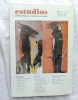
Bords un peu frottés. Bords un peu insolés. Plats un peu salis. Très bon état par ailleurs. Intérieur frais.
HOBBES/BENTHAM, Revue philosophique de la France et de l’étranger, n°3 Juillet-septembre 2021
, Paris, P.U.F. 2021, in-8, br., bon état, [140]p.
![HOBBES/BENTHAM, Revue philosophique de la France et de l’étranger, n°3 Juillet-septembre 2021. [Revue]](https://static.livre-rare-book.com/pictures/DRM/52511_1_thumb.jpg)


Phone number : 01 43 29 46 77
Politeia, revue de théorie politique et de philosophie pratique, n°3-4, 4ème trimestre 1999, avec au sommaire : Mercedes Allendesalazar : Thérèse d'Avila : de l'écriture et de l'obéissance / Françoise Coblence : Hannah Arendt, partage d'ombre et de lumière / Zarana Papic : Nationalisme, patriarcat et guerre.... Sommaire complet sur simple demande.
13,9 cm X 21,1 cm, 201 pp, couverture souple.
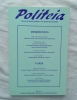
Bords un peu frottés. Très bon état par ailleurs. Intérieur frais.
Revista de filosofia de la Universidad de Costa Rica, numéros 129-131, volumen. LI, Enero-Diciembre 2012, en espagnol
18,5 cm X 26,1 cm, 505 pp, couverture souple et illustrée. Broché.
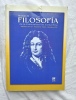
Bords un peu frottés. Plats un peu salis. 1 déchirure sur le bord de tête de 2,5 cm sur la couverture et les premières pages. 1 accroc sur la coiffe de tête. Très bon état par ailleurs. Intérieur frais.
Revista de filosofia de la Universidad de Costa Rica, volumen XXXVII, numero 92, junio-Diciembre 1999, en espagnol
18,5 cm X 26,1 cm, 156 pp, couverture souple. Broché.

Bords un peu frottés. Dos un peu sali. 1 étiquette sur le dos et les plats. Très bon état par ailleurs. Intérieur frais.
Revista de filosofia, universidad de Chile, vol. LXIII, 2007, en espagnol
16,1 cm X 25,2 cm, 210 pp, couverture souple. Broché.

Bords un peu frottés. Plats un peu salis. Très bon état par ailleurs. Intérieur frais.
Sexualités occidentales. Revue "Communications" n° 35.
Editions du Seuil, Revue "Communications", n° 35 1982 1 vol. broché in-8, broché, 191 pp. Bonne condition.
L'étranger, le temple et la loi dans le judaïsme ancien.
Paris, Armand Colin - Annales, 1996 ; in-8, broché. Très bon état - 51e année n°5 sept oct 1996.
Très bon état - 51e année n°5 sept oct 1996.
[REVUE] Auguste Cornu, Jean Dresch, Georges Viers, Jacques Scheibling, Jean-Marc Gabaude...
Reference : 13138
La pensée, revue du rationalisme moderne, N°194, août 1977. In-4, broché.
[13138]
La Tolérance. Pour n humanisme hérétique. Revue AUTREMENT, Série Morales, n°5, 1994.
in 8° broché, 221 pages ; couvetrure illustrée.
...................... Photos sur demande ...................
Phone number : 04 77 32 63 69
CHRISTUS.
Paris, Christus, 2003 ; in-8, 124 pp., broché. Contient le progres spirituel, pelerinage du coeur, un exdde intérieur, maitrise de soi et abandon, la spirale liturgique, traverser les crises - formation spirituelle diocésaine a bord du Bel Espoir - n°199 IHS juillet 2003.
Contient le progres spirituel, pelerinage du coeur, un exdde intérieur, maitrise de soi et abandon, la spirale liturgique, traverser les crises - formation spirituelle diocésaine a bord du Bel Espoir - n°199 IHS juillet 2003.
Revue Contemporaine Mensuelle. Tome Premier (Deuxième, Troisième et Quatrième).
P., Bureaux de la Revue Contemporaine, 1865-66, 4 forts volumes in 8°, reliés demi-percaline rouge, dos llisse pour les tomes I à III, et demi-percaline saumon, dos lisse (passé) pour le tome IV, 768, 768, 768 et 576 pages ; des rousseurs.
Bon exemplaire de le nouvelle série cette excellente revue d'histoire, de politique, de philosophie, etc..., "dont tout le monde connait la valeur" (Hatin, p.525). ...................... Photos sur demande ...................
Phone number : 04 77 32 63 69
Revue d'Ascétique et de Mystique Tome XVIII : Deux préfaces spirituelles de Jean de Fécamp (A. WILMART) - La doctrine spirituelle de Dom Innocent Le Masson. Fin (J.-P. MARTIN) - Lettre autographe et inédite de Fénelon à Bossuet sur le sacrifice absolu du salut (P. DUDON) - Dictionnaire de Spiritualité ascétique et mystique, Fascicule 6. F. Cavallera (M. VILLER) - Douleur et stigmatisation. Etudes Carmélitaines, Octobre 1936 - Considération sur la vie intérieure d'une âme religieuse (M.-M. GARRIGOU) - La science spirituelle d'après Cassien (M. OLPHE-GALLIARD) - ...
1937 Tome XVIII - 18e année - 1937 - Revue paraissant tous les trois mois (trimestrielle) - In-8, demi chagrin bleu; titre, année et filets dorés au dos - 436 pages


Bon état - Infimes frottements sur les coins

