 Write to the booksellers
-
Type
Autograph (15)
Book (50790)
Magazine (146)
Manuscript (2)
Maps (1)
New book (1)
Old papers (1)
-
Latest
Last 24h (2)
Last 3 days (17)
Last month (208)
Last week (59)
-
Language
Dutch (5)
English (37)
Finnish (1)
French (50841)
German (15)
Greek (5)
Italian (19)
Japanese (2)
Latin (20)
Portuguese (2)
Spanish (7)
Swedish (2)
-
Century
16th (59)
17th (194)
18th (1276)
19th (3530)
20th (21641)
21st (3739)
-
Countries
Belgium (6748)
Brazil (24)
Canada (6)
China (2)
Côte d'Ivoire (68)
Denmark (1009)
France (38406)
Germany (3)
Greece (3)
Netherlands (272)
Switzerland (4415)
-
Syndicate
ALAC (6)
CLAM (29)
CNE (6)
ILAB (20124)
NVVA (998)
SLACES (907)
SLAM (17838)
SNCAO (41)
Pèlerinages savoyards
1944 Annecy, Gardet et Garin, 1944 Petit in-4° broché, couverture illustrée en couleurs rempliée, 139 pages, belle typographie en 2 couleurs, illustré de 13 planches et de vignettes sur bois gravées en couleurs par Philippe Kaeppelin.Portraits d'ecrivains,etc. Tirage total à 950 exemplaires. L'un des 850 exemplaires sur vélin N°411.,bon état.
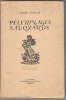
Pélerinages littéraires (Rousseau,Gide, Lamartine, Claudel, Sade,etc..) et Religieux. Remise de 20% pour toutes commandes supérieures à 200 €
Les notions morales chez l'enfant - essai de psychologie différentielle (filles et garçons) - bibliothèque de philosophie contemporaine
Presses universitaires de France 1949 in8. 1949. Broché.
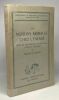
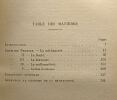
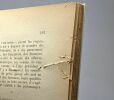
bon état de conservation cependant pages 181 à 192 abîmée (déchirure sans manque) intérieur propre par ailleurs sous papier de soie
L'Afrique bascule vers l'Avenir
Editions Tirésias - Michel Reynaud | Paris 1999 | 15 x 21 cm | broché
Edition originale pour laquelle il n'a pas été tiré de grands papiers. Dos légèrement insolé. Précieux envoi autographe daté de 1976 et signé de Germaine Tillion à la sociologue et militante féministe Evelyn Sullerot : "... courageuse combattante, cette préhistoire d'un "front" qu'elle a bien connu." - Photographies et détails sur www.Edition-Originale.com -


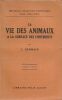
La vie des animaux à la surface des continents.
Felix Alcan-Nouvelle collection scientifique dirigée par Emile Borel In-12° carré, broché, couverture orangée élégante, l'ensemble cousu de 260 pages, bel ensemble et solide exemplaire remarquablement conservé.
Nouvelle Edition Bon Etat Mise à jour du Samedi 27 Juin 2026. Paiement PayPal immédiat, Mondial Relay pour : France, Allemagne, Autriche, Belgique, Espagne, Italie, Portugal, Luxembourg, Pays-Bas, Pologne (Communiquer votre point ou locker si connu). Une participation supplémentaire peut être demandée pour les colis lourds hors France où les envois compris entre 5 et 25 kg sont dégressifs : 2 à 4 kilogrammes - 7.99 / 5 à 10 kg - 15.99 / 15 -25 kg - 25.99. Certaines de nos collections ( Vian, Céline, Camus (...) peuvent être expédiées en Franco de port. Pour linternational hors Europe (Suisse, Canada, Japon, Etats-Unis, les frais dexpéditions peuvent varier selon le poids (mise à jour : 1 juin 2026).
La tentation des indes (Plon)
Omnibus 1980 382 pages 14 2x3 2x22 4cm. 1980. Broché. 382 pages. Un homme encore jeune entreprend un voyage en Inde par voie terrestre traversant Venise la Grèce la Turquie l'Afghanistan et le Pakistan. Ce parcours initiatique mêle rencontres sensualité et spiritualité nourrissant à la fois les sens et l'intelligence dans une quête de soi et de découverte du sous-continent indien
Bon état
"Agora "" Les aventuriers de l'esprit"""
LA MANUFACTURE. 1991. In-8. Broché. Bon état, Couv. légèrement passée, Dos satisfaisant, Intérieur frais. 231 pages.. . . . Classification Dewey : 100-PHILOSOPHIE ET DISCIPLINES CONNEXES
Entretiens réalisés pour France-Culture. Cuny A., Raine Kathleen, Debray Régis, Turpin Jean-Marie, Thibon Gustave, Le Moine Annick, Han Kza, Emmanuel Pierre, Kattan Naïm, Frénaud André, Sollers Philippe, Boudot Pierre, Davy Marie-Madeleine, Brosse Jacques, Cazenave Michel.... Classification Dewey : 100-PHILOSOPHIE ET DISCIPLINES CONNEXES
LES JUIFS DANS L'HISTOIRE. De la naissance du judaïsme au monde contemporain.
CHAMP VALLON, 2011; in-8 broché, 917 pp, bibliographie, glossaire. . TRES BON ETAT
Nombreux titres disponibles en Philosophie.
Sinfonie und Poeme. Philosophischen Grundlagen einer gattungsgeschichtlichen Wechselbeziehung im Werk Skrjabins
Köln, 1995 241pp., 21cm., softcover, text in German, Doctoral dissertation (Inaugural-Dissertation zur Erlangung des Doktorgrades der Erziehungswissenschaftlichen Fakultät der Universität zu Köln), stamp at verso of title page, text is clean and bright, good condition, M108862
Le destin religieux de l'humanité - Essai de philosophie occulte
Paris-Bruxelles, Les éditions de la Revue Demain 1944 335pp., br.orig., pour la plupart non coupé, bon état
Le Destin religieux de l'Humanité. Essai de philosophie occulte.
Paris-Bruxelles, Editions de la revue "Demain", 1944 ; in-16 (18,5 cm), broché ; 334; [2] pp., couverture crème illustrée par Guy Oskeling, imprimée en noir et jaune.
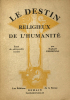
Edition originale non coupé. Les traditions païennes ; les traditions des hébreux ; l'universalisme et ses avatars ; les grandes crises de l'orient et de l'occident. Couverture légèrement défraichie.
LA RAISON DES CHOSES, ESSAI SUR LA PHILOSOPHIE DE WANG FUZHI (1619-1692)
Gallimard. 2005. In-8. Broché. Bon état, Couv. convenable, Dos satisfaisant, Intérieur frais. 436 pages. Etiquettes de code sur le dos et le 1er plat. Tampons de bibliothèque en pages de garde et de titre.. . . . Classification Dewey : 100-PHILOSOPHIE ET DISCIPLINES CONNEXES
'Bibliothèque de Philosophie'. Nrf. Classification Dewey : 100-PHILOSOPHIE ET DISCIPLINES CONNEXES
La raison des choses - Essai sur la philosophie de Wang Fuzhi (1619-1692) - Collection Bibliothèque de Philosophie.
Gallimard. 2005. In-8. Broché. Bon état, Couv. convenable, Dos satisfaisant, Papier jauni. 436 pages - livre en français avec citations en chinois.. . . . Classification Dewey : 180-Philosophie antique, médiévale, orientale
Collection Bibliothèque de Philosophie. Achevé d'imprimer le 23 février 2005. Classification Dewey : 180-Philosophie antique, médiévale, orientale
Dissertation zur Erlangung des doktorgrades der philosophischen fakultät der Georg - August - universitât zu Göttingen
Non Renseigné 1972 in8. 1972. Broché.
Bon état (BE) étiquette sur le premier plat intérieur frais tampons
Gerolamo Cardano - Pavie, 24 septembre 1501 - Rome, 21 septembre 1576 ( Parfois nommé Gerolamo Cardano, Hieronymus Cardanus en latin ou encore Jérôme Cardan en français) - Mathématicien, Philosophe, Astrologue, Inventeur, et Médecin.
Reference : 27718
(1635)
Arcana politica, sive de Prudentia civili liber singularis
1635 Lugduni Batavor, ex officina Elzeviriana , 1635 - In-24 (11,5 x 6,5 cm) - Reliure Plein vélin à rabat de l'époque, dos lisse portant le titre manuscrit à l'encre, accroc à un plat - Pièce de titre illustrée d'une gravure - 12 ff-608 pages - Ex-libris manuscrit "Gwenc'lan Le Scouezc - Bon exemplaire - Réf. 27718
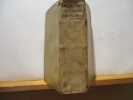
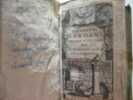
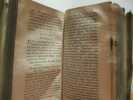
Seconde édition imprimée chez les Elzevir. Cet ouvrage de Jérôme Cardan fut publié pour la première fois en 1627 sous le titre "De proxeneta seu De prudentia civili" Les sujets abordés sont diverses comme la vie politique et la cour, la gestion de biens ou l'Université. References : Willems [421]. Cnformément à nos conditions générales de vente :Les frais de port sont affichés à titre indicatif. Il se peut que nous devions vous contacter pour vous informer du coût de laffranchissement supplémentaire en fonction du poids et du nombre de livres, surtout pour les envois internationaux Cependant vu l'augmentation des tarifs postaux à l'internationale, nous pouvons expédier les ouvrages en point relais MONDIAL RELAY pour les pays suivants : Allemagne, Autriche, Belgique, Espagne, Italie, Luxembourg, Pays-Bas, Pologne, et Portugal. Merci de nous indiquer en retour le point relais choisi ainsi que votre numéro de téléphone mobile & adresse Courriel pour assurer le suivi du colis.N'hésitez pas à nous interroger.In accordance with our general terms and conditions of sale:Shipping costs are displayed for informational purposes only. We may need to contact you to inform you of the additional postage costs depending on the weight and number of books, especially for international shipments.However, given the increase in international postal rates, we can ship books via Mondial Relay to the following countries: Germany, Austria, Belgium, Spain, Italy, Luxembourg, Netherlands, Poland, and Portugal. Please provide us with your chosen Mondial Relay point, as well as your mobile phone number and email address to ensure package tracking.Please feel free to contact us with any questions
GRAND JURON + Le petit Bouvard illustré dictionnaire des idées reçues et rejetées + Vive la vie (Pierre Bonte) + Je craque... (Guy Bedos) --- 4 livres
POCKET 2008 344 pages 10x18x2cm. 2008. Poche. 4 volume(s). 344 pages.

Bon Etat de conservation de l'ensemble
GERR (Henri) (direction), FEBVRE (Lucien), LANGEVIN (Paul), REY (Abel)
Reference : 98737-JB159
(1938)
Revue de Synthèse organe du centre international de synthèse fondation "pour la science" Sciences de la Nature et Synthèse générale VIII
P., Albin Michel, 1938, broché, 12 pages paginées de 68 à 78, 25.5 x 17.1 x 0.1 cm, couverture fendue, coupée en deux au niveau du dos, usure sur les contours de la couverture et des pages, feuilles détachées de la couverture.
La philosophie de Heymans
Paris, Alcan 1938 299pp., dans la série "Bibliothèque de philosophie contemporaine", non coupé, bel état
La philosophie de Heymans
Paris, Alcan 1938 299pp.+ 3pp. de thèses ("stellingen"), dans la série "Bibliothèque de philosophie contemporaine", Dissertation de doctorat ["Proefschrift ter verkrijging van den graad van doctor in de letteren en wijsbegeerte aan de Rijks-universiteit te Groningen, 1938], F54596
"La philosophie de Heymans - ""Bibliothèque de philosophie contemporaine"""
Alcan. 1938. In-8. Broché. Etat d'usage, Couv. convenable, Dos plié, Intérieur frais. 298 pages. Tampon en pages de titre et de garde. 2e plat légèrement déchiré. Mors fendus en coiffes.. . . . Classification Dewey : 190-Philosophie occidentale moderne
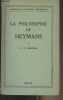
Classification Dewey : 190-Philosophie occidentale moderne
Kinesis Akinetos. A Study of spiritual Motion in the Philosophy of Proclus
Leiden, E.J. Brill 1973 viii + 143pp., original 1973-edition, in the series "Philosophia Antiqua, A series of Monographs on Ancient Philosophy" volume 26, 25cm., original softcover (slightly sunfaded), text and interior clean and bright, good condition, F105039
Nihilisme of traditionalisme - Brieven van den eenen naar den anderen hoek
, Brugge/Brussel, De Kinkhoren 1945, 107pp., F18548
De custodia linguae et corde bene ruminanda. - [GERSON'S SEMINAL TREATISE ON RUMOR-MAKING, PRINTED BY ZELL CA. 1470]
(Cologne, Ulrich Zell, ca. 1470). Small 4to. Beautifully bound in a later (ca. 1900) full calf binding in Renaissance style with three raised bands and blindstamped ornamentation to spine. Boards with three wide ornamental blindstamped borders inside each other. A damp stain to inner margin and a bit of light brownspotting. Early marginal annotations (some of them slightly shaved) and underlinings. 6 ff. + first and last blank. 27 lines to a page. A large, four-line opening initial in red, a two-line initial in red, paragraph marks as well as capital strokes in red throughout, and red underlinings in beginning and end. A lovely copy. With the gilt red leather ex libris of John Pierpont Morgan to inside of front board.
Magnificent, early incunable edition, being the exceedingly scarce second edition (as a Zell-edition dated between 1467 and 1470 is considered the first - these two first editions are of equal scarcity) of this highly important tract on the moral implications of speaking ill of others in their absence, by one of the pioneers of natural right theory, Jean de Gerson, printed by the eminent first printer of Cologne, Ulrich Zell. The work, though having been overlooked for centuries, is of the utmost importance to the shaping of Western thought, both legal, religious, and moral, and it was extremely influential in its time. It appeared as many as four times around 1470 (the two first editions printed by Zell, who was the main printer of all of Gerson's works, followed by an edition by Fust and Schöffer shortly after and another one by Therhoernen) with editions following in both the 1480'ies and 90'ies. The two Zell-editions, which constitute the first appearances of the work, are distinguishable by the printing error in the first line of A1r, which says ""Intipit"" (the present copy - Hain 7683) instead of ""Incipit"" (Hain 7682). The number of early editions of Gerson's work bears witness to his tremendous popularity as a moral and spiritual authority in 15th-century Europe. In spite of being “[o]ne of the smallest and rarest of the many tracts by the Chancellor of Paris Jean Charlier de Gerson (1363-1429), which were printed by the earliest printer of Germany"" (Rhodes), the work nonetheless exercised great impact. The theme of the treatise is the morality of speaking ill of others behind their backs, which has implications for, not only morality philosophically speaking, but also legally, theologically, and religiously, tying together the most important themes of Gerson’s thought. Curiosity and vanity, which are at the heart of rumor-making and speaking ill of others behind their backs, are two main intellectual vices that must be warned about in all contexts. “The reflection on vices and sins, both from the moral and the intellectual point of view, is a “fil rouge” in Jean Gerson’s production. As a theologian constantly concerned with shaping a correct theology and driven by the necessity to pursue the safety and unity of the doctrine, the Parisian Chancellor often warns his students and colleagues about the dangers connected with this misuse of rationality. (Luciano Micali: The Consent of the Will…, p. 1). “Jean Gerson (b. 1363–d. 1429"" also Jean de Gerson, or, originally, Jean Charlier) was the most popular and influential theologian of his generation, the most important architect of the conciliar solution to the Great Schism (1378–1415), and the leading figure at the Council of Constance (1414–1418). He came from a family of modest means in the Champagne region of France. As a young student at the College of Navarre in Paris, he came in contact with humanist currents from Italy (he probably read Petrarch at this time), which left some traces in his writings. He first gained fame as a popular preacher in Paris in the early 1390s and then followed his master Pierre d’Ailly as the chancellor of the University of Paris in 1395. He gained international renown as a result of his leading role at the Council of Constance, which put an end to the Great Schism. ... Gerson’s wide-ranging interests extended well beyond the traditional limits of university masters, and his writings serve as a window into 15th-century life and thought. His complete works were first printed in 1483 and were frequently reprinted through the first quarter of the 16th century. Later humanists and university theologians alike claimed him as one of their intellectual fathers."" (Oxford Bibliographies in Medieval Studies: Daniel Hobbins: “Jean Gerson”). In spite of his enormous influence upon his contemporaries and near contemporaries of the following century, recent centuries have witnessed little insight into his vast importance. This, however, seems to be changing, as many scholars are now gaining increasing insight into the extension of his influence. “Researchers are familiar with seeing and examining the influence of Augustine, Thomas Aquinas and other significant figures in Western intellectual history. The reception of Jean Gerson (1363-1429) — the late medieval French Church reformer, ecclesiastical leader, theologian, poet, educator and chancellor of the University of Paris — is, however, an understudied field. Gerson’s legacy had nevertheless an impact on late medieval and early modern movements and thinkers of great significance, paving the way for many developments, which still shape our existence today. He became a source of inspiration for all those involved in establishing new religious and national identities, and his name appears in both Protestant (of all branches) as well as in Catholic sources. Aside from the expected influence in theology and Church history, his ideas transformed law, jurisprudence, art, music, pedagogy, literature and even medicine. The topography of his legacy is just as broad and varied, spanning from Portugal to Scandinavia, and from Japan to Mexico. From a deeper perspective, Gerson is extremely important for understanding the religious evolution of Western civilization. Jean Gerson’s legacy provides a significant theological context where contemporary ideas such as, for example, the concept of individual right or need of palliative care, find their roots. Today, when the question of religion has retaken the central stage of our existence, an understanding of our theological background is no longer the fief of specialized researchers, but a social necessity.” (Introduction to: The Reception of Jean Gerson in Late Medieval and Early Modern Theology, Spirituality and Law. Roundtable Discussion at KU Leuven, 2018) Although commonly accepted as a seminal figure important in legal theory, even his role a a pioneer of natural right theory has been overlooked, as has his vast influence on thinkers like Thomas Moore. A 2018-conference at KU Leuven has contributed to the renewed understanding of his importance. As Yelena Mazour-Matuzevich (University of Alaska Fairbanks / Senior Fellow KU Leuven) concluded: “Before looking closely at Thomas More’s connection to the late medieval French theologian Jean Gerson (1363-1429), I could not imagine the breadth and depth of More’s dependency on his legacy as a source of scriptural narrative, moral theology or legal theory. More’s extensive knowledge of Gerson’s works is evident from the Englishman’s writings, and his admiration, already manifest in his early years, only increased as he aged, climaxing during his imprisonment in the Tower.” (The Very Special Case: Gerson & Thomas More). It was only with Richard Tuck and his ""Natural Rights Tradition"" from 1979 that Gerson was first really credited with his pioneering work in this field. Tuck argues that Jean Gerson was the first to describe the notion of ius as “a dispositional faculty or power, appropriated to so meone and in accordance with a right was understood in terms of an ability” and places him at the centre in the rights tradition. Thus, the guiding light of the Concillar Movement and one of the most prominent theologians at the Council of Constance was also one of the first thinkers to develop what would later come to be called natural rights theory, and he was even one of the first individuals to defend Joan of Arc and proclaim her supernatural vocation as authentic. The celebrated devotional work traditionally ascribed to Thomas à Kempis, ""The Imitation of Crist"" has been considered by some scholars, to be the work of Gerson, although no conclusive evidence has yet been found. ""Gerson was a prolific writer, and a powerful intellectual force in a calamitous period in France’s history. A champion of his university, he strongly advocated the role of theologians in the debates which erupted when the Great Schism divided the catholic church between 1378 and 1417, as first two, and then three, claimants contended for the papacy. As a cleric, he had a strong sense of pastoral responsibility, often expressed in his more personal writings. He witnessed and bewailed France’s descent into political chaos, when the madness of King Charles VI allowed rival princes to jostle, and eventually murder, to gain their ends. In 1413 the civic and political disturbances in Paris almost cost him his life. That civic disorder, civil war, and then the Lancastrian takeover with King Henry VI of England as questionable heir to Charles VI, doubtless explains why Gerson, ever the Valois loyalist, spent his final years in a kind of exile in Lyons. Many of Gerson’s major writings deal with the Schism, and the debates over the Church’s structure which it provoked. These pushed him to argue for reform, a programme which challenged papalism by urging the authority of a general council as representative of the Church as a whole. Some of his most important work addresses such matters, and he was occasionally a key player in events, notably at Constance in March–April 1415. ” (Swanson: Review of Patrick McGuire's Jean Gerson and the Last Medieval Reformation). Hain: 7683" BMC: I:184 Goff: 219.
uitschot en de geest Paulus onder filosofen
, vantilt uitgeverij, 2018 paperback, 14 x 22 cm, 288 pagina's. nieuw. ISBN 9789460043673.
De apostel Paulus staat sinds de eeuwwisseling in het middelpunt van de filosofische belangstelling. Denkers als Taubes, Badiou, Agamben en ?i?ek ? en eerder al Heidegger ? vinden in Paulus? brieven grondwoorden voor een nieuwe manier van denken over de wereld, de tijd en de geschiedenis, maar ook over de levenskunst, het recht en de politiek. Zij laten tevens zien hoe Paulus? brieven niet alleen aan de basis staan van ervaringen die kenmerkend zijn voor onze cultuur, zoals het nihilisme en de dood van God, maar ook de politiek-sociale agenda van emancipatie en gelijkheid hebben gevormd. Bovendien wordt hun interpretatie van Paulus geboren uit een intensieve discussie met denkers als Hegel, Kierkegaard, Nietzsche, Schmitt en Foucault. Het uitschot en de geest ontsluit deze boeiende internationale filosofische discussie over Paulus nu ook in het Nederlandse taalgebied en biedt daarmee een fascinerende blik achter de schermen van de belangrijkste thema?s en spelers in de hedendaagse continentale filosofie.
Introduction to Wittgenstein's Tractatus
Hutchinson university library 1971 21 082x1 27x13 462cm. 1971. Broché.
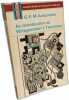

Très bon état ex-libris bonne tenue intérieur propre

