 Write to the booksellers
-
Type
Autograph (15)
Book (52778)
Magazine (288)
Manuscript (2)
Maps (1)
New book (1)
Old papers (1)
Photographs (1)
-
Latest
Last 24h (13)
Last 3 days (15)
Last month (324)
Last week (56)
-
Language
Dutch (5)
English (43)
Finnish (1)
French (52959)
German (19)
Greek (5)
Italian (20)
Japanese (2)
Latin (20)
Polish (1)
Portuguese (3)
Spanish (7)
Swedish (2)
-
Century
16th (63)
17th (200)
18th (1331)
19th (3677)
20th (23036)
21st (4106)
-
Countries
Belgium (6716)
Brazil (24)
Canada (6)
China (2)
Côte d'Ivoire (69)
Denmark (1046)
France (40549)
Germany (3)
Greece (3)
Netherlands (269)
Switzerland (4400)
-
Syndicate
ALAC (6)
CLAM (36)
CNE (6)
ILAB (20363)
NVVA (998)
SLACES (907)
SLAM (18033)
SNCAO (41)
Saturne ou l'herbe des âmes. Collection : Histoires d'un mythe.
Paris, Seghers, 1981. 13 x 21, 219 pp., broché, très bon état.
SCIENCE ET PHILOSOPHIE 2 TEMPS ESPACE RELATIVITE.
BEAUCHESNE GABRIEL.. 1928. In-12. Broché. Etat d'usage, Couv. légèrement passée, Dos fané, Intérieur acceptable. 211 pages. Note au crayon à papier dans le texte.. . . . Classification Dewey : 100-PHILOSOPHIE ET DISCIPLINES CONNEXES
Classification Dewey : 100-PHILOSOPHIE ET DISCIPLINES CONNEXES


Une nouvelle philosophie des Sciences: Le causalisme de M Emile Meyerson.
Felix Alcan. 1928. In-12. Broché. Etat d'usage, Couv. convenable, Dos satisfaisant, Intérieur frais. 210 pages.. . . . Classification Dewey : 100-PHILOSOPHIE ET DISCIPLINES CONNEXES
Classification Dewey : 100-PHILOSOPHIE ET DISCIPLINES CONNEXES
Meyerson, Une Nouvelle Philosophie De La Connaissance
Paris Félicx Alcan 1934 In-12 VII+232 pp, 2ème édition, revue et corrigée. Parfois souligné au crayon.
Bon État Général Broché à raba
Phänomenologie und Metaphysik. Das Problem des Relativismus und seiner Uberwindung
Halle a. Saale, Max Niemeyer 1933 xvi + 270pp., 25cm., softcover, copy from the library of the Belgian scholar Jacques Schotte with his signature, pages uncut, very good condition, F74909
Christliche Anthropozentrik. Uber die Denkform des Thomas von Aquin
München, Kösel-Verlag 1962 139pp., 23cm., hardcover (cloth), dustwrapper, Very good, R67039
Christliche Anthropozentrik - Über die Denkform der Thomas von Aquin
München, Kösel-Verlag 1962 137pp., cloth, few stamps else VG
Platon peintre des âges de la vie humaine (République VIII 544 a - IX 580 c) / L'antiquité classique EXTRAIT - TOME LX 1991
L'Antiquité Classique 1991 in8. 1991. Agrafé.

Bon état intérieur frais bonne tenue
Chamfort et Mirabeau
Paris, 1928, A la jeune Parque - in-8. 116 pp. br. ex n° 118 sur 500 - tiré sur papier alfa
Bon ex.
Apolinius de Tyane ou Le séjour d'un Dieu parmi les hommes, suivi de : Les vers d'or de Pythagore. Collection : Les grands initiés.
Paris, Robert Laffont, 1974. 14 x 20, 283 pp., nombreuses illustrations en N/B, reliure d'édition skivertex vert, très bon état.
FRAGMENTS ET LETTRES DE THEANO, PERICTIONE, PHINTYS, MELISSA ET MYIA
Guy Trédaniel - La Maisnie. 1980. In-12. Broché. Bon état, Couv. légèrement passée, Dos satisfaisant, Intérieur frais. 120 pages. Rousseurs sur la couverture.. . . . Classification Dewey : 100-PHILOSOPHIE ET DISCIPLINES CONNEXES
Femmes pythagoriciennes. Trad. nouvelle avec prolégomènes et notes par M. Meunier. Classification Dewey : 100-PHILOSOPHIE ET DISCIPLINES CONNEXES
HYMNES PHILOSOPHIQUES / ARISTOTE, CLEANTHE, PROCLUS.
L'ARTISAN DU LIVRE. 1935. In-8. Broché. Bon état, Couv. convenable, Dos satisfaisant, Intérieur frais. 114 pages.. . . . Classification Dewey : 100-PHILOSOPHIE ET DISCIPLINES CONNEXES
TRADUCTION NOUVELLE AVANT PROPOS PROLEGOMENES ET NOTES. Classification Dewey : 100-PHILOSOPHIE ET DISCIPLINES CONNEXES
La légende de Socrate
Albin Michel. 1965. In-12. Broché. Bon état, Couv. convenable, Dos satisfaisant, Intérieur acceptable. 183 pages. Petite annotation au crayon de papier en page de faux titre. Annotations à l'encre en dernière page blanche et quelques unes dans le texte.. . . . Classification Dewey : 100-PHILOSOPHIE ET DISCIPLINES CONNEXES
Classification Dewey : 100-PHILOSOPHIE ET DISCIPLINES CONNEXES
La légende de Socrate.
Paris, L’Edition d’Art, H. Piazza 1926, 190x130mm, frontispice, 183pages, reliure d'éditeur. Reliure pleine basane de l’éditeur avec titre et auteur dorés au dos orné à froid, aussi sur les deux plats. Tranche supérieure dorée. Couvertures conservées. Nom du possesseur sur le haut de la page de garde supérieure, autrement bel exemplaire.
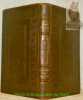
Pour un paiement via PayPal, veuillez nous en faire la demande et nous vous enverrons une facture PayPal
La légende de Socrate.
Paris, L'Edition d'Art, H. Piazza, 1926. 13 x 19, 184 pp., reliure large dos cuir, couverture conservée, tête dorée, très bon état.
Belle reliure en parfait état.
La légende de Socrate.
Paris, Edition d'Art, H. Piazza, 1926. 13 x 19, 184 pp., quelques illustrations, broché, bon état.
Les Convulsions de l'Ecorce terrestre.
FLAMMARION Ernest. 1910. In-12. Relié demi-cuir. Bon état, Couv. convenable, Dos satisfaisant, Intérieur frais. 371 pages. Frontispice en noir et blanx. Nombreuses illustrations en noir et blanc, en état dusage. Reliure de bibliothèque : étiquette de code sur la coiffe en-tête et tampons sur la page de titre.. . . . Classification Dewey : 190-Philosophie occidentale moderne
Bibliothèque de Philosophie scientifique. Classification Dewey : 190-Philosophie occidentale moderne
Das Alter des Universums - Eine philosophische Studie zum Problem des Weltalters in der Astronomie der Gegenwart
, Meisenheim am Glan, A.Hain 1954, 103pp., in the series "Monographien zur Naturphilosophie" Band IV
CHEMINS DE CE TEMPS-LA - DE MEMOIRE D'ESSENIEN - TOME 2
ARISTA. 1990. In-8. Broché. Bon état, Couv. convenable, Dos satisfaisant, Intérieur frais. 426 pages - nombreuses quelques photos illustrations couleur et noir et blanc dans et/ou hors texte - annotations et/ou tampon en page. . . . Classification Dewey : 190-Philosophie occidentale moderne
Classification Dewey : 190-Philosophie occidentale moderne
Chemins de ce temps-là- De mémoire d'Essénien Tome 2
Editions Arista. 1989. In-8. Broché. Bon état, Couv. partiel. décollorée, Dos fané, Intérieur frais. 426 pages.. . . . Classification Dewey : 100-PHILOSOPHIE ET DISCIPLINES CONNEXES
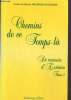
Classification Dewey : 100-PHILOSOPHIE ET DISCIPLINES CONNEXES
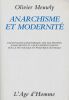
Anarchie et modernité
L'Age d'Homme L'Age d'Homme, 1998. In-8 broché de 223 pages. Très bon état
Toutes les expéditions sont faites en suivi au-dessus de 25 euros. Expédition quotidienne pour les envois simples, suivis, recommandés ou Colissimo.
Henri Druey, 1799 - 1855. Actes du colloque du 8 octobre 2005. Collection Bibliothèque Historique Vaudoise, n.° 130.
Lausanne, Bibliothèque historique vaudoise - Cercle Démocratique 2007, 235x170mm, frontispice, 245pages, broché. Très bel exemplaire.
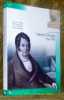
photos n/b, Pour un paiement via PayPal, veuillez nous en faire la demande et nous vous enverrons une facture PayPal
ESSAI DE MÉTAPHYSIQUE OU PRINCIPES ET LES OPERATIONS DE L'ESPRIT
Paris Chez Dessaint & Saillant 1756 in 12 (16,5x10,5) 1 volume reliure pleine basane fauve de l'époque, dos à nerfs orné, caissons dorés, pièce de titre de cuir beige, tranches teintées rouge, [1] 398 pages [1], coiffe supérieure usée, petite et fine galerie de vers dans la marge inférieure des 9 derniers feuillets (sans atteinte au texte). Bon exemplaire ( Photographies sur demande / We can send pictures of this book on simple request )
Très bon Couverture rigide
Pour connaitre la pensée de Bergson
Bordas 1948 in8. 1948. Relié.
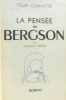
Très Bon Etat reliure artisanale intérieur uniformément jauni couverture d'origine conservée

