 Write to the booksellers
-
Type
Autograph (15)
Book (50928)
Magazine (288)
Manuscript (2)
Maps (1)
New book (1)
Old papers (1)
Photographs (1)
-
Latest
Last 24h (37)
Last 3 days (35)
Last month (1182)
Last week (29)
-
Language
Dutch (6)
English (43)
Finnish (1)
French (51107)
German (19)
Greek (5)
Italian (20)
Japanese (2)
Latin (21)
Polish (1)
Portuguese (3)
Spanish (7)
Swedish (2)
-
Century
16th (61)
17th (194)
18th (1293)
19th (3614)
20th (22007)
21st (3742)
-
Countries
Belgium (6728)
Brazil (24)
Canada (12)
China (2)
Côte d'Ivoire (69)
Denmark (1046)
France (38685)
Germany (3)
Greece (3)
Netherlands (269)
Switzerland (4396)
-
Syndicate
ALAC (12)
CLAM (37)
CNE (6)
ILAB (19991)
NVVA (998)
SLACES (907)
SLAM (17652)
SNCAO (41)
L’Individualisme dans l’Antiquité (Histoire et Critique).
Conflans-Honorine (Seine-et-Oise), Éditions de «l’Idée Libre», 1924 ; in-16 (133 x 196 mm), 80 pp. + frontispice hors-texte, plaquette brochée. Exemplaire numéroté 25/250. Portrait de l’auteur en noir et blanc.
![L’Individualisme dans l’Antiquité (Histoire et Critique). . [HISTOIRE] - RYNER (Han)](https://static.livre-rare-book.com/pictures/OEC/_202303714_thumb.jpg)
![L’Individualisme dans l’Antiquité (Histoire et Critique). . [HISTOIRE] - RYNER (Han)](https://static.livre-rare-book.com/pictures/OEC/_202303714_2_thumb.jpg)
![L’Individualisme dans l’Antiquité (Histoire et Critique). . [HISTOIRE] - RYNER (Han)](https://static.livre-rare-book.com/pictures/OEC/_202303714_3_thumb.jpg)
La France catholique illustrée.
Paris, Éditions Gassendi, 1935 ; in-folio, 426 pp., reliure demi-chagrin noir à coins, dos orné à nerfs. Très bon état.
La légende des anges.
Paris, Flammarion, 1993 ; in-4, 302 pp., cartonnage d'éditeur avec jaquette imprimée. Nombreuses photographies et reproductions dans le texte.
Le père Jandel au Concile du Vatican, paginé de 72 à 76.
Meaux, Imprimerie André Pouyé, 1953 ; in-8 (162 x 241 mm), 16 pp., broché. Extrait de la «Revue d'histoire de l'Église de France». -Tome XXXIX, N° 132 (janvier-juin 1953).
Mythe & pensée chez les Grecs, études de psychologie historique.
Paris, Éditions la Découverte, 1990 ; in-8 (136 x 220 mm), 432 pp., broché, couverture illustrée.
![Mythe & pensée chez les Grecs, études de psychologie historique. . [HISTOIRE] - VERNANT (Jean-Pierre)](https://static.livre-rare-book.com/pictures/OEC/_202501087_thumb.jpg)
![Mythe & pensée chez les Grecs, études de psychologie historique. . [HISTOIRE] - VERNANT (Jean-Pierre)](https://static.livre-rare-book.com/pictures/OEC/_202501087_2_thumb.jpg)
![Mythe & pensée chez les Grecs, études de psychologie historique. . [HISTOIRE] - VERNANT (Jean-Pierre)](https://static.livre-rare-book.com/pictures/OEC/_202501087_3_thumb.jpg)
Une arme contre le radicalisme anticlérical: les pamphlets du chanoine Marcel contre Diderot (1884), pagination 236 à 251.
S. l. (Paris), Klincksieck, vers 1991 ; in-8, 18 pp., couverture et feuilles agrafées. Extrait des Actes du colloque organisé par la société Diderot (Paris, Hôtel de Sully, 25-26 octobre 1991):Les ennemis de Diderot. Dédicace de l'auteur.
Mémoires pour servir à la vie de M. de Voltaire, écrits par lui-même, suivis de Lettres à Frédéric II.
Paris, Mercure de France, 1985 ; in-8 (141 x 205 mm), 248 pp., broché, couverture illustrée. Collection «le Temps retrouvé», N° I. Édition présentée et annotée par Jacques Brenner.
![Mémoires pour servir à la vie de M. de Voltaire, écrits par lui-même, suivis de Lettres à Frédéric II. . [HISTOIRE] - VOLTAIRE](https://static.livre-rare-book.com/pictures/OEC/_202501090_thumb.jpg)
![Mémoires pour servir à la vie de M. de Voltaire, écrits par lui-même, suivis de Lettres à Frédéric II. . [HISTOIRE] - VOLTAIRE](https://static.livre-rare-book.com/pictures/OEC/_202501090_2_thumb.jpg)
![Mémoires pour servir à la vie de M. de Voltaire, écrits par lui-même, suivis de Lettres à Frédéric II. . [HISTOIRE] - VOLTAIRE](https://static.livre-rare-book.com/pictures/OEC/_202501090_3_thumb.jpg)
Le joli temps. Philosophe et artistes sous la Régence et Louis XV (1715-1774).
Paris, Hatier, 1990 ; in-8, 231 pp., broché. Très bon état.
ST LOUIS et sonsiècle.
Tours, Mame et ci editeurs, 1847 ; grand in-8, 497 pp., br. En état moyen (a relier) broché dos des manques - orné de portraits et de gravures sur acier par MM/ Rouargue Frères - tampons.
En état moyen (a relier) broché dos des manques - orné de portraits et de gravures sur acier par MM/ Rouargue Frères - tampons.
La civilisation de l'inde Concours 1983 (2e partie) les relations internationales depuis 1945 (2) HISTORIENS & GÉOGRAPHES N° 297 décembre 198).
Paris, Histoires et géographes, 1994 ; in-8, broché, couverture illustr (ptes usures). Bon état.
Bon état.
DIEU N'EST PAS GRAND - COMMENT LA RELIGION EMPOISONNE TOUT
FRANCE LOISIRS. 2009. In-8. Broché. Bon état, Couv. convenable, Dos satisfaisant, Intérieur frais. 321 pages - Couverture contrepliée. . . . Classification Dewey : 210-Philosophie et théorie
Traduction de l'américain par Ana Nessun Classification Dewey : 210-Philosophie et théorie
Lettre ouverte à ceux qui prêchent la guerre et la font faire aux autres.
Paris, Ediion albin michel , 1991 ; in-8, 161 pp., broché. Trace de crayon.
Trace de crayon.
Aristoteles Latinus XVII 2.v - de generatione animalium - translatio Guillelmi de Moerbeka /
Desclée de Brouwer/ Bruges-Paris 1966 in8. 1966. Broché. Corpus philosophorum medii aevi academiarum consociatarum auspiciis et consilio editum

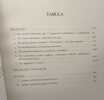
Bon état bords un peu frottés intérieur propre pages non coupées
De Generatione Animalium - Aristoteles Latinus XVII 2.v / Corpus philosophorum medii aevi academiarum consociatarum auspiciis et consilio editum / Union académique internationale
Desclée de Brouwer / Bruxelles-Paris 1966 in8. 1966. Broché.
Bon état bords frottés couverture ternie intérieur propre pages non coupées
NOUVEAUX ESSAIS
Paris Presses Universitaires de France P.U.F. 1985 in 8 (22x15) 1 volume broché, couverture imprimée, 207 pages. Collection '' Formes sémiotiques ''. Très bel exemplaire ( Photographies sur demande / We can send pictures of this book on simple request )
Très bon Broché
Omkring Sprogteoriens Grundlæggelse. [Prolegomena to a Theory of Language]. - [THE STARTING POINT OF LINGUISTIC ANALYSIS]
København [Copenhagen], 1943. Lex8vo. Uncut in the original printed wrappers. Spine and part of back wrapper faded, otherwise very nice and clean. 116 pp.
The seminal first edition of this breakthrough work in linguistics, which constitutes the basis of linguistic analysis and served as a main inspiration for Derrida's ""De la Grammatologie"". In 1943 the first edition of the main work of the great Danish linguist Louis Hjelmslev (1899-1965) appeared. The work appeared in the series ""Festskrift udgivet af Københavns Universitet i Anledning af Universitetets Aarsfest"" and bore the title ""Omkring Sprogteoriens Grundlæggelse"". The work was translated into English as ""Prolegomena to a Theory of Language"" and later into French as ""Prolegomenes a une theorie du langage "". This work came to represent a breakthrough in linguistics and formed an entirely new branch of this field.Hjelmslev had studied comparatvive linguistics in Copenhagen, Prague and Paris, when in 1931 he co-founded the ""Cercle Linguistique de Copenhague"", also known as the ""Copenhagen School of Linguistics"" with Viggo Brøndal (1887-1942). Hjelmslev's linguistic theories formed the basis of this seminal scool, which soon became one of the most important centres of structuralism in the world. The single most important cornerstone of this internationally highly influential school was the new theory on language that Hjelmslev had developed together with Hans-Jørgen Uldall. This theory consisted in the double duality of the linguistic sign and is now known as ""Glossematics"", a now generally used term, which was coined by the two. ""Glossematics"" represents an attempt to analyze the contents and the form of language on a coherent basis. Hjelmslev's theories of semiotics became hugely influential, and virtually all of the greatest European thinkers interested in language and theories of language throughout the 30s, 40s, 50s, 60s and 70s were hugely inflenced by Hjemslev, whose theories remain of seminal character to this day.In his main work, ""Prolegomena to a Theory of Language"", Hjelmslev begins by ascertaining that ""- Language - human speech - is an inexhaustible wealth of manifold values. Language is inseparably linked to man and follows him in all of his doing. Language is the tool with which man moulds thought and feeling, mood, aspiring, will and action, the tool with which he influences and is influenced, the last and deepest condition of human society. [...]"" (""- Sproget - mennesketalen - er en uudtømmelig rigdom af mangfoldige værdier. Sproget er uadskillelig knyttet til mennesket og følger ham I al hans færd. Sproget er det redskab hvormed mennesket former tanke og følelse, stemning, stræben, vilje og handling, det redskab hvormad han paavirker og paavirkes, menneskesamfundets sidste og dybeste forudsætning."" p. (5) ). He then goes on to unfold a criticism of the linguistic methodologies in use at the time. He accepts Saussure's theories of language as a system of signs, the leading theories in this field at the time, but he claims that this only applies to theories of language use. Hjelmslev, however, wishes to establish a regular linguistic system, in which language is seen as a complex system made up of small units. He sees earlier linguistic methodologies as being merely descriptive, and as the first, he wishes to provide a methodology that is systematizing and provide a linguistic theory that is to found the basis of a rational form of linguistics. The theory that Hjelmslev thus develops here came to constitute an important contribution to modern general epistemology, a contribution that likewise constitutes the starting point of linguistic analysis. Linguistic analysis is set off with the theory propounded in this work that a sign not merely refers to one form, but to two, namely a content form and an expression form. At the same time, every function of a sign is twofold in that it is manifested by both the content substance and the expression substance, the first being the psychological manifestation of the sign, the second being the material substance, in which the sign is manifested. Thus, Hjelmslev puts forth a new form of semiotics, one in which language and linguistics are not necessarily bound to a spoken language, and one which is constituted by a scientific method of analysis. Because of this theory, a new philosophical tradition also sees the light of day, one inspired by the opposition to the widely accepted idea that images, in order to be understood, had to be translated into a phonetic substance or something more concrete. For Hjelmslev, the linguist finds meaning in from the form of content, and it is from the point of view of this form that the content substance must be analyzed. This theory deeply influenced both Deleuze, who often mentions Hjelmslev throughout his works, and Derrida, who's ""Grammatologie"" is deeply inspired by Hjelmslev's work, to which it bears numerous references and long quotations.
PROLEGOMENES A UNE THEORIE DU LANGAGE. Traduit du danois par Una Canger.
Paris, EDITIONS DE MINUIT, 1971, in-8 broché, 231 pp. TRES BON ETAT
Nombreux titres disponibles en Philosophie.
Prolégomènes à une théorie du langage. Nouvelle édition traduite du danois. Suivi de : La Structure fondamentale du langage.
1971 Paris, Editions de Minuit, 1971, in 8° broché, 233 pages ; cachets.
...................... Photos sur demande ...................


Phone number : 04 77 32 63 69
LA CRISE DE LA VERITE- BIBLIOTHEQUE DE PHILOSOPHIE SCIENTIFIQUE
FLAMMARION. 1939. In-8. Broché. Etat passable, 2ème plat abîmé, Dos abîmé, Intérieur frais. 275 pages- quelques figures en noir et blanc dans le texte- quelques annotations et soulignements au crayon à papier dans et hors texte sans conséquence sur la lecture. . . . Classification Dewey : 100-PHILOSOPHIE ET DISCIPLINES CONNEXES
Traduit par Colonel Cros Classification Dewey : 100-PHILOSOPHIE ET DISCIPLINES CONNEXES
La Crise De La Vérité
Paris Flammarion 1934 In-12 Large 275 pp, Bibliothèque de Philosophie Scientifique, traduit par le Colonel Cros, avec 28 figures dans le texte. Exemplaire partiellement coupé. Frottis sur mors et coiffes
Correct Broché à raba
La crise de la vérité. Traduit par le Colonel Cros.
P., Flammarion, 1934, in 12 broché, 275 pages.
Illustré de 28 figures dans le texte. ...................... Photos sur demande ...................
Phone number : 04 77 32 63 69
De howitziske Philosophemer underkastede en Prøvelse. 2 Hefter (alt). Første Hefte. I. Gjendrivelse af Hume. II. Oplysninger over Determinisme. III. Hvad er Frit?. + Andet og sidste Hefte. IIII. Urimeligheden af den howitziske Nødvendighedslære. V. De... - [HJORTS TRE INDLÆG I HOWITZ-FEJDEN.]
Kjøbenhavn, J.H. Schultz, 1825. 8vo. Indbundet i to nyere helshirtbind med forgyldte rygtitler. Rene og pæne indvendigt. 49,80"(2),54 pp.

De særdeles sjældne originaludgaver af Hjorts tre indlæg i Howitz-fejden, striden om viljens frihed.""Med afhandlingen ""Om Afsindighed og Tilregnelse, et Bidrag til Psykologien og Retslæren"", indledte Howitz i 1824 det 19. århundredes danske diskussion om viljens frihed."" (Koch, Den danske idealisme, p. 183). Howitz mente, at samtidens retslærde (med Ørsted i spidsen) ikke forstod forholdet mellem menneskets normale fornuftstilstand og den afsindige tilstand, og han påbegyndte dermed en diskussion af det juridiske begreb om tilregnelighed, bag hvilket han mente at se Kants frihedslære. På flere fronter foregriber han emner, der forekommer meget moderne. For det første var hans mål i opposition til Ørsted at få ændret synet på domme i straffesager, hvor ydre omstændigheder burde siges at kunne svække den sagsøgtes evne til at handle fuldt rationelt, - en foregriben af moderne retspraksis. Samtidig behandler han spørgsmålet om sindssygdom som et spørgsmål om enhver anden legemlig sygdom. Han gør sig til talsmand for en biologisk funderet psykiatri, der sidestiller psykiske lidelser med fysiske lidelser ved at finde sædet for denne type sygdomme i hjernen.Med Hume søger Howitz således at gendrive Kants lære om menneskets frihed. Han sætter lighedstegn mellem forholdet motiv-handling og forholdet årsag-virkning, og således kan der, ifølge Howitz, når det gælder menneskelige handlinger, heller ikke findes noget, der er uden årsag. Howitz opfattede dog ikke, helt på linie med Hume, denne naturnødvendighed som værende i modstrid med friheden.Der er ingen tvivl om, at et skrift af den art som Howitz' ""Om Afsindighed og Tilregnelse"" har virket provokerende på den filosofisk idealistiske samtid, der ikke anerkendte nogen form for materialistisk determinisme, og det var nærmest en nødvendighed for de vigtigste filosofisk aktive skribenter i Danmark at svare på dette provokerende skrift.Således skriver først Ørsted allerede samme år ""Et Par Ord"" i Anledning af den foranstaaende Afhandling"". Fejden, striden om viljens frihed, er nu i fuld gang, og hele det filosofiske Danmark inddrages heri. Allerede samme år svarer Howitz igen på Ørsteds svar, med sit værk ""Determinismen eller Hume imod Kant"". Howitz fastholder heri sine meninger fra det første indlæg, og sætter trumf på ved bl.a. at påpege, ""at den kantske frihed er en videnskabelig uting, idet det må gælde for såvel den moralske som den fysiske natur, at den er underkastet love."" (Koch, p. 191)""Hjorts indlæg imod Howitz er præget af ordkløveri, uklarhed og påstuleren og er -ligesom Mynsters- skrevet ud fra en bevidsthed om at indtage en overlegen position i forhold til den angrebne."" (C.H. Koch, ""Den danske idealisme"", p. 202).In the Feud on Free Will, Hjort published these three separate works, in which he attacks Howitz and, with him, Hume.
Johan Scotus Erigena oder von dem Ursprung einer christlichen Philosophie und ihrem heiligen Beruf.
Kopenhagen, Gyldendal, 1823. 8vo. Indbundet i et nyere helpapbind med forgyldt rygtitel. Noget brunet. Gennemgående understreget med blyant. X, 147, (1).

