 Write to the booksellers
-
Type
Autograph (15)
Book (51234)
Magazine (288)
Manuscript (2)
Maps (1)
New book (1)
Old papers (1)
Photographs (1)
-
Latest
Last 24h (93)
Last 3 days (21)
Last month (1268)
Last week (37)
-
Language
Dutch (6)
English (43)
Finnish (1)
French (51413)
German (19)
Greek (5)
Italian (20)
Japanese (2)
Latin (21)
Polish (1)
Portuguese (3)
Spanish (7)
Swedish (2)
-
Century
16th (62)
17th (195)
18th (1297)
19th (3640)
20th (22186)
21st (3772)
-
Countries
Belgium (6731)
Brazil (24)
Canada (6)
China (2)
Côte d'Ivoire (66)
Denmark (1043)
France (38996)
Germany (3)
Greece (3)
Netherlands (268)
Switzerland (4401)
-
Syndicate
ALAC (6)
CLAM (37)
CNE (6)
ILAB (20094)
NVVA (998)
SLACES (907)
SLAM (17764)
SNCAO (41)
Hara, centre vital de l'homme
Le courrier du livre. 1991. In-8. Broché. Bon état, Coins frottés, Dos satisfaisant, Papier jauni. 254 pages. Quelques rousseurs. Quelques planches illustrées en noir et blanc.. . . . Classification Dewey : 180-Philosophie antique, médiévale, orientale
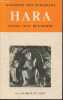
Classification Dewey : 180-Philosophie antique, médiévale, orientale


Aristotele (Biblioteca di filosofia)
Mursia 1976 752 pages 15 8x3 8x22 6cm. 1976. Broché. 752 pages.

proche du très bon état intérieur propre bonne tenue couverture un peu défraîchie
Metaphysik als Wissenschaft. Festschrift für Klaus Düsing zum 65. Geburtstag.
Freiburg, München Verlag Karl Alber. 2006 8°. Frontispiz, 535 S. Originalpappband.
Mit einer Einleitung des Herausgebers, Beiträgen von Hans-Dieter Klein, Karl Bormann, Jan Opsomer, Wolfgang Janke, Dirk Fonfara, Andreas Speer, Rolf Darge, Claudia Bickmann, Tom Rockmore, Janna Padel, Morteza Ghasempour, Anja Solbach, Félix Duque, Otto Pöggeler, Cinzia Ferrini, Klaus Erich Kaehler, Heinz-Gerd Schmitz, Dieter Lohmar, Rudolf Bernet, Dimitris Yfantis, Albert Rosales, Jing-Jong Luh, Albert Zimmermann und Tobias Schlicht.
Dāʼūd al-Ashkashī & Ḥusām al-Dīn al-Kātī (DA-UD AL-ASHKASI & HUSAM AL-DIN AL-KATI)
Reference : 60111
(1772)
Arabic manuscript on cream paper, containing: [Dāʼūd al-Ashkashī :] supercommentary Ḥāshiyah ʻalá Sharḥ al-Marāḥ on Aḥmad Dīkqūz’s (15th c.) commentary on Aḥmad ibn Masʻūd’s (13th c.) grammatical treatise Marāḥ al-arwāḥ, on Arabic morphology. + [Ḥu... - [HIGHLY INTERESTING ARABIC MANUSCRIPT ON LOGIC AND GRAMMAR]
(Presumably Yemen), 1772. 4to. Bound in a contemporary full leather binding with flap. Boards and flap with blindtooled ornamentation. Spine worn and worn through at hinges. Back board loose at top 2/3, but still attached. A bit of worming to boards and overall signs of wear to leather. Internally well preserved, with occasional light discolouration. 170 ff. with numerous additional smaller pages of notes inserted throughout, several in different colours (pink and blue). Text throughout is written in Naskh script, in a single column. Mostly written in black ink with occasional colorful highlights. Passages of core texts are overlined, generally in red but occasionally in black or green. The first text varies between approximately 18 and 33 lines per page and is occasionally written diagonally (for example, fol. 31rv) the second is consistent at 9 lines per page with considerable interlinear notes. Portions of the text are copied by the primary scribe on smaller pages, for example ff. 70r-79v, to be distinguished from the small pages of notes that were likely inserted later. The title and author of the first text are presented in attractive green and red calligraphy on f. 1r. The scribe’s name is also written in calligraphy on f. 1r and 126r, in addition to the colophon on f. 168v, but the name has been systematically erased in all three locations, for unknown reasons. According to the colophon on f. 168v, the manuscript was copied on the first Friday of Rabi? al-Thani 1186 AH, equivalent to 3 July 1772 CE. As noted above, the scribe’s name has been erased. The style of the script and decorations suggest that it was most likely copied in or near Yemen. Texts: Fol. 1r-126v: Da'ud al-Ashkashi’s supercommentary ?ashiyah ?alá Shar? al-Mara? on A?mad Dikquz’s (15th c.) commentary on A?mad ibn Mas?ud’s (13th c.) grammatical treatise Mara? al-arwa?, on Arabic morphology. Fol. 129v-168v: ?usam al-Din al-Kati’s (d. 1358/9) commentary Shar? al-Isaghuji on Athir al-Din al-Abhari’s (d. 1265) Isaghuji. Miscellaneous notes and poems appear on front and rear flyleaves, on pages between the two texts, in margins, between lines, and on small inserted pages. Many of these paratexts are in the hand of the primary scribe. The notes discuss numerous topics, but especially grammar and logic, the subjects of the two main texts. Marginal and interlinear notes generally comment on specific passages in the main text. A few notes, especially on fol. 128r, are in Turkish, attesting to Ottoman influence. The front pastedown has a short story or riddle about Muslims and nonbelievers on a ship.
Unrecorded Arabic manuscript containing two highly important treatises, the first of which is of the utmost scarcity (only three other manuscript copies of the work are known), and the other of which is of the utmost importance to the development of logic in the Arab world. Da'ud al-Ashkashi’s supercommentary “?ashiyah ?alá Shar? al-Mara?” on A?mad Dikquz’s (15th c.) commentary on A?mad ibn Mas?ud’s (13th c.) grammatical treatise “Mara? al-arwa?”, on Arabic morphology, is extremely rare, and the present manuscript is only the fourth known copy of the work known to exist. Being unrecorded, this manuscript contributes significantly to preserving an old Arabic work of logic and grammar that may otherwise have been lost and may very well shed new light on a text that is now extremely obscure. The core texts are relatively well known, but al-Ashkashi’s work is extremely obscure. The spelling of his name is uncertain and virtually nothing is known about his life. There is one copy of this text in the Municipal Library of Alexandria (Egypt) and two at Princeton University (Incipit:????? ??? ???? ?? ?????? ?????? ??????? ????? ?????? ????????), but so far, no scholars seem to have worked seriously with the work to determine what it may reveal. Husam al-Din al-Kati’s (d. 1358/9) commentary on Athir al-Din al-Abhari’s (d. 1265) “Isaghuji” (Isagoge) is a well-known, popular, and very influential commentary, of which several copies are known in institutions. Although al-Abhari’s Isaghuji is often described as a commentary on Porphyry’s text, it is really more of an imitation, or a text in the same genre. This extremely influential commentary constitutes an introduction to logic in the style of Porphyrios’ famous “Isagoge” of Porphyry. Being extremely popular and influential, numerous manuscripts and supercommentaries of it are known. (Incipit: ????? ??? ?????? ????? ??????? ????? ?????? ????). Not much is known about Husam-al-Din-Katia (who is sometimes referred to as al-Rumi) either, but we know he was a native Anatolian. Furthermore, it was his commentary (and glosses) on al-Abhari's Isagoge that became the most popular and the standard accompanying text throughout the Ottoman period. “This work is a super-commentary or gloss on Athir al-Din al-Abhari (d. 663/1264 or 1265)’s Isaghuji, a brief collection of definitions of logic terms named after its inspiration, the Neoplatonist Porphyry (Furfuriyus, d. 309 AD)’s Isagoge. Abhari’s work which only covers the Categories of Porphyry’s work, served as the standard introductory text for the study of logic in madrasas across the Islamic world until modern times, with an emphasis on elementary semantics through the syllogism. Of the many commentaries and glosses on al-Abhari’s Isaghuji, ?üsamüddin ?asan el-Kati’s was one of the most popular, and continued to be the accompanying text by which al-Abhari’s Isaghuji was studied throughout the Ottoman period. In his autobiographical entry, Tasköprüzade mentions having studied the Isagoge via ?üsamüddin el-Kati (Hüsam-i Kati)’s commentary. Well known super glosses (?ashiya) on ?üsamüddin el-Kati’s commentary were produced by Mevlana ?araca A?mad (d. 854/1450) ???? ???? ??????, Mu?yi al-Din Mu?ammad al-Barda?i (d. 927/1521) ???? ?? ???? ??????? and Mu?yi al-Din al-Taliji (al-Talishi) ??? ????? ??????? ??????? (?ashiya ?ala´ shar? ?usam al-Din al-Kati, ????? ??? ???? ????? ?????? , composed in the year 1085). These works tend to be bound together in manuscript codices.” (Uiversity of St. Andrews: The Islamisation of Anatolia). The two works bound here on logic and grammar have clearly been thoroughly studied, both by the scribe, whose name has sadly been erased, and by later readers. The comments almost constitute a work in its own, and there may be much new material to be found here, for the serious scholar. This kind of supercommentary is extremely interesting and will reveal a lot about the development of logic in the Arab world over the numerous centuries that this supercommentary has come to cover - documenting an entire tradition of one of the most important disciplines from the middle ages. As of now, the present manuscript remains univestigated, as do several of this type whose contents are not just straightforward.
THE TEACHINGS OF THE COMPASSIONATE BUDDHA
NEW AMERICAN LIBRARY. 1955. In-12. Broché. Bon état, Couv. convenable, Dos satisfaisant, Intérieur frais. 241 pages. Premier plat illustré en couleurs. Texte en anglais.. . . . Classification Dewey : 210-Philosophie et théorie
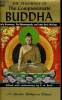
Collection A mentor religious classic Classification Dewey : 210-Philosophie et théorie
Marx et la liberté. Collection : Les grands philosophes/Points, N° 419/Essais, Inédit.
Paris, Editions du Seuil/Points, 2000. 11 x 17, 91 pp., broché, très bon état.
Traduit de l'anglais par Christian Dufour.
Marx et la liberté - Collection points essais n°419.
Seuil. 2000. In-12. Broché. Bon état, Couv. convenable, Dos satisfaisant, Intérieur frais. 90 pages.. . . . Classification Dewey : 100-PHILOSOPHIE ET DISCIPLINES CONNEXES
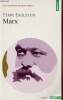
Traduit de l'anglais par Christian Cler - Collection points essais n°419. Classification Dewey : 100-PHILOSOPHIE ET DISCIPLINES CONNEXES
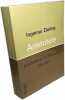
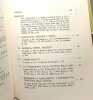
Ästhetik. Die Geschichte ihrer Ideologie. Aus dem Englischen von Klaus Laermann.
Stuttgart, Weimar, Verlag J.B. Metzler. 1994. 23,5x15,5 cm. 447 S., 5 Bl. Originalbroschur.
Kleiner schwacher Fleck auf Vorderdeckel.
MEMOIRE TEMPS HISTOIRE THEMES ET SUJETS - TERMINALES TOUTES SETIONS - COLLECTION MAJOR BAC
PUF. 1996. In-8. Broché. Bon état, Couv. convenable, Dos satisfaisant, Intérieur acceptable. 114 pages.. . . . Classification Dewey : 100-PHILOSOPHIE ET DISCIPLINES CONNEXES
Classification Dewey : 100-PHILOSOPHIE ET DISCIPLINES CONNEXES
The text of Habakkuk. Chap. I, 1-II. 4. Dissertation.
Toronto, The University of Toronto 1905, 245x175mm, 26pages, paperback. Book in good condition.
Pour un paiement via PayPal, veuillez nous en faire la demande et nous vous enverrons une facture PayPal
Le festin des muses masquées : la parole engendre la pensée, Editions Notre-Dame, Coutances, 1961
14,5 cm X 22,8 cm, 158 pp, couverture souple,
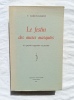
Dos et bords insolés, bords un peu frottés, tranches salies, très bon état par ailleurs. Exemplaire non coupé. Intérieur frais.
Science et philosophie - Une révolution 1450-1750 - La chasse aux sorcières Descartes, Copernic, Kepler.
Ramsay. 1986. In-8. Broché. Etat d'usage, Coins frottés, Dos plié, Papier jauni. 336 pages.. . . . Classification Dewey : 100-PHILOSOPHIE ET DISCIPLINES CONNEXES
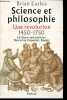
Traduit de l'anglais par Nina Godneff. Classification Dewey : 100-PHILOSOPHIE ET DISCIPLINES CONNEXES
"Science et philosophie, une révolution (1450-1750); La chasse aux sorcières : Descartes, Copernic, Kepler."
Paris, Ramsay, 1986. 16 x 24, 336 pp., quelques figures, broché, bon état.
Traduit de l'anglais par Nina Godneff.
Ethics of Saint Thomas Aquinas. Two Courses,
Turnhout, Brepols, 1998 Hardback, 242 p., 135 x 230 mm. ISBN 9780888447203.
Ignatius Eschmann, O.P. (1898-1968) was a most distinguished interpreter of Saint Thomas Aquinas, if we take 'interpreter' in the double sense of one who knows what Thomas meant and who brings to that interpretation what our century has made available. Two sides of Eschmann are clear: he was a controversialist who, after his prison year, was hesitant to publish; he was also a constructive thinker, unwilling to substitute commentators, no matter how classical, for the Master. Both sides are patent in this book. Saint Thomas redivivus would surely recognize in these lectures the seeds he had sown seven centuries earlier. Language : English.
Le Complexe de Diane. Erotisme ou Féminisme (LONG ENVOI AUTOGRAPHE SIGNE A COLETTE).
In-12 (185 x 120 mm), broché, couverture imprimée, 301, (3) pages. Paris, Julliard, 1951.
![Le Complexe de Diane. Erotisme ou Féminisme (LONG ENVOI AUTOGRAPHE SIGNE A COLETTE).. EAUBONNE (Françoise d'). - [COLETTE]](https://static.livre-rare-book.com/pictures/HAT/39219_1_thumb.jpg)
![Le Complexe de Diane. Erotisme ou Féminisme (LONG ENVOI AUTOGRAPHE SIGNE A COLETTE).. EAUBONNE (Françoise d'). - [COLETTE]](https://static.livre-rare-book.com/pictures/HAT/39219_2_thumb.jpg)
![Le Complexe de Diane. Erotisme ou Féminisme (LONG ENVOI AUTOGRAPHE SIGNE A COLETTE).. EAUBONNE (Françoise d'). - [COLETTE]](https://static.livre-rare-book.com/pictures/HAT/39219_3_thumb.jpg)
Edition originale, exemplaire du service de presse enrichi d'un très bel et long envoi autographe de l'autrice à Colette.Ce premier essai, dans lequel Françoise dEaubonne (19202005) pose les fondements de sa pensée féministe, fut publié en réponse aux attaques conservatrices visant 'Le Deuxième Sexe' de Simone de Beauvoir.Sappuyant sur la figure mythologique de Diane chasseresse, elle y affirme que la "nature féminine" nest quune construction sociale destinée à légitimer la domination masculine, et que les prétendues "affaires privées" relèvent en réalité du politique.Romancière, essayiste et infatigable militante, Françoise dEaubonne fut de tous les grands combats sociaux et politiques de laprès-guerre. Cofondatrice du Mouvement de libération des femmes (MLF) puis du Front homosexuel daction révolutionnaire (FHAR), elle est également à lorigine du concept décoféminisme, affirmant limpossibilité de dissocier lutte féministe et combat écologique.À la parution du 'Deuxième Sexe', elle écrivit à Simone de Beauvoir qui deviendra son amie: "Vous êtes un génie, vous nous avez toutes vengées !".Long envoi autographe à Colette daté du 3 mars 1951: "À notre chère et grande COLETTE (notre "bien indivis" !) / Avec tous mes remerciements pour la grande joie que m'a donnée sa lettre et pour l'honneur qu'elle m'a fait. En espérant bientôt avoir le plus grand honneur encore de lui demander si 'Le Complexe de Diane' ne l'a pas trop ennuyée... Avec lexpression de ma déférence et de ma vive gratitude 'pour être femme, pour être Colette. Françoise d'Eaubonne, qui attend son prochain livre !" [Signature autographe datée]Marges brunis.Bon exemplaire, tel que paru
L'amour en plus. Histoire del 'amour maternell. XVIIe - XXe siècle
Paris, Champ 1981. In Paris, Champ 1981. In-12 broché de 372 pages, collection Champs Philosophie. Bon état.
Toutes les expéditions sont faites en suivi au-dessus de 25 euros. Expédition quotidienne pour les envois simples, suivis, recommandés ou Colissimo.
COURS DE PHILOSOPHIE MORALE.
J.DE GIGORD. 1936. In-8. Broché. Etat d'usage, Couv. légèrement passée, Dos satisfaisant, Intérieur acceptable. 551 pages - coins frottés - coiffe en tête légèrement abîmée .. . . . Classification Dewey : 100-PHILOSOPHIE ET DISCIPLINES CONNEXES
Classification Dewey : 100-PHILOSOPHIE ET DISCIPLINES CONNEXES
Cours de psychologie
J. de Gigord 1931 630 pages in8. 1931. broché. 630 pages. Le 'Cours de psychologie' d'Émile Baudin est un manuel classique destiné à la préparation du baccalauréat français publié par l'éditeur J. de Gigord. Il constitue le premier volume d'un cours complet de philosophie et de psychologie dont une version réduite ('Précis de psychologie') a également été éditée. L'ouvrage a connu plusieurs éditions et a reçu le prix Gegner de l'Académie des sciences morales et politiques
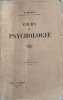
Etat correct exemplaire usagé
ETUDES HISTORIQUES et CRITIQUES SUR LA PHILOSOPHIE DE PASCAL
Un ouvrage de 410 pages, format 140 x 180 mm, broché, publié en 1947, Editions de la Baconnière, collection "Etre et Penser, Cahiers de Philosophie" (avec référence de bibliothèque)
II - Sa Phisosophie morale : Pascal, Les Libertins et les Jansénistes (2)
Phone number : 04 74 33 45 19
INTRODUCTION GENERALE A LA PHILOSOPHIE. I- Qu'est ce que la philosophie ?
J. DE GIGORD. 1927. In-8. Broché. Etat d'usage, Couv. défraîchie, Dos abîmé, Intérieur frais. 277 pages. Ouvrage débroché. Déchirure partielle au dos. Premier plat détaché.. . . . Classification Dewey : 100-PHILOSOPHIE ET DISCIPLINES CONNEXES
Classification Dewey : 100-PHILOSOPHIE ET DISCIPLINES CONNEXES
"LOUIS BAUTAIN - LE ""PHILOSOPHE DE STRASBOURG"""
IMP. MUH. 1921. In-8. Broché. Bon état, Couv. convenable, Dos satisfaisant, Intérieur frais. 28 pages - ENVOI DE L'AUTEUR - 2 PHOTOS DISPONIBLES. . . . Classification Dewey : 100-PHILOSOPHIE ET DISCIPLINES CONNEXES
Classification Dewey : 100-PHILOSOPHIE ET DISCIPLINES CONNEXES
Rule-Following and Realism
Harvard university press 1997 in8. 1997. Cartonné jaquette.
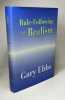

Bon état de conservation intérieur propre bonne tenue avec sa jaquette cartonnage un peu déformé
NOVUM TESTAMENTUM GRAECE post Eberhard et Erwin Nestle. Editione vicesima septima revisa
Deutsche Bibelgesellschaft, 1995, in-8 hardcover, 810 pp. Text in Greek. VERY GOOD CONDITION
Nombreux titres disponibles en Philosophie.
Die Allgemeingültigkeit der platonischen Arete
Erlangen, 1956 129pp., 21cm., Doctoral Dissertation (Inaugural-Dissertation der Philosophischen Fakultät der Friedrich-Alexander-Universität Erlangen), softcover, stamp at verso of title page, text is clean and bright, F112149
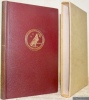
Interview mit Cicero. Gestalten und Profile.
Stuttgart, Deutsche Verlags-Anstalt 1956, 220x140mm, 148Seiten, Verlegereinband. Mit Schuber. Mit Widmung. Ex-libris. Sehr schönes Exemplar.
Pour un paiement via PayPal, veuillez nous en faire la demande et nous vous enverrons une facture PayPal

