 Write to the booksellers
-
Type
Autograph (15)
Book (51092)
Magazine (288)
Manuscript (2)
Maps (1)
New book (1)
Old papers (1)
Photographs (1)
-
Latest
Last 24h (90)
Last 3 days (21)
Last month (1271)
Last week (38)
-
Language
Dutch (6)
English (43)
Finnish (1)
French (51271)
German (19)
Greek (5)
Italian (20)
Japanese (2)
Latin (21)
Polish (1)
Portuguese (3)
Spanish (7)
Swedish (2)
-
Century
16th (62)
17th (194)
18th (1295)
19th (3638)
20th (22095)
21st (3743)
-
Countries
Belgium (6731)
Brazil (24)
Canada (6)
China (2)
Côte d'Ivoire (66)
Denmark (1045)
France (38850)
Germany (3)
Greece (3)
Netherlands (268)
Switzerland (4403)
-
Syndicate
ALAC (6)
CLAM (37)
CNE (6)
ILAB (20098)
NVVA (998)
SLACES (907)
SLAM (17764)
SNCAO (41)
Origeniana quinta. Historica - text and method - biblica - philosophica - theologica - Origenism and later developments. Papers of the 5th International Origen Congress (Boston College, 14-18 August 1989) [BETL, 105]
Leuven, Leuven University Press / Peeters 1992 xvii + 635pp., 25cm., in the series "Bibliotheca Ephemeridum Theologicarum Lovaniensium" volume 105, softcover, dustwrapper, fine condition, [contributions in English, French, German, Spanish and Italian], R74708
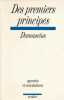
DES PREMIERS PRINCIPES
Paris, VERDIER, Apories et résolutions, 1987 ; in-8 broché, 808 pp. Couverture en bon état (plis au dos), intérieur en très bon état.
Nombreux titres disponibles en Philosophie.
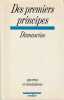
Des premiers principes. Apories et resolutions
Verdier Verdier, 1987. Fort In-8 broché, couverture à rabats de 808 pages. Bon état
Toutes les expéditions sont faites en suivi au-dessus de 25 euros. Expédition quotidienne pour les envois simples, suivis, recommandés ou Colissimo.
Des premiers principes: Apories et résolutions
Verdier, 1987, 808 pp., broché, pli de lecture sur le dos, bon état.
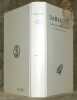
Traité des premiers principes. Volume I : De l'ineffable et de l'un. Texte établi par Leendert Gerrit Westerink et traduit par Joseph Combès. Collection des Universités de France, pubiée sous le patronage de l’Association Guillaume Budé.
Paris, Les Belles Lettres 1986, 205x130mm, CLV - 178pages, reliure d'éditeur. reliure toile de l’éditeur imitation de parchemin. Exemplaire à l'état de neuf.
édition bilingue : français - grec ancien, Pour un paiement via PayPal, veuillez nous en faire la demande et nous vous enverrons une facture PayPal
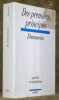
Des premiers principes. Apories et résolutions. Texte intégral. Introduction, notes et traduction du grec par Marie-Claire Galpérine.
Paris, Editions Verdier 1987, 220x140mm, 808pages, broché. Couverture à rabats. Accrocs sur le bas du bords du la couverture supérieure et tache brune sur le bas du revers de la couverture supérieure, autrement bel exemplaire, intérieur propre.
Pour un paiement via PayPal, veuillez nous en faire la demande et nous vous enverrons une facture PayPal
Spinoza avait raison. Joie et tristesse, le cerveau des émotions
Odile Jacob ,2003, in-8 de 346 pages ,broché ,Très bon état , .Isbn : 2738112641.(2 photos du livre sur mon site https://www.vieuxlivre.fr) .Les frais de port pour la France sont offerts à partir de 25 euros d'achat (Mondial relay ). (colissimo suivi +6,90 ).
SENTIR ET SAVOIR: UNE NOUVELLE THEORIE DE LA CONSCIENCE
In-8 broche, Couverture illustree, Ed. Odile JACOB, 2021, 240 pages, Gencod: 9782738154606, Très bon état

TRES BON ÉTAT : Couverture en très bon état, Intérieurement en très bon état
Sartres Einleitung in die phänomenologische Ontologie
Bonn, 1989 xiv + 271pp., 21cm., softcover, text in German, Doctoral dissertation (Inaugural-Dissertation zur Erlangung der Doktorwürde der Philosophischen Fakultät der Rheinischen Friedrich-Wilhelms-Universität zu Bonn), stamp at verso of title page, text is clean and bright, good condition, F109085
KARMA, DETINEE ET YI KING - KARMA AND DESTINY IN THE I CHING
EDITIONS J'AI LU N°2763. 1990. In-12. Broché. Bon état, Couv. convenable, Dos satisfaisant, Intérieur frais. 221 pages.. . . . Classification Dewey : 100-PHILOSOPHIE ET DISCIPLINES CONNEXES
Traduit de l'anglais par F. Lasaygues. Classification Dewey : 100-PHILOSOPHIE ET DISCIPLINES CONNEXES


L'Égypte antique
Gallimard, coll. « Livres d'Arts » 2002 In-4 relié 28,7 cm sur 25,7. 400 pages. Jaquette en mauvais état. Bon état d’occasion.
Noëlle Damiano-Appia (Traduction) Bon état d’occasion
Dictionnaire du transport et de la logistique - 3ème édition
Dunod 2010 600 pages 14 8x20 9x3 3cm. 2010. Relié. 600 pages.
Comme neuf dans son emballage d'origine
LE MONDE INTERIEUR
Librairie Félix Alcan. 1930. In-8. Broché. Etat d'usage, Couv. légèrement passée, Dos fané, Intérieur acceptable. 141 pages.. . . . Classification Dewey : 100-PHILOSOPHIE ET DISCIPLINES CONNEXES
Conception du temps. Grandeur et intensité. Commentaire sur Bergson... Classification Dewey : 100-PHILOSOPHIE ET DISCIPLINES CONNEXES
Conflit, confiance.
Broché, 21X14 cm, 2006, 394 pages, presses universitaires de Franche-Comté. Très bon état.
DAMIENS - PEZAD H. - JOLEAUD L - HALBWACHS M. - BOUGLE F. - PECAUT F. - HAUSER H. - FONTEGNE J.
Reference : 104914
(1926)
Philosophie scientifique et sociologie. Conférences faites à la Sorbonne (1925).
Couverture souple. Broché. 274 pages. Couverture légèrement défraîchie.
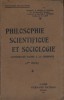
Livre. Editions Fernand Nathan, 1926.
PHILOSOPHIE SCIENTIFIQUE ET SOCIOLOGIE CONFERENCES FAITES A LA SORBONNE (4E SERIE)
FERNAND NATHAN. Non daté. In-8. Broché. Etat d'usage, Couv. légèrement passée, Dos abîmé, Intérieur acceptable. 276 pages. Couverture partiellement déboitée.. . . . Classification Dewey : 190-Philosophie occidentale moderne
Classification Dewey : 190-Philosophie occidentale moderne
Philosophie scientifique et sociologie - Conférences faites à la Sorbonne - 4me série - Collection Bibliothèque des éducateurs.
"Fernand Nathan. 1926. In-12. Broché. Etat d'usage, Couv. légèrement passée, Dos satisfaisant, Papier jauni. 276 pages - quelques figures en noir et blanc dans le texte - un tableau en noir et blanc hors texte dépliant ""classification périodique des éléments"".. . . . Classification Dewey : 100-PHILOSOPHIE ET DISCIPLINES CONNEXES"
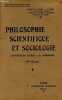
Collection Bibliothèque des éducateurs. Classification Dewey : 100-PHILOSOPHIE ET DISCIPLINES CONNEXES
ALLIANCE DE L'AMOUR ET DE LA RAISON GAGE D'UNION DE LA RELIGION ET DE LA PHILOSOPHIE THEISTE ET SPIRITUALISTE (MANUSCRIT)
Chez l'auteur. Non daté. In-4. En feuillets. Bon état, Livré sans Couverture, Dos satisfaisant, Intérieur bon état. 6 pages dactylographiées, avec quelques corrections manuscrites de l'auteur dans le texte.. . . . Classification Dewey : 210-Philosophie et théorie

Notre ouvrage attaché à montrer le rôle de la raison pour accorder les vérités de la foi chrétienne et celle d'une philosophie théologique rationnelle, risquerait de trahir son objectif s'il ne cherchait pas aussi à relier une théorie philosophique de l'amour, de son essence spirituelle avec le dogme de l'amour de Dieu (...)' Classification Dewey : 210-Philosophie et théorie
AMOUR ET INTELLECT CHEZ LEON L'HEBREU
Privat. 1971. In-8. Broché. Bon état, Couv. convenable, Dos satisfaisant, Intérieur bon état. 187 pages.. . . . Classification Dewey : 100-PHILOSOPHIE ET DISCIPLINES CONNEXES
'Nouvelle Recherche', Etudes et essais sous la dir. de G. Hahn. Biographie de Léon l'Hébreu. Le syncrétisme théologico-néo-platonicien. Le désir et l'amour dans leur rapport avec la connaissance. L'amour intellectuel de Dieu chez Léon l'Hébreu... Classification Dewey : 100-PHILOSOPHIE ET DISCIPLINES CONNEXES
Amour et intellect chez Léon l'Hébreu
Toulouse, Privat, 1971, in-8 br., 187 p., coll. "Nouvelle recherche / Etudes et essais", bon état.
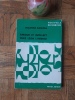
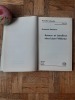

Travail de thèse de doctorat . "Introduction - Biographie de Léon l'Hébreu. Le syncrétisme théologico-néo-platonicien. Le désir et l'amour dans leur rapport avec la connaissance. L'amour intellectuel de Dieu chez Léon l'Hébreu… Voir le sommaire complet sur photos jointes.
COMMENT LA CONTEMPLATION DEVIENT-ELLE DELECTATION EN DIEU (MANUSCRIT)
Chez l'auteur. Non daté. In-4. En feuillets. Etat d'usage, Livré sans Couverture, Dos satisfaisant, Intérieur bon état. 22 pages dactylographiées et annotées, de la main de l'auteur.. . . . Classification Dewey : 100-PHILOSOPHIE ET DISCIPLINES CONNEXES
Tiré d'un essai de l'auteur sur l'Action et la contemplation. Avec éléments de bibliographie sur Aristote, saint Augustin, Descartes... Classification Dewey : 100-PHILOSOPHIE ET DISCIPLINES CONNEXES
DE L'ACTION A LA CONTEMPLATION
Editions Universitaires du Sud. 1995. In-8. Broché. Bon état, Couv. convenable, Dos satisfaisant, Intérieur frais. 211 pages.. . . . Classification Dewey : 100-PHILOSOPHIE ET DISCIPLINES CONNEXES
Coll. 'Philosophie', dir. par J.M. Gabaude. Préface de Jean-Marc Gabaude, Prof. émérite de l'Université de Toulouse-Le Mirail. En une progression qui va de la phénoménologie de l'action à la métaphysique de l'Etre/ACte, l'auteur approfondit le sens d'une philosophie spiritualiste mettant en valeur le seommet que représente ce que Maurice Blondel appelle action de contemplation. Classification Dewey : 100-PHILOSOPHIE ET DISCIPLINES CONNEXES
DE L'ACTION A LA CONTEMPLATION (MANUSCRIT)
Chez l'auteur. Non daté. In-4. En feuillets. Etat d'usage, Couv. convenable, Dos satisfaisant, Intérieur frais. Non paginé (env. 300 pages). 1re version du manuscrit, avec parties dactylographiées et mansucrites, nombreuses annotations de la main de l'auteur, iconographie tirée d'ouvrages de philosophie, textes etc.. . . . Classification Dewey : 100-PHILOSOPHIE ET DISCIPLINES CONNEXES

1re partie: A. L'action. I. Distinctions premières de l'action et de la contemplation. II. Les formes primitives de l'action au plan de l'existence psychophysiologique. III. L'action délibérée et l'action artificialiste. IV. L'action et l'engagement. V. L'effort. VI. L'action au plan social. VII. L'acte dans sa nature morale. VIII. Des actions inversées quant à leur rapport aux valeurs. B. La contemplation. IX. La contemplation perceptive. X. La contemplation esthétique... 2e partie: L'action et la contemplation au plan métaphysique et axiologique. I. L'acte comme fondement ontologique de l'homme. II. La pensée est l'acte par excellence. III. Réduction de la contemplation esthétique à la contemplation métaphysique. IV. La contemplation active intellectuelle et métaphysique. V. La transcendance de l'agir en l'homme et en Dieu... Classification Dewey : 100-PHILOSOPHIE ET DISCIPLINES CONNEXES
DE L'AMBIGUITE DES SENTIMENTS MORAUX (ESSAI, MANUSCRIT)
Chez l'auteur. Non daté. In-4. Broché. Bon état, Couv. convenable, Dos satisfaisant, Intérieur bon état. 70 pages. 2 exemplaires brochés avec reliure plastique à spirales. Un exemplaire en feuillets avec annotations de l'auteur. Annotation et tampon sur le 1er plat. Exemplaires numérotés.. . . . Classification Dewey : 100-PHILOSOPHIE ET DISCIPLINES CONNEXES
Essai. 'Veritas'. L'ambiguïté éthico-théologique dans les sentiments du juste et de l'injuste. L'ambiguïté théologico-politique et sociale quant au juste et à l'injuste. Le sentiment de culpabilité et de responsabilité et son ambiguïté. La bonne conscience et son ambiguïté. L'ambiguïté du sentiment de l'amour... Classification Dewey : 100-PHILOSOPHIE ET DISCIPLINES CONNEXES

