Write to the booksellers
-
Type
Book (3482)
Disk (1)
Magazine (40)
-
Latest
Last 3 days (3)
Last month (44)
Last week (1)
-
Language
English (1)
French (3521)
Spanish (1)
-
Century
16th (1)
17th (2)
18th (18)
19th (78)
20th (1168)
21st (1394)
-
Countries
Belgium (466)
Canada (7)
China (4)
Côte d'Ivoire (1)
Denmark (4)
France (2998)
Greece (1)
Netherlands (4)
Switzerland (38)
-
Syndicate
ALAC (7)
CLAQ (2)
ILAB (294)
NVVA (3)
SLACES (3)
SLAM (276)
L'Aventure De l'Espace (J'aime savoir!)
Dessain et Tolra 1993 20 9x2 3x27 1cm. 1993. Relié.


Bon état
Information: From Claims to Needs National Aptitudes for International Co-Operation in Scientific Information Economy
Akademiai Kiado 1990 in8. 1990. Cartonné.
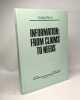

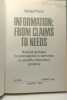
Bon Etat couverture un peu défraîchie intérieur propre
Ancient Greek: A New Approach
MIT Press 1991 432 pages 17 78x2 032x24 892cm. 1991. Broché. 432 pages.
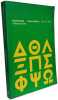
Bon état cependant couverture défraîchie intérieur propre tranche ternie
Le collier rouge: Roman
Gallimard 2014 155 pages 14 2x2 2x20 4cm. 2014. Broché. 155 pages.
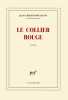
Très bon état - légères marques de lecture et/ou de stockage mais du reste en très bon état- expédié soigneusement depuis la France
Le tour du monde du roi Zibeline
Gallimard 2018 420 pages 10 9x17 7x2cm. 2018. pocket_book. 420 pages.


Bon état


Armenian and Iranian Studies (Harvard Armenian Texts and Studies Band 9)
National Association for Armenian Studies & Research 2005 1462 pages 15 75x6 6x23 11cm. 2005. Cartonné. 1462 pages.

Bon état
La Rivoluzione Dimenticata
Feltrinelli Traveller 1996 384 pages in8. 1996. Broché. 384 pages.
Très Bon Etat de conservation cependant couverture insolée
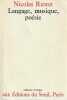
Langage, musique, poesie,
Seuil, Poétique, 1972, 246 pp., broché, traces d'usage, petite trace de coup sur la tranche inférieure, trait de stylo sur la première de couverture, nom en première page, état correct.
Théorie syntaxique et syntaxe du français.
Paris, Editions du Seuil, 1972. 14 x 20, 299 pp., broché, bon état (couverture défraîchie).
Catalogue des fragments et manuscrits grecs du Matenadaran d'Erevan
, Brepols - Harvey Miller, 2008 Hardcover. 240 p., 85 b/w ill. 16 colour ill., 220 x 280 mm, Languages: French, Including an index. Fine copy. ISBN 9782503529790.
Grace a une convention passee entre le Matenadaran d?Erevan et l?Universite d?Aix-Marseille 1, R. Varteni Chetanian a pu etablir le catalogue des manuscrits grecs et des fragments grecs presents au sein des manuscrits armeniens conserves dans la prestigieuse bibliotheque de la capitale de l?Armenie. Au cours de ses sejours a Erevan, elle a sans cesse beneficie du soutien et des conseils des bibliothecaires. Je les remercie d?avoir rendu possible l?elaboration de cet instrument de travail. La presente publication permet de faire connaitre aux chercheurs du monde entier des documents precieux, mais insuffisamment pris en compte par les hellenistes et les armenisants. En particulier, il reste beaucoup a faire dans le domaine des traductions des textes litteraires grecs en armenien. Le Catalogue de R. Varteni Chetanian, qui a par ailleurs publie une remarquable etude sur la traduction armenienne des Homelies sur les Actes des apotres de Jean Chrysostome, donne un moyen nouveau de progresser dans ce champ de recherche. C?est dire que le present Catalogue ne doit pas etre envisage comme une fin ou une cloture. Il doit au contraire etre a l?origine d?autres travaux : travaux d?edition des plus importants textes grecs exhumes par R. Varteni Chetanian ; travaux de numerisation des fragments et des manuscrits, afin de rendre possible leur consultation a distance. Jalon pour l?avenir de la recherche historique et philologique, voila comment doit etre envisage ce Catalogue. Sa confection a ete l?occasion de tisser des liens scientifiques entre l?Armenie et la France. Puissent les travaux qu?il suscitera permettre de poursuivre dans la meme voie et d?approfondir le sillon ainsi trace.
Sociophilological Study of Late Latin
, Brepols - Harvey Miller, 2002 Hardcover. VIII 390 p., 160 x 240 mm, Languages: English, Latin, Fine copy. Including an index. ISBN 9782503513386.
"Sociophilology" is a word coined by the author to describe a discipline which combines traditional rigorous philological analysis of texts with the recent insights of sociolinguistics. From these combined perspectives he provides an understanding both of Late Latin (Early Romance) language and of the circumstances of the scribes who have given us the evidence. The chronological span ranges from the later part of the Roman Empire to the thirteenth century. The focus is on the processes by which Latin, at different times in different places, came to be thought of as being several different languages (formal Medieval Latin and less formal Romance Languages); these conceptual distinctions are most directly represented by the decisions taken to write some texts in a new way. There are six sections in the book, each containing four chapters: Section A provides an overview, and is entitled "Latin, Medieval Latin and Romance"; B, "Texts and Language in Late Antiquity"; C, "The Ninth Century"; D, "Italy and Spain in the Tenth and Eleventh Centuries"; E, "Spain in the Twelfth and Thirteenth Centuries"; F, "Sociophilology and Historical Linguistics"; followed by a concluding summary chapter, bibliography and indexes. Scholars and Texts investigated include Priscian, Boniface, Rhythmic Poetry, Alcuin, Eulogio de Cordoba, The Strasbourg Oaths, Glossaries, Glosses, and the earliest Romance texts of the Iberian Peninsula; general topics considered in detail, within the Late Latin and Early Romance world, include periodization, the influence of other languages on the development of Latin, change of language names, the nature of sound change, the relationship between speech and writing, the relationship between historical linguistics and sociolinguistics, and the relationship between language-internal variation and language splits.
Bibliography of Armenian Literature,
Turnhout, Brepols, 1995 Paperback, 328 p., 15,5 x 24,5. ISBN 9782503504568.
Languages : English.
Bibliography of Classical Armenian Literature to 1500 AD,
Turnhout, Brepols, 1995 Hardback, 328 pages., 15,5 x 24,5.Languages : English. *new ISBN 9782503504551.
Bibliography of Classical Armenian Literature to 1500 AD,
Antedatings and additions for OED from the Catalogue of Prints of Political and Personal Satire in the British Museum
Stockholm, Almqvist & Wiksell int. 1987 184pp., in the series "Acata Universitatis Stockholmiensis - Stockholm Studies in English" Vol.72
André Gide & Henri de Régnier: Correspondance 1891-1911
PU LYON 1997 296 pages 14x1 6x20 4cm. 1997. Broché. 296 pages.

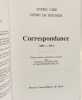
Très bon état bonne tenue intérieur propre exemplaire numéroté
Petit Journal du Palais Royal, ou affiches, annonces et avis divers.
Au Palais Royal, de l'Imprimerie du Caveau, 1789 ; in-8, broché ; N°1, 4, 5, 6 sur les six numéros parus au total (32 ; 19 ; 24 ; 28 pp.).
![Petit Journal du Palais Royal, ou affiches, annonces et avis divers.. [Révolution Française - Journal pamphlétaire éphémère]](https://static.livre-rare-book.com/pictures/CLA/11113_1_thumb.jpg)
Rédigé par Leclerc de Saint-Aubin, ce journal pamphlétaire se situe dans la ligne des publications anti-royalistes, anticléricales, anti-affairistes et anti-opportunistes avec une tendance populiste et même poissarde, le fond reste révolutionnaire ; tout ceci présenté avec beaucoup d'humour, pêle-mêle, on y trouve des annonces : "Terre et Seigneurie de Saint Cloud [...] à vendre ou à concéder pour un certaint temps. Le produit de cet argent est consacré à retirer les diamants précieux mis en gage avant la fuite des conjurés de l'infâme Duchesse de Polignac, l'illustre et méprisable propriétaire de ces bijoux, voulant en aider sa tendre amie sans se montrer. S'adresser à la R(eine) en personne." ; "Grand et superbe emplacement à vendre à la Porte Saint-Antoine [...] appartenant au Poète Beaumarchais, la fuite nécessaire où il se prépare le force à regret à cette vente..." ; "Grande et belle maison, rue Bergère, appartenant à feu lâche et scélérat, Messire de Flesselles [...] au profit des veuves et orphelins laissés par nos défenseurs à la prise de la Bastille." ; "Joli petit appartement tout meublé, à retrocéder, rue des Fossés M. le Prince. S'adresser à Mademoiselle Contat, comédienne du Roi [...] et que le desespoir d'avoir perdu les faveurs d'un frère du Roi..." ; "Charge de faux témoin du Parlement à Rouen, à vendre. S'adresser sur les lieux au sieur de Fontaine..." ; vente de meubles et effets : "Ustensile et batterie de cuisine de l'abbé Maury..." ; "Une précieuse statue de Priape, ornée de son principal ornement, d'une longueur et grosseur plus qu'honnête" ; "Un beau God... de grandeur ordinaire..." ces effets se vendent Hôtel de Ballion ; effets perdus ou trouvés : "il vient d'être trouvé, dans les filets de Saint-Cloud, deux têtes mutilées, qui paraissent avoir séjourné longtemps dans la rivière. On croit que ce sont celles des sieurs de Flesselles et de Delaunay" ; "Une superbe édition de Thérèse philosophe a tombé de la poche du Cardinal de La Rochefoucault..." ; "La raison de M. l'Archevêque de Paris, égarée, avec une liasse de Mandements et Lettres Pastorales. Mille bénédictions à celui qui la rapportera à l'Archevêché" ; "Le Marquis de Villette voudrait remplacer le Mignon qu'il vient de perdre à la suite d'une maladie honteuse..." ; "Hôtel de Ville à Paris, à vendre [...] y établir une hôpital de foux, les occupans actuels ne seraient pas obligés de déménager" ; à vendre : "Un chapeau de cardinal, appartenant à M. de la Rochefoucault, archevêque de Rouen. En effet, a-t-on besoin de chapeau quand on a perdu la tête ?" ; "cinq bâtons de Maréchaux de France, appartenans à M. de Cantades, au Prince de Soubise, à M. de Broglie, à M. de Fitz-Jones et à M. Devaux" ; "La religion, Dieu et les hommes, joués par la culotte, drame en trois actes, sujet fourni par les évêques représentants" ; "changemens de domicile : le marquis de Nesle, de l'Abbaye au Châtelet. Le baron de Bezenval au Châtelet. Quand ils en changent à nouveau pour aller à la Grève, où ils sont impatiemment attendus, le sieur Bachois de Villefort en donnera avis" ; à vendre : "Le panache blanc d'Henri IV, ce signe de ralliement est délaissé depuis long-temps dans les armoires du garde-meuble..." ; "les huit canonicats de l'abbé de Saint-Aulaire, aumonier ordinaire de la Reine" ; "La dame comtesse de Deux Ponts, dame de compagnie de madame Elisabeth a perdu [...] sa réputation" ; "La demoiselle Courtois de l'Opéra a perdu son greluchon. Partout où on trouvera le sieur marquis d'Esparbes..." ; "Un simple particulier a trouvé, dans une seule soirée, la conscience timorée du comte de Mirabeau, la probité de M. Augustin Caron de Beaumarchais, la pudeur de la reine de France. La délicatesse sans tâche de Monsieur, frère du Roi, l'esprit de Louis XVI, qui ne vaut pas celui de Henri IV. Les scupules du curé de Saint-Roch. les vices du marquis de l'Espinesse. Une partie du libertinage du comte d'Artois...". Le N°1 a été un peu rogné, les autres sont à toutes marges, bon état général ; rare.


Etat Militaire, et Armée des Aristocrates, avec le nom des chefs, officiers et employés à la suite.
De l'Imprimerie Patriotique, 1790 ; in-8, broché ; 8 pp.
![Etat Militaire, et Armée des Aristocrates, avec le nom des chefs, officiers et employés à la suite.. [Révolution - Pamphlet]](https://static.livre-rare-book.com/pictures/CLA/11114_1_thumb.jpg)
Le Général est, bien-sûr, M. de Condé, le Major Général M. d'Artois, le directeur général des vivres : Vicomte de Mirabeau ; Première Vivandière : Madame de Villeroy ; Vivandières ordinaires : Mesdmaes de POlignac, de Guiche, de Calonne ; Galopins : De Belboeuf, Perrotin, de Marguérites ; Tambour-Major-Général : Duval d'Espresmenil. Vient ensuite le "Régiment de la Calotte", avec à sa tête le colonel Abbé Maury, et toute une cohorte d'évêques, archevêques, cardinaux et abbés et, comme Quartier-Maitre-Trésorier, d'Arnaud Baculard ! Le troisième régiment est celui dit de "Mont-Orgueil", avec M. Necker pour colonel et Sartine fils, de Beauharnais, de Bonthilier, de moncalin, de Virieu, de Montlozier, etc. pour officiers ; vient ensuite le Régiment "de la Pioche", avec de Faucigny, du pujet, de Bortz, de Clermont-Lodève, de Brienne... ; ensuite nous avons le "Royal Anti-Assignats, cavalerie", mené par Dupont de Nemours, de Montesquiou, des Meuniers, de Boisgelin, de Caulaincourt, d'Orsy, etc. ; et enfin le "Royal-Sottise, Dragons", avec en tête l'ineffable Cardinal de Rohan, Lully-Tolendal, Mounier, de Castellanne, Bergasse, de la Lande, d'Aligre, Bouchet d'Argis, Amelot, Beaumarchais, etc. Le document s'achève par "La suite au prochain numéro", qui n'est jamais paru. Bel exemplaire de ce facétieux et rare éphémère.
Origine et préhistoire du langage, traduction de L. Homburger
Payot, Bibliothèque Scientifique 1950 1 vol. - 234 pp. grand In-8 broché,bon état ,
Remise de 20% pour toutes commandes supérieures à 200 €
Generation(s): Anthologie BTS Programme 2009 / 2011
Editions Hatier 2009 12 2x1 2x17 4cm. 2009. Broché.

Bon état
Generation(s): Anthologie BTS Programme 2009 / 2011
Editions Hatier 2009 12 2x1 2x17 4cm. 2009. Broché.

Bon état
La critique de la société au XVIIIe siècle: Oral de français Groupement de textes
Hatier 2006 10 4x0 6x17 8cm. 2006. Broché.

Très bon état - légères marques de lecture et/ou de stockage mais du reste en très bon état- expédié soigneusement depuis la France