 Write to the booksellers
-
Type
Book (3478)
Disk (1)
Magazine (40)
-
Latest
Last month (42)
Last week (4)
-
Language
English (1)
French (3517)
Spanish (1)
-
Century
16th (1)
17th (2)
18th (19)
19th (79)
20th (1175)
21st (1396)
-
Countries
Belgium (466)
Canada (7)
China (4)
Côte d'Ivoire (1)
Denmark (4)
France (2994)
Greece (1)
Netherlands (4)
Switzerland (38)
-
Syndicate
ALAC (7)
CLAQ (2)
ILAB (294)
NVVA (3)
SLACES (3)
SLAM (276)
Reperes - La Decouverte: L'Emploi En France
La Decouverte Editions 1988 11x1 2x18cm. 1988. Broché.
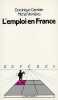
Bon état
Zéro faute en anglais - Comment maîtriser 800 mots sources d'erreur
ELLIPSES 2003 160 pages 16 2x1 2x23 8cm. 2003. Broché. 160 pages.
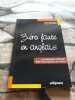
Très bon état
Traduire la presse : Entraînement à la version anglaise
ELLIPSES 2004 160 pages 14 5x1x19cm. 2004. Broché. 160 pages.
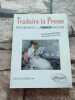
Bon état
Traduire la presse : Entraînement à la version anglaise
ELLIPSES 2004 160 pages 14 5x1x19cm. 2004. Broché. 160 pages.
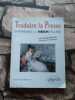

Bon état
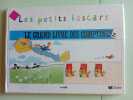
Les Petits Lascars - Level 2: Le Grand Livre DES Comptines 2
Editions Hatier 1992 1992. Relié.
Bon état
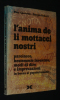
L'Anima de li mottacci nostri
Grafiche Alfa Dos carré collé In-8 (16,5 x 23 cm), dos carré collé, 158 pages, sans date, texte en italien ; dos et bords des plats insolés, papier bruni, par ailleurs assez bon état. Livraison a domicile (La Poste) ou en Mondial Relay sur simple demande.



Le développement de la conversation chez l'enfant. Collection : Questions de personne.
Paris/Bruxelles, De Boeck Université, 1998. 16 x 24, 212 pp., 19 figures, broché, très bon état.
Lan ga ge (Langage)
Éditions à la page Couverture souple Montréal 1962 Ed. numérotée
Très bon In-8. Non paginé. Exemplaire no. 474/500/526. Belle dédicace au journaliste et écrivain Wilfrid Lemoine.
Précis d'un cours de psychologie suivi d’une défense de cette étude contre les objections antagonistes, d’esquisses sur les autres parties de la philosophie intellectuelle et morale, d’un parallèle des écoles philosophiques, relativement à a question de nos sources de connaissances.
Paris, Librairie classique de L. Hachette, 1831 ; in-8, plein veau havane mouchetée, pièce de titre rouge, auteur et titre dorés, grands décors romantiques dorés, tranches marbrées ; (1) f. , 219 pp. , 10 pp. , (1) f.
Edition originale rare d'une des toute premières oeuvres d'Adolphe Garnier, philosophe né à Paris (1801-1864), qui faisait reposer toute la philosophie sur la psychologie, comme le montre si bien cet ouvrage. Exemplaire en bon état malgré des frottements en tête et dans les coins. .
GARNIER, Catherine - BEDNARZ, Nadine - ULANOVSKAYA, Irina
Reference : 126610
(2004)
ISBN : 2804143503
Après Vygotski et Piaget - Perspectives sociale et constructiviste, Ecoles russe et occidentale. 2e édition.
2004 Editions De Boeck - 2004 - In-8 broché - 299 pages

Très bon état Très bon
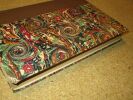
Etude sur l'écriture ou langage écrit et sur ses troubles au point de vue médico-légal et spécialement des articles 901 et 970 du Code Civil.
Rey 1898 Lyon, A. Rey, Faculté de Medecine et de Pharmacie de Lyon, 1898, 415 p., demi-percaline, environ 250x165mm, premier plat d'origine conservé (restauré). Coins inférieurs des plats émoussé, des frottements en bordure des plats, bon état pour le reste et intérieur bien propre.
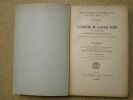

Thèse présentée à la Faculté de médecine et de pharmacie de Lyon, et soutenue publiquement le 26 mars 1898 pour obetnir le grade de Docteur en médecine. Merci de nous contacter à l'avance si vous souhaitez consulter une référence au sein de notre librairie.
Spoken and Written Language, Relations between Latin and the Vernacular Languages in the Earlier Middle Ages. Papers from the Second Utrecht Symposium on Medieval Literacy, 24-26 June 1999.
, Brepols, 2013 Hardback, XII+364 p., 8 b/w ill. + 4 colour ill., 156 x 234 mm, Languages: English, German, French Utrecht Studies in Medieval Literacy (USML 24 ISBN 9782503507705.
News Catalogue Contact & About Partners Downloads Scroll up Scroll down Scroll up Scroll down Scroll up Scroll down Scroll up Scroll down The linguistic situation of medieval Europe has sometimes been characterized as one of diglossia: one learned language, Latin, was used for religion, law, and documents, while the various vernaculars were used in other linguistic registers. Informing the relationship between Latin and the vernaculars was the choice of Latin as the language of the Western Roman Empire and the Roman Church. This choice entailed the possibility of a shared literary culture and heritage across Europe, but also had consequences for access to that heritage. Scholarship on the Romance languages has contested the relevance of the term diglossia, and the divergence between written or spoken Latin and Romance is a subject of energetic debate. In other linguistic areas, too, questions have been voiced. How can one characterize the interaction between Latin and the various vernaculars, and between the various vernaculars themselves? To what extent could speakers from separate linguistic worlds communicate? These questions are fundamental for anyone concerned with communication, the transmission of learning, literary history, and cultural interaction in the Middle Ages. This volume contains contributions by historians, cultural historians, and students of texts, language, and linguistics, addressing the subject from their various perspectives but at the same time trying to overcome familiar disciplinary divisions. Table of Contents; abbreviations Trace Elements of Obliterated Vernacular Languages in Latin Texts - MICHAEL RICHTER Qu?une femme ne peut pas etre appelee homme: Questions de langue et d?anthropologie autour du concile de Macon (585) - A. DEMYTTENAERE Wie gross war der Einfluss des Griechischen auf die Sprache der (ersten) lateinischen Christen? - ARPAD ORBAN Die Figur des Dolmetschers in der biographischen Literatur des westlichen Mittelalters (IV.-XII. Jh.) - WALTER BERSCHIN Nordic Digraphia and Diglossia - INGER LARSSON The Non-Classical Vocabulary of Celtic Latin Literature: An Overview - ANTHONY HARVEY The Cena Adamnani or Seventh-Century Table Talk - MICHAEL W. HERREN Latin and Old English in Ninth-Century Canterbury - NICHOLAS BROOKS A Sociophilological Study of the Change to Official Romance Documentation in Castile - ROGER WRIGHT L?ancien francais (archaique) et le fonctionnement de la communication verticale latine en Gaule (VIIe-VIIIe siecles) - MARC VAN UYTFANGHE Quelques exemples de compromis morphologiques au VIIIe siecle en Francia - MICHEL BANNIARD Latin Grammars and the Structure of the Vernacular Old Irish Auraicept na nEces - RIJCKLOF HOFMAN From Monks? Jokes to Sages? Wisdom: The Joca Monachorum Tradition and the Irish Immacallam in daThuarad - CHARLES D. WRIGHT Writing in Latin and the Vernacular: The Case of Old High German - DENNIS GREEN Volkssprachige Glossen fur lateinkundige Leser? - ROLF BERGMANN Rustice vel Teodisce appellatur oder: Warum schreibt man Glossen? - AREND QUAK Typen und Funktionen volkssprachiger (althochdeutschen) Eintragungen im lateinischen Kontext - ELVIRA GLASER Liturgical Latin in Early Medieval Gaul - ELS ROSE Sprach Ludwig der Deutsche deutsch? - DIETER GEUENICH Latin and Three Vernaculars in East Central Europe from the Point of View of the History of Social Communication - ANNA ADAMSKA
L'Église Arménienne et le grand Schisme d'Orient (Corpus Scriptorum Christianorum Orientalium Band 574)
Peeters 1998 631 pages 16 256x4 572x24 13cm. 1998. Broché. 631 pages.
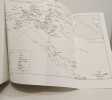
Très Bon état sous rhodoïd intérieur propre bonne tenue carte dépliante in-fine
The Paulician heresy: a study of the origin and development of Paulicianism in Armenia and the Eastern Procinces of the Byzantine empire (Publications ... and Middle East Studies. Series A 6 Band 6)
De Gruyter Mouton 1967 293 pages 16 4x23 9x2 1cm. 1967. Cartonné. 293 pages.
Bon état couverture défraîchie intérieur propre
Grande Dizionario DI Inglese Hazon (I grandi dizionari)
Garzanti Libri 2002 2706 pages 2002. Broché. 2706 pages.

Très bon état
Meurtre au confessionnal + Meurtre à la une --- 2 livres
Presses de la Cité 1998 128 pages 23x14x3cm. 1998. Cartonné. 128 pages.
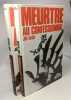
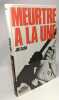
qques rousseurs sur la tranche de tête intérieur propre bonne tenue
Les Origines préhistoriques de l'Ecriture
1925 A Lyon, Anciens Etablissements Legendre - 1925 - In-8, broché - 39 p.
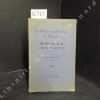
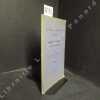
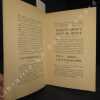
Bon état - Couverture partiellement décolorée - Départ de fente en bas du dos Bon
Le Petit Livre De: Achille Le Chien
Editions First 2006 157 pages 8 6x1 2x11cm. 2006. mass_market. 157 pages.
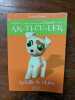
Bon état
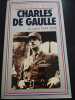
Memoires De Guerre: Le Salut (1944-1946): Tome 3 Le salut
Pocket 1980 1980. mass_market.
Très bon état
Gaultier Christophe Leroux Gaston Galopin Marie
Reference : 500094731
(2011)
ISBN : 9782070631704
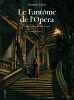
Le Fantome de l'Opera (BD) Vol. 1: Première partie
Gallimard 2011 56 pages 23 6x31 7x1 2cm. 2011. Broché. 56 pages.
La Cafetière et autres contes fantastiques numéro 22 texte intégral. Elève
Hachette 2000 128 pages 12 5x17 8x0 9cm. 2000. Broché. 128 pages.
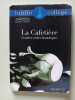
Bon état
La Cafetière et autres contes fantastiques numéro 22 texte intégral. Elève
Hachette 2000 128 pages 12 5x17 8x0 9cm. 2000. Broché. 128 pages.
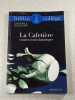
Bon état

