 Write to the booksellers
-
Type
Book (3489)
Disk (1)
Magazine (40)
-
Latest
Last 24h (3)
Last month (43)
Last week (3)
-
Language
English (1)
French (3528)
Spanish (1)
-
Century
16th (1)
17th (2)
18th (19)
19th (79)
20th (1175)
21st (1396)
-
Countries
Belgium (466)
Canada (7)
China (4)
Côte d'Ivoire (1)
Denmark (4)
France (3005)
Greece (1)
Netherlands (4)
Switzerland (38)
-
Syndicate
ALAC (7)
CLAQ (2)
ILAB (294)
NVVA (3)
SLACES (3)
SLAM (276)
Francais 6eme. Tout Le Programme En Fiches Pratiques
Vuibert 1997 14x1 4x20 8cm. 1997. Broché.
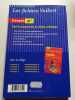
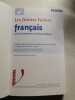
Très bon état
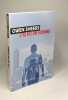
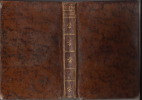
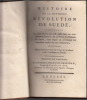
Histoire de la dernière révolution de Suède : contenant le récit de ce qui s'est passé dans les trois dernieres Dietes, & un Précis de L'Histoire de Suede, dans lequel on développe les véritables causes de cer événement, précédé D'Une Introduction. .
1783 Londres, sans nom d'éditeur, 1783, reliure pleine basane époque,dos lisse orné,coiffes arrachées,in 8 de 1 fx-titre, 1 titre, IV-446 pp., 1 p. d'errata.Edition originale de la premiere traduction francaise complète de cet ouvrage. Le volume s'ouvre sur une interessante "Introduction sur le sort de la Liberte civile et politique en Europe"
texte frais Remise de 20% pour toutes commandes supérieures à 200 €
Writing the Wilton Women Goscelin's Legend of Edith and Liber confortatorius,
Turnhout, Brepols, 2004 Hardback, XII+454 p., 160 x 240 mm. ISBN 9782503514369.
This volume contains translations of Goscelin of Saint-Bertin's Liber confortatorius and life of St Edith, with new essays about his life and work. This collection of essays and translations brings together two closely related works by an important but little studied late eleventh-century author, Goscelin of Saint-Bertin. His Liber confortatorius (the earliest work of spiritual instruction for a female recluse known to have been written in England) is addressed to Eve. Goscelin, who may have been a chaplain at Wilton, had been Eve?s spiritual mentor since her childhood. Eve, however, left Wilton in her early twenties to become a recluse in Angers without even informing him of her plans, and in the Liber confortatorius, written in the form of an extended letter (c. 1082), Goscelin attempts to reassert and reconfigure their former close relationship. His account of the life and translation of St Edith, who was a member of the Wilton community until her death (in c. 986) at the age of twenty-three, was commissioned by the Wilton nuns and based on their oral report. Completed in c. 1080, the Legend gives a portrait of Edith and her mother Abbess Wulfthryth, and an account of the community?s posthumous relationship with its saint up until the time that Goscelin began work on it. It is (with the exception of Goscelin?s Life of Wulfhild of Barking) our only near contemporary narrative account of a late Anglo-Saxon women?s community. The essays in this collection present a closely integrated account of some of the most central and striking aspects of the two texts. The essays and accompanying translations are the result of a collaborative research project undertaken at The University of Auckland. Languages : English.
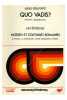
Jeanloup Sieff, 1950-1990 demain le temps sera plus vieux
Contrejour 1990 36 x 27 x 4,2 cm. Couverture rigide 286 pp, Pleine toile noire jaquette photographique 286 pages.Nous fait partager par le texte et l'image quarante années de photographies, de rencontres et de souvenirs.
L'auteur nous fait partager par le texte et l'image quarante années de photographies, de rencontres et de souvenirs.Très bon état malgré un cahier central légèrement déboîté. Très bon
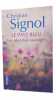
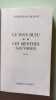
Le Pays Bleu Vol. 2/Les Menthes Sauvages
Pocket 2014 480 pages 10 8x2 4x17 6cm. 2014. pocket_book. 480 pages.
Bon état
L'ete de nos vingt ans
Le Livre de poche 2020 192 pages 10 92x17 78x2 03cm. 2020. pocket_book. 192 pages.
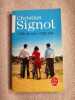
Bon état
Tout l'amour de nos peres
Pocket 2015 384 pages 17 6x2 2x10 8cm. 2015. pocket_book. 384 pages.
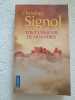
Bon état
EUROPE DES LANGUES
Mardaga Pierre 1996 21 6x2x15 2cm. 1996. Broché.
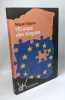
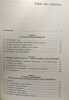
Très Bon Etat de conservation intérieur propre bonne tenue
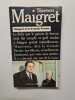
Simonin Albert Pécherot Patrick Mac Orlan Pierre
Reference : 500126655
(2014)
ISBN : 9782070455904
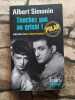
Touchez pas au grisbi
Gallimard 2014 288 pages 11x2x17 8cm. 2014. pocket_book. 288 pages.
Bon état
Medieval Stories and Storytelling. Multimedia and Multi-Temporal perspectives
, Brepols, 2021 Hardback, 319 pages, Size:156 x 234 mm, Illustrations:19 b/w, 3 col., Language: English. ISBN 9782503590509.
Summary The shaping and sharing of narrative has always been key to the negotiation and recreation of reality for individuals and cultural groups. Some stories, indeed, seem to possess a life of their own: claiming a peculiar agency and taking on distinct voices which speak across time and space. How, for example, do objects, manuscripts, and other artefacts communicate alternative or complementary narratives that transcend textual and linguistic boundaries? How are stories created, reshaped, and re-experienced, and how do these shifting contexts and media change meaning? This volume of essays explores these questions about meaning and identity in a range of ways. As a collection, it demonstrates the importance of interdisciplinary and context-focused enquiry when approaching key issues of activity and identity in the medieval period. Ultimately, the process of making meaning through shaping narrative is shown to be as vital and varied in the medieval world as it is today. With a wide range of different disciplinary approaches from leading scholars in their respective fields, chapters include considerations of art, architecture, metalwork, linguistics, and literature. Alongside examinations of medieval cultural productions are explorations of the representation and adaptation of medieval storytelling in graphic novels, classroom teaching, and computer gaming. This volume thus offers an interdisciplinary exploration of how stories from across the medieval world were shaped, transformed, and transmitted. TABLE OF CONTENTS Introduction: Stories and their Tellers S. C. Thomson Beowulf Goes to School: Adaptations and transformations for the Secondary Classroom Janes Coles, Theo Bryer, and Daniel Ferreira 'Retelling Old Stories for New Audiences': Shaping and Visualizing Beowulf through Gareth Hinds' Graphic Novels [The Collected Beowulf (2003) & Beowulf (2007)] Jorge Luis Bueno Alonso Being Numerous: Communal Storytelling in Li smannaflokkr Erin Michelle Goeres Performance and Emotions in Four Epic Works about Roland Evelyn Birge Vitz Towards a Poetics of Storytelling, or, why could Early Medieval English Writers not stop telling the Story of Judith? S. C. Thomson Mosaics, Marbles, and Medievalisms: Displaying the Foundation Narrative of the English Church in Westminster Cathedral Meg Boulton A Storied Cathedral: Space and Audacious Women in Early Medieval Durham Euan McCartney Robson Dynamic Material Aspects of Writing in Wolfram of Eschenbach's Titurel Christoph Witt Iceland's Alexander: Gunnarr and Pale Corn in Nj ls Saga Richard North Sensing Stories: Iconography, Pattern, and Abstraction in Metalwork from Early Medieval England Melissa Herman A Telling Tradition: Preliminary Comments on the Epic of Manas, 1856-2018 James Plumtree Index
Dictame. Tome I : Les Jargonautes et les Oxydés - Tome II : La Brèche
1990 Editions SPADEM - Collection "Renaissance et Vulgarisation du Spiritualisme dans le Cadre de l'Alliance de vie et de Vérité" - 1990 - 2 volumes in-12 broché, feuillets non coupés (ouvrage jamais lu) - 214 + 395 pages
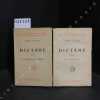
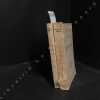
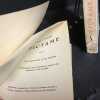
Bon état général - Coins légèrement émoussés - Plis de lecture au dos - Petites déchirures aux coiffes sans manque - Déchirure avec manque de matière au dos du tome II (voir photo) - Intérieur frais Bon
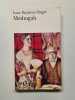
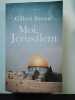
Les nuits du Caire
Editions Flammarion 2013 192 pages 12 5x1 5x17cm. 2013. Broché. 192 pages.


Bon état
Un monde flamboyant
Actes Sud 2014 448 pages 14 5x24x3cm. 2014. Broché. 448 pages.
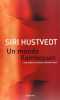
Très bon état
Montherlant et l'Espagne: les sources hispaniques de "La Reine morte"
KLINCKSIECK 1978 in8. 1978. Broché.
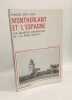
Bon état couverture un peu défraîchie intérieur propre
Imagining the Book,
Turnhout, Brepols, 2005 Hardback, XVIII+254 p., 20 b/w ill., 1 b/w line art, 160 x 240 mm. ISBN 9782503516936.
Collectively, the contributors to Imagining the Book offer a snapshot of current research in English manuscript study in the pre-modern period on the inter-related topics of patrons and collectors, compilers, editors and readers, and identities beyond the book. This volume responds to the recent development and institutionalization of 'History of the Book' within the wider English Studies discipline. Scholars working in the pre-printing era with the material vestiges of a predominantly manuscript culture are currently establishing their own models of production and reception. Research in this area is now an accepted part of twenty-first century Medieval Studies. Within such a context, it is frequently observed that scribal culture found imaginative ways to deal with the technological watersheds represented by the transition from memory to written record, roll to codex, or script to print. In such an 'eventful' environment, texts and books not infrequently slip through the semi-permeable boundaries laboured over by previous generations of medievalists, boundaries that demarcate orality and literacy; 'literary' and 'historical'; 'religious' and 'secular'; pre- and post-Conquest compositions, or 'Medieval' and 'Renaissance' attitudes and writings. Once texts are regarded as offering indices of community- or self-definition, or models of piety and good behaviour (and the codices holding them statements of prestige and influence), the book historian is left to contemplate the real or imagined importance and status of books and writting within the larger socio-political, often local, milieux in which they were once produced and read. All fourteen essays in this volume question the status of the book in a predominantly manuscript culture. Some focus on the practical politics of book production and local circumstances; others focus on the visual experience of early readers. In this volume, the idea of the pre-modern vernacular book is pursued in terms of its miscellaneity and its association with localised writing projects undertaken by (and occasionally also for) a polyglot and sometimes also socially-aware English readership. Such investigation is valuable since it enables us to recognise the textual networks, the sources and the readership that mark the pre-modern codex as an important medium of social and literary exchange quite distinct from printed books. Languages : English.
Robin Hood in Greenwood Stood Alterity and Context in the English Outlaw Tradition,
Turnhout, Brepols, 2012 Hardback, XVIII+234 pages., 21 b/w ill., 156 x 234 mm. ISBN 9782503540542.
New studies of the changing meaning of the myth of Robin Hood, from the Middle Ages to the present. The Robin Hood tradition is a rich assembly of exciting stories, more than five hundred years old and still thriving. From medieval ballads of yeoman resistance and gentrified Renaissance stories of Lord Robin versus bad King John, the tradition survived lustily into modern film, through which Robin Hood, played by major stars like Fairbanks, Flynn, and Costner, has become a truly international hero of natural law. This richly varied tradition enables scholars to study how different periods have understood the concept of Robin?s noble resistance to wrongful authority. These new essays uncover innovative topics like Robin?s relation with the cult of archery in the late Middle Ages, the purpose of the recently discovered 1670s? Forresters manuscript of outlaw ballads, and what Thomas Love Peacock thought when in 1815 he met in Windsor Forest a man called Little John. Other essays explore the social meanings and contexts of the texts, from the stark early ballads and their contacts with both Catholicism and Protestantism, through to modern excitements like the Kevin Costner film of 1991 and the links between Robin and Batman. Just as the five-hundred-year tradition of the Robin Hood story is alive today, so this collection shows how vital and varied is modern analysis of the myth of the best known and most loved of all the outlaws. Languages : English.
Allegories of Love in Marguerite Porete's 'Mirror of Simple Souls',
Turnhout, Brepols, 2009 Hardback, X+218 p., 160 x 240 mm. ISBN 9782503519029.
This volume analyses the role of allegory in Marguerite Porete's Mirror of Simple Souls, the oldest known mystical work written in French, and the only surviving medieval text by a woman writer executed as a heretic. Marguerite Porete's Mirror of Simple Souls, dating probably to the 1290s, is the oldest known mystical work written in French, and the only surviving medieval text by a woman writer executed as a heretic. This volume analyses its use of interconnected allegories that describe the soul's approach toward God in terms of human social relationships. These include romantic love between lovers in same-sex and mixed-sex pairs, relations among people of differing social rank such as servants and nobles, and rich and poor engaged in economic transactions such as taxation and gift-giving. Gender, rank, and exchange serve as remarkably versatile allegories for spiritual states. Porete uses comparison as an organizing principle that underlies her supple and creative use of allegory, personification, parables, metaphors, similes, proverbs, and glosses. The theologian invites her audience to cross boundaries among literal and figurative registers of meaning, in ways that are emblematic of the soul's ultimate leap toward the divine. Porete's social allegories, the author contends, can provide us with valuable evidence of a medieval thinker's conceptions of God, gender, language, and human capacity for change. Languages : English, Middle French.
Tiro libre (Contemporánea)
DEBOLSILLO 2003 214 pages 12 4x1 4x18 8cm. 2003. mass_market. 214 pages.
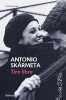
Très bon état - légères marques de lecture et/ou de stockage mais du reste en très bon état- expédié soigneusement depuis la France
Pas de Pitie Pour Martin: Thriller
Hachette 2011 144 pages 11x1 6x17 6cm. 2011. pocket_book. 144 pages.
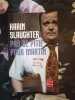
Bon état

