 Write to the booksellers
-
Type
Book (3485)
Disk (1)
Magazine (40)
-
Latest
Last month (42)
Last week (4)
-
Language
English (1)
French (3524)
Spanish (1)
-
Century
16th (1)
17th (2)
18th (19)
19th (79)
20th (1180)
21st (1398)
-
Countries
Belgium (466)
Canada (7)
China (4)
Côte d'Ivoire (1)
Denmark (4)
France (3001)
Greece (1)
Netherlands (4)
Switzerland (38)
-
Syndicate
ALAC (7)
CLAQ (2)
ILAB (294)
NVVA (3)
SLACES (3)
SLAM (276)
Manuel de syntaxe et d'accentuation grecques à l'usage des classes de lettres des lycées et des étudiants d'enseignement supérieur.
Paris, Librairie A. Hatier, 1941, in-12 cartonnage éditeur, 66 + 32 pp. 6e ed Bon état.
Paraulas de vertat e de profiech. Edizione del canzoniere di Guilhem de l'Olivier d'Arles
, Brepols, 2021 Paperback, 367 pages, Size:156 x 234 mm, Language: Italian. ISBN 9782503594484.
Summary Guilhem de l'Olivier fu politico e funzionario ad Arles tra 1200 e 1230, e di lui ci sono rimaste 77 cobbole in lingua d'oc, destinate al pubblico dei cavalieri urbani, dei mercanti e di quelle famiglie che stavano sovvertendo la tradizionale struttura sociale della citt rodaniana. Nel suo canzoniere trovano spazio la vita municipale e le esigenze di quella classe colta che guidava Arles attraverso complicate vicende istituzionali. Centro commerciale di primaria importanza, infatti, tra la fine del Cento e i primissimi decenni del Duecento quella che era stata una delle metropoli pi fiorenti delle Gallie e una delle capitali dell'impero costantiniano, si trasform in comune consolare e poi podestarile. In ragione di ci gruppi sociali fin l esclusi dalla gestione della cosa pubblica si trovarono quasi improvvisamente proiettati ai vertici del potere; la citt nel suo insieme fu scossa da tali sommovimenti. La produzione poetica di Guilhem si inserisce in questo complesso quadro: i suoi versi propongono una sintesi tra la cultura ufficiale feudal-cortese della fin'amor e l'inedito codice comunicativo che sorresse l'evoluzione istituzionale di Arles. Vero intellettuale municipale, riutilizzando materiali collaudati il poeta propone un modello di civis che sia a un tempo attento al bene comune e avveduto negli interessi individuali. Il suo disegno educativo e formativo emerge con nettezza dall'analisi della sequenza con cui le cobbole sono state predisposte presumibilmente da Guilhem stesso, il quale ci avrebbe cos lasciato un 'canzoniere d'autore'. TABLE OF CONTENTS Storiografia Biografia Metodo Il Nome Cosa si sa di Guilhem Omonimi e affini Atti ad Arles Bernardus, un possibile germano Gli Olivier tra Arles e Marsiglia Gli Olivarii marsigliesi Conclusioni La metrica Solo coblas Analisi prosodica Parit a oltranza? La tradizione manoscritta Coblas e canzonieri Il supertesto Poesia e politica Una mano (forse) non anonima Conclusioni La lingua Testimoni e criteri La lingua di R-f La lingua di Guilhem de l'Olivier Le Poesie Glossario Indice dei nomi Bibliografia
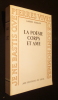
La poésie corps et âme
Editions du Seuil Pierres Vives Broché 1973 In-8 (14 x 20,5 cm.), broché, 325 pages, nom de l'ancien propriétaire en page de garde ; quelques annotations et traits en début d'ouvrage, dos un peu plissé et incurvé, coiffes légèrement frottées, assez bon état. Livraison a domicile (La Poste) ou en Mondial Relay sur simple demande.


Wars of the Lord, Treatise Three On God's Knowledge,
Turnhout, Brepols, 1977 Paperback, 335 p., 130 x 195 mm. ISBN 9780888442680.
Languages : English.
Gey Michel Pruvost Jean Cazanove Cécile de Sculfort Marie-France Pellat Jean-Christophe
Reference : 500261909
(1998)
ISBN : 9782091714745
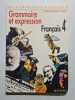
Francais 4eme Grammaire Et Expression. Programme 1998
Nathan 1998 19x1x26cm. 1998. Broché.
Bon état
Sisterbook of Master Geert?s House, Deventer The Lives and Spirituality of the Sisters, c. 1390?c. 1460
, Brepols - Harvey Miller, 2025 Hardcover, Pages: 352 pages,Size:156 x 234 mm, Illustrations:1 b/w, 3 col., Language(s):English. ISBN 9782503602509.
The Sisterbook of Master Geert?s House contains the lives of sixty-four Sisters of the Common Life who died between 1398 and 1456. Founded as an alms-house for destitute women in 1374, by the end of the fourteenth century Master Geert?s House had become a home for women desiring to live a life of humility and penitence, as well as in community of goods without vows. The Sisterbook was likely written sometime between 1460 and 1470, at a time when the religious fervour that had characterized the earlier Sisters had begun to wane. It was to incite the readers and hearers of the Sisterbook, which would have been read in the refectory during mealtimes, to imitate the earlier Sisters who are portrayed as outstanding examples of godliness and Sisters of the Common Life. The opening sentence of the Sisterbook succinctly sums up the author?s reason for writing it: ?Here begin some edifying points about our earlier Sisters whose lives it behoves us to have before our eyes at all times, for in their ways they were truly like a candle on a candlestick?, and who, by implication, could still illumine the way for her own generation of Sisters. The first foundation of Sisters of the Common Life, Master Geert?s House became the ?mother? house of numerous other houses in the Low Countries and Germany directly as well as indirectly and served as an inspiration for others. This book provides a study of the Sisterbook and its significance in the Devotio Moderna and late medieval female religiosity, while the accompanying translation introduces this important source to an English audience. TABLE OF CONTENTS Introduction The Sisterbook of Master Geert?s House, One of a ?Family? of Five The Sister Community in Master Geert?s House and Its Daily Routine The History of the House of Master Geert The Sisters. A Prosopographical Overview The Mistress, and Other Offices The Founding of New Sister Houses and the Reformation of Others Profectus virtutum (Progress in the Virtues), the Guiding Principle in the Sisters? Lives and Spirituality The Sisterbook of Master Geert?s House: Its Composition and Sources The Sisterbook: Genre and Resemblance to Other Sisterbooks The Bible and Christian Authors Cited in the Sisterbook Dirk de Man?s Edition of the Sisterbook and the Present Translation The Sisterbook of Master Geert?s House, Deventer. The Lives and Spirituality of the Sisters Appendix 1. List of Mothers/Mistresses and Priest?Rectors of Master Geert?s House Appendix 2. Sisters Mentioned in the Sisterbook that Do Not Have their Own Vita Bibliography Index of Biblical Texts Index of Names and Places Subject Index
La décagraphie, écriture sténographique professionnelle en dix signes. Cours théorique et pratique par méthode déductive, avec: application au flamand, lettres commerciales et discours parlementaire type dans les deux langues ; tableaux synoptiques
Bruxelles, s.d. [+/- 1920's?] vi + 86pp.illustré de nombreux exemples d'écriture de décagraphie, br.orig., 25cm., bel état, T80083
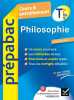
Prepabac Cours ET Entrainement: Philosophie Terminale L Es S
Editions Hatier 2012 320 pages 14x1 2x18 8cm. 2012. Broché. 320 pages.
Très bon état - légères marques de lecture et/ou de stockage mais du reste en très bon état- expédié soigneusement depuis la France
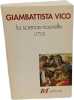
La Science nouvelle: (1725)
Gallimard 1993 in8. 1993. Broché. La 'Science nouvelle' de Giambattista Vico est une œuvre majeure de philosophie de l'histoire qui propose une méthodologie originale pour l'étude des sociétés humaines. Vico y développe sa théorie des cycles historiques (corsi e ricorsi) et explore les liens entre droit langage mythologie et développement des civilisations
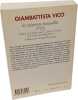
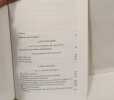
Très bon état intérieur propres couverture jauni charnieres un peu ternie
Gibert Bruno Gallent Bernard Dupond Pascal
Reference : 500276492
(2007)
ISBN : 9782011173447
Le bibliobus: 4oeuvres complètes
Hachette 2007 128 pages 14 6x1x20 8cm. 2007. Broché. 128 pages.

Etat correct
Die Braut sagt leider nein: Roman
Lübbe 2016 192 pages 12 5x18 5x1 8cm. 2016. Broché. 192 pages.
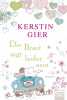
Etat correct
Belle d'amour: roman
Gallimard 2017 384 pages 14x20 5x2 7cm. 2017. Broché. 384 pages.
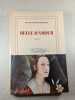
Bon état
L'arracheuse de dents
Folio 2018 467 pages 10 8x18x2 2cm. 2018. pocket_book. 467 pages.
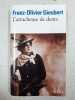
Bon état
Un système informatique en langage naturel : application didactique aux coloris ISCC-NBS
Orstom Dos carré collé 1974 In-8 (16 x 24 cm), dos carré collé, 117 pages ; couverture brunie, inégalement au quatrième plat, assez bon état. Livraison a domicile (La Poste) ou en Mondial Relay sur simple demande.
Gignoux Philippe Jullien Dr. Christelle Jullien Florence Eichner Univ.-Prof. Heiner Fragner Univ.-Prof. Bert G. Sadovski Dr. Velizar Schmitt Univ.-Prof. Rüdiger
Reference : 100144074
(2009)
ISBN : 3700165439
Iranische Namen in semitischen Nebenüberlieferungen: Faszikel 5: Noms propres Syriaques dOrigines Iranienne (Iranische Onomastik Band 789)
Verlag der österreichischen Akademie der Wissenschaften 2009 192 pages 14 986x1 016x22 606cm. 2009. Broché. 192 pages.
Très Bon Etat intérieur propre bonne tenue
Latin Grammar (Advanced Language S) - reprint 1998
BLOOMSBURY 3PL 1998 546 pages 13 8x21 4x3 2cm. 1998. Broché. 546 pages.
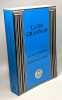

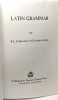
Très bon état de conservation intérieur propre bonne tenue
Le symbolisme dans l'art religieux. Architecture, couleurs, costume, peinture, naissance de l'allégorie. Préface par Valentin Bresle.
Paris, La Colombe, Editions du Vieux Colombier, collection "l'Unité", 1961 ; in-8, broché ; 226 pp. , couverture illustrée d'une licorne, en jaune et bleu.
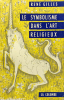
Edition originale de cet ouvrage ouvertement franc-maçon autour du thème de l' "unité du monde". Très bel exemplaire.
Gimson A.C. Anderson J. L. Ramsaran S. M. Davidson Lionel
Reference : 15907
(1979)
ISBN : 0194242145
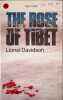
The Rose of Tibet (Alpha Books S.)
Oxford University Press 1979 96 pages collection Alpha Thriller. in8. 1979. Broché. 96 pages.
Gintrac Cécile Mendola Daniel Frémont-Vanacore Anne Smaghue Nicolas Vandoolaeghe Ludovic
Reference : 500186531
(2015)
ISBN : 9782218995439
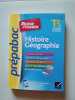
Prepabac Reussir l'examen: Tle - Histoire Geographie - S
Editions Hatier 2015 298 pages 14 2x1 6x18 8cm. 2015. Broché. 298 pages.
Bon état
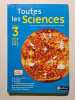
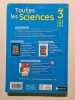
Toutes les sciences Cycle 3: Programmes 2008
Fernand Nathan 2008 239 pages 19 2x1 2x27 8cm. 2008. Relié. 239 pages.
Etat correct
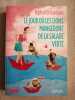
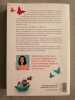
Le jour où les lions mangeront de la salade verte
Pocket 2019 376 pages 10 92x17 53x1 78cm. 2019. pocket_book. 376 pages.
Bon état
Il Seicento. Le parole chiave i luoghi i protagonisti. Ediz. illustrata (I secoli dell'Arte)
Mondadori Electa 2006 383 pages collection I Secoli dell'Arte. 20x2 6x13 6cm. 2006. perfect. 383 pages. Le parole chiave I luoghi I protagonisti

Très bon état
Varietate delectamur: Multifarious Approaches to Synchronic and Diachronic Variation in Latin. Selected Papers from the 14th International Colloquium on Late and Vulgar Latin (Ghent, 2022)
, Brepols, 2025 Hardback, Pages: 792, Size:156 x 234 mm, Illustrations:65 b/w, 120 tables b/w., Languages: English, French, Italian. ISBN 9782503606798.
Summary The focus of the Latin Vulgaire - Latin Tardif book series lies on the complex and multifaceted problem of late and so-called vulgar Latin. Specifically, starting out from a wide range of methodological approaches involving all levels of language, the series' main purpose is to investigate how Classical Latin (i.e. the language used in the period from ca. 100 BC to AD 100 by authors such as Cicero, Horace and Vergil) underwent the changes during the late period (i.e. mainly between the 3rd and the 7th century AD) that resulted in (the early stages of) the Romance languages. To this purpose, three main types of linguistic sources are taken into consideration. First, direct Latin sources, which include for instance texts written by people with a lesser level of literacy (e.g. inscriptions, soldiers' letters), or by fully literate authors reproducing colloquial language deliberately (e.g. Petronius, Apuleius). Second, indirect Latin sources, which consist of metalinguistic testimonies of ancient authors (mainly, but not exclusively, grammarians) dealing with the language variation typical of their time and region. And third, the Romance idioms themselves: by comparing sources in at least two Romance varieties, one may reconstruct Latin words or forms which were used widely in spoken usage but, for different reasons, are not attested in any extant source. TABLE OF CONTENTS Preface Orality and Diastratic Variation Terence's language between oratory and vulgar Latin (Gualtiero Calboli) Les marques d'ouverture du discours direct dans le roman latin (le Satyricon de P trone et les M tamorphoses d'Apul e) (Joseph Dalbera) Motion pseudo-coordination in Plautus' and Terence's plays. A corpus-based analysis (Simone Gentile & Carmelina Toscano) La geminazione di s- preconsonantica nella koin scrittoria latino-greca. Dati empirici e aspetti teorici (Serena Barchi) Latin technical legal terminology in Greek papyrus documents. Some examples from Late Antique and Byzantine Egypt (Alessia Pezzella) Some evidence on geminatio consonantium between standardisation and variation (Lucia Tamponi) Phenomena of graphic interference in Latin curse tablets from Africa (Mariarosaria Zinzi) Christian Latin in Late Antiquity La per frasis habeo + infinitivo en el Itinerarium Egeriae (Olga lvarez Huerta) Virtus adunationis. Alcuni esempi di innovazione lessicale nel De anima di Cassiodoro (Michele Di Marco) El uso de ipse y dem s formas demostrativas en la Regla de San Benito de Nursia (Alfonso Garc a Leal) A spiritual use of Lat. mens in Gregory the Great's Homilies on Gospels (Octavian Gordon) Clausal word order in the Passio Perpetuae et Felicitatis. An emerging V2 grammar? (Kim A. Groothuis) Morphologies in contact in Bible translations. The nomina agentis in New Testament Latin (Elisabetta Magni) Motions verbs in the Vulgata. Aspect and deixis in a diachronic and typological perspective (Andrea Nuti) Nuovi contributi sulla lingua dell'anonimo poema dell'Heptateuchos (i termini anus e odium) (Maria Rosaria Petringa) Il de con ablativo nelle controuersiae di Ennodio (dict. 21-22) (Amedeo A. Raschieri) Style matters. Hyperbaton and genre in Augustine of Hippo (Agnes Vendel) The Greek loan word presbyteri in Vetus Latina and Vulgate Susanna (Vulg. Dan. 13). Reception by Cyprian, Lucifer, and Jerome (Kevin Zilverberg) Technical Latin in Late Antiquity Muliebribus uerbis usus sum. The Gynaecia of Mustio and the language of midwives (Micaela Brembilla) Nomi di mestiere nel glossario latino-greco degli Hermeneumata Celtis (Salvatore Cammisuli) Offa, ofella, offula. A semantic analysis in Apicius' De re coquinaria (Marilena De Gregorio) Ortografia ed evoluzione linguistica nel latino tardo (Paolo De Paolis) Sobre el acercamiento de mitto a pono en el lat n poscl sico (Mar a Isabel Jim nez & Chantal Melis) Diachronic Perspectives on Latin Alea iacta est. Insights from corpus semantics into the diachrony of the Latin passive (Simon Aerts) La gran poes a latina y las peque as lenguas romances. Algunos ejemplos l xicos del Noroeste hisp nico (Mar a Concepci n Fern ndez L pez) Classical and Late Latin poetry. Looking for diachronic variations in the grammatical categories distribution (Dominique Longr e & Marc Vandersmissen) Tracing the semantic change of socio-political terms from Classical to early Medieval Latin with computational methods (Barbara McGillivray & Krzysztof Nowak) La concordance n gative (NC) et la n gation expl tive (EN) entre renforcement et affaiblissement dans l' volution du latin aux langues romanes (Anna Orlandini & Paolo Poccetti) Late Latin Testimonies to Early Romance Innovations Back vowel mergers in Dalmatian Latin and Dalmatian Romance (B la Adamik) Latin varieties and the study of language. Social stratification in language evolution (Brigitte L.M. Bauer) On problems in the description of the Late Latin verbal system (Gerd V. M. Haverling) Termes interrogatifs dans le Liber Historiae Francorum. Concordances et discordances avec les Historiae de Gr goire de Tours (Colette Bodelot) Notes on the Late Latin Accusative Absolute construction (Paola Cotticelli-Kurras, Eystein Dahl & Jelena ?ivojinovi?) Il verbo insinuo nelle epistole commendaticiae tardoantiche (Sara Fascione) Evidence of periphrastic gradation in Late Latin (Lucie Pultrov ) Re-verbs in Late Antiquity (Josine Schrickx) Tensions linguistico-communautaires en Occident dans l'Antiquit (Tardive) et au haut Moyen ge (r sum ) (Marc Van Uytfanghe) Early Medieval Latin on the Threshold of Proto-Romance Reconsidering Langobards' Latinity from a socio-historical viewpoint (Rosanna Sornicola) Lexicographical notes on Historia Brittonum (Maxime Canin) Glutinum sermonum. The metaphorical representation of a syntactic function (Paola Cotticelli-Kurras & Francesca Cotugno) I toponimi nelle carte notarili della Langobardia minor (IX-X secolo): morfosintassi e propriet testuali (Elisa D'Argenio & Cesarina Vecchia) Manifestazioni del neutro nel latino circa roman um dei Regii Neapolitani Archiui Monumenta (sec. X) (Eleonora Delfino) Variazione lessicale e linguaggio notarile. Qualche esempio dalle carte mediolatine della Campania (IX-XII secolo) (Valentina Ferrari) Sintassi, semantica e testualit dei pronomi relativi qui e que nelle carte notarili della Langobardia minor (IX secolo) (Paolo Greco) Norme et style dans les textes narratifs latins du Haut Moyen ge. Essai de typologie (S ndor Kiss) Asigmatic non-standard plurals in 8th- and 9th-century Tuscian charters? (Timo Korkiakangas & Tommi Alho) The syntactic glosses of the Liber Iudicum Popularis (Afra Pujol i Campeny) Alternanze tematiche, innovazione e polimorfismo. Le testimonianze di alcune raccolte documentarie dell'Italia meridionale (Simona Valente) Workshop in Celebration of Gualtiero Calboli's Career Discontinuit du groupe nominal dans la Vulgate (Bernard Bortolussi) Aspects of juridical language in Benedict's Rule (Giovanbattista Galdi) El origen de t?r?, -?nis 'novillo uncido' y de *t?r?re 'tirar'. Dos creaciones del habla r stica (Benjam n Garc a-Hern ndez) Les constructions infinitives selon la conception de Gualtiero Calboli (S ndor Kiss) Sur l'interaction entre n gation, verbes modaux et modalit s (Anna Orlandini & Paolo Poccetti) Ille in the Latin Gospel of John. Demonstratives and articles in translation (Silvia Pieroni) On the scope of theticity in Latin (Hannah Ros n) Workshop on Inscriptions and tabellae defixionum Shaping shapes. Sicilicus and other diacritics in Latin epigraphy (Lucia Tamponi & Serena Barchi) Exorcisms, oaths, and invocations in Greek and Latin curse tablets, funerary inscriptions, and amulets. Some preliminary results (Juraj Franek, Daniela Urbanov & Ulrike Ehmig) Normativity. Editing Latin inscriptions (Marietta Horster, Katharina Kagerer & Christine Wulf)
Girard Anne-Sophie Girard Marie-Aldine
Reference : 500046514
(2014)
ISBN : 9782290079317
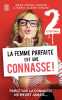
La femme parfaite est une connasse.Vol.2: Parce que la connasse ne meurt jamais
Ed. Flammarion Siren 2014 159 pages 11x17 6x1 2cm. 2014. pocket_book. 159 pages.
Correct

