 Write to the booksellers
-
Type
Autograph (3)
Book (9399)
Magazine (20)
Manuscript (1)
Old papers (1)
Photographs (1)
-
Latest
Last 3 days (68)
Last month (24)
Last week (40)
-
Language
English (7)
French (9389)
Italian (25)
Latin (4)
-
Century
16th (17)
17th (19)
18th (83)
19th (802)
20th (5025)
21st (607)
-
Countries
Belgium (877)
Canada (3)
Côte d'Ivoire (2)
France (7490)
Greece (3)
Switzerland (1050)
-
Syndicate
ALAC (3)
CLAM (1)
CLAQ (1)
CNE (2)
ILAB (7494)
NVVA (823)
SLACES (823)
SLAM (6513)
SNCAO (5)
DELL'ORIGINE, DE PROGRESSI E DELLO STATO ATTUALE D'OGNI LETTERATURA. En 7 volumes. 1782 - 1799.
Tome 1 : 529 pages : Complet. 1782 Tome 2 : 515 pages : Complet. 1785 Tome 3 : 675 pages : Complet. 1787 Tome 4 : 606 pages : Complet. 1790 Tome 5 : 707 pages : Complet. 1794 Tome 6 : 584 pages : Manque 2 pages (585 et 586). 1799 Tome 7 : Seconde partie du Tome 6. 841 pages.+ indice général. 1799 In 4.

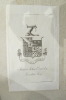

Les 7 volumes n'ont pas de couverture, les rousseurs sont extrêmement rares. Un superbe état de papier malgré quelques feuillets cornés. OUVRAGE SAVANT.

NATURA E STATUS GIURIDICO DEI GRUPPI PARLAMENTARI NEL PARLAMENTO EUROPEO (ESTRATTO DELLA TESI)
Pontificia Università Lateranense, Roma. 2002. In-8. Broché. Très bon état, Couv. fraîche, Dos impeccable, Intérieur frais. 75 pages.. . . . Classification Dewey : 450-Italien, roumain, rhéto-romain
Pontificia Universitas Lateranensis. Excerptum Theseos ad Doctoratum in Iure Civili. Classification Dewey : 450-Italien, roumain, rhéto-romain
REN E DEMEESTER : Paysages Abstraits - Abstracte Landschappen
, Pandora Uitgeverij, 2023 Hardcover, 182 pagina's , NL / FR , 300 x 250 x 20 mm, Nieuw / Nouveau, illustr. in kleur / z/w. ISBN 9782930532042.
Het boek zoomt in op het werk en leven van de recent overleden Belgische kunstenares Ren e Demeester (1927-2022). Aan de hand van ongepubliceerde teksten en foto's, en in samenwerking met haar familie, brengt het onderzoeksteam van het museum hulde aan een leven dat volledig gewijd was aan kunst. De monografie werd rijkelijk ge llustreerd met schilderijen en tekeningen. Het boek is uitgegeven naar aanleiding van een gelijknamige tentoonstelling in het Magritte museum waarin abstracte schilderijen ge nspireerd door plaatsen waarvan ze erg hield getoond worden, zoals de weelderige natuur van Katanga, de omheinde weiden van het Pajottenland, het bruisende Brussel en de open horizon van de Noordzee. L'ouvrage retrace le parcours de l'artiste belge r cemment disparue. R alis par l' quipe du mus e en collaboration avec sa famille, il d voile une vie d di e l'art, travers des textes et photographies in dites. La moiti du catalogue pr sente des illustrations en pleine page de peintures et dessins. Cet ouvrage s'accompagne d'une exposition au Mus e Magritte rassemblant des toiles abstraites inspir es des lieux qui lui taient chers : de la nature luxuriante du Katanga aux prairies cl tur es du Pajottenland, des espaces construits de Bruxelles aux horizons ouverts de la mer du Nord.
LA RINASCITA LITURGICA CONTEMPORANEA
Vita e Pensiero. 1934. In-12. Broché. Bon état, Couv. convenable, Dos satisfaisant, Non coupé. 213 pages. Etiquette de code sur la couverture. Quelques tampons de bibliothèque.. . . . Classification Dewey : 450-Italien, roumain, rhéto-romain
'I Quaderni del Cattolicismo Contemporaneo', 13. Classification Dewey : 450-Italien, roumain, rhéto-romain
Celebrity and Performance : The World's Top Photographers Workshops
, Rotovision, 2009 Hardcover, 176 pages, ENG, 255 x 255 x 18 mm, in good condition, illustrated in colour. ISBN 9782940378401.
Demonstrates how to shoot big personalities. This title showcases the work reflecting the various aspects of celebrity and performance photography, including projects shot in studios, on sets, in theatres, on stage, and on location.
UN PRETE DI IERI PER LA CHIESA DI OGGI (GIUSTINO RUSSOLILLO)
Editrice Vocazionista, Roma. 1976. In-8. Broché. Bon état, Couv. convenable, Dos satisfaisant, Intérieur frais. 211 pages. Photo en couleur en frontispice (portrait).. . . . Classification Dewey : 450-Italien, roumain, rhéto-romain
Profilo biografico di Don Giustino Russolillo. Classification Dewey : 450-Italien, roumain, rhéto-romain
Uses and Reuses of Medieval Manuscript Books / Usi e riusi del libro manoscritto nel Medioevo. Southern Italy. Latin Manuscripts / Italia meridionale. Manoscritti latini
, Brepols, 2026 Hardback, Pages: 280, Size:216 x 280 mm, Illustrations:24 b/w, 83 col., 8 tables b/w., Languages: Italian, French, English. ISBN 9782503616827.
Summary Manuscript books have many lives. Once assembled, they scarsely remain unchanged. They can be read and re-read, annotated, supplemented, dismembered, restored and physically moved, even more than once. The volume 'Uses and Reuses of Medieval Manuscript Books. Southern Italy. Latin Manuscripts' investigates these multiple lives through an interdisciplinary approach that embraces codicology, paleography, philology, and art history. With a focus on book circulation in Latin Southern Italy, the volume brings together 14 contributions written in three languages. Through rich and diverse case studies, the authors offer a new perspective on the history of the book. Divided into three thematic sections ('Uses and Reuses of Classical Texts, 'Manuscripts en route', 'Material and Immaterial Reuses'), the book explores the 'marginal' traces left by readers, the philological reception of texts, material transformations, and the journeys of codices. The volume reconstructs through these lenses the influence of manuscripts on medieval intellectual activity and offers insights that extend from the specific context of southern Italy to broader geographical and diachronic scales. L'histoire d'un codex commence la fin de sa fabrication, apr s la copie du texte. Mais les livres manuscrits n'ont pas qu'une seule vie : ils peuvent tre lus et relus, annot s, int gr s, divis s, ou encore d plac s, plusieurs reprises, de leur lieu de conservation. Bien que non pr vues dans le projet initial, les annotations marginales des lecteurs, les corrections du texte, les ajouts au d cor sont des op rations qui t moignent de la r utilisation du manuscrit, et donc de son v ritable usage au fil du temps. Ces traces laiss es par les lecteurs permettent de reconstituer l'influence des livres dans l'activit intellectuelle, personnelle et collective dans un lieu ou une p riode donn e. Le volume Usi e riusi del libro manoscritto nel Medioevo meridionale s'ins re dans cette dimension de renouvellement des tudes, avec un focus sur la circulation du livre en Italie m ridionale, en particulier dans le domaine latin, par le biais d'une approche interdisciplinaire, qui allie la codicologie, la pal ographie, la philologie, l'histoire de l'art et des biblioth ques. La storia di un codice inizia quando esso finisce di essere allestito e copiato. Ma i manoscritti non hanno una sola vita: vengono letti e riletti, annotati, integrati, smembrati, risarciti e, inoltre, possono essere spostati, anche pi di una volta, dal loro luogo di conservazione. Bench non previste nel progetto iniziale, queste operazioni testimoniano il vero uso, e quindi riuso, del manoscritto. Le tracce lasciate dai lettori, le manipolazioni e gli spostamenti permettono cos di ricostruire l'influenza dei libri nell'attivit intellettuale, personale e collettiva, di un determinato luogo o periodo. Il volume Usi e riusi del libro manoscritto nel Medioevo meridionale si inserisce in questa dimensione di studio, con un focus sulla circolazione libraria nel Meridione italiano, in particolare latina, attraverso un approccio interdisciplinare che abbraccia codicologia, paleografia, filologia, storia dell'arte e storia delle biblioteche. TABLE OF CONTENTS Introduction, Angela Cossu - Elvira Zambardi I. Uses and Reuses of Classical Texts / Usi e riusi dei testi classici Adriano Russo, Riuso dei libri e trasmissione dei classici: la tradizione della prima Deca in Italia centro-meridionale Filomena Bernardo, L'Ovidius Neapolitanus: la storia di un manoscritto attraverso il suo (ri)uso come antigrafo Caterina Pentericci, El Escorial Codex T. II. 8 and the beginning of Plautine Itala recension II. Manuscripts en route / Manoscritti in viaggio Andrea Puglia, Migrazioni di codici dall'Italia meridionale alla Toscana nordoccidentale tra XI e XII secolo. Prime ricerche Valeria De Fraja - Francesco Siri, Dn 11, les craintes apr s les V pres siciliennes, et la biblioth que de la cath drale de Messine Claudia D'Alberto, The ?Cronico del Re Giovannino? in the Latin Barberini Fund of the Vatican Apostolic Library: Connections, Provenance and Reuses Franco Benucci - Matteo Calzone, Da Padova a Parigi: usi e riusi d'un Giuseppe Flavio nel Medioevo meridionale III. Material and Immaterial Reuses / Riusi materiali e immateriali J r my Delmulle, Vittore, vescovo di Capua (541-554), lettore, annotatore e revisore di codici Michele Campopiano, Storia e memoria nell'Italia meridionale. Rappresentazioni del passato e pratiche compilative: alcuni esempi e la loro influenza (secoli IX-XI) Anna Gili, Lire la ?Pantegni? entre le xiiie et le xive si cles : le t moignage du codex Napoli, Biblioteca Nazionale Vittorio Emanuele III, VIII.D.39 dans son contexte Chiara De Angelis - Elvira Zambardi, Reuses of Reuses: The Case of Glossed Biblical Fragments at Montecassino Chiara Paniccia, Nuovi materiali per la storia della miniatura (secc. XII-XV). Le pergamene reimpiegate dell'Archivio di Stato di Viterbo e della Biblioteca degli Ardenti Closing words, Marilena Maniaci - Universit di Cassino e del Lazio Meridionale
Diabolik - Un indizio dall'oltretomba (il giallo a fumetti- anno XXXVIII n°11)
Astorina 1999 129 pages 11 8x17x1 1cm. 1999. broché. 129 pages. Diabolik est une série de bande dessinée italienne emblématique de type 'fumetto nero' créée en 1962 par les sœurs Angela et Luciana Giussani et éditée par Astorina. L'album spécifique 'Un indizio dall'oltretomba' est le numéro 633 de la série (Volume 38 n°11) publié en novembre 1999. L'intrigue de cet album semble impliquer une enquête de Ginko sur un navire de croisière le forçant à adopter les méthodes de son ennemi juré Diabolik
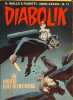
Très bon état
Diabolik - Scacco a Diabolik - I miti
MONDADORI. 2021. In-8. Broché. Etat d'usage, 2ème plat abîmé, Dos satisfaisant, Fortes mouillures. 374 pages de BD en noir et blanc. Quelques mouillures en bas de page, en fin d'ouvrage ( une cinquantaine de page). En italien.. . . . Classification Dewey : 450-Italien, roumain, rhéto-romain

Intro: Mario GOMBOLI. Classification Dewey : 450-Italien, roumain, rhéto-romain
PEDAGOGIA MARIANISTA NEI PRIMI 40 ANNI D'INSEGNAMENTO ELEMENTARE (THESE)
TIESS. 1978. In-8. Broché. Bon état, Couv. convenable, Dos satisfaisant, Intérieur frais. 246 pages. Etiquette de code sur le dos. Tampons et annotation de bibliothèque sur le 1er plat et en page de titre.. . . . Classification Dewey : 450-Italien, roumain, rhéto-romain
Università di Friburgo. Thèse prés. à la faculté des Lettres de l'Univ. de Fribourg (Suisse). Classification Dewey : 450-Italien, roumain, rhéto-romain
SICILIA, L'ISOLA DEL SOLE
Mistretta. 1989. In-4. Broché. Etat d'usage, 1er plat abîmé, Dos abîmé, Intérieur acceptable. 173 pages. Illustré de nombreuses photos en couleur. Carte et plans en noir et blanc au dos des plats (rabats).. . . . Classification Dewey : 450-Italien, roumain, rhéto-romain
Edizione italiana. Classification Dewey : 450-Italien, roumain, rhéto-romain
TAORMINA, PERLA DEL MEDITERRANEO
Mistretta. 1990. In-4. Broché. Bon état, Couv. convenable, Dos frotté, Intérieur frais. 88 pages. Illustré de nombreuses photos en couleur. Carte et plans en noir et blanc au dos des plats (rabats).. . . . Classification Dewey : 450-Italien, roumain, rhéto-romain
Edizione italiana. Classification Dewey : 450-Italien, roumain, rhéto-romain
Confederazione fascista dei lavoratori dell’agricoltura. Il ‘lavoro’ nella coltura della vite in Italia.
Roma, Anno XIII, s. d., vers 1920, gr. in-8vo, 35 p., brochure originale.

(SLACES, NVVA)
Phone number : 41 (0)26 3223808
Angelo De Gubernatis (1840-1913), ethnologue, philologue, orientaliste italien.
Reference : 016203
Lettre autographe signée à Gabriel Monod
Angelo De Gubernatis (1840-1913), ethnologue, philologue, orientaliste italien. L.A.S., Florence, 8 décembre 1875, 2pœ in-8. A l'historien Gabriel Monod (1844-1912). « Cher Monsieur, Je suppose que c'est à votre bienveillance que je dois l'article charmant qui me concerne publié dans le dernier numéro de la Revue Critique. Permettez-moi pourtant une petite observation après avoir reçu mes sincères remerciements. Vous me reprochez, Monsieur, d'avoir « dit quelque part que Dall'Ongaro n'a rien à envier à la gloire de Byron ». Lorsque je nommais les poètes patriotes italiens qui ont combattu pour la liberté, j'ai pu dire, et je pense encore avec raison que l'Italie n'avait, sous ce rapport, rien à envier aux étrangers ; la Grèce a eu Riga, l'Allemagne Koerner, l'Angleterre Byron, c'est-à-dire, un poète soldat de la Liberté ; l'Italie en a eu plusieurs et je les ai nommés, et après les avoir nommés, j'ai ajouté « Anche, il nostro poeta (Dall'Ongaro) fu di questa animosa schiera ». Est-ce trop d'enthousiasme ? Je vous jure que je n'ai pas dit et voulu dire autre chose ; au reste, chaque lecteur italien a fort bien compris que je ne prétendais point comparer le génie poétique de Byron avec le talent de Dall'Ongaro, mais tout simplement indiquer que les poètes italiens de ce siècle ont été, en général, des excellents patriotes, et que Dall'Ongaro, à son tour, a parfaitement rempli son devoir. Vous étiez évidemment un peu pressé, Monsieur, en lisant la page où vous avez trouvé le nom de Byron ; mais si je ne pouvais féliciter mon pays d'avoir eu beaucoup de patriotes parmi les poètes, je demande à mon bienveillant critique ce qu'il faudrait dire des poètes courtisans , des poètes serviles. Vous m'accusez, cher Monsieur, de ne pas avoir accentué davantage les côtés faibles de mon ami ; j'ai une excuse bien simple : ce rôle peu sympathique en tous les cas, a été rempli à outrance par de nombreux ennemis, et je ne pensais pas que j'aurais rendu un grand service à la mémoire de Dall'Ongaro en reprenant pour mon compte et en accentuant les accusations qui ont par trop déchiré le coeur du poète, pendant qu'il était en vie ; je n'ai point fait l'apothéose de Dall'Ongaro ; mais, assurément, je me suis gardé de jeter des pierres sur son tombeau. Je n'ai pas, d'ailleurs, appelé mon livre un essai critique : mais tout simplement des ricordi. Je crois avoir été fidèle à mes souvenirs ; je me suis pourtant, je le sens, je le reconnais, ému quelquefois ; et je vous en demande grâce ; vous en auriez fait de même, je crois, mon cher confrère ; il n'y a pas encore trois ans que le poète est mort ; et sa soeur, pauvre délaissée, continue dans sa solitude et dans son désespoir à pleurer ; dans un demi-siècle, il n'y aura assurément plus de larmes en Italie pour Dall'Ongaro ; et alors on pourra entreprendre paisiblement un livre profond d'anatomie sur ce poète ; mais ni moi, ni monsieur Monod lui-même, s'il avait été l'ami de Dall'Ongaro, n'aurait pu imaginer à présent un livre aussi savant. Vous conviendrez d'ailleurs, cher Collègue, que pour certaines appréciations, il faut se fier un peu au bon jugement des gens du pays. Il n'y a pas deux ans que la Revue Critique dans un article aimable (11 avril 1874), pour faire honneur à sa réputation de juge sévère, me reprochait d'avoir dans mes Ricordi biografici compris parmi les hommes intéressants de l'Italie actuelle le poète Dall'Ongaro ; maintenant votre article commence précisément par ces mots : « François Dall'Ongaro est une des figures intéressantes de l'Italie moderne » à la bonne heure ! Nous commençons dont à nous entendre un peu ; et j'en suis heureux. je n'ai pas maintenant la prétention de voir insérée cette justification dans la Revue Critique ; elle ne s'occupe, je le vois bien et je l'en félicite sincèrement, que de ce qui est utile ; et probablement vous trouverez cette lettre de défense personnelle parfaitement inutile. Pourtant, si dans votre esprit d'impartialité, il vous se
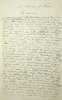
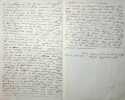
Angelo de GUBERNATIS - [Turin 1840 - Rome 1913] - Ecrivain italien
Reference : GF27321
Lettre Autographe Signée à "Chère Demoiselle" - le 6 aout 1902 -
1 page in8 - bon état -
Il se réjouit de pouvoir la féliciter pour sa photographie - "Votre portrait tromperait bien d'observateurs; on vous dirait une espagnole ou une italienne du midi" - Elle ne pourra avoir de bourses car elle est "hors-concours" mais elle peut se faire donner une mission à Rome - "Après l'Espagne, vous ne pouvez pas vous passer de l'Italie" -
Il Liutaio. Origine e costruzione del violino e degli strumenti ad arco moderni
U. Hoepli. 1923. In-12. Relié. Etat passable, 1er plat abîmé, Dos abîmé, Papier jauni. 558 pages. Texte en italien. Rousseurs. Nombreuses illustrations en noir et blanc, dans et hors texte. Frontispice en noir et blanc. 1er plat désolidarisé. Couverture défraîchie et tâchée. Tranches rouges.. . . . Classification Dewey : 450-Italien, roumain, rhéto-romain
Classification Dewey : 450-Italien, roumain, rhéto-romain
Problemi Del Più Alto Interesse Scientifico Geometricamente Risolti E Dimostrati
Napoli Stamperia del Fibreno 1861 in 8 (23x15) 1 volume reliure (Hardcover) demi velin de l'époque, dos lisse, pièce de titre de cuir rouge, faux-titre, portrait gravé en frontispice (ritratto), 198 pages [1], avec 4 planches dépliantes in fine (4 tavole ripiegate). Notre exemplaire est enrichi sur le faux-titre d'une dédicace manuscrite maçonnique de l'auteur: A Sua altezza imp e reale, al cont d'aquila, caris. (et d'un feuillet manuscrit ajouté: nel Fr. Marino Caracciolo. Bel exemplaire, attestant des qualités scientifiques, religieuses et franc-maçonnes de l'auteur (photographie sur demande)
Très bon Reliure
"L'Italia felice (Collection ""Nuova Biblioteca Italiana"")"
Tumminelli. 1947. In-12. Broché. Etat d'usage, Couv. convenable, Dos satisfaisant, Intérieur frais. 198 pages. Rousseurs. Texte en italien. Nombreuses déchirures sur la jaquette.. Avec Jaquette. . . Classification Dewey : 450-Italien, roumain, rhéto-romain
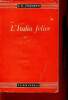
"Collection ""Nuova Biblioteca Italiana"" Classification Dewey : 450-Italien, roumain, rhéto-romain"
Le icone della collezione classense di Ravenna
Alfa Bologna. 1982. In-8. Broché. Bon état, Couv. convenable, Dos satisfaisant, Intérieur frais. 310 pages augmentées de nombreuses photos en noir et blanc dans texte.. . . . Classification Dewey : 450-Italien, roumain, rhéto-romain
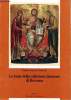
Texte intégralement écrit en italien. Classification Dewey : 450-Italien, roumain, rhéto-romain
collezione d'arte del Sanpaolo ITA
, Silvana ( original : University of Virginia USA), 2003 Hardcover, 319 pages, ITA , 310 X 250 mm, in very good condition !, dustjacket, carbon jacket, illustrations in fine colours, . ISBN 9788882156701.
This volume is dedicated to the artistic heritage of the Sanpaolo IMI Group, which includes various realities located throughout the national territory. The collections, which include both Italian and foreign artists, are the result of different but continuous and sometimes centuries-old paths, which have seen the various banking institutions manifest not only a collecting attitude, but, often, a precise patronage of cultural promotion. This volume traces a span of time spanning five centuries, which overlaps with the history of Sanpaolo: from the birth, in 1563, of the Confraternity Compagnia di San Paolo, to all the subsequent phases of the evolution of the banking institution.
ANNAHEIM, Hans; EGGENBERG, Paul; FLAIG, Walther; SCHWABE, Erich:
Reference : 104602aaf
Sorvolando le Alpi - Vedute aeree dalla Costa Azzurra al Wienerwald.
Torino, Editrice Saie, 1959, in-8vo, 58 p., avec 52 photographies en couleur et en noir et blanc, cartonnage original, très bon état.
(SLACES, NVVA)
Phone number : 41 (0)26 3223808
Piero Della Francesca - Les oeuvres
IT, Silvana , 2012 Hardcover, 240 pages, Text en Francais, 290 x 240 x 28 mm, Tres bon condition, jaquette illustre , illustrations / images en couleur / n/b, ISBN 9788836624645.
Cette monographie est dediee a un des plus grands artistes de la Renaissance italienne, Piero della Francesca (Borgo Sansepolcro, aux alentours 1416/1417-1492). Chaque oeuvre du maitre, du Bapteme du Christ a la Nativite conservees a la National Gallery, est presentee avec une image en pleine page et attentivement etudiee, tant du point de vue historique qu'esthetique, sans negliger les fortunes critiques au cours des siecles. Un interet particulier est reserve a la splendide serie de fresques, avec La legende de la Vraie Croix dans la basilique de San Francesco d'Arezzo, consideree comme son chef d'oeuvre. L'auteur, a qui nous devons les restaurations de la Chapelle, propose dans cette etude les resultats des interventions sur la moitie des surfaces peintes, accompagnes d'images des fresques apres restauration. Le volume represente un instrument complet et maniable pour tous ceux qui veulent se rapprocher de l'oeuvre de Piero della Francesca.
Robert Hoozee: Hommage : Museum voor Schone Kunsten Gent, 1982-2012, Volume 1
, MER Paper Kunsthalle, 2014 Hardcover, 254 pag. NL / ENG. 320 x 255 x 27 mm, in zeer goede staat / in fine condition, illustr. in colour / b/w. ISBN 9789491775512.
Onder het dertigjarige directeurschap (1982-2012) van Robert Hoozee onderging het Museum voor Schone Kunsten Gent een ware transformatie. Hoozees drang naar herbronning, multidisciplinariteit en internationale contextualisering van de Belgische kunst uit de periode 1789-1950 vond zijn weerslag in de collectievorming van het MSK en in de tentoonstellingen die onder zijn leiding tot stand kwamen, zowel in het Gentse museum als elders. Hoogtepunten in de collectievorming - van James Ensor, Fernand Khnopff, George Minne en Odilon Redon over Oskar Kokoschka en Erich Heckel tot Raoul De Keyser - illustreren Hoozees streven naar topkwaliteit. In het tentoonstellingsbeleid verzette hij de bakens met 'Paris-Bruxelles' (1997) en 'British Vision' (2007-08). In deze hommage blikt een groep van vijftig binnen- en buitenlandse auteurs terug op deze rijke periode uit de museumgeschiedenis. Hun bijdragen schetsen een caleidoscopisch beeld van een uitzonderlijk man, die bij zijn overlijden in 2012 een museum met internationale faam achterliet. Een man die bovendien in de afgelopen decennia bepalend is geweest voor zowel de kunsthisto riografie over de negentiende en vroege twintigste eeuw als het museumlandschap in Belgi
Philippon Lecoq - Designers Architectes d'int rieur 1955-1995
, Regard (Editions du), 2023 Hardcover, 250 pages, FR. edition, 315 x 250 x 30 mm, NOUVEAU, illustrations en couleur / n/b. ISBN 9782841054268.
Ce livre est la premi re monographie consacr e au duo d'architectes d'int rieur Philippon Lecoq. Le bureau d' tude d'Antoine Philippon et Jacqueline Lecoq s'impose de 1955 1995. Tout au long de la p riode des " Trente glorieuses ", ils imposent une pratique exigeante qui concerne l'architecture int rieure, la sc nographie d'exposition, le design industriel, l'enseignement. Le bureau d' tude d'Antoine Philippon et Jacqueline Lecoq s'impose de 1955 1995. Tout au long de la p riode des " Trente glorieuses ", ils imposent une pratique exigeante qui concerne l'architecture int rieure, la sc nographie d'exposition, le design industriel, l'enseignement. Ils participent aux salons nationaux et internationaux, se faisant reconnaitre pour leur militantisme professionnel et la d fense d'une profession en devenir. Ils exposent au Salon des artistes d corateurs, au Salon des arts m nagers, l'exposition internationale de Bruxelles en 1958, la Triennale de Milan et dans de nombreuses manifestations d'importance. Ce livre rend hommage aux industriels qui les ont soutenus dans l' laboration de leurs multiples projets produits en s rie, favorisant leur exploration de nouveaux usages et de nouvelles techniques : en France : d'Henry Mouraux Airborne, le Mobilier national, Formica et les Glaces de Boussois. A l' tranger, en Allemagne en particulier : Bofinger, Erwin Behr, Lauser, etc. Leurs r alisations se distinguent par un ancrage dans la dur e, un engagement sans concessions. Ce livre est la premi re monographie consacr e au duo d'architectes d'int rieur Philippon Lecoq.
Ritual, Gender, and Narrative in Late Medieval Italy. Fina Buzzacarini and the Baptistery of Padua
, Brepols, 2020 Hardback, 384 pages, Size:225 x 280 mm, Illustrations:188 col., Language: English. ISBN 9782503579689.
Summary Ritual, Gender, and Narrative in Late Medieval Italy is the first English-language study of the baptistery of Padua and its extraordinarily rich fresco program, which opens with Genesis and closes with the Apocalypse. Remarkably, when the building was refashioned and frescoed by Giusto de' Menabuoi in the 1370s, it was a woman, Fina Buzzacarini, who funded the enterprise. In late medieval Italy, baptisteries were potent symbols of civic identity, solidarity, and pride, and towns spent lavishly on them - but no other baptistery was so radically reworked at the behest of a woman. Remarkably, too, though the building continued to function as Padua's baptismal church, the renovations transformed it into the mausoleum of Fina Buzzacarini and her family. This volume takes an interdisciplinary approach, using close visual analysis to argue that to a surprising degree, Fina exerted control over the images. The author argues too that ritual is equally important in understanding the frescoes: that in multiple ways that have rarely been considered, the images respond to and participate in the ritual enacted in this sacred space. The prayers intoned at the font, the actions of the officiant, the hymns chanted in procession and inside the baptistery, and even details of the rite all find visual echoes on the baptistery's walls. Ultimately, gender and ritual intersect in the multilayered frescoes of the Padua baptistery. TABLE OF CONTENTS Introduction Chapter 1 Fina Buzzacarini in Carrara Padua Local chroniclers say little about Fina, but recount one salient aspect of her life: after marrying Francesco I Carrara in 1345, she failed for over a decade to produce the requisite son and heir. After crises at court over succession, in 1359 she gave birth to a son. Though the couple's marriage was strained by her husband's blatant philandering, previously overlooked records show that Fina, a very wealthy woman, gradually emerged as a powerful presence at court. While some have minimized the degree of Fina's responsibility for the baptistery's program, I cite a number of documents from the later trecento that attest to a woman's ability to shape the subject matter of a work that she funded. I next discuss Fina's tomb monument, which emulates those of earlier Carrara lords but outshines them, and her votive portrait, which places her on the dexter side, as sole donor, and excludes her husband. Finally, I consider the extraordinary small portraits of Fina inserted into several of the narratives and interpret them as assertions of her authority, overt claims of agency, injected through the program. Chapter 2 Baptistery as Mausoleum: Ambitions and Motivations Why would Fina have sought the baptistery as a burial site, and why did Francesco and the local bishop, whose approval would have been required, agree? The sacred space of a baptistery had long been understood as a desirable funerary site. For Francesco, the project meant the embellishment of one of the most important buildings in the city, burnishing the stature of the regime; co-opting the preeminent symbol of civic harmony; and creating a prestigious-and presumably spiritually advantageous-setting for his own tomb. For the bishop, given the brief tenures of his predecessors who dared to cross Francesco, attempting to thwart the project was not a viable option. Fina likely had reasons of her own, which I consider further in Chapter 6, for choosing the baptistery as her burial place. Here I note that baptisteries were uncommonly welcoming to women. The rite offered them a rare opportunity to participate in the liturgy: women took their place at the font next to men. Finally, in electing her burial in the baptistery, Fina insured that her tomb would be seen, and her memory preserved, by future generations. Chapter 3 Narrative, Ritual, Exegesis: The Genesis Cycle This chapter opens with an account of the baptismal ritual as performed in late medieval Italy- the choreography of prayers, chants, readings, ritual actions, and attendant customs for both the solemn rite and the individual rite. The rest of chapter 3, and chapters 4 and 5, analyze the frescoes in the narrative cycles, arguing that they are as carefully choreographed as the rite, and work in concert with it. They respond as well to baptismal theology, depicting themes that offer pictorial glosses on the rite, echoing typological parallels drawn by medieval exegetes. The Genesis cycle in the drum of the dome includes narratives both familiar and more obscure (the Death of Adam; Lamech Slaying Cain; Jacob's Prayer after his Dream; Jacob's Rods; the Reunion of Jacob and Esau). The obscure episodes are distinctly baptismal, and even the familiar ones are rendered in unusual ways that heighten their baptismal resonance. Chapter 4: Narrative, Ritual, Exegesis: The New Testament Cycle The baptismal themes introduced in the drum continue below, in the New Testament cycle, where the frescoes are often strategically sited to respond to others, each accruing meaning from those nearby. Because of these pictorial and thematic correspondences, it is most productive to analyze the frescoes spatially, wall by wall, rather than purely chronologically. While most of the New Testament episodes depicted here are commonly seen in trecento visual narrative, almost all have been adapted in ways that make them singularly appropriate to the site. For instance, in the Massacre of the Innocents, the slain babies, normally shown nude in trecento painting, wear white tunics that evoke the white garments given to infants after baptism; the jugs in the Marriage of Cana are enlarged versions of the ewer used in the baptismal rite. Chapter 5: Narrative, Ritual, Exegesis: The Apocalypse Cycle In the baptistery's apse is a remarkably detailed depiction of the book of Revelation, a subject seldom seen in trecento painting and never on this scale. The choice was well considered: from late antiquity into late medieval Italy, exegetes found in the text repeated allusions to the sacrament. Again, uncommon narrative inclusions, such as the opening of the fifth seal, with the giving of white garments to the souls under the altar, or idiosyncratic features, like the setting of scenes in dramatic seascapes that attest to the salvific potency of water, highlight the relationship between the images and the rite enacted here. Chapter 6: Gender Matters: Maternity, Sexuality, and Visual Rhetoric If the Padua baptistery is a site for the celebration of the liturgy, it is also a site for the celebration, and commemoration, of its patron. Chapter 6 returns to the visual evidence to examine Fina's role in the baptistery more closely. The gender symmetry of the dome, where women and men appear in equal numbers in the largest circle of Paradise, is suggestive. So is the Genesis cycle's insertion of women into the narrative, at times almost rewriting sacred history to insist on their active participation at critical junctures. Moreover, many of the women featured in the dome and the drum are, unlike most women in the Christian pantheon, mothers - significantly, mothers of sons. Several (Sarah, Rebecca, Rachel, Elizabeth) conceived and delivered sons only after a long delay. Important, too, is the Apocalyptic Woman of Rev. 12, prominently depicted in the apse, who gave birth to a son born to rule. All of these women serve as Fina's exemplars - and as reminders of her success in delivering her own long-awaited son. Finally, the frescoes also feature malevolent, and specifically sexually transgressive, women: Herodias, the wife of Lot, and the Whore of Babylon; all are visually juxtaposed with virtuous mothers, and Herodias, who had an adulterous relationship with a ruler, with Fina herself.

