 Write to the booksellers
-
Type
Autograph (3)
Book (9379)
Magazine (20)
Manuscript (1)
Old papers (1)
Photographs (1)
-
Latest
Last 24h (1)
Last 3 days (1)
Last month (20)
Last week (10)
-
Language
English (7)
French (9368)
Italian (26)
Latin (4)
-
Century
16th (16)
17th (19)
18th (83)
19th (794)
20th (5015)
21st (607)
-
Countries
Belgium (871)
Canada (3)
Côte d'Ivoire (2)
France (7476)
Greece (3)
Switzerland (1050)
-
Syndicate
ALAC (3)
CLAM (1)
CLAQ (1)
CNE (2)
ILAB (7472)
NVVA (823)
SLACES (823)
SLAM (6491)
SNCAO (5)
Le sodoma. Collection : Les grands artiste, leur vie, leur oeuvre.
Paris, Henri Laurens, Editeur, s.d. (ca 1910). 16 x 22, 128 pp., 24 planches en N/B, reliure d'édition pleine toile, bon état.
REPORTAGE MORTALE
Arnoldo Mondadori. 1992. In-12. Broché. Bon état, Couv. convenable, Dos satisfaisant, Intérieur frais. 175 pages. Texte sur 2 colonnes.. . . . Classification Dewey : 450-Italien, roumain, rhéto-romain
'Il Giallo Mondadori', 2286. Classification Dewey : 450-Italien, roumain, rhéto-romain

IL PICCOLO ITALIANO, EIN HANDBUCH ZUR FORTBILDUNG IN DER ITALIENISCHEN UMGANGSSPRACHE
J. Bielefelds Verlag, Karlsruhe. 1900. In-16. Relié. Bon état, Couv. convenable, Dos satisfaisant, Intérieur frais. 164 pages. Tranche rouge. Etiquette de code sur la couverture. Quelques tampons de bibliothèque.. . . . Classification Dewey : 450-Italien, roumain, rhéto-romain
Und zur Einführung in italienische Verhältnisse und Gebräuche verfasst un mit Aussprachehilfen versehen von Dr. O. Hecker. Classification Dewey : 450-Italien, roumain, rhéto-romain
IL PICCOLO ITALIANO, MANUALETTO DI LINGUA PARLATA AD USO DEGLI STUDIOSI FORESTIERI
J. Bielefelds Verlag, Freiburg i.B.. 1910. In-16. Relié. Bon état, Couv. convenable, Dos satisfaisant, Intérieur frais. 256 pages. Tranche rouge. Etiquette de code sur la couverture. Quelques tampons et annotations de bibliothèque. Quelques annotations au crayon dans le texte.. . . . Classification Dewey : 450-Italien, roumain, rhéto-romain
3a edizione riveduta. Compilato sugli argomenti principali della vita pratica e corredato dei segni per la retta pronunzia. Classification Dewey : 450-Italien, roumain, rhéto-romain
FAUNA DELL'AFRICA ORIENTALE
Silva, Zurich. 1966. In-4. Relié. Bon état, Couv. convenable, Dos satisfaisant, Intérieur frais. 131 pages. Illustré de nombreuses photos en couleur encollées dans le texte.. Avec Jaquette. . . Classification Dewey : 450-Italien, roumain, rhéto-romain
Fotografie di Ernst Meier jun. Versione italiana di Tito Scolari. UGANDA. KENYA. TANZANIA. Classification Dewey : 450-Italien, roumain, rhéto-romain
kwestie van smaak. Menu's, kookboeken en culinaire archivalia
, SBA Stadsbibliotheek Antwerpen/AMCV , 1994 Paperback, 296 pag. NL; 295 x 210 mm, in prima staat, ill. in kleur / z/w.
Archief en Museum voor het Vlaamse Cultuurleven
La berlino di pietra - storia della piu grande citta di caserme d'affitto.
Gabriele Mazzotta editore. 1975. In-8. Broché. Bon état, Couv. convenable, Dos satisfaisant, Papier jauni. XIX + 379 pages - livre en italien - nombreuses illustrations, photos, cartes en noir et blanc dans et hors texte.. . . . Classification Dewey : 450-Italien, roumain, rhéto-romain
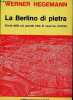
Presentazione di Donatella Calabi - livre en italien. Classification Dewey : 450-Italien, roumain, rhéto-romain
AINO + ALVAR AALTO : A LIFE TOGETHER
, Phaidon Press, 2023 Hardcover, 352 pages, ENG.,305 x 240 x 35 mm, NEW, illustrated in colour / b/w. ISBN 9781838666071.
A visual biography of Aino and Alvar Aalto, who designed some of the most iconic objects of the twentieth century. Aino and Alvar Aalto together founded Artek and created some of the most celebrated objects and buildings of the twentieth century. Through letters, documents, drawings, and family photographs, Alvar and Aino's grandson tells the stories of their life together, in Finland and abroad, drawing on many of the never-before-published letters they sent to each other and to family, friends, and colleagues, until Aino's death in 1949. The first monograph to specifically examine and celebrate the life and work of Aino and Alvar as a shared endeavour, this personal and intimate look at the unconventional lives of one of the most influential design couples of the twentieth century has been warmly and accessibly written by Aino and Alvar's grandson, who has drawn on the family's largely unpublished archive, including personal letters, snapshots, and sketches.
Rom. Art Treasures in the Royal Ontario Museum.
Toronto, University of Toronto 1963, in-4to, VII + 200 p., illustr. with 41 color plates and 163 bl./w. illustr. orig. clothbound with orig. illustr. jacket.

(SLACES, NVVA)
Phone number : 41 (0)26 3223808
Resebilder und Skizzen aus Italien, Sicilien und Sardinien.
Leipzig, Friedrich Fleischer, 1852. 8°. IX (1), 570 S. Mit 1 Stahlstich als Frontisp. und 1 gef., lithogr. Plan. Pappband der Zeit mit Rückenschild.
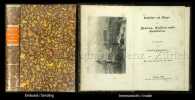
Friedrich Heinzelmann (1791-1852), einer der vielen deutschen Italienreisenden stammte aus Baden-Württemberg. - Durchgehend etwas gebräunt und stockfleckig. Einband berieben und bestossen.
KUNSTHISTORISCHES MUSEUM (Pinacoteca), VIENNA
Istituto Geografico De Agostini. 1971. In-4. Relié. Bon état, Couv. convenable, Dos satisfaisant, Intérieur frais. 140 pages. Illustré de nombreuses photos en couleur dans et hors texte. Texte sur 2 colonnes. Jaquette déchirée.. Avec Jaquette. . . Classification Dewey : 450-Italien, roumain, rhéto-romain
Collana dei grandi Musei. Classification Dewey : 450-Italien, roumain, rhéto-romain
Hellen van Meene : Untitled
, Gabrius, 2000 Hardcover, 68 pages, ENG, 260 x 225 x 16 mm, As Good As New !, photocover, illustrated in colour, very rare, . ISBN 9788884840011.
Artist Hellen van Meene (Alkmaar, Netherlands, 1972) is known for her (mostly) square format photographic portraits of teenage girls. Her work was first exhibited in 1996 and has been shown around the world since then. Her photos are in the collection of many prominent museums, including Guggenheim NYC and MoMA. She lives and works in Heiloo and her subjects now include boys, still lifes, dogs and other animals.
PER CHI SUONA LA CAMPANA, VOLUME I
Arnoldo Mondadori. 1966. In-12. Broché. Etat d'usage, Tâchée, Dos satisfaisant, Intérieur acceptable. 236 pages.. . . . Classification Dewey : 450-Italien, roumain, rhéto-romain
Il Libri del Pavone, vol. 8. Classification Dewey : 450-Italien, roumain, rhéto-romain
La Capra
Napoli - New York Edizioni Morra - Printed Editions 1979 In-8 Broché, couverture illustrée à rabats
Edition originale. Texte en italien et en anglais. Photographies en noir. 80 pp. Très bon 0
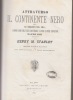
Attraverso il Continente nero, ossia, Le sorgenti del Nilo, i Grandi laghi dell'Africa equatoriale e lungo il fiume Livingstone fino all'Oceano Atlantico : 1874-1877 di Henry M. Stanley ; traduzione autorizzata dall'autore.
1879 Milano : Treves, 1879.In-4,legatura reliure demi basane à petits coins,dos orné titré, [6], 374 p.,texte à 2 colonnes, ill. 30 cm.6 cartes en couleur sur une feuille rempliée toilée,une carte manquante in fine,e 150 incisioni xilografiche nel testo,bon exemplaire devenu rare
Remise de 20% pour toutes commandes supérieures à 200 €
DELITTO SULL'IDITAROD TRAIL
Arnoldo Mondadori. 1992. In-12. Broché. Bon état, Couv. convenable, Dos satisfaisant, Intérieur acceptable. 207 pages. Texte sur 2 colonnes. Illustré d'une carte en noir et blanc hors texte.. . . . Classification Dewey : 450-Italien, roumain, rhéto-romain
'Il Giallo Mondadori', 2247. Dossier VAN GULIK. Classification Dewey : 450-Italien, roumain, rhéto-romain
L'ESTATE DEL VELENO
Arnoldo Mondadori. 1977. In-12. Broché. Etat d'usage, 1er plat abîmé, Dos satisfaisant, Intérieur acceptable. 176 pages. Texte sur 2 colonnes.. . . . Classification Dewey : 450-Italien, roumain, rhéto-romain
'Il Giallo Mondadori', 1494. In Appendice la Rivista di Ellery QUEEN. Classification Dewey : 450-Italien, roumain, rhéto-romain
SEI RACCONTI MODERNI. CASSOLA, MORAVIA, BUZZATI, ALVARO
ERNST KLETT STUUTGART. 1976. In-12. Broché. Bon état, Couv. convenable, Dos satisfaisant, Intérieur frais. 56 pages. Ouvrage en italien.. . . . Classification Dewey : 450-Italien, roumain, rhéto-romain
Classification Dewey : 450-Italien, roumain, rhéto-romain
DESERT POLARI- TEXTE EN ITALIEN
RIZZOLI EDITORE. 1971. In-8. Relié. Bon état, Couv. convenable, Dos satisfaisant, Intérieur frais. 125 pages environ- nombreuses illustrations en noir et blanc et en couleurs dans et hors texte- texte sur 2 colonnes. . . . Classification Dewey : 450-Italien, roumain, rhéto-romain
INTERNATIONAL LIBRARY Classification Dewey : 450-Italien, roumain, rhéto-romain
CHEZ LES ROMAINS FASCISTES
1934 reliure demi-chagrin grenat grand in-octavo oblong présentée sous étui très légèrement défraîchi (binding oblong half shagreen great in-octavo with slipcase), dos 2 faux-nerfs (spine with 2 raised bands) - titre frappé or (gilt title), papier marbré aux plats (cover with marbled paper), tête dorée (top edge gilt) - gouttière grand papier (fore-edge great paper), marque-page en tissu (bookmark in tissue), dos et couverture conservés (spine and cover preserved), tirage limité à 10 exemplaires - sur papier Lafuma (limited edition - 10 copies were printed), 1 illustration hors-texte (1 illustration full page engraving) : bronze moderne dû à l'artiste Tayaht, annotations manuscrites anciennes à l'encre sur la page de titre (old handwritten annotations with ink on the title page) : "Grande médaille d'Or du Tourisme Italien Octobre 1934", 264 pages, 1934 à Paris Editions de la Revue Mondiale,
préface de Monsieur Henry Bérenger Président de la Commission Sénatoriale des Affaires Etrangères - édition originale (original edition) - trés belle reliure en bon état (beautiful binding in very good condition)..
Die Französisch-Sardinische Ueberreinkunst vom 15. September 1864.
Frankfurta.M., Verlag für Kunst und Wissenschaft 1865, 225x140mm, 36Seiten, broschiert. Rousseurs.
Pour un paiement via PayPal, veuillez nous en faire la demande et nous vous enverrons une facture PayPal
Carta Geologica delle Alpi Nord-Occidentali.
Milano, 1937. 90 x 125 cm. Farbige Karte, auf Leinen aufgezogen und gefaltet.
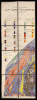
Geologische Karte von Nord-östlichen Alpen (Wallis, Italien)
L'ARTE IN ROMA DAL SEC. VIII AL XIV
Licinio Cappelli. 1945. In-8. Relié. Bon état, Couv. convenable, Dos satisfaisant, Intérieur frais. 515 pages. Illustré de nombreuses photos en noir et blanc hors texte.. Avec Jaquette. . . Classification Dewey : 450-Italien, roumain, rhéto-romain
Istituto di Studi Romani, Storia di Roma, Volume XXVII. Classification Dewey : 450-Italien, roumain, rhéto-romain
DE RE SCENICA IN AESCHYLI ORESTEA, DISSERTATIO
Literis Staritzii, Lipsiae. 1846. In-8. Broché. Etat d'usage, Livré sans Couverture, Dos satisfaisant, Pliures. Plaquette de 24 pages. Etiquette de code sur le dos. Quelques tampons de bibliothèque.. . . . Classification Dewey : 450-Italien, roumain, rhéto-romain
Dissertatio Scripta Renuntiationi XXI. Doct. Philos. et AA. LL. Mag. Cal. Maiis A. MDCCCXLVI, Rectore Mag. D. Ludovico de Pfordten. Classification Dewey : 450-Italien, roumain, rhéto-romain
IL MISTERO DEI CELTI
Garzanti. 1975. In-8. Relié. Bon état, Couv. convenable, Dos satisfaisant, Intérieur frais. 362 pages. Illustré de nombreuses photos et de plans et cartes en noir et blanc, dans et hors texte.. Avec Jaquette. . . Classification Dewey : 450-Italien, roumain, rhéto-romain
21 illustrazioni fuori testo e 16 cartine nel testo. Classification Dewey : 450-Italien, roumain, rhéto-romain

