 Write to the booksellers
-
Type
Book (1242)
Magazine (1)
-
Language
French (1241)
Italian (2)
-
Century
18th (2)
19th (44)
20th (116)
21st (17)
-
Countries
Belgium (266)
France (367)
Netherlands (329)
Switzerland (281)
-
Syndicate
ILAB (321)
NVVA (15)
SLACES (15)
SLAM (306)
SNCAO (1)
Die satirische Streitschrift des Papyrus Anastasi I.
Wiesbaden, Otto Harrassowitz, 1983. In-8 broché, 159 pp.
Couv. très légèrement fanée, bonne condition par ailleurs. - Frais de port : -France 6,8 € -U.E. 9 € -Monde (z B : 14 €) (z C : 24 €)
Literarische Ostraka der Ramessidenzeit in Übersetzung.
Wiesbaden, Otto Harrassowitz, 1986. In-8 broché, 93 pp.
Couv. très légèrement fanée, bonne condition par ailleurs. - Frais de port : -France 5,7 € -U.E. 8 € -Monde (z B : 12 €) (z C : 22 €)
L'écriture et l'art de l'Egypte ancienne - Quatre leçons sur la paléographie et l'épigraphie pharaoniques
Presses Universitaires de France, 1986, 253 p., in-8 br., coll. "Essais et Conférences du Collège de France", préface de Jean Leclant, 63 figures in-t., 108 planches h.-t., très bon état
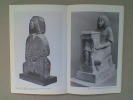
Ces "Quatre leçons" de G. H. Fischer constituent une introduction nécessaire à la connaissance de la civilisation, de la graphie et de l'art pharaoniques. Prononcées les 9, 16, 23 et 30 octobre 1981, avec l'intitulé d'ensemble : "Considérations sur la paléographie et l'épigraphie de l'Egypte ancienne", les leçons du Pr H. G. Fischer sont enrichies ici de notes et de belles planches photographiques.
Transforming the Medieval World Uses of Pragmatic Literacy in the Middle Ages. A CD-ROM and Book
, Brepols - Harvey Miller, 2006 Hardcover. X 312 p., CD, 160 x 240 mm, Languages: English, German, Fine copy. Including an index. ISBN 9782503511665.
When viewed retrospectively, the period between the eleventh and the fifteenth centuries was a phase of European history that was characterized by a radical and fundamental media transformation. Before this time, the vast majority of the population had never encountered the written word in their day-to-day activities. From the beginning of the second millennium, however, texts began to appear in, and influence, almost every sphere of human life. Medieval written texts were subject to revision, copying, embellishments, and deletions; they were read silently and aloud, and they were recited in a variety of contexts. This CD-ROM and book, Transforming the Medieval World, presents these changes dynamically by linking texts and images from this period, and by providing detailed commentaries on each of them. The multimedia environment offered on the CD visualizes these textual transformations and illustrates the adaptability and dynamism of writing and its reception. The uses of writing in this early phase of intensive European literacy are analysed in eleven separate multimedia presentations, which are almost all based on research carried out by the Special Research Unit (SFB) between 1986 and 1999. The CD also contains an anthology of important essays, which provide the user with further reading materials, as well as a general bibliography. The book which accompanies the CD-ROM facilitates the use of the CD itself, and provides the various multimedia presentations in written format. As such, Transforming the Medieval World will be invaluable to both scholars and students interested in medieval literacy.
Album paléographique du Nord de la France. Chartres et documents historiques reproduits par la phototypie et publiés avec transcription partielle. Travaux et mémoires de l’Université de Lille. Atals n° 2.
Lille, Au siège de l’Université 1896, 285x380mm, III - 204pages, broché. Bon état.
Pour un paiement via PayPal, veuillez nous en faire la demande et nous vous enverrons une facture PayPal
Abriss der lateinischen Paläographie. 2. neu bearbeitete und vermehrte Auflage. Mit 39 Abbildungen auf 24 Tafeln
Stuttgart, Hiersemann, 1963.
322 p., 24 plates. Cloth 24.5 cm
I veneti antichi Lingua e cultura.
Editoriale Programma, Padova, 1988. In-4, cartonnage de l'éditeur, jaquette, 440pp, 323 figues et illustrations; bibliographie, indice.
Très bonne condition. -
Yémen, cités d'écritures.
Manosque, Le bec en l'air éditions, 2006. In-4 à l'italienne, cart. éd. ill. sous jaquette ill. en coul.; 204 pp., très nb. ill. photogr. et cartes en coul., texte sur 3 colonnes, notes, chronologie, bibliographie, cahier arabe in fine.
Très bel ex. - Frais de port : -France 9,65 € -U.E. 11 € -Monde (z B : 17 €) (z C : 42 €)
FONTANA SEMERANO, Sandra (inventario a cura di). - SCHIAVOTTI MORENA, Marzia (inventario a cura di).
Reference : 76889
La carte de Giovanni Targioni Tozzetti conservate nella Biblioteca Nazionale Centrale di Firenze. Presentazione di Paolo Galluzzi. Inventari e Cataloghi Toscani, n.° 30.
Milano, Giunta regionale toscana & Editrice Bibliografica 1989, 300x210mm, XIV - 160pagine, in brossura. Timbro biblioteca. Ottimo stato.
incisione a colori, Pour un paiement via PayPal, veuillez nous en faire la demande et nous vous enverrons une facture PayPal
Archives du Forez XVe - XVIIIe siècle. Fac-similés transcits et commentés.
2004 Saint-Etienne, Conseil Général de la Loire, 2004, grand in 4° broché, 222 pages ; fac-similés en noir et en couleurs ; couverture illustrée.
...................... Photos sur demande ...................


Phone number : 04 77 32 63 69
De oudheid in codex en druk. (Themanummer Hermeneus).
Hermeneus 38,11/12 (1967).
60 p.; 10 plates. Wrappers.
Tradizione medievale ed edizione critica del “Somnium Scipionis”. Millennio Medievale, 33. Sottocollana, Testi, 10.
Firenze, Sismel, Edizioni del Galluzzo 2002, 245x175mm, XIII - 577pagine, legatura del editore con sovracopperta. Ottimo stato.
Pour un paiement via PayPal, veuillez nous en faire la demande et nous vous enverrons une facture PayPal
Manuel d'Assyriologie. Tome Premier : Explorations et fouilles, Déchiffrement des cunéiformes, Origine et histoire de l'écriture.
Paris, Geuthner, 1977. In-8 br., XIV-470 pp., 2 plans et une carte dépliants, importante biblio., index.
Réimpr. de l'édition Ernest Leroux, 1904. Bonne condition. -
Hellénisme dans l'Egypte du VIe siècle. La bibliothèque et l'oeuvre de Dioscore d'Aphrodité.
Le Caire, IFAO, 1999. 2 vol. in-folio broché, 734 pp. en continu, qq. fig. in t., extraits en grec, 77 planches de reprod. photogr. en n/b. de papyrus, index.
MIFAO, 115. Bonne condition. - Frais de port : -France 13,5 € -U.E. 13 € -Monde (z B : 24 €) (z C : 52 €)
FOURNET (Jeean-Luc) [Edité par], MAGDELAINE (Caroline) [avec la coll.]
Reference : 591942
ISBN : 9782701802503
Les archives de Dioscore d'Aphrodité cent ans après leur découverte : histoire et culture dans l'Egypte byzantine.
Paris, De Boccard, 2008. In-8 broché, couv. ill., 384 pp., 32 pl. en n/b. de reprod. photogr., 17 contributions multilingues, annexes et index. Epuisé chez l'éditeur.
Collection de l'Université Marc Bloch de Strasbourg. Etudes d'archéologie et d'histoire ancienne dirigée par Dominique Lenfant. Dos très lég. bruni, très bon ex. au demeurant. - Frais de port : -France 6,8 € -U.E. 9 € -Monde (z B : 14 €) (z C : 24 €)
FRAKNOI, Guglielmo. - FOGEL, Giuseppe. - GULYAS, Paolo. - HOFFMANN, Edit. - BERZEVICZY, Alberto (a cura di). - KOLLANYI, Francesco (a cura d). - GEREVICH, Tiberio (a cura d).
Reference : 77128
Biblioteca Corvina. La biblioteca di Mattia Corvino Re d’Ungheria. Traduzione dall’ungherese di Luigi Zambra. 30 Tavole.
Budapest, Editrice L’Accademia di Santo Stefano 1927, 365x270mm, 186pagine, in brossura. Strappo di 11 cm tra la parte superiore della schiena ed entrambi i bordi. Bel exemplaire.
incisione b/n, Pour un paiement via PayPal, veuillez nous en faire la demande et nous vous enverrons une facture PayPal
Nicolaus Papa IV, 1288 - 1292. Girolamo d’Ascoli. Testo curato da Franca Maroni Capretti.
Ascoli Piceno, Cassa di Risparmio di Ascoli Piceno 1990, 280x205mm, 292pagine, in brossura. Con sovracopperta. Ottimo stato.
fotografie a colori e b/n, Pour un paiement via PayPal, veuillez nous en faire la demande et nous vous enverrons une facture PayPal
Le iovile capuane.
Firenze, Léo S. Oslchki editore, 1981. In-8 broché, 238pp, 23 ill. photographies en N/B, ( Lingue e iscrizioni dell'Italia antica 2).
Très bonne condition, partiellement non coupé. - Frais de port : -France 7,15 € -U.E. 9 € -Monde (z B : 14 €) (z C : 24 €)
Le Iscrizioni Supdicence. I. Testi.
Firenze, Léo S. Oslchki editore, 1985. In-8 broché, 297pp, 41 ill. photographies en N/B, (Lingue e iscrizioni dell'Italia antica 5).
Très bonne condition, partiellement non coupé. - Frais de port : -France 7,15 € -U.E. 9 € -Monde (z B : 14 €) (z C : 24 €)
Gli autographi di fratre Francesco e di fratre Leone.
Turnhout, Brepols, 2000.
137 p., 28 pls. Cl. 25 cm (CCAMA, Corpus Christ. Autographa Medii Aevi 5) (New 80 Euro)
Codex Egberti der Stadtbibliothek Trier. Entstehung und Geschichte der Handschrift.
Wiesbaden, Reichert, 1984.
54 p., 4 pls. Wrs. 27 cm
Album de paléographie et de diplomatique. Fac-similés phototypiques de documents relatifs à l'histoire du midi de la France et en particulier de la ville de Toulouse
Champion Toulouse, chez l'éditeur Clovis Lassalle 1912. Paris Champion. Grand in-Folio en feuillet sous couverture cartonnée, nouée par lacets, dos toilé. Manque de papier en bord de couverture. 36 planches.
Toutes les expéditions sont faites en suivi au-dessus de 25 euros. Expédition quotidienne pour les envois simples, suivis, recommandés ou Colissimo.
I manoscritti datati del fondo acquisti e doni e dei fondi minori della Biblioteca Medicea Laurenziana di Firenze.Manoscritti datati d’Italia 12.
Firenze, Edizioni del Galluzzo - sismel 2004, 300x220mm, X- 133pagine, legatura del editore con sovracopperta. Exemplaire à l'état de neuf.
112 incisione b/n, 1 cd-rom, Pour un paiement via PayPal, veuillez nous en faire la demande et nous vous enverrons une facture PayPal
Chartularium Universitatis Parisiensis Sub Auspiciis Consilii Generalis Facultatum Parisiensium Ex Diversis Bibliotecis Tabulariisque Collegit et cum authenticis chartis contulit
Paris. 26 cm x 33 cm. 1889. Reliés. 4 volume(s). 2863 pages. Paris Delalain 1889-1897 édition originale. 4 volumes reliures toilage moderne couvertures parcheminées conservées 26 cm x 33 cm XXXVI+ 713+ XXIII+ 808+ XXXVII+ 777+ XXXVI+ 835 pages. Transcription et annotations de Friedrich Heinrich Suso Denifle avec le concours de Emile Chapelain tabula index generalis index personarum index rerum. Très bon état
Kleinasiatische Sprachdenkmäler.
Berlin, Walter de Gruyter & Co, 1932. In-8 broché, VIII-155 pp., texte en allemand. Ex. non coupé. Première édition.
Kleine Texte für Vorlesungen und Übungen, 163. Dos un peu jauni, très bon ex. - Frais de port : -France 5,7 € -U.E. 8 € -Monde (z B : 12 €) (z C : 22 €)

