 Write to the booksellers
-
Type
Book (4705)
Magazine (4)
-
Language
Dutch (98)
English (4)
French (4598)
German (1)
Italian (2)
Latin (5)
Spanish (1)
-
Century
16th (5)
17th (30)
18th (81)
19th (426)
20th (1892)
21st (95)
-
Countries
Belgium (1763)
Brazil (1)
Canada (1)
Côte d'Ivoire (5)
Denmark (560)
France (942)
Netherlands (7)
Switzerland (1430)
-
Syndicate
ALAC (1)
CLAM (201)
ILAB (1403)
NVVA (180)
SLACES (180)
SLAM (432)
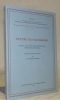
Steppe im Staubkorn. Texte aus der Urdu-Dichtung Muhammad Iqbals. Ausgewählt, übersetzt und erläutert von J. Christoph Bürgel. Seges Philologische und literatische Studien und Texte 28.
Freiburg S., Universitätsverlag 1982, 235x160mm, 194Seiten, broschiert.
Pour un paiement via PayPal, veuillez nous en faire la demande et nous vous enverrons une facture PayPal
Das Bild des Dichters bei Eichendorff
Köln, 1968 vi + 300pp., 21cm., Academic dissertation (Inaugural-Dissertation zur Erlangung des Doktorgrades der Philosophischen Fakultät der Universität zu Köln), T59374
Codices poetici et philologici
Wiesbaden, Harrassowitz 1981 xx + 279pp. + portrait, 30cm., copy from the library of the Belgian medievalist Raymond Macken with his signature, in the series "Die Handschriften der Würtembergischen Landesbibliothek Stuttgart" Erste Reihe Zweiter Band, softcover, good condition, T75227
Studia Etymologica Indoeuropaea. Memoriae A.J. Van Windekens (1915-1989) dicata [in: Orientalia Lovaniensia Analecta, 45]
Leuven, Peeters 1991 xvi + 343pp., hardcover (editor's green cloth), dustwrapper, 25cm., in the series "Orientalia Lovaniensia Analecta" volume 45, fine condition (as new), ISBN 978-90-6831-378-9, [Contains over 30 articles, in various languages], X80260
Opera quae exstant omnia. ad optimorum exemplorum fidem emendavit, varietate lectionis, animadversionibus criticis, summario et indice instruxit Wilhelmus Lange
Halle an der Saale, Hemmer, 1803 fort vol. in-8, 84-[8]-836 pp., veau fauve raciné, dos lisse cloisonné et orné de guirlandes et fleurons dorés, pièce de titre brique, encadrement de simple filet à froid sur les plats, chaînette dorée sur les coupes, tranches mouchetées de bleu, gardes de papier bleu (reliure de l'époque). Dos uniformément insolé.
Bonne édition, estimée pour son exactitude critique. Isocrate étant estimé à l'égal de Démosthène tant pour l'éloquence politique que judiciaire, les versions de ses discours abondent.Brunet III, 467. - - VENTE PAR CORRESPONDANCE UNIQUEMENT - LIEN DE PAIEMENT, NOUS CONSULTER.
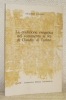
La tradizione esegetica nel commento ai Re di Claudio di Torino.Quaderni dell’Istituto di Filologia Classica “Giorgio Pasquali” dell’Universita’degli Studi di Firenze.
Firenze, CLUSF - Cooperativa Editrice Universitaria 1979, 210x140mm, 145pagine, in brossura. Exemplaire à l'état de neuf.
Pour un paiement via PayPal, veuillez nous en faire la demande et nous vous enverrons une facture PayPal
Der ostlappische Vokalismus vom qualitativen Standpunkt aus, mit besonderer Berücksichtigung des Inari- und Skoltlappischen. Lautgeschichtliche Untersuchung
Helsinki, Suomalais-Ugrilainen Seura 1939 xvi + 386pp., 25cm., text in German, in the series "Suomalais-Ugrilaisen seuran toimituksia. Mémoires de la société finno-ougrienne" volume LXXIX (79), 3 stamps, pages still uncut, text and interior clean and bright, good condition, T98435
Struktur und Entwicklung der ostlappischen Quantitätssysteme
Helsinki, Suomalais-Ugrilainen Seura 1946 xxii + 267pp., 25cm., text in German, in the series "Suomalais-Ugrilaisen seuran toimituksia. Mémoires de la société finno-ougrienne" volume LXXXVIII (88), 3 stamps, pages still uncut, text and interior clean and bright, good condition, T98426
Corpus Troporum XII. Tropes du Gloria. Volume 1: Introduction et édition des textes. Volume 2: Aperçu des manuscrits. Studia Latina Stockholmiensia, LXI.
Stockholm, Stockholm University 2014, 240x160mm, 429 + 438pages, broché. Exemplaire à l'état de neuf.
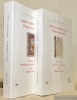
photos couleurs, Pour un paiement via PayPal, veuillez nous en faire la demande et nous vous enverrons une facture PayPal
Senjen-Maalet. Lydverket i Hoveddrag.
Kristiania, 1913. Privat halvfablea. 84 pp.
Videnskapsselskapets Skrifter. II. Hist.- Filosofiske Klasse 1912. Nr. 4.
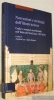
Narrazioni e strategie dell'illustrazione. Codici e romanzi cavallereschi nell’Italia del Nord, secc. XIV - XVI. Collezione Il libri di Veilla, Arte.
Roma, Viella 2014, 240x170mm, 171pagine, in brossura. Copertine con alette. Ottimo stato.
Pour un paiement via PayPal, veuillez nous en faire la demande et nous vous enverrons une facture PayPal
Charmante soirée - SERIE NOIRE 230
,Paris, Gallimard 1955, 184 pp., 1 vol. in 12 relié cartonné sous jaquette noire et jaune
Edition originale
Vocabulaire patois du pays Messin
Paris, Borrani et Droz/ Dumoulin 1854 viii + 60pp., 19cm., brochure originale, peu de rousseurs, bon état, rare, T96276
Die Erziehung des Edelfräuleins im alten Frankreich nach Dichtungen des XII., XIII. und XIV.jahrhunderts
Halle a.S., Max Niemeyer 1908 [vi +] 80pp., in "Beihefte zur Zeitschrift für romanische Philologie" 16.Heft, spine repaired, text VG
Eggjum-Stenen. Forsøg paa en folologisk Tolkning.
Kbhvn., 1931. Folio. Omslagets ryg med lidt rifter. 111 pp., 9 plancher.
Svenskevældets Fald. Studier til Danmarks Oldhistorie i filologisk og runologisk Lys.
København, Levin & Munksgaard, 1929. Lex8vo. Privat hshirtbd. med skindtitel på ryg. 158 pp., 16 plancher. Med dedikation.
Morfologie van het Tetela (Kasayi, Kongo) [2 volumes]
Gent, 1964 Volledig in 2 delen: xvi + 336pp., in-4, origineel exemplaar van Jacobs' proefschrift aan de Rijksuniversiteit te Gent (1964, promotor: prof. Burssens), bladsneden wat bevlekt, goede staat, zeldzaam, C90949
Tetela-teksten
Tervuren, 1959 104pp.+ 1 carte, br.orig., bel état, dans "Annales du Musée royal du Congo belge Tervuren. Série in-8. Sciences de l'homme. Linguistique" vol.20
A kai O (Greek). Curiosis et Simul Incautus Aristarchus, Sive Dissertatio Philologio-Critica De Veterum Grammaticorum Censura Circa Libros Eorumq Inscriptiones, Quam favente supremo Numine & Annuente Ampulissima Facultate Philosophica...
Havniæ, 1705. Small 4to. Unbound. Engr. vignette on t-p. Clean copy. (2), 15, (1) pp.
Bibl.Dan. IV:545.
Les traditions indo-asiatiques
Paris, A. Lacroix et cie. 1876 368pp., 23cm., br.orig., qqs. rousseurs, bon état, X88346
La parole générative de la mythologie des indiens Yukuna
Tremblay, P. Lepettit 1981 x + 392pp., 28cm., Thèse présenté à la Faculté des Lettres de l'Université de Neuchatel pour obtenir le grade de docteur ès letttres, br.orig., cachet au verso de la p.d.t., texte frais et en bon état, poids: 1kg., G112188
Les Maximes de Ptah-Hotep. L’enseignement d’un sage au temps des Pyramides. Présentation, texte et traduction.
Paris, La Maison De Vie 2004, 240x165mm, 247pages, broché. Exemplaire à l'état de neuf.
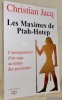
photos couleurs, Pour un paiement via PayPal, veuillez nous en faire la demande et nous vous enverrons une facture PayPal
Cèdre ou sapin ? Tiré à part de la Revue "Kêmi".
P., Geuthner ("Kêmi", Revue de Philologie et d'Archéologie Egyptiennes et Coptes, Tome II), 1930, plaquette in 4° brochée, paginée 113 à 118 ; 4 figures.
PHOTOS sur DEMANDE. ...................... Photos sur demande ...................


Phone number : 04 77 32 63 69
Paysages et structures dans "La Comédie humaine"
Louvain, Université de Louvain 1976 xxx + 487pp., 25cm., non coupé, bel état, dans la série "Recueil de travaux d'histoire et de philologie" 6e série fasc.5, T31481
Mélanges de linguistique et de littérature offerts au Professeur Henri Draye à l'occasion de son éméritat
Louvain 1978 Université de Louvain Hardcover
Reliure rigide, 25 x 17 cm, 258 pp., français, état du livre: Très bon Recueil de travaux d'Histoire et de Philologie VIe série, fascicule 14 [Cette description peut avoir été traduite par une IA.]

