 Write to the booksellers
-
Type
Book (9919)
Engraving (8)
Magazine (12)
Maps (1)
Photographs (1)
-
Latest
Last 24h (1)
Last month (76)
Last week (30)
-
Language
English (4)
French (9900)
German (2)
Greek (28)
Italian (2)
Latin (4)
Swedish (1)
-
Century
16th (11)
17th (34)
18th (49)
19th (695)
20th (1775)
21st (114)
-
Countries
Belgium (1192)
Brazil (1)
Canada (7)
Côte d'Ivoire (5)
France (2894)
Greece (16)
Netherlands (5650)
Switzerland (175)
United Kingdom (1)
-
Syndicate
ALAC (7)
CLAM (35)
ILAB (1903)
NVVA (2)
SLACES (2)
SLAM (1818)
SNCAO (3)
Die Bedeutung des Bühnenspiels für das Verständnis antiker Tragödien.
München, Fink, n.d.
35 p. Stiff wrappers 23 cm (Offprint 'Studien zum antiken Drama. Unter besonderer Berücksichtigung des Bühnenspiels')
theocharis Mores
1996 1996 , in4, pleine toile sous jaquette, livre en grecque 158 pp illustrées en couleurs


Die Ausdruckskraft der caesura media im iambischen Trimeter der attischen Tragödie.
Königstein, Hain, 1981.
XII,151 p. Wrappers. 23 cm (Beiträge zur Klassischen Philologie 126) (Right lower corner slightly warped by moist)
L'Affaire de Corfou et la Société des Nations. Préface de G. Scelle
F. Rey, Dijon 1925. In-8o, br. 112 pp., non coupe.
Gnomologium Parisinum ineditum. Appendix Vaticana
Cracoviae [Krakow], sumptibus Academiae Litterarum 1893 84pp., 26cm., blind wrappers (original frontcover partly preserved), copy from the collection of the Belgian byzantinist prof. Justin Mossay (with ex-libris), pages are still uncut, good condition, [Introduction in Latin, texts in Greek], K114486
Mosaïque. Recueil d'hommages à Henri Stern.
Paris, Éd. Recherche sur les civilisations, 1983.
374 p.; 237 plates. Stiff wrappers 30 cm (Festschrift)
DIX HUIT ANS ET QUELQUE ... - EDITION BILINGUE.
ENTRE DEUX MERS / REGIONS D'EUROPE / CLEM. 2000. In-8. Broché. Bon état, Couv. convenable, Dos satisfaisant, Intérieur frais. 79 pages - ouvrage en grec avec la traduction française en regard.. . . . Classification Dewey : 480-Langues helléniques. Grec
Traduit du grec par Claire Monférier - ouvrage en grec avec la traduction française en regard. Classification Dewey : 480-Langues helléniques. Grec
Stips votiva. Papers presented to C.M. Stibbe.
Amsterdam, Allard Pierson Museum, 1991.
XV,264 p. Cloth. 30 cm (Festschrift, contributions in Italian, English & German)
"Grèce d'Asie; arts et civilisations classiques de Pergame à Nemroud Dagh. L'art antique au Proche-Orient."
Paris, Seuil, 1986. 25 x 32, 232 pp., 178 planches en couleurs, autres illustrations (photos et dessins en N/B, 1 carte double-page, 4 tableaux, reliure d'édition pleine toile + jaquette, très bon état.
Empire Romain. Volume I : Des étrusques au déclin de l'Empire
1996 Editions Taschen, collection "Architecture mondiale" - 1996 - In-4, cartonné sous jaquette illustrée de l'éditeur - 240 pages - Très nombreuses illustrations et reproductions photographiques en couleurs in et hors texte
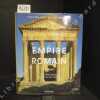
Bon état - Menus frottements sur la jaquette
STILTINGUS J. S.J., SUYSKENUS C. S.J., PERIERUS J. S.J. e.a. (CARNANDET Joannes, re-edition)
Reference : R74289
(1867)
Acta sanctorum [October 1 and 2] ex Latinis et Graecis aliarumque gentium monumentis, servata primigenia veterum scriptorum phrasi, collecta, digesta, commentariisque et observationibus illustrata. Octobris tomus primus quo dies primus et secundus continentur
Parisiis et Romae [Paris & Rome], Apud Victorem Palmé 1867 xlvi + 794pp., 38cm., printer's device on title page, 5 full page engravings (second title page, portrait of Maria Carlonia archidux Austriae, portrait of Stiltingus S.J., portrait of Perierus S.J. & plate with Eticho Dux, S. Odilia and S. Leudegar), editio novissima, text printed in 2 columns, bound in vellum (green and red title label with gilt lettering on spine, corners bit bumped, some shelf wear), few foxing, very good condition, [most of the texts in Latin], R74289
STILTINGUS J. S.J., SUYSKENUS C. S.J., PERIERUS J. S.J. e.a. (CARNANDET Joannes, re-edition)
Reference : R74290
Acta sanctorum Septembris [September 29 and 30] ex Latinis et Graecis aliarumque gentium monumentis, servata primigenia veterum scriptorum phrasi, collecta, digesta, commentariisque et observationibus illustrata, quo duo postremi dies continentur cum ejusdem mensis supplemento et gemina appendice mensis Augusti
Bruxellis [Brussels], Typis Alphonsi Greuse s.d. xvi + 906pp., 38cm., engraved printer's device on title page, 3 full page engravings out of text (of which a second title page & portrait of Iosepha archidux Austriae & map illustrating p.261 "Solodorum in Helvetia") editio novissima, text printed in 2 columns, bound in vellum (green and red title label with gilt lettering on spine, corners bit bumped, some shelf wear, vellum damaged on top of spine and at the raised bands), few foxing, stamp at verso of title page, volume 48 of the Acta Sanctorum, good condition, [most of the texts are in Latin], R74290
Epidromus adversus putridum, murcidum & cariosum angelocratoris pedum :. id est ; secunda pars responsionis de septuaginta septimanis propheticis : quam auspice Domino, moderatore Christophoro Helvico, Hebraeae Graecaeque linguarum in inclyta Giessena professore ordinario, publice pro virium modulo suscepturus est Philippus Stippius Rodenaviensis Cattus
Giessen, Nicolaus Hampel, 1607 petit in-4, [15] ff. n. ch., dérelié.
Rares positions de thèses défendues devant l'hébraïsant Christoph Helwig (1581-1617), célèbre pour ses études de chronologie biblique. L'Angelocrator qui condense toutes les invectives de l'auteur est la forme latinisée de Daniel Engelhardt (1569-1635), théologien calviniste et archidiacre de Marburg, particulièrement odieux aux professeurs et étudiants luthériens qui avaient quitté leur Université en cette année 1607 pour fonder celle de Giessen, consacrée à l'orthodoxie du maître de Wittenberg.Aucun exemplaire au CCF. - - VENTE PAR CORRESPONDANCE UNIQUEMENT - LIEN DE PAIEMENT, NOUS CONSULTER.
IOANNIS STOBAEI ECLOGARUM PHYSICARUM ET ETHICARUM LIBRI DUO, TOMUS I
B. G. Teubner, Leipzig. 1903. In-12. Relié cuir dos-coins. Etat d'usage, Couv. légèrement passée, Dos abîmé, Quelques rousseurs. 395 pages. Texte en grec ancien. Titre doré sur le dos. Dos très frotté avec de fortes épidermures. Plats frottés. Nombreuses annotations d'époque au dos du 1er plat et en page de garde.. . . . Classification Dewey : 480-Langues helléniques. Grec
Recensuit Augustus Meineke. Classification Dewey : 480-Langues helléniques. Grec
Stobi, the Hellenistic and Roman pottery.
Princeton, Princeton Univ. Press, 1992.
XXXV,218 p., 191 pls. Cl. 29 cm (Stobi, 1)
Keramik jenseits von Chronologie. Beiträge der Arbeitsgemeinschaft 'Theorie in de Archäologie' bei der Tagung des West- und Süddeutschen Verbandes für Altertumsforschung e.V. in Xanten, 7.-8. Juni 2006.
Rahden, Leidorf, 2009.
XIV,155 p., ills. Hardb. (30 cm (Intern. Arch., Arbeitsgemeinschaft, Band 14)
Textes choisis par J. BRUN. 4e éd.
Paris, PUF,1968.
180 p. Pocket (Collection SUP) (Sourcebook; tr.)
A luminous Land. Artists discover Greece.
Los Angeles, J. Paul Getty Museum, 1998.
X,178 p., illustrations. Cloth. 24x28 cm (Including dustjacket)

