 Write to the booksellers
-
Type
Book (9953)
Engraving (8)
Magazine (12)
Maps (1)
Photographs (1)
-
Latest
Last 24h (2)
Last 3 days (4)
Last month (117)
Last week (14)
-
Language
English (4)
French (9934)
German (2)
Greek (28)
Italian (2)
Latin (4)
Swedish (1)
-
Century
16th (11)
17th (30)
18th (48)
19th (698)
20th (1792)
21st (121)
-
Countries
Belgium (1195)
Brazil (1)
Canada (7)
Côte d'Ivoire (5)
France (2924)
Greece (16)
Netherlands (5650)
Switzerland (176)
United Kingdom (1)
-
Syndicate
ALAC (7)
CLAM (35)
ILAB (1906)
NVVA (2)
SLACES (2)
SLAM (1820)
SNCAO (3)
Annales ecclesiastici. (..), una cum critica historico-chronologica P. Antonii Pagii (..). In qua rerum narratio defenditur, illustratur, suppletur, ordo temporum corrigitur, & periodo Graeco-Romana munitur. Additur praeterea Dissertation hypatica ejusdem Pagii ; & epistola consularis Henrici card. Norisii. In hac vero editione Fasti consulares ab A.U.C. 709 ad annum Christi 567 illustrantur, supplentur, & castigantur. Accedunt animadversiones in Pagium, & praecipue circa chronologiam inferioris aevi ab eo digestam
Lucques, Leonardo Venturini, 1738-1746 20 forts vol. in-4, texte sur deux colonnes, demi-basane fauve racinée, dos lisses ornés de filets, guirlandes et fleurons dorés, pièces de titre et de tomaison cerise, tranches marbrées (rel. du XIXe s.).
La première édition de cette oeuvre majeure d'histoire ecclésiastique était parue de 1588 à 1607 à l'adresse de Rome et composait une série de 12 volumes in-folio, couvrant la période de la naissance du Christ à l'année 1198 seulement (soit celle de l'avènement d'Innocent III). La mort du cardinal Baronio cette même année 1607 avait arrêté la publication.Depuis, les rééditions s'étaient succédé ; la nôtre, de loin la meilleure qui ait été donnée, se décline en quatre parties différentes, et forme théoriquement un ensemble de 38 volumes. En fait, le texte de Baronius, enrichi à leur place chronologique des observations critiques de Pagi (publiées originellement en 1705 en 4 volumes), correspond aux 19 premiers volumes ; les 15 suivants, parus de 1747 à 1756, sont occupés par la continuation donnée par Odorico Rainaldi en 1646-1677, et prolongeant le récit de 1198 à 1565, mais qui ne peut en aucun cas être considérée comme oeuvre de Baronio. Enfin, il existe un volume d'appareil critique (1740, il est joint à notre série), et trois volumes d'index, parus de 1757 à 1759. Dans certains exemplaires, on joint également les Annales de Tornielli (1756), ce qui rajoute encore quatre volumes.Nous avons donc l'intégralité du texte de Baronius-Pagi et l'appareil critique :I. 842 pp. - II. 719 pp. - III. 732 pp. - IV. 719 pp. - V. 708 pp. - VI. 691 pp. - VII. 692 pp. - VIII. 695 pp. - IX. 738 pp. - X. 718 pp. - XI. 707 pp. - XII. 764 pp. - XIII. 694 pp. - XIV. 732 pp. - XV. 722 pp. - XVI. 770 pp. - XVII. 774 pp. - XVIII. 771 pp. - XIX. 819 pp. - XX. Le dernier volume, daté de 1740, contient l'Apparatus Annalium ecclesiasticorum Caesaris Baronii, et a été préparé par Giovanni Domenico Mansi ([4] ff. n. ch. de titre et de dédicace, 21 pp., lv pp., 494 pp., avec un beau frontispice allégorique gravé par Zucchi d'après Fratia).Brunet I, 663.Très bon exemplaire. - - VENTE PAR CORRESPONDANCE UNIQUEMENT - LIEN DE PAIEMENT, NOUS CONSULTER.


Aristote et l'analyse du savoir. Collection : Philosophes de tous les temps, N° 81.
Paris, Editions Seghers, 1972. 13 x 16, 190 pp., quelques illustrations en N/B, broché, très bon état.
Bibliographie par G. Rocca-Serra.
[Auguste Brouet] - Barrès, Maurice - Brouet, Auguste (ill.)
Reference : 4601
(1928)
Gréco ou le secret de Tolède. Vingt-trois eaux-fortes originales gravées par Auguste Brouet.
Paris Les Editions d'art Devambez 1928 grand in-4 en feuilles Paris, Les Editions d'art Devambez, 1928. 33,5 x 26 cm, grand in-4, (4) 109 (6) pp. - frontispice et 14 planches hors texte d'après Le Gréco, 8 larges en-têtes, vignette de titre et 7 culs-de-lampe également gravés, en feuilles sous couverture blanche rempliée et imprimée, chemise et étui.
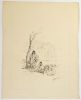
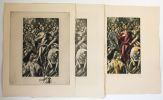
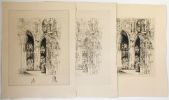
Premier tirage des eaux-fortes de Auguste Brouet. Tirage à 218 exemplaires. Celui-ci l'un des 12 exemplaires sur JAPON à la forme réservés à l'artiste, contenant TROIS ETATS (eau-forte pure, état avec remarque, état définitif) des 23 eaux-fortes annoncées au titre (soit les 15 hors-texte et 8 en-têtes), un grand DESSIN ORIGINAL à la mine de plomb signé et une EAU-FORTE supplémentaire en couleurs (avec deux états supplémentaires en noir) dont le tirage est réservé à ces exemplaires (n° H. C. 1). Sans le cuivre annoncé. Parmi les exemplaires sur Japon il fut également tiré 1 exemplaire unique avec dessins, bons à tirer et 3 états, 20 avec 3 états et 1 dessin, 40 avec 2 états. Somptueuse publication effectuée sous la direction artistique de Edouard Chimot. Bel exemplaire. (CARTRET, IV, 60 : "belle publication cotée" ; MONOD, 1017) Très bon
Geschiedenis van de klassieke lettrekunde
Utrecht Prisma Compendia Utrecht Prisma Compendia 1964, In-12 broché, 320 pages. Texte en hollandais. Bon état.
Toutes les expéditions sont faites en suivi au-dessus de 25 euros. Expédition quotidienne pour les envois simples, suivis, recommandés ou Colissimo.
De bloeiende woestijn. De wereld van het vroege monachisme.
Baarn, Ambo, 1993.
214 p. Cl. 22 cm (OiN Suppl. 11; incl. dustjacket)
Klassieke letterkunde. (7e druk)
Utrecht, Het Spectrum, 2000.
346 p. Paperback 21 cm (Aula)
KLASSIEKE LETTERKUNDE. OVERZICHT VAN DE GRIEKSE EN LATIJNSE LITERATUUR.
Utrecht, Het Spectrum, 2000 Paperback, originele uitgeversomslag in kleur, 21x13 cm.,346 pp. ISBN 9789027469397.
In dit beknopte overzicht wordt de betekenis van de verschillende Griekse en Latijnse auteurs belicht en wordt een korte samenvatting van de belangrijkste van hun werken gegeven.
Die Transzendentalienlehre der alten Ontologie, Teil I: Die Transzendentalienlehre im Corpus Aristotelicum
Berlin, Walter de Gruyter 1972 viii + 415pp., 24cm., publisher's hardcover in blue cloth with gilt lettering (spine slightly sunfaded), text and interior clean and bright, good condition, F105135
VOYAGE DU JEUNE ANACHARSIS EN GRÈCE, vers le milieu du quatrième siècle avant l'ère vulgaire. Tomes 1-7
Paris Chez Etienne Ledoux, Libraire 1821 in 8 (21x14) 7 volumes brochés, couvertures de papier marbré rose de l'époque, étiquettes de titre imprimées sur les dos, rousseurs éparses, non rognés. Tome 1: CXL et 354 pages, le frontispice gravé est présent dans le tome 5 (portrait de l'auteur). Tome 2: II et 506 pages, auréole claire dans l'angle interne de la marge inférieure. Tome 3: VI et 482 pages. Tome 4: VI et 488 pages, petites trace brune sur l'angle de la marge supériure des 10 premiers feuillets. Tome 5: VI et 479 pages. Tome 6: [1] et 436 pages. Tome 7: 448 pages. Texte seul, le volume d'atlas manque (39 planches). Bon exemplaire ( Photographies sur demande / We can send pictures of this book on simple request )
Bon Couverture rigide
VOYAGE DU JEUNE ANACHARSIS EN GRÈCE vers le milieu du quatrième siècle avant l'ère vulgaire. Quatrième édition. Tomes 1-7
Paris de l'imprimerie de Didot Jeune, l'an septième 1799 in 12 (17,5x10) 7 volumes reliures plein veau fauve de l'époque, dos lisses ornés de caissons dorés, pièces de titre de cuir rouge, petites épidermures sur le dos du tome 7 et dernier. Texte seul, l'atlas de format in 4 manque (40 planches gravées). Ensemble en bel état ( Photographies sur demande / We can send pictures of this book on simple request )
Bon Couverture rigide
VOYAGE DU JEUNE ANACHARSIS EN GRÈCE vers le milieu du quatrième siècle avant l'ère vulgaire. Cinquième édition imprimée sur les nouveaux caractères polyamatypes de Henri Didot. Tomes 1-7
Paris Chez Desray, libraire. De l'imprimerie de Didot le Jeune 1817 in 8 (21,5x13,5) 7 volumes reliures demi chagrin violine, dos à nerfs ornés de beaux fleurons dorés. Tome 1: portrait gravé en frontispice, X, CLII et 367 pages, Tome 2: II et 517 pages, Tome 3: VI et 496 pages, Tome 4: VI et 507 pages, Tome 5: VI et 495 pages, Tome 6: [1] et 454 pages, Tome 7: VI et 493 pages. Cinquième édition. Complet des 6 volumes de texte, l'atlas de format in 4 manque (41 planches gravées). Ensemble en bel état ( Photographies sur demande / We can send pictures of this book on simple request )
Très bon Couverture rigide
OEUVRES DE BARTHÉLEMY ET MÉRY
Paris Aimé Payen, Libraire 1838 in 24 (12x7,5) 1 volume reliure demi basane verte de l'époque, dos à nerfs orné de filets dorés, 196 pages, rousseurs. Syphilis; Poèmes et poésies. Auguste Marseille Barthélémy, Marseille 1794-1867, poète français. Bel exemplaire ( Photographies sur demande / We can send pictures of this book on simple request )
Très bon Couverture rigide
Studia minora facultatis philosophicae Univ. Brunensis.
Vol. 36 (1991).
170 p. Wrappers 24 cm (Festschrift, including portrait & bibliography; 10 essays in Czech, 5 in German, 2 in English & 1 in French)
BASILE DE CESAREE par BOISSONADE (de Fontarabie J-F.) ΒΑΣΙΛΕΙΟΣ Ο ΚΑΙΣΑΡΕΙΑΣ
Reference : LI294
(1827)
Notice des scholies inedites de B. de C. sur S. Gregoire de Naziance.
Paris, Academie des Inscriptions et de Belles Lettres, 1827, In-4o, 55-165 p. texte grec notes en francais. Non coupe dans une chemise bleue moderne.
BASILE DE CESAREE (SMETS Alexis S.J. & VAN ESBROECK Michel S.J., eds.)
Reference : R86775
(1970)
Sur l'origine de l'homme (Hom. X et XI de l'Hexaéméron). Introduction, texte critique, traduction et notes [dans: Sources chrétiennes, 160]
Paris, Cerf 1970 344pp., 20cm., br.orig., dans la série "Sources chrétiennes" vol.160, texte grec avec traduction en français, très bon état, R86775
Bibliotheke Ellenon Pateron Kai Ekklesiastikon Suggrapheon. Volume 51 : Vasileios o Megas [= Basilius magnus] (meros 1)
Athenai [Athens], Ekdosis tes apostoloikes diakonias tes ekklesias tes Ellados 1975 307pp., containing critical text editions (first part) of Basilius Magnus (c.330-379 A.D.), 22cm., text in classical Greek, publishers full cloth binding, text is clean and bright, good condition, R113684
Bibliotheke Ellenon Pateron Kai Ekklesiastikon Suggrapheon. Volume 52 : Vasileios o Megas [= Basilius magnus] (meros 2)
Athenai [Athens], Ekdosis tes apostoloikes diakonias tes ekklesias tes Ellados 1975 348pp., containing critical text editions (2nd part) of Basilius Magnus (c.330-379 A.D.), 22cm., text in classical Greek, publishers full cloth binding, text is clean and bright, good condition, R113685
Bibliotheke Ellenon Pateron Kai Ekklesiastikon Suggrapheon. Volume 53 : Vasileios o Megas [= Basilius magnus] (meros 3)
Athenai [Athens], Ekdosis tes apostoloikes diakonias tes ekklesias tes Ellados 1976 439pp., containing critical text editions (3rd part) of Basilius Magnus (c.330-379 A.D.), 22cm., text in classical Greek, publishers full cloth binding, text is clean and bright, good condition, R113686
Bibliotheke Ellenon Pateron Kai Ekklesiastikon Suggrapheon. Volume 54 : Vasileios o Megas [= Basilius magnus] (meros 4)
Athenai [Athens], Ekdosis tes apostoloikes diakonias tes ekklesias tes Ellados 1976 363pp., containing critical text editions (4th part) of Basilius Magnus (c.330-379 A.D.), 22cm., text in classical Greek, publishers full cloth binding, text is clean and bright, good condition, R113687
Bibliotheke Ellenon Pateron Kai Ekklesiastikon Suggrapheon. Volume 55 : Vasileios o Megas [= Basilius magnus] (meros 5)
Athenai [Athens], Ekdosis tes apostoloikes diakonias tes ekklesias tes Ellados 1977 434pp., containing critical text editions (5th part) of Basilius Magnus (c.330-379 A.D.), 22cm., text in classical Greek, publishers full cloth binding, text is clean and bright, good condition, R113688
Bibliotheke Ellenon Pateron Kai Ekklesiastikon Suggrapheon. Volume 56 : Vasileios o Megas [= Basilius magnus] (meros 6)
Athenai [Athens], Ekdosis tes apostoloikes diakonias tes ekklesias tes Ellados 1978 340pp., containing critical text editions (6th part) of Basilius Magnus (c.330-379 A.D.), 22cm., text in classical Greek, publishers full cloth binding, text is clean and bright, good condition, R113689
BASILIUS CAESARIENSIS [BASILE DE CESAREE, BASIL OF CAESERA, BASIL THE GREAT] (GARNIER J., ed.)
Reference : R69154
(1839)
Sancti patris nostri Basilii Caesareae Cappodiciae archiepiscopi Opera Omnia quae exstant vel quae ejus nomine circumferuntur [] [complet en 3 tomes en 6 vols.]
Parisiis [Paris], Apud Gaume fratres 1839 [ ad mss. codices Gallicanos, Vaticanos, Florentinos et Anglicos, necnon ad antiquiores editiones castigata, multis aucta: nova interpretatione, criticis praefationibus, notis, variis lectionibus illustrata, nova sancti doctoris vita et copiosissimi indicibus loucpletat opera et studio D. Juliani Garnier. Greek title: Tou en hagiois patros hêmôn Basileiou, archiepiskopou Kaisareias Kappadokias, Ta Heuriskomena Panta], complet en 3 tomes en 6 vols. lxxxvi,1162 + xcviii,1190 + cclxxii,1008pp., 28cm., editio Parisina altera emendata et aucta, texte imprimé en 2 colonnes, br.orig. (dos de vol.1 restauré), qqs.rousseurs, 1 cachet dans chaque volume, bon état, [contient: Tomus prior - Pars prior & Tomus primus - Pars altera & Tomus secundus - Pars prior & Tomus secundus - Pars altera & Tomus tertius - Pars prior & Tomus tertius - Pars altera], bilingue; texte grec avec traduction latine, R69154
BASILIUS CAESARIENSIS [BASILE DE CESAREE, BASIL OF CAESERA, BASIL THE GREAT] (GARNIER J., ed.)
Reference : R92252
(1839)
Sancti patris nostri Basilii Caesareae Cappodiciae archiepiscopi Opera Omnia quae exstant vel quae ejus nomine circumferuntur [] [complet en 3 tomes en 6 volumes]
Parisiis [Paris], Apud Gaume fratres 1839 [ad mss. codices Gallicanos, Vaticanos, Florentinos et Anglicos, necnon ad antiquiores editiones castigata, multis aucta: nova interpretatione, criticis praefationibus, notis, variis lectionibus illustrata, nova sancti doctoris vita et copiosissimi indicibus loucpletat opera et studio D. Juliani Garnier. Greek title: Tou en hagiois patros hêmôn Basileiou, archiepiskopou Kaisareias Kappadokias, Ta Heuriskomena Panta], complete in 3 parts bound in 6 volumes: lxxxvi,1162 + xcviii,1190 + cclxxii,1008 pp., 28cm., Editio Parisina altera emendata et aucta, text printed in 2 columns, 6 uniform 19th cy. hardcover bindings (marbled boards, spines in red leather with gilt titles), few foxing, library stamp, good condition, [content: Tomus prior - Pars prior & Tomus primus - Pars altera & Tomus secundus - Pars prior & Tomus secundus - Pars altera & Tomus tertius - Pars prior & Tomus tertius - Pars altera], bilingual: Basilius' Greek text with Latin translation, R92252
BASILIUS CAESARIENSIS [BASILE DE CESAREE, BASIL OF CAESERA, BASIL THE GREAT] (GARNIER J., ed.)
Reference : R95899
(1839)
Sancti patris nostri Basilii Caesareae Cappodiciae archiepiscopi Opera Omnia quae exstant vel quae ejus nomine circumferuntur [] [complet en 3 tomes en 6 volumes]
Parisiis [Paris], Apud Gaume fratres 1839 [ad mss. codices Gallicanos, Vaticanos, Florentinos et Anglicos, necnon ad antiquiores editiones castigata, multis aucta: nova interpretatione, criticis praefationibus, notis, variis lectionibus illustrata, nova sancti doctoris vita et copiosissimi indicibus loucpletat opera et studio D. Juliani Garnier. Greek title: Tou en hagiois patros hêmôn Basileiou, archiepiskopou Kaisareias Kappadokias, Ta Heuriskomena Panta], complete in 3 parts bound in 6 volumes: lxxxvi,1162 + xcviii,1190 + cclxxii,1008 pp., 28cm., Editio Parisina altera emendata et aucta, text printed in 2 columns, 6 uniform 19th cy. hardcover bindings in full brown leather, all edges gilt, marbled endpapers, some occasional foxing, good condition, [content: Tomus prior - Pars prior & Tomus primus - Pars altera & Tomus secundus - Pars prior & Tomus secundus - Pars altera & Tomus tertius - Pars prior & Tomus tertius - Pars altera], bilingual: Basilius' Greek text with Latin translation, R95899

