 Write to the booksellers
-
Type
Book (9929)
Engraving (8)
Magazine (12)
Maps (1)
Photographs (1)
-
Latest
Last 24h (11)
Last 3 days (3)
Last month (102)
Last week (1)
-
Language
English (4)
French (9910)
German (2)
Greek (28)
Italian (2)
Latin (4)
Swedish (1)
-
Century
16th (11)
17th (30)
18th (48)
19th (694)
20th (1779)
21st (114)
-
Countries
Belgium (1195)
Brazil (1)
Canada (7)
Côte d'Ivoire (5)
France (2901)
Greece (16)
Netherlands (5650)
Switzerland (175)
United Kingdom (1)
-
Syndicate
ALAC (7)
CLAM (35)
ILAB (1902)
NVVA (2)
SLACES (2)
SLAM (1817)
SNCAO (3)
Pseudo-Plaute. Le prix des ânes (Asinaria). Texte établi et trad. par L. HAVET & A. FRETÉ.
Paris, Les Belles Lettres, (1925).
Wrs. (Budé) (Rebound; st. on title)
Pseudo-Plaute. Le prix des ânes (Asinaria). Texte établi et traduit par L. HAVET & A. FRETÉ.
Paris, Les Belles Lettres, (1925).
Boards. 19.5 cm (Budé) (Rebound; name on title)
Essai de phonétique néo-grecque. Futur composé du grec moderne
Paris, Imprimerie Nationale, 1884 in-8, 47 pp., broché.
Jean Psichari (1854-1929), d'origine grecque, était un philologue, linguiste, romancier et nouvelliste. Il fut un ardent défenseur du grec démotique. - - VENTE PAR CORRESPONDANCE UNIQUEMENT - LIEN DE PAIEMENT, NOUS CONSULTER.
Oeuvres spirituelles, tome I: Homélies propres à la Collection III. Introduction, traduction et notes (avec le texte grec) [Sources chrétiennes, 275]
Paris, Cerf 1980 399pp., 20cm., br.orig., dans la série "Sources chrétiennes" vol.275, bilingue: grec-français, petit coin détaché du plat supérieur, sinon en bon état, R86796
GEOGRAPHIA. TOME III. TEXTE EN GREC.
LIPSIA.. 1845. In-18. Broché. Etat d'usage, Couv. légèrement passée, Dos abîmé, Quelques rousseurs. 207 pages.. . . . Classification Dewey : 480-Langues helléniques. Grec
Classification Dewey : 480-Langues helléniques. Grec
Lettre a Flora [Ptelemaiou pros Phloran]. Texte, traduction et introduction [dans: Sources chrétiennes, 24]
Paris, Cerf 1949 101pp., 20cm., dans la série "Sources chrétiennes. Série annexe de textes non chrétiens" vol.24, br.orig., non coupé, bon état, bilingue: grec-français, R86739
Selectæ sententiæ, avctiores, et ordine commodiori quàm hactenus, descripti, & Græcis Iamblicis à Iosepho Scaligero expressi: cum Gallica explicatione rythmique. Hoc Triglôtton opvs Fed. Morellvs … recognouit, auxit, recensuit
Parisiis Ex typographia Ioan. Libert 1611 in-8 de 64 pp. demi-bas., dos à nerfs, orné, coins vélin [Rel. moderne]
Brunet V 616. Première édition des sentences du mime latin Publilius Syrus (Ier siècle av. J.-C.) accompagnées de leur traduction en vers ïambiques grecs par Scaliger et de leur explication en vers français
Ulysse polutropos. Lectures intertextuelles de l'Illiade et de l'Odyssée. Traduit de l'anglais par Jeanine Routier-Pucci. Préface de Philippe Rousseau.
1995 Lille, Presses du Septentrion (Cahiers de Philologie), 1995, grand in 8° broché, 378 pages ; couverture illustrée.
...................... Photos sur demande ...................


Phone number : 04 77 32 63 69
Pages et pensées morales extraites des auteurs grecs
Armand Colin. 1927. In-12. Cartonnage d'éditeurs. Bon état, Couv. convenable, Dos frotté, Intérieur bon état. 299 p. - Petites tâches sur les plats.. . . . Classification Dewey : 480-Langues helléniques. Grec
Classification Dewey : 480-Langues helléniques. Grec
Pindare Tome 1 Olympiques 3è édition revue et corrigée Collection des universités de France
Société d'édition Les belles Lettres. 1949. In-8. Broché. Bon état, Couv. convenable, Dos satisfaisant, Intérieur frais. 300 pages environ.. . . . Classification Dewey : 480-Langues helléniques. Grec
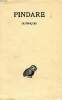
3è édition revue et corrigée. Collection des universités de France. Texte écrit en français et en grec. Classification Dewey : 480-Langues helléniques. Grec
Essays on Latin lyric, elegy and epic.
Princeton, Princeton University Press, (1982).
XIII,354 p. Cloth. 24 cm
Les vers d'or. Hiéroclès, commentaire sur les vers d'or des Pythagoriciens. Trad. nouvelle avec prolègomènes et notes par M. MEUNIER.
Paris, Artisan du Livre, 1925.
345 p. Wrs. 19 cm (Tanslation only)
Les vers d'or. Hiéroclès, commentaire sur les vers d'or des Pythagoriciens. Trad. nouvelle avec prolègomènes et notes par M. MEUNIER.
Paris, Artisan du Livre, 1931.
345 p. Wrs. 19 cm (Translation only) (Covers loose; back damaged; some pencil)
Les vers dorés de Pythagore, expliqués et traduits pour la 1re fois en vers eumolpiques français. Précédés d'un discours sur l'essence et la forme de la poésie par FABRE-D'OLIVET.
Paris, Niclaus, n.d. (Prob. 1946).
409 p. Wrs. 23 cm (Incl. a Greek text)
The golden verses of Pythagoras. Explained and translated into French (...) by FABRE D'OLIVET. Done into English by Nayan Louise Redfield.
N.Y., Ldn., Putnam, 1917.
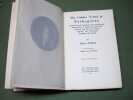
278 p. Original cloth. 24 cm (Including a Greek text & English translation. Ex library copy, with 3 white shelf numbers on the back. Binding somewhat spotted. Stain on the frontcover. Traces of removed labels on the back. Front hinge cracking)
Plato und die sogenannten Pythagoreer.
Halle, Niemeyer, 1923.
X,400 p. Cloth. 23 cm (Cover worn and spotted; occasional underlinings & marginal pencil stripes with a blue pencil; blue pencil annotation on the rear pastedown. Some foxing spots on the fore edge of the book-block)
Les vers d'or pythagoriciens. Édités avec une introduction et un commentaire.
Leiden, E.J. Brill, 1932.
43,71 p. Wrappers. 25 cm (Dissertation, Univ. Leiden) (Cover worn. Small piece of paper gone at the head of the spine)
Pythagoras, lover of wisdom.
Wellingsborough, Antiquarian Press, 1984.
128 p. Paperback 22 cm
Les vers d'or
Marcel Boin,. 1948. In-16. Broché. Bon état, Couv. convenable, Dos satisfaisant, Intérieur frais. 63p illustré d'une gravures en frontispice de Jean mary, et pagination en rouge.. . . . Classification Dewey : 480-Langues helléniques. Grec
Ex. numéroté :387/4000. texte original grec original avec traduction française littérale précédée d'unavertissement et suivie de notes explicatives par léonard Saint-Michel Classification Dewey : 480-Langues helléniques. Grec
Les vers d'or. Texte grec original avec la traduction française littérale précédée d'un avertissement et suivie de notes explicatives par Léonard Saint-Michel. Frontispice de Jean Mary.
Bourges, Boin, 1948, petit in 12 carré, 63 pages.
PHOTOS sur DEMANDE. ...................... Photos sur demande ...................
Phone number : 04 77 32 63 69
Initiation au Grec Biblique.
1982 Cahiers de la Parole, 5.Maison S. Dominique, Bruxelles, 1982. Un cahier A4 broché, 43, 19, 19 & 15 pages. Couverture défraîchie.
La librairie est ouverte du mardi au samedi de 9h30 à 12h30 et de 13h30 à 19h00. Commandes par courriel ou téléphone. Envoi rapide, emballage soigné.
Píndaro : obra completa (Letras Universales Band 114)
Ediciones Cátedra 2008 448 pages 11x2 2x17 8cm. 2008. Broché. 448 pages.
proche du très bon état intérieur propre bonne tenue

