 Write to the booksellers
-
Type
Book (9914)
Engraving (8)
Magazine (12)
Maps (1)
Photographs (1)
-
Latest
Last 24h (1)
Last month (76)
Last week (30)
-
Language
English (4)
French (9895)
German (2)
Greek (28)
Italian (2)
Latin (4)
Swedish (1)
-
Century
16th (12)
17th (31)
18th (48)
19th (694)
20th (1774)
21st (114)
-
Countries
Belgium (1192)
Brazil (1)
Canada (7)
Côte d'Ivoire (5)
France (2889)
Greece (16)
Netherlands (5650)
Switzerland (175)
United Kingdom (1)
-
Syndicate
ALAC (7)
CLAM (35)
ILAB (1905)
NVVA (2)
SLACES (2)
SLAM (1820)
SNCAO (3)
Mythen en hun esoterische betekenis. Mythologie: een reis door de tijd en langs alle windstreken.
Amst., Schors, (2006).
XVI,304 p. Pb. 22 cm
Village préhistorique de Macédoine orientale, I. Fouilles de J. Deshayes (1961-1975). Vol. 2, sous la dir. de R. TREUIL.
Athens, EFA, 2004.
XXIV,325 p., 150 pls. Stiff wrs. 24 cm (BCH, Suppl. 37) (Neolithic and chalcolithic ceramics)
VOCABULAIRE FRANCAIS - LATIN - GREC, MOTS USUELS DE LA PROSE CLASSIQUE
Librairie Vve Ch. Poussielgue. Non daté. In-8. Relié. Etat d'usage, Couv. légèrement passée, Dos satisfaisant, Intérieur acceptable. 267 pages. Texte sur 4 colonnes. Etiquette de code sur la couverture. Quelques tampons et annotations de bibliothèque. Bords des plats frottés.. . . . Classification Dewey : 480-Langues helléniques. Grec
Avec des Index alphabétiques latin et grec. Classification Dewey : 480-Langues helléniques. Grec


On Aristotle's Categories: Dexippus: On Aristotle Categories (The Ancient Commentators on Aristotle)
Bristol Classical Press 1989 156 pages 16 2x1 4x23 8cm. 1989. Relié. 156 pages.
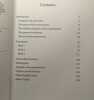
très bon état de conservation intérieur propre bonne tenue dos de la jaquette insolé
Pilgrims and pilgrimage in ancient Greece.
London, New York, Routledge, 1997.
XIX,308 p. Cloth 15,5 cm (Including dustjacket; some pencil; one small ballpoint two-letter word in the margin of a page)
Dimitrios Gerothanasis, Johannes Stelzhammer, Alan Walker, Rex Gao (eds)
Reference : 70427
James M. Collier Collection of Greek and Roman Coins. A Selection
, Brepols - The American Numismatic Society, 2026 Hardback, Pages: xii + 144, Size:152 x 229 mm, Illustrations:236 col., Language: English. ISBN 9780897227537.
Summary Professor James M. Collier was an ardent lover of the history and culture of Europe and the ancient world, and a passionate collector of ancient Greek and Roman coins. Born in 1943 in Bellingham, Washington, he pursued his early academic training at Pacific Lutheran University (PLU) in Tacoma, receiving a Bachelor of Arts in History in 1965. After graduating from PLU, he worked for the Boeing Corporation as an engineer. When he was seconded to Washington, DC, on the Minuteman project, his office was located-quite fortuitously, as it turned out-across from the National Gallery of Art. For two years he spent every lunch hour at the Gallery, where he discovered his real love for art and art history. Returning to the Pacific Northwest, he attended the University of Oregon and graduated with a Master of Arts in Art History in 1970. He then pursued a PhD in Art History at the University of Michigan, completing the degree in 1975. He was appointed an Assistant Professor in the Art History Department at Auburn University (Auburn, Alabama), where he eventually was tenured and became department chair. Over the course of his academic career, he lectured widely and published on the Italian Renaissance and Early Netherlandish perspective-the subject of his doctoral dissertation, entitled "Linear Perspective in Flemish Painting and the Art of Petrus Christus and Dirk Bouts." Professor Collier was published as an artist as well. In 1987, he left his teaching post and devoted himself to his passion for painting, studying at the National Academy of Design in New York City. He and his wife, Carole Anne Menzi Collier, moved to Amsterdam in 1990 and eventually attained dual citizenship. He continued to pursue and share his love of art and ancient coinage for the rest of his life. The Collier Prize in Ancient Numismatics was first given by the American Numismatic Society (ANS) in 2022. Established by Carole Anne Menzi Collier in memory of her late husband, James M. Collier, the biennial award honors the best book, catalogue, or online digital work in the field of ancient numismatics (650 bc-ad 300). In 2025, the ancient Greek and Roman coins of the Collier Collection were sold at auction to fund the endowment; highlights from the collection are featured within. "Ancient numismatics . . . intersects art history, political history, economic history, and religious studies," writes ANS Executive Director Ute Wartenberg Kagan. "When done properly, it is a truly interdisciplinary field that benefits scholars willing to explore different disciplines." The Collier Prize rewards this important, often underappreciated work and encourages the scholars who undertake it. TABLE OF CONTENTS Foreword, by Ute Wartenberg Kagan The James M. Collier Collection, by Dimitrios Gerothanasis The Collier Prize in Ancient Numismatics, by Peter van Alfen Introduction, by Carole Anne Menzi Collier Catalogue: Magna Graecia and the West Sicily Macedon, Thrace, and Moesia Greece Asia Minor The Near East and Central Asia Africa The Roman Republic and the Imperatores The Twelve Caesars The Roman and Byzantine Empires Abbreviations
Procopius the Christian Sophist. Catenist, Compiler, Epitomist
, Brepols, 2024 Hardback, 349 pages, Size:156 x 234 mm, Language(s):English, French, Italian. ISBN 9782503609898.
Summary The rich literary production of Gaza in the fifth and sixth centuries AD has received quite some attention in recent scholarship. Yet, the figure and work of Procopius the Sophist, as author of catenae, compiler, and epitomist of patristic exegesis, have remained relatively unknown and under-explored. This collection of essays delves deeply into Procopius' exegetical work. At the outset, a strong case is made that one should distinguish between the famous orator of Gaza and "the Christian sophist" Procopius. A first large section of the book deals with the Genesis Epitome that is studied from three different angles: the limited and as a rule critical use of Origen and his tradition; the importance given to Theodore of Mopsuestia's exegesis of Gen 1-3; and the relations between Procopius' Epitome and John Philoponus' De opificio mundi. The section on the Exodus Epitome studies the specificity of Procopius' work in comparison to the Catena on Exodus, the way the material is organised, and the literary genre of the work. The volume further contains contributions on the connections between the Scholia on Kings attributed to Procopius, the type B catena, and the so-called "Catena Lipsiensis"; the relations between Procopius' Catena on Proverbs and other catenae on this book; the sources of the Isaiah Epitome that show a diligent and able compiler at work; and the comparison between the characteristic features of Procopius' Epitomes and those of the Catena III on Obadiah. As a whole, it offers a wide perspective and significantly advances research on, and our knowledge of, Procopius the Christian sophist, a still somewhat mysterious early Byzantine author and scholar. TABLE OF CONTENTS Introduction Dimitrios Zaganas, Procope compilateur d'ex g ses et Procope sophiste de Gaza : un seul et m me auteur ? Emanuela Prinzivalli, La ricezione di Origene (e dell'origenismo) nell'Epitome in Genesim di Procopio Benjamin Gleede, Procopius' Eclogai in Genesim as a source for reconstructing the lost Genesis commentary by Theodore of Mopsuestia Tiziano F. Ottobrini, I Commentarii in Genesim di Procopio di Gaza e il De opificio mundi di Giovanni Filopono Karin Metzler, Prokop und seine Quellen f r den Exoduskommentar Agn s Lorrain, Compilateur ou ex g te ? Procope et son ouvrage sur l'Exode Reinhart Ceulemans, Prokopios in the Catena Lipsiensis on I-IV Kingdoms and the Margins of MS Munich, BSB, gr. 358 Meredith Danezan, Le nom de Procope dans les cha nes aux Proverbes Dimitrios Zaganas, L' pitom sur Isa e de Procope : l'?uvre et son auteur Tiphaine Lorieux, La cha ne III sur Abdias : similitudes et diff rences avec les pitom s de Procope
Auteurs anciens traduits en français (classe de Seconde).
Paris, Editions Bordas, 1968. 17 x 24, 256 pp., nombreuses illustrations en N/B, reliure d'édition pleine toile illustrée, très bon état.
A historical commentary on Dinarchus. Rhetoric and conspiracy in later fourth-century Athens (by) Ian Worthington.
Ann Arbor, University of Michigan Press, 1995.
XVI,394 p. Paperback. 23 cm (Includes a English translation. No Greek text)
Discours. Texte établi et annoté par Michel Nouhaud et traduit par Laurence Dors-Méary. Collection des Universités de France, publiée sous le patronage de l’Association Guillaume Budé.
Paris, Société d’Editions Les Belles Lettres 1990, 205x130mm, XXVII - 68pages, reliure d’éditeur. Cachet de possesseur sur le haut de la page de garde supérieure, autrement très bel exemplaire, comme neuf.
édition bilingue: français - grec ancien, Pour un paiement via PayPal, veuillez nous en faire la demande et nous vous enverrons une facture PayPal
Homeri Ilias. Pars I : Iliadis I - XII
LIPSIAE. 5ème édition.. 1896. In-12. Broché. Etat d'usage, Couv. légèrement passée, Dos satisfaisant, Intérieur bon état. 249 pages. Ouvrage en latin et en grec. Couverture muette.. . . . Classification Dewey : 480-Langues helléniques. Grec
Correction de C. Hentze. Classification Dewey : 480-Langues helléniques. Grec
Historia Romana. Cum annotationibus Ludovici Dindorfii. Vol. IV: Ioannis Xiphilini epitome, 61-80.
Leipzig, B.G. Teubner, 1864.
363 p. Modern boards. 17.5 cm (BT)
Historia Romana. Editionem primam curavit Ludovicus Dindorf, recognovit Ioannes Melber. Volumen I.
Leipzig, B.G. Teubner, 1890.
XLIII,604 p. Modern boards. 17.5 cm (BT) (Greek text. Fragmenta, books 36/40) (Rebound)
Diodori Siculi, Bibliothecae Historicae quae supersubt.Ex nova RecensioneLudovici Dindorfii.Graece et latine.Preditorum librorum excerpta et fragenta ad integri operis seriem accomodare studuit, rerum indicem locupletissimum adjecitCarolus Müllerus.Volumen Primum
Paris, Ambroise et Firmin Didot, 1842, in 8, br. 626pp
Nom barré sur partie supérieure gauche du premier plat. Petit manque sans atteinte au texte, partie inférieure droite de la première de couverture .Dos remplacé.Non rognéVolume premier seulExcellent exemplaire
Diodori Siculi bibliothèque hitoricae quae supersunt, t.2
Préface de Ludovic Dindorfii, notes de Carolus Müllerus, éd. Firmin Didot, 1844 – in-4, 758 pp – demi-rel. basane marron d'ép.
Ce vol. 2 seul de l'oeuvre de Diodore bilingue grec latin. Demi-rel. légèrement frottée, quelques piqûres claires néanmoins int. très frais, très bon ex.
Histoire des successeurs d'Alexandre le Grand.
Luxembourg, André Chevalier, 1705. In-12 (165 x 93 mm), 4 ff. n. ch., 536 pp., 1 f. n. ch. Veau blond, triple filet doré d'encadrement sur les plats, super libris au centre, dos à nerfs, chiffre doré en caisson, triple filet doré d'encadrement, pièce de titre en maroquin rouge, pièce en maroquin rouge bordeaux de la Bibliothèque Bignon avec date et numéro de classement, roulette sur les coupes, tranches mouchetées de rouge, deux petits trous de vers au dos de la reliure, menus frottements, coiffes et coins restaurés, trace de mouillure angulaire aux premiers feuillets et sur la moitié des pages aux derniers feuillets (reliure de l'époque).
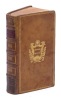
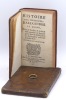
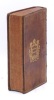
Nouvelle traduction, faite sur celle de Claude de Seyssel, auteur de la première traduction française, publiée pour la première fois en 1530, puis rééditée en 1545.Cette traduction modernisée fut donnée par Charles-Hyacinthe Hugo (Saint-Mihiel, 1667-Étival-Clairefontaine, 1739), en religion Charles-Louis, qui fut un éminent historien de son ordre. Devenu abbé d'Étival dans les Vosges en 1722, il fit installer une imprimerie dans l'abbaye pour faciliter la publication de ses écrits. Claude de Seyssel (Aix, vers 1450-Turin, 1520), prélat savoyard, enseigna d'abord le droit à Turin, puis devint conseiller et maître des requêtes de Louis XII. Il fut successivement évêque de Marseille de 1511 à 1517, puis archevêque de Turin de 1517 jusqu’à sa mort. Il écrivit de nombreux ouvrages parmi lesquels de nombreuses traductions d’auteurs grecs ou latins. Latiniste ignorant le grec, il collabora avec l’érudit grec Jean Lascaris qui traduisait les auteurs grecs en latin et Seyssel du latin au français. C'est de cette collaboration que sortirent les premières traductions françaises des historiens grecs, tels Hérodote, Thucydide, Appien, Justin, Xénophon et Diodore de Sicile. De la célèbre collection de l'abbé Bignon.Jean-Paul Bignon (Paris, 1662-L'Ile Belle, 1743), abbé de Saint-Quentin-en-l'Isle, prédicateur de Louis XIV, fut élu membre de l'Académie française en 1693, membre honoraire de l’Académie des sciences en 1699, membre de l'Académie royale des inscriptions et médailles en 1701. Ce bibliophile avait érigé une bibliothèque d'environ 50 000 volumes avec le projet de publier un catalogue raisonné de son immense collection. Mais lorsqu'il fut nommé, en 1718, bibliothécaire du roi, en charge de la plus grande bibliothèque d'Europe, il vendit sa collection au célèbre financier Law qui la revendit au cardinal Dubois, ministre d'État.Bon exemplaire en veau glacé portant le chiffre et le supra-libris de la Bibliothèque Bignon.Graesse, Trésor de livres rares et précieux, II, p. 395. Cioranescu, Bibliographie de la littérature française du XVIIIe siècle, II, n° 34295. O.H.R., Manuel de l’amateur de reliures armoriées françaises, pl. 870, fers n° 5, 6 et 7. Guigard, Nouvel Armorial du bibliophile, I, p. 238.
Bibliothèque historique. Traduction nouvelle avec une préface, des notes et un index par F. HOEFER.
Paris, Charpentier, 1846.
4 vols: 26,350;473;369;499 p. Cl. 18 cm (Head & tail of spine slightly worn)
DIODORI SICULI BOBLIOTHECAE QUAE SUPERSUNT, 2 VOL.
Ambrosio Firmin Didot, Paris. 1843. In-4. Relié demi-cuir. Etat d'usage, Plats abîmés, Coiffe en tête abîmée, Intérieur acceptable. 625 pages pour le tome I et 752 pages pour le tome II. Texte en grec ancien et en latin sur 2 colonnes. Titres, tomaisons et bandeaux dorés sur les dos. Etiquettes de code sur les couverture. Quelques tampons de bibliothèque. Fortes épidermures sur les dos. Quelques manques en surface des plats.. . . . Classification Dewey : 480-Langues helléniques. Grec
Ex Nova Recensione Ludovici Dindorfii Graecae et latine. Rerum Indicem Locupletissimum Adjecit Carolus Müllerus. Classification Dewey : 480-Langues helléniques. Grec
DIODORUS TARSENSIS [DIODORUS OF TARSUS] (& OLIVIER Jean-Marie, ed.)
Reference : R119023
(1980)
Commentarii in Psalmos I: Conmmentarii in psalmos I-L [in: Corpus christianorum series graeca 6]
Turnhout, Brepols 1980 cxxvi + 329pp., 25cm., in the series "Corpus Christianorum series graeca" volume 6, publisher's hardcover binding in green cloth with gilt lettering, text is clean and bright, small ex-libris stamp on blanco endpaper and at verso of title page, good condition, R119023
Diodori Tarsensis Commentarii in Psalmos I: Commentarii in psalmos I-L [in: Corpus christianorum Series Graeca, CCSG 6]
Turnhout, Brepols 1980 CXXVI + 329pp., in the series "Corpus christianorum series graeca" volume 6, 26cm., original softcover, pages still uncut, very good condition, ISBN 978-2-503-40062-4, [introduction infrench, text in greek], R102094
VIE ED PLATON
Les Belles Lettres. 1996. In-12. Broché. Bon état, Couv. légèrement pliée, Dos satisfaisant, Intérieur acceptable. 91 pages. Texte en grec ancien et en français en regard.. . . . Classification Dewey : 480-Langues helléniques. Grec
'Classiques en poche', Bilingue, dir. par Hélène Monsacré. Traduction, Introduction et Notes de Alain Ph. Segonds. Classification Dewey : 480-Langues helléniques. Grec
De vitis, dogmatis et apophthegmatis clarorum philosophorum libri decem. Edidit H.G. HUEBNERUS.
Hildesheim, N.Y., Olms, 1981.
4 vols: XXII,379;VI,814;X,670;724 p. Cl. 19 cm (Repr. Lpz. 1828 - 1833) (Heavy book, may require extra shipping costs)
Leven en leer van beroemde filosofen. Vertaald door R. FERWERDA & J. EYKMAN.
Baarn, Ambo, 1989.
435 p. Cloth 22 cm (OiN Suppl. 49; incl. worn and faded dustjacket)
Uilen van Athene. Leven en leer van klassieke filosofen. Een bloemlezing vertaald en ingeleid door J.C.B. EYKMAN.
Amst., Meulenhoff, (1966).
271 p. Pb. 20 cm (OiN 164; slightly used)

