 Write to the booksellers
-
Type
Book (9924)
Engraving (8)
Magazine (12)
Maps (1)
-
Latest
Last 24h (1)
Last month (30)
Last week (18)
-
Language
English (4)
French (9904)
German (2)
Greek (28)
Italian (2)
Latin (4)
Swedish (1)
-
Century
16th (13)
17th (30)
18th (49)
19th (696)
20th (1774)
21st (115)
-
Countries
Belgium (1186)
Brazil (1)
Canada (7)
Côte d'Ivoire (5)
France (2897)
Greece (16)
Netherlands (5655)
Switzerland (177)
United Kingdom (1)
-
Syndicate
ALAC (7)
CLAM (35)
ILAB (1909)
NVVA (2)
SLACES (2)
SLAM (1823)
SNCAO (3)
Vertellingen uit Hellas en Rome. Vertaald en toegelicht door M.A. SCHWARTZ.
Amst., Brussel, Elsevier, 1965.
2 vols: 176;168 p. Pockets 18 cm (OiN 53; previously published as 'Barnsteen'
Griechenland in Wort und Bild. Eine Schilderung des hellenischen Königreiches.
Leipzig, Heinrich Schmidt & Carl Günther, 1882. Folio. XIV, 224 Seiten. Mit zahlreichen Illustrationen. Goldverziertere, geprägter Leinenband.
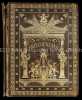
Berieben und bestossen. Rücken aufgeplatzt. Einband mit kleinen Schadstellen. Im Buchblock lose.Leicht gebräunt. Sauberes Exemplar.

Zur Kunst der Antike. Ausgewählte Schriften.
Tübingen, Wasmuth, (1963).
2 vols: 360;323 p.; 28 & 80 pls. Cl. 24 cm
"Compter avec des cailloux; le calcul élémentaire sur l'abaque chez les anciens Grecs."
Lausanne, Presses Polytechniques et Universitaire romandes, 2001. 16 x 24, 339 pp., nombreuses figures, broché, bon état (1 cachet d'ex-propriétaire).
The History of the Jewish People in the Age of Jesus Christ: Volume 1 (175 B.C.-A.D. 135 Band 1)
T & T Clark International 1973 634 pages 14 8x5 6x21 6cm. 1973. Cartonné jaquette. 634 pages.
Bon état cependant couverture défraîchie intérieur propre tranche ternie
The History of the Jewish People in the Age of Jesus Christ: Volume III.2 and Index
Bloomsbury 3PL 1987 332 pages 16 71x2 26x23 06cm. 1987. Cartonné jaquette. 332 pages.
Bon état dos légèrement dévissé intérieur propre
Urne fittili chiusine e perugine di età medio e tardo ellenistica.
Roma, Giorgio di Bretschneider, 2010.
XXVIII,384 p., 8 tables, 46 pls. Stiff wrs. 24 cm (Archaeologica 160; new 230 Euro)
PATROLOGIAE CURSUS COMPLETUS, SERIES GRAECA, TOMUS I, S. CLEMENTIS I, PONTIFICIS ROMANI, OPERA OMNIA
J.-P. Migne. 1857. In-4. Broché. Etat d'usage, Couv. légèrement passée, Dos fané, Non coupé. 1484 pages. Texte en latin et en grec sur 2 colonnes, chacune étant paginée. Etiquette de code et trace de colle sur le dos. Tampon de bibliothèque en page de titre. Bords des plats légèrement déchirés.. . . . Classification Dewey : 480-Langues helléniques. Grec
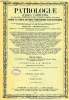
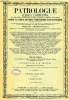
Seu Bibliotheca Universalis, Integra, Uniformis, Commoda, Oeconomica, Omnium SS. Patrum, Doctorum Scriptorumque Ecclesiasticorum. Qui ab Aevo Apostolico ad Usque Innocentii III Pro Latinis, et ad Photii Tempora Pro Graecis Floruerunt. Accurante J.-P. Migne. Classification Dewey : 480-Langues helléniques. Grec

Edidit W. DEN BOER.
Leiden, Brill, 1948.
48 p. Wrs. 19 cm (TM)(Name on title; 1 sm. ballp. ann.)
Plato in Medieval England. Pagan, Scientist, Alchemist, Theologian
, Brepols, 2024 Hardback, 400 pages, Size:156 x 234 mm, Illustrations:16 b/w, 47 tables b/w., Language: English. ISBN 9782503601083.
Summary From the time of the Roman Republic, continental Europeans traveling to England brought knowledge of Greek and Roman intellectual culture in the form of books of every genre. But, until 1111 CE, the island contained not a single Platonic dialogue. And for the next two centuries, it had only a partial Latin translation of the Timaeus. A Latin Phaedo eventually appeared, in 1340, and the Meno in 1423. But this hardly limited the number of ideas people had about Plato. He was a proto-Christian, a sage, a scholar of the cosmos, and a healer. And he had an elaborate oeuvre that did exist in England, works of astrology, numerology, medicine, and science, including Cado, Calf, Circle, Herbal, Question, Alchemy, and Book of Prophecies of a Greek King. This book tells the story of Plato in Medieval England, from a name with too few works to a sage with too many. Based on a complete survey of all extant manuscripts, publications, and library records until the fifteenth century, it traces with extraordinary precision the movement of opinions and information about Plato from Europe to England and then into its various monasteries, schools, and universities. This erudite and illuminating sociology of knowledge provides novel insight into the dubious English career of our best-known philosopher. This is intellectual history and reception studies at its most surprising. TABLE OF CONTENTS Editor?s Introduction Author?s Introduction Chapter 1. The Romans (55 BCE to 449 CE) Chapter 2. The Early Benedictines (449?943) Chapter 3. The Dunstan Reform (943?1066) Chapter 4. The Early Norman Period (1066?1150) Chapter 5. The Later Norman Period (1150?93) Chapter 6. The Universities (1193?1221) Chapter 7. The Friars (1221?1340) Chapter 8. The Seculars (1340?1423) Conclusion Appendix Table of Manuscripts Outline of Discussions Bibliography Sears Jayne (1920 ? 2015): Bibliography Index
"Grec et latin en 1983 et 1984; cinquante année de philologie classique à l'U.L.B. (1934-1984). Université Libre de Bruxelles, section de philologie classique."
Bruxelles, Université Libre de Bruxelles, 1984. 18 x 27, 271 pp., 1 photo, broché, bon état.
Interpreting Greek tragedy. Myth, poetry, text.
Ithaca, Ldn., Cornell University Press, (1986).
XII,384 p. Paperback 23 cm (Ballpoint marks in the table of contents. In Chapter 11 several underlinings and marginal notes in blue ink, one large note in black ink)
Poetry and myth in ancient pastoral. Essays on Theocritus and Virgil.
Princeton, Princeton University Press, (1981)
XII,348 p. Cloth 24 cm
Interpreting Greek Tragedy: Myth Poetry Text
Cornell university press 1986 384 pages 3x24x17cm. 1986. Relié. 384 pages.
très bon état de conservation sans jaquette un anti-vol magnétique collé dans l'intérieur du 2e plat intérieur propre bonne tenue
Oxford readings in Greek tragedy. Edited by Erich Segal
Oxford, OUP, 1983.
IX,453 p. Paperback. 20 cm (29 chapter by leading scholar)
Herodoti, Thucydidis, Xenophontis, Polybii illustres loci, Plutarchi vitae Demosthenis et Ciceronis delectu, praefatione, annotatione discipulorum institutioni accomodavit D. WYTTENBACHIUS. Ed. altera aucta et corr.
Amst., Den Hengst, 1808.
8vo. XXXVIII,472 p. Vellum 21 cm (On frontcover in ink: LATIJNSCHE SCHOLEN. Covers a bit curved)
With introduction and notes by Jesse Benedict Carter.
Boston etc., D.C. Heath, (1900).
XLVII,283 p. Cloth. 19 cm (Gildersleeve-Lodge Latin Series) (Cover worn at the extremes. Occasional pencil marginalia. Stamp on the front flyleaf and title-page)
Corcyra. A City at the Edge of Two Greek Worlds
, Brepols, 2022 Paperback, 2 vols, 747 pages, Size:170 x 240 mm, Language: English. ISBN 9789607905970.
Summary The current monograph on Corcyrean history has the aim of offering a synthesis on the history of the island from the time of the Liburnian tribe of the Kerkyres, after which the island was named, to the end of the ancient world and the destruction of the temples of the Greek gods by ????????, the local episkopos. For this reason, it takes into consideration all available evidence deriving from Greek and Latin literary sources, epigraphic documents, Corcyrean coinage and archaeological excavations on the island of Corcyra. All aspects of Corcyrean history are discussed: the geography of the island, the relations with Corinth, Athens, the kings of Epirus and, finally, the Romans, its position in the international politics, the numerous staseis, its institutions, the Corcyrean navy, the island's legendary background and religious life, its coinage and numismatic policy. Prosopography, onomastics and name-giving practices are also discussed as well as Corcyrean society. Finally, different readings of some significant events of Greek history involving Corcyra are discussed: Corcyrean power, the Corcyreans at the sea battle of Salamis, Corcyra and the network of Corinthian colonies in the North West, the beginning of the Peloponnesian War and the real causes of this war, Corcyra during the Peloponnesian War, insularity, geographic position and their impact on the history and shaping of identity of the city-island? The first volume analyzes its geographical location, history, economy and monetary policy (chs I-XII), institutions, legendary background, identity and religious life (chs XIII, XIV, XV). The second volume studies Corcyrean prosopography (XVI), onomastics (XVII) and society (XVIII). This volume also contains lists of names, three Appendices, bibliography and different indices, plates depicting coins of Corcyra, and a map of the island.

