 Write to the booksellers
2066 books for « wilson v e r »Edit
-
Type
Any type (1)
Autograph (1)
Book (2057)
Disk (1)
Magazine (1)
Music sheets (16)
New book (3)
Postcards (7)
-
Language
Dutch (1)
English (22)
French (2054)
German (1)
Italian (2)
Russian (6)
Spanish (1)
-
Century
14th (1)
16th (1)
18th (14)
19th (42)
20th (1007)
21st (258)
-
Countries
Belgium (102)
Canada (21)
China (1)
Côte d'Ivoire (3)
Denmark (20)
France (1760)
Germany (2)
Greece (1)
Netherlands (7)
Switzerland (157)
United Kingdom (7)
United States of America (6)
-
Syndicate
ALAC (17)
CLAM (7)
CLAQ (11)
ILAB (887)
NVVA (14)
SLACES (14)
SLAM (805)
SNCAO (1)
Topics
- Anticipation (12)
- Archaeology (16)
- Architecture (20)
- Army (8)
- Australia (6)
- Belgium (6)
- Biography (8)
- Buddhism (7)
- Chemistry (5)
- Children’s books (5)
- Children’s books (32)
- China (7)
- Christianity (6)
- Civilisation (6)
- Collections (7)
- Comic strip (79)
- Cooking (78)
- Culinary art (55)
- Detective novels (16)
- Dickens charles (7)
- Drawings (24)
- Drink (13)
- Early printed books (5)
- Economics (6)
- Egypt (8)
- England (16)
- English (54)
- Entomology (12)
- Erotic (8)
- Esotericism (7)
- Ethnology (8)
- Europe (9)
- Fantastic (9)
- Fantasy (9)
- Fine arts (17)
- First edition (28)
- Flora (9)
- Fox (10)
- Gastronomy (10)
- Geography (8)
- Germanic languages (6)
- Germany (5)
- Grey-wilson christopher (6)
- Hackney (18)
- History (55)
- Hunting (5)
- Industrial arts & crafts - fine arts (5)
- Jazz (11)
- Joyce james (11)
- Linguistics (5)
- Literature (191)
- Medicine (9)
- Military arts (6)
- Mitchell margaret (14)
- Museums (9)
- Navigation (5)
- Navy (10)
- New caledonia (5)
- Pacific (8)
- Painting (7)
- Paris (6)
- Philippines (5)
- Philosophy (25)
- Photography (21)
- Physics (9)
- Poetry (7)
- Policy (6)
- Postcards (7)
- Psychology (12)
- Quebec (12)
- Religions (18)
- Review (9)
- Reviews (6)
- Robin (6)
- Rock (10)
- Rock (10)
- Romance (11)
- Science fiction (40)
- Sciences (13)
- Scores (21)
- Shipwreck (6)
- Songs (16)
- Spain (7)
- Spying (7)
- Tahiti (5)
- Tea (13)
- Testimonies / stories (7)
- Theatre (9)
- Theology (10)
- Translation (11)
- Travel (8)
- United kingdom (16)
- United states (14)
- Various (18)
- Vocabulary (6)
- War (30)
- Williams tennessee (12)
- Wilson edmund (16)
- Youth (19)
- Zen (7)
Bon dodo, mon Roudoudou
Gautier-Languereau Cartonnage d'éditeur 2007 In-8 (25.5x23.5 cm), cartonnage d'éditeur, couverture illustrée, ouvrage non paginé, texte de Karma Wilson, illustrations couleurs de John Segal ; coiffes et coins à peine frottés, intérieur très frais, bel état. Livraison a domicile (La Poste) ou en Mondial Relay sur simple demande.


A History of British Quadrupeds including the cetacea. Second edition revised an partly re-written bin the author, assisted by Robert F. Tomes and Edward Richard Alston.
London, John van Voorst 1874. Gross-8°. XVIII, 474 S., 2 n.n. S.Anzeigen. Mit 160 Xylographien im Text. Dunkelgrüner Originalleinwandband.
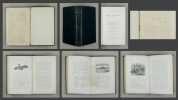
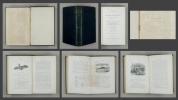
Überarbeitete Fassung der Ausgabe von 1837. - Wellcome 2, 138 (dort mit 1836 und only part III) des erfolgreichen populären zoologischen Werkes. - Auf dem fliegenden Vorsatz mit dem handschriftlichen Besitzvermerk "Edward A. Wilson. Oct. 1905", auf dem fliegenden Vorsatz, darunter von anderer Hand in Bleistift "Scott's last expedition. This book was taken to the Antarctic by E.A.Wilson 1910 - 1913". Obwohl die Innenfälze des Vorder- und Hinterdeckels angebrochen sind, das obere Kapital leicht angerissen und der Einbandbezug leicht fleckig, scheint mir persönlich der Zustand des Exemplares zu gut erhalten für einen Artefakten der berühmten Geschichte von Scotts 2. Antarktik Expedition, bei der Edward A. Wilson, zusammenn mit Scott und Henry „Birdie" Bowers am 29. März 1912 verstarb. Wilson (1872-1912), Mediziner und Zoologe, war bereits an der Discovery-Expedition von 1901-1904 als wissenschaftlicher Leiter beteiligt. Zurück von der mehrjährigen Reise erholte er sich im Sommer 1905 in Irland von den Strapazen der unzähligen öffentlichen Auftritten, Vorträgen und Einladungen. Dabei kam er in Kontakt mit dem Naturalisten Barrett-Hamiltonn der ihn als Illustrator für eine neue Monografie der " A History of British Mammals" engagierte. Wilson lebte im Herbst 1905 in Bushey, einem Künstlerort in der Nähe von London. Obwohl er keine akademische Kunstausbildung besass, wurden seine zoologischen Illustrationen zu Standards der Naturgeschichte Grossbritanniens. Über den Verbleib seiner Bibliothek scheint nichts bekannt zu sein. - Revised version of the 1837 edition - Wellcome 2, 138 (there with 1836 and only part III) of the successful popular zoological work. - With the handwritten ownership note 'Edward A. Wilson. Oct. 1905', on the flyleaf, underneath in another hand in pencil 'Scott's last expedition. This book was taken to the Antarctic by E.A.Wilson 1910 - 1913'. Although the inner folds of the front and back cover are cracked, the upper capital slightly torn and the cover slightly stained, the condition of the copy seems to me personally too well preserved for an artefact of the famous history of Scott's 2nd Antarctic expedition, during which Edward A. Wilson, together with Scott and Henry 'Birdie' Bowers, died on 29 March 1912. Wilson (1872-1912), a physician and zoologist, had already been involved in the Discovery Expedition of 1901-1904 as scientific director. After travelling for several years, he returned to Ireland in the summer of 1905 to recover from the strain of countless public appearances, lectures and invitations. He came into contact with the naturalist Barrett-Hamiltonn, who engaged him as an illustrator for a new monograph of 'A History of British Mammals'. In the autumn of 1905, Wilson was living in Bushey, an artists' village near London. Although he had no academic art training, his zoological illustrations became standards in the natural history of Great Britain. Nothing seems to be known about the whereabouts of his library.
"WILSON, C.T.R. - THE MOST ORIGINAL AND WONDERFUL INSTRUMENT IN SCIENTIFIC HISTORY - WILSON'S CLOUD CHAMBER.
Reference : 45816
(1913)
Über die Expansionsapparat zur Sichtsbarmachung der Bahnen ionisierender Teilchen in Gasen, und über einige mittels dieses Apparats gewonnene Ergebnisse. Mit 23 Figuren im Text und auf 5 Tafeln. (Eingegangen 6. Oktober 1912). (On an Expansion Apparatu...
Leipzig, S. Hirzel, 1913. 8vo. Orig. printed wrappers, no backstrip. Wrappers loose. In ""Jahrbuch der Radioaktivität und Elektronik"", 10. bd., Heft 1. Pp. 1-138 (entire issue offered). Wilson's paper: pp. 34-54, textillustrations, showing apparatus and 5 photographic plates, showing ionizing by Alpha-, Beta- and Röntgen- radiation).
Together with the English version - published 1912 in the Proceedings of the Royal Society - this is Wilson's main paper relating ""that the track of an ionizing particle might be made visible and photographed by condensing water of the ions which is liberated"". The first trails were obtained in 1911 where he submitted a short note of this to the Proceedings. In the offered paper he published the first tracks made by the ionizing particles of alpha, beta and Röntgen-rays. This, Wilson Cloud-Chamber, became an extremely valuable instrument of fundamental research, the discovery of the positron in 1932 and the kaon in 1963 were made by using cloud chambers as detectors.""But the whole course of the particle appears infinitely more clearly by the method invented by C.T.R. Wilson in 1911 and named after him. The radiation is allowed to enter an expansion-chamber, containing a gas saturated with water vapour. A sudden expansion of the chamber cools the gas, and cloud-drops are then formed instantly around the ions produced along the tracks of the particles. By suitable illumination these tracks can be made to stand out clearly as if they had been described by luminous projectiles. The ""Altmeister"" of modern nuclear physics, Lord Rutherford, once called the Wilson chamber ""the most original and wonderful instrument in scientific history"".""Thomson Rees Wilson (1869-1959), a Scottish physicist, is credited with inventing the cloud chamber. Inspired by sightings of the Brocken spectre while working on the summit of Ben Nevis in 1894, he began to develop expansion chambers for studying cloud formation and optical phenomena in moist air. Very rapidly he discovered that ions could act as centers for water droplet formation in such chambers. He pursued the application of this discovery and perfected the first cloud chamber in 1911. In Wilson's original chamber the air inside the sealed device was saturated with water vapor, then a diaphragm is used to expand the air inside the chamber (adiabatic expansion). This cools the air and water vapor starts to condense. When an ionizing particle passes through the chamber, water vapor condenses on the resulting ions and the trail of the particle is visible in the vapor cloud. Wilson, along with Arthur Compton, received the Nobel Prize in Physics in 1927 for his work on the cloud chamber. (Wikipedia).
La Cage de verre
Editions Planète Broché 1969 In-8, (14x21 cm), broché, 290 pages, roman ; pliures sur les plats et le dos salis, assez bon état. Livraison a domicile (La Poste) ou en Mondial Relay sur simple demande.
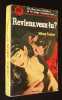
Reviens, veux-tu ?
Denoël Oscar Broché 1952 In-12 (10,8 x 18 cm), broché, 250 pages, n°7 de la collection Oscar ; mors et bords des plats frottés, assez bon état. Livraison a domicile (La Poste) ou en Mondial Relay sur simple demande.
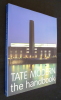
Tate modern the handbook
Tate Gallery Album souple 2000 Grand in-8 (21 x 27 cm.), album souple, couverture illustrée, 245 pages, illustrations couleurs in-texte, texte en anglais ; coiffes et coins légèrement frottés, menus incidents aux plats, bel état. Livraison a domicile (La Poste) ou en Mondial Relay sur simple demande.
S.P.G. Papers in the Lambeth Palace Library. Calendars and Indexes
Clarendon Press Cartonné avec jaquette 1974 In-8 (16,3 x 24 cm), cartonné avec jaquette, 230 pages, texte en anglais ; jaquette usée (dos bruni, bords des plats insolés, quelques traces sur les plats), par ailleurs intérieur frais, bon état général. Livraison a domicile (La Poste) ou en Mondial Relay sur simple demande.
Aerial Reconnaissance for Archaeology (CBA Research Report No. 12)
The Council for British Archaeology Broché 1975 In-4 (21 x 29,7 cm), broché, 158 pages, texte en anglais, iconographie en noir ; pliure au dos, deux réparations au ruban adhésif au dos en tête, assez bon état général. Livraison a domicile (La Poste) ou en Mondial Relay sur simple demande.
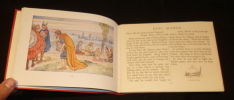
A picture history for boys and girls
Thomas Nelson and sons Cartonné In-8 (19 x 14 cm.), cartonné, format à l'italienne, 99 pages, 48 illustrations couleurs in-texte, texte en anglais ; quelques traces aux plats, coiffes et coins légèrement frottés, bon état. Livraison a domicile (La Poste) ou en Mondial Relay sur simple demande.
Les merveilles du corps humain
Deux Coqs d'Or Les merveilles Cartonné avec jaquette 1963 In-4, (28.5x20.5 cm), album cartonné sous jaquette illustrée en couleurs, 139 pages, illustrations en couleurs de C. de Witt, préface de Pasteur Vallery-Radot, index ; traces sur la jaquette jaunie, assez bon état général. Livraison a domicile (La Poste) ou en Mondial Relay sur simple demande.
Beardsley
Ars Mundi Cartonné 1987 In-4, (31x23 cm), cartonné, couverture illustrée, non paginé, iconographie en couleurs et en noir et blanc ; plats jaunis et piqués, assez bon état. Livraison a domicile (La Poste) ou en Mondial Relay sur simple demande.
La Pierre philosophale
Nouvelles Editions Oswald Fantastique/science-fiction/aventure Dos carré collé 1982 In-8 (14,1 x 20,5 cm), dos carré collé, 217 pages ; pelliculage décollé par endroits au dos et sur les bords des plats, par ailleurs assez bon état général. Livraison a domicile (La Poste) ou en Mondial Relay sur simple demande.
La structure de dédoublement - Objectivité et mythe dans Les Thibault de Roger Martin du Gard
Birmingham Summa 1997 In8 - cartonnage de l'éditeur - 238 pages - Bien qu'édité aux USA et cet ouvrage est en Français .
Bon Pas de jaquette
La Marche de l'ours
Seghers Les fenêtres de la nuit Dos carré collé 1981 In-8 (13,5 x 21,5 cm), dos carré collé, 381 pages ; coins un peu recourbés, dos et quatrième plat uniformément jaunis, par ailleurs assez bon état. Livraison a domicile (La Poste) ou en Mondial Relay sur simple demande.
L'Homme au complet gris
Editions Robert Laffont Chefs-d'oeuvre d'hier et d'aujourd'hui Cartonné 1957 In-8 (13,9 x 20,8 cm), cartonné, 330 pages ; dos bruni, rousseurs sur les plats, bords des contreplats et le dos, deux feuillets désolidarisés, en l'état. Livraison a domicile (La Poste) ou en Mondial Relay sur simple demande.
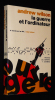
La Guerre et l'ordinateur
Robert Laffont Le monde qui se fait Broché 1969 In-8 (13,5 x 21,5 cm), broché, 265 pages ; petit défaut de pelliculage au dos en queue, par ailleurs bon état. Livraison a domicile (La Poste) ou en Mondial Relay sur simple demande.
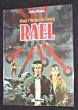
Rael - Dans l'ombre du soleil
Glénat Cartonné 1984 Album de bande dessinée, in-4 cartonné, couverture illustrée couleurs, 47 pp. ; excellent état. Livraison a domicile (La Poste) ou en Mondial Relay sur simple demande.
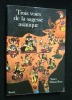
Trois voies de la sagesse asiatique
Stock Broché 1968 In-4, (25.5x18 cm), broché, couverture à rabats illustrée, 181 pages, illustrations en noir et blanc ; pliures sur le dos, usures sur les bordures et les coins, assez bon état général. Livraison a domicile (La Poste) ou en Mondial Relay sur simple demande.
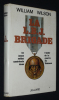
La L.B.J. Brigade : un jeune soldat américain dans l'enfer de la guerre du Vietnam
Julliard Cartonné avec jaquette 1967 In-8 (14,2 x 20,7 cm), cartonné avec jaquette, 209 pages ; bords de la jaquette brunis et frottés, petite déchirure sans manque en tête du quatrième plat de la jaquette, rousseurs sur les tranches et les gardes, état moyen. Livraison a domicile (La Poste) ou en Mondial Relay sur simple demande.
L'ombre de la mort
Morgan Broché 1947 In-12 (11,5 x 18 cm.), broché, 221 pages ; dos incurvé, coiffes, mors et coins un peu frottés, plats légèrement défraîchis, intérieur frais, assez bon état. Livraison a domicile (La Poste) ou en Mondial Relay sur simple demande.
Les Vampires de l'Espace
Albin Michel Super-Fiction Dos carré collé 1978 In-8 (13,5 x 21 cm), dos carré collé, 279 pages ; coiffes, mors et bords des plats frottés, marques d'usage sur les plats, intérieur frais, état très correct. Livraison a domicile (La Poste) ou en Mondial Relay sur simple demande.
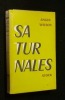
Saturnales
Stock Broché 1960 In-8, (19x12 cm), broché, 226 pages, recueil de nouvelles ; pliures sur le dos, plats légèrement salis, bon état général. Livraison a domicile (La Poste) ou en Mondial Relay sur simple demande.
Les Visiteuses De La Planete 5
Paris Hachette 1962 In12 252 pages - Collection Le Rayon Fantastique N. 92 - bon etat
Bon État
"WILSON, C.T.R. - THE ""WILSON-CLOUD-CHAMBER"" BROUGHT TO PERFECTION.
Reference : 47063
(1923)
Investigations on X-Rays and Beta-Rays by the Cloud Method.. Part I. - X-Rays. Part II. - Beta-Rays. (2 Papers).
London, Harrison and Sons, 1923. Royal8vo. Contemp. full cloth, gilt lettering to spine. A small stamp to verso of titlepage and on foot of a few leaves.. In: ""Proceedings of the Royal Society"", Series A, Vol. 104. VI,(6),676,XXXII pp., textillustr. and plates. (Entire volume offered). Wilson's papers: pp. (1-) 24 and 12 plates + pp. 192-212 and 9 plates.
First printing of the paper in which Wilson had brought his Cloud Chamber to perfection and showed the photographic tracks of the particles. The Cloud Chamber was the first detector of radioacticity and nuclear transmutations and it played an importent role in experimental particle physics e.g. the discovery of the positron. Wilson received the Nobel prize - together with Arthur Compton - in physics in 1927 for his work on the Cloud Chamber.""The 21 cloud chamber pictures of X-rays and beta-rays on coated stock printed recto only were the culmination of many years research by Wilson and at last showed the full potential of this method as a tool for particle physicists. Early in 1911 (Wilson) was the first person to see and photograph the tracks of individual alpha-particles and electrons. The event aroused great interest as the paths of the alpha-particle were just as W.H. Bragg had drawn them in publication some years earlier. But it was not until 1923 (the paperoffered) that the clous chamber was brought to perfection and led to his two, beautifully illustrated classic papers on the track of electron."" (The Nobel Foundation).
The Ephemera of Adrian Wilson : an annotated list, 1944-1988
Tuscany Alley | San Francisco 1994 | 27 x 39 cm | 2 volumes reliures en de l'éditeur, sous étui
Edition originale, un des 75 exemplaires numérotés sur Rives, seul tirage avec 10 également sur Rives signés par Adrian Wilson et 3 hors commerce. Reliures en pleine toile crème, dos lisses, exemplaire bien complet de son étui. Ouvrage illustré de nombreux bois originaux d'Adrian Wilson. Notre exemplaire est bien complet de sa chemise qui renferme une cinquantaine de pièces imprimées représentatives du travail d'imprimeur d' Adrian Wilson. Rare et très bel exemplaire. - Photographies et détails sur www.Edition-Originale.com -

