Write to the booksellers
1145 books for « wallace i d »Edit
-
Type
Book (1160)
Manuscript (1)
Music sheets (16)
-
Latest
Last month (5)
Last week (1)
-
Language
Dutch (1)
English (16)
French (1138)
German (1)
Russian (21)
-
Century
17th (1)
18th (5)
19th (18)
20th (564)
21st (83)
-
Countries
Belgium (60)
Canada (3)
China (2)
Côte d'Ivoire (2)
Denmark (4)
France (1017)
Switzerland (64)
United Kingdom (3)
United States of America (22)
-
Syndicate
ALAC (3)
CLAM (4)
CLAQ (2)
CNE (1)
ILAB (536)
NVVA (6)
SLACES (6)
SLAM (513)
SNCAO (1)
Topics
- American literature (6)
- Anthropology (2)
- Architecture (3)
- Bibliophilism (3)
- Boats - ships (2)
- Children’s books (27)
- China (4)
- Christ (the) (3)
- Cinema (6)
- Civilisation (3)
- Comic strip (22)
- Computer science (4)
- Criminology (8)
- Curiosa (3)
- Detective novels (27)
- Drawings (3)
- Early printed books (4)
- Economics (2)
- England (5)
- English (45)
- Entomology (3)
- Erotic (3)
- Esotericism (5)
- Ethic (3)
- Fantastic (6)
- Fantasy (2)
- Fine arts (9)
- First edition (3)
- Flora (4)
- Fowlie wallace (3)
- Freemasonry (2)
- Geography (8)
- Germanic languages (5)
- Great britain (3)
- Hachette (8)
- Healthcare (3)
- History (25)
- Hunting (2)
- India (2)
- Industrial arts & crafts - fine arts (3)
- Israel (2)
- Latin (2)
- Literature (155)
- Magazine (2)
- Marilyn (10)
- Melville herman (4)
- Melville wallace (4)
- Michelangelo (6)
- Miller (5)
- Navy (4)
- Newspapers press (3)
- North america (3)
- Odontology (2)
- Painters (12)
- Painting (2)
- Painting (8)
- Philosophy (5)
- Photography (6)
- Poe edgar (2)
- Poetry (11)
- Policy (3)
- Reading vocabulary (3)
- Religions (3)
- Review (11)
- Reviews (2)
- Romance (3)
- Russia (5)
- Science fiction (4)
- Sciences (6)
- Scores (27)
- Sociology (2)
- Songs (16)
- Spying (13)
- Suspense (3)
- Tea (7)
- Thriller (4)
- Translation (6)
- United kingdom (6)
- United states (4)
- Ussr (3)
- Various (9)
- Version (4)
- Wallace edgar (228)
- Wallace-murphy tim (2)
- War (6)
- Williams tennessee (2)
- Witchcraft (2)
- Yoga (2)
- Youth (10)
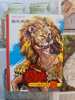
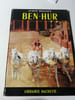
Ben Hur
Marabout géant Sans date. Le roman 'Ben-Hur' de Lewis Wallace publié en 1880 raconte l'histoire de Judah Ben-Hur un prince juif trahi par son frère adoptif romain réduit en esclavage et envoyé aux galères. Après avoir regagné sa liberté il cherche à se venger tandis que le récit prend une dimension religieuse en lien avec la vie du Christ


Très bon état
Wallace Dee Coyote Peter Thomas Henry Spielberg Steven Howell C. Thomas Barrymore Drew Wallace Dee Frye Sean Macnaughton Robert
Reference : 500352161
ISBN : 5050582926316
E.t. l'extraterrestre [Blu-ray] (NEUF SOUS BLISTER)
Universal 13 76x1 48x18 03cm. Sans date. blu_ray.
![E.t. l'extraterrestre [Blu-ray] (NEUF SOUS BLISTER). Wallace Dee Coyote Peter Thomas Henry Spielberg Steven Howell C. Thomas Barrymore Drew ...](https://static.livre-rare-book.com/pictures/IGE/500352161_thumb.jpg)
Neuf
Un baiser inattendu / Un ennemi trop séduisant
Harlequin collection Mariage Horizon. Sans date. Deux histoires d'amour où des femmes se retrouvent face à des hommes séduisants mais agaçants. Dans 'Un baiser inattendu' Zoé assiste au mariage de sa meilleure amie confrontée à l'échec de sa propre vie. Dans 'Un ennemi trop séduisant' Sophie exaspérée par le bruit venant de l'appartement voisin se heurte à un voisin au torse musclé qui va bouleverser sa vie


Très bon état
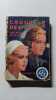
Correspondance privée.
Buchet/Chastel, 1976, 191 p., broché, bon état.
> Merci de nous contacter à l'avance si vous souhaitez consulter une référence au sein de notre librairie.
On the Law which has Regulated the Introduction of New Species. [In: The Annals and Magazine of Natural History. Second Series, Volume 16]. - [INAUGURATING THE DISCOVERY OF THE ORIGIN OF SPECIES]
London, 1855. 8vo. Entire volume 16, second series of ""The Annals..."" present, bound in a very nice red half morocco with richly gilt spine. A nice, clean, fresh, and sturdy copy. A vague stamp to title-page (London Institution) and a blindstamped marking to top of first leaf of contents (Cranbrook Institute of Science). Pp. 184-196. [Entire volume: VII, 472 pp. + 11 plates].
Exceedingly scarce first printing of Wallace's very first publication on the theory of evolution, predating any publication on the subject by Darwin. This milestone paper in the history of the theory of evolution - ""A stunning scientific debut"" (Nature vol. 496, p. 162) - formulates what is now known as the ""Sarawak Law"", which is in essence half of the theory of evolution by natural selection, which Wallace would later (1858) so famously publicize together with Darwin. From as early as 1845, Wallace had been convinced of the idea that species arise through natural laws rather than by divine fiat and he invested all in supplying scientific details and uncovering a satisfactory evolutionary mechanism. He kept this more or less to himself, however, and refrained from commenting on it in public until 1855, when he, provoked by an article by Edward Forbes Jr., published this seminal paper, ""a concise synthesis of his ideas on the subject. Like many brilliant works, his ""On the Law Which Has Regulated the Introduction of New Species"" (September 1855) was based on well-known, acceptable scientific observations, although he had transformed the mass of facts into an unusually persuasive argument. The evidence was drawn from geology and geography - the distribution of species in time and space - and following nine acceptable generalizations (axioms), Wallace concluded: ""Every species has come into existence coincident both in space and time with a pre-existing closely allied species"". He claimed that he had explained ""the natural system of arrangement of organic beings, their geographical distribution, their geological sequence"", as well as the reason for peculiar anatomical structures of organisms."" (D.S.B.). It was this paper by Wallace - not greatly read in the public, but very seriously studied by the greatest biologists of the time - that led directly to Darwin beginning his ""origin of Species"". - ""Despite this excellent presentation (i.e. Wallace's 1855 paper), there were no public replies, although the private comments were quite another matter. Indeed, Edward Blyth, Charles Lyell, and Charles Darwin all read Wallace's article and were greatly impressed by his arguments, but in particular Lyell, who began a complete reexamination of his long-held ideas on species. On 16 April 1856 Lyell discussed Wallace's paper with Darwin, urging him to publish his own views on species as soon as possible. Darwin then began what we now call the long version of the ""Origin"", and that version was used as a basis for the ""Origin"" as published in 1859."" (D.S.B.).It was in 1848 that Wallace first left England for the tropics. He did so with his friend the entomologist Henry Walter Bates, with the specific intention of solving the problem of the origin of species. ""In the autumn of 1847 Mr. A.R. Wallace, who has since acquired wide fame in connection with the Darwinian theory of Natural Selection, proposed to me a joint expedition to the river Amazonas, for the purpose of exploring the Natural History of its banks"" the plan being to make for ourselves a collection of objects, dispose of the duplicates in London to pay expenses, and gather facts, as Mr. Wallace expressed it in one of his letters, ""towards solving the problem of the origin of species""."" (Bates I: p. III). It is during these travels that Wallace begins noticing the remarkable coincidences in the distribution of species in space and time, and in 1855, while sitting in Sarawak, Borneo, he writes the paper that is now a landmark work in the history of evolutionary thought, his so-called ""Sarawak-paper"", which was published later the same year in the present volume of ""The Annals and Magazine of Natural History"". ""This paper, formulating what came to be known as the ""Sarawak Law"", is remarkable... (Wallace) advances what is, in effect, half of the theory of evolution, namely what Darwin would call ""descent with modification"": the idea that the generation of a biological novelty is a genealogical process."" (Berry, p. XXVII). The law now known as the Sarawak Law, or ""the first half of the theory of eveolution"", is stated as follows: ""Every species has come into existence coincident both in time and space with a pre-existing closely allied species."" This law connected and explained a vast number of independent facts. It was, in fact, Wallace's first statement of a belief in evolution, and for the following three years from the time that he wrote the essay, Wallace recounts that ""the question of how changes of species could have been brought about was rarely out of my mind.""According to one of the most celebrated anecdotes in the history of science, the second half of the theory of evolution by natural selection finally came to Wallace in February 1858, while delirious during an attack of malarial fever in Ternate in the Mollucas. In his own words, ""there suddenly flashed upon me the idea of the survival of the fittest."" The theory was thought out during the rest of the fit, drafted the same evening, and written out in full in the two succeeding evenings. Knowing that Darwin was working on the same problem, Wallace sent a manuscript summary to Darwin, who now feared that his discovery would be pre-empted. In order to avoid conflict between the two, Joseph Hooker and Carles Lyell suggested a joint publication. The essay was read, together with an abstract of Darwin's own views, as a joint paper at the Linnean Society on the 1st of July 1858.

La sélection naturelle. Essais
Paris, Reinwald et Cie, 1872, in-8, [4]-XIII-[3]-420 pp, Percaline verte de l'éditeur [Lenègre], Première édition française, traduite sur la seconde anglaise par de Candolle. Cet ouvrage réunit pour la première fois tous les travaux les plus importants de Alfred Russel Wallace (1823-1913) sur la sélection naturelle et la biogéographie. Certains de ces travaux pour la plupart considérés comme fondateurs furent publiés auparavant dans de nombreux périodiques scientifiques. Wallace, naturaliste britannique du XIXe siècle, est le co-découvreur de la sélection naturelle, indépendamment de Charles Darwin. Les vues de ces deux scientifiques sont présentées en effet lors d'une réunion de la Linnean Society de Londres, dès juillet 1858, par l'entremise d'une lettre de Charles Lyell et Joshua Hooker. Darwin l'admet lui-même, dans l'Esquisse historique de l'Origine des espèces : "The third volume of the Journal of the Linnean Society contains papers, read July 1st, 1858, by Mr. Wallace and myself, in which, as stated in the introductory remarks to this volume, the theory of Natural Selection is promulgated by Mr. Wallace with admirable force and clearness" (Darwin. Origin of Species. London, John Murray, 1861, Historical Sketch, pp. XVIII-XIX). Le savant connaissait les travaux de Wallace, qui lui avait écrit, en juin 1848, une lettre dans laquelle il décrivait exactement la même théorie que la sienne. "If Wallace had my manuscrit sketch written in 1842, he could not have made a better abstract... Even his terms stand as heads of my chapters" (Darwin, lettre à Charles Lyell - 18 juin 1858). La postérité a retenu Darwin et sa "puissance de pensée théorique", contre le "formalisme scientifique" de Wallace, qui s'est principalement cantonné à des observations découlant de variétés utilisées en élevage (Flutre, Julou et Riboli-Sasco). Bon exemplaire, non coupé. Coins émoussés, légères jaunissures en marge des feuillets. Darwin Correspondence Project. University of Cambridge [en ligne]. Timothée Flutre, Thomas Julou et Livio Riboli-Sasco, "La théorie de la sélection naturelle présentée par Darwin et Wallace", Bibnum [En ligne], Sciences de la vie, mis en ligne le 01 décembre 2009, consulté le 07 février 2024. Couverture rigide
Bon [4]-XIII-[3]-420 pp.

Dissertation historique et politique sur la population des anciens tems, comparée avec celle du nôtre, dans laquelle on prouve qu'elle a été plus grande autrefois qu'elle ne l'est de nos jours. () Traduite de l'Anglois par M. E. [Marc Antoine EIDOUS].
Amsterdam et Paris, Rozet, 1769. 1769 1 vol. in-8° (202 x 103 mm) de : IV pp. (titre, avertissement) ; 380 pp. ; [1] f. (fautes à corriger). Plein veau marbré d'époque, dos à nerfs orné de fers héraldiques sur les entrenerfs et armes dorées en queue, titre de maroquin rouge, filet à froid encadrant les plats, roulette dorée sur les coupes, tranches rouges, signet de soie rouge.
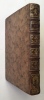
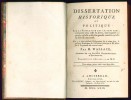
Première édition sous ce titre et seconde traduction en français, due à M.A. Eidous et considérée comme la meilleure, de cet ouvrage majeur de Robert Wallace, célèbre pour avoir influencé la pensée malthusianiste. Son auteur, Robert Wallace (1696-1771), est un pasteur de l'Église d'Écosse, économiste et membre de la société philosophique dÉdimbourg. Son ouvrage « Dissertation on the Numbers of Mankind in Ancient and Modern Times » voit le jour à Edimbourg en 1753. Il y développe l'idée selon laquelle, après une rapide croissance de la population humaine dans les temps bibliques, une mesure divine favorise la monogamie, ne pouvant ainsi mener qu'à une décroissance de la population ; théorie adoptée par Montesquieu qui se chargera de superviser la traduction de l'ouvrage en français. Wallace cherche à démontrer que la terre a été, dans les temps anciens, davantage peuplée, et cherche les causes de ce dépeuplement : causes physiques (climat, stérilité des régions, famines, pestes, inondations, tremblements de terre, etc.) et causes morales (guerres, pauvreté, intempérance, amours illicites, oisiveté, luxe, etc.). La Dissertation avait déjà été traduite en français par Elie de Joncourt en 1754. La deuxième partie de l'ouvrage nommée « Examen critique du discours de M. Hume sur la population des tems anciens, comparée avec celle du nôtre » est une critique des théories de son ami David Hume concernant la démographie des peuples anciens. Très bel exemplaire, rare. Intérieur particulièrement frais. 1 vol. 8vo. Full contemporary calf. First edition under this title and second translation into French, by M.A. Eidous, considered the best of this major work by Robert Wallace, famous for having influenced Malthusianist thought. The author, Robert Wallace (1696-1771), was a pastor of the Church of Scotland, economist and member of the Edinburgh Philosophical Society. His work Dissertation on the Numbers of Mankind in Ancient and Modern Times was published in Edinburgh in 1753 in which he developed the idea that, after a rapid growth of the human population in biblical times, a divine measure favored the monogamy, which can only lead to a decrease in the population. A theory adopted by Montesquieu who oversaw the translation of his work into French. Wallace seeks to demonstrate that the earth was, in ancient times, more populated, and seeks the causes of this depopulation: physical causes (climate, sterility of regions, famines, pestilences, floods, earthquakes, etc.) and moral causes (wars, poverty, intemperance, illicit love, idleness, luxury, etc.). The Dissertation had already been translated into French by Elie de Joncourt in 1754. The second part of the work called "Critical Examination of the Discourse of M. Hume on the Population of Ancient Times, Compared with that of Ours" is a critique of the theories of his friend David Hume concerning the demography of ancient peoples. Very nice copy, rare. Particularly fresh interior.




Ralph Reese Dick Giordano Jeff Jones Mike Kaluta Wallace Wood Berni Wrightson
Reference : 500354640
Larry Hama Jeff Jones Gil Kane Ralph Reese Barry Smith Wallace Wood Berni Wrightson
Reference : 500354734
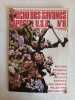
L'écho des savanes spécial U.S.A. / N°7 / Avril 1978
Editions du Fromage Sans date.
Bom estado
Neal Adams Jeff Bonivert Jeff Jones Mike Kaluta Ralph Reese Basil Wolverton Wallace Wood Berni Wrightson
Reference : 500354736
L'écho des savanes Spécial U.S.A. / N°6 / Janvier 1978
Editions du Fromage Sans date. Il s'agit d'un numéro de la revue trimestrielle de bande dessinée 'L'Écho des Savanes Spécial USA' publié en 1978 par les éditions du Fromage. Ce numéro le n°7 contient 68 pages en noir et blanc avec une couverture en couleur et fait partie d'une série de 25 numéros dédiés à la bande dessinée américaine
Bom estado
Neal Adams Russ Heath Paul Kirchner Jeff Jones Ralph Reese Jim Steranko Wallace Wood Berni Wrightson
Reference : 500354643