Write to the booksellers
1722 books for « vera a »Edit
-
Type
Autograph (1)
Book (1696)
Magazine (1)
Music sheets (22)
Postcards (1)
Posters (1)
-
Latest
Last 24h (2)
Last month (14)
Last week (3)
-
Language
Dutch (2)
English (5)
French (646)
German (5)
Italian (1)
Russian (1062)
Spanish (1)
-
Century
17th (2)
18th (1)
19th (12)
20th (339)
21st (51)
-
Countries
Belgium (50)
Brazil (1)
China (1)
Côte d'Ivoire (1)
Denmark (1)
France (543)
Switzerland (63)
United Kingdom (1)
United States of America (1061)
-
Syndicate
CLAM (2)
CNE (4)
ILAB (299)
NVVA (9)
SLACES (9)
SLAM (282)
Topics
- Animals (9)
- Archaeology (6)
- Architecture (19)
- Autographs (6)
- Biography (6)
- Cardot vera (3)
- Carmen (2)
- Children’s books (32)
- Chile (4)
- Christmas (4)
- Cinema (10)
- Collaboration (3)
- Contemporary look (3)
- Cooking (3)
- Creole (2)
- Criminology (3)
- Czechoslovakia (3)
- Dantchakoff vera (8)
- Dedication (6)
- Detective novels (4)
- Dictionaries (2)
- Education (2)
- English (12)
- English literature (2)
- Europe (3)
- Fine arts (12)
- First edition (9)
- Gardens (4)
- Genealogy (2)
- Geography (4)
- Germanic languages (5)
- Germany (5)
- Hackney (2)
- Helvética (3)
- History (31)
- Icons (2)
- Industrial arts & crafts - fine arts (5)
- Italian (4)
- Italy (13)
- Japan (3)
- Journalism (4)
- Justice (3)
- Linguistics (2)
- Literature (57)
- Magazine (8)
- Mammals (5)
- Maria theresa (2)
- Medicine (4)
- Miller (3)
- Mines & miners (3)
- Music (5)
- Navy (4)
- Newspapers press (9)
- Ornithology (3)
- Painting (5)
- Philology (3)
- Photography (9)
- Poetry (24)
- Policy (2)
- Posters (2)
- Psychology (5)
- Reading vocabulary (2)
- Regionalism (4)
- Religions (2)
- Reliure (3)
- Reverend (2)
- Review (16)
- Reviews (8)
- Russia (14)
- Russian literature (2)
- Sciences (9)
- Scores (20)
- Scout (5)
- Sculpture (4)
- Simonin (4)
- Songs (20)
- Surrealism (2)
- Switzerland (5)
- Tapestry (3)
- Tea (3)
- Teaching (2)
- Theatre (6)
- Translation (4)
- Travel (4)
- United states (4)
- Various (4)
- Vera paul (3)
- Version (4)
- Wairy louis-constant alias constant (2)
- Waltz (2)
- War (3)
- Warner (3)
- Woods & woods’ price lists (2)
- Youth (4)
- Zoology (14)
Soloviova Irina, Laurina Vera, Rodnikova Irina, Evseeva Lilia, Lebedeva Natalia
Reference : fh876
(2006)
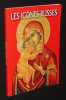
Les Icônes russes
Editions d'Art, Saint-Pétersbourg Broché 2006 In-4 (19 x 26 cm), broché, 127 pages, iconographie en couleurs ; très bon état général. Livraison a domicile (La Poste) ou en Mondial Relay sur simple demande.


Faune des îles : 250 photos du monde animal de l'Indo-Pacifique
Hachette Cartonné 1965 In-8 (22,3 x 24,5 cm), cartonné toilé, 216 pages, photographies en noir et blanc et en couleur ; cartonnage du premier plat abîmé en tête, rousseurs sur les plats, papier bruni, état moyen. Livraison a domicile (La Poste) ou en Mondial Relay sur simple demande.
Le Saint Viking
Gigord J. de Mowgli Broché In-12 (13,2 x 17,6 cm), broché, 118 pages, illustrations en noir et blanc de Pierre Joubert ; pliure au dos, coin corné, petite mouillure le long du mors inférieur au quatrième plat, par ailleurs très bon état général. Livraison a domicile (La Poste) ou en Mondial Relay sur simple demande.
Cinéma pour vous
Julliard Broché 1974 In-8 (13,3 x 20 cm), broché, 226 pages ; pliure au dos et dans le coin inférieur du premier plat, assez bon état. Livraison a domicile (La Poste) ou en Mondial Relay sur simple demande.
Trésor de la Tchécoslovaquie. L'art populaire
Cercle d'art Cartonné avec jaquette 1974 In-4, (30.5 x 24 cm.), cartonné sous jaquette en couleurs illustrée, 292 pages, nombreuses illustrations en couleurs et en noir et blanc ; dos de la jaquette insolé, légers frottements aux coiffes et coins, par ailleurs très bon état général. Livraison a domicile (La Poste) ou en Mondial Relay sur simple demande.
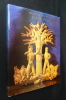
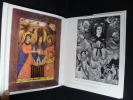
Célébration du visage
Morel Robert Cartonnage d'éditeur 1966 In-16 carré, 15 x 14 cm., cartonnage toile de l'éditeur, vignette contre collée sur le premier plat, non paginé, suite de photographies noir et blanc consacrée à Georges Brassens, accompagnées de quelques pages de texte ; dos un peu insolé, bel état Livraison a domicile (La Poste) ou en Mondial Relay sur simple demande.
Souvenirs d'une fillette russe, 1890-1900
Editions Baudinière Broché 1925 In-12 (12 x 18,8 cm), broché, 249 pages, édition originale sur Alfa ; pliures au dos brunis, petits manques et réparation au ruban adhésif sur les bords du premier plat, par ailleurs intérieur frais, assez bon état général. Livraison a domicile (La Poste) ou en Mondial Relay sur simple demande.
Médecine traditionnelle et pharmacopée : étude ethnobotanique des plantes utilisées dans la pharmacopée traditionelle à la Réunion
ACCT Broché 1989 In-8 (16 x 24 cm), broché, 221 pages ; légère pliure au dos, traces sur la tranche de tête, bon état général. Livraison a domicile (La Poste) ou en Mondial Relay sur simple demande.
Parade animale du continent noir
Hachette Cartonné avec jaquette 1963 Grand in-8 carré, cartonnage toile de l'éditeur sous jaquette illustrée, 224 pages, abondante iconographie photographique en couleurs et en noir et blanc dans le texte et hors texte ; menus incidents à la jaquette, très bon état. Livraison a domicile (La Poste) ou en Mondial Relay sur simple demande.
Mémoires d'une petite fille russe
Hennuyer Bibliothèque nouvelle de la jeunesse Cartonnage d'éditeur In-8° cartonnage d'éditeur, couverture illustrée, tranches dorées, 274 pp suivies de 4 pp. d'extrait du catalogue, illustrations en noir et blanc in et hors-texte dont un frontispice, sans date ; couverture légèrement salie, infimes rousseurs in-texto, certains cahiers se détachent légèrement de la reliure, bon état général Livraison a domicile (La Poste) ou en Mondial Relay sur simple demande.
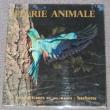
Féerie animale
Hachette La faune d''Europe en 280 images Cartonné avec jaquette 1961 Grand in-8 carré, cartonnage toile de l'éditeur sous jaquette illustrée, 232 pages, abondante iconographie photographique en couleurs et en noir et blanc dans le texte et hors texte ; menus incidents à la jaquette, très bon état. Livraison a domicile (La Poste) ou en Mondial Relay sur simple demande.
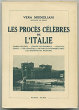
Les procès célèbres de l'Italie
Payot Broché 1936 Petit in-8 broché, non coupé, très bon état. Livraison a domicile (La Poste) ou en Mondial Relay sur simple demande.
I doni di Cerere. Storie della terra nella tarda antichità (Strutture, società, economia)
, Brepols, 2020 Paperback, 389 pages, Size:216 x 280 mm, Illustrations:1 b/w, 0 col., 2 tables b/w., Languages: Italian, French, English. ISBN 9782503581507.
Summary Even if his wide-ranging research work is not limited to Roman agrarian history, this is the field in which his contribution has been decisive and internationally recognized. For this reason, Domenico Vera chose this theme when he planned to gather in a single coherent volume a number of texts that first appeared in not easily accessible publications. The critical examination to which he submitted the sources over the years enabled him to radically renew the account that was traditionally given of the late imperial rural world, at opposite ends of the self-sufficiency that was posited by the 19th century historians, while revisiting the chronology of its implementation. Domenico Vera challenges an alleged break in the Italian agricultural flourishing throughout the 2nd and 3rd centuries as well as an alleged continuity from the 4th-6th centuries colonate up to medieval serfdom, or the prefiguration of the large Carolingian estate as soon as the Later Roman Empire. Domenico Vera clearly identified those three main features which make a difference in agrarian structures before and after the 3rd century: "deconcentration of production (hence the prevalence of colonate)"; "indirect land management (hence the expansion of a multi-level tenancy system)"; "concentration of the rent and surplus held by the landlords (hence the decline of the banking professions) and the tendency to the overlapping of great landlordship and wholesale trade". From now on Italian agrarian economy and society organised themselves around two antithetic but non-adversarial poles: the land barons and an authentic "peasant society". This volume aims at giving to more readers easier access to key texts some of which were published in hardly available journals or conference proceedings. Bien que son oeuvre scientifique, aux multiples versants, ne se limite pas à l'histoire agraire romaine, c'est ce thème où son apport a été déterminant et internationalement reconnu que Domenico Vera a retenu pour réunir en un volume homogène des textes dispersées dans des publications souvent difficiles d'accès. Le travail critique sur les sources qu'il a mené au fil des ans l'a conduit à renouveler radicalement le tableau traditionnellement offert du monde rural tardoimpérial, aux antipodes de l'autarcie postulée par les historiens du XIXe siècle, et à bouleverser la chronologie de sa mise en place. Domenico Vera récuse aussi bien une prétendue rupture de la prospérité agricole italienne au cours des IIe-IIIe siècles qu'une prétendue continuité entre le colonat des IVe-VIe siècles et le servage médiéval, ou la préfiguration, dès l'Empire tardif, du grand domaine carolingien. Domenico Vera a clairement identifié les trois traits principaux qui différencient les structures agraires de part et d'autre du IIIe siècle : « déconcentration de la production (d'où la prédominance du colonat) » ; « gestion foncière indirecte (d'où l'expansion d'un système de location à plusieurs étages) » ; « concentration de la rente et du surplus entre les mains des propriétaires (d'où le déclin des métiers de la banque et la tendance à la superposition de la grande propriété et du commerce de gros ». L'économie et la société agraire italienne s'organisent désormais autour de deux pôles antithétiques mais non contradictoires : les magnats de la terre et une véritable « peasant society ». Le présent volume se propose de rendre accessibles à un plus vaste lectorat des textes fondamentaux publiés parfois dans des revues ou des actes de colloques peu diffusés. TABLE OF CONTENTS Avant-propos. Domenico Vera, une nouvelle écriture de l'histoire agraire (J.-M. Carrié) Prefazione Bibliografia di Domenico Vera (1973-2018) 1. Appunti per una storia della proprietà fondiaria nel tardo impero 2. Strutture agrarie e strutture patrimoniali nella tarda antichità: l'aristocrazia romana fra agricoltura e commercio 3. Forme e funzioni della rendita fondiaria nella tarda antichità 4. Simmaco e le sue proprietà: struttura e funzionamento di un patrimonio aristocratico del quarto secolo d.C. 5. Enfiteusi, colonato e trasformazioni agrarie nell'Africa Proconsolare del tardo impero 6. Terra e lavoro nell'Africa romana 7. Conductores domus nostrae, conductores privatorum. Concentrazione fondiaria e redistribuzione della ricchezza nell'Africa tardoantica 8. Schiavitù rurale e colonato nell'Italia imperiale 9. Proprietà terriera e società rurale nell'Italia gotica 10. L'Italia agraria nell'età imperiale: fra crisi e trasformazione 11. Dalla villa perfecta alla villa di Palladio: sulle trasformazioni del sistema agrario in Italia fra Principato e Dominato 12. Padroni, contadini, contratti: realia del colonato tardoantico 13. Le forme del lavoro rurale: aspetti della trasformazione dell'Europa romana fra tarda antichità e alto medioevo 14. I silenzi di Palladio: osservazioni sull'ultimo agronomo romano 15. Massa Fundorum. Forme della grande proprietà e poteri della città in Italia fra Costantino e Gregorio Magno 16. La legislazione sul colonato tardoantico: cui prodest? 17. I paesaggi rurali nel Meridione tardoantico: un bilancio consuntivo e preventivo 18. L'altra faccia della luna: la società contadina nella Sicilia di Gregorio Magno 19. Essere "schiavi della terra" nell'Italia tardoantica: le razionalità di una dipendenza 20. Questioni di storia agraria tardoromana: schiavi, coloni, villae 21. Imperial estates in Late Roman southern Italy: land concentration and rent distribution Indice
Trümpy-Schule, Private Schule für Tanz und Gymnastik [We join : ] Dante göttliche Komödie Ubertragungen von Stefan George [ Signed by Vera Skoronel : "Ich wünsche Ihnen alles, alles Gute, Vera Skoronel, 1 Feb 1931" ]
Trümpy-Schule, Private Schule für Tanz und Gymnastik, Leitung : Berthe Trümpy, Mitarbeit :Vera Skoronel, Assistentin : Margot Lanzen, 1 brochure in-8 oblong, Tiefdrück Ant. Kämpfe, Jena, s.d. [circa 1926-1931 ], 8 pp. [We join : ] Dante göttliche Komödie Ubertragungen von Stefan George [ Signed by Vera Skoronel : "Ich wünsche Ihnen alles, alles Gute, Vera Skoronel, 1 Feb 1931" ], Dritte Auflage, 1 vol. in-8 reliure pleine toile éditeur, Georg Bondi, Berlin, 1922
![Trümpy-Schule, Private Schule für Tanz und Gymnastik [We join : ] Dante göttliche Komödie Ubertragungen von Stefan George [ Signed by Vera Skoronel : ...](https://static.livre-rare-book.com/pictures/CDL/57808_thumb.jpg)
![Trümpy-Schule, Private Schule für Tanz und Gymnastik [We join : ] Dante göttliche Komödie Ubertragungen von Stefan George [ Signed by Vera Skoronel : ...](https://static.livre-rare-book.com/pictures/CDL/57808_2_thumb.jpg)
![Trümpy-Schule, Private Schule für Tanz und Gymnastik [We join : ] Dante göttliche Komödie Ubertragungen von Stefan George [ Signed by Vera Skoronel : ...](https://static.livre-rare-book.com/pictures/CDL/57808_3_thumb.jpg)
Scarce copy of this booklet, explaining at the beginning that Vera Skoronel "war Meisterschülerin von Mary Wigman". We join a book (translation from Dante by Stefan George) signed by Vera Skoronel, who died one year later ! This set comes from the Raden Mas Jodjana's library (a famous javanese dancer on this time). Fair (booklet rubbed with small lack, otherwise a good set).
"Les Baigneuses".
1938 Aquarelle signée en bas à droite, (1938), 17.5 x 25.5 cm, cadre doré mouluré.
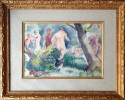
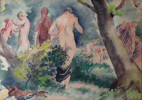
Paul-Bernard VERA (1882-1957), peintre, graveur sur bois, cartonnier de tapisseries pour Aubusson, Beauvais et les Gobelins, sculpteur, céramistes (Sèvres)Paul Vera étudie à l'académie Julian avec Jules Lefebvre et Tony Robert-Fleury. Il expose au Salon d'Automne dès l'année 1904, puis part en Italie. À son retour il s'inscrit à l'académie Ranson et devient l'élève de Maurice Denis et de Paul Sérusier. L'artiste expose aux Indépendants en 1911 et en 1912 participe à la deuxième exposition, en tant que français, du Blaue Reiter à Munich avec Braque, Picasso, Derain, La Fresnaye. Paul Vera est le fondateur de la Compagnie des Arts français avec Louis Süe et André Mare. Il pratique aussi la sculpture et devient décorateur à la Manufacture de Sèvres de 1932 à 1951, l'artiste utilise des techniques variées, la peinture, le dessin, les projets de jardins, les cartons pour tapisseries, la décoration intérieure et la céramique. Il illustre plusieurs ouvrages et expose aux Arts Décoratifs de 1925.Dans un jardin, six naïades s'essuient, sensuellement, après leurs ablutions. Paul VERA et son frère André (théoricien), privilégient tout particulièrement, le thème du jardin et réaliseront en 1938 une série sur le thème des baigneuses.Le décor de cette aquarelle est largement inspiré du jardin de la propriété "la Thébaïde" des frères Véra.
Zhelikhovskaya Vera. Rosanchik. In Russian (ask us if in doubt)/Zhelikhovskaya
Zhelikhovskaya Vera. Rosanchik. In Russian (ask us if in doubt)/Zhelikhovskaya Vera. Rozanchik.A Magic Tale for the Children of Vera Zhelichovskaya. St. Petersburg Edition by A.F. Devrien 1889. 36 p. We have thousands of titles and often several copies of each title may be available. Please feel free to contact us for a detailed description of the copies available. SKUalb98d30db867a976c5

Zhelikhovskaya Vera Petrovna. My sister is Elena Blavatskaya. The truth about M
Zhelikhovskaya Vera Petrovna. My sister is Elena Blavatskaya. The truth about Madame Radda-Bai In Russian /Zhelikhovskaya Vera Petrovna. Moya sestra - Elena Blavatskaya. Pravda o madam Radda-Bay Editor: Migunova E. Algorithm 2017. We have thousands of titles and often several copies of each title may be available. Please feel free to contact us for a detailed description of the copies available. The delivery of this book might be delayed beyond the usual timeframe due to extended processing and preparation before shipment, and faster shipping options are not offered. Please inform us if you need the order by a certain date or have a deadline.SKUalbcde4303a1881074b

Zelikhovskaya Vera. My Sister Elena Blavatskaya. The Truth About Madame Radda-B
Zelikhovskaya Vera. My Sister Elena Blavatskaya. The Truth About Madame Radda-Bai In Russian /Zhelikhovskaya Vera. Moya sestra-Elena Blavatskaya. Pravda o madam Radda-BayThe series: I remember it so well in 2017.We have thousands of titles and often several copies of each title may be available. Please feel free to contact us for a detailed description of the copies available. SKUalbcd3e38caf6be95b1.

Zasulich, Vera. Worker Varlens speech before the court of the correctional poli
Zasulich, Vera. Worker Varlens speech before the court of the correctional police. In Russian /Zasulich, Vera. Rech rabochego Varlena pered sudom ispravitelnoy politsii. In Russian. Working Library, # 1. St. Petersburg, Luch, 1905. 14 p. We have thousands of titles and often several copies of each title may be available. Please feel free to contact us for a detailed description of the copies available. SKUalb8f27836772c5eb8d
Les Chansons de Callianthe, fille de Ronsard (Madeleine de l'Aubespine, Dame de Villeroy) publiées par Roger Sorg, ornées de vignettes gravées sur bois par Paul Véra et d'un portrait de Callianthe reproduit en fac-similé.
P., Chez l'Imprimeur Léon Pichon, 1926, 1 vol. in-4° (262 x 200) en feuilles sous couverture crème rempliée imprimée en noir et rouge, de 92 pp. (faux-titre, titre et table compris) - (3) ff. (justificatif et 2 bl.). Parfait exemplaire.
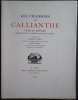
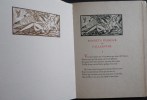
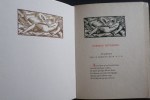
Reproduction d'un portrait de Madelaine de L'Aubespine conservé au Cabinet des Estampes en frontispice et 5 grandes vignettes gravées sur bois en vert et noir, en entêtes, par Paul Véra. Tiré à 400 exemplaires, 1 des 30 sur Japon de la Manufacture Impériale contenant une suite d'épreuves des gravures sur Chine en bistre (N°43), après 20 Japon à la forme et avant 340 vergé d'Arches.Très bel ouvrage sorti des presses du grand éditeur-imprimeur Léon Pichon. "Chez Léon Pichon, tout ce qui est du rôle de l'imprimeur était étudié et rendu avec le feu sacré de la réalisation impeccable" (Carteret, Le Trésor du Bibliophile, Livres illustrés modernes, III-264).
Le NOUVEAU JARDIN
Un ouvrage de 312 pages, format 170 x 250 mm, illustré de vignettes et ornements dessinés et gravés sur bois par Paul Véra (frère de l'auteur), broché couverture rempliée, réimpression (2009) de l'édition de 1912, tirage limité à 300 exemplaires numérotés sur Vélin Curtis, très bon état
L'auteur (1881-1971) était le fils de l'architecte Gustave Véra (1851-1938) ; il avait reçu une éducation artistique qui l'avait conduit vers la critique spécialisée en art des jardins et en architecture
Phone number : 04 74 33 45 19
Le NOUVEAU JARDIN
Un ouvrage de 312 pages, format 170 x 250 mm, illustré de vignettes et ornements dessinés et gravés sur bois par Paul Véra (frère de l'auteur), broché couverture rempliée, réimpression (2009) de l'édition de 1912, tirage limité à 300 exemplaires numérotés sur Vélin Curtis, bon état (léger choc sans gravité au bas du plat supérieur)
L'auteur (1881-1971) était le fils de l'architecte Gustave Véra (1851-1938) ; il avait reçu une éducation artistique qui l'avait conduit vers la critique spécialisée en art des jardins et en architecture
Phone number : 04 74 33 45 19
Cantate 103 - dédicacé par l'auteur
Joany 1992 90 pages in8. 1992. Broché couverture rempliée. 90 pages. Cantate 103 est le premier recueil de nouvelles de Véra Simonin née à Sarajevo en 1936 et installée en France depuis trente ans qui explore le thème des rencontres intenses et déterminantes dans la vie. L'ouvrage publié en 1992 par les éditions Joany compte 90 pages
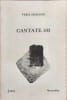
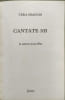
Très bon état couverture salie intérieur trés propre
Les puissants et les riches
Presses de la Cité 1986 384 pages 23x14x3cm. 1986. Broché. 384 pages.

French edition. Le livre présente plis sur la couverture des traces de stockage et d'usure sur la couverture ou les pourtours mais reste en état correct d'ensemble. Envoyé dans un emballage adapté depuis la France
Cultural Models for Emotions in the North Atlantic Vernaculars, 700-1400
, Brepols, 2025 Hardback, Pages: 337, Size:156 x 234 mm, Illustrations:1 col., 3 tables b/w., Language: English. ISBN 9782503610443.
Summary While the medieval regions that form modern-day Britain, Ireland, Iceland, and the Scandinavian states were, very much like today, home to diverse ethnic and linguistic groups, it is evident that the peoples who inhabited the north-western Atlantic seaboard at this time were nonetheless connected by key cultural, environmental, historical, and ideological experiences that set them apart from other regions of Europe. This volume is the first to focus specifically on these cultural and linguistic connections from the perspective of the history of emotions. The contributions collected here examine cultural encounters among medieval North Atlantic peoples with regard to the gradual development of shared emotional models and the emergence of early cross-cultural emotional communities in this region. The chapters also explore how the folk psychologies illustrated in the oldest European vernacular writing traditions (Irish, English, and Scandinavian) bear witness to cultural models for emotions that first took shape in pre-Christian times. TABLE OF CONTENTS List of Illustrations Acknowledgements 1. Problematizing Emotions and their Linguistic Expression in the Medieval North Atlantic Edel Porter and Javier E. Díaz-Vera 2. Fear and Loathing in Early Medieval Ireland: Investigating Emotions Connected to Early Irish Satirical Poetry Eoin Ó Donnchadha 3. Ship of Volition, Seabed of Desire: Vernacular Models of the Breast in Skaldic Diction Edel Porter 4. WONDER and the Supernatural in Old English Verse: An Assessment of WONDER as a Potentially Mixed Emotional Response Francisco Javier Minaya-Gómez 5. Conceptualising ANGER in the Old English 'Pastoral Care' Daria Izdebska 6. Poisoned Arrows and Flames of Grace: Emotions Inside and Outside in Felix's Life of St Guthlac and the Old English Prose Life of St Guthlac Alice Jorgensen 7. The Love for the Self and Gawain's Desire to Survive: An Ockhamist Reading of Emotions in Sir Gawain and the Green Knight Israa Qallab 8. Blood, Rain, and Tears: Eco-emotive Metaphor in the Medieval North Timothy Bourns 9. SADNESS in Old English and in Old Norse: Externalizing the Mind in the Body in Two North Atlantic Cultures Javier E. Díaz-Vera and Teodoro Manrique-Antón 10. 'Spiritual Joy Against Worldly Sorrow': Exploring the Emotional Landscape of Tallaght Nathan Millin 11. Emotion, Embodiment, and the Heart in Old Norse-Icelandic Colin Mackenzie 12. 'Hendr hafa þau ok þreifa ekki': Tactile Sensitivity and Emotional Interaction in Old Norse Literature Teodoro Manrique-Antón