Write to the booksellers
1735 books for « vera »Edit
-
Type
Autographs (1)
Books (1733)
Magazines (1)
Music sheets (22)
Postcards (1)
Posters (1)
-
Latest
Last 24h (1)
Last 3 days (7)
Last month (10)
Last week (12)
-
Language
Dutch (2)
English (5)
French (667)
German (5)
Italian (1)
Russian (1078)
Spanish (1)
-
Century
17th (3)
18th (1)
19th (14)
20th (342)
21st (63)
-
Countries
Belgium (49)
Brazil (1)
China (1)
Côte d’Ivoire (1)
Denmark (1)
France (551)
Switzerland (77)
United Kingdom (1)
United States (1077)
-
Syndicate
CLAM (2)
CNE (4)
ILAB (287)
NVVA (9)
SLACES (9)
SLAM (270)
Topics
- Animals (8)
- Archaeology (6)
- Architecture (18)
- Autographs (6)
- Biography (6)
- Cardot vera (2)
- Carmen (2)
- Children’s books (31)
- Chile (4)
- Christmas (4)
- Cinema (9)
- Collaboration (3)
- Contemporary look (3)
- Cooking (3)
- Creole (2)
- Czechoslovakia (2)
- Dantchakoff vera (8)
- Dedication (6)
- Detective novels (4)
- Dictionaries (2)
- English (12)
- English literature (2)
- Europe (3)
- Fine arts (13)
- First edition (9)
- Gardens (4)
- Genealogy (2)
- Geography (4)
- Germanic languages (5)
- Germany (5)
- Hackney (2)
- Helvética (3)
- History (27)
- Icons (2)
- Illustrated books (2)
- Industrial arts & crafts - fine arts (5)
- Italian (4)
- Italy (12)
- Japan (3)
- Journalism (4)
- Justice (3)
- Language (16)
- Literature (64)
- Magazine (8)
- Mammals (5)
- Medicine (4)
- Mexico mayas (2)
- Miller (3)
- Mines & miners (3)
- Music (4)
- Navy (4)
- Newspapers press (9)
- Ornithology (2)
- Painting (4)
- Philology (2)
- Philosophy (3)
- Photography (9)
- Poetry (24)
- Policy (2)
- Posters (2)
- Psychology (5)
- Regionalism (4)
- Religions (3)
- Reliure (3)
- Reverend (2)
- Review (16)
- Reviews (8)
- Russia (13)
- Russian literature (2)
- Sciences (8)
- Scores (20)
- Scout (5)
- Sculpture (3)
- Simonin (4)
- Songs (20)
- Surrealism (2)
- Switzerland (5)
- Tapestry (3)
- Tea (3)
- Teaching (2)
- Theatre (6)
- Translation (4)
- Travel (4)
- United states (4)
- Ussr (2)
- Various (4)
- Vera paul (3)
- Version (5)
- Wairy louis-constant alias constant (2)
- Waltz (2)
- War (3)
- Warner (3)
- Woods & woods’ price lists (2)
- Youth (3)
- Zoology (14)
Véra dantchakoff Déterminisme et réalisation dans le devenir hermann cie
1935 1935. Véra Dantchakoff: Déterminisme et réalisation dans le devenir du sexe / Hermann Cie 1935 . bon état

Très bon état
Laura
J'ai Lu 250 pages Sans date. Broché. 250 pages. Laura Hunt publiciste de renom est découverte chez elle assassinée d'un coup de fusil au visage. Pour McPherson le policier qui mène l'enquête deux hommes sont suspects: Shelby le fiancé de la victime et Waldo un chroniqueur mondain qui considérait celle-ci comme sa création. Sous prétexte de rechercher des indices McPherson passe souvent dans l'appartement de Laura où fasciné il reste à contempler le portrait de la jeune femme pendant des heures. Il va bientôt connaître la plus grande émotion de sa vie... Porté à l'écran par Otto Preminger en 1947 ce livre consacra Vera Caspary comme une spécialiste du roman criminel psychologique car l'intérêt de son histoire réside bien au-delà de la recherche d'un meurtrier. Dans un récit à plusieurs voix où se mêlent le rêve l'imaginaire et aussi le hasard qui parfois sait si bien arranger l'amère réalité chacun des trois protagonistes s'efforce de résoudre une autre énigme: mais qui était donc la belle et envoûtante Laura? Amateurs de psychologie à vos marques! --Claude Mesplède --Ce texte fait référence à une édition épuisée ou non disponible de ce titre

M228 N°1561 DE LA COLLECTION J'AI LU .A VOIR DANS MA BOUTIQUE GRAND NOMBRE DE SERIE POLICIERE .ESSAYEZ DE GROUPER VOS ACHAT VOUS SEREZ GAGNANT SUR LE PORT EXEMPLAIRE EN PARFAIT ETAT
Laura
France Loisirs 1972 1972. Laura Hunt une publiciste talentueuse et renommée est retrouvée assassinée chez elle. L'inspecteur McPherson chargé de l'enquête se laisse fasciner par l'image de la victime absente. L'intrigue menée à travers les versions et perceptions divergentes des trois hommes de son entourage mêle enquête policière et réflexion sur les fantasmes et désirs projetés sur une femme indépendante


Bom estado
Rouge Baiser J'ai lu
Éditions J'ai lu 1986 1986. Véra Belmont - Rouge Baiser / J'ai Lu 1986

Bon état


Farmiga Vera Bichir Demian Bloquet Jonas Hardy Corin
Reference : 500269897
(2019)
ISBN : 5051889622512
The Nun / La Nonne Blu-Ray (NEUF SOUS BLISTER)
BookSpot B.V. (inzake New Book uitg) 2019 13 6x17 4x1 2cm. 2019. blu_ray.

Neuf
Farmiga Vera Bichir Demian Bloquet Jonas Hardy Corin
Reference : 500301101
(2019)
ISBN : 5051889622512
The Nun (La Nonne) BLU-RAY (NEUF SOUS BLISTER)
BookSpot B.V. (inzake New Book uitg) 2019 13 6x17 4x1 2cm. 2019. blu_ray.

Neuf
Farmiga Vera Chandler Kyle Brown Millie Bobby Dougherty Michael
Reference : 500316941
ISBN : 5051888247075
Godzilla II : roi des monstres [Blu-ray] [FR Import] (NEUF SOUS BLISTER)
Warner Bros 13 46x17 02x1 27cm. Sans date. blu_ray.

Neuf
Farmiga Vera Bichir Demian Bloquet Jonas Hardy Corin
Reference : 500321547
(2019)
ISBN : 5051889622512
The Nun - Blu-Ray(NEUF SOUS BLISTER)
BookSpot B.V. (inzake New Book uitg) 2019 13 6x17 4x1 2cm. 2019. blu_ray.

Neuf
Farmiga Vera Bichir Demian Bloquet Jonas Hardy Corin
Reference : 500327382
(2019)
ISBN : 5051889622512
The Nun - Blu-Ray(NEUF SOUS BLISTER)
BookSpot B.V. (inzake New Book uitg) 2019 13 6x17 4x1 2cm. 2019. blu_ray.

Neuf
Farmiga Vera Bichir Demian Bloquet Jonas Hardy Corin
Reference : 500328880
(2019)
ISBN : 5051889622512
The Nun - Blu-Ray (NEUF SOUS BLISTER)
BookSpot B.V. (inzake New Book uitg) 2019 13 6x17 4x1 2cm. 2019. blu_ray.

Neuf
Hardy Corin Farmiga Vera Bichir Demian Bloquet Jonas
Reference : 500366361
(2019)
ISBN : 5051889622512
The Nun - Blu-Ray (NEUF SOUS BLISTER)
BookSpot B.V. (inzake New Book uitg) 2019 13 6x17 4x1 2cm. 2019. blu_ray.

Neuf
Hardy Corin Farmiga Vera Bichir Demian Bloquet Jonas
Reference : 500394866
(2019)
ISBN : 5051889622512
The Nun - Blu-Ray (NEUF SOUS BLISTER)
BookSpot B.V. (inzake New Book uitg) 2019 13 6x17 4x1 2cm. 2019. blu_ray.

Neuf
Découvrir l'hypnothérapie
Marabout 2001 160 pages 11x18x1cm. 2001. Broché. 160 pages.


Etat correct


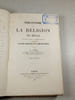
Philosophie de la religion de Hegel - Tome premier
Librairie Germer Baillière 1876 1876.
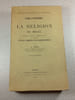
Bon état


LES JEUNES ANIMAUX DES CINQ CONTINENTS - DEPART POUR LA VIE - EXEMPLAIRE 1807/5000 HORS COMMERCE
LE CLUB DU LIVRE FRANCAIS 1968 1968.


I doni di Cerere. Storie della terra nella tarda antichità (Strutture, società, economia)
, Brepols, 2020 Paperback, 389 pages, Size:216 x 280 mm, Illustrations:1 b/w, 0 col., 2 tables b/w., Languages: Italian, French, English. ISBN 9782503581507.
Summary Even if his wide-ranging research work is not limited to Roman agrarian history, this is the field in which his contribution has been decisive and internationally recognized. For this reason, Domenico Vera chose this theme when he planned to gather in a single coherent volume a number of texts that first appeared in not easily accessible publications. The critical examination to which he submitted the sources over the years enabled him to radically renew the account that was traditionally given of the late imperial rural world, at opposite ends of the self-sufficiency that was posited by the 19th century historians, while revisiting the chronology of its implementation. Domenico Vera challenges an alleged break in the Italian agricultural flourishing throughout the 2nd and 3rd centuries as well as an alleged continuity from the 4th-6th centuries colonate up to medieval serfdom, or the prefiguration of the large Carolingian estate as soon as the Later Roman Empire. Domenico Vera clearly identified those three main features which make a difference in agrarian structures before and after the 3rd century: "deconcentration of production (hence the prevalence of colonate)"; "indirect land management (hence the expansion of a multi-level tenancy system)"; "concentration of the rent and surplus held by the landlords (hence the decline of the banking professions) and the tendency to the overlapping of great landlordship and wholesale trade". From now on Italian agrarian economy and society organised themselves around two antithetic but non-adversarial poles: the land barons and an authentic "peasant society". This volume aims at giving to more readers easier access to key texts some of which were published in hardly available journals or conference proceedings. Bien que son oeuvre scientifique, aux multiples versants, ne se limite pas à l'histoire agraire romaine, c'est ce thème où son apport a été déterminant et internationalement reconnu que Domenico Vera a retenu pour réunir en un volume homogène des textes dispersées dans des publications souvent difficiles d'accès. Le travail critique sur les sources qu'il a mené au fil des ans l'a conduit à renouveler radicalement le tableau traditionnellement offert du monde rural tardoimpérial, aux antipodes de l'autarcie postulée par les historiens du XIXe siècle, et à bouleverser la chronologie de sa mise en place. Domenico Vera récuse aussi bien une prétendue rupture de la prospérité agricole italienne au cours des IIe-IIIe siècles qu'une prétendue continuité entre le colonat des IVe-VIe siècles et le servage médiéval, ou la préfiguration, dès l'Empire tardif, du grand domaine carolingien. Domenico Vera a clairement identifié les trois traits principaux qui différencient les structures agraires de part et d'autre du IIIe siècle : « déconcentration de la production (d'où la prédominance du colonat) » ; « gestion foncière indirecte (d'où l'expansion d'un système de location à plusieurs étages) » ; « concentration de la rente et du surplus entre les mains des propriétaires (d'où le déclin des métiers de la banque et la tendance à la superposition de la grande propriété et du commerce de gros ». L'économie et la société agraire italienne s'organisent désormais autour de deux pôles antithétiques mais non contradictoires : les magnats de la terre et une véritable « peasant society ». Le présent volume se propose de rendre accessibles à un plus vaste lectorat des textes fondamentaux publiés parfois dans des revues ou des actes de colloques peu diffusés. TABLE OF CONTENTS Avant-propos. Domenico Vera, une nouvelle écriture de l'histoire agraire (J.-M. Carrié) Prefazione Bibliografia di Domenico Vera (1973-2018) 1. Appunti per una storia della proprietà fondiaria nel tardo impero 2. Strutture agrarie e strutture patrimoniali nella tarda antichità: l'aristocrazia romana fra agricoltura e commercio 3. Forme e funzioni della rendita fondiaria nella tarda antichità 4. Simmaco e le sue proprietà: struttura e funzionamento di un patrimonio aristocratico del quarto secolo d.C. 5. Enfiteusi, colonato e trasformazioni agrarie nell'Africa Proconsolare del tardo impero 6. Terra e lavoro nell'Africa romana 7. Conductores domus nostrae, conductores privatorum. Concentrazione fondiaria e redistribuzione della ricchezza nell'Africa tardoantica 8. Schiavitù rurale e colonato nell'Italia imperiale 9. Proprietà terriera e società rurale nell'Italia gotica 10. L'Italia agraria nell'età imperiale: fra crisi e trasformazione 11. Dalla villa perfecta alla villa di Palladio: sulle trasformazioni del sistema agrario in Italia fra Principato e Dominato 12. Padroni, contadini, contratti: realia del colonato tardoantico 13. Le forme del lavoro rurale: aspetti della trasformazione dell'Europa romana fra tarda antichità e alto medioevo 14. I silenzi di Palladio: osservazioni sull'ultimo agronomo romano 15. Massa Fundorum. Forme della grande proprietà e poteri della città in Italia fra Costantino e Gregorio Magno 16. La legislazione sul colonato tardoantico: cui prodest? 17. I paesaggi rurali nel Meridione tardoantico: un bilancio consuntivo e preventivo 18. L'altra faccia della luna: la società contadina nella Sicilia di Gregorio Magno 19. Essere "schiavi della terra" nell'Italia tardoantica: le razionalità di una dipendenza 20. Questioni di storia agraria tardoromana: schiavi, coloni, villae 21. Imperial estates in Late Roman southern Italy: land concentration and rent distribution Indice