 Write to the booksellers
81 books for « vasari »Edit
-
Language
French (78)
Italian (2)
Russian (1)
-
Century
16th (1)
18th (1)
19th (10)
20th (32)
21st (6)
-
Countries
Belgium (12)
Canada (5)
France (54)
Switzerland (7)
United Kingdom (2)
United States of America (1)
-
Syndicate
ALAC (5)
CLAM (2)
ILAB (42)
SLAM (29)
Topics
- Architecture (6)
- Artists (1)
- Arts pc (1)
- Biography (5)
- Drawings (2)
- Epistemology (1)
- Fénéon félix (1)
- Fine arts (8)
- Florence (2)
- Fra angelico (1)
- Germanic languages (2)
- Giotto (1)
- History (1)
- Industrial arts & crafts - fine arts (1)
- Italian (9)
- Italy (3)
- Literature (2)
- Mazenod (2)
- Methodology (1)
- Michelangelo (1)
- Modern times (1)
- Painters (6)
- Painting (1)
- Painting (7)
- Raphael (1)
- School (2)
- Sculpture (5)
- Sportsmen (1)
- Testimonies / stories (1)
- Translation (1)
- Vinci léonard de (1)
Ragionamenti del Signor Cavaliere Giorgio Vasari Pittore e Architetto Aretino . . . Seconda Edizione.
Vasari, Giorgio: Ragionamenti del Signor Cavaliere Giorgio Vasari Pittore e Architetto Aretino . . . Seconda Edizione. Arezzo: Michele Bellotti, 1762. Quarto. Contemporary limp paper, manuscript title to spine. Contemporary or near-contemporary library ticket to the front pastedown. Half title, engraved portrait frontispiece, title printed in red and black with allegorical engraving, engraved historiated initials and head and tail-pieces. Head of spine repaired, small area of worming to the lower cover, 19th-century library ink stamp partially washed from the lower corner of the frontispiece, occasional light spotting, but overall contents fresh and largely unopened. Second edition, originally published posthumously in 1588 and reprinted in 1619 under the title Treatise on Painting. Though himself a painter and architect, Giorgio Vasari (1511-1574) is now best known as the founder of art history. He wrote the first, and certainly the most influential, collection of artists' biographies, Le Vite de' Piu Eccellenti Pittori, Scultori, E Architettori, and was responsible for promoting the modern concept of the Renaissance. He was so influential that almost every art historian in the century after Vasari wrote at least partially in response to his ideas. The present volume is about Vasari's own work, in particular the allegorical meanings of his frescoes in the Palazzo Vecchio in Florence, which were commissioned by Cosimo de' Medici, as well as other aspects of the palazzo's decorative scheme and contents, including ancient artefacts. The text is written as a dialogue between the author and the young Francesco de' Medici, and it elucidates much of Vasari's artistic and critical philosophy. This is a particularly nice copy, the contents fresh and largely unopened. Text in Italian.
Second edition, originally published posthumously in 1588 and reprinted in 1619 under the title Treatise on Painting. Though himself a painter and architect, Giorgio Vasari (1511-1574) is now best known as the founder of art history. He wrote the first, and certainly the most influential, collection of artists' biographies, Le Vite de' Piu Eccellenti Pittori, Scultori, E Architettori, and was responsible for promoting the modern concept of the Renaissance. He was so influential that almost every art historian in the century after Vasari wrote at least partially in response to his ideas. The present volume is about Vasari's own work, in particular the allegorical meanings of his frescoes in the Palazzo Vecchio in Florence, which were commissioned by Cosimo de' Medici, as well as other aspects of the palazzo's decorative scheme and contents, including ancient artefacts. The text is written as a dialogue between the author and the young Francesco de' Medici, and it elucidates much of Vasari's artistic and critical philosophy. This is a particularly nice copy, the contents fresh and largely unopened. Text in Italian
Vasari D. Vazari D., Zhizneopisaniya naibolee znamenitykh zhivopistsev, vayatel
"In Russian. Short description: Vasari D., Lives of the Most Eminent Painters, Sculptors, and Architects. Volumes I-II, Moscow-Leningrad, 1933. Translated and annotated by Yu. Verkhovsky, A. Gabrichevsky, B. Griftsov, A. Guber, A. Dzhivelegov, and A. Efros, with a preface by A. Lunacharsky, edited and introduced by A. Dzhivelegov and A. Efros, designed by I. Rerberg. ""Lives of the Most Eminent Painters."" by the Italian painter and architect Giorgio Vasari (1511-1574) is a book that marks the beginning of the history of art in Europe. Both in content and form, it has long been considered a classic. The work contains biographies of famous Italian painters, architects, and sculptors of the Renaissance era, including Cimabue, Paolo Uccello, Masaccio, Filippo Brunelleschi, Donatello, Raphael, Titian, Michelangelo, and others. The books also include numerous factual details about the artistic life in Italy. Reproductions of paintings, photographs of sculptures, and architectural monuments are published on separate pages of coated paper. Giorgio Vasari was a courtier of the ruler of Florence, Cosimo de' Medici, and was an artist, art historian, and connoisseur of art and biography. In the original, his work consists of many volumes, but only the most significant portions of the ""Lives of the Most Eminent Painters"" were translated into Russian. Please feel free to contact us for a detailed description of the copies available. SKUMS001820"
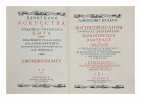
Le vite de' pià eccellenti pittori, scultori ed architettori scritte da Giorgio Vasari, pittore aretino, con nuove annotazioni e commenti di Gaetano Milanesi. 9 vols
Vasari, Giorgio edited by Gaetano Milanesi: Le vite de' pià eccellenti pittori, scultori ed architettori scritte da Giorgio Vasari, pittore aretino, con nuove annotazioni e commenti di Gaetano Milanesi. 9 vols. Florence: G. C. Sansoni Editore, 1878-85. Text in Italian. Arntzen & Rainwater 48a.
Text in Italian
Ragionamenti. Sopra le inventioni da lui dipinte in Firenze nel Palazzo di loro Altezze Serenissime. Con lo illustriss & Eccelentiss Signor Don Francesco Medici allora Principe di Firenze. Insieme con la inventione della Pittura da lui cominciata nella Cupola.
Florenz, Filippo Giunti, 1588. Kl.-4°. (4) Bl., 186 S., (9) Bl. Mit Holzschnitt-Portrait, 2 versch. Holzschnittdruckermarken und zahlr. Holzschnitt-Initialen. Flexibler Pergamentband der Zeit mit 2 Schliessbändern (2 Seiten ausgerissen), handschr. Rückentitel und Papierrückenschild.
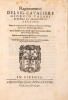
Brunet V, 1097. – Cicognara 225. – Erste Ausgabe. War schon 2 Jahre vor Giorgio Vasaris Tod (1511-1574) druckfertig, wurde vom gleichnamigen Neffen aus dem Nachlass herausgegeben. Die insgesamt sieben Dialoge, den einzelnen Sälen, mit Malereien von Vasari, im Palazzo Vecchio gewidmet, zwischen Vasari und Francesco Medici, dem damaligen «Principe» der Stadt Florenz.– Papier durchgehend stockfleckig. 7 Blatt stärker gebräunt. Der Einband leicht fleckig.

Phone number : 41 (0)44 261 57 50
Vie de Michel-Ange
Grasset 2004 107 pages in8. 2004. broché. 107 pages. Les 'Vies des artistes' de Giorgio Vasari est un ouvrage fondateur de l'histoire de l'art offrant une série de biographies des plus grands peintres sculpteurs et architectes italiens du XIIIe au XVIe siècle. Écrit par un contemporain et admirateur de Michel-Ange il documente de manière détaillée la vie et l'œuvre de ce dernier ainsi que celles d'artistes comme Léonard de Vinci et Raphaël tout en traçant l'évolution de l'art de la Renaissance
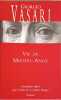
Très bon état
Les vies des meilleurs peintres, sculpteurs et architectes de Giorgio Vasari, tome 12. Vasari illustré
Berger-Levrault, coll. « Du texte à l’image » 1989 In-8 broché 21,7 cm sur 13,7. 456 pages. Bon état d’occasion.
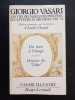
Édition commentée sous la direction d’André Chastel Bon état d’occasion
Giorgio Vasari, il Giovane. Raccolto fatto dal Cav. Giorgio Vasari di varii instrumenti per misurare con la vista. Introduzione e cura di Filippo Camerota. Biblioteca della scienza italiana, XIV.
Firenze, Giunti Gruppo Editoriale 1997, 240x170mm, 423pagine, in brossura. Sovracoperta. Copia nuova condizione.
Pour un paiement via PayPal, veuillez nous en faire la demande et nous vous enverrons une facture PayPal
Les vies des plus excellents peintres, sculpteurs et architectes. Traduction nouvelle par Charles Weiss.Tome I seul;
PARIS, Dorbon-Ainé - Volume In-8 ° broché, dos fatigué - Introduction VII à XI - 479 pages - Reproduction au Tome I de la couverture de l’original (1568) --
il faut 2 volumes, Remise de 20% pour toutes commandes supérieures à 200 €
Holzschnitte - Lithographien.
(Biel), Förderkreis Gianni Vasari. 1980 18 x 24 cm. 47 S. illustriert und je 3 signierte und nummerierte Holzschnitte und Lithographien. Originalkarton.
Originalausgabe Nr. XXII von 100 Exemplaren der Vorzugsausgabe mit 6 Originalgrafiken des Bieler Künslters. Mit Texten von Richy Fux, Jean-Pierre Maeder, Huub Oosterhuis, Christian Peikert-Falspöhler, Johann Tschanz, Urs Walter, Anton Wilhelm. Mit einer zusätzlichen Widmung auf dem Titelblatt.
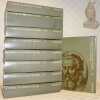
Le opere di Giorgio Vasari. Con nuove annotazioni e commenti di Gaetano Milanesi. 9 Volumi.
Firenze, G. C. Sansoni 1981, 200x130mm, in brossura. Buone condizioni.
Pour un paiement via PayPal, veuillez nous en faire la demande et nous vous enverrons une facture PayPal
Vie des grands artistes [Board book] Giorgio Vasari
Relié bon état .Contenu propre . Exemplaire numéroté .Nom au stylo .522 pages . 1954. PHOTOS SUR DEMANDE
Merci de nous contacter à l'avance si vous souhaitez consulter une référence dans notre boutique à Authon-du-Perche.
Vie des grands artistes [Library Binding] Giorgio Vasari
Relié bon état Contenu propre . Ex. numéroté . Dos insolé . 522 pages . 1954. PHOTOS SUR DEMANDE
Merci de nous contacter à l'avance si vous souhaitez consulter une référence dans notre boutique à Authon-du-Perche.
Vies des peintres numro 2
Les Belles Lettres Broch D'occasion tr¿s bon tat 15/11/2002 190 pages
Traité de la peinture. Réimpression intégrale de l'édition italienne de Bologne (1786) d'après celle de 1651, publiée à Paris par Raphaël Trichet du Fresne. Texte illustré de 16 planches gravées d'après les dessins de Nicolas Poussin. Nouvelle traduction française par André KELLER, diplômé de la Société Dante Alighieri de Rome, comportant la reproduction des croquis et des dessins du grand maître. La Vie de Léonard de Vinci est de Giorgio VASARI, peintre et écrivain florentin.
Jean de Bonnot, Paris, 1977, in-4 relié plein cuir richement orné, dorures, tranche supérieure dorée, signet, environ 450 pp, nombreuses illustrations. Tirage de tête. TRES BON ETAT
Le opere die Giorgio Vasari con nouve annotazioni e commenti di Gaetano Milanesi (1818-1895).
9 Bände. Firenze, Sansoni, 1880-1885. 8°. Spätere Halbpergamentbände, bzw. mod. Leinenband (Band I).
Bibliotheksexemplar mit Nummern, Klebern, Etiketten und mehrfach gestempelt.
LIVES OF THE MOST EMINENT PAINTERS, SCULPTORS AND ARCHITECTS, VOL. III
Henry G. Bohn. 1851. In-12. Relié. Etat d'usage, Couv. légèrement passée, Mors fendus, Intérieur acceptable. 526 pages. Couverture se détachant légèrement.. . . . Classification Dewey : 420-Langue anglaise. Anglo-saxon
Trans. from the Italian of Giorgio Vasari, With Notes and illustrations, Chiefly selected from various commentators, by Mrs. Jonathan FOSTER. Classification Dewey : 420-Langue anglaise. Anglo-saxon
OPERE DI GIORGIO VASARI, PITTORE E ARCHITETTO, 6 TOMES (COMPLET)
S. Audin e C., Firenze. 1822-1823. In-16. Relié. Bon état, Couv. convenable, Dos satisfaisant, Quelques rousseurs. 6 tomes. Plusieurs paginations. Illustrés de nombreuses gravures en noir et blanc sur planches hors texte (portraits). Titres et tomaisons dorés sur les dos. Etiquettes de code sur les couvertures. Quelques tampons de bibliothèque.. . . . Classification Dewey : 450-Italien, roumain, rhéto-romain
Dell'Architettura. Della Scultura. Della Pittura. Vite degli Artefici. Ragionamenti sopra le invenzioni dipinte in firenze nel Palazzo Vecchio... Classification Dewey : 450-Italien, roumain, rhéto-romain
CAPRICCI E ANEDDOTI DI ARTISTI
G. Barbèra, Firenze. 1878. In-32. Relié demi-cuir. Bon état, Couv. convenable, Dos à nerfs, Quelques rousseurs. 471 pages. Auteur, titre, fleurons, roulettes et filets dorés sur le dos. Etiquette de code sur la couverture. Quelques tampons de bibliothèque. Dos légèrement insolé.. . . . Classification Dewey : 450-Italien, roumain, rhéto-romain
Descritti da Giorgio Vasari. Classification Dewey : 450-Italien, roumain, rhéto-romain
Les Vies des meilleurs peintres, sculpteurs et architectes. 11 Volumes
Berger-Levrault Couvertures souples Paris 1981
Très bon 11 volumes in-8, paginations diverses. 1981-1987. Complet en 11 volumes incluant l'index, mais sans le volume 12 : "Du texte à l'image - Vasari illustré". Bel ensemble.
Le vite de piu eccellenti pittori scultori e architetti di Giorgio Vasari - 4 tomes en 2 volumes - Seconda edizione.
Tip. dell'oratorio di S.Franc.di Sales. 1871. In-16. Relié. Etat d'usage, Couv. convenable, Dos satisfaisant, Intérieur acceptable. 291+226 pages + 254+340 pages - tranches bordeaux - contre plats jaspés - étiquette collée sur la coiffe en pied - ouvrages en italien.. . . . Classification Dewey : 450-Italien, roumain, rhéto-romain

Ouvrages en italien - Volume 1 : Tomes 1 + 2 - Volume 2 : Tomes 3 + 4. Classification Dewey : 450-Italien, roumain, rhéto-romain
Sept vies d'artistes plus celle de l'auteur.
Paris, NRF, Gallimard (Collection "La Renaissance"), 1929, in 12 broché, 221 pages ; 5 portraits hors-texte ; signature sur le titre.
Exemplaire du Service de Presse. Lippi - La Cecca - Ghirlandaio - Botticello - Perugino - Bandinelli - Rustici - Vasari. ...................... Photos sur demande ..........................

Phone number : 04 77 32 63 69
VASARI, Giorgio - Arezzo, 30 juillet 1511, Florence, 27 juin 1574 - Peintre, Architecte et Ecrivain italien auteur des Vite, premier recueil d'histoire de l'Art - Traduction par Charles WEISS
Reference : 72
Les Vies des Plus Excellents Peintres, Sculpteurs et Architectes , Alias" Le Vite de' più eccellenti Pittori, Scultori e Architettori
PARIS, Dorbon-Ainé - 2 Volumes In-8 ° brochés, dos fatigué - Introduction VII à XI - 937 pages - Reproduction au Tome I de la couverture de l'original (1568) -- Tome II, Vue dépliante de FLORENCE au XIV e - Ex. non coupé, Très frais intérieurement.
C'est l'ouvrage que Giorgio Vasari a consacré aux artistes de son temps, paru une première fois en 1550, puis, remanié, paru en 1568 à Florence. Souvent nommé Le Vite De'piu Eccellenti Architetti, Pittori, Et Scultori Italiani voire complété par Da Cimabue, Insino A' Tempi Nostri (ces mentions ne figurent toutefois pas sur la couverture de l'ouvrage). Il est le premier, dans Le Vite, à utiliser le terme Renaissance pour qualifier son époque. Cet ouvrage apparaît, aujourd'hui, comme un des éléments fondateurs de l'Histoire de l'art. Cnformément à nos conditions générales de vente :Les frais de port sont affichés à titre indicatif. Il se peut que nous devions vous contacter pour vous informer du coût de laffranchissement supplémentaire en fonction du poids et du nombre de livres, surtout pour les envois internationaux Cependant vu l'augmentation des tarifs postaux à l'internationale, nous pouvons expédier les ouvrages en point relais MONDIAL RELAY pour les pays suivants : Allemagne, Autriche, Belgique, Espagne, Italie, Luxembourg, Pays-Bas, Pologne, et Portugal. Merci de nous indiquer en retour le point relais choisi ainsi que votre numéro de téléphone mobile & adresse Courriel pour assurer le suivi du colis.N'hésitez pas à nous interroger.In accordance with our general terms and conditions of sale:Shipping costs are displayed for informational purposes only. We may need to contact you to inform you of the additional postage costs depending on the weight and number of books, especially for international shipments.However, given the increase in international postal rates, we can ship books via Mondial Relay to the following countries: Germany, Austria, Belgium, Spain, Italy, Luxembourg, Netherlands, Poland, and Portugal. Please provide us with your chosen Mondial Relay point, as well as your mobile phone number and email address to ensure package tracking.Please feel free to contact us with any questions
Le Vite de' più eccellenti pittori, scultori et architetti, di Giorgio Vasari, pubblicate per cura di una Società di amatori delle Arti belle. Volume VI
Firenze Felice Le Monnier 1850 in-12 broché Firenze, Felice Le Monnier, 1850. 18 x 12 cm, in-12, (4) 352 pp. - 4 planches hors texte, broché sous couverture saumon imprimée.
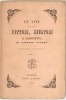
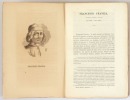
Volume 6 des 14 parus. Concerne Francesco Francia, Pietro Perugino, Vittore Scarpaccia, Iacopo dello l'Indaco et Luca Signorelli. Dos bruni et quelques rares rousseurs. Bon
Le Vite de' più eccellenti pittori, scultori et architetti, di Giorgio Vasari, pubblicate per cura di una Società di amatori delle Arti belle. Volume IV
Firenze Felice Le Monnier 1848 in-12 broché Firenze, Felice Le Monnier, 1848. 18 x 12 cm, in-12, (4) 255 pp. - 20 planches hors texte, broché sous couverture saumon imprimée.
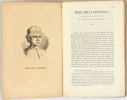
Volume 4 des 14 parus. Concerne 21 artistes italiens, de Giuliano de Maiano à Ercole Ferrarese. Dos bruni et quelques rares rousseurs. Bon

