 Write to the booksellers
19 books for « urbain le verrier »Edit
-
Type
Autograph (2)
Book (17)
-
Topics
Astronomy (5)
Autographs (1)
Forez (2)
Metallurgy (3)
Metals (1)
Neptune (4)
Paris (1)
Physics (1)
Planet (2)
Sciences (1)
Sun (1)
Tea (5)
Various (1)
-
Countries
Denmark (6)
France (13)
-
Syndicate
ILAB (15)
SLAM (9)
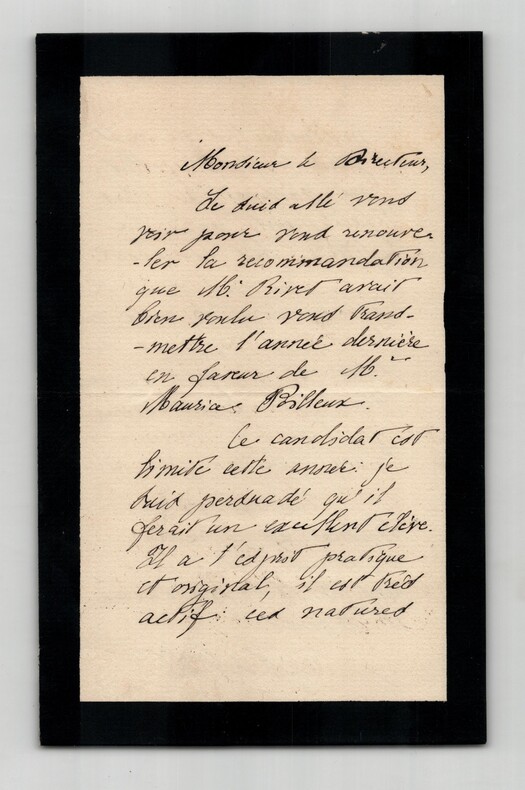
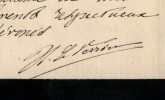
Urbain Le Verrier - Lettre autographe signée à Monsieur Risler
Urbain Le Verrier. Lettre autographe signée à Monsieur Risler Astronome, mathématicien français spécialisé en mécanique céleste et fondateur de la météorologie moderne française Lettre autographe signée d'Urbain Le Verrier, adressée à Monsieur Risler, non datée. Rédigée à l'encre noire sur un double feuillet de papier vergé à liseré de deuil de 1 cm. Dimensions : 11,3 x 17,9 cm État : Traces d'onglets au dos de la lettre. Nombre de pages : 2 pages Urbain Le Verrier Urbain Le Verrier, né à Saint-Lô le 11 mars 1811, mort à Paris le 23 septembre 1877, est un astronome, mathématicien français spécialisé en mécanique céleste et fondateur de la météorologie moderne française. Il est mondialement connu pour avoir découvert la planète Neptune par le calcul le 23 septembre 1846.
Urbain Le Verrier - Lettre autographe signée - Télégraphes européens - 1865
Urbain Le Verrier - Lettre autographe signée - Télégraphes européens - 1865 Lettre autographe signée d'Urbain Le Verrier, astronome et mathématicien français, découvreur de la planète Neptune et directeur de l'Observatoire impérial de Paris. La lettre est datée du lundi 13 mars 1865. Rédigée à l'encre brun-noir sur feuillet de papier vergé filigrané, avec en-tête imprimé « Observatoire Impérial » en tête de colonne gauche, souligné d'un filet ornemental, et mention pré-imprimée « Paris, le » suivie d'un filet pointillé complété à la main. Mention autographe du destinataire en pied de page. Dans cette lettre adressée à Geoffroy de Villeneuve, député de l'Aisne, Urbain Le Verrier convie son correspondant à la réception donnée le soir même par Madame Le Verrier et évoque la présentation de ses principaux instruments aux directeurs généraux des télégraphes européens alors présents à Paris, réunis dans la capitale pour la première Conférence télégraphique internationale (1er mars - 17 mai 1865). Dimensions : 13,6 x 20,7 cm État : Bon état général, présence de plis d'envoi inhérents au format postal, quelques très légères rousseurs et discrètes traces de colle ancienne au verso. Voir photos pour plus de détails. Nombre de pages : 1 page Envoi soigné dans un carton rigide et étanche.
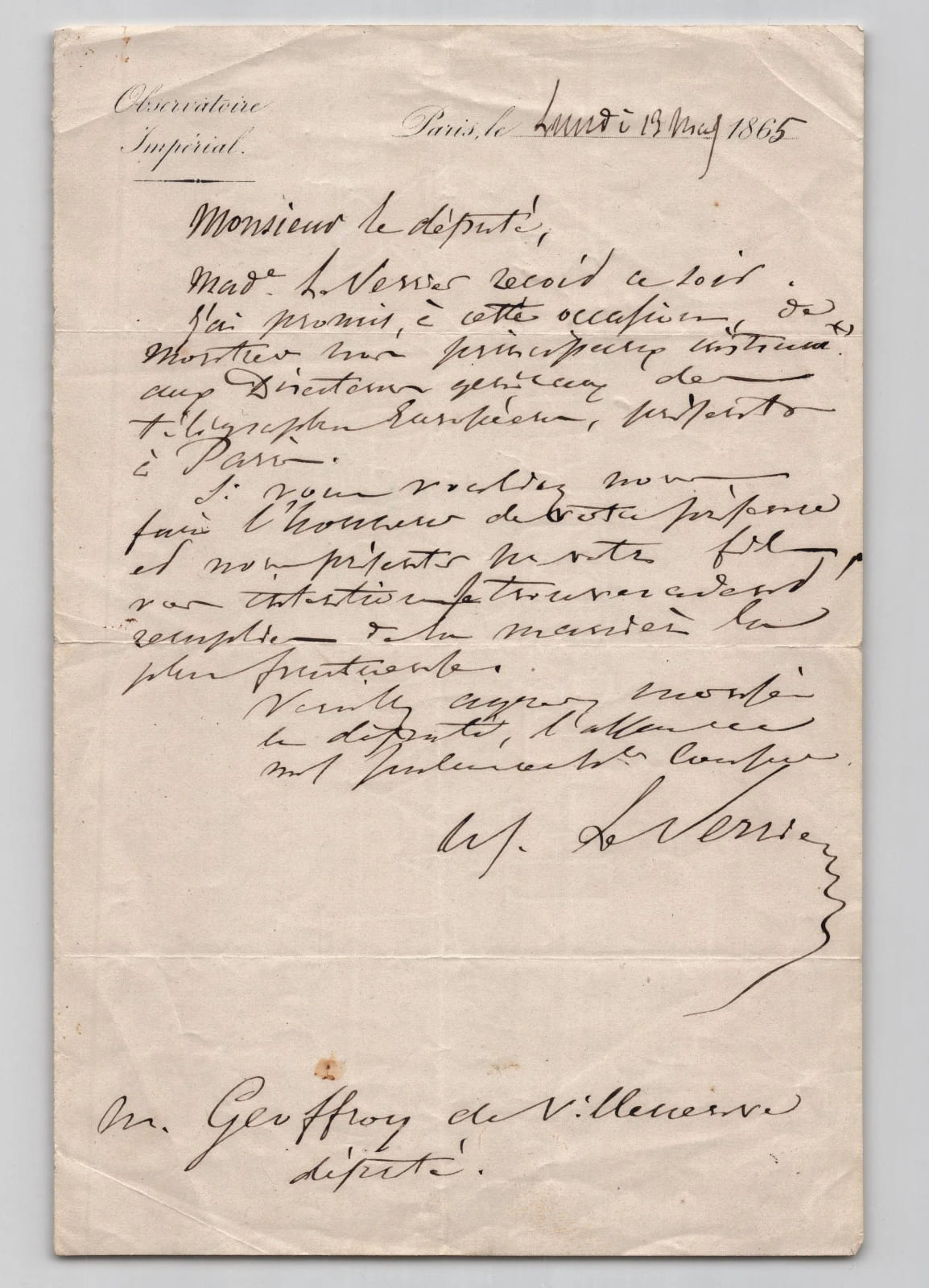
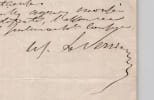
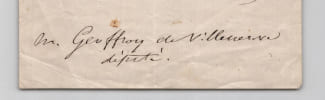
Lettre autographe signée
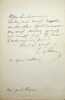
Urbain Le Verrier (1811-1877), astronome, mathématicien. L.A.S., sd, 1p in-8. Peut-être à Eugène de Rozière (1820-1896), Le Verrier n'indiquant que « Mr de la Rozières » ou « Rozeries ». « Mon cher camarade, Laissez-moi vous rappeler un peu plus régulièrement que vous m'avez promis vos mardis soirs. Il faut se retrouver un peu. Tout à Vous. Le Verrier ». [427]
Le Verrier et son temps. Catalogue d'exposition du 18 au 27 octobre 1946.
Paris, éd. Observation de Paris, imprimeur Gauthier-Villars, 15 octobre 1946, EDITION ORIGINALE, aucune réédition postérieure, gd. in-8, cartonnage souple, couv. ill. en noir et texte en noir et rouge sur fond blanc éd., VII - 75 - (5) pp., ill. de 6 planches de lettres et textes manuscrits de l'auteur hors-texte, portrait de Le Verrier en frontispice, "la découverte de Neptune à travers les journaux et les périodiques contemporaains", Urbain Le Verrier (1811 - 1877) fut astronome et mathématicien français, spécialiste en mécanique céleste, fondateur de la météorologie moderne française et "inventeur" de la planète Neptune en 1846. Il fut élu à l'Académie des Sciences pour ses travaux sur la stabilité du système solaire. RARE Très bon état
Recherches sur L'Orbite de Mercure et sur ses Pertubations. Détermination de la Masse de Vénus et du Diamètre du Soleil" - [A CONFIRMATION OF THE GENERAL THEORY OF RELATIVITY]
(Paris, Imprimerie de Bachelier), 1843. 4to. Recent blue boards. 87, (1) pp. Clean and fine. In ""Journal de Mathématiques pures et appliquées"", tome VIII.
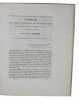
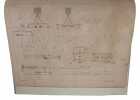

Scarce first separate edition of Le Verrier's provisional theory on the motion of Mercury, his studies of which eventually did much to demonstrate the validity of Einstein's Theory of Relativity. The separate edition - as we have it here - is paginated 1-87, while the periodical version is paginated 273-359.The planetary orbits should agree with the predictions of the General Theory of relativity, but as Einstein pointed out in his ""Erklärung der Perihelbewegung des Merkurs aus der allgemeinen Relativitätstheorie"" from 1915, the divergences predicted were too small to be observed, except in the case of the nearest planet Mercury, where the perihelion advance, according to the formula, reaches the value of 43"""" per 100 years, being in full agreement with the calculations of Le Verrier, who found this unexplained rest in the perihelion advance of Mercury per century, if the perturbations due to the other planets are deduced.- Einstein tells in a letter to a friend that for several days he was in a 'state of delirious joy' by this wonderful astronomical confirmation of his theory.""Le Verrier first began to study Mercury on the suggestion of Arago in 1840. Astronomers realized that Mercury's perihelion (the point at which the orbit of a planet is closest to the sun) advanced along its orbit at a rate of 566 seconds per century. Le Verrier calculated that, even when taking into account the forces exerted by other planets in the solar system, there still existed a discrepancy between calculation and observation. Le verrier's accurate calculations showed that the planet's perihelion...did indeed advance forty seconds of an arc per century more than could be accounted for by Newton's theory of gravitation, even after the minor pertubing effects of the other planets had been allowed for."" (Asimov). - Le verrier published these findings in the present work, carefully as to the mass of the planet, comparison with other orbits of planets and their perihelia. At the time, Le Verrier put down the discrepancy to mis-observation or mis-calculation.- Sparrow, Milestones of Science No. 133.
LE VERRIER, URBAIN JEAN JOSEPH. - A CONFIRMATION OF THE GENERAL THEORY OF RELATIVITY.
Reference : 42922
(1843)
Recherches sur L'Orbite de Mercure et sur ses Pertubations. Détermination de la Masse de Vénus et du Diamètre du Soleil"
(Paris, Imprimerie de Bachelier), 1843. 4to. No wrappers as extracted from ""Journal de Mathématiques pures et appliquées...Publié par Joseph Liouville"", tome VIII. Pp. 273-360. Clean and fine.
First appearance of Le Verrier's provisional theory on the motion of Mercury, his studies of which eventually did much to demonstrate the validity of Einstein's Theory of Relativity. The planetary orbits should agree with the predictions of the General Theory of relativity, but as Einstein pointed out in his ""Erklärung der Perihelbewegung des Merkurs aus der allgemeinen Relativitätstheorie"" from 1915, the divergences predicted were too small to be observed, except in the case of the nearest planet Mercury, where the perihelion advance, according to the formula, reaches the value of 43"""" per 100 years, being in full agreement with the calculations of Le Verrier, who found this unexplained rest in the perihelion advance of Mercury per century, if the perturbations due to the other planets are deduced.- Einstein tells in a letter to a friend that for several days he was in a 'state of delirious joy' by this wonderful astronomical confirmation of his theory.""Le Verrier first began to study Mercury on the suggestion of Arago in 1840. Astronomers realized that Mercury's perihelion (the point at which the orbit of a planet is closest to the sun) advanced along its orbit at a rate of 566 seconds per century. Le Verrier calculated that, even when taking into account the forces exerted by other planets in the solar system, there still existed a discrepancy between calculation and observation. Le Verrier's accurate calculations showed that the planet's perihelion...did indeed advance forty seconds of an arc per century more than could be accounted for by Newton's theory of gravitation, even after the minor pertubing effects of the other planets had been allowed for."" (Asimov). - Le verrier published these findings in the present work, carefully as to the mass of the planet, comparison with other orbits of planets and their perihelia. At the time, Le Verrier put down the discrepancy to mis-observation or mis-calculation.- Sparrow, Milestones of Science No. 133.
"LE VERRIER, URBAIN JEAN JOSEPH. - PREDICTING THE EXISTENCE OF THE PLANET NEPTUN.
Reference : 46890
(1846)
Paris, Bachelier, 1846. 4to. No wrappers. In: ""Comptes rendus hebdomadaires des séances de l’Académie des sciences"", Vol. 23, No 9 (entire issue offered). With htitle and titlepage to vol. 23. Pp. 425-484. Le Verrier's paper: pp. 428-438.
First printing of this important paper in the history of astronomy in which Le Verrier predicted the existence of a new planet, determining its orbit and the mass as well as its actual position, so that, by informing Dr. Galle the following month, where he should look for it in the sky. The same evning when Galle had received the letter, he found close to the position given by Le Verrier a strange body showing a small planetary disc, which was soon recognized as a new planet, known now as Neptune. Adams in England, independently made the same prediction.""Until 1846 there was no theory of Uranus that permitted its movements to be represented satisfactorily. In 1821 Bouvard had constructed tables that, abandoning the older positions, adhered very closely to recent observations. Yet twenty years later a discrepancy of two minutes had already been observed, and several astronomers suggested that it might result from the attraction of an unknown planet. In 1845 Arago presented the problem to Le Verrier, who began by establishing a precise theory of Uranus. He then demonstrated that its observed perturbations could not be explained as the effect of the actions of Jupiter and Saturn, whatever modifications might eventually be made in the values assigned to the masses of those planets. He began to search for signs of an unknown disturbing planet. Finally, in a third memoir on the subject, appearing on 31 August 1846, Le Verrier fixed the exact position of the unknown planet and gave its apparent diameter.""(DSB)
Mémoire sur la planète Neptune.
Paris, Bachelier, 1848.
Tiré à part des Comptes rendus des séances de l'Académie des Sciences', tome XVII, séance du 2 octobre 1848. On joint 9 tirés à part des communications de Le Verrier à l'Académie des Sciences et un de Mouchez : - Recherches sur les comètes périodiques. ... , tome XXV, séance du 25 octobre, 1847. 11 pp. - Recherches sur les comètes périodiques. ..., tome XXV, séance du 20 décembre, 1847. 9 pp. - Nouvelle détermination de la différence de longitude entre les observatoires de Paris et de Greenwich. ..., tome XXXIX, séance du 25 septembre 1854. 14 pp. - Théorie et tables du mouvement de Vénus. ..., tome LI, séance du 26 novembre 1860. 7 pp. - Réponse de M. Le Verrier à M. Delaunay. [sur une modifications de nombres de la Théorie de Vénus et de la Terre.] ..., tome LI, séance du 26 novembre 1860. 4 pp. - Réponse de M. Le Verrier aux critiques [de Delaunay] dirigées à tort contre quelques-uns des derniers chiffres, des derniers coefficients des dernières séries dont dépendent les actions réciproques de Vénus et de la Terre. ..., tome LI, séance du 19 novembre 1860. 7 pp. - Travaux en voie d'exécution à l'Observatoire. ...tome LXXXX, séance du 28 juin 1875. 6 pp. - Eclipse totale du Soleil le 18 août 1868. ... tome LXVI, séance du 3 février 1868. 7 pp. - Exposé des opérations entreprises par l'Observatoire ... pour la détermination astronomique des longitudes et latitudes des points principaux du réseau géodésique français. ...tome LVI, séance du 5 janvier 1863. 20 pp. On joint : Catalogue [des étoiles] de l'Observatoire de Paris. Note de M. Mouchez. ...tome CV, séance du 17 octobre 1887. 4 pp. /// In-4 de Brochés, sans couverture. //// 10 off-prints by Le Verrier and one by Mouchez.
"LE VERRIER (LEVERRIER), URBAIN JEAN JOSEPH. - THE EXISTANCE OF NEPTUNE PREDICTED.
Reference : 47206
(1846)
Recherches sur les mouvements d'Uranus. (Séance du Lundi 1er Juin 1846).
Paris, Bachelier, 1846. 4to. No wrappers. In: ""Comptes Rendu hebdomadaires des Séances de l’Académie des Sciences"", Vol. 22, No 22. Pp. (893-) 928. (Entire issue offered). Le Verrier's paper: pp. 907-018.
First appearance of Le Verrier's paper in which he postulated the existance of a new planet on mathematical premises from the gravitational disturbencies of Uranus.""In 1846 John Cauch Adams... and Urban J. Leverrier... simultaneously and independently determined the location of a possible new planet... In 1845 he wrote of his findings of the mathematical location of a new planet to Sir George Bidell Airy,,, Because Adams was unknown, his letter was put aside. Meanwhile the same perturbations of Uranus had become of interest to Leverrier. On July 1(should be June !), 1846 he presented a paper ""Recherches sur les mouvements d'Uranus"" (the paper offered) to the Academie des Sciences inParis. When Airy realized that Leverrier and Adams had reached the same conclusions, he hastened to suggest that a search be made for the newplanert. Shortly hereafter it was seen bur not recognized. About a week before it was found in England, it was discovered by Galle in Berlin on information supplied by Leverrier. Thus, the honour of the discovery, or even co-discovery of the new planet, Neptune, was lost to Adams and credited to Leverrier.... Adams paper was reade before the Royal Astronomical Society, November 13, 1846, and was published in 1847. (Milestones p. 40).Milestones of Science No 132. - Dibner No. 16.
"LE VERRIER, URBAIN JEAN JOSEPH. - THE FIRST STEPS TOWARDS DISCOVERING NEPTUNE.
Reference : 48802
(1845)
Premier Mémoire sur la théorie d'Uranus.
(Paris, Bachelier), 1845. 4to. No wrappers. In: ""Comptes rendus hebdomadaires des séances de l’Académie des sciences"", Vol. 21, No 19. Pp. (1009-) 1082 (entire issue offered). With titlepage to vol. 21. Le Verrier's paper: pp. 1050-1055. Stamp to top of titlepage.
First appearance of Le Verrier's first paper on the anomalities in the orbit of Uranus, the calculations on which eventually leading to his prediction and discovery of a new planet, Neptune the following year, 1846.
"LE VERRIER (LEVERRIER), URBAIN JEAN JOSEPH. - PREPARING FOR, PREDICTING AND CONFIRMING THE EXISTENCE OF NEPTUNE.
Reference : 49635
(1845)
Premier Mémoire sur la théorie d'Uranus. (Séance 10 Novembre 1845). (+) Recherches sur les mouvements d'Uranus. (Séance du Lundi 1er Juin 1846). (+) Sur la planète qui produit les anomalies observées dans le mouvement d'Uranus. Détermination de ...
Paris, Bachelier, 1845 a. 1846. 4to. No wrappers. In: ""Comptes rendus hebdomadaires des séances de l’Académie des sciences"", Vol. 21, No 19, Vol. 22, No 22, Vol. 23, Nos 9, 14, 16 a. 17. (6 entire issues offered). Le verrier's papers: pp. 1050-1055 (No 19), pp. 907-919 (no 22), pp. 428-438 (No 9), pp. 657-659, 659-643, 676 (No 14), pp. 741, 741-754, 754 (No 16), pp. 798-799, 799-800 (No 17). With title-pages to vol. 21,22 a. 23. Titlepages with a small stamp in upper corner and a perforated stamp to lower margin. Light yellowing to title-pages, otherwise clean and fine on good paper.

First printing of Le Verrier's importent and famous papers, predicting and confirming the discovery of the Planet Neptune, including the ""preparatory"" paper, the first paper on the anomalities in the orbit of Uranus, the calculations on which eventually leading to his prediction and discovery of a new planet, Neptune the following year, 1846.""In 1846 John Cauch Adams... and Urban J. Leverrier... simultaneously and independently determined the location of a possible new planet... In 1845 he wrote of his findings of the mathematical location of a new planet to Sir George Bidell Airy,,, Because Adams was unknown, his letter was put aside. Meanwhile the same perturbations of Uranus had become of interest to Leverrier. On July 1(should be June !), 1846 he presented a paper ""Recherches sur les mouvements d'Uranus"" to the Academie des Sciences inParis. When Airy realized that Leverrier and Adams had reached the same conclusions, he hastened to suggest that a search be made for the newplanert. Shortly hereafter it was seen bur not recognized. About a week before it was found in England, it was discovered by Galle in Berlin on information supplied by Leverrier. Thus, the honour of the discovery, or even co-discovery of the new planet, Neptune, was lost to Adams and credited to Leverrier.... Adams paper was reade before the Royal Astronomical Society, November 13, 1846, and was published in 1847. (Milestones p. 40).Milestones of Science No 132. - Dibner No. 16.
Théorie du mouvement de Mercure
Paris, Bachelier, imprimeur-libraire, 1845, in-8, 165 pp, Broché, couverture bleue imprimée, Par le découvreur de la planète Neptune. Dés 1837, Le Verrier (1811-1877) travailla sur la stabilité du système solaire, sur les problèmes généraux de mécanique céleste et sur les perturbations des axes principaux des orbites des planètes. En 1839 et 1840, il parvient à préciser les excentricités et inclinations de sept planètes, développant ainsi des méthodes inédites et une théorie sans précédent des perturbations orbitales. Il se tourna ensuite vers l'étude théorique de Mercure, dont les tables existantes ne correspondaient pas bien aux observations, puis vers l'identification des comètes périodiques. Ses avancées dans la théorie analytique des perturbations furent reconnues par l'Académie des sciences ; il en devint membre en janvier 1846, alors qu'il était engagé dans les travaux qui le menèrent à la découverte de Neptune. Étiquettes et tampons de l'Institut catholique de Paris. Dos restauré. Petites rousseurs couverture et gardes empoussiérées. DSB IX, p. 277.0 Couverture rigide
Bon 165 pp.
Annales de l'observatoire impériale de Paris. Mémoires. Tome VI.
Paris, Mallet-Bachelier, 1861.
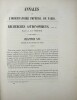
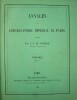
/// In-4 de VIII, 435 pp. Toile verte récente, couverture imprimée conservée. ////
Annales de l'observatoire impérial de Paris. Tome quatrième.
Paris, Mallet-Bachelier, 1858.

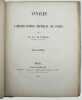
/// In-4 de VIII, 263, 151 pp. Broché, couverture imprimée. ////
Annales de l'observatoire impériale de Paris. Mémoire. Tome premier.
Paris, Mallet-Bachelier, 1855.
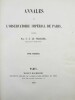

/// In-4 de VII, 419 pp., 1 planche dépliante. Toile verte récente. ////
La Métallurgie en France.
Baillière 1894 In-12 broché, XII- 348 pp. 66 figures dans le texte. Couverture ternie.
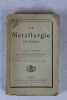
Fils du grand astronome, l’auteur (1848-1905) fut professeur de métallurgie au Conservatoire des Arts et Métiers. Bon état d’occasion
Cours de Métallurgie professé à l'Ecole des Mines de Saint-Etienne. METALLURGIE de la FONTE.
1894 Saint-Etienne, Chevalier, Paris, Baudry, 1894, grand in 4° relié demi-chagrin vert, dos lisse orné de filets dorés, 234 pages ; cachets.
Bel exemplaire. Avec 17 planches hors-texte. Fermeture du 1er au 23 Août


Phone number : 04 77 32 63 69
Cours de Métallurgie professé à l'Ecole des Mines de Saint-Etienne. METALLURGIE des METAUX AUTRES que le FER. Nouvelle édition revue et augmentée.
1896 Saint-Etienne, Chevalier, Paris, Baudry, 1896, grand in 4° relié demi-chagrin vert, dos lisse orné de filets dorés, 385 pages ; cachets.
Bel exemplaire. Avec 44 planches hors-texte. Fermeture du 1er au 23 Août
Phone number : 04 77 32 63 69
LA METALLURGIE EN FRANCE / BIBLIOTHEQUE SCIENTIFIQUE CONTEMPORAINE.
BAILLIERE J.-B. ET FILS. 1894. In-12. Relié. Etat d'usage, Couv. convenable, Dos abîmé, Intérieur frais. XI + 348 pages - nombreuses figures en noir et blanc dans et hors texte - figure page 146-147 partiellement desolidarisé - dos partiellement manquant et desolidarisé mais conservé.. . . . Classification Dewey : 672-Métallurgie des métaux ferreux
AVEC 66 FIGURES INTERCALEES DANS LE TEXTE. Classification Dewey : 672-Métallurgie des métaux ferreux

