 Write to the booksellers
1254 books for « thompson r t »Edit
-
Type
Book (1242)
Magazine (1)
Music sheets (9)
Old papers (1)
Photographs (1)
-
Latest
Last 24h (2)
Last 3 days (3)
Last month (55)
Last week (3)
-
Language
Dutch (1)
English (10)
French (1171)
Russian (72)
-
Century
18th (18)
19th (27)
20th (531)
21st (143)
-
Countries
Belgium (76)
Brazil (1)
Canada (7)
Côte d'Ivoire (2)
Denmark (40)
France (916)
Germany (3)
Greece (1)
Netherlands (2)
Switzerland (131)
United Kingdom (2)
United States of America (73)
-
Syndicate
ALAC (6)
CLAM (6)
CLAQ (1)
CNE (3)
ILAB (517)
NVVA (15)
SLACES (15)
SLAM (442)
SNCAO (1)
Topics
- Africa (4)
- Animals (5)
- Archaeology (11)
- Architecture (13)
- Belgium (4)
- Besson patrick (3)
- Bible (4)
- Bibliography (3)
- Biography (8)
- Biology (3)
- Books from the xviiith (3)
- Botany (3)
- Children’s books (23)
- Cinema (6)
- Civilisation (10)
- Claudel paul (7)
- Comic strip (3)
- Detective novels (19)
- Dictionaries (5)
- Drawings (6)
- Drugs (3)
- Early printed books (4)
- Economics (5)
- Egyptology (4)
- Electricity (5)
- England (6)
- English (80)
- Entomology (5)
- Erotic (6)
- Esotericism (4)
- Ethnology (3)
- Fantastic (5)
- Fine arts (8)
- First edition (4)
- Flora (6)
- Flowers (3)
- Fox (9)
- Guittoneau ben (4)
- Helvética (4)
- History (50)
- Humour anecdotes (4)
- Hunting (5)
- Illustrated books (3)
- Industrial arts & crafts - fine arts (6)
- Journalism (3)
- Joyce james (5)
- Language (3)
- Literature (98)
- Malacology (3)
- Mathematics (10)
- Medicine (6)
- Meteorology (4)
- Mexico mayas (8)
- Miller (5)
- Mines & miners (3)
- Navy (12)
- North america (4)
- O'brien robert (3)
- Orientalism (5)
- Painting (3)
- Painting (8)
- Philosophy (9)
- Photography (8)
- Physics (13)
- Poetry (19)
- Policy (4)
- Political economy (3)
- Psychology (4)
- Religions (5)
- Reliure (4)
- Romance (7)
- Ruth (4)
- Science fiction (10)
- Sciences (16)
- Scores (14)
- Sculpture (5)
- Songs (9)
- Spying (13)
- Surgery (3)
- Suspense (5)
- Tales (4)
- Tea (16)
- Theatre (3)
- Thompson eric (7)
- Thompson gene (4)
- Thompson jim (62)
- Thompson sylvia (4)
- Thriller (4)
- Translation (11)
- Travel (6)
- United kingdom (6)
- United states (8)
- Various (12)
- War (13)
- Youth (6)
- Zoology (13)
Clinical Lectures on Diseases of the Urinary Organs delivered at University College Hospital. Fourth Edition.
London, J. & A. Churchill, 1876. Orig. full cloth. Spine gone. XII,386 pp., 2 lithographed plates and 55 fine textillustr. in woodcut.
Garrison & Morton No 4173 (1868-edition). Thompson performed the operation of lithotrity upon Leopold I and Napoleon III.

La Formation de la classe ouvrière anglaise.
Gallimard/Le Seuil, 1988, gr. in-8°, 791 pp, traduit de l'anglais, présentation par Miguel Abensour, index, reliure toile éditeur, jaquette, bon état
En 1792, lorsque la monarchie est renversée à Paris, les jacobins anglais ne sont qu'une poignée. Leurs sociétés seront vite interdites et William Pitt les pourchassera sans relâche. Et c'est à la taverne que le gentilhomme réformateur et l'artisan se réfugieront pour lire les “Droits de l'homme” de Thomas Paine. Cinquante ans plus tard, le radicalisme structure un monde ouvrier diversifié, mais organisé et conscient de ses droits. Entre ces deux moments, la révolution industrielle s'impose, au prix du fer et du sang. Pour saisir la conscience ouvrière dans sa formation, E.P. Thompson a puisé à toutes les sources de la culture populaire. Et ce grand classique d'histoire sociale est avant tout une somme d'érudition critique. — En France, peu d'historiens ont joué un rôle politique et intellectuel équivalent à celui qu'a tenu Edward Palmer Thompson en Grande-Bretagne et, plus largement, dans le monde. Peu de livres ont exercé une influence aussi profonde sur l'écriture de l'histoire contemporaine que cette somme publiée une première fois en anglais en 1963, traduite en français vingt-cinq ans plus tard. Ce livre foisonnant et engagé, d'une richesse exceptionnelle, qui tente de tisser ensemble de multiples fils afin de restituer l'expérience vécue par les contemporains de la "révolution industrielle" demeure d'une extraordinaire actualité. Comme l'écrit Thompson lui-même dans sa préface : "Certaines causes perdues de la révolution industrielle peuvent nous éclairer sur des plaies sociales encore ouvertes aujourd'hui". En reconstituant la vie des pauvres tisserands à bras, des artisans "utopistes" et radicaux, des luddistes brisant les machines, en s'efforçant de les "sauver de l'immense condescendance de la postérité", Thompson a écrit un chapitre décisif de notre passé. Près de cinquante ans après, la lecture de ce grand livre peut encore nous aider à nous orienter face aux bouleversements et aux incertitudes du présent. — "Relire le livre d'Edward P. Thompson trente ans après sa première parution, c'est d'abord saluer une œuvre qui a marqué l'histoire sociale du vieux continent. “The Making of the English Working Class” fut en effet un livre pionnier, remarquable par la somme des informations qu'il contenait et par le souci de son auteur de diversifier les sources de l'histoire sociale. Le tableau ainsi dressé par Thompson a permis de comprendre la complexité de la sociabilité politique des ouvriers décrits. Ceci a constitué un formidable enrichissement par rapport aux propos simplificateurs du marxisme vulgaire. Pour cette raison et pour les ouvertures qu'il a permises dans l'écriture de l'histoire ouvrière, l'ouvrage de Edward P. Thompson mérite des retours réguliers..." (Yannick Le Marec, Actes de la recherche en sciences sociales, 1993) Désormais les frais d'envoi sont de 6 € seulement pour les livres jusqu'à 1 kg (colissimo suivi), pour la France métropolitaine.
Juge provincial de Gaspé, 1831.
Document signé John G. Thompson Judge & J. P., et portant son sceau de papier. District of Gaspé. Carleton, 7 juillet 1831. 1f. in-plano (30.6cm) (1) p. en partie imprimée. Rédigé en anglais. Très bel état. [ Mandat d'arrêt de Thomas McGuire, tavernier de Carleton, délivré par le juge de paix Thompson suite à la déposition de Fabien Allin de Carleton, Comté de Bonaventure, qui craint pour sa vie vu les menaces qu'il reçut à 2 reprises à l'effet qu'il serait abbatu par pistolet. (John Gawler Thompson (1787-1868), juge et juge de paix du District de Gaspé de 1827 à 1868, avait été le compagnon d'enfance de Philippe Aubert de Gaspé, père, où il consacre plusieurs pages à leurs escapades dans les « Mémoires ». Il était le fils du commissaire général James Thompson qui, en 1828, en sa qualité de seul survivant de la bataille des Plaines d'Abraham et en tant que grand maître adjoint des francs-maçons, eut l'honneur de la pose de la 1ère pierre du monument Wolfe/Montcalm. Le député de Bonaventure J.-F. Deblois demanda au gouverneur Gosford la destitution du juge Thompson en 1835 pour s'être immiscé dans la dernière élection « avec les ennemis déclarés des libertés du peuple ». Cette histoire prit de l'ampleur et se termina à Londres devant le comité judiciaire du Conseil privé qui décida de le garder dans l'exercise de ses fonctions à la veille des troubles politiques de 1837-38. Deblois avait donné son vote pour les 92 Résolutions et Thompson était reconnu comme ami de l'ancien gouverneur Dalhousie. cf.: DBC VIII p. 230-231.]
"RUMFORD, GRAFEN von (BENJAMIN THOMPSON). - WEAKENING THE CALORIC THEORY OF HEAT.
Reference : 43872
(1799)
Bemerkungen über dias eigenthümliche Gesetz, wonach erkaltendes Wasser nahe beim Frostpunkte seine Dichtigkeit ändert, und über die auffallenden Wirkungen dieses Gesetzes in der Oekonomie der Natur, sammt Vermuthungen über die Endursache der Salzigkei...
(Halle, Rengerschen Buchhandlung, 1799). Without wrappers. In ""Annalen der Physik. Herausgegeben von Ludwig Wilhelm Gilbert"", Bd. 1 Viertes Stück und Bd. 2, Drittes Stück. (The entire issues offered). Pp. 379-518 a. 2 folded engravd plates + pp. 249-368 a. 2 folded engraved plates. Rumford's papers: pp. 436-463 a. pp. 249-286.
First German editions of Rumford's central essays on heat flows in liquids, describing his DISCOVERY OF THE CONVECTION OF HEAT and his experiments that led to his theory of the CONVECTION CURRENTS IN THE OCEAN. The papers appeared originally in the Philosophical Transactions in 1798.
"RUMFORD, GRAFEN von (BENJAMIN THOMPSON). - THE ECONOMY OF HEAT.
Reference : 43873
(1800)
Beyträge zur Lehre von der Wärme in physikalisher und ökonomischer Rücksicht.
(Halle, Rengerschen Buchhandlung, 1800) Without wrappers. In ""Annalen der Physik. Herausgegeben von Ludwig Wilhelm Gilbert"", Bd. 3, Drittes Stück. (The entire issue offered). Pp. 257-376 a. 3 folded engraved plates. Rumford's paper: 257-376.
First appearance in German of selected papers from Rumford's Experimental Essays on heat, describing smoky fireplaces and his design of more efficient fireplaces using radiant heat better. He discovers that mat surfaces radiate heat better than shiny ones etc. etc.
RUMFORD, BENJAMIN COUNT (BENJAMIN THOMPSON). - DISCOVERING THE PRINCIPLES OF OCEAN CIRCULATION.
Reference : 50776
(1797)
Mémoire sur la maniere dont la CHALEUR se propage dans les FLUIDES sur une loi remarquable qui s'observe dans la condensation de l'eau par le froid, lorque ce liquide approche du terme de la congélation" & sur les effets surprenans qui sont pro...
A Geneve, Biblioth. Britannique, 1797. 8vo. Contemp. marbled boards. Paperlabel with handwritten volume- title on spine. Boards rubbed. In: ""Bibliotheque Britannique"", Tome cinquieme. Sciences et Arts. A name cut from titlepage, no loss of letters. Entire volume offered. 392 pp., 4 folded tables a. 3 folded engraved plates. A faint dampstain to foot of titlepage, otherwise clean, printed on good paper. Rumford's paper: pp. 97-200 a. 1 engraved folded plate.
First printing of the founding paper on Oceanography, describing the experiments leading to the discovery of the convection currents in the sea. Cold water at depth in the tropics implies a meriodinal circulation transporting deep water from the polar regions towards the equator. Water cooled at the surface in high latitudes gets denser and hence descends. (Parkinson ""Breakthroughs"" 1797).The volume also contains the first translation of any part (into French) of JAMES HUTTON ""Theory of the Earth, &c. Théorie de la Terre, avec des preuves & des éclaircissemens"" en guatre parties. (1.-2. Extrait)."". Pp. 53-73 a. pp. 262-273.
Life-Histories of Northern Animals. An Account of the Mammals of Manitoba. 2 vols. (1. Grass-Eaters. 2. Flesh-Eaters).
London, Constable & Co., 1910. 4to. 2 orig. full cloth. Gilt backs. Backs faded. Uncut. XXX,XII,1267 pp., 68 maps, 560 drawings by the author.
First English edition.
Pine Crossbills. A Scottish Contribution. Drawings by Donald Watson.
Berkhamsted, (1975). Orig. boards. Part of wrappers pasted in. 256 pp., i cold. plate, 16 plts. in b/w, many fine linedrawings.
Black Caribbean. Decorated by W.A. Redgrave. London, Macdonald & Co., 1946.
Orig. full cloth. Rubbed. Back faded. 286 pp. Illustr. Inscription on title.
The Lost Oracles. A Masque. Chicago, Walter M. Hill, (1921).
orig. hvellum. Uncut. No 32 of 500 signed by the author.
The Rabbit. With an Appendix on legal Aspects by Valerie Worrall.
London, Collins, 1956. Orig. full cloth. Part of orig. wrappers pasted in. XII,240 pp., photographic plates, maps and textillustr.
First edition. (The New Naturalist).
Animal Conflict and Adaptation.
London, Foulis & Co., (1965). Orig. full cloth. Part of orig. wrappers pasted in. XI,160 pp., plates and textillustr.
Pelagic Tunicates of Australia.
Melbourne, 1948. Small 4to. Orig. full cloth. 196 pp., 75 plates. Small stamp on title.
The Arctic Prairies. A Canoe-Journey of 2,000 Miles in search of the Caribou being the Account of a Voyage to the Region of North Aylmer Lake.
London, Constable & Co., 1912. Orig. full cloth. Gilt back. A gilt bull on frontcover. Few chips to spine ends. Spine a little faded. Uncut. XVI,415 pp. Frontispiece and many photographical plates, richly textillustr., maps.
First UK-edition.
The Gospel of St. John According to the Earliest Coptic Manuscripts.
London, Bernard Quaritch, 1924. Original publishers cloth backed boards. Back slightly worn. Small stamp on titlepage. XXXIX,70 pp. and 43 plates.


(British School of Archaeology in Egypt and Egyptian Research Account Twenty-Ninth Year, 1923.).
The Tomb and Moon Temple of Hureidha (Hadhramaut).
Oxford, 1944. 4to. Orig. boards. XV,184 pp. and 81 plates, some folded, some in colour.
The Twins and the Whys. A Fairy Tale Worth While.
San Francisco & N.Y., Paul Elder and Co., Tomoye Press, (1906). Small 8vo. Uncut in orig. clothbacked decorated boards. (12),26,(1) pp. Decorations by Spencer Wright.
BUTLER, ELIZABETH THOMPSON [LADY], 1846-1933) USHERWOOD, PAUL & JENNY SPENCER-SMITH.
Reference : 39756
(1987)
Lady Butler, Battle Artist 1846-1933. Published for the Exhibition . . . held at the National Army Museum, London, 14 May - 26 September 1987.
London Alan Sutton / National Army Museum, 1987. Orig. pictorial wrappers. 192 pp. Richly illustr. Library stamps.
"RUMFORD, BENJAMIN COUNT (BENJAMIN THOMPSON). - THE MECHANICAL EQUIVALENT OF HEAT.
Reference : 45131
(1804)
An Enquiry concerning the Nature of Heat, and the Mode of its Communication. Read february 2, 1804.
(London, W. Bulmer and Co., 1804). 4to. No wrappers as extracted from ""Philosophical Transactions"" 1804 - Part I. Pp. 77-182 and 2 engraved plates (showing his experimental apparatus). First and last leaves with some faint browning and brownspots. The plates with some browspots, mainly to margins. Wide-margined.
First appearance of Rumford's second large paper on the mechanical equivalent of heat, in which he owerthrows the caloric theory. Rumford's early papers were importent steps towards the conception of the principle of the ""Conservation of Energy"" and the thermodynamical laws.""The importence of this investigation here entered into, - inasmuch as it applies to most of the operations of nature as well as art, - appears so manifest, that we shall not recapitulate what the author advances on the subject. before he proceeds to the details of his experiments for the purpose oof computing the emissions of heat from various bodies under a variety of circumstances, he finds it necessary to prmise a minute description of the principal part of the apparatus he contrived for the purpose...""(Abstract).In his famous paper of 1798 ""An Inquiry Concerning the Source of Heat Which is Exicited by Friction"" showed that heat is a form of motion and not a substance as it was seen in the 18th century.""He had been lead to the hypothesis that friction is an inexhaustable source of heat while considering the boring of a canon at Munich's military arsenal and had proceeded to experiment with brass guns at the arsenal. The experiments confirm the hypothesis, justifying his conclusion that heat is not a material substance as others had believed. He goeson to equate heat to motion.""(Parkinson in ""Breakthroughs"" 1798 P.)
An Account of a curious Phenomenon observed on the Glaciers of Chamouny" together with some occasional Observations concerning the Propagation of Heat in Fluids. Read December 15, 1803.
(London, W. Bulmer and Co., 1804). 4to. No wrappers as extracted from ""Philosophical Transactions"" 1804 - Part I. Pp. 23-29.
First printing of the paper in which Rumford describes the observations performed on an excursion together with Pictet to the Glaciers of Chamouny where they observed the Sea of Ice (Mer de Glace). Here, and before making ‘direct experiments’ Rumford observed the melting ice and commented: ""I have ascribed the melting of the ice below the surface of the ice-cold water to currents of water slightly warmer, and consequently slightly heavier, which descend from the surface to the bottom of the ice-cold water"".
An Account of a curious Phenomenon observed on the Glaciers of Chamouny" together with some occasional Observations concerning the Propagation of Heat in Fluids. Read December 15, 1803.
(London, W. Bulmer and Co., 1804). 4to. No wrappers as extracted from ""Philosophical Transactions"" 1804 - Part I. Pp. 23-29.
First printing of the paper in which Rumford describes the observations performed on an excursion together with Pictet to the Glaciers of Chamouny where they observed the Sea of Ice (Mer de Glace). Here, and before making ‘direct experiments’ Rumford observed the melting ice and commented: ""I have ascribed the melting of the ice below the surface of the ice-cold water to currents of water slightly warmer, and consequently slightly heavier, which descend from the surface to the bottom of the ice-cold water"".
Dynamo-Electric Machinery. A manual for Students of Electrotechnics.
London, New York, Spon, 1886. Orig. full cloth. Gilt. A paperlabel pasted on upper part of spine. Stamps on title-page. XVII,527,(1) pp + Publishers Cat. A few brownspots on the first leaves.
Thompson-Seaton E. Seton-Thompson E. Craig, The Kutney Hero (story). The Sparro
Thompson-Seaton E. Seton-Thompson E. Craig, The Kutney Hero (story). The Sparrow-Clown (story). In Russian /Tompson-Siton E. Seton-Tompson E. Kreg, Kutneyskiy geroy (rasskaz). Vorobey-pevun (rasskaz). With 18 and 15 drawings by the author. Library of Outbursts # 12. (Free supplement to # 12 of the journal Outbursts for 1910). St. Petersburg, 1910. 126 p. We have thousands of titles and often several copies of each title may be available. Please feel free to contact us for a detailed description of the copies available. SKUalb30c16875166a0b63.
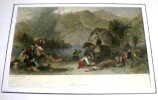
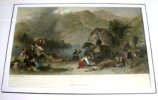
[THOMPSON Jacob - COUSEN Charles] - THOMPSON Jacob - COUSEN Charles
Reference : 10461
(1850)
Gravure couleurs. The signal.
Gravure histoire en couleurs. The signal.From the picture in the possession of Wm. Preston, ESQ. Charles Cousen Sculp. Jacob Thompson Pinx.London, James S. Virtue - 1850.Très bon état. Format in-4°(32x23) pour la gravure. Format in-plano(51x35) pour le passe-partout. Livré sans le passe-partout pour des raisons techniques.
THOMPSON Jacob - COUSEN Charles
Besson Patrick Thompson Danièle Thompson Danièle
Reference : 80031
(1983)
ISBN : 9782724217223
La Boum 2
France loisirs 1983 216 pages in8. 1983. cartonné jaquette. 216 pages. Thompson Danièle et Pinoteau Claude sont les auteurs des scénarios La Boum et La Boum 2 films réalisés par Pinoteau Claude

french édition - quelques marques de frottement plis de lecture et/ou de stockage mais du reste en bon état . Expédition soignée sous blister dans une enveloppe à bulles depuis la France

