Roma, Rossi, 1647. (72 x 50,2 cm au coup de planche, marges : 1cm environ.
Planche "Hiver" seule, de la série des Quatre saisons. Mention en bas à droite, sur le cuivre : "Si Stampano in Roma alla pace per Giouan Jacomo Rossi all insegna di Parigi" - "Petrus Testa Pinxit et Sculpsit 1647". Pietro Testa était considéré par ses contemporains comme le meilleur graveur italien du XVII° siècle. Il rejoignit l'atelier de Domenichino en 1628, où il côtoya entre autre Nicolas Poussin. "Le Lucchesino", ainsi surnommé en référence à Lucca, sa ville natale, grava ses premières planches vers 1631-1632. Il délaissa alors la peinture pour se consacrer à la gravure, son domaine d'excellence. - Le rédacteur de la notice du Fine Arts Museums of San-Francisco n'hésite pas envers cette "Allégorie de l'hiver" : "Apotheosis of the Artist’s Genius". A superb draftsman and printmaker, Pietro Testa was described by contemporaries as the best Italian etcher of the 17th century. Less successful as a painter, Testa also left preparatory notes for a treatise on the principles of art, describing ideas about theory and practice that he also expressed in his etchings. He ended his life by suicide when he was thirty-seven. Born in Lucca and baptized on June 18, 1612, Testa’s father was a dealer in secondhand merchandise. Nothing is known about any artistic training Testa may have had in Lucca. Testa went to Rome around 1628. He entered the studio of Domenichino (1581-1641), received instruction in drawing, and went about Rome drawing antiquities. Through this school Testa met Nicolas Poussin (1594-1665) and others in his circle. Joachim von Sandrart (1606-1688), the German artist and writer then in Rome, wrote that he discovered Testa making drawings out among ancient ruins. Sandrart gave him clothing and money and recruited Testa to make drawings of the collection of ancient statutes in the collection of Marchese Vincenzo Giustiniani (1564–1637), later engraved and published as the Galleria Giustiniani. Testa also worked on the “Museo cartaceo” (“Paper Museum”) of Cassiano dal Pozzo (1588-1657), an ambitious undertaking to create drawings of all the ruins and antiquities of Rome. A contemporary biographer wrote that Testa created five volumes of such drawings. Around this time Testa received the nickname “il Lucchesino,” after his birthplace. Domenichino had closed his school and gone to Naples by June 1631, and Testa joined the studio of Pietro da Cortona (1596-1669). This relationship was short-lived; Testa’s nature, described by all early biographers as bitter and difficult, led to disagreements with da Cortona, who expelled Testa from the studio. His earliest prints date from this time. Testa had returned to Lucca by August 1632, where he received a commission to paint a fresco in the Palazzo degli Anziani. He had no training in fresco, and his work was not well received. While in Lucca he did meet a prominent cleric and art collector, Girolamo Buonvisi (1607-1677), who became an important patron; Testa dedicated several of prints to Buonvisi. He returned to Rome, probably later in 1632. Several of his paintings have been dated to the 1630s. In 1637 his patron Cassiano dal Pozzo had Testa imprisoned, suspecting that Testa was about to leave Rome without completing two promised paintings. After resolution of these legal difficulties, Testa did go to Lucca to seek the patronage of Cardinal Marcantonio Franciotti (1592-1666), the new bishop of Lucca. A note on a 1637 portrait of Testa drawn by Pier Francesco Mola (1612-1666) recites that it was made in Lucca. Testa celebrated Franciotti’s appointment with two etchings: An Allegory in Honor of the Arrival of Cardinal Franciottias Bishop of Lucca (1637, B. 30) and An Allegory of Painting (1637-38, B. 29), which he dedicated to the Cardinal. Testa returned to Rome after a brief time in Lucca. He continued to receive commissions for paintings through the 1640s and created etchings on allegorical, religious and mythological themes. He probably received more income from his etchings than his painting commissions. He continued to receive support and commissions from dal Pozzo and Buonvisi, but after the election of Pope Innocent X (1574-1655) in 1644 both patrons fell out of favor and left the papal court, with Buonvisi returning to Lucca. The last years of Testa’s life were increasingly unhappy. Frescoes he painted in a Roman church in 1642 were destroyed later in the decade, replaced by the work of another artist. A major commission to decorate the apse of another church was withdrawn late in the decade. His last prints were on moralistic themes. Contemporary biographers describe him as deeply melancholy and alienated from the public. Testa drowned in the Tiber on March 1, 1650. (TNB 4/2013) Selected bibliography: Bellini, Paolo and Richard W. Wallace. “Pietro Testa,” in The Illustrated Bartsch, Vol. 45 Commentary, pp. 133-136. New York: Abaris Books, 1990. Cropper, Elizabeth. Pietro Testa, 1612-1650, prints and drawings. Philadelphia: Philadelphia Museum of Art, 1988. [FAM: AFGA NC 257 T4 C7 and ND 623 T39 C7 1988.] Cropper, Elizabeth: The Ideal of Painting: Pietro Testa's Düsseldorf Notebook, Princeton University Press, Princeton, 1984. - Épreuve fortement et habilement restaurée. Trace de pli vertical au centre de la planche, menu frottement avec perte de quelques traits au centre, macules atténuées dans les angles.
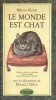
[Franco TESTA] - LICHTENBERGER, Marianne - Illustrations de Franco TESTA
Reference : 11655
PARIS, Gentleman Editeur - 1987 - Coll. "Les petits plaisirs" - In-8 étroit - Cartonnage éditeur illustré sous jaquette illustrée en couleurs - Illustrations NB dans le texte et en couleurs HT de Franco Testa - 96 pages - Très bon exemplaire
- Livraison a domicile (La Poste) ou sur simple demande en Mondial Relay.- ATTENTION: Colis recommandé uniquement sur demande (parcel recommended on request). Si vous désirez un remboursement équivalent au montant de votre achat, en cas de perte détérioration ou spoliation, demandez-nous expressément un envoi en recommandé ( if you wish a repayment equivalent to the amount of your purchase, in case of loss - deterioration or despoliation, ask us expressly for a sending recommended)- Conditions de vente : Les frais de port sont affichés à titre Indicatifs (pour un livre) Nous pouvons être amené à vous contacter pour vous signaler le surcoût du au nopmbre de livres achetés ou du poids de ceux-ci. - Conditions of sale : The shipping costs are displayed as an indication (for one book) We may need to contact you to inform you of the cost of the additional shipping depending on the weight and the number of books- Possibilité d'envoi par Mondial-Relay - Réception en boutique sur rendez-vous. Librairie G. PORCHEROT - SP.Rance - 0681233148
CHIETI OFFICINE GRAFICHE VINCENZO BONANNI 1936
Edizione del 1936 di questo saggio sul fascismo scritto da Italo Testa.<BR><BR>All'interno: Arnaldo Mussolini, gironalismo e gironalisti, Mussolini nel suo libro di guerra, Ludwig Mussolini e la storia, i venti anni di vita del Popolo d'Italia, Il Discorso del Duce agli operai di Milano, Santa croce, Testimonianze, Parentesi letterarie: Piave di Vitaliano Brancati, letteratura fascista, la stampa, la guerar e il libro, Gironali letterari, Moralità, Il centenario delle "Mie prigioni", La spada e il vomere ecc...<BR><BR>Note manoscritte alle prime pagine.<BR><BR>In buone condizioni.<BR>Copertina editoriale in buone condizioni generali con lievi usure ai margini e dorso. Legatura in buone condizioni. All'interno le pagine si presentano in buone condizioni con rare fioriture. In 8. Dim. 24,5x17 cm. Pp. 339+(1). Edition of 1936 of this essay about fascxism written by Italo Testa.<BR><BR>Handwritten notes in first pages<BR><BR>In good conditions.<BR>Editorial cover in good general conditions slightly worn in the edges and spine. Binding in good conditions. Inside pages are in good conditions with occasional foxings. In 8. Dim. 24,5x17 cm. Pp. 339+(1).
TORINO CASAEDITRICE MUSCIALE CHIAPPO TORINO 1930
Partitura completa per orchestra del 1930 delle melodie di Marius "Mamma son tornato con te" e N. Testa "Porque no me quieres?".<BR>Copertina morbida editoriale.<BR>GENERE: Tango<BR>STRUMENTI: pianoforte, violini; cello; basso, tromba, trombone, sassofono, clarinetto, flauto, batteria<BR>ANNO: 1930<BR>DIMENSIONI: In 8. cm 27x17,5<BR>PAGINE: pp. 38<BR>CONDIZIONI: Buone condizioni. Ex libris in copertina Complete score for orchestra of 1930 of the melodies of Marius "Mamma son tornato con te" e N. Testa "Porque no me quieres?".<BR><BR>Editorial soft cover.<BR>MUSIC: Tago<BR>STRUMENTI: piano, violin; cello; bass, trumpet, trombone, saxophone, clarinet, flute, drums<BR>YEAR: 1930 SIZE: In 8. cm 27x17,5 PAGES: pp. 38 CONDITIONS: Good conditions. Ex libris in the cover
, Silvana, 2024 hardcover, 285 x 245 mm, Illustrations 276 col.ill. 216 pages, Language(s) Eng./ It. ed. ISBN 9788836657704.
Ca' Pesaro opens the new 2024 exhibition season with a major exhibition dedicated to Armando Testa (1917-1992). Already present since December 2022 in the Venetian civic collections with 17 works, the creative genius from Piedmont will be the focus of a monographic exhibition that will allow people to discover and rediscover previously unseen aspects of his production.
, Silvana Editoriale, 2024 HB, 216 pages, EN-IT edition . ISBN 9788836657704.
Ca' Pesaro opens the new 2024 exhibition season with a major exhibition dedicated to Armando Testa (1917-1992). Already present since December 2022 in the Venetian civic collections with 17 works, the creative genius from Piedmont will be the focus of a monographic exhibition that will allow people to discover and rediscover previously unseen aspects of his production. From his Turin beginnings at the Vigliardi Paravia Typographic School and with the teaching of Ezio D'Errico, the exhibition aims to reconstruct the artistic path of a protagonist of visual culture contemporary, creator of famous icons that have entered our collective imagination for years. His masterpieces are the offspring of a plurality of expressive languages, experimented during his more than 30-year career, whose modernity is today a source of inspiration for contemporary artists and which has led aesthetics scholar Gillo Dorfles to call him a "global visualiser."
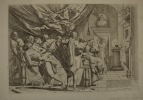
Signée P. Testa 1648 à droite et mention “in Roma da Vincenzo Billy” en bas au centre. Très belle épreuve du 3è état sur 4 en retirage (Bellini n° 39) Bartsch t. 20 , p. 220 n° 20 Mouillures. 1648 281 x 416 (357 x 490 avec les marges).
, Brepols, 2023 Paperback, 672 pages, Size:156 x 234 mm, Illustrations:1 b/w, 2 col., 15 tables b/w., Language(s):English, Italian, Spanish. ISBN 9782503588360.
Summary The essays collected in this volume study the competences and status of late antique notaries, who from simple stenographers acquired responsibilities and growing importance within the imperial court and in the papal chancellery, being charged with drawing up the acts of the consistorium and the ecclesiastical councils, and with preserving and often delivering sensitive documents from Rome to Constantinople. The analysis of their multiple activities and of the functions they occupied, in the imperial and episcopal archives as well as in the libraries of the great Roman domus, also allows us to verify some new hypotheses on the compiler and on the editing of the Collectio Avellana. Since in the Middle Ages, the collection was transcribed into two main manuscripts both preserved in Santa Croce di Fonte Avellana, the essays also try to understand what role the founder of the Monastery, San Pier Damiani, played in preserving this collection. TABLE OF CONTENTS Introduction (Rita Lizzi Testa) I. The Making of the Collectio Avellana from Cassiodorus to Pier Damiani La seconda vita di Cassiodoro e la Collectio Avellana (Pierfrancesco Porena) Ritornando sulla Collectio Avellana. La subscriptio del notarius Sixtus nel codex Berolinensis Latinus 79 (Paola Paolucci) The Gesta de absolutione Miseni of 495 as Synodal Minutes. A Formal Analysis (Tommaso Mari) Dal manoscritto medievale ai modelli tardoantichi. Indizi nel codice V della Collectio Avellana (Serena Ammirati) Pier Damiani e la Collectio Avellana. Storia di un'ipotesi (Giulia Marconi) II. A Teeming World of Secretaries and Archives, between the Senatorial Aristocracy and the Imperial Court Alcune note sui notarii nella corte imperiale del IV secolo (Ignazio Tantillo) The notarii of the Valentinian Emperors (AD 364-392): Social Profiles, Promotion in Rank, and Political Rise in the East and in the West (Milena Raimondi) L'aristocrazia senatoria romana e la trasmissione di oracoli e prodigi sulla fine dell'impero tra Roma e Costantinopoli (sec. V-VI) (Umberto Roberto) Archivi palatini tardo antichi. Genesi e mitopoiesi (Maria G. Castello) Los constitutionarii exceptores del senado? (Mar a Victoria Escribano Pa o) I funzionari dell'amministrazione civile al concilio di Calcedonia (451) (Joachim Szidat) Archivos y notarii en las relaciones bizantino-visigodas (Margarita Vallejo Girv s) Lo scriba di Ravenna e la prefettura del pretorio tardoantica (Fabrizio Oppedisano) Gli exceptores fra tarda antichit e alto medioevo. Aspetti istituzionali, sociali e culturali (Dario Internullo) III. Tachygraphers, Notaries, and the Formation of the Ecclesiastical Chancellery Abiectis ante iudicis pedes tabulis. Stenografia e stenografi nelle passioni tardoantiche di martiri cristiani: alcune osservazioni (Michel-Yves Perrin) Notarii, decretali e apocrifi a Roma tra fine V e inizio VI secolo (Tessa Canella) Los preceptos romanos en las primeras colecciones can nicas atestiguadas en Hispania (Josep Vilella) Committenti e 'tecnici' delle collezioni: i traduttori tra notarii, copisti, stenografi e altri. Dal caso delle Dionysianae (Teresa Sardella) Ecclesiastical Bureaucracy at the Synod under Menas in 536 (Sylvain Destephen) Da stenografi ad amministratori. I notarii nel Registrum Epistularum di Gregorio Magno (Elena Caliri) IV. Moving Documents in Late Antiquity: Messengers and Negotiators in the Collectio Avellana Los notarii y otros funcionarios en la Collectio Avellana. Formaci n, funciones y papel institucional (Juana Torres) Don't Shoot the Messenger? Men of 'Power and Might' - notarii and exceptores in the Collectio Avellana (Alexander Evers) Moving the Mail: The Status and Operations of Letter Carriers in the Collectio Avellana (Noel Lenski) Concluding Remarks. Cassiodorus as antiquarius (Rita Lizzi Testa) List of Abbreviations Bibliography Index nominum propriorum
Presses universitaires de France Broch D'occasion tat correct 01/01/1962 150 pages
München, 1987. In-8 reliure éditeur pleinte toile, 202 pp., reprod. en noir et coul. dans le texte, chronologie des expositions.
Texte en allemand. Très bonne condition. - Frais de port : -France 6,9 € -U.E. 9 € -Monde (z B : 15 €) (z C : 25 €)
Couverture rigide. Cartonné. Jaquette. 96 pages.
Livre. Illustrations de Franco Testa. Editions Gentleman (Collection : Les petits plaisirs), 1987.
, Brepols, 2020 Paperback, 810 pages, Size:156 x 234 mm, Illustrations:24 b/w, 1 maps b/w, Languages: English, Italian, Spanish. ISBN 9782503585246.
Summary This volume in honour of Guido Clemente collects essays by nearly 40 established and younger scholars from all over the world, who want to express their gratitude for prof. Clemente's direct or indirect teaching. While the essays included in the volume cover domains ranging from methodology and (the history of) historiography, over archaeology and epigraphy, to politics and religion, they all resort under the main theme of 'the past as present'. This main theme is inspired by a prominent feature of Guido Clemente's scholarly work: the awareness that from the last centuries of the Roman Republic up until Late Antiquity, a sense of the past 'as present' marked the rhythm of everyday life and provided the key to understanding ongoing societal change. TABLE OF CONTENTS Preface List of illustrations List of abbreviations Un profilo di Guido Clemente (Giovanni Alberto Cecconi) Bibliografia di Guido Clemente (Nicola Barbagli) Historiography and Methodology Il perdono degli Alessandrini: fortuna di un episodio di clemenza imperiale (Nicola Barbagli) Da Rufino a Orosio: la battaglia al Fiume Freddo e l'eclissi della storiografia classica (Giorgio Bonamente) The Present in the Past and the Past in the Present (Averil Cameron) Il diritto, il mito e la rappresentazione simbolica nell'ermeneutica di Bachofen (Luigi Capogrossi) Monarchia delle origini e regnum in Cicerone: tra passato e presente (Chiara Carsana) Die keltische Ethnographie zwischen Poseidonios und Ammian (Maria Cesa) Der Beitrag der Sch ler Mommsens zur Erforschung der Geschichte der Stadt Rom (Werner Eck) Mussolini: Ancient Rome on the Sea (Daniele Foraboschi) The Darkening of the West: A Note (Ramsay MacMullen) 'Fine' della schiavit antica: considerazioni inattuali a margine di un'ancora aperta discussione (Mario Mazza) Hermann Strasburger (1909-1985) (Barbara Scardigli) Cassiodorus' Historiographical Plan (Giuseppe Zecchini) Archaeology and Epigraphy Les gaiet s de la cohorte (Jean-Michel David) The Economy of the Monastery of L rins (c. 400-c. 460) (Matheus Figuinha) Composite Constantine (Paolo Liverani) A proposito di alcune indagini recenti sulla fiscalit dell'Impero romano tra Principato e tarda antichit (Elio Lo Cascio) Gaio, Livio e la funzione esplicativa della storia (Digesto, I. 2. 1) (Dario Mantovani) Food, Popinae, and the Emperor: Some Considerations on the Early-Imperial Policies on the Sale of Food (Annalisa Marzano) Servi, liberti, colliberti, ancillae nella Sardegna romana: nota su possibili continuit , eredit e trasformazioni (Attilio Mastino & Maria Bastiana Cocco) Per la storia edilizia di Roma nel IV secolo. Qualche contributo epigrafico (Silvia Orlandi) La quaestio consolare del 138 a.C. per la strage della Sila (Bernardo Santalucia) Rivisitazione di un'epigrafe tardoantica di Canusium (Marina Silvestrini) Note topografiche sulla rivolta dei mercenari di Cartagine in Sardegna (240-237 a.C.) (Raimondo Zucca) Las transformaciones del Senado en la antig edad tard a (Hugo Zurutuza) Politics and Religion Late-Republican Theatre: A Source for Public Opinion (Andrea Angius) Debt-bondage, Fides, and Justice: Republican Liberty and the Notion of Economic Independence in the First Century BC (Valentina Arena) Episodi di guerra e lotte di potere in Italia nel III secolo d.C.: storia degli eventi alla vigilia dell'ordinamento provinciale (c. 235-285) (Giovanni Alberto Cecconi) Iside e i vota publica nel IV secolo d.C. (Filippo Coarelli) Reflections on the Foundation of Aelia Capitolina (Hannah M. Cotton Paltiel & Avner Eckner) L'ultima rivolta ebraica e l'esercito romano tardoantico (Ariel S. Lewin) The Bishop of Rome and the Ostrogothic Kings (Rita Lizzi Testa) Privato consilio (Augusto, RG 1,1): una nota (Arnaldo Marcone) Comment identifier un lieu de culte ? (John Scheid) Saliae virgines: un lemma di Festo e i rilievi trionfali Medinaceli (Mario Torelli) The Impact of the Kerygma on the Diaspora Communities: Political Aspects (Lucio Troiani) Tiberius, the Legacy of Augustus, and the Shadow of the Republic: 'Accession Debate' and Beyond (Alexander Yakobson)
Schiaffino Mariarosa- Cluizel Michel- Franco Testa
Reference : RO20270585
(1988)
ISBN : 2906730114
GENTLEMAN. 1988. In-8. Relié. Bon état, Couv. convenable, Dos satisfaisant, Intérieur frais. 111 pages - nombreuses illustrations sépia / monochrome et couleur, dans et hors texte - jaquette correcte. Avec Jaquette. . . Classification Dewey : 641.5-Cuisine, art culinaire
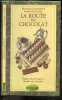
Schiaffino Mariarosa - Cluizel Michel (preface) - Franco Testa (illustrations) Classification Dewey : 641.5-Cuisine, art culinaire
Fulvio Testa, Hans Christian Andersen, Pastiaux L
Reference : RO20269214
(1991)
ISBN : 273664509X
"EPIGONES. 1991. In-8. Relié. Bon état, Couv. convenable, Dos satisfaisant, Intérieur frais. 29 pages illustrées en couleur - exemplaire de bibliotheque avec divers tampons / annotations / etiquettes sans conséquence sur la lecture + recouvert d""un film plastique adhésif. . . . Classification Dewey : 843.0692-Livres d'enfants"
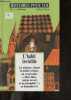
Fulvio Testa (illustrations), Hans Christian Andersen, Pastiaux Laurence (traduction) Classification Dewey : 843.0692-Livres d'enfants
De Robertis (E.D.P.) and Carrea (R.)eds. - M. Polak - A. Lasansky - I. Klatzo, H. Wisniewski and D.E. Smith - J. Miquel and W. Haymaker - H. Davson and M. Bradbury - H.M. Pappius - L. Bakay - H. Collewijn and J.P. Schadé - J.A. Zadunaisky, F. Wald, E.D.P. de Robertis - E. Levin, G.J. Nogueira and C.A. Garcia Argiz - I. Tasaki - G. Svaetichin, K. Negishi, R. Fatehchand, B.D. Drujan and A. Selvin de Testa - R. Galambos
Reference : Cyb-3001
(1965)
Elsevier Publishing Company , Progress in Brain Research, volume 15 Malicorne sur Sarthe, 72, Pays de la Loire, France 1965 Book condition, Etat : Bon hardcover, under dust-jacket In-4 1 vol. - 308 pages
181 illustrations and 23 tables 1st Edition Contents, Chapitres : List of Contributors, Preface, Contents, xi, Text, 297 pages - E.D.P. de Robertis : Some new electron microscopical contributions to the biology of neuroglia - M. Polak : Morphological and functional characteristics of the central and peripheral neuroglia, light microscopical observations - R.L. Friede : Enzyme histochemistry of neuroglia - A. Lasansky : Functional implications of structural findings in retinal glial cells - I. Klatzo, H. Wisniewski and D.E. Smith : Observations on penetration of serum proteins into the central nervous system - J. Miquel and W. Haymaker : Astrogial reactions to ionizing radiation, with emphasis on glycogene accumulation - H. Davson and M. Bradbury : The extracellular space of the brain - H.M. Pappius : The distribution of water in brain tissues swollen in vitro and in vivo - L. Bakay : The movement of electrolytes and albumin in different types of cerebral edema - H. Collewijn and J.P. Schadé : Changes in the size of astrocytes and oligodentrocytes during anoxia, hypothermia and spreading depression - J.A. Zadunaisky, F. Wald, E.D.P. de Robertis : Osmotic behaviour and glial changes in isolated frog brains - E. Levin, G.J. Nogueira and C.A. Garcia Argiz : Some aspects of amino acid transport in the central nervous system - I. Tasaki : Excitability of neurons and glial cells - G. Svaetichin, K. Negishi, R. Fatehchand, B.D. Drujan and A. Selvin de Testa : Nervous function based on interactions between neuronal and non-neuronal elements - R. Galambos : Introductory discussion on glial function - E.D.P. de Robertis : General conclusions the top of the jacket is lightly torn, without significant missings, else fine copy, no markings
Barjou Bruno Cohen Annick Isoré Jacques Testa Jean-Pierre
Reference : 7357
ISBN : 2710112663
ESF Editeur Grand In-8°,broché,263 pages,ensemble à l'état de neuf.
Comme neuf Franco de port France jusqu'à 30 euros. MONDIAL RELAY pour : FRANCE, Portugal, Pologne, Espagne, Allemagne, Autriche, Pays Bas, Luxembourg, Italie, Belgique. Toutes les étapes sont accompagnées. Achat, estimations et listages France / Suisse (sur rdv).
HELICE HELAS EDITEUR
LIVRE A L’ETAT DE NEUF. EXPEDIE SOUS 3 JOURS OUVRES. NUMERO DE SUIVI COMMUNIQUE AVANT ENVOI, EMBALLAGE RENFORCE. EAN:9782940522873
LE POMMIER
LIVRE A L’ETAT DE NEUF. EXPEDIE SOUS 3 JOURS OUVRES. NUMERO DE SUIVI COMMUNIQUE AVANT ENVOI, EMBALLAGE RENFORCE. EAN:9782746524668
DOMINIQUE & COMPAGNIE (CA)
LIVRE A L’ETAT DE NEUF. EXPEDIE SOUS 3 JOURS OUVRES. NUMERO DE SUIVI COMMUNIQUE AVANT ENVOI, EMBALLAGE RENFORCE. EAN:9782897858049
GREMESE EDITIONS
LIVRE A L’ETAT DE NEUF. EXPEDIE SOUS 3 JOURS OUVRES. NUMERO DE SUIVI COMMUNIQUE AVANT ENVOI, EMBALLAGE RENFORCE. EAN:9782366772296
Fleurus BROCHE
Merci de nous contacter à l'avance si vous souhaitez consulter une référence dans notre boutique à Authon-du-Perche.
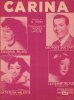
Delyle Lucienne,Guétary Georges,Valente Catherine,Blasi Silvana - Poes R. - Larue Jacques,Testa A.
Reference : 75508
(1958)
CAYC | Buenos Aires 1978 | 16.50 x 22 cm | broché
Edition originale illustrée de photographies de ce catalogue de l'exposition s'étant tenue à Buenos Aires en Septembre 1978. Agréable et rare exemplaire. Texte de Jorge Glusberg. - Photographies et détails sur www.Edition-Originale.com -
Phone number : 01 56 08 08 85
Couverture souple. Broché. 128 pages.
Livre. Editions P.U.F (Collection : Que sais-je? N° 970), 1962.
Couverture souple. Broché. 32 pages. Légèrement défraîchi.
Livre. Editions CEP (Collection : Les romans de la vie), 1947.