 Write to the booksellers
125 books for « terentius »Edit
-
Language
French (123)
Latin (2)
-
Century
16th (4)
17th (5)
18th (15)
19th (7)
20th (1)
-
Countries
Belgium (5)
Denmark (10)
France (37)
Germany (1)
Netherlands (64)
Switzerland (8)
-
Syndicate
CLAM (1)
ILAB (35)
NVVA (4)
SLACES (4)
SLAM (20)
Topics
- Books from the xvith (1)
- Carthage (1)
- Classic literature (3)
- Comedy (4)
- Drama (1)
- Early printed books (2)
- English (1)
- Epigraphy (1)
- Ex-libris (1)
- Farm management (1)
- First edition (1)
- Gardens (1)
- Gastronomy food (1)
- Greece (1)
- Greek (54)
- Italy (1)
- Latin (72)
- Latin greek (1)
- Literature (2)
- Palaeography (1)
- Paris (1)
- Philosophy (1)
- Reliure (2)
- Rome (2)
- Scandinavian literature (1)
- Theatre (7)
- Venice (1)
- Wine (1)
- Xvi th century (1)
De zes comedien van P. Terentius. Verduitst door Henricus Zwaardekroon, rector der Schole, tot Rotterdam.
Rotterdam, Gedrukt bij Johannes Naeranus, 1668.
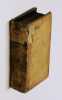
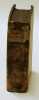
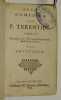
12mo. 498,(6 blank) p. Vellum 12.5 cm (Ref: Geerebaert 138,11,6; OiN 362) (Condition: Binding scuffed, spotted and soiled. Frontispiece removed. Oval stamp on the title. Some worming in the blank upper margin, occasionally nibbling at letters. Paper yellowing) (Note: The late antique grammarian Aelius Donatus (4th century A.D) wrote not only a commentary on the plays of the Roman playwright Publius Terentius Afer, ca. 190-159 B.C., but also a short biography, in which he tells that Terentius was born in the Roman province Africa and that he came as a slave in the houshold of the senator Terentius Lucanus. He adopted his name when he was manumitted. Terentius is the author of 'fabulae palliatae', which means 'plays in Greek cloths'. He adapted Greek plays, especially those of the Greek playwright Menander, to the taste of the Romans. Six of his comedies have survived. For later generations he became a model for elegant Latin. His style was closer to everyday conversation than Plautus', an earlier contemporary comic playwright, whose style was more extravagant. He was quoted by Cicero, Horace, Persius and the Church Fathers. Ever since antiquity he lived also a long and influential life in schools as a model for Latin language and rhetoric. In the Middle Ages he was read for his moral sentences. He was imitated by the German abbess Hrotsvitha of Gandersheim (ca. 935 - ca. 973) in her 'Dramenbuch', with which she wanted to create a Christian alternative for the pagan comedies. With the coming of humanism Terentius enjoyed a renaissance in the classroom and on stage. Scholars rejected the 'barbaries' of Medieval Latin and chose the elegance of Cicero and Terentius as their model. In his 'De ratione studii' (1511) the Dutch humanist Desiderius Erasmus, 1466-1536, encouraged the study of Terentius for his language and moral utility. 'Among Latin writers, who is more valuable as a standard of language than Terence? He is pure, concise, and closer to everyday speech and, by the very nature of his subject matter, is also congenial to youth'. (The Classical Tradition, 2010, p. 930) Erasmus published later in life, in 1532, an edition of Terentius' plays. Erasmus seems to have learned the whole of Terentius by heart in his youth. He admired the author for his 'latinitas' and his civilized humor. His ideal as a humanist and pedagogue was the creation of better men with the help of the classics. He held the opinion, that schoolboys should read Terentius over and over again. Thus they could master a pure Latin style, and learn at the same time good morals. Several Dutch humanists wrote 'Dialogi pueriles', fictitious dialogues to train schoolboys to converse in Latin; conversations which much Terentius in it. The first Dutch translation of Terentius appeared in 1555 in Antwerp. Almost one century later 2 other new translation followed. In 1646 the remonstrant reverent Henricus Oosterhaern published a prose translation in Rotterdam. His translation is as literal as possible. His aim in didactic. He hopes that his readers will polish their speech and style when reading Terentius, that they will learn from Terentius a 'suyvere en cierlijke manier van spreken en schryven'. (P.J.M. van Alphen, Nederlandse Terentius-vertalingen in de 16e en 17e eeuw, Tilburg 1954, p. 95) Two years later, in 1648, Rotterdam saw the next and more elegant prose translation, now by another remonstrant, the schoolmaster Henricus Zwaerdecroon, since 1634 Rector of the 'Schola Latina Erasmiana'. (NNBW 5.1182/83) In the dedication in this edition to his 'alumnus' Adrianus de Matenesse, Zwaerdecroon dwells on the diligence and enthousiasm he and other old schoolboys displayed while reading Terentius. On their request, Zwaerdecroon tells us, and because they are leaving for the university he made this translation. Sometimes we find in the Dutch translation words or passages printed in italics. Those words and passages have been added to improve the Dutch, and to explain matters. The edifying comedies of Terence were not only read by schoolboys. The Dutch philosopher Spinoza must also have studied his Terentius very thoroughly. In his work hundreds of quotations and borrowings from Terence can be traced. Spinoza used them to define and illustrate human feelings, weaknesses and passions. (F. Akkerman, Spinoza's tekort aan woorden, Leiden, 1977, p. 3) In the same year as this edition (1648) the Rotterdam printer Naeranus brought a translation only edition on the market. This translation was reissued again in 1668, this edition) (Provenance: Stamp on the title: 'Bibliotheek Missiehuis Tilburg) (Collation: A-X12 (leaves X10, X11 & X12 blank. leaf A2, the frontispiece, gone) (Photographs on request)
P. Terentii Afri Comoediae sex, ad fidem duodecim amplius Msstorum codicum, et pluscularum optimae notae editionum recensitae, et commentario perpetuo illustratae. Accedunt interpretes vetustiores, Aelius Donatus, Eugraphius, Calphurnius (...); additis observationibus (...). Porro Frid. Lindenbruchii observationes (...) et Ael Donati Commentarium, (...). Curavit Arn. Henr. Westerhovius.
The Hague (Hagae-Comitum), Apud Thomam Johnsonium, 1726.
4to. 2 volumes: (XII),LXXXIX,(5); 1240; 244, (379 index),(1 blank) p.; 2 frontispieces, portrait of Terentius. Vellum. 26.5 cm (Ref: STCN ppn 310362857; Cupaiuolo, 'Bibliografia Terenziana', no. 863; Schweiger 2,1068; Dibdin 2,475: 'A sumptuous and valuable edition'; Moss 2 673/74: 'the best edition which has yet been published'; Brunet 5,717: 'Édition fort recherchée à cause des commentaires et du bon index'; Fabricius/Ernesti 1,62; Graesse 6/2,60; Ebert 22519) (Details: Backs with 6 raised bands. Boards blind tooled. The 2 frontispieces are the same, they are made by P. van Cuyk; they depict a kneeling poet (Terentius), who offers a scroll to a seated Apollo, who offers him in return a laurel wreath; up in the sky hovers Fama, blowing her horn. Terentius' full page portrait is engraved after a portrait from the so-called 9th century Vatican Terence (Terentius Vaticanus, or Codex Vaticanus Latinus 3868)) (Condition: Bindings age-tanned and somewhat soiled. Vellum damaged at the lower edge of the upper board of the 2nd volume. Endpapers detached. Tiny wormhole at the upper margin of the last 2/3 of the first volume, sometimes nibbling at a letter. The paper of 13 gatherings (more than 100 pages) in the index is browning) (Note: The late antique grammarian Aelius Donatus (4th century A.D) wrote a short biography of the Roman playwright Publius Terentius Afer, ca. 190-159 B.C, in which he tells that Terentius was born in the Roman province Africa and that he came as a slave in the houshold of the senator Terentius Lucanus. He adopted his name when he was manumitted. Terentius is the author of 'fabulae palliatae', which means plays in Greek cloths. He adapted Greek plays, especially those of the Greek playwright Menander, to the taste of the Romans. Six of his comedies have survived. For later generations he became a model for elegant Latin. His style was closer to everyday conversation than Plautus', an earlier contemporary comic playwright, whose style was more extravagant. He was quoted by Cicero, Horace, Persius and the Church Fathers. Ever since antiquity Terentius lived also a long and influential life in schools as a model for Latin language and rhetoric. In the Middle Ages he was read for his moral sentences. He was imitated by the German abbess Hrotsvitha of Gandersheim (ca. 935 - ca. 973) in her 'Dramenbuch', with which she wanted to create a Christian alternative for the pagan comedies. With the coming of humanism Terentius enjoyed a renaissance, on stage and in the classroom as textbook. He was studied enthousiastically by scholars, students and schoolboys. Scholars rejected the 'barbaries' of Medieval Latin and chose the elegance of Cicero and Terentius as their model. In his 'De ratione studii' (1511) the Dutch humanist Desiderius Erasmus encouraged the study of Terentius for his language and moral utility. 'Among Latin writers, who is more valuable as a standard of language than Terence? He is pure, concise, and closer to everyday speech and, by the very nature of his subject matter, is also congenial to youth'. (The Classical Tradition, 2010, p. 930) Erasmus seems to have learned the whole of Terentius by heart in his youth. He admired the author for his 'latinitas' and his civilized humor. His ideal as a humanist and pedagogue was the creation of better men with the help of the classics. He held the opinion, that schoolboys should read Terentius over and over again. Thus they could master a pure Latin style, and learn at the same time good morals. From the 15th till the 17th century Terentius' plays were frequently staged in schools. The German scholar Arnold Heinrich Westerhoff, latinized as Arnoldus Henricus Westerhovius, ca.1677-1738, was rector of the Schola Latina of the Dutch city Gouda from 1711. In 1726 he published in two fat quarto volumes this sumptuous and very scholarly edition, with a copious index. It remained popular throughout the 18th century. It should be admired, according to Dibdin, more 'for elaborate care and research, than for exhibiting any critical niceties of construction of the text'. The edition contains the commentary of the 4th century A.D. Roman grammarian and teacher of rhetoric Aelius Donatus, the observations from the commentary of the 6th century grammarian Eugraphius, and the learned notes the German scholar Heinrich Lindenbrog, 1570-1642. Lindenbrogius (also named Lindenbruchius) studied classics in Leiden under the famous J.J. Scaliger. After his studies he made a tour which brought him and his friend Johannes van Wouweren to France, to the monastery of St. Victor. It was told that they stole there with the help of a monk 16 manuscripts. They became known as 'Les Corsaires de Hamburg'. He was arrested, but came free with the help of the French scholar Pierre Dupuy (Puteanus), the son of the humanist and famous bibliophile Claude Dupuy, who was a great collector of manuscripts. Little is known of the rest of his life. From 1610 onward till his death, Lindenbrog was the librarian of the Duke Johann Adolf von Holstein, who had assembled in Gottorp a great collection of books. (ADB 18,693) In the preface to his Terentius edition of Frankfurt 1623, Lindenbrogius confesses that he also was imbibed with Terentius as a schoolboy, and still loved to read him. 'Quem (Terentium) enim pueri amavimus, eiusdem amoenitate ac venere vel hac quoque aetate nos capi, non erubescimus'. (Edition 1623: Lectori p. a2 recto)) (Collation: pi2, dagger4, *-12*4 (minus blank leaf 12*4); A-5P4, 5Q2 (verso leaf 5Q2 blank); 2pi2, 5R-7R4, 7S2; A-2G4, 2H2; a-3a4, 3b2 (leaf 3b verso blank)) (Photographs on request) (Heavy book, extra postage may be needed)
P. Terentii Carthaginiensis Afri Comoediae sex. Interpretatione & notis illustravit Nicolaus Camus, Juris Utriusque Doctor, jussu Christianissimi Regis in usum Serenissimi Delphini. Editio prioribus longe emaculatior.
London (Londoni), Impensis J. Pote (et alii), 1776.
8vo. (VI),CXXXVIII,288,(80 index) p. Calf 21 cm (Ref: ESTC Citation No. T219687; Schweiger 2,1070; cf Brunet 5,716; Graesse 6/2,59; Ebert 22513; Cupaiuolo no. 946; La collection Ad usum Delphini, vol. 2,51/61; Spoelder p. 644, Middelburg 5) (Details: Prize copy, without the prize. Back ruled gilt. Red morocco shield on the 'second compartment'. Gilt coat of arms of Middelburg on both boards. Title in red & black. Terence's Latin text is surrounded with an easy Latin version and with annotations, and is preceded by 138 pages of 'prolegomena Terentiana') (Condition: Prize removed. Binding slightly rubbed, especially at the extremities. Some small and very faint waterstains at the margin of 10 p. Name cut from upper corner of the front flyleaf) (Note: The 6 plays of Terentius, second century B.C, remained from antiquity through the Middle Ages, and in later centuries an example of style, and a rich source for moral sentences. In the 15th and 17th century his plays were frequently staged in schools. This London edition of 1776 is a reissue of the 1688 London version of Terence's comedies from the Delphin series ('Ad usum Delphini), edited by Nicolas Camus (1610-1677) and originally published in Paris in 1675. In the dedication we are told that Terentius was the favorite author of the young prince Louis of France, and that he could find in this edition, besides the elegance of the Latin language, examples of the noble customs and the wisdom of the Romans. Louis of France was born in 1661 as the eldest son of Louis XIV, King of France. His title was, as the heir apparent to the throne, Dauphin (Delphinus). (As he died before his father, he never became king) This 'Ad usum Delphini' edition was a tremendous success, especially in England. In the English Short Title Catalogue we found till 1800 no less than 17 editions. 'Nous avons ici une édition de Térence de bonne qualité, où le plus gros effort est fait au niveau du choix des pièces liminaires (prolegomena Terentiana) et de l'annotation'. (La collection Ad usum Delphini p. 57) The Roman playwright Publius Terentius Afer, ca. 190-159 B.C., was born in the Roman province Africa and came as a slave in the houshold of the senator Terentius Lucanus. He adopted his name when he was manumitted. Terentius is the author of 'fabulae palliatae', which means 'plays in Greek cloths'. He adapted Greek plays, especially those of the Greek playwright Menander, to the taste of the Romans. Six of his comedies have survived. For later generations he became a model for elegant Latin. His style was closer to everyday conversation than Plautus, an earlier contemporary comic playwright, whose style was more extravagant. He was quoted by Cicero, Horace, Persius and the Church Fathers. Ever since antiquity he lived also a long and influential life in schools as a model for Latin language and rhetoric. In the Middle Ages Terentius was read for his moral sentences. He was imitated by the German abbess Hrotsvitha of Gandersheim, ca. 935 - ca. 973 in her 'Dramenbuch', with which she wanted to create a Christian alternative for the pagan comedies. With the coming of humanism Terentius enjoyed a renaissance in the classroom and on stage. Scholars rejected the 'barbaries' of Medieval Latin and chose the elegance of Cicero and Terentius as their model. In his 'De ratione studii' (1511) the Dutch humanist Desiderius Erasmus, 1466-1536, encouraged the study of Terentius, whom he thought congenial to youth. Thus they could master a pure Latin style, and learn at the same time good morals. Erasmus seems to have learned the whole of Terentius by heart in his youth. He admired the author for his 'latinitas' and his civilized humor. His ideal as a humanist and pedagogue was the creation of better men with the help of the classics. Several Dutch humanists wrote 'Dialogi pueriles', fictitious dialogues to train schoolboys to converse in Latin, conversations which much Terentius in it. Erasmus held the opinion, that schoolboys should read the edifying comedies of Terentius over and over again. So did also the Dutch Jewish philosopher Spinoza. He must have studied his Terentius very thoroughly. In his work hundreds of quotations and borrowings from Terentius can be traced. Spinoza used them to define and illustrate human feelings, weaknesses and passions. (F. Akkerman, Spinoza's tekort aan woorden, Leiden, 1977, p. 3)) (Provenance: In ink on front flyleaf: 'A.A.L. Rouyer'. In the 'Verslagen uitgebracht door de Commissie voor Verzoekschriften' of the 'Tweede Kamer', 33rd meeting of 24 december 1902, we found in a report of this Committee that the mother of one 'A.A.L.J. Rouyer' appealed to the Committee to grant her son, who had served as a minister of the protestant church in the Dutch Indies, and who was removed honorably from his office because of insanity, a pension. According to the rules his time spent in the Indies was just too short for a pension. She asks for lenience, for se does not have the means to pay for proper care her son who was looked after in the mental institution Veldwijk in Ermelo. The Committee sent her petition to the Minister of Colonial Affairs, with the remark that this Department was to receive for the year 1903 funds for this kind of cases) (Collation: A-2I8) (Photographs on request)
Publii Terentii Carthaginiensis Afri Comoediae N. VI. Et in eas: Aelii Donati VC. oratoris Urbis Romae, et Eugraphii Veteris Scholiastae commentaria. Frid. Lindenbrogius collatis MSS. veteribusque exemplaribus recensuit, auxit, & observationibus inlustravit, adiecto indice uberrimo.
Frankfurt (Francofurti), In Bibliopolio Heringiano, 1623.
4to. (XX),666 (recte 664) p. Modern plain and tasteless boards. 22 cm (Ref: VD17 1:043236K; Graesse 6/2 58/59; Ebert 22504; Schweiger 2,1064; Fabricius/Ernesti 1,58: 'editio insignis atque reliquis praeferenda') (Details: Title printed in red & black. An engraved portrait of Terentius on the title. Bookblock in good condition) (Condition: Binding plain and very shabby. Bookblock loose in the binding. Front flyleaf loose, front pastedown gone. Title dustsoiled. Paper yellowing) (Note: The 6 plays of the Roman playwright Publius Terentius Afer, ca. 190-159 B.C, remained from antiquity through the Middle Ages, and in later centuries an example of style, and a rich source for moral sentences. In the 15th and 17th century his plays were frequently staged in schools. He was born in the Roman province Africa and came as a slave in the houshold of the senator Terentius Lucanus. He adopted his name when he was manumitted. Terentius is the author of 'fabulae palliatae', which means 'plays in Greek cloths'. He adapted Greek plays, especially those of the Greek playwright Menander, to the taste of the Romans. Six of his comedies have survived. For later generations he became a model for elegant Latin. His style was closer to everyday conversation than Plautus, an earlier contemporary comic playwright, whose style was more extravagant. He was quoted by Cicero, Horace, Persius and the Church Fathers. Ever since antiquity he lived also a long and influential life in schools as a model for Latin language and rhetoric. In the Middle Ages Terentius was read for his moral sentences. He was imitated by the German abbess Hrotsvitha of Gandersheim, ca. 935 - ca. 973 in her 'Dramenbuch', with which she wanted to create a Christian alternative for the pagan comedies. With the coming of humanism Terentius enjoyed a renaissance in the classroom and on stage. Scholars rejected the 'barbaries' of Medieval Latin and chose the elegance of Cicero and Terentius as their model. In his 'De ratione studii' (1511) the Dutch humanist Desiderius Erasmus, 1466-1536, encouraged the study of Terentius, whom he thought congenial to youth. Thus they could master a pure Latin style, and learn at the same time good morals. Erasmus seems to have learned the whole of Terentius by heart in his youth. He admired the author for his 'latinitas' and his civilized humor. His ideal as a humanist and pedagogue was the creation of better men with the help of the classics. Erasmus held the opinion, that schoolboys should read the edifying comedies of Terentius over and over again. So did also the Dutch Jewish philosopher Spinoza. He must have studied his Terentius very thoroughly. In his work hundreds of quotations and borrowings from Terentius can be traced. Spinoza used them to define and illustrate human feelings, weaknesses and passions. (F. Akkerman, Spinoza's tekort aan woorden, Leiden, 1977, p. 3) This Frankfurt edition of 1623 is a revised edition of the edition Paris 1602, which was produced by the German scholar Heinrich Lindenbrog, 1570-1642. He added to the text the commentaries of the Roman grammarian and rhetorician Aelius Donatus, 4th century AD, and the 6th century AD grammarian Eugraphius. The last commentary deals especially with the rhetorical aspects of the comedies. Lindenbrogius studied classics in Leiden under the famous J.J. Scaliger. After his studies he made a tour which brought him and his friend Johannes van Wouweren to France, to the monastery of St. Victor. It was told, that they stole there with the help of a monk 16 manuscripts. They became known as 'Les Corsaires de Hamburg'. He was arrested, but came free with the help of the French scholar Pierre Dupuy (Puteanus), 1582-1651, the son of the humanist and famous bibliophile Claude Dupuy, who was a great collector of manuscripts. Little is known of the rest of his life. From 1610 onward till his death, Lindenbrog was the librarian of the Duke Johann Adolf von Holstein, who had assembled in Gottorp a great collection of books. (ADB 18,693) In the preface Lindenbrogius confesses that he also was imbibed with Terentius as a schoolboy. 'Quem (Terentium) enim pueri amavimus, eiusdem amoenitate ac venere vel hac quoque aetate nos capi, non erubescimus'. (Lectori p. a2 recto)) (Collation: a-b4, c2, A-4O4. Pagination skips at 584 2 numbers)) (Photographs on request)
Publii Terentii Comoediae sex, ad optimas editiones nunc demum emendatae. Accedunt notae Joh. Min-Ellii, et index absolutissimus.
Amsterdam (Amstelaedami), Apud R. & G. Wetstenios, 1721.
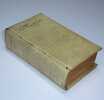
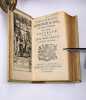
12mo. (XVI, including frontispiece),540,(42 index),(2 blank) p. Vellum. 14.5 cm (Ref: STCN ppn 30413497X; Schweiger 2,1067; Graesse 6/2,59) (Details: Five thongs laced through both joints. The frontispiece, depicts a scene from one of the plays, the return of an abandoned child. Printer's device on the title: a burin being sharpened on a whetstone, around it the motto: 'Terar dum prosim') (Condition: Terentius written in ink on both boards and on the spine. Some small and faint ink annotations (18th century)) (Note: The late antique grammarian Aelius Donatus (4th century A.D) wrote not only a commentary on the plays of the Roman playwright Publius Terentius Afer, ca. 190-159 B.C., but also a short biography, in which he tells that Terentius was born in the Roman province Africa and that he came as a slave in the houshold of the senator Terentius Lucanus. He adopted his name when he was manumitted. Terentius is the author of 'fabulae palliatae', which means 'plays in Greek cloths'. He adapted Greek plays, especially those of the Greek playwright Menander, to the taste of the Romans. Six of his comedies have survived. For later generations he became a model for elegant Latin. His style was closer to everyday conversation than Plautus', an earlier contemporary comic playwright, whose style was more extravagant. He was quoted by Cicero, Horace, Persius and the Church Fathers. Ever since antiquity Terentius lived also a long and influential life in schools as a model for Latin language and rhetoric. In the Middle Ages he was read for his moral sentences. He was imitated by the German abbess Hrotsvitha of Gandersheim (ca. 935 - ca. 973) in her 'Dramenbuch', with which she wanted to create a Christian alternative for the pagan comedies. With the coming of humanism Terentius enjoyed a renaissance in the classroom and on stage. Scholars rejected the 'barbaries' of Medieval Latin and chose the elegance of Cicero and Terentius as their model. They admired Terentius for his 'latinitas' and his civilized humour. In his 'De ratione studi'i (1511) the Dutch humanist Desiderius Erasmus, 1466-1536, encouraged the study of Terentius for his language and moral utility. 'Among Latin writers, who is more valuable as a standard of language than Terence? He is pure, concise, and closer to everyday speech and, by the very nature of his subject matter, is also congenial to youth'. (The Classical Tradition, 2010, p. 930). Erasmus' ideal as a humanist and pedagogue was the creation of better men with the help of the classics. He held the opinion, that schoolboys should read Terentius over and over again. Thus they could master a pure Latin style, and learn at the same time good morals. One of the several 'Terentius for beginners', and a popular one too, was produced by the Dutch schoolmaster Johannes Min-Ellius, ca. 1625-1670. He was educated at the Erasmianum at Rotterdam, and was until his death a Praeceptor at the same school. Minellius, or Min-ellius, produced several school editions of classical authors, such as Horace, Florus, Vergil and Ovid, with ample annotations in easy Latin. His first school text of Terentius, with his numerous notes and commentary, was first published in 1670 in his hometown Rotterdam. At the end of the 17th and in the 18th century reissues of his Tererentius' schoolbook were widely used, not only on Dutch grammar schools, but also on German, English and Danish schools. Schweiger records editions in 1680 (Rotterdam), 1691 (Hamburg), 1691 (Cambridge), 1708 (London), 1710 (Leiden), 1721 (Leiden & Amsterdam), 1726 (Leipzig), 1730 (London), 1735 (Leipzig), 1741 (Copenhagen), 1757 (London), 1758 (London), 1771 (Copenhagen), 1775 (Madrid). There must be more unrecorded editions) (Collation: pi1 (frontispiece), *8 (minus blank leaf *8); A-2A12, 2B4 (leaf 2B4 blank))
P. Terentii Comoediae sex elegantissimae, cum Donati commentariis ex optimorum praesertim veterum exemplariorum collatione emendatae, atque scholiis exactissimis, a multis doctis viris illustratae, & nunc denuo a omnibus mendis purgatae.
Basel (Basileae), Apud Nicolaum Brylingerum, 1561.
8vo. (XXVI),643,(1 blank) p. Pigskin binding, over wooden boards and dated 1565. 17.5 cm (Ref: VD16 T 456; cf. Schweiger 2,1059; cf. Renouard, Annales de l'imprimerie des Estienne, p. 43, no. 15; cf. Dibdin 2,470 for the Stephanus ed. of 1536) (Details: Contemporary blindstamped pigskin over wooden boards, dated 1565. Back with 3 raised bands, and its 4 compartments have blindstamped floral motives. The boards decorated with a triple blind-rolled frame; the outer frame comprising human figures, alternating with acanthus leaves; the central compartment of the upper board shows the female figure of Justice, who holds a sword and a pair of scales, below her 3 lines of worn away and unreadable text; in a compartment above Justice is blindstamped 'N.O', below Justice the year of the binding '1565'. In the center of the lower board Lucretia, who plunges the dagger into her breast; beneath her 3 lines dog latin: 'Castatvlitmagnafor/ maelvcrelavdeactat/ magestvvlneclarasv'; This might be something like: 'Casta tulit magna(m) form/ ae Lucre(tia) laude(m), actat/ magest (magis est?) vulne (= vulnera?) clara su(a?)'. Brass clasps on pigskin hinges. Woodcut printer's mark on the title, depicting 3 panting lions, one holds a hourglass; they are waiting for the sands of time to trickle through the glass. Woodcut initials) (Condition: Pigskin soiled and spotted. Some wear to the extremes. Front pastdown gone. 3 ownership entries on the front flyleaf, ownership entry on the title. Edges of the first leaves thumbed. Right edge of the first 20 leaves stained. Pastdown of the lower board loose) (Note: Late in life the Dutch humanist Desiderius Erasmus, 1466-1536, published his edition of the plays of Roman playwright Terentius, who lived in the first half of the second century B.C. It was printed in Basel in 1532 on the presses of Froben. It immediately became the standard edition. The French scholar/printer Robert Estienne (Robertus Stephanus), 1503-1559, immediately saw the importance of the edition of Erasmus and, according to Schweiger, adopted the best part of the edition of 1532 for a new edition which he brought on the market in 1536. Stephanus added also the scholia on Terentius of the 4th century grammarian Donatus, which he had already published previously in 1529. We compared the 1536 edition of Stephanus with our Brylinger edition of 1561, and must conclude that this 1561 edition is a word for word reissue, from beginning to end (including the preliminary pages) of the Terentius edition of Robertus Stephanus. To complicate matters, the pirate edition of Brylinger of 1561 itself is a repetition of an edition which Brylinger had earlier published in 1543 (VD16 T 418). The layout and the typeface are the same. Terentius remained from antiquity through the Middle Ages, and in later centuries an example of style, and a rich source for moral sentences. Erasmus seems to have learned the whole of Terentius by heart in his youth. He admired the author for his 'latinitas' and his civilized humor. His ideal as a humanist and pedagogue was the creation of better men with the help of the classics. He held the opinion, that schoolboys should read Terentius over and over again. Thus they could master a pure Latin style, and learn at the same time good morals. In his short 'praefatio' Erasmus says: 'Non ex alio scriptore melius discitur Romani sermonis puritas, nec est alius lectu iucundior aut puerorum ingeniis accomodatior' (page *3 recto) (Provenance: 'Eastern Europe, Jewish'. The first name on the front flyleaf is a small stamp: 'Ex libris Dr. O. Hönich'. We found on the internet one Dr. O. Hönich; Dr. Osias Hönich was a Jewish paediatrician living in Czernowitz, a city which till 1918 belonged to Austria, then till 1940 to Rumania, and from WW II to the Soviet Union, and now (since 1991) to the Ukraine (Tsjernivtsi). We cite an obituary of February 22, 1933 from Der Tag, a local newspaper (in German) of Czernowitz: 'Samstag, den 18. d. M., starb im Alter von 66 Jahren der Kinderarzt Dr. Osias Hönich, einer der geachtetsten und tüchtichsten Vertreter des Aerztestandes unserer Stadt. Abgesehen von seinen hervorragenden Eigenschaften als Arzt verfügte Dr. Hönich über ein bedeutendes Wissen und viel Verständnis auf künstlerischen und wissenschaftlichen Gebieten. Das Leichenbegängnis fand gestern nachmittags, vom Trauerhaus, Borobchiecigasse 3 aus, statt. Von seinen Sohen ist der eine Advokat in Czernowitz, der jüngere Maler in Paris'. The names of his sons are Felix Hönich, and Paul Konrad Hönich (Hoenich). The last one emigrated to Israel before WWII and became a succesfull painter. A photograph of Osias Höning, his wife Friederike and 2 of his kids can be found here: (www).geni.com/people/Dr-Osias-Hoschia-H%C3%B6nich-Henich/6000000007383326410. The second name, in ink, is Polish: 'Jan. Rogawski, Kolom(gji?)', 1876'. The third name: 'Josephi ..eislai Schind'; Schind might be a Jewis name, from Galicia and Bukovina, in German Buchenland, a region in Eastern Europe, half of which now belongs to Rumania and half to the Ukraine. On the title in old ink: 'Residentiae Sambonenis Soc. Jesu', 1702. What and where this 'residentia' of the Jesuits was, is hard to say) (Collation: a-z8, A-T8 (Leaf T7 verso blank, minus blank leaf T8) (Photographs on request)
Liber Ijobi Chaldaice et Latine, cum notis graece. Item Graece sticheros, cum variantibus lectionibus. Frankere, Johannes Wellens, 1663.Relié avec : Textus sticheros juxta editionem Londinensem. Même lieu, même édit., même date.
Pour le premier ouvrage [56]-312 pages.Pour le second 26-151 pagesUn volume petit 4° en plein veau brun postérieur, dos lisse (traces d'usure).Johannes Gerardi Terentius (1628?-1677) est un professeur hollandais d'hébreu à l'Université de Franeker en Frise.Pour la première oeuvre : texte araméen avec la ponctuation de Johann Buxtorf et traduction latine de Benito Arias Montano sur 2 colonnes. Aux pages 125-312, notes et remarques de Johannes Gerhardi Terentius.Pour la seconde oeuvre : Texte grec repris de l'édition donnée par Patrick Young à la suite de : « Catena graecorum patrum in beatum Job, collectore Niceta Heracleae... », London, 1637, et suivi aux pages 125-151 des « variantes lectiones ». Édition par Johannes Gerhardi Terentius.Rare ensemble.
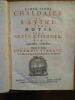
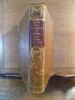
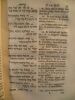

Römische Komödien. Deutsch von C. Bardt. Zweiter Band: Plautus: die Gefangenen, der Bramarbas, der Schiffbruch, Vater und Sohn. Terentius: der Selbsquäler. 2. Auflage.
Berlin, Weidmann, 1913.
XV,328 p. Cloth. 19 cm (Translation of Plautus' Capt., Mil., Rud., Merc. And Terentius' Heaut.) (Volume 2 of 2)
Blijspelen van Terentius. Met inleiding en aantekeningen uitgegeven door P. Hoekstra. 2e geheel herziene druk. Eerste stuk: Andria, Heauton timorumenos. (Bound with:) Blijspelen van Terentius. Met inleiding en aantekeningen uitgegeven door P. Hoekstra. 2e geheel herziene druk. 2e stuk: Phormio, Adelphoe.
Haarlem, De Erven F. Bohn, 1910.
2 volumes in 1: XX,128;XX,138 p. Half cloth. 19.5 cm (Introduction, text & commentary in Dutch) (Rebound. Some pencil)
TERENTE, (Terentius Afer, Publius), HEINSUS (Daniel, éditeur).
Reference : PHO-1911
(1630)
Pub. Terentius Comoediae sex: Ex Dan: Heinsii recensione.
Amsterdam, Apud Guiljelmu Blaueu (Willem Janszoon Blaeu), 1630, in-24, 216pp.-4ff., relié plein maroquin époque, dos à nerfs orné d’étoiles, doubles filets aux plats, tranches dorées, titre gravé.
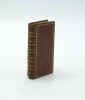
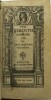
Recueil des six comédies écrites par le poète romain Terentius (vers 190 – 159 av. J.-C.), paru pour la première fois en 1618 chez Willem Blaeu. Les six pièces que Terentius a écrites au cours de sa courte vie sont "Andria", "Eunuchus", "Heutontimorumernos", "Adelphi", "Hecyra" et "Phormio".
TERENTIUS AM. ANTONIO MURETO LOCIS PROPE INNUMERABILIBUS emendatus, nunc primum figuris artificiofifsimis illustratus .Eiusdem Mureti Argumenta in singulas comedias, & annotationes, quibus tum correctionum, magna ex parte, ratio redditur, tum loci obscuriores explicantur (INCOMPLET)
1566 Sigmund Feirabent ( Feyerabend), Francforti ad Mœnum, 1566. 1 vol in-12 pleine peau gaufrée crème du temps avec traces d'anciens motifs, 3 nerfs, dos muet, - AVEC 5 FIGURES GRAVÉES + FER de l'éditeur SIGISMUNDUM FEYRNBEND en page de titre et en dernière pages; 209 pages ( erreur de pagination sur la dernière page indiquant 229 au lieu de 209), coins un peu écrasés et un trou de vers dans l'épaisseur du premier plat. Quelques notes anciennes manuscrites au crayon au revers du premier plat
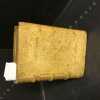
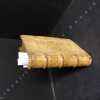
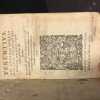
Rare édition imprimée en Allemagne pour ce texte ancien. Très belle qualité d'impression du texte et des figures pour ce livre bien conservé dans sa reliure d'époque INCOMPLET : Il manque une page et précisément la page B8, la dernière de l'introduction (voir dernière photo) Mauvais
TERENCE [Publius Terentius Afer]. [Madame DACIER, traductrice]. Bernard PICARD (illustrateur).
Reference : AMO-4516
(1747)
Les comédies de Térence ; avec la traduction et les remarques de Madame Dacier. Nouvelle édition, corrigée d'un nombre considérable de fautes et enrichie de différentes leçons de Mr. Bentlei, de Donat, de Faern, et d'autres.
A Amsterdam et à Leipzig, chez Arkstée et Merkus, 1747 3 volumes in-12 (17 x 10,5 cm) de LX-495, (4)-459-(1) et (4)-403-(1) pages. Frontispice au tome I dessiné et gravé par Bernard Picard. Vignettes à l'eau-forte (différentes) sur les pages de titre imprimées en rouge et noir. 48 figures hors-texte (dont 2 dépliantes) dont un portrait de l'auteur, des scènes des pièces de théâtre ainsi que des séries de masques de théâtre à l'antique, gravées au trait par Bernard Picard. Nombreux culs-de-lampe et bandeaux gravés sur bois ou à l'eau-forte. Edition bilingue latin-français (la page en latin est à gauche), les remarques très nombreuses sont sur chaque page. Reliure strictement de l'époque plein maroquin rouge vermillon, dos à nerfs orné aux petits fers dorés, pièces de titre et tomaison de maroquin vert, tranches dorées, triple-filet doré en encadrement des plats avec fleuron dans les angles, filet doré sur les coupes, roulette dorée en encadrement intérieur des plats. Exemplaire proche du neuf tel que sorti de l'atelier du relieur au milieu du XVIIIe siècle. Une très petite tache sombre au dos du premier volume et une coupure du cuir au second plat du deuxième volume sont à signaler (très peu visible). Intérieur très frais. Comme toujours pour cette édition certains feuillets sont plus jaunis ou légèrement roussis, sans jamais que cela ne soit important. Toutes les gravures sont d'un superbe tirage et sur beau papier resté bien blanc.

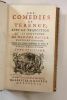
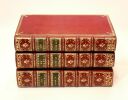
Nouvelle édition et édition définitive donnée par Madame Dacier, qui fait suite aux éditions de 1717 (première édition de cette traduction, 1724, 1747, etc. Madame Dacier fit paraître une première édition des Comédies de Térence en 1688. Cette traduction de Madame Dacier eut un très grand succès dans toute la première moitié du XVIIIe siècle. L'illustration due au talent de Bernard Picard est parfaitement dans le ton du théâtre antique de Terence. Le jeu des acteurs ainsi que les séries de masques illustrent avec brio les différentes pièces. "Avant que de finir cette Préface, je rendrai compte ici d’une chose qui me paraît ne devoir pas être oubliée. Pendant que je travaillais à cet Ouvrage, M. THEVENOT, dont le mérite est si connu de tout le monde, & qui a su joindre toutes les qualités de l’honnête homme [xxxviii] à celles de l’homme d’esprit, m’exhortait à voir les Manuscrits de la Bibliothèque du Roi, où il me disait que je pourrais trouver des choses que je ne serais pas fâchée de voir. J’avois beaucoup de répugnance à en venir là ; il me semblait que les Manuscrits étaient si fort au dessus d’une personne de mon sexe, que c’était usurper les droits des Savants que d’avoir seulement la pensée de les consulter. Mais ma Traduction étant achevée d’imprimer, et M. THEVENOT m’ayant dit que les Manuscrits dont il m’avait parlé méritaient d’être vus, à cause des figures qui y sont, la curiosité m’a portée enfin à les voir avant que de donner ma Préface. Ils m’ont été communiquez depuis quelques jours, et j’y ai trouvé des choses dont je suis charmée, et qui prouvent admirablement les changements les plus considérables que j’ai fait au texte pour la division des Actes, qui est ce qu’il y a de plus important. Pour le plaisir du Lecteur de mettre par [xxxix] ordre ce que j’y ai trouvé de plus remarquable. Entre ces Manuscrits il y en a deux qui bien que fort anciens (car le plus moderne paraît avoir plus de huit ou neuf cent ans) ne sont pas si précieux par leur antiquité que par les parques qu’ils portent, qui font connaître qu’ils ont été faits sur des Manuscrits fort anciens, et d’une très-bonne main. Les figures qui sont au commencement de chaque Scène ne sont pas fort délicatement dessinées ; mais leur geste & leur attitude répondent parfaitement aux passions & aux mouvements que le Poète a voulu donner à ses personnages ; et je ne doute pas que du temps de TERENCE les Comédiens ne fissent les mêmes gestes qui sont représentés par ces figures. Il n’y avait point d’Acteur qui n’eût un masque : c’est pourquoi à la tête de chaque Comédie il y a une Planche où l’on voit autant de masques qu’il y a d’Acteurs ; mais [xl] ces masques n’étaient pas faits comme les nôtres qui couvrent seulement le visage, c’était une tête entière qui enfermait toute la tête de l’Acteur. On n’a qu’à se représenter un casque dont le devant aurait la figure du visage, & qui serait coiffé d’une perruque ; car il n’y avait point de masque sans cheveux. J’ai fait graver toutes les figures de ce Manuscrit et les Planches de ces masques, dont les figures servent à faire entendre cette fable de PHEDRE : Personam tragicam forte Vulpes viderat. O quant species ! inquit, cerebrum non habet. Un Renard voyant un jour un masque de Théâtre, ô la belle tête, dit-il, mais elle n’a point de cervelle. La troisième remarque que je fais sur les figures, c’est que le manteau des Esclaves était aussi court que [xli] celui de nos Comédiens Italiens ; mais il était beaucoup plus large. Ces Acteurs le mettaient d’ordinaire en écharpe, et ils le portaient le plus souvent autour du cou, ou sur une épaule ; et quelquefois ils s’en servaient comme d’une ceinture. La quatrième remarque, c’est que les portes qui donnaient dans la rue avoient presque toutes les portières qui les couvraient par dedans ; et comme apparemment on n’avait pas alors l’usage des tringles et des anneaux, ceux qui sortaient, et qui se tenant devant la porte voulaient voir cependant ce qui se passait devant la maison, nouaient la portière comme on noue les rideaux d’un lit. C’est ce que je trouve de plus remarquable dans ces figures. Voyons si en parcourant les pièces l’une après l’autre, on ne trouvera rien qui mérite d’être remarqué." (extrait de la préface de Madame Dacier). Térence (en latin : Publius Terentius Afer), né à Carthage aux alentours de 190 av. J.-C. et mort à Rome en 159 av. J.-C., est un poète comique latin, vraisemblablement d'origine berbère. Auteur de seulement six pièces qui nous sont toutes parvenues, il est considéré, avec Plaute, comme un des deux grands maîtres du genre à Rome, et son œuvre a exercé une influence profonde sur le théâtre européen, de l'Antiquité jusqu'aux temps modernes. Ses pièces s'intitulent : L'Andrienne, L’Hécyre, L’Heautontimoroumenos, L'Eunuque (Jean de La Fontaine adorait cette pièce, qu'il adapta en 1655.), Le Phormion (cette pièce inspira en grande partie à Molière ses Fourberies de Scapin.), Les Adelphes (cette pièce inspira à Molière son École des maris.). « Je compare [Térence] à quelques-unes de ces précieuses statues qui nous restent des Grecs, une Vénus de Médicis, un Antinoüs. Elles ont peu de passions, peu de caractère, presque point de mouvement ; mais on y remarque tant de pureté, tant d’élégance et de vérité, qu’on n’est jamais las de les considérer. Ce sont des beautés si déliées, si secrètes, qu'on ne les saisit toutes qu'avec le temps ; c'est moins la chose, que l'impression et le sentiment qu'on en remporte : il faut y revenir, et l'on y revient sans cesse. » (Denis Diderot, Mélanges de littérature et de philosophie, édition de Jacques-André Naigeon, vol. IX. Paris, 1798). Anne Dacier, est née Le Fèvre à Grandchamp, au sud de Langres, en 1645 (mois et jour inconnus), et a été baptisée à Is-sur-Tille, le 24 décembre 1645. Elle est morte le 17 août 1720, au Louvre à Paris. C'est une philologue et traductrice française très réputée en son temps. Après sa mort, Voltaire l'a présentée comme « l’un des prodiges du siècle de Louis XIV » et a affirmé : « Ses traductions de Térence et d’Homère lui font un honneur immortel ». Saint-Simon l'a jugé supérieure à son époux et a loué sa modestie. Provenance : de la bibliothèque d'Alfred Dailly avec son ex libris gravé (Stern, Paris), passé ensuite dans la bibliothèque Frochot (son parent). Lire à propos d'Alfred Dailly notre article sur le Bibliomane moderne : Alfred Dailly (1818-1888), bourgeois distingué, laborieux et bienfaisant, bibliophile à ses heures. "Né à Paris, en 1818 (*), Alfred Dailly entrait au Conseil d'Etat, le 10 mars 1839, en qualité d'auditeur de 2e classe. En 1843, il était nommé chef de cabinet de M. Passy, sous-secrétaire d'Etat à l'intérieur. Cette situation lui permit de rendre d'importants services lors de la cruelle disette qui affligea le pays en 1846. Il fut à cette occasion nommé chevalier de la Légion d'Honneur. Durant cette même année 1846, il quitta le Conseil d'Etat où il avait été promu à la première classe de l'auditorat, pour occuper les fonctions d'administrateur des chemins de fer de l'Ouest. En cette qualité et comme fondateur du chemin de fer de Dieppe, il contribua énergiquement à créer et à rendre populaire en France l'industrie encore nouvelle qui, en quelques années, devait si complètement transformer le monde. Quinze ans plus tard, en 1862, le roi Victor-Emmanuel lui donnait un témoignage personnel d'estime pour la part qu'il venait de prendre à la création de la ligne reliant la France à l'Italie par le Mont-Cenis. Pendant la Commune, en 1871, M. Dailly fit jusqu'à la fin son service d'administrateur à la Compagnie de l'Ouest, se rendant chaque jour aux bureaux de la gare Saint-Lazare qu'occupaient les fédérés et menacé plusieurs fois par eux d'être emprisonné comme otage. Revenu à Saint-Cloud après la guerre, il y exerçait les pénibles fonctions d'administrateur de l'hospice civil, lorsque la mort est venue, non le surprendre, mais apporter un terme aux souffrances d'une impitoyable maladie." (extrait). Splendide ensemble pour bibliophile exigeant à la recherche d'exemplaires parfaitement conservés.
Blijspelen van Terentius met inleiding en aanteekeningen. Uitgegeven door P. Hoekstra. Vijfde druk. Phormio (Bound with:) Andria & Heaton Timorumenos.
Haarlem, De erven F. Bohn, 1937.
2 volumes in 1: XXIII,86; 116 p. Cloth 20.5 cm (Rebound; Latin text & Dutch notes) (Some marginalia in the Andria)
Nederlandse Terentius-vertalingen in de 16e en 17e eeuw.
Tilburg, Bergmans, 1954.
XXVII,214 p. Wrappers. 24 cm (Dissertation, University Nijmegen)
Nederlandse Terentius-vertalingen in de 16e en 17e eeuw.
Tilburg, Bergmans, 1954.
XXVII,214 p. Wrappers. 24 cm (Dissertation University Nijmegen)
Nederlandse Terentius-vertalingen in de 16e en 17e eeuw.
Tilburg, Bergmans, 1954.
XXVII,214 p. Wrs. (Diss.)(Cover worn)
Nederlandse Terentius-vertalingen in de 16e en 17e eeuw.
Tilburg, Bergmans, 1954.
XXVII,214 p. Wrs. 24 cm (Diss.)
TERENCE (Térence en latin Publius Terentius) - FARNABII Thomae (Thomas Farnaby)
Reference : 15951
(1668)
Pub. Terentii Comoediae sex, ex recensione Heinsiana.
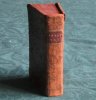
Cum Annotationibus Thomae Farnabii, in quatuor Priores.Amstelodami, apud Iohannem Ianssonium à Waesberge, et Viduam Elizei Weyerstraet, 1668 - 23 ff et 284 pages avec une gravure du portrait de Terence.Reliure plein-veau de l'époque. Dos lisse orné et doré avec pièce de titre maroquin rouge. Légèrement frotté. Pas de rousseur. Bon état. Format in-16°(13x7).Térence (en latin Publius Terentius Afer), né à Carthage aux alentours de 190 et mort en 159 av. J.-C., est un poète comique latin, peut-être d'origine berbère. Auteur de seulement six pièces qui nous sont toutes parvenues, il est considéré, avec Plaute, comme un des deux grands maîtres du genre à Rome, et son oeuvre a exercé une influence profonde sur le théâtre européen, de l'Antiquité jusqu'aux Temps Modernes.
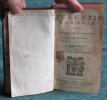
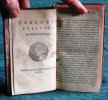
Terence - Publius Terentius Afer; Philipp Melanchthon (Mélanchton) ; Paul Haemmerlin; Pietro Marso; Aelius Donatus
Reference : 23876
(1528)
Pu. Terentii Aphri Comoediae sex per Philippum Melan[chthonem] restitutae. Addita sunt haec argumenta eiusde[m] Phil. Mel. in totas comoedias, itemque Pauli Malle[oli] in singulas scenas, scholia praeterea tum Philip. Melan., quae quidem praenotavimus, tum Petri Marsi, in loca obscuriora, neutiquam contemnenda.
1528 Coloniae : Hittorp, 1528.pt IN8, reliure époque veau brun estampé,non paginé,199 pages,texte réglé,dos abimé avec manques,frais,collationné complet.
![Pu. Terentii Aphri Comoediae sex per Philippum Melan[chthonem] restitutae. Addita sunt haec argumenta eiusde[m] Phil. Mel. in totas comoedias, itemque ...](https://static.livre-rare-book.com/pictures/BRK/23876_1_thumb.jpg)
![Pu. Terentii Aphri Comoediae sex per Philippum Melan[chthonem] restitutae. Addita sunt haec argumenta eiusde[m] Phil. Mel. in totas comoedias, itemque ...](https://static.livre-rare-book.com/pictures/BRK/23876_2_thumb.jpg)
![Pu. Terentii Aphri Comoediae sex per Philippum Melan[chthonem] restitutae. Addita sunt haec argumenta eiusde[m] Phil. Mel. in totas comoedias, itemque ...](https://static.livre-rare-book.com/pictures/BRK/23876_3_thumb.jpg)
Biblogr. Nachweis: VD 16 T 392.Melanchthon, (Mélanchton) Philippus (1497-1560)- Théologien réformateur et humaniste. - Principal rédacteur des "Confession d'Augsbourg"Haemmerlin, Paul (14..-15..) Malleolus, Paulus (14..-15..) Humaniste. - Maître ès arts. - Archiprêtre Naissance: 14.., Andlau (Bas-Rhin) un seul exemplaire dans les bibliothéques publiques ?edition numerisée : http://daten.digitale-sammlungen.de/~db/0001/bsb00014980/images/BNF; Titre(s):Pu. Terentii Aphri Comoediae sex, per Philippum Melan. restitutae. Addita sunt haec : argumenta ejusdem Phil. Mel. in totas comoedias, itemque Pauli Malle. [Malleoli] in singulas scenas, scholia praeterea tum Philip. Melan. ... tum Petri Marsi in loca obscuriora, neutiquam contemnenda. Eucharius Cervicornus excudebat, anno M. D. XXVII. - ("Au v° du titre :") Paedagogis Philippus Melanchthon S. P. D. - ("Sign. a2, v° :") Johanni Gloriero ["sic" pour Grolierio],... Franciscus Asulanus sal. - ("Sign. a5, v° :") Terentii vita et de Tragoedia ac comoedia non pauca, ex Aelio Donato. - ("Sign. b5, r° :") Terentii vita, ex libro primo Petri Criniti de Poetis latinis. - ("Sign. b [6,] v° :") De Partibus personarum et actuum Andriae [ex Donato]. - ("Sign. b [7,] r° :") Argumentum Andriae [ex Donato]. - ("Sign. b [8,] v° :") Volcatii Sedigiti de Comicis latinis iambi. - ("À la fin :") Coloniae, apud Eucharium Cervicornum, impensa M. Godefridi Hittorpii, civis et bibliopolae coloniensis, anno M.CCCCC.XXVII., decimosexto calend. martias... [Publication:Coloniae, 1527 Description matérielle:In-8° , sign. a-z et A-B, titre à encadr. gr. Note(s):Édition ignorée de Lawton. - Édition donnée par Philipp Schwartzerd Mélanchton Remise de 20% pour toutes commandes supérieures à 200 €
PUBLIUS TERENTIUS AFER [PUBLII TERENTII AFRI] (LEMAIRE N.E., ed.)
Reference : K72024
(1827)
Publii Terentii Afri Comoediae ex optimarum editionum textu recensitae quas adnotatione perpetua, variis disquisitionibus et indice rerum locupletissimo illustravit N.E. Lemaire [complete in 3 vols.]
Parisiis [Paris], Lemaire 1827-1828 complete in 3 volumes: cciii,470 + 362 + viii,437pp., 22cm., in the series "Bibliotheca classica latina sive collectio auctorum classicorum Latinorum cum notis et indicibus", cart.cover (spine in cloth, marbled plates), few foxing, text in Latin, Good condition, K72024
AUSGEWÄHLTE KOMÖDIEN DES P. TERENTIUS AFER, ERSTES BÄNDCHEN, PHORMIO
B. G. Teubner. 1885. In-8. Broché. Etat d'usage, Couv. convenable, Dos abîmé, Intérieur acceptable. 141 pages. Texte en latin et Notes en allemand (sur 2 colonnes). Quelques annotations dans le texte.. . . . Classification Dewey : 470-Langues italiques. Latin
Zur Einführung in die Lektüre der Altlateinischen Lustspiele. Erklärt von Karl Dziatzko. Zweite ver. Auflage. Classification Dewey : 470-Langues italiques. Latin

Afer A.M. Antonio Mureto emendatus. Ejusdem Mureti, argumenta et scholia in singulas comoedias.
Venetiis, apud Aldum, 1570, portrait de Aldus Pius Manutius gravé sur bois en médaillon au titre, (au dos de la p. de titre : Armes des Alde marque N°6) ; Editio Aldi Manutii Paulli F. Aldi N. In 8, vélin rigide, dos à faux nerfs dorés décoratifs, pièce rouge (reliure ancienne) ; [24], 45, [1 bl.], [1] f. bl., 352, 94 pp. (signatures : ?-??-??? ; (-((-((( ; A-Y ; a-e 8 ; f. 6).
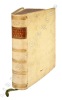
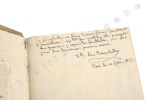
Huitième édition aldine de Térence ; l’appareil critique d’Antoine Muret, humaniste français né à Limoges à sa pagination propre à la fin de l’ouvrage. Deux petits trous de vers comblés aux premiers et derniers feuillets et affectant trois autres feuillets avec pertes d’une lettre ; feuillet b3 anciennement restauré sans perte ; quelques notes manuscrites marginales ; édition absente à Aldine Press Book.Ex-libris armorié, de Rambuteau et, en tête du feuillet de garde cette mention signée : “J’ai acheté ces trois heureux livres pendant l’armistice. Cap.tne des mobiles et prisonnier de guerre : j’espère les feuilleter en des jours plus heureux pour nous. Cte de Rambuteau. Paris le 21 février 1871”Exemplaire correct et globalement en bon état, dans une reliure en vélin très décorative.
Comoediae, Andria, Eunuchus, Heautontimorumenos, Adelphi, Hecyra, Phormio, ex emendatissimis ac fide dignissimis codicibus summà diligentià castigatae.
Paris, [Benoît Prévôt pour] Jean de Roigny, 1552. 1 vol. in-folio, basane fauve, dos à nerfs orné de caissons dorés portant en leur centre une grosse fleur de lys dorée, double encadrement de deux roulettes et d'un double filet doré sur les plats, semé de fleurs de lys dorées, armes dorées au centre, tranches dorées, contreplats recouverts de papier peigne. Reliure du milieu du XVIIe siècle restaurée, dos aplati, qq. accidentes en bordure des plats. Ex-libris cancellés sur la page de titre e ex-libris manuscrit de Jacques d'Héraiuville recteur du collège de Bayeux (1707) au contreplat. 151 vignettes gravées sur bois dans le texte, nombreuses et belles lettrines sur fond criblé, texte imprimé en caractères romains sur 2 coll., (1) f., 776 pp., (14) ff. d'index (sur 19). Signatures : pi2 [a-z]6 [A-Z]6 [AA-SS]6 TT4 [XX-YY]6. Il manque 5 feuillets d'index. Quelques annotations marginales ou interlinéaires à l'encre brune de l'époque.
Premier tirage de cette belle édition des comédies de Térence, établie par Thierry de Beauvais. Dans cet exemplaire, le colophon est daté du 17 des calendes de décembre 1551. Il existe un second tirage daté des calandres de janvier 1552. Le texte de Térence, imprimé en italique au centre de la page est entouré des commentaires (dans une italique plus petite) des interprètes antérieurs de Térence parmi lesquels : Philippe Melanchthon, Erasme, Scaliger, P. Bembo, Donati, B. Latoni; J. Ribius, E. Dolet etc. Elle est augmentée du Spicilegium in omnes Terentii comoedias de Thierry de Beauvais. Edition illustrée de 151 vignettes gravées sur bois qui représentent différentes scènes (avec de nombreux remplois). La plupart mesurent 47 x 70 mm. L'une d'elles (51 x 70 mm) représente des spectateurs au théâtre. Elle sont toutes exécutées au trait dans un style archaïque. Le privilège du roi signé par procuration par J. Lallemant archevêque de Tours indique que Jean de Roigny a fait graver exprès les gravures de cette édition. En fait elles sont copiées sur l'édition vénitienne de Scotto de 1545. L'édition fut imprimée par Benoît Prévôt aux frais de Jean de Roigny. Exemplaire relié aux armes de François Théodore de Nesmond (1629-1715), évêque de Bayeux. Graesse VII, 57; Adams T341; Brun, 299; Brunet V, 714; Mortimer, French, n°512.
Fragments des ouvrages intitulés Logistorici Hebdomades vel de Imaginibus de Forma Philosophiae. Recueillis et mis en ordre par Ch. Chapuis. Paris, Libr. de L. Hachette, 1868.
Paris, Librairie de L. Hachette, 1868. In-8, reliure demi-basane, havane dos à nerfs, titré, plats et gardes marbrés,112pp, table.
Dos un peu passé, bonne condition. - Frais de port : -France 5,7 € -U.E. 8 € -Monde (z B : 12 €) (z C : 22 €)
COMOEDIAE ex optimarum editionum textu recensitae quas adnotatione perpetua, variis disquisitionibus et indice rerum locupletissimo illustravit.
Paris, Collibebat N.E. Lemaire, 1827-1828. 2 vol. in-8, rel. fin XIXe demi-chagrin marron, dos à 5 nerfs ornés de filets doré, titre et tomaison dorés, tête mouchetée, CCIII-470, VIII-437 pp., texte en latin, index.De la Bibliothèque d'Armand de la Rochefoucauld et son épouse Lise Radziwill, Duc et Duchesse de Doudeauville (ex-libris armorié).
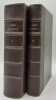
De la Collection Bibliotheca Classica Latina. Très bon ex. relié. -

