 Write to the booksellers
1148 books for « stuart a »Edit
-
Type
Book (1142)
Disk (1)
Music sheets (5)
-
Latest
Last 24h (1)
Last month (41)
Last week (1)
-
Language
Dutch (1)
English (10)
French (1135)
Russian (2)
-
Century
17th (1)
18th (4)
19th (64)
20th (553)
21st (108)
-
Countries
Belgium (50)
Brazil (1)
Canada (1)
China (2)
Côte d'Ivoire (2)
Denmark (21)
France (953)
Netherlands (1)
Switzerland (115)
United States of America (2)
-
Syndicate
ALAC (1)
CLAM (5)
CLAQ (1)
CNE (1)
ILAB (572)
NVVA (13)
SLACES (13)
SLAM (530)
SNCAO (3)
Topics
- Anthropology (3)
- Archaeology (19)
- Architecture (12)
- Asia - orient (6)
- Astronomy (4)
- Autographs (3)
- Auvergne (7)
- Biography (8)
- Birds (3)
- Botany (3)
- Bourbonnais (4)
- Castles (4)
- Children’s books (4)
- China (8)
- Churches (3)
- Demonology (4)
- Detective novels (31)
- Dictionaries (5)
- Drama (4)
- Economics (14)
- England (10)
- English (46)
- English literature (7)
- Engstrand stuart (5)
- Esotericism (6)
- Ethic (4)
- Feminism (5)
- Fin de siècle (4)
- Fine arts (11)
- First edition (4)
- Florence (3)
- Gardens (3)
- Geography (6)
- Germanic languages (3)
- Great britain (3)
- Guide books (4)
- Head edition (3)
- Helvética (11)
- History (29)
- Holroyd stuart (32)
- Humour anecdotes (3)
- Industrial arts & crafts - fine arts (4)
- Italian (8)
- Joyce james (4)
- Lambert david (5)
- Law (5)
- Literature (121)
- Maclean alistair (3)
- Mary i of scotland (3)
- Mexico mayas (8)
- Miller (4)
- Motor vehicle (3)
- Nagel (18)
- Napoleon i (3)
- Newspapers press (4)
- Nietzsche frédéric (4)
- Ornithology (6)
- Palmer stuart (13)
- Parapsychology (7)
- Philosophy (61)
- Photography (9)
- Poetry (9)
- Police (4)
- Policy (8)
- Political economy (4)
- Political sciences (3)
- Portraits (3)
- Psychology (14)
- Religions (6)
- Review (43)
- Reviews (3)
- Saint saëns (4)
- Sciences (8)
- Scores (6)
- Scotland (3)
- Sleep (3)
- Sociology (7)
- Songs (5)
- Spying (10)
- Star (3)
- Switzerland (11)
- Symbolism (7)
- Translation (6)
- Travel (5)
- United kingdom (10)
- United states (4)
- Various (12)
- Velay (4)
- War (4)
- War 39/45 (3)
- Welch stuart cary (3)
- Wilde oscar (6)
- Willy (5)
- Witchcraft (4)
- Woolf virginia (5)
- Zola emile (4)
Le Procès de Marie Stuart.
P., Le Club du meilleur livre, 1956, in-8° carré, (10)-300 pp, documents originaux traduits et présentés par Marcel Thomas, 21 gravures hors texte, sources, tiré sur bouffant de Bellegarde, reliure pleine basane chagrinée chocolat de l'éditeur ornée du blason des Stuart, gardes illustrées (maquette de Massin), bon état (Coll. Dossiers de l'Histoire)
Fait partie d'une collection unique en son genre de sept titres consacrés à des procès historiques célèbres avec Galilée, les Templiers, Jeanne d'Arc (deux volumes), Savonarole et Vidocq. – "Depuis quatre cents ans, tant d'ouvrages ont été publiés sur Marie Stuart qu'à peine en dresserait-on la liste. Ajouter un nouveau volume à cette imposante bibliothèque pourrait donc, à première vue, sembler assez superflu. Pourtant, s'il est vrai que peu de grandes destinées ont pareillement réussi à inspirer les dramaturges, à exciter l'imagination des foules et à provoquer les discussions passionnées des historiens, la figure de Marie Stuart n'en demeure pas moins enveloppée d'un certain halo de mystère. Pour la plupart des Français, ce nom évoque la romantique personnalité d'une jeune reine que sa beauté, son intelligence, sa sensibilité, et surtout son héroïsme devant la mort, auréolent de toutes les séductions. On se la représente en général comme la victime d'une impitoyable fatalité, contrainte par son veuvage prématuré à regagner une lointaine et inhospitalière patrie avant que la haine de ses ennemis ne lui fasse enfin, au terme d'une longue captivité, gravir les marches d'un échafaud. Aux yeux de bon nombre d'Anglais, en revanche, Marie Stuart apparaît tout autre : ils verraient volontiers en elle une aventurière intrigante et débauchée, n'hésitant pas, par fanatisme, à trahir les intérêts de son propre fils, prête au besoin à recourir au meurtre pour écarter de sa route des adversaires gênants. Notre intention n'est point, on s'en doute, de donner ici un aperçu d'ensemble sur la carrière si mouvementée et si dramatique de Marie Stuart. C'est seulement la catastrophe par laquelle s'acheva sa douloureuse existence dont nous voudrions faire saisir le mécanisme et les dessous secrets. Selon l'interprétation qu'il donnera aux documents présentés ici, le lecteur pourra y trouver des motifs de condamner ou d'absoudre la reine d'Écosse. Peut-être préférera-t-il s'abstenir de porter un jugement définitif, mais il aura au moins eu sous les yeux le dossier complet de l'affaire, non sans qu'y aient été jointes un certain nombre de pièces annexes qui contribuent à la replacer dans son véritable contexte. Ces documents n'ont certes pas été ignorés des historiens de Marie Stuart, mais, rédigés qu'ils étaient, pour la plupart, en anglais, en latin, ou en espagnol, et publiés le plus souvent dans des recueils familiers aux seuls érudits de profession, ils sont restés à peu près inconnus du grand public cultivé de notre pays..." (Avant-propos) Désormais les frais d'envoi sont de 6 € seulement pour les livres jusqu'à 1 kg (colissimo suivi), pour la France métropolitaine.
Polity and Neighbourhood in Early Medieval Europe
, Brepols, 2019 Hardback, xviii + 430 pages, Size:156 x 234 mm, Illustrations:14 b/w, 39 maps, 6 graphs, Language: English. ISBN 9782503581682.
Summary How were early medieval people connected to each other and to the wider world? In this collection, archaeologists and historians working in very different areas of early medieval Europe explore diverse evidence - from landscape and burial archaeology to charters and chronicles - to discuss the relationships that constituted neighbourhoods and the roles these played in the processes of state formation that can be observed in the peripheries of the Frankish world. What these case-studies teach us, the contributors argue, is that polities are formed not through the exclusive operation of either top-down or bottom-up agencies, but from the interplay between them. By exploring the ways in which local knowledge, social ties, and understandings of landscape interacted with higher-level authorities and institutions, we can gain real insights into the nature of early medieval power and people's experiences of it. Marking the culmination of a collective effort that has spanned over a decade and three funded projects, this volume brings together case-studies from Spain, Italy, England, northern Frankia, Norway, and Iceland to offer a comparative view of polities and neighbourhoods in early medieval Europe. Drawing on new research, and offering new perspectives driven by an interdisciplinary approach, this volume is of relevance to a range of disciplines including archaeology, history, onomastics, geography, and anthropology. TABLE OF CONTENTS Introduction - JULIO ESCALONA, ORRI VÉSTEINSSON, AND STUART BROOKES Polities, Neighbourhoods, and Things In-Between - JULIO ESCALONA, ORRI VÉSTEINSSON, AND STUART BROOKES Understanding the Identities and Workings of Local Societies in Early Medieval England, AD 800-1100 - GRENVILLE ASTILL Peasant Communities and Landscape Change in Northwest Iberia - MARGARITA FERNÁNDEZ MIER Early Medieval Burials and Settlements: Some Reflections on Northern Italian Archaeological Evidence - ALEXANDRA CHAVARRÍA Ancestors and Landscape: Early Medieval Burial Sites in the Central-Western Regions of the Iberian Peninsula - IÑAKI MARTÍN VISO The Thing and the King: The Formation of the Norwegian Medieval Kingdom - FRODE IVERSEN Meeting Places, Markets, and Churches in the Countryside between Madrid and Toledo, Central Spain, c. AD 500-900 - ALFONSO VIGIL-ESCALERA State Formation and World View: Commonwealth Iceland as a Part of the Norwegian Realm - ORRI VÉSTEINSSON 'Est haec effera gens': Landscapes of Negotiation on the Former Island of Walcheren, the Netherlands - LETTY TEN HARKEL Territoriality and Social Stratification: The Relationship between Neighbourhood and Polity in Anglo-Saxon England - STUART BROOKES AND ANDREW REYNOLDS Regions and Micro-Regions of Scribal Practice - WENDY DAVIES The Use of the Term Villa in Early Medieval León: A Review of the Economic Base of the Astur-Leonese Monarchy, Ninth-Eleventh Centuries - ÁLVARO CARVAJAL CASTRO Dense Local Knowledge: Grounding Local to Supra-local Relationships in Tenth-Century Castile - JULIO ESCALONA Local Places and Local People in Anglo-Saxon Wessex - ALEX LANGLANDS Conclusion - JULIO ESCALONA, ORRI VÉSTEINSSON, AND STUART BROOKES Index
Om den repræsentative Regering. Paa dansk ved Vilhelm Arntzen. - [FIRST DANISH EDITION OF MILL'S ON REPRESENTATIVE GOVERNMENT]
Kjøbenhavn, 1876. 8vo. A little later (ca. 192) mustard yellow full cloth binding with gilt title to spine. Owner's name to front free end-paper and a couple of pencil-annotations. Two pp. (142-43) with staining from a piece of silver paper used as a book mark. (6), 457, pp.
![Om den repræsentative Regering. Paa dansk ved Vilhelm Arntzen. - [FIRST DANISH EDITION OF MILL'S ON REPRESENTATIVE GOVERNMENT]. "MILL, JOHN STUART.](https://static.livre-rare-book.com/pictures/LLX/63369_1_thumb.jpg)
![Om den repræsentative Regering. Paa dansk ved Vilhelm Arntzen. - [FIRST DANISH EDITION OF MILL'S ON REPRESENTATIVE GOVERNMENT]. "MILL, JOHN STUART.](https://static.livre-rare-book.com/pictures/LLX/63369_2_thumb.jpg)
![Om den repræsentative Regering. Paa dansk ved Vilhelm Arntzen. - [FIRST DANISH EDITION OF MILL'S ON REPRESENTATIVE GOVERNMENT]. "MILL, JOHN STUART.](https://static.livre-rare-book.com/pictures/LLX/63369_3_thumb.jpg)
First edition of the first Danish translation of Considerations on Representative Government (1861) by John Stuart Mill (1806-1873), one of the most influential English language philosophers of the 19th century. Translated by the economist, teacher, and author Vilhelm Arntzen (1842-1893). Stuart Mill wrote extensively on topics such as logic, economics, moral philosophy as well as political and social philosophy, and is known for his views on utilitarianism and for being one of the early male advocates of women's rights. The present work deals with the nature of democracy, arguing for the importance of a representative government while discussing the dangers of democracy, namely the tendency towards uniformity and the oppression of minorities. Stuart Mill served as Member of Parliament for the Liberal Party in the years between 1865-1868. However, he declined ""to actively canvass for the seat—indeed, he remained, for most of the campaign, at his home in Avignon. While in the Commons, he championed what he perceived as unpopular but important causes: the extension of suffrage to women, Irish reform, and the prosecution of Governor Eyre for atrocities committed during his administration of Jamaica"" (Macleod, in: The Stanford Encyclopedia of Philosophy, 2020). OCLC registers merely two copies in libraries worldwide, both in Denmark.

Stuart m kaminsky Le flic qui venait du froid Le Masque n2011 1990
Editions du Masque 2011 2011. Stuart M. Kaminsky: Le flic qui venait du froid/ Le Masque N°2011 1990 . Stuart M. Kaminsky: Le flic qui venait du froid/ Le Masque N°2011 1990
Bon état
Mao Tsé-toung. Textes traduits et présentés par Stuart Schram.
Armand Colin, 1963, pt in-8°, 416 pp, chronologie sommaire, biblio, broché, bon état (Coll. U)
"Tout recueil de textes inédits ou rétablis dans leurs versions originales du numéro 1 de la République populaire de Chine présente un très gros intérêt. Le Mao Tsé-toung présenté par Stuart Schram est précisément un recueil de ce genre. On y trouve notamment de nombreux extraits d'oeuvres de jeunesse de Mao Tsé-toung totalement oubliées ("Une étude de l'éducation physique", avril 1917 ; "La grande union des masses", juillet-août 1919, etc.) ; de précieux inédits, dont une réponse au journaliste Edgar Snow qui nous révèle qu'en juillet 1936 Mao Tsé-toung pensait qu'après la victoire de la révolution en Chine "la Mongolie extérieure deviendrait automatiquement une partie de la fédération chinoise" et des éléments des versions originales de la célèbre "Analyse des classes de la société chinoise" (janvier-février 1926), du non moins célèbre "Rapport après enquête sur le mouvement paysan dans le Hunan" (février 1927), de la "Lutte dans les Jing gangshan" (novembre 1928), etc. Et ce est pas seulement le non-initié mais aussi l'initié qui se précipitera avec gourmandise sur ces nouveautés. Mais il a mieux : les morceaux choisis de l'œuvre écrite du leader chinois que vient de nous donner Stuart Schram ont été commentés (dans une introduction extrêmement substantielle) et regroupés de telle sorte qu'il s'en dégage une image bien définie de Mao Tsé-toung en tant que théoricien et en tant qu'homme d'action..." (Claude Cadart, Revue française de science politique, 1964) — "Choix d'écrits de Mao Tsé-Toung situés non seulement par rapport à la doctrine marxiste-léniniste mais aussi par rapport à la réalité chinoise." (Politique étrangère, 1965) Désormais les frais d'envoi sont de 6 € seulement pour les livres jusqu'à 1 kg (colissimo suivi), pour la France métropolitaine.
Mao Tsé-toung. Textes traduits et présentés par Stuart Schram.
Armand Colin, 1963, pt in-8°, 416 pp, chronologie sommaire, biblio, reliure demi-basane bleue à coins, dos à 4 nerfs, titres dorés, bon état (Coll. U)
"Tout recueil de textes inédits ou rétablis dans leurs versions originales du numéro 1 de la République populaire de Chine présente un très gros intérêt. Le Mao Tsé-toung présenté par Stuart Schram est précisément un recueil de ce genre. On y trouve notamment de nombreux extraits d'oeuvres de jeunesse de Mao Tsé-toung totalement oubliées ("Une étude de l'éducation physique", avril 1917 ; "La grande union des masses", juillet-août 1919, etc.) ; de précieux inédits, dont une réponse au journaliste Edgar Snow qui nous révèle qu'en juillet 1936 Mao Tsé-toung pensait qu'après la victoire de la révolution en Chine "la Mongolie extérieure deviendrait automatiquement une partie de la fédération chinoise" et des éléments des versions originales de la célèbre "Analyse des classes de la société chinoise" (janvier-février 1926), du non moins célèbre "Rapport après enquête sur le mouvement paysan dans le Hunan" (février 1927), de la "Lutte dans les Jing gangshan" (novembre 1928), etc. Et ce est pas seulement le non-initié mais aussi l'initié qui se précipitera avec gourmandise sur ces nouveautés. Mais il a mieux : les morceaux choisis de l'œuvre écrite du leader chinois que vient de nous donner Stuart Schram ont été commentés (dans une introduction extrêmement substantielle) et regroupés de telle sorte qu'il s'en dégage une image bien définie de Mao Tsé-toung en tant que théoricien et en tant qu'homme d'action..." (Claude Cadart, Revue française de science politique, 1964) — "Choix d'écrits de Mao Tsé-Toung situés non seulement par rapport à la doctrine marxiste-léniniste mais aussi par rapport à la réalité chinoise." (Politique étrangère, 1965) Désormais les frais d'envoi sont de 6 € seulement pour les livres jusqu'à 1 kg (colissimo suivi), pour la France métropolitaine.
Corbin Bernsen Tracy Nelson Whip Hubley Katie Stuart Lukas Behnken Michael Gregory Mark L. Taylor Kelly Sandefur Corbin Bernsen Tracy Nelson Corbin Bernsen Katie Stuart Kelly Sandefur Lukas Behnken Mark L. Taylor Michael Gregory Tracy Nelson Whip Hubley
Reference : 78694
(2005)
ISBN : 3760061537491
Fangs - La revanche des chauves-souris
Swift Productions 2005 18x14x1cm. 2005. DVD.

ZONE 2 EUROPE - Le dvd présente des marques d'utilisation mais reste en tres bon état d'ensemble - Expédition soignée sous blister dans une enveloppe à bulles depuis la France
Stott Bill MacFarlane Linda Stott Bill MacFarlane Stuart MacFarlane Stuart
Reference : 94190
(2001)
ISBN : 9782873882266
On n'a pas tous les jours 30 ans
Exley Editions 2001 50 pages 15x11x2cm. 2001. Broché. 50 pages.
French édition - le livre issu de déstockage présente des marques de stockage sur la couverture et/ou les pourtours mais reste en bon état d'ensemble. Expédition dans une enveloppe à bulles depuis la France avec suivi postal
Nicholas nickleby morceaux choisis
Ch.delagrave 1891 210 pages in12. 1891. Cartonné. 210 pages.
Etat Correct inscription dos 4e plat bords couverture abimés tranche salie reliure détendue
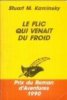
Le flic qui venait du froid
Editions du Masque 1990 222 pages in12. 1990. Broché. 222 pages.
Très Bon Etat
Le flic qui venait du froid
Editions du Masque 1990 222 pages in12. 1990. Broché. 222 pages.
Bon Etat
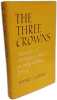
The Three Crowns: Structures of Communal Politics in Early Rabbinic Jewry
Cambridge University Press 1990 308 pages 21 8x2 6x14cm. 1990. Cartonné jaquette. 308 pages.

Très bon état de conservation intérieur propre bonne tenue
Vickers John Stuart Stuart Yarrow George
Reference : 100147422
(1988)
ISBN : 0262720116
Privatization: An Economic Analysis (Mit Press Series on the Regulation of Economic Activity 18)
MIT Press 1988 474 pages 14 986x2 54x22 606cm. 1988. Broché. 474 pages. Ce livre de l'économiste János Kornai professeur à Harvard et à l'Académie des sciences de Hongrie examine les contradictions et dilemmes entre la vision idéologique et la réalité économique en se concentrant sur les relations entre le marché et l'État. L'analyse porte notamment sur la politique économique de la Hongrie (1968-1989) et de la Chine (1976-2000) ainsi que sur celle d'autres pays communistes

proche du neuf trace d'étiquete sur le dernier plat
Om Troen Paa En Ydre Verden. En Psykologisk Undersøgelse. - [ONLY DANISH EDITION AF ANY PART OF MILL'S ""EXAMINATION""]
Kjøbenhavn, 1889. 8vo. Contemporary blue half cloth with gilt title and gilt lines to spine. A bit of wear along hinges and capitals, but overall very nice. Also internally fresh and clean. (2), VI, (2), 78, pp.
![Om Troen Paa En Ydre Verden. En Psykologisk Undersøgelse. - [ONLY DANISH EDITION AF ANY PART OF MILL'S ""EXAMINATION""]. "MILL, JOHN STUART.](https://static.livre-rare-book.com/pictures/LLX/63359_1_thumb.jpg)
![Om Troen Paa En Ydre Verden. En Psykologisk Undersøgelse. - [ONLY DANISH EDITION AF ANY PART OF MILL'S ""EXAMINATION""]. "MILL, JOHN STUART.](https://static.livre-rare-book.com/pictures/LLX/63359_2_thumb.jpg)
![Om Troen Paa En Ydre Verden. En Psykologisk Undersøgelse. - [ONLY DANISH EDITION AF ANY PART OF MILL'S ""EXAMINATION""]. "MILL, JOHN STUART.](https://static.livre-rare-book.com/pictures/LLX/63359_3_thumb.jpg)
""On the Belief in an External World: A Psychological Study"", which comprises the first Danish translation of two chapters and respective appendix from ""An Examination of Sir William Hamilton's Philosophy"" (1865) by John Stuart Mill (1806-1873), one of the most influential English language philosophers of the 19th century. The translated chapters are the following: ""The Psychological Theory of the Belief in an External World"" (chapter XI), ""The Psychological Theory of the Belief in Matter, How Far Applicable to Mind"" (chapter XII), along with ""Appendix to the two preceding chapters"". This Danish edition has an introduction by the Danish philosopher Kristian Kroman (1846-1925). Examination is one of Mill's most important works, together with System of Logic (1843), On Liberty (1859) and Utilitarianism (1861). In Examination, Mill argues for associationist theories (see Colman 2025) and opposes intuitionist views of the external world, rejecting the position of Sir William Hamilton (1788-1856) – a Scottish metaphysical philosopher and influential educator. The philosophers within the Scottish Common Sense tradition of the 18th century claimed that there truly existed an objective world, which was guaranteed by an intuitive insight. Mill argued that such knowledge is unjustified. Instead, he analysed matter in terms of possible sensations: for something to be a material thing, distinct from our sensations, it must (1) be public, meaning perceived by many different people, (2) ""perdurable"", outlasting the experiences of those who perceive it, and (3) retain the same properties despite looking different in different circumstances (see Ryan 1979). The effect of Stuart Mill's Examination was, according to Pattison's review: ""[...] the absolute annihilation of all Sir W. Hamilton’s doctrines, opinions, of all he has written or taught. Nor of himself only, but all his followers, pupils, copyists, are involved in the common ruin. The whole fabric of the Hamiltonian philosophy is not only demolished, but its very stones are ground to powder"" (Pattison 1865: 562). Furthermore, the publication of this attack on Hamilton and intuitionism had (unintended) consequences for how history of philosophy is taught: ""Mill’s demolition of Hamilton’s reputation led to the removal of Reid and the school of Scottish “common sense” philosophy from the curriculum in Britain and America"" (Heydt 2006).There is no known complete Danish translation of Mill’s An Examination of Sir William Hamilton's Philosophy. OCLC locates merely two copies worldwide, both in Denmark, own a copy of this edition.
Longue étude sur la traduction en français d'ULYSSE (par Stuart Gilbert, co-traducteur avec Auguste Morel et Valery Larbaud).
Dans la " Nouvelle Revue Française ", n° 187, avril 1929 (pp. 567-579). Exemplaire du rare tirage de luxe numéroté sur vélin pur fil.
Très bon état.
[Revue La Plume, Collectif dont] Adolphe Retté, Stuart Merrill, Emile Ysabeau, Léon Deschamps, Adrien Remacle, Willy, etc. ,
Reference : 021290
La Plume, Revue de Littérature, de Critique & d'Art indépendants - n°60 du 15 octobre 1891.
[Revue La Plume, Collectif dont] Adolphe Retté, Stuart Merrill, Emile Ysabeau, Léon Deschamps, Adrien Remacle, Willy, etc. , La Plume, Revue de Littérature, de Critique & d'Art indépendants - n°60 du 15 octobre 1891. Paris, 1891. In-8, paginé 347 à 364. Fameuse revue Fin-de-Siècle publiant essentiellement de l'inédit. Portrait de Stuart Merrill (compris dans la pagination). Complet du bulletin de souscription pour Thulé des Brumes d'Adolphe Retté. Broché. Dérelié. Gravure collée en bordure. [II]
![La Plume, Revue de Littérature, de Critique & d'Art indépendants - n°60 du 15 octobre 1891.. [Revue La Plume, Collectif dont] Adolphe Retté, Stuart ...](https://static.livre-rare-book.com/pictures/JNL/021290_1_thumb.jpg)
![La Plume, Revue de Littérature, de Critique & d'Art indépendants - n°60 du 15 octobre 1891.. [Revue La Plume, Collectif dont] Adolphe Retté, Stuart ...](https://static.livre-rare-book.com/pictures/JNL/021290_2_thumb.jpg)
![La Plume, Revue de Littérature, de Critique & d'Art indépendants - n°60 du 15 octobre 1891.. [Revue La Plume, Collectif dont] Adolphe Retté, Stuart ...](https://static.livre-rare-book.com/pictures/JNL/021290_3_thumb.jpg)

Stuart Piggot Clark Mellaart Mallowan Aldred Culican lloyd Hood Mortimer Wheeler Watson Christie Ph
Reference : FR16872
ISBN : B001D48BAS
Aux portes de l'histoire, les premiers âges de l'humanité : EDawn of civilisatione. Textes de Grahame Clark, James Mellaart, M.E.L. Mallowan, Cyril Aldred... etc. Sous la direction de Stuart Piggott. Texte français de Henri Daussy et Pierre Arcelin [Hardcover] Stuart Piggot Clark Mellaart Mallowan Aldred Culican lloyd Hood Mortimer Wheeler Watson Christie Phillips Powell Bushnell
Sans jaquette.
Merci de nous contacter à l'avance si vous souhaitez consulter une référence dans notre boutique à Authon-du-Perche.
Essays on some unsettled questions of political economy
The London School of Economics and Political Science 1948 in8. 1948. Cartonné. Ce recueil d'essais de John Stuart Mill écrit entre 1829 et 1830 aborde des questions non résolues en économie politique. Mill y définit l'économie politique comme une science abstraite et déductive fondée sur les principes de la nature humaine et possédant son propre objet d'étude autonome : les lois de l'économie. L'ouvrage propose notamment des solutions à des problèmes techniques complexes comme la répartition des gains du commerce international
Bon état couverture défraîchie in
Stuart kaminsky chico banco bobo Gallimard Série Noire
Editions Gallimard Sans date. Stuart Kaminsky: Chico banco bobo/ Gallimard Série Noire
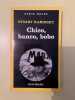
Très bon état
Stuart kaminsky chico banco bobo Gallimard
Editions Gallimard 1979 1979. Stuart Kaminsky: Chico banco bobo/ Gallimard 1979
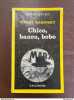
Etat correct
Un très sale boulot archipoche
2008 2008. Stuart Woods: Un très sale boulot/ Archipoche 2008 . Stuart Woods: Un très sale boulot/ Archipoche 2008
Bon état
Stuart Kaminsky Chico banco bobo Gallimard Série Noire
Sans date. Stuart Kaminsky: Chico banco bobo/ Gallimard Série Noire
Bon état
Roy Stuart The Fourth Body.
Tashen, 2004. Fort in-4, nombreuses photographies en couleurs. Public averti. Epuisé.

Mise à jour du Samedi 27 Juin 2026. Paiement PayPal immédiat, Mondial Relay pour : France, Allemagne, Autriche, Belgique, Espagne, Italie, Portugal, Luxembourg, Pays-Bas, Pologne (Communiquer votre point ou locker si connu). Une participation supplémentaire peut être demandée pour les colis lourds hors France où les envois compris entre 5 et 25 kg sont dégressifs : 2 à 4 kilogrammes - 7.99 / 5 à 10 kg - 15.99 / 15 -25 kg - 25.99. Certaines de nos collections ( Vian, Céline, Camus (...) peuvent être expédiées en Franco de port. Pour linternational hors Europe (Suisse, Canada, Japon, Etats-Unis, les frais dexpéditions peuvent varier selon le poids (mise à jour : 1 juin 2026).
John Stuart Arey. Activits nocturnes eNight worke roman traduit de l'anglais par Germaine Lalande
R. Julliard Broch D'occasion bon tat 01/01/1946 239 pages
Gardens of the National Trust
Graham Stuart Thomas Book Club Associates Jaquette en bon état Reliure Toile Vert Dorures London 1979 291 pages en format 21 - 28 cm - Including 16 water - colours of plants in the trust's gardens, and pencil drawings , by the author
Très Bon État

