 Write to the booksellers
7 books for « stromer e »Edit
-
Language
French (6)
Swedish (1)
-
Century
16th (1)
19th (1)
20th (4)
-
Topics
Astronomy (1)
Astronomy pc (1)
Faust (1)
Geometry (1)
Geometry pc (1)
Goethe johann wolfgang (1)
Helvética (1)
Medicine (1)
Palaeontology (2)
Switzerland (1)
Tea (1)
Zoology (2)
-
Countries
Denmark (2)
France (3)
Switzerland (2)
-
Syndicate
ILAB (3)
SLAM (1)
Saluberrime adversus pestilentiam observationes recens editae.
Maguntie [Mainz], Joannes Schöffer, 1517. In-4 de 46 pages, titre orné de gravures. Cartonnage de papier marbré noir (19ème). Ex-libris de la bibliothèque du docteur Georges Kloss, dont la vente eu lieu en 1835, réalisée par Sotheby, et qui contenait de très nombreux ouvrages en provenance de la bibliothèque du réformateur Mélanchthon.In-4 of 46 pages, title decorated with engravings. Original cased binding of black marbled paper (19th). Bookplate from the library of doctor Georges Kloss, the sale of which took place in 1835, carried out by Sotheby's, and which contained a large number of works from the library of the reformer Mélanchthon.
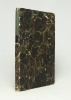
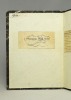

La page de titre est encadrée de gravures sur bois.The title page is framed with woodcuts. Né en 1476, l’auteur fit ses études médicales à Leipzig où il fut reçu docteur en 1511. Il fut ensuite nommé professeur de cette université. Il était fort instruit et devint l’ami d’Erasme, dont il existe plusieurs lettres adressées à Stromer(Dechambre, Dict. enc. des sc. méd. , série 3, vol. 12). Mais ce que Dechambre ne nous dit pas, c’est qu’il fut le fondateur du célèbre Auerbachs Keller à Leipzig en 1525, comptoir pour les étudiants dans la cave à vins de sa maison. Maison qu’il rasera et agrandira au profit de l’actuelle bâtiment qui date de 1531. Dans sa cave à vins, les affaires vont bon train, car en 1534 Heinrich Stromer paie un tiers des impôts sur le vin de toute la ville. C’est à l’Auerbachs Keller que Goethe sera inspiré par les peintures du lieu pour rédiger son Faust. L’établissement existe toujours aujourd’hui. L’ouvrage est dédié par l’auteur à Albrecht von Brandenburg, archevêque de Magdeburg, dont il était le médecin. Stromer gagna aussi par ses succès thérapeutiques l'estime du duc de Saxe qui le combla de bienfaits. On raconte que le médecin voulait de la gaieté chez ces malades “ et ne négligeait rien pour leur en inspirer ”. Il disait souvent que depuis quarante ans qu'il exerçait la médecine, il avait observé que la tristesse emportait plus de gens que toutes les espèces de morts violentes ensemble. Stomer mis ses principes en pratique et mourut gaiement vers 1552. Jean-Claude Morgolain in Coloquia Erasmia 1972.Born in 1476, the author studied medicine in Leipzig where he became a doctor in 1511. He was then named professor of this university. He was highly educated and became the friend of Erasmus, of whom there are several letters addressed to Stromer (Dechambre, Dict. Enc. Of sc. Med., Series 3, vol. 12). But what Dechambre does not tell us is that he was the founder of the famous Auerbachs Keller in Leipzig in 1525, a student counter in the wine cellar of his house. The house he razed and enlarged for the benefit of the current building dating from 1531. In his wine cellar, business was going well, because in 1534 Heinrich Stromer paid a third of the city's wine taxes. It was at Auerbachs Keller that Goethe was inspired by the local paintings to write his Faust. The establishment still exists today. The author dedicated the book to Albrecht von Brandenburg, Archbishop of Magdeburg, of which he was the doctor. Stromer also gained by his therapeutic success the esteem of the Duke of Saxony who overwhelmed him with benefits. It is said that the doctor wanted gaiety in his patients "and did not neglect anything to inspire them some". He often said that in the forty years that he had practiced medicine, he had observed that sadness killed more people than all kinds of violent deaths together. Stomer put his principles into practice and died happily around 1552. Jean-Claude Morgolain in Coloquia Erasmia 1972. Du 26 septembre au 5 octobre, le libraire est absent il prendra connaissance de vos commandes dès le 6 octobre au matin. Et durant cette période, l'horaire de fermeture sera 17h30 du lundi au vendredi. – From September 26 to October 5, the bookseller is absent; he will take note of your orders as early as the morning of October 6. And during this period, the closing time will be 5:30 p.m. from Monday to Friday.
DUBLER, Reto. - KELLER, Christine. - STROMER, Markus. - WINDLER, Renata.
Reference : 117731
Vom Dübelstein zur Waldmannsburg. Adelssitz, Gedächtnisort und Forschungsobjekt. Mit einem Beitrag von Chantal Hartmann. Schweizer Beiträge zur Kulturgeschichte und Archäologie des Mittelalters, Band 33.
Basel, Schweizerischer Burgenverein 2006, 300x215mm, 195Seiten, Verlegereinband. Sehr schönes Exemplar.

Farbige und schwarz-weisse Illustrationen und Fotos im Text und ausserhalb des Textes, Pour un paiement via PayPal, veuillez nous en faire la demande et nous vous enverrons une facture PayPal
Haifischzähne aus dem unteren Mokattam bei Wasta in Egypten.
1903 13 p., 1 plate, loose (original printed title-page of journal added). Published in: Neues Jahrbuch für Mineralogie, Geologie und Palaeontologie.
Ergebnisse der Forschungsreisen Prof. E. Stromers in den Wüsten Ägyptens. IV. Die fossilen Floren Ägyptens. 3. Der Erhaltungszustand und die Entstehung der Kieselhölzer Ägyptens.
1933 52 p., 14 figs, roy. 4to, paperbound. Unopened copy. Published in: Abhandlungen der Bayrerischen Akademie der Wissenschaften.
Lehrbuch der Paläozoologie. 2 Bde. (I.Wirbellose Tiere. II. Wirbeltiere).
Leipzig u.Berlin, 1909-12. 2 orig. full cloth. X,342,VIII,325 pp. Richly textillustr.

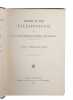

Lehrbuch der Paläozoologie. 2 Bde. (1. Wirbellose Tiere. 2. Wirbeltiere).
Leipzig u. Berlin, 1912. 2 orig. full cloth. Top of spines slightly worn. X,342,325 pp. Richly illustr.
EUCLIDIS ELEMENTA eller Grundeliga Inledning till Geometrien.
1813 / 429 pages. Relié. Editions Marquardska Tryckeriet. 1813 / 429 sidor. Inbunden. Editions Marquardska Tryckeriet.
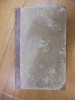
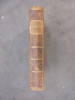
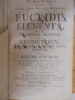
fint skick trots skavning av användning och spridd rodnad, första sidan har svarta märkmärken men boken är helt synlig / good condition despite rubbing from use and scattered redness, the first page has black felt-tip marks but the book is quite visible.


