 Write to the booksellers
50 books for « self c r »Edit
-
Century
19th (5)
20th (11)
21st (11)
-
Countries
Belgium (3)
Denmark (5)
France (37)
Switzerland (5)
-
Syndicate
ILAB (18)
SLAM (13)
On the Influence of a Spiral Conductor in increasing the Intensity of Electricity from a Galvanic Arrangement of a Single Pair, &c.
(London, Richard and John E. Taylor, 1837). No wrappers. Extracted fron ""Scientific Memoirs, selected from The Transactions of Foreign Academies of Science and Learned Societies. Edited by Richard Taylor."", Vol. I. Pp. 540-547.
Henry's milestone paper announcing his discovery of electrical self-induction. ""Henry independently discovered electro-magnetic induction and in this paper announced his discovery of electric self-induction, one of the prime properies of an electro-magnetic circuit. Henry was an eminent experimenter but was casual in publishing his findings with resulting lack of recognition of his contributions.""(Bern Dibner).Dibner ""Heralds of Sciece"", No.63.It was also printed the same year in ""Transactions of the American Philosophical Society, New Series, Vol. 5"". The paper was later printed in ""Philosophical Magazine"", 1840.""The direction of Henry’s thought became somewhat apparent in his 1835 paper (refers to the papers reading before the American Phil. Soc., febr. 6th, 1835) on the action of a spiral conductor in increasing the intensity of galvanic currents. The paper started out as an affirmation of Henry’s priority in the discovery of self-induction. He then combined induction proper (using Faraday’s findings and his own) with selfinduction to show how these produce a pattern of repulsions yielding an increased effect in spirals. He specifically linked these “magneto-electrical” results to the principles of static induction developed by Cavendish and Poisson. This explanation was then applied to Savary’s report of changes of polarity when magnetic needles were placed at varying distances from a wire in which a current was being transmitted (""Mémoire sur l’aimantation,"" in Annales de chimie et de physique, 34 [1827],. That is, currents appeared periodically in the air surrounding a current-bearing straight wire as a result of the actions of induction and self-induction."" (DSB).Wheeler Gift: 2724-2725a.

"HENRY, JOSEPH - THE DISCOVERY OF SELF-INDUCTION - GERMAN VERSION.
Reference : 44147
(1842)
Ueber elektro-dynamische Induction.
(Leipzig, Johann Ambrosius Barth, 1842). Without wrappers. In ""Annalen der Physik und Chemie. Hrsg. von J.C. Poggendorff"", Ergänzungsband 1, Stück 2. Pp. 193-384 a. 1 folded engraved plate. (The entire issue offered). Henry's paper: pp. 282-312.
First German version of Henry's description of his discovery of self-induction. He missed the credit for the discovery of induction to Faraday, but he had done the key experiment ahead of Faraday, but Faraday was the first to publish. But he is credited for the discovery of self-induction (1832) and Faraday discovered it independently two years later (1834).""In Henry's paper, however, he explained thet the electric current in a coil can induce another current not only in another coil but in itself. The actual current observed in the coil is, then, the combination of the original current and the induced current. This is called self induction.""(Isac Asimov).The issue contains further notable papers Michael Faraday's ""Vierzehnte Reihe von Experimental-Untersuchungen über Elektricität"", 2o-22. (Nos 1667-1748). Pp. 249-281. First German version. In this paper FARADAYamplifies his theory of electrostatic induction by making further use of the analogy with the induction of magnetism. Whittaker describes the paper as having ""THE FUNDAMENTAL EQUATION OF ELECTROSTATICS"", as modified in order to take into account the effect of the specific inductive capacity.""(Whittaker I, pp.187-89).
Facts in reference to the Spark, &c from along conductor uniting the poles of a Galvanic Battery.
Philadelphia, Fraklin Institute, 1835. 8vo. Later full green cloth. Tome-and titlelabels in leather with gilt lettering on spine. In: ""Journal of the Franklin Institute of the State of Pennsylvania... Edited by Thomas P. Jones"", Vol. XV. New series. Engraved frontisp. (2),446 pp., 2 folded engraved plates and 2 folded engraved maps. (Entire volume offered). Henry's announcement: pp. 169-70. A stamp to verso of frontispiece (Library of Congress duplicate stamp).
First printing of this importent paper, the first to describe in detail how the phenomena of Self-Induction was discovered. Henry discovered the induction phenomena - how an electric current in one coil may set up a current in the other through the development of the magnetic field - independently of Faraday, but Faraday was first to publish on electromagnetic induction. Henry's experiments with induction led him to his importent discovery of SELF-INDUCTION, which is the phenomenon in which a change in electric current in a coil produces an induced emf in the coil itself. This phenomenon was also discovered inependently by Faraday, but this time Henry had published first. The basic unit of inductance was to be called ""the Henry"". Relevant to the controversy between Faraday and Henry is the following statement by A D Bache, Secretary of the American Philosophical Society introducing an abstract of Henry in J Franklyn Inst. 1835 pp. 169-70 (H. Norman 1053 and the paper offerd): ""A memoir on this subject has been since submitted to the Society, containing an extension of the subject, the primary fact in relation to which was observed by Professor Henry as early as 1832, and announced by him in the American Journal of Science. Mr. Faraday having recently entered upon a similar train of observations, the immediate publication of the accompanying is important, that the prior claims of our fellow countryman may not be overlooked.""(Spark Museum).Magee ""Source Book in Physics"", p. 515.
Ma methode de self defense 7e dan.
S.l., Impression de ce livre par ls soins de m. cario , 1952 ; in-12, 388 pp., br. 7e dan adaptation et dessins de Jean Gailhat.
7e dan adaptation et dessins de Jean Gailhat.
Luc Tuymans - Birds of a feather.
Brussel, Ludion, 2015 Hardcover with illustrated dustjacket, 112 pages, 26.5 x 21.5 cm, English, **As New. . ISBN 9789491819391.
This book brings together the most recent work by Luc Tuymans. It will be shown in the Talbot Rice Gallery in Edinburgh in the autumn of 2015. Birds of a Feather shows Tuymans? fascination with the Scottish Enlightenment and its thinkers, who believed in the ability of humans to shape their future rationally and whose influence extended as far as the United States. Stimulated by a visit to the art collection of the University of Edinburgh, Tuymans did three small portraits of Scottish philosophers, originally painted by the eighteenth-century portrait artist Henry Raeburn. The theme of the Enlightenment is combined with menacing horror: in a monumental dark work, The Shore, which alludes to Goya?s pinturas negras, or in the portrait of the murderer and cannibal Issei Sagawa. The British writer Will Self wrote a remarkable short story for The Shore, and the art critic Colin Chinnery has contributed an explanatory essay.
No smoking [Paperback] Self, Will
L'Olivier PHOTOS SUR DEMANDE
Merci de nous contacter à l'avance si vous souhaitez consulter une référence dans notre boutique à Authon-du-Perche.
Dorian [Paperback] Self, Will
L'Olivier PHOTOS SUR DEMANDE
Merci de nous contacter à l'avance si vous souhaitez consulter une référence dans notre boutique à Authon-du-Perche.
Ainsi vivent les morts [Paperback] Self, Will and Kerline, Francis
L'Olivier broché. coins légèrement cornés. tranche piquée.
Merci de nous contacter à l'avance si vous souhaitez consulter une référence dans notre boutique à Authon-du-Perche.
Ainsi vivent les morts [Paperback] Self, Will and Kerline, Francis
L'Olivier BROCHE
Merci de nous contacter à l'avance si vous souhaitez consulter une référence dans notre boutique à Authon-du-Perche.
Les grands singes [Pocket Book] Self, Will
Points PHOTOS SUR DEMANDE
Merci de nous contacter à l'avance si vous souhaitez consulter une référence dans notre boutique à Authon-du-Perche.
Un vritable naturalisme littraire est-il possible ou m¬me souhaitable ?
Pleins feux Broch D'occasion bon tat 12/09/2003 90 pages
Le Livre de Dave Une révélation du passé récent et de l'avenir lointain
2010 Paris, éditions de l'Olivier, 2010 14,5 x 22 cm, 540 pp Neuf car service de presse
Traduit de l'anglais par Robert Davreu.

Parapluie
2015 Paris, éditions de l'Olivier, 2015, 14,5 x 22 cm, 406 pp Neuf car service de presse
Traduit de l'anglais par B.Hoepffner.
LOMBARDO Patrick, pionnier du Combat Libre en France, Fondateur du Pankido, Ceinture noire 5ème dan de Karaté (grade d'Etat), Ceinture Rouge 7ème degré de Pankido et de Self-défense, Professeur diplômé d'Etat, Créateur du Tournoi des Ceintures d'Or (The Golden Belts Championships) - Antony Rea, les champions de l'Institut Pandokan
Reference : 96617
(2007)
Combat libre Pankido Tome II: combat debout, combat au sol, pieds-poings, grappling, compétitions
2007 Editions E.M., collection "les livres d'or des arts martiaux" - 2007 - In-8 broché avec rabat - 95 pages - nombreuses reproductions photographiques
Bon état, très légers frottements sur la couverture, étiquette de prix sur le bas du quatrième plat
"FARADAY, MICHAEL.. - SELF-INDUCTION DISCOVERED AND INVESTIGATED.
Reference : 42284
(1835)
Experimental Researches in Electricity. - Ninth Series. . 15. On the Influence of an Electric Current on itself: - and on the inductive action of Electric Currents generally. (Sections 1048-1118). Received December 18, 1834.- Read January 29, 1835.
(London, Richard Taylor, 1835). 4to. No wrappers as extracted from ""Philosophical Transactions"" 1835 - Part I. Pp. 41-56., 1 textillustr. Clean and fine.
First appearance of a historical paper in which Faraday (independent of Henry's discovery of the same phenomena in 1832)discovers SELF-INDUCTION or the ""extra current"" and points out the importent influence it must have in the construction of electr-magnetic machines (electro-motors).""Faraday showed that the powerful momentary current, which was observed when the circuit was interrupted, was really an induced current governed by the same laws as all other induced currents, but with this peculiarity, that the induced and inducing current now flowed in the same circuit. In fact, the current in its steady state establishes in the surrounding region a magnetic field, whose lines of force are linked with the circuit"" and teh removal of these lines of forcewhen the circuit is broken originates an induced current, which reatly reinforces the primary current just before its final extinction.""(Whittaker in ""A History of the Aether and Electricity"")""In the series of experiments which are detailed in this paper, the author inquires into the causes of some remarkable phenomena relating to the action of an electrical current upon itself, under certain circumstances, wherby its intensity is highly exalted, and occasionally increased to ten, twenty, or even fifty times that which it originally possessed.""(Abstract).From 1831 to 1852 Michael Faraday published his ""Experimental Researches in Electricity"" in The Philosophical Transactions of the Royal Society. These papers contain not only an impressive series of experimental discoveries, but also a collection of heterodox theoretical concepts on the nature of these phenomena expressed in terms of lines of forces and fields. He published 30 papers in all under this general title.They represents Faraday's most importent work, are classics in both chemistry and physics and are the experimental foundations for Maxwell's electro-magnetic theory of light, using Faraday's concepts of lines of force or tubes of magnetic and electrical forces. His many experiments on the effects of electricity and magnetism presented in these papers lead to the fundamental discoveries of 'induced electricity' (the Farday current), the electronic state of matter, the identity of electricity from different sources, equivalents in electro-chemical decomposition, electrostatic induction, hydro-electricity, diamagnetism, relation of gravity to electricity, atmospheric magnetism and many other.""Among experimental philosophers Faraday holds by universal consent the foremost place. The memoirs in which his discoveries are enshrined will never ceaseto be read with admiration and delight"" and future generations will preserve with an affection not less enduring the personal records and familiar letters, which recall the memory of his humble and unselfish spirit.""(Edmund Whittaker in A History of the Theories of Aether and Electricity).The paper is reprinted in Magie: A Source Book in Physics p.485 ff.
"FARADAY, MICHAEL.- CHEMICAL AFFINITY IS ELECTRICITY - SELF-INDUCTION DISCOVERED AND INVESTIGATED.
Reference : 48203
(1834)
Achte Reihe von Experimental-Untersuchungen über Elektricität. 14. ueber die Elektricität der voltaschen Säule, ihre Abkunft, Menge, Stärke und ihre allgemeinen Kennzeichnen. (+) Neunte Reihe von Experimental-Untersuchungen über Elektricität. 15. ...
Leipzig, Johann Ambrosius Barth, 1834. 8vo. Contemp. hcalf. Spine gilt and with gilt lettering. Spine slightly rubbed. In: ""Annalen der Physik und Chemie. Hrsg.von Poggendorff"", Bd. 35. X,630,(8) pp. a. 5 folded lithographed plates. (Entire volume offered). Faraday's papers: pp. 1-45 a. 222-226, 1 plate (8. Reihe) - pp. 413-444 (9. Reihe). Stamp to verso of titlepage and verso of plates. Clean and fine, printed on good paper.
First appearance in German - prepared by Faraday himself for publication in Annalen - of two groundbreakings papers in chemistry and physiscs.In the FIRST PAPER (8. Reihe) Faraday brings forth the idea ""that the atoms of matter are in some way endowed or associated with electrical powers, to which they owe their most striking qualities, and amongst them their mutual chemical affinity."" He showed how natural it is to suppose that the electricity which passes through the electrolyte is exact equivaklent of that which is possessed by the atoms separated at the electrode: which implies that there is A CERTAIN ABSOLUTE QUANTITY OF THE ELECTRIC POWER ASSOCIATED WITH EACH ATOM OF MATTER.- Faraday further verifies, that the electricity of the violtaic pile is proportionate in its intensity to the intensity of the affinities concerned in its production. - Dealing with the the decompositions in electrolysis, he shows that THE FORCES TERMED CHEMICAL AFFINITY AND ELECTRICITY ARE THE SAME.In the SECOND PAPER (9. Reihe), Faraday (independent of Henry's discovery of the same phenomena in 1832) discovers SELF-INDUCTION or the ""extra current"" and points out the importent influence it must have in the construction of electro-magnetic machines (electro-motors).""Faraday showed that the powerful momentary current, which was observed when the circuit was interrupted, was really an induced current governed by the same laws as all other induced currents, but with this peculiarity, that the induced and inducing current now flowed in the same circuit. In fact, the current in its steady state establishes in the surrounding region a magnetic field, whose lines of force are linked with the circuit"" and teh removal of these lines of forcewhen the circuit is broken originates an induced current, which reatly reinforces the primary current just before its final extinction.""(Whittaker in ""A History of the Aether and Electricity"")""In the series of experiments which are detailed in this paper, the author inquires into the causes of some remarkable phenomena relating to the action of an electrical current upon itself, under certain circumstances, wherby its intensity is highly exalted, and occasionally increased to ten, twenty, or even fifty times that which it originally possessed.""(Abstract).
WILL
POINTS
LIVRE A L’ETAT DE NEUF. EXPEDIE SOUS 3 JOURS OUVRES. NUMERO DE SUIVI COMMUNIQUE AVANT ENVOI, EMBALLAGE RENFORCE. EAN:9782757895801
WILL
OLIVIER
LIVRE A L’ETAT DE NEUF. EXPEDIE SOUS 3 JOURS OUVRES. NUMERO DE SUIVI COMMUNIQUE AVANT ENVOI, EMBALLAGE RENFORCE. EAN:9782823616729
TRANSITION DIMENSIONNELLE
ARIANE (CA)
LIVRE A L’ETAT DE NEUF. EXPEDIE SOUS 3 JOURS OUVRES. NUMERO DE SUIVI COMMUNIQUE AVANT ENVOI, EMBALLAGE RENFORCE. EAN:9782896262960
Emerald
Thames & Hudson
LIVRE A L’ETAT DE NEUF. EXPEDIE SOUS 3 JOURS OUVRES. NUMERO DE SUIVI COMMUNIQUE AVANT ENVOI, EMBALLAGE RENFORCE. EAN:9780500517208
Dorian - Une imitation
Olivier 318 pages 14 5cmx22cmx2cm. Sans date. Broché. 318 pages.
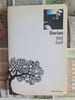
Bon état
Les grands singes
Points 2000 512 pages 11x18x3cm. 2000. Poche. 512 pages.
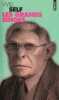
Bon état - . quelques marques plis de lecture et/ou de stodckage sur couverture et coins mais du reste en bon état - envoi rapide et soigné dans enveloppe à bulles depuis france
Dorian - Une Imitation
L'Olivier Broché état correct.Texte propre.Couverture abîmée . 2004.318 pages . PHOTOS SUR DEMANDE
Merci de nous contacter à l'avance si vous souhaitez consulter une référence dans notre boutique à Authon-du-Perche.
Administrative Theories and Politics: An Enquiry into the Structure and Processes of Modern Government
George allen & unwin 1979 in8. 1979. Broché.
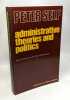
Bon état intérieur propre tranche ternie

