 Write to the booksellers
1 books for « rev robert walsh »Edit
Notices of Brazil in 1828 and 1829
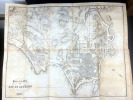
London, Richardson, Lord & Holbrook, 1830. Complete set. Two in-8, 23.5 x 15 cm (9.25" x 6") volumes of (xv) 528 and (xii) 541 pp., hardbound in original shellac cloth. Title pieces with author's name, title and volume number on the spines, all gilded, with ornamental gilded lines above and below. Ex-libris on each pastedown. The first volume contains 1 unfolding large plan of Rio and 9 lithographs. The second volume features 1 unfolding map (journey to Minas), 10 lithographs, five appendixes (Carta regia for opening the ports of Brazil; Decree for elevating Brazil into a kingdom; Hymno, imperial e constitucional, composto por S.M.I. Dom Pedro 1°; Exports from Rio de Janeiro, crops of sugar at Santos, exports from Bahia, trade of the port of Rio de Janeiro; Names of the streets and number of houses, in the city of Rio de Janeiro, in the year 1829), and the unnumbered page with a list of illustrations and "Corrigenda" (errata). Per Borba de Moraes (934): "Robert Walsh, brother of the Irish poet Edward Walsh, was ordained in 1802 and also took a medical degree in 1820. Walsh was not only a very cultured man, but had traveled widely in other 'underdeveloped' countries and was familiar with cultures other than his own. Thus he attempted to explain the manners and customs of the Brazilians rather than criticize them, and tried to understand them as well as to make the reader appreciate Brazilian culture and the institutions of the young Empire. This approach and his eagerness to learn and observe everything make his book extremely interesting and one of the best about that period. The first 150 pages describe his journey from Portsmouth to Rio via Madeira and the Canaries. He then gives a very interesting résumé of Brazil's history from the discovery to the coronation of Pedro I. This résumé is not without originality as he relates many details about the time of João VI and Independence which were told to him by people who witnessed the events. The rest of the first volume is occupied by an extremely accurate description of Rio de Janeiro. The first 300 pages of the second volume contain the account of a journey to the gold mine district. The remainder of the volume is concerned with the slave situation in Brazil, general observations, and an appendix reproducing several documents and a sheet of music with the Imperial anthem composed by Pedro I."
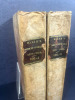
From the private library of José Cochrane de Alencar (1898-1971), a Brazilian diplomat who accompanied US President Herbert Hoover on his visit to Brazil in 1928. ---- Light bumps and rubbing on the cloth of the covers, heads and tails. Robust binding, pages are clean. A good copy.

