 Write to the booksellers
4 books for « raffaele garrucci »Edit
-
Language
French (3)
Italian (1)
-
Topics
Archaeology (1)
Architecture (1)
Fine arts (2)
First edition (1)
Sculpture (2)
Vatican city (1)
-
Countries
Belgium (1)
France (2)
United Kingdom (1)
-
Syndicate
ILAB (2)
SLAM (1)
Prometeo e Pandora. - Andromeda, Perseo, Fineo. Due ciste descritte ed illustrate. Estratto dagli Annali dell' Instituto archeologico [Prométhée et Pandore. Andromède, Persée, Phinée. Deux cistes décrites et illustrées. Extrait des Annales de lInstitut archéologique]
Tipografia Tiberina | Roma [Rome] 1860 | 14.5 x 22.7 cm | Broché
Rare édition originale illustrée, en fin de volume, de 2 planches dépliantes. Seulement deux exemplaires au CCF (BnF et Strasbourg). Backer & Sommervogel III, 1242 (59). Notre exemplaire est présenté sous couverture d'attente de papier jaune, Quelques petites rousseurs sur les planches dépliantes. Le Jésuite napolitain Raffaele Garrucci (1811-1885) se consacra à l'étude des Pères de l'Église ainsi qu'aux antiquités païennes et chrétiennes. Il est devenu un des principaux disciples du père Giuseppe Marchi avec le célèbre Giovanni Battista De Rossi. - Photographies et détails sur www.Edition-Originale.com -


Vetri ornati di figure in oro trovati nei cimiteri cristiani primitivi di Roma raccolti e spiegati
Garrucci, Raffaele: Vetri ornati di figure in oro trovati nei cimiteri cristiani primitivi di Roma raccolti e spiegati. Rome: 1858. xxiv, 111 pages 43 steel engraved plates. Half red morocco. 41x30cms. The first significant publication on paleo-christian gold glass was by Filippo Buonarroti in 1716, Osservazioni sopra alcuni frammenti di vasi antichi di vetro ornate di figure trovati nei cimiteri di Roma, in which he made the extraordinary assertion that the aesthetic crudity of early Christian art, often remarked by connoisseurs of Roman arts, had served to intensify the piety of the worshipper, an early expression of feeling for primitive art. After other studies, the Italian Jesuit Raffaele Garrucci published the first illustrated survey in 1858, with an expanded second edition in 1864. In the 19th century a number of imitations, copies and downright forgeries of Roman pieces were made, mostly in Murano off Venice, by firms such as Salviati. Text in Italian.
The first significant publication on paleo-christian gold glass was by Filippo Buonarroti in 1716, Osservazioni sopra alcuni frammenti di vasi antichi di vetro ornate di figure trovati nei cimiteri di Roma, in which he made the extraordinary assertion that the aesthetic crudity of early Christian art, often remarked by connoisseurs of Roman arts, had served to intensify the piety of the worshipper, an early expression of feeling for primitive art. After other studies, the Italian Jesuit Raffaele Garrucci published the first illustrated survey in 1858, with an expanded second edition in 1864. In the 19th century a number of imitations, copies and downright forgeries of Roman pieces were made, mostly in Murano off Venice, by firms such as Salviati. Text in Italian
Monumenti del Museo lateranense, descritti ed illustrati da Raffaele GARRUCCI D.C.D.G. E pubblicati per ordine della santa di nostro signore, PAPA PIO IX.
Tipografia Della S.C. De Propaganda Fide Roma 1861 In-plano ( 650 X 470 mm ) de 123 pages de texte et 51 planches, demi vélin ivoire à coins, dos à nerfs orné de caissons et fleurons dorés, pièces de titres de maroquin framboise et olive ( Reliure de l'époque ). Bel exemplaire de ce monumental ouvrage."Travail d'un grand prix.... Voulant faire honneur à une uvre si vénérable, il fut décidé que le palais de Latran serait transformé en musée pour la recevoir. Cétait dailleurs une occasion de dégager les galeries du Vatican autour du Sophocle, à qui était réservé le point central de lédifice, on disposerait bien des objets récemment découverts : statues, fragmens, bas-reliefs, toute sorte de richesses entassées dans les salles devenues trop étroites et qui demandaient la lumière. Le palais de Latran se prêtait parfaitement à ce dessein attenant à la basilique du même nom, situé non loin de la campagne romaine, tourné pour ainsi dire vers les âges disparus, il offrait un asile merveilleusement poétique à ces poétiques débris de lancien monde. Quelles harmonies naturelles, harmonies de lieux et de pensées, dans ce nouveau musée des antiques rassemblé ainsi.A Saint-Jean de Latran, en face des déserts!Ainsi fut créé le musée grégorien de Latran, ou plus simplement le musée de Latran, puisque ce nom de musée grégorien est aujourdhui attribué par lusage à la collection étrusque du Vatican. A peine installé, et pendant quil senrichissait encore des fouilles exécutées sur plusieurs points du territoire, ce musée, ou plutôt ce temple consacré à Sophocle, attirait lattention des archéologues. M. Henri Brunn en parlait dans le Kunstblatt M. Braun, dans ses Ruines et Musées de Rome, étudiait avec soin quelques-uns de ses monumens enfin Grégoire XVI, pour compléter son uvre, ordonnait la publication dune vaste monographie où tous les objets du musée de Latran seraient examinés, classés, décrits, avec lindication de leur provenance. Ce travail, confié dabord aux soins du père Marchi, fut transmis bientôt au père Secchi, et, après la mort de ce dernier, au père Garrucci, qui le publia en 1861 sous ce titre : Monumenti del museo lateranense descritti ed illustrati da Raffaele Garrucci e pubblicati per ordine della santità di nostro signore papa Pio IX. ( Revue des Deux Mondes - 1868 - tome 73 - Page 537-338 ).
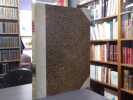
Tavole Fotografiche delle PITTURE VULCENTI staccate da un ipogeo etrusco preso Ponte della Badia... esposte in ROMA dal Principe D.Alessandro Torlonia nel suo Museo a Porta Settimiana, dichiara te Da Raffaele Garrucci
2. S.l.s.d. (Rome , Tip. della S.C. de Propaganda Fide, 1866), oblong in-folio, 59 x 43 cm, 8 leaves (16 nn pp) with 23 tipped in photographs. orig. printed blue wrapper (back wrapper gone, front wrapper frayed, with some loss of paper, no loss of text). Early photographs of Roman ( Etruskian) archeological paintings. De Backer-Sommervogel Vol. III col. 1244..

