 Write to the booksellers
18 books for « pythagoras »Edit
-
Topics
Aristotle (1)
Basel (1)
Ethic (1)
Greek (10)
Humanism (1)
Latin (10)
Philosophy (6)
-
Countries
France (1)
Netherlands (17)
-
Syndicate
ILAB (1)
SLAM (1)
De Pythagorae methodo philosophiam docendi disserit, atque ad Orationem memoriae Ridelianae sacram die XXV Novemb. A.R.S. MDCCXLI in Auditorio Philosophico, hora IX habendam, invitat Christ. Gottlieb Ioecher, Academiae H.T. Rector, et ordinis philosophici exdecanus.
N.pl. (Lipsiae), Breitkopf (literis Breitkopfianis), 1741.
4to. 12 p. Paper wrappers gone. 19.5 cm (Ref: NDB 10,452; not yet in VD18) (Condition: The original green paper wrapper has been removed) (Note: Invitation of the Rector of the University of Leipzig Christian Gottlieb Jöcher to attent a meeting in the 'Philosophicum Auditorium', in memory of 'Georgius Ridelius von Leuenstern und Seyfersdorf'. (p. 12) ADB/NDB does not know him. In Worldcat we found invitations to such meetings to commemorate Ridelius in 1713, 1728, 1732, 1733 & 1748. Ridelius had established a fund for scholarships for students from his own region. At the end of this short essay on Pythagoras Ridelius is called 'Haeriditarius (a kind of hereditary peer?) in Treschen'. Treschen, since 1945 Polish Trestno, lies in former Silesia, in the region of Wroclaw (Breslau). Ridelius was an army officer, a 'cohortis bellicae capitaneus'. (p. 12) Jöcher announces that a promising student, who is a benificiary of such a scholarship (stipendio liberali), one 'Ernestus Fridericus Wuttge, Olna-Silesius', will speech in memory of his 'Euergetes'. The essay on Pythagoras which preceeds this invitation was written by the German philosopher, librarian and lexicographer Christian Gottlieb Jöcher, 1694-1758. It deals with the way in which Pythagoras organized his teachings and classified his students. Born in Leipzig Jöcher was from 1730 professor of philosophy, and from 1732 of history of the University of Leipzig. From 1742 onward he was also its librarian. Jöcher however is best know for the 4th edition of his colossal and still indispensable work of reference 'Jöchers Allgemeines Gelehrten-Lexicon' (4th ed. 1874-1787). Jöcher was apparantly interested, like Ridelius, in the sponsoring of poorer students from different regions. 'Er is ausserdem Aufseher des kurfürstlichen Stipendienwesens und Konvikts, sowie Präfekt der Akademischen Dorfschaften'. Jöcher was famous for his occasional speeches and funeral orations. (NDB 10,452) Jöcher might have promoted the art of rhetoric among his students, and have stimulated one of them to hold a splendid speech on a wellknown countryman. We quote a lemma on Ridelius that we found in 'Des schlesischen Adels, anderer Theil, oder Fortsetzung Schlesischer Curiositäten', Leipzig/Breslau 1728, page 418: 'Der Freiherr von Riedel. Wie der helle Stern am Himmel im Löwen (Löwenstern!), also gläntzt dieses vornehmen Hauses Ruhm-würdige Wohlthätigkeit und Liebe zu Gelehrten in und ausser Schlesien. Georgius Ridelius à Löwenstern & Seiffersdorff, Haereditarius (hereditary peer?) in Treschen, in Castris Episcopi Monasteriensis, & ipsius Caesaris Leopoldi Tribunitia Dignitate ornatus, stipendium olim legavit perpetuum, quo Vratislaviensis, vel alius e Silesia oriundus, Lipsiae studiis incumbens biennio fruatur, simulque ordinavit, ut illud merens quotannis die Michaëlis, aut non ita diu post, Benefactoris memoriam refricet'. The fortified city Münster was the capital and garrison town of the Prince-Bishopric of Münster. Ridelius had in the army of the bishop a rank of 'tribunitia dignitas', garrison commander? Ridelius had that rank also in the army of the Holy Roman Emperor Leopold I, 1640-1705, King of Hungary and Croatia, King of Bohemia and King of Serbia. Ridelius might have fought the Ottomans in 1683 near Vienna. What 'office of tribune' meant, we couldnot find out) (Collation: *4, **2) (Photographs on request)
The golden verses of Pythagoras. Explained and translated into French (...) by FABRE D'OLIVET. Done into English by Nayan Louise Redfield.
N.Y., Ldn., Putnam, 1917.
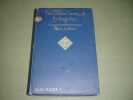
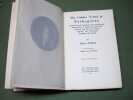
278 p. Original cloth. 24 cm (Including a Greek text & English translation. Ex library copy, with 3 white shelf numbers on the back. Binding somewhat spotted. Stain on the frontcover. Traces of removed labels on the back. Front hinge cracking)
Pythagoras, lover of wisdom.
Wellingsborough, Antiquarian Press, 1984.
128 p. Paperback 22 cm
Pythagoras, lover of wisdom.
Wellingsborough, Antiquarian Press, 1984.
128 p. Paperback 22 cm
Aristote [Aristotélês], Lambin (Denis) (traduction de), Zwinger (Theodor (commentaires de), Pythagore [Pythagóras], Canter (Willem) (traduction de)
Reference : 4352
(1566)
De Moribus ad Nicomachum. Libri Decem. Fragmenta Ethica Pythagoraeorum.
1566 Ethique à Nicomaque d'Aristote suivie des Fragments de Pythagore. Edition bilingue Grec et Latin. Ioannem Oporinum, Eusebium Episco, Basileae (Bâle, Basel), 1566. In-4 reliure du XIXe siècle, demi veau glacé olive, quatre faux nerfs, filets dorés et à froid, titre et date, dentelles en tête et en queue, tranches jaspées, page de titre, [3ff.], 487 pages chiffrées mais manquent les pages 1 à 8, dont 4 pp. intercalées entre p.8 et p.9 [erreur numérotation], inversion de l'imprimeur entre les pages 217 et 224, [13ff.] d'index, manque la fin de l'index, léger travail de vers sur les 4 premières pages (sans atteinte au texte), mors fendus en queue.
La librairie est ouverte du mardi au samedi de 9h30 à 12h30 et de 13h30 à 19h00. Commandes par courriel ou téléphone. Envoi rapide, emballage soigné.


Les vers dorés de Pythagore, expliqués et traduits pour la 1re fois en vers eumolpiques français. Précédés d'un discours sur l'essence et la forme de la poésie par FABRE-D'OLIVET.
Paris, Niclaus, n.d. (Prob. 1946).
409 p. Wrs. 23 cm (Incl. a Greek text)
Les vers d'or. Hiéroclès, commentaire sur les vers d'or des Pythagoriciens. Trad. nouvelle avec prolègomènes et notes par M. MEUNIER.
Paris, Artisan du Livre, 1925.
345 p. Wrs. 19 cm (Tanslation only)
Les vers d'or. Hiéroclès, commentaire sur les vers d'or des Pythagoriciens. Trad. nouvelle avec prolègomènes et notes par M. MEUNIER.
Paris, Artisan du Livre, 1931.
345 p. Wrs. 19 cm (Translation only) (Covers loose; back damaged; some pencil)
Plato und die sogenannten Pythagoreer.
Halle, Niemeyer, 1923.
X,400 p. Cloth. 23 cm (Cover worn and spotted; occasional underlinings & marginal pencil stripes with a blue pencil; blue pencil annotation on the rear pastedown. Some foxing spots on the fore edge of the book-block)
Les vers d'or pythagoriciens. Édités avec une introduction et un commentaire.
Leiden, E.J. Brill, 1932.
43,71 p. Wrappers. 25 cm (Dissertation, Univ. Leiden) (Cover worn. Small piece of paper gone at the head of the spine)

