Write to the booksellers
2819 books for « otto c »Edit
-
Type
Book (2796)
Disk (1)
Engraving (1)
Magazine (1)
Maps (1)
Music sheets (27)
New book (2)
Photographs (1)
Posters (1)
-
Latest
Last 24h (1)
Last 3 days (1)
Last month (64)
Last week (4)
-
Language
Danish (1)
Dutch (2)
English (18)
French (2729)
German (28)
Italian (2)
Russian (49)
Spanish (2)
-
Century
17th (13)
18th (33)
19th (196)
20th (1272)
21st (63)
-
Countries
Belgium (275)
Canada (12)
China (3)
Côte d'Ivoire (8)
Denmark (160)
France (1754)
Germany (2)
Greece (7)
Netherlands (11)
Switzerland (542)
United Kingdom (6)
United States of America (51)
-
Syndicate
ALAC (11)
CLAM (22)
ILAB (1454)
NVVA (200)
SLACES (200)
SLAM (929)
Topics
- Africa (11)
- Alps (13)
- Alsace (14)
- Archaeology (55)
- Architecture (52)
- Austria (26)
- Autographs (13)
- Bibliography (14)
- Bibliophilism (10)
- Biography (20)
- Birds (9)
- Bismarck otto (20)
- Busch fritz otto (9)
- Chemistry (7)
- China (8)
- Christianity (9)
- Dedication (10)
- Dictionaries (7)
- Earth (10)
- Economics (13)
- Education (9)
- Egypt (44)
- Egyptology (17)
- Entomology (9)
- Esotericism (9)
- Ethnology (8)
- Europe (8)
- Ex-libris (11)
- Fine arts (34)
- First edition (24)
- Flake otto (7)
- Flora (14)
- Geography (27)
- German literature (15)
- Germanic languages (260)
- Germany (87)
- Grammar (27)
- Greek (8)
- Hahn otto (11)
- Helvética (117)
- History (173)
- Hitler (12)
- Hoffmann (7)
- Industrial arts & crafts - fine arts (19)
- Iron (7)
- Klee paul (8)
- Klineberg otto (11)
- Latin (8)
- Law (17)
- Linguistics (16)
- Literature (112)
- Louis xvii of france (7)
- Ludwig otto (10)
- Mathematics (15)
- Medicine (39)
- Meissner hans otto (18)
- Military arts (24)
- Music (17)
- Navy (11)
- Nazism (9)
- Newspapers press (10)
- Ornithology (10)
- Painters (13)
- Painting (8)
- Painting (18)
- Philology (22)
- Philosophy (47)
- Photography (17)
- Physics (17)
- Poetry (9)
- Policy (20)
- Posters (11)
- Psychiatry neurology (11)
- Psychoanalysis (16)
- Psychology (28)
- Regionalism (8)
- Religions (36)
- Rembrandt (11)
- Review (14)
- Scandinavian (8)
- Schumann (7)
- Sciences (25)
- Scores (35)
- Sculpture (7)
- Skorzeny otto (14)
- Sociology (7)
- Songs (25)
- Sudan (11)
- Switzerland (117)
- Theatre (12)
- Theology (18)
- Travel (28)
- United states (7)
- Various (21)
- War (39)
- Wilde oscar (10)
- Wildlife (7)
- Zoology (16)
- Zurich (10)
La volonté du bonheur
Stock | Paris 1934 | 12 x 18.5 cm | Broché
Edition originale de la traduction française pour laquelle il n'a pas été tiré de grands papiers, un des exemplaires du service de presse. Quelques petites taches sur le dos très légèrement frotté, légères rousseurs affectant principalement les gardes. Très rare envoi autographe signé d'Otto Rank : "à Monsieur Sébastien Charlety en hommage de ma très haute estime. Otto Rank. - Photographies et détails sur www.Edition-Originale.com -


Invectives
Léon Vanier | Paris 1896 | 12 x 19.5 cm | Relié
Edition originale. Reliure à la Bradel en demi percaline gris souris, dos lisse orné d'unn motif floral doré, date et double filet doré en queue, pièce de titre de chagrin marron, plats de papier marbré, couvertures conservées, reliure de l'époque réalisée pour Léon Vanier, avec l'étiquette "Reliures Léon Vanier 19 quai Saint-Michel Paris". Notre exemplaire est enrichi d'une photographie originale d'Otto Wegener, passée, représentant Paul Verlaine ; exceptionnel envoi autographe signé de Paul Verlaine, à lencre passée mais parfaitement lisible, en marge inférieure droite du cliché à son principal éditeur : "A Léon Vanier son édité et ami. P. Verlaine." * Verlaine fut probablement avec Rimbaud, Mallarmé et Laforgue, le plus célèbre "édité" de Léon Vanier, pour reprendre les mots de son envoi en marge de son portrait photographique. En retour, Vanier, le "très cher débiteur... j'allais dire bienfaiteur !!" (lettre de Verlaine, 7 juillet 1892) du poète lui vint matériellement en aide jusqu'à la fin de sa vie, même si leurs relations furent parfois orageuses, notamment après la publication de Parallèlement. Verlaine consacra à son éditeur quatre sonnets publiés dans la deuxième édition de Dédicaces (1894). Il signa également sa biographie dans la fameuse série Les Hommes d'aujourd'hui (n° 320, février 1888) dont Vanier avait repris la direction éditoriale : "Longue vie et bonne chance à l 'homme de bien' qui ose sintituler : Éditeur des Décadents !", écrivit-il, non pas sans une pointe d'ironie, en conclusion du portrait. Eternellement sans le sou, Verlaine fut d'ailleurs le seul contributeur à être rémunéré par Vanier pour ses biographies d'auteurs et d'artistes. Monté sur une page de garde en tête du volume, figure le fameux portrait du poète par Otto Wegener, adressé ici par Verlaine à Vanier. Dans ce cliché en pied, exécuté pour sa candidature à l'Académie en 1893, Verlaine arbore la superbe écharpe brodée de motifs japonisants de chez Charvet, qui lui avait été offerte par l'écrivain-dandy Robert de Montesquiou. L'ouvrage lui-même sera le fruit d'une dernière collaboration posthume entre Vanier et Verlaine : Invectives, cette oeuvre vengeresse en gestation depuis le début des années 1890, voit le jour grâce à Vanier peu après le décès du poète. En possession du manuscrit, il l'édite alors même qu'il est le sujet d'une des invectives du recueil, dans la "Ballade en faveur de Léon Vanier & Cie." : Du Kohinnor et de Lahore / Princes trop grands, mais peu donneurs, / Cest vers vous que je médulcore, /Mes chers, mes tendres éditeurs". Superbe exemplaire à la prestigieuse provenance, rassemblant des poèmes qui "témoignent dun brio technique et dune maîtrise poétique que les coups de gueule et la médisance qui sy étalent à chaque page ont tendance à éclipser. Cette poétique de la haine, Verlaine la mise au point en adaptant deux langages, celui de la hargne et celui de la langue des vers." (Olivier Bivort). Provenance : un des exemplaires de Léon Vanier, avec l'étiquette des reliures Vanier sur le contreplat. - Photographies et détails sur www.Edition-Originale.com -
Hitler et moi
Grasset | Paris 1940 | 11.50 x 18.50 cm | relié
Edition originale de la traduction française, un des exemplaires du service de presse. Reliureà la bradel en plein papier façon cartonnage gaufré, dos lisse, pièce de titre de box gris souris, couvertures conservées, reliure signée Goy & Vilaine. Très rare envoi autographe signé d'Otto Strasser à Pierre Loewel. Rare exemplaire. - Photographies et détails sur www.Edition-Originale.com -
Byzantine Art and the West. The Wrightsman Lectures, III.
Demus, Otto: Byzantine Art and the West. London: Weidenfeld & Nicolson, 1970. Series: The Wrightsman Lectures, III. pp. xxi, 274pp, illustrated mostly in black & white. Cloth,
Theatrum funebre, exhibens per varias scenas epitaphia nova, antiqua, seria, jocosa, aevo, ordine, dignitate, genere, sexu, fortunâ, ingenio, adeò & stylo perquàm varia, cum summorum pontificum, imperatum, et regum galliae, succincta chronologia, eorumque symbolis ac apitaphis
sumpt & typis Joannis Baptistae Mayr | Salisburgi (Salzbourg) 1673 | 19.80 x 15.50 cm | deux parties en un volume relié
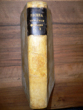
Edition originale. Rare. Un exemplaire à la BN de France et un à Bristol en Angleterre, un autre dans les catalogues del' Allemagne de l'ouest. Une seconde édition verra le jour en 1675 avec 2 nouvelles parties. 2 très beaux frontispices Reliure en plein vélin postérieur. Pièce de titre XXe noire et pages de garde également. Dentelles de ver sur les 2 premières pages et les 5 dernières. Rousseurs éparses. Otto Aicher (1628-1705), bénédictin et professeur, fut un dramaturge autrichien, un professeur de rhétorique et un grammairien, mais également un historien, il rassemble dans ce livre des épitaphes de tous les temps, notamment des empereurs romains et des rois, l'ensemble constituant un théâtre de la mort car les épitaphes sont comme les voix d'outre-tombe, l'épitaphe étant le dernier signe que les morts laissent à la postérité. Très intéressant pour mesurer le rapport à la mort au cours de l'histoire. Brunet I, 118. - Photographies et détails sur www.Edition-Originale.com -
Q. Horati Flacci Emblemata. Imaginibus in aes incisis, notisque illustrata [Les emblèmes de Q. Horati Flacci. Illustré par des gravures sur cuivre et des notes explicatives]
Hieronymi Verdussen [Verdussen, Jérôme (1553?-1635)] | Agra, avec privilège du Grand Mogol 1607 | 18 x 23 cm | relié
Édition originale recherchée, la seule entièrement en latin contrairement aux éditions suivantes , illustrée de 103 emblèmes à pleine page gravés sur cuivre par C. Boël et Gisbert van Veen. Portrait d'Horace en médaillon sur la page de titre. Le feuillet 48 est mal chiffré 84. Plusieurs ex-dono sur les pages de faux-titres et de titre. Quelques nudités ont été très discrètement biffées. Reliure de l'époque en plein parchemin, titre à la plume effacé sur le dos, une petite perle bleue sur le premier plat. Plusieurs pâles mouillures. * Première publication d'Otto van Veen (1550-1629) peintre maniériste, théoricien d'art flamand et maître du célèbre Rubens l'ouvrage se compose d'une série de tableaux ayant pour vocation d'élucider la signification morale des emblèmes mis en scène. En regard de chaque planche se trouve une maxime en majuscules suivie d'un court extrait poétique ainsi qu'une explication sous la forme d'une citation extraite d'Horace ou d'autres auteurs latins. Important ouvrage dans lequel l'image prime pour la toute première fois sur le texte, ce livre d'emblèmes révèle le talent de Venius qui allie à la tradition picturale flamande le maniérisme italien: «N'est-il point, parmi les maîtres trop oubliés de cette époque, celui qui parvint le mieux à associer à l'accent individuel de la vérité flamande la fleur idéale de la grâce italienne?» (Charles Blanc, Histoire des peintres de toutes les écoles: Ecole ombryenne-romaine, Volume 13, 1864). Dans cette même démarche toute novatrice, le peintre choisit en outre de présenter des sujets profanes au détriment des représentations religieuses traditionnelles. Rare édition de l'un des livres d'emblèmes les plus célèbres du XVIIème siècle. - Photographies et détails sur www.Edition-Originale.com -
Jocorum atque seriorum, tum novorum, tum selectorum, atque imprimis memorabilium
Hartmanni Palthenii | Francofurti (Francfort) 1617 | 7 x 16 cm | relié
Nouvelle édition, assez rare, après l'originale parue en 1603 par Dyonisius Melander et augmentée considérablement par son fils Otto Melander. Marque de l'imprimeur en page de titre. Reliure en demi chagrin noir XIX ca 1850. Dos à nerfs orné de roulettes sur les nerfs et filets. Date en queue. Page de titre jaunie. Recueil d'anecdotes et d'histoires plaisantes avec 1749 entrées ; on y rencontrera nombre de personnages célèbres. Ce type de recueil, issu à l'origine de compilations sérieuses sur les maximes et sentences issues des Anciens, eut une grande vogue à la fin du XVIe et au début du XVIIe, certains sont franchement gaulois et grivois, d'autres plus sérieux et historique comme celui de Melander, mais toujours orienté vers l'amusement et le divertissement du lecteur. Etiquette de librairie : Joseph Boudot Lamothe. 84, rue Bonaparte. 75006 Paris. - Photographies et détails sur www.Edition-Originale.com -
Ceramiche Medievali e Moderne
Mazzucato, Otto : Luca Pesante: Ceramiche Medievali e Moderne. 2023. 320 pages, illustrated in colour throughout. Paperback. 32 x 25cms. Catalogue of 273 works in the Vatican Museum collection. Divided into 4 parts on medieval and modern ceramics for cooking, historical plates, including the plates of Castel Gandolfo, model and sculpture, and floor tiles.. Text in Italian.
Catalogue of 273 works in the Vatican Museum collection. Divided into 4 parts on medieval and modern ceramics for cooking, historical plates, including the plates of Castel Gandolfo, model and sculpture, and floor tiles.. Text in Italian
[Sir Peter Paul Rubens] - Simson, Otto von
Reference : 057074
(1996)
ISBN : 3805318308
Peter Paul Rubens (1577-1640). Humanist, Maler und Diplomat. Berliner Schriften zur Kunst 8
Simson, Otto von: Peter Paul Rubens (1577-1640). Humanist, Maler und Diplomat. Munich: Philipp von Zabern, 1996. Series: Berliner Schriften zur Kunst 8. 556pp with 24 colour plates and 202 monochrome illustrations. Cloth. 24x17.5cms. Drawing on the author's lifelong study of the artist, this analytical work offers an insight into the ancient mythology, allegories and religious history in Rubens' painting, considering the moral and aesthetic dimensions of his work. 20 essays cover topics such as Mars and Venus, classical themes, church commissions and his work in Italy, Spain and Antwerp. Bibliography and index. Text in German.
Drawing on the author's lifelong study of the artist, this analytical work offers an insight into the ancient mythology, allegories and religious history in Rubens' painting, considering the moral and aesthetic dimensions of his work. 20 essays cover topics such as Mars and Venus, classical themes, church commissions and his work in Italy, Spain and Antwerp. Bibliography and index. Text in German
L'école mathématique bâloise des Bernouilli à l'aube du XVIIIème siècle
Université de Paris | Paris 1958 | 13.50 x 18.50 cm | agrafé
Edition originale de cette conférence s'étant tenue au Palais de la découverte le 3 Mai 1958. Iconographie. Rare brochure. - Photographies et détails sur www.Edition-Originale.com -
En ce nouveau monde
S. n. | Paris 1948 | 17 x 23 cm | broché
Edition originale de la traduction française établie par Robert Ganzo, un des 400 exemplaires numérotés sur Marais, seul tirage. Envoi autographe signé de Robert Ganzo à un couple de ses amis. Préface de Jean Cassou. Agréable exemplaire. - Photographies et détails sur www.Edition-Originale.com -
Pauvres saltimbanques - L'exemplaire de Paolo Fratellini
Ed. Lintz | Düsseldorf 1897 | 17 x 25 cm | reliure de l'éditeur
Edition originale illustrée de 39 photographies hors texte. Reliure de l'éditeur en pleine percaline vert bouteille, dos lisse, coiffe supérieure légèrement frottée, premier plat illustré d'une scène de cirque, encadrement de filets à froid sur le second plat, gardes et contreplats de papier à motifs floraux dorés, toutes tranches dorées. Annotations en allemand au crayon de papier en tête d'une garde et au feutre noir sur la page de dédicace imprimée, rares rousseurs, sinon agréable état intérieur. Prestigieuse provenance : de la bibliothèque de Paolo Fratellini avec deux ex-libris encollés sur un contreplat et en regard de la page de faux-titre. - Photographies et détails sur www.Edition-Originale.com -
Plainte et Complaisance de l'Amour divin. //- Emblèmes de l'Amour divin.
A Rennes, chez Nicolas Devaux, sans date, 2 textes reliés ensemble en 1 volume in-12 de : 1. 74 pages (pages découpées et collées sur des feuillets bleus - manque la page 39), pour le premier texte, - 2. Second texte : se vend à Paris, chez N.J.B. P. Poilly, 1 page de titre gravée et 59 emblèmes à pleine page légendés en latin avec quatrain explicatif en français, dans une reliure plein veau marbré fauve, dos lisse portant titres dorés sur pièce ce titre bordeaux, orné de caissons à motifs dorés, gardes marbrées, tranches rouges. Cuir abimé sur le dos, coins émoussés, mors fragiles et en partie fendus, mouillure dans la marge interne sur le second texte.
![Plainte et Complaisance de l'Amour divin. //- Emblèmes de l'Amour divin.. [Otto van Veen, dit Otto Venius ou Otto Vaenius]](https://static.livre-rare-book.com/pictures/DIO/110075_1_thumb.jpg)
![Plainte et Complaisance de l'Amour divin. //- Emblèmes de l'Amour divin.. [Otto van Veen, dit Otto Venius ou Otto Vaenius]](https://static.livre-rare-book.com/pictures/DIO/110075_2_thumb.jpg)
![Plainte et Complaisance de l'Amour divin. //- Emblèmes de l'Amour divin.. [Otto van Veen, dit Otto Venius ou Otto Vaenius]](https://static.livre-rare-book.com/pictures/DIO/110075_3_thumb.jpg)
Otto van Veen, dit Otto Venius ou Otto Vaenius, est un peintre maniériste et un théoricien d'art flamand, né en 1556 à Leiden (Leyde) et mort le 6 mai 1629 à Bruxelles (Emblèmes de l'Amour divin). Merci de nous contacter à l'avance si vous souhaitez consulter une référence au sein de notre librairie.
roy adzakdehydrationdéshydratation&Les Empreintes1955-1972
In-4, agrafé sous couverture illustrée, 9 pp. [8 ill. + Tranche n° 35 collée et signée en p. 9]In-4, dépliant sous couverture illustrée, 8 pp. [5/6 illustrations en noir par page]. 1. Publié par l'artiste avec l'aide du British Council, 1978. [en lien avec la Biennale de Venise 1978, comme le laisserait entendre une inscription manuscrite du critique d'art Gilbert Lascault sur une garde (?)].2. s.éd., s.l., [1980?] 1. roy adzak dehydration/déshydration : Les déshydrations de Roy Adzak. Première Partie par Paul Rodgers/Dehydrations : Roy Adzak. Part 1 by Paul Rodgers - Deuxième Partie par Richard Kidder/Part 2 by Richard Kidder - Déshydratation - Bien complet de la ...
On joint : un important dossier de presse composé d'une trentaine de photocopies (recto) comportant des articles et textes écrits sur ou par Roy Adzak, notamment à l'occasion des expositions :Adzak, le rendez-vous des amis, galerie fred lanzenberg, bruxelles, 1976 ; articles de Jean-Jacques Lévêque [Arts, 1963] ; Successo / D'ars [1963] ; Cinq prophètes du "réel imaginaire" par Alain Jouffroy [s.d.] ; Paris Gazette, "Hermit of the Trocadero" holds dialogue within the ruins, by Musard [1964], Otto Hahn [L'Express, décembre 1974, à propos de l'exposition Adzak chez Iris Clert] ; Otto Hahn : Le langage optique de Roy Adzak ; Roy Adzak, le silence éternel de l'objet, par François Pluchart [Combat, 1966] ; Otto Hahn [art and artists, march 1968] ; Mythologies quotidiennes/ARC 2, 1977 ; La Déshydratation, Roy Adzak [XIe Biennale de Menton, 1976] ; Désydratation [1974], Otto Hahn [L'Express, décembre 1974] & J.-J. Lévêque [Jardin des Arts] ; Les Textures [texte Musée des Arts décoratifs, 1977] ; Cl. Bouyeure [Opus, 1975], Autoportrait anthropométrique [Atelier Roy Adzak]. --- Plus d'informations sur le site archivesdunord.com
Shrader Otto. Indo-Europeans. In Russian /Shrader Otto. Indoevropeytsy.
Shrader Otto. Indo-Europeans. In Russian /Shrader Otto. Indoevropeytsy. Translation from German F.I. Pavlov. Edited and introduced by A.L. Pogodin. Second edition, stereotypical. Ser: Academy of Fundamental Research: History. M URSS 2003. 216 You are welcome to reach out to us for a detailed description of the copies currently available. Delivery of this book may take longer than usual including extended processing and pre-shipping time, no expedited shipping is available. Please advise us if you have a set date or a deadline to receive your order.SKUalb4314779a009f5290
Mit Frimurer-liv. Original unpublished manuscript by Dr. Carl Otto on his life as Freemason. - [UNPUBLISHED DANISH MANUSCRIPT ON FREEMASONRY]
(Manuscript, ca. 1870, no later than 1879) 4to. (220 x 180 mm). In contemporary half calf (Bound by Wilh. Gether). Scratches and wear to spine. Ex-libris (Dr. Carl Otto) to verso of front board. In fine legible handwriting in Danish with approximately 26 line to each page, with text on both verso and recto. Nice and clean. 93 ff.
Unpublished autograph manuscript in Danish comprising a detailed autobiographical account of the author’s life within Freemasonry, beginning with his initiation in 1819. Written in Danish, the text records lodge experiences, relations with fellow lodge-brothers and the moral and spiritual development he experienced with the Order. Manuscript accounts of Freemasonry of this length and personal character - and especially with an identifiable character as here - are scarce and are rarely found in the trade Carl Otto (1795–1879) was Danish physician and prominent advocate of phrenology. Educated in Copenhagen, he studied in Paris, where he adopted the then controversial doctrine of phrenology.Alongside his medical career and university teachings Carl Otto was deeply engaged in Freemasonry. After he retired he devoted himself to literary work, including autobiographical writings (including the present) and continued Masonic involvement.
Kuntner Florian Stimpfle Otto Wst Otto Feisthauer Joseph
Reference : 38077VPPG
ISBN : 9782227315686
Renouveau dans l'esprit de dieu : encouragements et directives
Centurion Broch D'occasion tat correct 01/01/1988 200 pages
La dernière nuit. Roman. Traduit de l'allemand par Magda Michel. Préface d'Albert Kern.
Paris, Gallimard, nrf. 1963. 8°. 236 S., Originalbroschur.
"Du monde entier CCCXXII". - Erste französische Ausgabe. - 1/27 numerierten Exemplaren der Vorzugsausgabe auf Velin pur fil Lafuma-Navarre. - Das erste Buch von Otto F.Walter "Der Stumme" wurde 1959 mit dem Charles Veillon Preis ausgezeichnet. Zusammen mit Jörg Steiner, Peter Bichsel, Gerhard Meier u.a.gehören die Bücher von Otto F. Walter zur sogenannten"Jurasüdfuss" Literatur. Das Vorwort des heute fast vergessenen Elsässer Autoren Alfred Kern (1919 - 2001) wurde für die vorliegende französische Ausgabe verfasst. Kern war einer der ersten französischen Förderer von Thomas Bernhard in Frankreich und ein Freund von Philippe Jaccottet. - Im Schnitt leicht stockfleckig. Ungeöffnetes Exemplar. „Du monde entier CCCXXII". - Première édition française. - 1/27 exemplaires de l'édition spéciale sur Velin pur fil Lafuma Navarre. - Le premier ouvrage de Otto. F. Walter « Der Stumme » fut récompensé en 1959 par le prix Charles Veillon. - Les livres de Otto F. Walter appartiennent à ce qu'on appelle la littérature du pied du Jura sud au même titre que des textes écrit par Jörg Steiner, Peter Bichsel, Gerhard Meier, e.a.. L'introduction par l'auteur alsacien, aujourd'hui pratiquement oublié, Alfred Kern (1919-2001) avait été spécialement écrite pourla présente édition française. - Kern fut l'un des premiers promoteurs de Thomas Bernhard en France et également un amis de Philippe Jaccottet. - Tranches avec de légères rousseurs. - Exemplaire non coupé.
DE SIERSMID, SCHMIRLER, Otto
, Antwerpen, Devries, 1998**, Gebonden in linnen band met omslagwikkel, frontispice, 220 x 275mm., 224pp., meer dan overvloedige z/w illustratie. ISBN 9053413944.
Alle werkstukken van Otto Schmirler zijn vastgelegd in werktekeningen en foto??s. Ze worden in een zorgvuldig samengestelde selectie in dit boek gepresenteerd. In alle werkstukken herkent men de hand van de meester, in wiens creaties het zwierige en blijmoedige karakter van de oude keizerstad wordt weerspiegeld, evenals de traditie van de bouwmeesters en de geschiedenis. Prioriteit voor Otto Schmirler was doelmatigheid en artistieke vormgeving op zinvolle wijze met elkaar te verbinden. Ontwerp en uitvoering waren steeds in een hand. De oorspronkelijkheid en levendigheid van het gesmede ijzer komen tot uitdrukking in de fraaie oppervlaktebehandeling, die zonder gedegen kennis van de eigenschappen van het materiaal ondenkbaar is; het verschil met industrieel vervaardigde producten is zonneklaar. Boek is als nieuw.
Zoologia Danica seu Animalium Daniae et Norvegiae rariorum ac minus notorum Descriptiones et Historia. Volumen I-IV. (Auctore O.F. Müller. - Vol. III: P.C. Abildgaard - IV: P.C. Abildgaard, M. Vahl, J.S. Holten, J. Rathke). - [THE ZOOLOGICAL COUNTERPART TO FLORA DANICA]
Havniae (København), N. Möller (et Filii) og N. Christensen, 1788-1806. Folio. Bound in two contemporary half calf bindings (vol. 1-4) with single gilt lines to spines. Gilt leather-title-label. Small tear to upper part of one hinge of vol. I. Marbled paper over boards. Spines with light signs of wear. Four engraved title-vignettes. (2),VI,52 (4),56 (4),71,(1)" (6),46 pp. + 160 engraved plates (complete). Both plates and text have been printed on thick, heavy paper and are in excellent condition. Vol. II, however has a bit of marginal brownspotting to the first text-leaves. A few plates with minor, vague, marginal brownspotting. Apart from the 160 plates in b/w as issued, there is an unusual ""appendix volume"" that contains the first 120 plates (I-CXX) of the work, corresponding to the plates of vols. I-III, in beautiful ORIGINAL HAND-COLOURING. Furthermore, the binding has belonged to our famous zoologist OTTO FABRICIUS (internationally renowned for his ""Fauna Groenlandica"" (1780) ). At the foot of every plate, Fabricius has added species- and figure-determination in his own hand, outside of the print. That these denominations are in Fabricius' hand is evident from a handwritten note on the front free end-paper: ""The designations here written are added by the zoologist professor Otto Fabricius, at whose auction this work is bought by H.B. Melcior."" (""De her anførte skrevne benævnelser ere tilföiede af Zoologen professor Otto Fabricius, paa hvis Auktion dette værk er kiöbt af H.B. Melcior.""). Melchior was a teacher at Herlufsholm and founded the natural history collections of the school. On the front free end-paper there is a stamp from the library of the school (Herlufsholms Bibliotek). This collection is bound in a contemporary full mottled calf binding with richly gilt spine. Small holes to boards. Binding with some wear. The plates are fine and fresh.
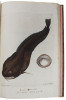
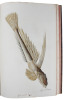
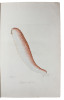
Complete copy (of all that appeared) of this extremely rare work, which constitutes the highlight of Danish zoological literature of the 18thy century. The work was meant to be a counterpart to Bibliotheca Danica, but it was never completed. Here we have the work with the Latin text and all the plates that were issued. The publishing began already in 1777, when Müller issued the plates for the first two volumes separately, with no text. The publishing history is complicated, but it is thoroughly described in Jean Anker's monograph about the work (1950). The work describes the marine fauna in Denmark and Norway, and according to Anker, it is a foundational work of marine biology. Müller was one of the first to make widespread use of a bottom scraper - ""Müller must therefore be regarded as one of the real pioneers in marine biology"" (Anker). There are only very few copies of the work which have all plates in hand-coloured condition. In the present copy, all issued plates are present in b/w, and in addition we have plates 1-120 in hand-coloured condition. Bibl. Danica II,168. - Jean Anker ""Otto Friderich Müller's Zoologia Danica"" (1950) - Nissen ZBI,2932.- Gosch, Afd. III, pp. 176-80.
Architecture moderne et autres textes.
<p>Écrit au moment où Otto Wagner s’apprête à prendre ses fonctions de professeur d’architecture à l’Académie des beaux-arts de Vienne en 1894, l’ouvrage «Architecture moderne« s’organise en cinq parties : l’architecte, le style, la composition, la construction et la pratique artistique. À ceux-ci, nous avons ajouté un texte fondamental sur le futur de la métropole européenne (Die Großstadt) publié en 1911. L’ensemble réunit la majeure partie des écrits de l’architecte qui ont fait littéralement corps avec son enseignement et son activité professionnelle, dans un souci de militantisme pour dépasser l’académisme et le conservatisme politique omniprésents dans l’Autriche des Habsbourg à la fin du XIXe siècle. Après un début de carrière assez académique, Otto Wagner n’a eu de cesse de défendre de nouvelles valeurs esthétiques et conceptuelles, aspirant à une forme de démocratie où la grande ville idéale et une architecture bien pensée défendraient au mieux ces nouvelles valeurs morales. Une position critique qui lui a valu, à la fin de sa vie professionnelle, d’être souvent écarté de la commande officielle et de devenir le symbole d’un renouveau espéré de l’architecture autrichienne. À cette lourdeur symbolique et à l’immobilisme complice de beaucoup de ses pairs, Otto Wagner opposait la figure de l’architecte comme homme providentiel, adepte du seul art total susceptible de changer la vie matérielle en imaginant des bâtiments et des villes réellement conformes aux aspirations de l’homme moderne. Les principes qu’il défendait : un nouveau langage architectural qui n’exclut pas le motif décoratif mais revitalise ses sources, qui sollicite de nouveaux matériaux (fer, aluminium, béton, céramique) et de nouvelles techniques de construction et qui recherche la fonctionnalité des bâtiments. Auteur de nombreux projets qui continuent de marquer la Vienne d’aujourd’hui par leur beauté, Otto Wagner a choisi d’être également un théoricien fondamental (et optimiste) et un professeur (apprécié) afin d’agir sur tous les leviers possibles. Ses textes sont l’expression d’un très grand optimisme et posent à la fin du XIXe siècle des principes créatifs qui sont toujours d’actualité : contre tous les conservatismes, faire la ville et son architecture conformes aux enjeux du monde contemporain. </p> Marseille, 2019 Parenthèse 160 p., broché. 15 x 23
Neuf
MEMOIRES D'EUROPE - Entretiens avec Jean-Paul PICAPER du Figaro.
CRITERION. 1993. In-8. Broché. Bon état, Couv. convenable, Dos satisfaisant, Intérieur frais. 278 pages. . . . Classification Dewey : 940-Histoire générale de l'Europe
"Preface d'Alain LAMASSOURE, Ministre delegué desAffaires européennes. / RESUME AU DOS : Otto de Habsbourg est né en 1912. Prince héritier de l'empire austro-hongrois, il voit ses prétentions au trône anéantis par la destitution de son père, l'empereur Charles, en 1919. Exilé avec sa mère, l'impératrice Zita, son père et ses frères et soeurs, commence pour lui une longue vie d'errance d'abord centrée sur son opposition aux dictateurs Hitler et Staline, puis, à partir de son élection au Parlement européen en 1978, sur la construction d'un nouveau continent : l'Europe. Otto de Habsbourg est l'un des derniers grands témoins du XXe siècle. Il a connu deux guerres mondiales, la guerre froide, les grandes révolutions et la décolonisation. L'histoire de sa famille depuis Charles Quint se confond avec celle de l'Europe. Fort de ce passé prestigieux, Otto de Habsbourg, président de l'Union paneuropéenne, se bat quotidiennement pour que l'Europe trouve des fondements solides. Cette construction est indispensable si l'on veut pouvoir faire face aux crises qui nous menacent : "" Comparée à une guerre des nationalités en Russie, la guerre en ex-Yougoslavie n'aura été qu'un murmure du vent dans les arbres. "" Observateur impartial, engagé au service de la vérité et de la réconciliation, Otto de Habsbourg nous parle avec franchise des hommes qu'il a rencontrés : Lyautey et Hindenburg, Hitler, Staline et Benes, Roosevelt, Churchill et de Gaulle, Willy Brandt, F.J. Strauss et Helmut Kohl, Bill Clinton, Milosevic, François Mitterrand et Edouard Balladur. Classification Dewey : 940-Histoire générale de l'Europe"
LUCIUS ANNAEUS SENECA philosophische schriften.
Leipzig, Verlag von Felix Meiner - der philosophischen bibliothek, 1923-1924 ; grand in-12, 266-240-374-364 pp., br. Les 4 volumes. En bon état (complet en 4vol) exemplaire de bibliothèque tampons et etiquette sur le dos) - der philosophischen bibliothek band 73/74/189/190 - erstes bandchen DER DIALGOE ERSER TEIL BUCHE I-IV - zweites bandchen DER DIALGOGE ZWEITER TEIL buch VII-XII mit einleitungen und anmerkungen versehen von OTTO APELT - drittes bandchen BRIEFE AN LUCILIUS erster teil brief 1-81- viertes bandchen BRIEFE AN LUCILIUS zweiter teil brief 82-124 ubersetzt mit eineitungen und anmerkungen versehen von OTTO APELT.
En bon état (complet en 4vol) exemplaire de bibliothèque tampons et etiquette sur le dos) - der philosophischen bibliothek band 73/74/189/190 - erstes bandchen DER DIALGOE ERSER TEIL BUCHE I-IV - zweites bandchen DER DIALGOGE ZWEITER TEIL buch VII-XII mit einleitungen und anmerkungen versehen von OTTO APELT - drittes bandchen BRIEFE AN LUCILIUS erster teil brief 1-81- viertes bandchen BRIEFE AN LUCILIUS zweiter teil brief 82-124 ubersetzt mit eineitungen und anmerkungen versehen von OTTO APELT.
Über das Zerplatzen des Urankernes durch langsame Neutronen (Offprint from ""Abhandlungen der Preussischen Akadamie der Wissenschaften""). - [THE FIRST OF THE FOUNDING PAPERS ON THE DISCOVERY OF NUCLEAR FISSION]
Berlin, Walter de Gruyter und Co., 1939. 4to (295 x 210 mm). In the original printed green wrappers. A little faded at edges, but otherwise a near perfect copy. Completely clean and fresh, also the title on the thin spine. Illustrated. 20 pp.
First edition, offprint issue, of the first of Hahn and Strassmann's seminal papers on nuclear fission which eventually lead to the creation of the atomic bomb. As a chemist, Hahn was initially reluctant to propose a revolutionary discovery in physics. Lise Meitner and her nephew, Otto Frisch, in Sweden, came to the same conclusion and were able to work out the basic mathematics of nuclear fission – a term that was coined by Frisch. ""The discovery of nuclear fission by Otto Hahn and Fritz Strassmann opened up a new era in human history. It seems to me that what makes the science behind this discovery so remarkable is that it was achieved by purely chemical means."" (Lise Meitner, 1963). At the end of the war Hahn was astonished to hear that he had won the Nobel Prize in Chemistry in 1944 and that nuclear bombs had been developed from his basic discovery. “In 1934 Fermi roused the world of radioactivity with his method of neutron bombardment and that same year reported on the possible production of transuranic elements by irradiating uranium with neutrons. The irradiation had led to radioactive substances with different half-lives such as 10s, 40s, 13min, and 90min. Fermi’s group had separated the 13-min and 90-min ‘bodies’ chemically from uranium and had shown that they were not isotopes of elements, which are located only a few places below uranium in the Periodic Table … they assumed that the uranium nucleus with the extra neutron transformed, via beta decay, into a nucleus of an element with the number 93 in the Periodic Table. That could still be unstable and transit, by another beta decay, into a nucleus of element 94.The idea of more than 92 elements was, of course, contested. Ida Noddack, a renowned chemist and co-discoverer of the element rhenium, pointed out that all known elements had to be excluded before new ones were proposed. This very sound advice was not taken. Nuclear physicists saw no possibility for a nucleus to fragment into large pieces. Nothing more drastic than alpha decay had ever been observed. Another way out was also proposed: in spite of Fermi’s interpretation, his 13-min body might be an isotope of protactinium, element number 91. Here Hahn and [Lisa] Meitner came in. After all, they were discoverers of protactinium and knew the properties of this element. They were able to show that the activity in question was not due to protactinium and became convinced that transuranic elements had been produced. They began intensive work in this new field, from 1935 onwards together with Strassmann … Quite a number of substances with different half-lives and different chemical properties were found in uranium irradiated with neutrons. A detailed scheme for their production was proposed, which implied the creation and subsequent decay of four, possibly five, transuranic elements. It was not seriously challenged by other groups working in the field. When Austria was annexed in 1938, Lise Meitner became a German citizen and, because of her Jewish descent, was in acute danger. Helped by Hahn and other colleagues, she fled via Holland and Denmark to Sweden, where she could work in the Physical Institute of the Academy of Sciences in Stockholm. Hahn and Strassmann continued alone. The decay products of the apparent transuranic elements seemed to contain three substances, which underwent beta decays of different half-lives and were chemically very similar to barium. They were taken to be isomeric nuclei of the isotope Ra231 of radium. Radium is an alkaline-earth metal as is barium and is located below barium in the second column of the Periodic Table, hence the similarity. Hahn and Strassmann tried to isolate the radium. Since only minute quantities could have been produced, a precipitation with barium as carrier from a solution was performed" the barium was to carry along the chemically similar radium. The precipitate then only contained barium and radium, which were to be separated in the next step. As mentioned above, Hahn was well versed in the method of separation, fractional crystallization, originally introduced by Marie Curie. But although they tried hard and checked and rechecked their method, Hahn and Strassmann were unable to separate any radium by chemical means. In their first paper they still conclude rather cautiously: ‘We come to the conclusion: Our ‘radium isotopes’ have the properties of barium as chemists we should rather say the new bodies are not radium but barium. [. . . ] As ‘nuclear chemists’, in a certain sense close to nuclear physics, we cannot yet decide ourselves to perform this step contradicting all previous experience of nuclear physics. A series of strange coincidences might still have faked our results.’ “Hahn had kept Meitner informed by letter about the work and he mailed her a copy of the manuscript of the paper on 21 December 1938, the same day it was submitted to Die Naturwissenschaften. The manuscript reached her in a small town near Gothenburg, where she had gone to visit Swedish friends over Christmas and where she had also invited her nephew Otto Frisch. We have already met him as collaborator of Stern in Hamburg. He, too, had been forced to leave Germany and at that time was working in Bohr’s institute in Copenhagen. Meitner showed him Hahn’s letter and the manuscript and dismissed the possibility of mistake: ‘Hahn was too good a chemist for that.’ The two began to look for an explanation. The nucleus could not just been cracked like a nut. In fact there was evidence that it behaved rather like a droplet. Now, a droplet might divide into two smaller ones by contracting in one direction, then elongating, and so on, until it finally would split up. The uranium nucleus might need little extra energy to do so, because its many protons provided a repulsive electrical force counteracting the attractive nuclear force between all nucleons, protons as well as neutrons. This extra energy could be provided by a single neutron. Meitner calculated that the energy of 200 MeV would be released in a single process, an energy equivalent to one-fifth of the rest mass of a proton. After a few days, Frisch returned to Copenhagen and told Bohr, who was enthusiastic: ‘Oh what idiots we have all been! Oh but this is wonderful! Have you and Lise Meitner written a paper about it?’ Frisch told him that there would soon be a paper and asked Bohr, who was about to travel to the United States to participate in a conference, not to discuss the matter before it would appear in print … this promise could not be kept and Bohr’s reports triggered intense activities which led to the first nuclear reactor in less than four years … “For the next few years, Hahn and Strassmann continued to identify radioactive isotopes produced in uranium fission. By spring of 1945, they had found a total of about 100 isotopes from 25 different elements … In 1945 Hahn was awarded the Nobel Prize in Chemistry for the year 1944 … In 1966 Meitner, Hahn, and Strassmann were the first non-US citizens to be given the Enrico-Fermi Award by the American president” (Harvest of a Century, pp. 264-7). Hahn, Meitner, and Strassmann were not engaged in nuclear-weapons research during World War II. Hahn later, as director of the Max-Planck-Gesellschaft (the postwar successor to the Kaiser Wilhelm Gesellschaft), he spoke vigorously against the misuse of atomic energy. Meitner—who many thought should have received the Nobel Prize with Hahn—continued to do nuclear research in Sweden and then England. Strassmann nurtured the study of nuclear chemistry in Mainz, Germany.Dibner 168 Norman 963 (PMM 422)
Schrader Otto. Comparative Linguistics and Primitive History: Linguistic and Hi
Schrader Otto. Comparative Linguistics and Primitive History: Linguistic and Historical Materials for the Study of Indo-German Antiquity. In Russian /Shrader Otto. Sravnitelnoe yazykovedenie i pervobytnaya istoriya: Lingvistiko-istoricheskie materialy dlya issledovaniya indogermanskoy drevnosti. Series: The Linguistic Legacy of the 20th Century / Translated with it by N.G. Chernyshevsky. Edition 2, Stereotypical Moscow Editorial URSS 2003. You are welcome to reach out to us for a detailed description of the copies currently available. Delivery of this book may take longer than usual including extended processing and pre-shipping time, no expedited shipping is available. Please advise us if you have a set date or a deadline to receive your order. SKUalb07c2a750abfb10f4