 Write to the booksellers
9 books for « orts »Edit
-
Century
19th (1)
20th (1)
21st (4)
-
Topics
Architecture (1)
Carmen (1)
Collections (1)
Europe (1)
History (5)
Italian (1)
Janin jules (1)
Museums (1)
Musicology (1)
Religions (3)
Sciences (1)
Spain (1)
-
Countries
Belgium (7)
France (2)
-
Syndicate
ILAB (1)
SLAM (1)
Le Livre rouge belge. Les atrocités allemandes en Belgique, recueil des rapports officiels... Signé Ernst de Bunswyck, Cooreman, Orts, Cte Goblet d'Alviella [Unknown Binding] Orts
BROCHE
Merci de nous contacter à l'avance si vous souhaitez consulter une référence dans notre boutique à Authon-du-Perche.
Eduardo Carrero Santamaría, Tess Knighton, Francesc Orts-Ruiz (eds)
Reference : 70526
Sound and Space in Early Modern Valencia c.1400-c.1700. Sonido y espacio en la ciudad de Valencia
, Brepols, 2026 Paperback, Pages: 388, Size:178 x 254 mm, Illustrations:5 b/w, 55 col., 2 tables col., 9 music examples, Languages: English, Spanish. ISBN 9782503624297.
Summary By the later Middle Ages Valencia had become a major urban centre close to the Mediterranean and surrounded by fertile plains. From Jaume I's conquest of the city in 1238, ecclesiastical and civic institutions were founded in rapid succession and built elegant churches and palaces to reflect their permanence and prestige. From at least the time of Francesc Eiximenis (d. 1409), the city's authorities became increasingly aware of the importance of opening new public spaces within the web of narrow streets characteristic of Muslim conurbations in the interest of developing the representation of a Christian civic religion. These spaces, notably those in front of the royal palace, cathedral and Dominican and Franciscan monasteries, quickly established themselves as focal points for urban ritual, especially for the processional activity that marked the liturgical calendar and the devotional practices of confraternities and guilds. Sounds of all kinds shaped and were shaped by the urban complex and were generated by both the festive and non-festive events that, whether recurrent or exceptional, held deep significance for the inhabitants of the city. This interdisciplinary collection of fifteen essays explores the relationship between the sounds and spaces of late medieval and early modern Valencia to gain greater insight into how the city's inhabitants interpreted the soundspace in which they moved and which influenced their daily lives, creating a sense of community - albeit one full of rivalry and conflict - and resulting in a coherent Valencian identity. A finales de la Edad Media, Valencia se había convertido en un importante centro urbano, abierto al Mediterráneo y rodeado de una fértil huerta. A la conquista de la ciudad por Jaume I en 1238 siguió la rápida fundación de instituciones eclesiásticas y cívicas y la construcción de elegantes templos y palacios que reflejaban su presencia y prestigio. Desde la época de Francesc Eiximenis (m. 1409), las autoridades de la ciudad fueron tomando cada vez más consciencia de la importancia de abrir nuevos espacios públicos dentro de la red de calles estrechas característica del urbanismo musulmán, con el fin de desarrollar la representación de una religiosidad cívica cristiana. Estos espacios, en particular los situados frente al palacio real, la catedral y los monasterios dominico y franciscano, se convirtieron rápidamente en puntos focales para los rituales urbanos, especialmente para las procesiones que marcaban el calendario litúrgico y las prácticas devocionales de cofradías y gremios. Sonidos de todo tipo, generados tanto por eventos festivos como no-festivos, recurrentes o excepcionales, tenían un profundo significado para los habitantes de la ciudad y fueron moldeados a la vez que contribuyeron a configurar el espacio urbano. Esta colección interdisciplinar de quince ensayos explora la relación entre los sonidos y los espacios en la Valencia tardomedieval y moderna para comprender mejor cómo los habitantes de la ciudad interpretaban el espacio sonoro en el que se movían y que influía en su vida cotidiana, creando un sentido de comunidad -aunque lleno de rivalidades y conflictos- y dando lugar a una identidad valenciana coherente.
Les rois contemporains, biographies des souverains de l'Europe.
Bruxelles, A. Jamar, 1849. 18 x 27, 423 pp., nombreuses vignettes en N/B, nombreuses planches en couleurs, demi-reliure dos/coins cuir à 4 nerfs, plats marbrés, bon état (coins et bords abîmés, mors frottés, pas de rousseur).
HOGG James, ORTS Albert Ferrer, SEYNNAEVE Johan & GRAJEWSKI Czeslaw
Reference : R117812
(2005)
Dom Firmin Le Ver: A Carthusian Lexicographer. The Carthusian Order from its foundation to the present day. Carthusian Spirituality. Guillelmi a Sancto Theodorico Opera Omnia Pars III: Opera Didactica et Spiritualia. De la procedencia de los artifices de la Cartuja de Ara Christi (1585-1682)
Salzburg, Universität Salzburg 2005 [Continuation of title: A 20th century Carthusian on the origin of language & Unbekannte Quelle des kartäuserischen Chorals aus dem 17. Jahrhundert], 157pp., in the series "Analecta Cartusiana" volume 225, 24cm., original softcover, text is clean and bright, very good condition, R117812
El eremita pere Munoz y las Cartujas de Valldecrist y Aracristi
Salzburg, Universität Salzburg 2007 78pp. of which 25pp. illustrations, 24cm., softcover, in the series "Analecta Cartusiana" volume 252, text in Spanish, good condition, R117431
Je Tricote - De l' écharpe Au Pull à Longue Manche
Marabout - Flash broché Bristol illustré 1964 152 pages en format 11 - 12 cm - nombreuses illustrations
Très Bon État
De l'incapacité Civile Des Congrégations Religieuses Non Autorisées
Office De publicité reliure Rigide Décorative Bruxelles 1867 441 pages en format grand -8 - reliure rigide en cuir au dos avec quatre nervures et dorures
Bon État
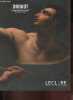
Catalogue de ventes aux enchères - Maîtres anciens mercredi 12 octobre 2016 Drouot - Exceptionnel cycle maniériste provenant des Collections du Baron Empain.
A compte d'auteur. 2016. In-4. Broché. Bon état, Couv. convenable, Dos satisfaisant, Intérieur frais. 76 pages - nombreuses reproductions en couleurs et en noir et blanc dans et hors texte.. . . . Classification Dewey : 708-Galeries, musées, collections d'art
Classification Dewey : 708-Galeries, musées, collections d'art


HOGG James, ORTS Albert Ferrer, SEYNNAEVE Johan & GRAJEWSKI Czeslaw
Reference : R107615
(2005)
Dom Firmin Le Ver: A Carthusian Lexicographer. The Carthusian Order from its foundation to the present day. Carthusian Spirituality. Guillelmi a Sancto Theodorico Opera Omnia Pars III: Opera Didactica et Spiritualia. De la procedencia de los artifices de la Cartuja de Ara Christi (1585-1682)
Salzburg, Universität Salzburg 2005 [Continuation of title: A 20th century Carthusian on the origin of language & Unbekannte Quelle des kartäuserischen Chorals aus dem 17. Jahrhundert], 157pp., in the series "Analecta Cartusiana" volume 225, 24cm., original softcover, library stamp, vague stain of removed label on frontcover, text is clean and bright, good condition, R107615

