 Write to the booksellers
175 books for « nepos »Edit
-
Language
French (170)
Latin (5)
-
Century
16th (1)
17th (1)
18th (26)
19th (40)
20th (18)
-
Countries
Belgium (4)
Canada (1)
Denmark (4)
France (124)
Germany (1)
Italy (1)
Netherlands (28)
Switzerland (12)
-
Syndicate
ALAC (1)
CLAM (1)
ILAB (76)
NVVA (4)
SLACES (4)
SLAM (66)
Topics
- Bibliophilism (1)
- Biography (7)
- Books from the xviiith (5)
- Books from the xvith (1)
- Classic literature (1)
- Early printed books (4)
- Ethic (1)
- First edition (2)
- Germanic languages (1)
- Greece (1)
- Greek (23)
- History (19)
- Illustrated books (1)
- Italy (2)
- Latin (52)
- Latin greek (3)
- Literature (41)
- Memories (1)
- Morocco (1)
- Mythology (1)
- Nepos cornelius (43)
- Philosophy (2)
- Reliure (1)
- Roman history (2)
- Rome (4)
- Sciences (1)
- Ss (1)
- Story (1)
- Translation (1)
- Various (2)
Cornelius Nepos, perperam vulgo Aemilius Probus dictus, De vita excellentium Imperatorum. Diesen giebt nach Art seines Plinii und Horatii mit auserlesenen philologischen, moralischen u. historischen Anmerckungen, auf eine ganz neue nützliche und leichte Weise, nebst einer Vorrede und dienlichen Registern heraus M. Caspar Gottschling, Siles., Neustadt-Brandenb. Rect. und Bibliothec.
Brandenburg, Zu finden bey Johann Ernst Wohlfelden, Buchhändlern. Gedruckt bey Christian Hallen, Kön. Preuss. privil. Buchh, 1729.
8vo. (XLVIII, including frontispiece),624 p. Vellum 17.5 cm (Ref: Not in Schweiger, Brunet, Ebert, Graesse; not yet in VD18) (Details: Nice copy. 5 thongs laced through both joints. Short title in ink on the frontcover. Frontispiece by Daniel Fincke, depicting the historian Nepos at work, while Mars and Athena keep guard. Title in red and black. Latin text on the upper half, and German commentary on the lower half of the page. Good quality paper) (Condition: Vellum somewhat soiled. Small stamp and a name on the verso of the frontispiece. Front flyleaf renewed) (Note: This is an edition with an accompanying commentary in German, of the only surviving complete work of the Roman historian Cornelius Nepos, ca. 100-24 B.C., De excellentibus ducibus exterrarum gentium. It is the first collection of biographies from antiquity. It contains the lives of 20 Greek generals, and the Carthaginians Hamilkar and Hannibal. An ancient editor added to this collection the lives of M. Porcius Cato, and of Pomponius Atticus, the friend and correspondent of Cicero. Already in late antiquity this collection was ascribed to the grammarian Aemilius Probus, and the editio princeps of 1471 bears his name. In his edition of 1569 the French classical scholar Dionysius Lambinus proved on stylistic grounds that this work must have been written by the contemporary of Cicero, Cornelius Nepos alone. Later editions often mention both names, and combine the names of the authors with vel, seu,sive, or vulgo. The simple style of writing of Nepos has made him a standard choice for schools. Schweiger mentions numerous editions. The German scholar and historian Caspar Gottschling, 1679-1739, is the author of a great number of publications. He used many pseudonymes, among which Carolus de Gaule, or Charles de Gaule. Since 1710 he was Rektor of the Gymnasium of Neustadt Brandenburg. Best known are his editions of the school authors Nepos, Pliny, Cicero and Horace. In 1717 he published in Halle his German translation of Nepos. This was followed by his edition of Nepos with a commentary in German. Wellknown is also his contribution to the Land of Cockaigne legend, Der Staat von Schlaraffenland which he published in 1710. (See for Gottschling Handbuch Gelehrtenkultur der Frühen Neuzeit, Bln., 2001, p. 310/11)) (Provenance: Small oval stamp of Döllinger and the manuscript name of Döllinger, dated 1874, on the verso of the frontispiece. This is Johann Joseph Ignaz von Döllinger, 1799 - 1890, who 'was a German theologian, Catholic priest and church historian who rejected the dogma of papal infallibility. He is considered an important contributor to the doctrine, growth and development of the Old Catholic Church, though he himself never joined that denomination'. He was educated in the gymnasium at Würzburg, and then began to study natural philosophy at the University of Würzburg, where his father held a professorship. In 1826 became professor of theology at the University of Munich, where he spent the rest of his life. (See for Döllinger his long Wikipedia German article) Döllinger loved Nepos. He once told about his Gymnasium time: I simply adored Nepos, and glowed with enthusiasm for Mithrydates, Marcus Aurelius, Homer, Sophocles, and a host of others. Even now, by way of a treat, I read Greek before I go to bed, and sometimes in the morning. And when I take my evening walk in the English Garden, I go over the Greek tragedies to myself, and find them excellent company. And when asked for his enthousiasm for the English General Gordon, the late governor-general of the Soudan, whom he thought a figure of heroic proportions, (...) Second to none in moral grandeur, and worthy to be placed by the side of Bismarck and of Moltke, Döllinger asked rhetorically: Take for instance the case of boys reading Homer or Nepos through for the first time. Do you mean to tell me that they (German youths) no longer have any feeling of enthusiasm for the heroes of these great works ?' (Conversations of Dr. Döllinger, London 1892, p. 173 and 174) These conversations took place 12 years earlier in the English Garden in Munich. This famous Englisher Garten still exists and has its own Wikipedia article) (Collation: a-c8, A-2Q8) (Photographs on request)
Cornelius Nepos. De Excellentibus Viris, notis perpetuis ex Longolio, Lambino, Schotto, Boeclero, Buchnero, Bosio, Cellario, aliisque, ad modum Johannis Minellii illustratus. Adjecta sunt ejusdem Fragmenta collecta ab Schotto, et index selectissimus. Editio altera.
Amsterdam (Amstelaedami), Apud Joannem Haffman, 1746.
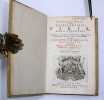
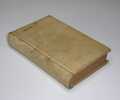
8vo. (XVI),411,(36 index),(1 blank) p. Vellum 16 cm (Ref: Not in Schweiger) (Details: Five thongs laced through both joints. Title in red & black. Engraved printer's device on the title, depicting Hermes and Athena, between them the fountain struck by Pegasus, it's motto: 'Ex hoc fonte licet cuique levare sitim') (Condition: Vellum soiled. 'Nepos' in curly ink letters on both boards. Some old ink annotations in the margins) (Note: This is a school edition with notes of the only surviving complete work of the Roman historian Cornelius Nepos, ca. 100-24 B.C., De excellentibus ducibus exterrarum gentium, also known as De excellentibus Viris. This very well preserverd schoolbook was produced after the manner of the Dutch schoolmaster Johannes Minellius, an industrious and successfull compiler of schoolbooks. He published the works of several classical authors with ample notes which were easy to understand by young schoolboys who were still inexperienced in Latin, or just lazy. Minellius, or Min-ellius, born ca. 1625, was educated at the Schola Erasmiana at Rotterdam, and was from 1650 onward till his death in 1683 a Praeceptor at that school. Minellius' schoolbooks with accompanying annotations were a tremendous success. In 1653 he published his first, Sallustius, then Valerius Maximus in 1661, Florus in 1664, Terence in 1665, Vergil in 1666, Horace in 1668 and Ovid in 1684. His books were reissued many times, and his manner was followed by schoolmasters all over Europe, who wanted to participate in his success and who produced school-editions ad modum Joanni Minellii. At the end of the 17th and in the 18th century his editions were widely used on Dutch grammar schools. After that they were barred from the schools because they were too unscientific, and offered too much help. They were esteemed to be pontes asinorum (Van der Aa 12,2 p. 873). Minellius never published a Nepos edition. The printer/bookseller of this Nepos nevertheless announces on the very first page of the Lectori that this is an edition cum notis Minellii. In the following preface the anonymous compiler however eases off the pedal, and explains that Minellius never touched Nepos, but that the publisher asked him to make a Nepos secundum ejusdem institutum. Cornelius Nepos is the author of the first surviving ancient collection of biographies. De excellentibus etc. contains the lives of 20 Greek generals, and the Carthaginians Hamilkar and Hannibal. Nepos corresponded with Cicero and was close with Cicero's friend Atticus. The collection served probably as a model for Plutarch's Vitae Parallelae. In his own days and in late antiquity Nepos was considered to be a source of importance. The churchfather Hieronymus included him in his De viris illustribus (392 A.D.) in his list of great authors and historians) (Collation: *8, A-2E8 (leaf 2E8 verso blank)) (Photographs on request)
Cornelii Nepotis Vitae excellentium Imperatorum, cum notis selelectis Boecleri, Bosii, Buchneri, Ernestii, Gebhardi, Heidmanni, Lambini, Loccenii, Longolii, Magii, Ravii, Savaronis, Schefferi, Schotti, nec non excerptis P. Danielis. Hisce accedit locupletissimus omnium vocabulorum, index, studio & opera J.A. Bosii. Suas notas addidit Augustinus van Staveren. Editio altera, longe auctior.
Leiden (Lugduni Batavorum), Apud Sam. et Joan. Luchtmans, 1773.
8vo. (XXXII, including frontispiece),832,(176, index) p.; text-illustrations on 11 p. Vellum 22 cm (Ref: STCN ppn 238342476; Schweiger 2,302: 'vielfach verbesserte und bereicherte Ausgabe'; Dibdin 2,246: 'a very elaborate edition', 'It is in great repute'; Moss 2,320; cf. Ernesti/Fabricius I,107; Ebert 5273; Brunet 2,289; Spoelder p. 490, Amsterdam 9) (Details: Prize copy, including the printed prize. Back gilt. 6 thongs laced through both joints. Boards with gilt borders, gilt corner pieces and the gilt coat of arms of Amsterdam. Engraved frontispiece (dated 1794), executed by J. Visscher. Engraved printer's mark on the title, depicting Athena, motto: 'Tuta sub Aegide Pallas'. Small text engravings (portraits, illustrations) on 11 p.) (Condition: Vellum soiled. All 4 ties gone. Excellent paper) (Note: This is an edition with commentary of the only surviving complete work of the Roman historian Cornelius Nepos, ca. 100-24 B.C., 'De excellentibus ducibus exterrarum gentium'. He is the author of the first surviving ancient collection of biographies. 'De excellentibus etc.' contains the lives of 20 Greek generals, and the Carthaginians Hamilkar and Hannibal. The collection served probably as a model for Plutarch's 'Vitae Parallelae'. In his own days and in late antiquity Nepos was considered to be a source of importance. The churchfather Hieronymus, included him in his 'De viris illustribus' (392 A.D.) in his list of great authors and historians. Already in late antiquity this collection was ascribed to the grammarian Aemilius Probus, and the 'editio princeps' of 1471 bears his (Probus') name. The simple style of writing of Nepos has made him a standard choice for schools. The biographies provided the pupils also models of behaviour. Schweiger mentions numerous editions. This edition is a socalled 'Variorum' edition, an edition which contained everthing a student required. Such an edition offers the 'textus receptus' which is widely accepted, accompanied with the commentary and the annotations of specialists, taken from earlier useful, normative or renewing editions. Editions like these, 'cum notis Variorum', were useful, but never broke new ground. The production of this kind of editions was the specialty of Dutch scholars of the 17th and 18th century. The compilers seldom were great scholars, but often hard working schoolmasters. The Dutch schoolmaster who skillfully excerpted, compared and contrasted the material of brighter minds is in this case Augstinus van Staveren, 1704-1772, who was rector of the 'schola latina' at Leiden since 1750. Nevertheless he proudly announces in the preface that he also has consulted in his search for 'variantes lectiones' 4 manuscripts of the Library of the University of Leiden, and the collations of 2 English manuscripts. This second edition of Van Staveren's Nepos was published posthumously. In the short 'dedicatio' to the second edition, written by Carolus Antonius Wetstenius J.C., we read that Van Staveren, who was already halfway, asked him, short before his death to complete the second corrected and augmented edition. Van Staveren, whom he calls 'vir amicissimus' was once his teacher, Westein tells us. Van Staveren had already skipped 'quaedam, suaque non pauca', to prevent the book from being too overloaded. Van Staveren is known for this edition of Nepos, which saw several later reissues, and for his 'Auctores Mythographi Latini', which was published in 1742. Not much is known of Carolus Antonius Wetstein, 1742-1797. He was a Leyden lawyer and also an accomplished Neolatin poet. (Van der Aa 20,159) The bibliographers donot mention his involvement in the editing of his teacher's Nepos. The frontispiece, or rather the copper plate for this frontispiece, has a story of almost 150 years. It was first used in 1658, then 1675, 1687, 1704 (?), 1705, 1728, 1734, this book of 1773, and finally in 1793) (Provenance: The prize is for Henricus Oort: 'Ingenuo optimaeque spei adolescentulo Henrico Oort. Hoc virtutis ac diligentiae praemium in classe sexta nova decreverunt Ampliss. Dd. Coss. & Scholarchae Amstelaedamenses'. It is signed by the Rector R. van Ommeren, 29th of March, 1793. Young Henricus Oort, 1778-1849, received this book also for his diligence. That is what he was, diligent. He took holy orders in the 'Nederlandsch Hervormde Kerk' and worked tirelessly for his church. He was also a diligent member of all kind of Societies. (Van der Aa, 14,142)) (Collation: *-2*8, A-3R8) (Photographs on request)
Cornelii Nepotis Vitae excellentium Imperatorum, observationibus & notis commentatorum omnium, quotquot hactenus innotuere, illustratae. Accesserunt huic editioni praecipuorum Graeciae Imperatorum icones aeri incisae; ut & index rerum & verborum auctior & emendatior.
Amsterdam (Amstelodami), Prostant apud Wetstenios, 1707.
8vo. (XXXII, including frontispiece),439,(40 index),(1 blank) p. Modern half calf. 19 cm (Ref: STCN ppn 186438281; Schweiger 2,299; Dibdin 2,245; Moss 2,319/20; Fabricius/Ernesti I,105: 'quae locupletissima est editio'; cf. Graesse 2,270, ed. Keuchenius) (Details: The engraved frontispiece is dated 1704, and is executed by J. Visscher, depicting Clio with a pen in her hand, she receives advice from Kronos, who holds his scythe, Fama blows her trumpet. Small engraved illustrations on 12 p.) (Condition: Name on the blank margin of the frontispiece. Oval stamp on the title. Paper slightly warped and yellowing) (Note: This is an edition with commentary of the only surviving complete work of the Roman historian Cornelius Nepos, ca. 100-24 B.C., 'De excellentibus ducibus exterrarum gentium'. He is the author of the first surviving ancient collection of biographies. 'De excellentibus etc.' contains the lives of 20 Greek generals, and the Carthaginians Hamilkar and Hannibal. Nepos corresponded with Cicero and was close with Cicero's friend Atticus. The collection served probably as a model for Plutarch's 'Vitae Parallelae'. In his own days and in late antiquity Nepos was considered to be a source of importance. The churchfather Hieronymus, included him in his 'De viris illustribus' (392 A.D.) in his list of great authors and historians. Already in late antiquity this Nepos collection was ascribed to the grammarian Aemilius Probus, and the 'editio princeps' of 1471 bears that name. The simple style of writing of Nepos has made him a standard choice for schools. The biographies provided the pupils also models of behaviour. Schweiger mentions numerous editions. This edition is a so-called Variorum edition, an edition which contained everthing a student required. Such an edition offers the 'textus receptus' which is widely accepted, accompanied with the commentary and the annotations of specialists, taken from earlier useful, normative or renewing editions. Editions like these, 'cum notis Variorum', were useful, but never broke new ground. The production of this kind of editions was the specialty of Dutch scholars of the 17th and 18th century. The compilers seldom were great scholars, but often hard working schoolmasters. Such a useful edition was published in 1658 in Leiden by the Hackius brothers. It was produced by the young Dutch scholar R. Keuchenius (1636-1673), who matriculated in 1654, and was later in life appointed professor of Roman History of the 'Athenaeum Illustre' at Amsterdam. The edition of 1658 was revised and augmented by an anonymous editor, and republished in 1675 by the same Hackius brothers. The preface of Keuchenius to the edition of 1658 (and the testimonia) was repeated, but now anonymously. The anonymous editor seems to be Keuchenius, for the main body of his work and his own notes have been preserved. In a short 'ad lectorem' (Keuchenius in 1658, and anonymous in 1675) the editor explains that he based his edition on those of Lambinus and Longolius, and that he passim added selected observations of Gifanius, Savarus, Schottus, Boeclerus, Gebhardus, Ernesti and Bosius. He also elucidated the Lives with passages from ancient Greek historians, like Herodotus, Thucydides, Xenophon and Plutarch. The edition of 1675 became the model of a line of clones, including the frontispiece and illustrations. It was reprinted 'verbatim', line by line, page by page, with the same layout and the same kind of typeface by the Blaeu brothers in 1687, probably Mortier in 1704, by Janssonius van Waesberge in 1705, by Wetstein in 1707 (this edition), and by Samuel Luchtmans in 1728) (Provenance: On the frontispiece: 'B.L.W. Mensing'. Between In the second half of the 19th century B.L.W. Mensing exploited a boarding school in Schoonoord, an estate in the Dutch city of Rijswijk. (See Wikipedia, Buitenplaats Schoonoord) On the title the stamp of: 'Huize Katwijk, De Breul, Zeist'. This school still exists, and is now called Katholieke Scholengemeenschap De Breul. (See Wikipedia) The school was established as a boarding school in 1831 in 'Katwijk aan den Rijn', and was in 1842 transfered to the Jesuits. The school moved to The Hague in 1928, then to Noordwijkerhout in 1941, and finally in1946 to 'De Breul', an estate between Zeist and Driebergen in the province Utrecht) (Collation: *-2*8; A-2G8 (leaf 2G8 verso blank)) (Photographs on request)
Cornelii Nepotis Vitae excellentium imperatorum, cum integris notis Jani Gebhardi, Henr. Ernestii & Jo. Andreae Bosii. Et selectis Andreae Schotti, Dionysii Lambini, Gilberti Longolii, Hieronymi Magii, Jo. Savaronis, aliorumque Doctorum; necnon Excerptis P. Danielis. Hisce accedit locupletissimus omnium vocabulorum index, studio & opera Jo. Andr. Bosii confectus, curante Augustino Van Staveren, qui & suas notas addidit.
Leiden (Lugduni Batavorum), Apud Samuelem Luchtmans, 1734.
(XVI including frontispiece),765,(187) p. Half calf 21.5 cm (Ref: STCN ppn 189887893; Schweiger 2,300/1; Dibdin 2,246; Moss 2,320; Ernesti/Fabricius I,107: 'Optima hodie et nitidissima est'; Graesse 2,271; Brunet 2,289) (Details: Back gilt and with 5 raised bands. Black morocco shield in the second compartment. Boards marbled. Margins preserved uncut. Frontispiece, executed by J. Visscher, depicting Clio with a pen in her hand, receiving advice from Kronos, scythe at hand, Fama blows her trumpet; title in red and black; printer's mark on title, depicting Athena, motto: 'Tuta sub Aegide Pallas'; small engravings of portraits and objects in the text on 11 pages) (Condition: Binding rubbed and scuffed. Head and tail of the spine damaged. Small library shelf number label on the upper board. Half of the front flyleaf cut off vertically. Flyleaf at the end gone. 12 gatherings are somewhat browning) (Note: This is an edition with commentary of the only surviving complete work of the Roman historian Cornelius Nepos, ca. 100-24 B.C., 'De excellentibus ducibus exterrarum gentium'. He is the author of the first surviving ancient collection of biographies. 'De excellentibus etc.' contains the lives of 20 Greek generals, and the Carthaginians Hamilkar and Hannibal. Nepos corresponded with Cicero and was close with Cicero's friend Atticus. The collection served probably as a model for Plutarch's Vitae Parallelae. In his own days and in late antiquity Nepos was considered to be a source of importance. The churchfather Hieronymus, included him in his 'De viris illustribus' (392 A.D.) in his list of great authors and historians. Already in late antiquity this collection was ascribed to the grammarian Aemilius Probus, and the 'editio princeps' of 1471 bears his name. The simple style of writing of Nepos has made him a standard choice for schools. The biographies provided the pupils also models of behaviour. Schweiger mentions numerous editions. This edition is a socalled Variorum edition, an edition which contained everthing a student required. Such an edition offers the 'textus receptus' which is widely accepted, accompanied with the commentary and the annotations of specialists, taken from earlier useful, normative or renewing editions. Editions like these, 'cum notis Variorum', were useful, but never broke new ground. The production of this kind of editions was the specialty of Dutch scholars of the 17th and 18th century. The compilers seldom were great scholars, but often hard working schoolmasters. The Dutch schoolmaster who skillfully excerpted, compared and contrasted the material of brighter minds is Augstinus van Staveren, 1704-1772. He was rector of the schola latina at Leiden since 1750. He is known for this edition of Nepos, which saw several later editions, and his 'Auctores Mythographi Latini', which was published in 1742. The frontispiece, or rather the copper plate for this frontispiece and the text engravings which belong to this edition, have a long history. The same plates were used for almost 150 years by different publishing firms. The plates were first used for by Hackius edition of 1658 and then the reissue of 1675. The next users were the Blaeu brothers, in 1687, thereupon probably Mortier, in 1704 (not seen by us), then Janssonius van Waesberge in 1705, and then by Samuel Luchtmans, who seems the last owner, in 1728. Luchtmans used the plates in 1734 again for his new edition of Van Staveren, next for the second edition of 1773, and finally for the 'editio minor' of Van Staveren, which was published in 1793) (Collation: *- 2*8, A-3N8, 3O4) (Photographs on request)
Cornelii Nepotis Vitae excellentium imperatorum, cum integris notis Jani Gebhardi, Henr. Ernestii & Jo. Andreae Bosii. Et selectis Andreae Schotti, Dionysii Lambini, Gilberti Longolii, Hieronymi Magii, Jo. Savaronis, aliorumque Doctorum; necnon Excerptis P. Danielis. Hisce accedit locupletissimus omnium vocabulorum index, studio & opera Jo. Andr. Bosii confectus, curante Augustino Van Staveren, qui & suas notas addidit.
Leiden (Lugduni Batavorum), Apud Samuelem Luchtmans, 1734.
(XVI including frontispiece),765,(187) p. Vellum. 21 cm 'Prize copy, with the prize' (Ref: STCN ppn 189887893; Schweiger 2,300/1; Dibdin 2,246; Moss 2,320; Ernesti/Fabricius I,107: 'Optima hodie et nitidissima est'; Graesse 2,271; Brunet 2,289; Spoelder p. 570, Gouda 4) (Details: 6 thongs laced through both joints. Back ruled gilt. Boards with double fillet gilt borders, and the gilt coat of arms of Gouda. Frontispiece, executed by J. Visscher, depicting Clio with a pen in her hand, receiving advice from Kronos, scythe at hand, Fama blows her trumpet. Title-page in red and black. Printer's mark on the title, depicting Athena, motto: 'Tuta sub Aegide Pallas'. Small engravings of portraits and objects in the text on 11 pages) (Condition: Vellum age-toned. All 4 decorative silk fastening ribbon at the outer edge of the boards worn away. Paper yellowing and occasionally browning) (Note: This is an edition with commentary of the only surviving complete work of the Roman historian Cornelius Nepos, ca. 100-24 B.C., 'De excellentibus ducibus exterrarum gentium'. He is the author of the first surviving ancient collection of biographies. 'De excellentibus etc.' contains the lives of 20 Greek generals, and the Carthaginians Hamilkar and Hannibal. Nepos corresponded with Cicero and was close with Cicero's friend Atticus. The collection served probably as a model for Plutarch's Vitae Parallelae. In his own days and in late antiquity Nepos was considered to be a source of importance. The churchfather Hieronymus, included him in his 'De viris illustribus' (392 A.D.) in his list of great authors and historians. Already in late antiquity this collection was ascribed to the grammarian Aemilius Probus, and the 'editio princeps' of 1471 bears his name. The simple style of writing of Nepos has made him a standard choice for schools. The biographies provided the pupils also models of behaviour. Schweiger mentions numerous editions. This edition is a socalled Variorum edition, an edition which contained everthing a student required. Such an edition offers the 'textus receptus' which is widely accepted, accompanied with the commentary and the annotations of specialists, taken from earlier useful, normative or renewing editions. Editions like these, 'cum notis Variorum', were useful, but never broke new ground. The production of this kind of editions was the specialty of Dutch scholars of the 17th and 18th century. The compilers seldom were great scholars, but often hard working schoolmasters. The Dutch schoolmaster who skillfully excerpted, compared and contrasted the material of brighter minds is Augstinus van Staveren, 1704-1772. He was rector of the schola latina at Leiden since 1750. He is known for this edition of Nepos, which saw several later editions, and his 'Auctores Mythographi Latini', which was published in 1742. The frontispiece, or rather the copper plate for this frontispiece and the text engravings which belong to this edition, have a long history. The same plates were used for almost 150 years by different publishing firms. The plates were first used for by Hackius edition of 1658 and then the reissue of 1675. The next users were the Blaeu brothers, in 1687, thereupon probably Mortier, in 1704 (not seen by us), then Janssonius van Waesberge in 1705, and then by Samuel Luchtmans, who seems the last owner, in 1728. Luchtmans used the plates in 1734 again for his new edition of Van Staveren, next for the second edition of 1773, and finally for the 'editio minor' of Van Staveren, which was published in 1793) (Provenance: This prize copy was given to Bartholomaeus de Moor van Immerzeel on the occasion of his promotion from the 4th to the 3rd grade for his progress and 'virtus'. It is dated December 1738, and is signed by 2 curators, and the Rector of the Gymnasium of Gouda Otto Arntzenius. Bartholomaeus was from 1767 mayor of Gouda. He was a friend of the Dutch female author Betje Wolff. He had a mansion in Alphen aan de Rijn, that had a neat, and well-chosen library, enriched by the finest editions of the best writers, in precious volumes. He was more interested in science and literature than his official offices. Mayor De Moor van Immerzeel was in regular correspondence with Pieter Burman Secundus, without doubt the most famous Dutch Neo-Latin poet of that time. He died in October 1779) (Collation: *- 2*8, A-3N8, 3O4) (Photographs on request)
Cornelii Nepotis vitae excellentium imperatorum, quorumdam iconibus ornatae, et nonnullis animadversionibus partim criticis, partim historicis inlustratae ab Augustino van Staveren. Editio altera.
Leiden (Lugduni Batavorum), Apud S. et J. Luchtmans, 1793.
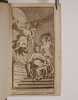
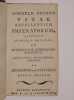
12mo. (XIV including frontispiece),434, (72) p.; 7 small engraved portraits in the text. Later half calf 12.5 cm (Ref: cf. Schweiger 2,302; cf Brunet 2,289) (Details: Back ruled blind and gilt. Marbled endpapers. Frontispiece, depicting Clio with a pen in her hand, she receives advice from Kronos, who holds a scythe, a winged Fama blows her trumpet. Seven small engraved portraits in the text) (Condition: Binding scuffed. Some pencil notes. Lower margin of the title cut short, with loss of part of the impressum) (Note: This is an edition with commentary of the only surviving complete work of the Roman historian Cornelius Nepos, ca. 100-24 B.C., 'De excellentibus ducibus exterrarum gentium', the first surviving ancient collection of biographies. 'De excellentibus etc.' contains the lives of 20 Greek generals, and the Carthaginians Hamilkar and Hannibal. Nepos corresponded with Cicero and was close with Cicero's friend Atticus. The collection served probably as a model for Plutarch's Vitae Parallelae. In his own days and in late antiquity Nepos was considered to be a source of importance. The churchfather Hieronymus, included him as great historian in his 'De viris illustribus' (392 A.D.). The simple style of writing of Nepos has made him a standard choice for schools. The biographies provided the pupils also models of behaviour. Schweiger mentions numerous editions. This edition was compiled by the Dutch schoolmaster Augustinus van Staveren, 1704-1772, who was appointed in 1750 Rector of the Schola Latina at Leyden. He produced during his career two editions of Nepos, a learned 'editio maior', a stout octavo of 765 p. 'cum notis Variorum suisque', which was first published in 1734 (second edition 1773). In 1755 he produced at the request of the publishing firm Luchtmans an 'editio minor', a small but thick duodecimo 'cum notis A. van Staveren'. The first one, of 1734, is a socalled 'Variorum' edition. Such editions' offer usually the 'textus receptus' which is widely accepted, accompanied with the commentary and the annotations of specialists, taken from earlier useful, normative or renewing editions. Editions like these, 'cum notis Variorum', were useful, but never broke new ground. The production of this kind of editions was the specialty of Dutch scholars of the 17th and 18th century. The compilers seldom were great scholars, but often hard working schoolmasters. Van Staveren's 'editio minor' of 1755 was repeated in 1793. The minor edition left out the learned commentaries, but offered a revised text accompanied by critical and historical notes of Van Staveren, which often contain material found by him in Greek sources. (Van der Aa, 17,2 p. 966/67) The frontispiece and the engravings in the text have a long history. The copper plates for them were first used in 1658. They were used again in editions of 1675, 1687, 1704 (?), 1705, 1728, 1734, 1773 and finally here in 1793) (Provenance: in pencil on the verso of the front flyleaf: 'A. Roozendaal, 1944'. We found one 'A. Roozendaal, Amersfoort' in the tabula gratulatoria of the Festschrift 'Studia varia Carolo Guilielmo Vollgraff a discipulis oblata', Amsterdam 1948, p. 194. After we had found this, a small receipt ticket of a restaurant in Amersfoort, dated 20/3/55, fell out of this book; at the back a note on Van Staveren, apparantly made the same Roozendaal, now an elderly person; A. Roozendaal was probably a student of C.W. Vollgraff, professor of Greek and Archaeology of the University at Utrecht. Vollgraff died in 1967, 91 years old) (Collation: *8 (minus *8)(including frontispiece), A-X12 Y1) (Photographs on request)
Cornelii Nepotis Vitae excellentium Imperatorum, observationibus ac notis commentatorum, quotquot hactenus innotuere, illustratae. Accesserunt huic editioni praecipuorum Graeciae Imperatorum icones aeri incisae; ut & index rerum & verborum praecedenti multo auctior & emendatior.
Amsterdam (Amstelodami), Ex Typographia P. & J. Blaeu, 1687.
8vo. (XXXII, including frontispiece),439,(XL),(1 blank) p. Vellum 20.5 cm (Ref: STCN ppn 101005326; Schweiger 2,299; Dibdin 2,245; Moss 2,319/20; Fabricius/Ernesti I,105: 'quae locupletissima est editio'; Graesse 2,270; Ebert 5262; Spoelder p. 593, Harderwijk 1) (Details: Nice prize binding, without the prize. 6 thongs laced through both joints. Back gilt. Boards with gilt double fillet borders, and corner pieces; coat of arms of Harderwijk on both boards. Engraved frontispiece, executed by J. Visscher, depicting Clio with a pen in her hand, she receives advice from Kronos, who holds his scythe, Fama blows her trumpet. Woodcut printer's mark on the title, depicting a celestial sphere, that is flanked by Hercules and Tempus; motto 'Indefessus agendo'. Small engraved portraits/illustrations on 12 p.) (Condition: Prize gone. Vellum age-toned. Some small spots on the upper board. Gilt on the covers almost completely worn away. All four ties gone) (Note: This is an edition with commentary of the only surviving complete work of the Roman historian Cornelius Nepos, ca. 100-24 B.C., 'De excellentibus ducibus exterrarum gentium'. He is the author of the first surviving ancient collection of biographies. 'De excellentibus etc.' contains the lives of 20 Greek generals, and the Carthaginians Hamilkar and Hannibal. Nepos corresponded with Cicero and was close with Cicero's friend Atticus. The collection served probably as a model for Plutarch's Vitae Parallelae. In his own days and in late antiquity Nepos was considered to be a source of importance. The churchfather Hieronymus, included him in his 'De viris illustribus' (392 A.D.) in the list of great authors and historians. Already in late antiquity this collection was ascribed to the grammarian Aemilius Probus, and the 'editio princeps' of 1471 bears his (Probus') name. The simple style of writing of Nepos has made him a standard choice for schools. The biographies provided the pupils also models of behaviour. Schweiger mentions numerous editions. This edition is a socalled 'Variorum' edition, an edition which contained everthing a student required. Such an edition offers the 'textus receptus' which is widely accepted, accompanied with the commentary and the annotations of specialists, taken from earlier useful, normative or renewing editions. Editions like these, 'cum notis Variorum', were useful, but never broke new ground. The production of this kind of editions was the specialty of Dutch scholars of the 17th and 18th century. The compilers seldom were great scholars, but often hard working schoolmasters. Such an edition was published in 1658 in Leiden by the Hackius brothers. It was produced by the young Dutch scholar R. Keuchenius (1636-1673), who matriculated in 1654, and was later in life appointed professor of Roman History at the 'Athenaeum Illustre' of Amsterdam. The edition of 1654 was revised and augmented by an anonymous editor, and published in 1675 by the same Hackius brothers. The preface of Keuchenius to the edition of 1658 (and the testimonia) was repeated, but now anonymously. The anonymous editor seems to be Keuchenius, for the main body of his work and his own notes have been preserved. In a short 'ad lectorem' (signed 'Keuchenius' in 1658, anonymous in 1675) the editor explains that he based his edition on those of Lambinus and Longolius, and that he passim added selected observations of Gifanius, Savarus, Schottus, Boeclerus, Gebhardus, Ernesti and Bosius. He also elucidated the Lives with passages from ancient Greek historians, like Herodotus, Thucydides, Xenophon and Plutarch. The edition of 1675 became the model of a line of clones, including the frontispiece and illustrations. It was reprinted verbatim, line by line, page by page, with the same layout and the same kind of typeface by the Blaeu brothers in 1687, probably Mortier in 1704, by Janssonius van Waesberge in 1705, by Samuel Luchtmans in 1728. The frontispiece and the illustrations of the 1687 edition are however no copies, but they are exactly the same as in the edition of 1675. Blaeu had perhaps come into the possession of the plates which belonged to the edition of 1675 after the death of Cornelius Hackius in 1668, and used them for this 1687 edition. He also might have hired them) (Collation: *-2*8; A-2G8 (leaf 2G8 verso blank)) (Photographs on request)
Oeuvres de Cornélius Népos [Board book] Cornélius Népos
BROCHE BON ETAT DOS DEFRAICHI AVEC PLIS COIFFE TRES FROTTER Oeuvres de Cornélius Népos , Népos Cornélius édition Les Belles Lettres, 1923
Merci de nous contacter à l'avance si vous souhaitez consulter une référence dans notre boutique à Authon-du-Perche.
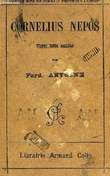
Cornelius Nepos. Texte latin, avec une notice sur Cornelius Nepos et des notes historiques et grammaticales par Ferd. Antoine.
Paris, Librairie Armand Colin, 1917.
276 p. Cloth 18.5 cm (Paper browned)
Vies des Grands Capitaines de L'Antiquité de Cornélius Nepos. Traduction Nouvelle, avec des notes par M. l'Abbé Paul.....
Avignon Niel 1787 1 Un volume de format in 12 de 12 pp.; 384 pp.; reliure de l'époque en pleine basane marbrée, blonde, dos à 5 nerfs richement ornéde caissons dorés; titre doré; tranches entièrement mouchetées;
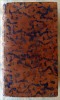
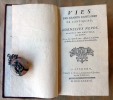
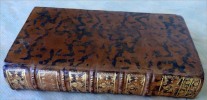
Petit départ de fente à une charnière, coiffe supérieure usée. Manque angulaire sans manque de texte à la page 1; charmant exemplaire malgré tout, très frais.Voir les photos.
Vies des grands capitaines de l'Antiquité de Cornelius Nepos. Traduction nouvelle, avec des notes. Par M. l’Abbé Paul...
Avignon, Chez J. J. Niel, Imprimeur-Libraire 1787 In-16 16,5 x 9,5 cm. Reliure de l’époque plein veau havane, dos lisse orné de fers dorés, pièce de titre cuir grenat, XI-381 pp., texte latin avec traduction française en regard. Reliure frottée, coiffes arrachées, inscriptions manuscrites sur les pages garde et de faux-titre, intérieur correct. En l’état.
Etat correct d’occasion
CORNELIUS NEPOS, TEXTE LATIN
Colin. 1905. In-12. Relié. Etat d'usage, Tâchée, Dos abîmé, Déchirures. 275 pages. Taches et annotations sur les plats et dans l'ouvrage. Page de garde manquante. Feuillet 273-74 manquant (Appendice critique).. . . . Classification Dewey : 470-Langues italiques. Latin
3e édition. Coll. de Classiques latins. Avec une notice sur C. Nepos et des notes. Classification Dewey : 470-Langues italiques. Latin


CORNELIUS NEPOS / EUTROPE, ABREGE DE L'HISTOIRE ROMAINE
Garnier Frères. Non daté. In-12. Broché. Etat d'usage, Couv. légèrement passée, Dos frotté, Non coupé. 449 pages. Texte en français et en latin sur la même page. 1er plat se détachant. Fortes rousseurs et quelques mouillures.. . . . Classification Dewey : 870-Littératures des langues italiques. Littérature latine
'Bibliothèque latine-française'. Cornelius Nepos, trad. nouvelle par Amédée Pommier. Eutrope, trad. par N.A. Dubois. Classification Dewey : 870-Littératures des langues italiques. Littérature latine
CORNELIUS NEPOS, TEXTE LATIN.
ARMAND COLIN ET Cie / COLLECTION DES CLASSIQUES LATINS. NON DATE. In-12. Cartonnage d'éditeurs. Etat d'usage, Coins frottés, Dos satisfaisant, Intérieur frais. 275 pages. Toile marron, titres noirs. Ouvrage déboîté. Tâches d'encre sur la tranche.. . . . Classification Dewey : 870-Littératures des langues italiques. Littérature latine
Collection des classiques latins, sous la dir. de M. A. Cartault. Avec une notice sur C. Nepos et des notes historiques et grammaticales Classification Dewey : 870-Littératures des langues italiques. Littérature latine
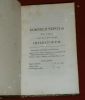
Cornelii Nepotis vitae excellentium Imperatorum.
Cette édition stéréotype se vend à Paris, chez P. Didot l'aîné, imprimeur, et Firmin Didot, Libraire, 1798-1799, 1 volume in-12 de 165x105 mm environ,148 pages, plein maroquin vert sapin, titres dorés sur dos lisse orné de caissons et petits fers dorés, large encadrement doré sur les plats, coupes tranches et chasses dorées, gardes marbrées. Dorures légèrement frottées par endroits sinon bon état. Texte en latin.
Cornélius Népos (-100 / -29 ou -25) était un écrivain latin qui entretint des relations amicales avec Atticus, une correspondance avec Cicéron et des rapports étroits avec Catulle. Merci de nous contacter à l'avance si vous souhaitez consulter une référence au sein de notre librairie.
VITAE EXCELLENTIUM IMPERATORUM. Ultima éditio, tum prosodiae signis, tum tabulis omnium locorum géographicis adornata. (vies des grands capitaines de l'antiquité).
Lyon, Rusand, 1807, 1 plein velin d'époque. in-12 de VI-216 pp. + 1 carte géographique dépliante de tous les lieux mentionnés dans cet ouvrage par François David Aynes, légères mouillures en début d'ouvrage ;
Texte en latin.traduction de la page de titre: "dernière édition des vies des excellents empereurs (vie des grands capitaines de l'Antiquité), par Cornelius Nepos, ornée de signes de prosodie et de tables géographiques de tous les lieux".François David Aynès né à Lyon, était principal du collège de Villefranche, emprisonné pour avoir publié la bulle d'excommunication de Napoléon, mort à Avignon
Nepos Cornelius M. Nisard (ss La Direction De.) Justin Maxime Valère Obsequens Julius
Reference : 100096104
(1871)
Cornelius Nepos - Quinte-Curce - Jusint - Valère Maxime Julius Obsequens ouvres complètes avec la traduction en Français
Firmin didot frères fils et cie 1871 in8. 1871. Relié.

Bon état couverture défraîchie coins frottés tranche ternie intérieur propre première garde déchirée en haut charnières fragilisées à l'intérieur
Cornélius Népos - Oeuvres - 3e tirages - collection des universités de France
Les belles lettres 1970 in12. 1970. Broché. Miltiade Thémistocle Aristide Pausanias Cimon Lysandre Alcibiade Thrasybule Conon Dion Iphicrate Chabrias Timothée Datame Epaminondas Pélopidas ... etc
Bon état de conservation couverture plastifiée intérieur propre pages non-coupées sur les 4/5e du livre
CORNELIUS NEPOS. Texte latin publié d'après les plus récents de la philologie avec un commentaire critique et explicatif et une introduction par Alfred Monginot.
Paris, Librairie de L. Hachette et cie., 1868. In-8, rel. de l'époque demi-chagrin vert foncé, dos à nerfs, titré, bordé d'un filet doré, orné de fleurons dorés, plats granités, gardes marbrées, XLIV-361pp, table des matières.
Plats un peu passés en tête, ex. bien relié; intérieur propre malgré la présence de qqs. rares rous. pâles, bonne condition. - Frais de port : -France 7,15 € -U.E. 9 € -Monde (z B : 14 €) (z C : 24 €)
Auswahl aus Nepos, Caesar, Ovid. Zusammen mit Max Brasse und Herbert Bochmann bearbeitet von Otto Wecker. 12. Auflage.
Göttingen, Vandenhoeck & Ruprecht, 1977.
2 volumes: 119;55 p. Stiff wrappers. 23 cm (Atrium Linguae Latinae III) (Covers plasticized)
De vita excellentium imperatorum. Ex recensione J.H. BREMI. (Bound with:) Aanteekeningen op Cornelius Nepos De vita excellentium imperatorum van J.H. Bremi, naar de 4e uitgaaf.
Zalt-Bommel, Noman, 1834.
2 vols. in 1: 142;266 p. H.calf 22 cm (Cover very scuffed; joints cracked; name cut from front flyleaf & half title)
Cornelius Nepos. Post Carolum Halmium recognovit Alfredus Fleckeisen. Mit einem Wörterbuch für den Schulgebrauch herausgegeben von H. Haacke. 17. Auflage von Otto Stange.
Leipzig, B.G. Teubner, 1919.
2 volumes in 1: VII,118;208 p. Cloth 17 cm (BT; in Index 1904 of TLL)(Paper of the 'Wörterbuch' yellowing)
Cornelius Nepos. Erklärt von K. NIPPERDEY. Kleinere Ausg. 4. verb. Aufl.
Lpz., Wdm., 1864.
177 p. H.cl. 20 cm (WmS)(Ink ann. on 4 p.)

