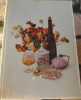
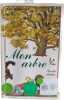
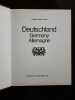
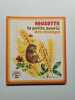
Genève, Berne, 1974. Portfolio in-4 en feuilles encartées, couverture illustrée en couleurs.
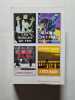
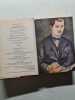
Illustré de 5 lithographies originales, 4 en couleurs et une en noir, par Bruno Müller. Ces lithographies originales ont été exécutées par Bruno Müller à l'occasion de ses expositions à la galerie Schindler à Berne et à la Galerie Anton Meier à Genève-Carouge en 1974. Le tirage en est de 450 exemplaires, imprimés par Pierre Badey à Paris (88/450).
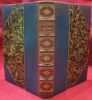
Paris, J.-B. Baillière, 1840, in-8, 2 vol, VI-640 + [4]-644 pp, 4pl, Demi-percaline fauve à la bradel, pièces de titre et de tomaison noires, Première édition française, traduite de l'allemand, sur la troisième édition. Cet ouvrage forme la partie la plus considérable du fameux traité de Physiologie de Müller (Handbuch der Physiologie des Menschen für Vorlesungen, Coblenz, Hölscher, 1834-40). Il a été ajouté au chapitre de la voix humaine, la version d'un opuscule que M. Müller venait alors de publier séparément, sur la compensation des forces physiques dans l'organe de l'homme (Ueber die Compensation der physischen Kroefte am menschlichen Stimmorgen, Berlin, 1839, avec 4 planches). Le physiologiste allemand Johannes Peter Müller (1874-1955) considéré généralement comme le père de la physiologie moderne, établit ici que la perception se produit par des organes sensoriels recevant des stimuli. Il fait partie des physiologistes qui, à partir de l'étude des sensations, sont à l'origine de la psychophysique dont procède la psychologie expérimentale. Tampon annulé de l'Institut catholique de Paris et étiquette de don de la bibliothèque des Liouville. Bel exemplaire, malgré quelques rousseurs, de cet ouvrage rare. Étiquettes en pied des dos. Dos brunis, une coiffe supérieure arasée. Couverture rigide
Bon 2 vol., VI-640 + [4]-644 pp.,
Paris, Muller & Desplas, 1922, in-4, 36 pp, Couverture grise illustrée en rouge, reliée par une cordelette orange, sous enveloppe timbrée de la maison, Catalogue illustré en noir. Enveloppe d'origine. Exemplaire plié en plein milieu sur la longueur. Couverture rigide
Bon 36 pp.
Paris, Muller & Desplas, 1923, in-4, 46 pp, Broché, couverture orange imprimée en noir, le tout rangé dans une enveloppe beige imprimée en noir et rouge, Catalogue illustré en noir de divers modèles de verrerie d'éclairage. Enveloppe d'origine. Bon état. Couverture rigide
Bon 46 pp.
GAIDOZ, H. (Directeur) - Ern. DESJARDINS - W. STOKES - H. d'ARBOIS de JUBAINVILLE - E. ERNAULT - Général CREULY - G. LEJEAN - R.F. LE MEN - d'ARBOIS de JUBAINVILLE - L. BUREAU - F.M. LUZEL - A. de BARTHELEMY - WINDISCH - Dr E. MULLER - A. LANG - W.-G. JONES
Reference : 48732
PARIS, Lib. A. Franck/LONDRES, Trübner and C° - N° 9, 10, 11 & 12 de la collection - Volume III, complet - Juin 1876/Novembre 1878 - In-8 - Broché -XVI- 512 pages - Exemplaire non coupé - Réf. 48732
La Revue celtique a pour objectif dunir les recherches entre savants des îles Britanniques et ceux du continent pour éclairer lhistoire et la littérature des peuples celtes, de ce fait c' est une référence en matière de celtologie, créée en 1870 par Henri Gaidoz et ressuscitée en 1936 par Joseph Vendryes. Elle publia des articles de Henri d'Arbois de Jubainville, Joseph Loth, Georges Dottin, Émile Ernault,Ernest Renan, Prosper Levot, Fañch an Uhel, Whitley Stokes, Friedrich Max Müller, Daniel Silvan Evans, etc....À la mort de J. Loth en 1934, les publications cessèrent, mais elles reprirent deux ans plus tard, sous l'impulsion de Joseph Vendryes, avec un nouveau nom : "Études celtiques"GAIDOZ, H. d'Arbois de Jubainville, E. Ernault, F.M. Luzel Conformément à nos conditions générales de vente :Les frais de port sont affichés à titre indicatif. Il se peut que nous devions vous contacter pour vous informer du coût de laffranchissement supplémentaire en fonction du poids et du nombre de livres, surtout pour les envois internationaux Cependant vu l'augmentation des tarifs postaux à l'internationale, nous pouvons expédier les ouvrages en point relais MONDIAL RELAY pour les pays suivants : Allemagne, Autriche, Belgique, Espagne, Italie, Luxembourg, Pays-Bas, Pologne, et Portugal. Merci de nous indiquer en retour le point relais choisi ainsi que votre numéro de téléphone mobile & adresse Courriel pour assurer le suivi du colis.N'hésitez pas à nous interroger.In accordance with our general terms and conditions of sale:Shipping costs are displayed for informational purposes only. We may need to contact you to inform you of the additional postage costs depending on the weight and number of books, especially for international shipments.However, given the increase in international postal rates, we can ship books via Mondial Relay to the following countries: Germany, Austria, Belgium, Spain, Italy, Luxembourg, Netherlands, Poland, and Portugal. Please provide us with your chosen Mondial Relay point, as well as your mobile phone number and email address to ensure package tracking.Please feel free to contact us with any questions
1864 PARIS, E. dentu - 1864 - In-8 - broché - 160 pages - Exemplaire non coupé, Propre - Réf. 48654
Conformément à nos conditions générales de vente :Les frais de port sont affichés à titre indicatif. Il se peut que nous devions vous contacter pour vous informer du coût de laffranchissement supplémentaire en fonction du poids et du nombre de livres, surtout pour les envois internationaux Cependant vu l'augmentation des tarifs postaux à l'internationale, nous pouvons expédier les ouvrages en point relais MONDIAL RELAY pour les pays suivants : Allemagne, Autriche, Belgique, Espagne, Italie, Luxembourg, Pays-Bas, Pologne, et Portugal. Merci de nous indiquer en retour le point relais choisi ainsi que votre numéro de téléphone mobile & adresse Courriel pour assurer le suivi du colis.N'hésitez pas à nous interroger.In accordance with our general terms and conditions of sale:Shipping costs are displayed for informational purposes only. We may need to contact you to inform you of the additional postage costs depending on the weight and number of books, especially for international shipments.However, given the increase in international postal rates, we can ship books via Mondial Relay to the following countries: Germany, Austria, Belgium, Spain, Italy, Luxembourg, Netherlands, Poland, and Portugal. Please provide us with your chosen Mondial Relay point, as well as your mobile phone number and email address to ensure package tracking.Please feel free to contact us with any questions
ROBERT-MULLER Charles - LE LANNOU Maurice - André Cholley (Auteur)
Reference : 2428
(1944)
1944 PARIS, A. Colin 1944 - In-4, 25.5x16.5 cm - Broché - E.O. - Frontispice : Photo contre-collée de l'auteur (1880/1942) - Introduction XIV, 616 pages - couverture tachée au 1 er plat, Sinon bon exemplaire - 2428
Cet ouvrage, monumentale étude sur la pêche en Sud Bretagne avant 1940, devait être présenté comme thèse de doctorat devant la Faculté de lettres de Paris. L'ouvrage fut terminé et mis au point par Maurice LE LANNOU, chargé de cours à la Faculté de lettres de RENNES. Conformément à nos conditions générales de vente :Les frais de port sont affichés à titre indicatif. Il se peut que nous devions vous contacter pour vous informer du coût de laffranchissement supplémentaire en fonction du poids et du nombre de livres, surtout pour les envois internationaux Cependant vu l'augmentation des tarifs postaux à l'internationale, nous pouvons expédier les ouvrages en point relais MONDIAL RELAY pour les pays suivants : Allemagne, Autriche, Belgique, Espagne, Italie, Luxembourg, Pays-Bas, Pologne, et Portugal. Merci de nous indiquer en retour le point relais choisi ainsi que votre numéro de téléphone mobile & adresse Courriel pour assurer le suivi du colis.N'hésitez pas à nous interroger.In accordance with our general terms and conditions of sale:Shipping costs are displayed for informational purposes only. We may need to contact you to inform you of the additional postage costs depending on the weight and number of books, especially for international shipments.However, given the increase in international postal rates, we can ship books via Mondial Relay to the following countries: Germany, Austria, Belgium, Spain, Italy, Luxembourg, Netherlands, Poland, and Portugal. Please provide us with your chosen Mondial Relay point, as well as your mobile phone number and email address to ensure package tracking.Please feel free to contact us with any questions
DESENNE, REGNARD, BEIN, BLANCHARD, BURDET, FAUCHERY, LEFEVRE, LEROUX, MULLER, CHAMPS
Reference : 9924
Paris, Dufart, (1828). 4to, 13 figures en 3 états (définitif, avant la lettre, eau-forte) sur Chine appliqué, et un portrait à l'eau-forte, montés sur onglets, reliure XIXe demi-maroquin (à grain long) vert à coins (Champs), dos orné (reliure très légèrement frottée, quelques rousseurs).
La SUITE SUR CHINE EN 3 ETATS des gravures d'après Desenne par Bein, Blanchard, Burdet, Fauchery, Lefèvre aîné, Leroux et Müller, pour les oeuvres de Régnard, et un PORTRAIT de Desenne à l'eau-forte gravé par Dupont d'après Mourlan, le tout en bon état sous une riche reliure de Champs. * Voir photographie(s) / See picture(s). * Membre du SLAM et de la LILA / ILAB Member. La librairie est ouverte du lundi au vendredi de 14h à 19h. Merci de nous prévenir avant de passer,certains de nos livres étant entreposés dans une réserve.
Paris, Amédée Bédelet, s.d. (circa 1850-1860). In-4 à l'italienne, 28 pp. et (24) pl., reliure de l'éditeur, pleine percaline vert bouteille effet chagrin, luxueux encadrement polychrome sur le plat supérieur, dos lisse à la cathédrale en couleurs, plat inférieur historié à l'or, tranches dorées (quelques rousseurs, planche "Sortie de l'Arche" grossièrement restaurée, ex-dono).
Texte extrait de la Bible du jeune âge, d'Elisabeth Müller, illustré de 24 ithographies en noir (dont un frontispice) de. Charles Vallet d'après les compositions d'Auguste Leloir. Ex- libris de Roger Boutet de Monvel. * Voir photographie(s) / See the picture(s). * Membre du SLAM et de la LILA / ILAB Member. La librairie est ouverte du lundi au vendredi de 14h à 19h. Merci de nous prévenir avant de passer,certains de nos livres étant entreposés dans une réserve.
Berlin, 1842. 4to. Entire volume of ""Abhandlungen""... and ""Mathamatische Abhandlungen""... 1840 present. Contemporary yellow boards with a vellum-like spine. Handwritten title to spine. A bit of wear and soiling to extremities, and corners bent. Internally fine and clean. Stamp to title-page (Dom-Gymnasium Magdeburg, also stamped out). Pp. (187)- 257 + 6 plates, two of which are folded. Text very nice, bright, and clean, plates with a bit of brownspotting. [Entire volume: (6), XVII, (5), 400 pp. + 10 plates, 4 of which are coloured + (4), 137 pp.].
First printing of this foundational work, which established the acceptance, by the modern world, of Aristotle as the founder of biological science. It is due to the present work that modern encyclopaedias will now conclude that ""Aristotle is properly recognized as the originator of the scientific study of life."" (SEP). Apart from its importance to the modern view of Aristotle, the present paper was also central to Müller's construction of a natural system of the fishes. For centuries, the authority of Aristotle in matters of science and biology was unrivalled, but with modern science, the advancement of exact knowledge, and modern man's ability to investigate the smallest of details, Aristotle's scientific and zoological works increasingly came to be viewed as not properly belonging to the exact sciences. Many biologists would claim that his observations were fanciful and incorrect, not constituting any real scientific value. This view completely changed with the publication of the present paper, by the renowned zoologist Müller.In his ""Historia Animalium"", Aristotle had described a phenomenon in a shark, which no modern zoologist believed to be true. Had it been true, our classification among sharks and fish would need to be different, as this fanciful observation would completely alter our view of the shark as such. Müller, in the present treatise, was the first to actually prove Aristotle's observation to be true, thereby altering the modern conception of Aristotle, earning him the respect that he truly deserved as the first scientific biologist and as the originator of the scientific study of life. ""Müller placed the Cyclostomata among the fishes. He was thus led to study the sharks... A further product of this investigation was ""Über den glatten Hai des Aristoteles"" (1842). In ""Historia animalium"", Aristotle had reported that the embryos of the ""so-called smooth shark"" are attached to the uterus of the mother by a placenta, as is the case among mammals. Rondelet had described such a shark in 1555 and Steno had observed one in 1673 off the coast of Tuscany, but it had not been referred to in more recent times. Müller was the first who was able to corroborate the earlier testimony.In conjunction with the study of the shark, Müller constructed a natural system of the fishes based on work as painstaking as it was perceptive."" (DSB).Johannes Peter Müller (1801-58) was one of the most important physiologists and zoologists of the 19th century. He made a vast number of important discoveries, and his unusual and empirical approach to his subjects made him one of the most influential scientists of the century. ""Müller introduced a new era of biological research in Germany and pioneered the use of experimental methods in medicine. He overcame the inclination to natural-philosophical speculation widespread in German universities during his youth, and inculcated respect for careful observation and physiological experimentation. He required of empirical research that it be carried out ""with seriousness of purpose and thoughtfulness, with incorruptible love of truth and perseverance."" Anatomy and physiology, pathological anatomy and histology, embryology and zoology-in all these fields he made numerous fundamental discoveries. Almost all German scientists who achieved fame after the middle of the nineteenth century considered themselves his students or adopted his methods or views. Their remarks reveal his preeminent position in medical and biological research. Helmholtz, one of his most brilliant students, termed Müller a ""man of the first rank"" and stated that his acquaintance with him had ""definitively altered his intellectual standards""."" (DSB).
Argentorati (Strassburg), J.G. Bauer, 1767. 8vo. Nice contemporary half calf with five raised bands and gilt lines to spine. Wear to spine and capitaks and slightly split at hinges, but still tight. A bit of brownspotting throughout. Smukt velbevaret samt. hldrbd. med ophøjede bind, rig rygforgyldning og skindtitel. XVIII, 238, (22) pp. + two folded engraved plates (one being the folded map of Furesøen, Lyngby-og Bagsværd Sø).
The very rare first edition of Müller’s floral magnum opus, which according to his own statements contains a description of all known plants in Denmark, of which Müller prides himself with having discovered and described no less than 300. Müller participated in the production of the monumental “flora Danica” with its magnificent plates of all Danish plants, but the present work is the only work of botany that he himself published, namely of the flora of the Schulin Estate. “Otto Friedrich Muller (1730-1784) was born in Copenhagen, the son of the court trumpeter, a German man who had moved to Denmark. With a ready and lively intelligence, he received an excellent education admitted to the University of his hometown at the age of 18, according to the custom of the time he initially studied theology (the Danish university had only three courses of study: theology, law, medicine), then moved to law he had excellent skills in various fields, including music. However, he did not graduate, because for economic reasons in 1753 he abandoned his studies to enter the service of the Schulin family as a tutor to the heir of the house, who was orphaned at an early age. He lived with the Schulin for about twenty years, mostly on their Friedrichsdalin estate, near Copenhagen. Beginning in 1758, using Linnaeus' books, he began to study natural sciences as a self-taught student, both out of passion and to teach his pupil. Starting in 1761, he procured a microscope. His first scientific publication was a catalogue of insects from the Schulin estate, Fauna insectorum Fridrichsdalina (1764). Between 1765 and 1767, during a trip to Europe with his pupil, he visited many countries in central and southern Europe and was able to attend scientific circles, making contacts and lasting friendships. A man of the world, well accustomed to courtiers since childhood, through a strategy of targeted promotion (knowledge of eminent scientists, publication of previous works in support of his candidacy) he managed to be admitted into many European scientific societies. A Strasbourg published his only work of botany, a catalogue of the flora of the Schulin estate, Flora Fridrichsdalina (1767). During the journey, thanks to the various meetings, his interests finally shifted from botany to zoology, in particular to the study of invertebrates, of which he became perhaps the greatest expert of his time. In 1771 - his pupil was then 24 years old - he left the Schulin and thanks to Oeder's recommendation he was hired at the State Archives the office was renovated in 1772 after the fall of Struensee and Müller and, although he retained a small pension, he lost his place. His marriage to the wealthy Norwegian widow Anna Catharina Paludan resolved his economic problems once and for all from that moment on, he was able to devote himself full-time to scientific work. An important piece of his research was the Estate of Drobak, on the Gulf of Oslo, owned by his wife, where the scientist spent the summers from 1774 to 1778, focusing in particular on the study of marine micro-fauna. He was assisted by a team that included draughtsmen and engravers (one of the best painters was his younger brother, Christian Friedrich, who, in addition to illustrating some of his brother's works, years later collaborated with Vahl on the third tranche of Flora Danica) and a number of students, recruited in an ingenious way. Every year, Müller made an advertisement in the newspapers to recruit them and paid them for the journey from Copenhagen to Oslo. Beginning in 1771, publications also multiplied, mainly dedicated to different classes of invertebrates, before then little known. In the meantime, Müller had presented to the court the project of a Fauna Danica, to pair with Flora Danica, of which he was appointed curator after Oeder's departure. The countryside in Norway and, later, when arthritis forced him to give it up, the coasts of Denmark, including the islands, allowed him to collect specimens for both works. In 1776 he anticipated the content of his great zoological work with Zoologiæ Danicae Prodromus, which listed, classified and briefly described all the animal species of the kingdom of Denmark-Norway, a work of epochal importance for the innovative classification of invertebrates. Two folio volumes of Fauna Danica followed in 1777 and 1786, with 40 plates (the other two volumes would be completed and published by various curators many years after his death). Between 1776 and 1784 five files of Flora Danica were also released. However, an important work on infusers (small single-celled organisms that develop in plant infusions, belonging to various classes, especially protozoa) remained unfinished (and was completed by O. Fabricius). In 1784, after a decade of intense work, Müller died at the age of fifty.” (D. D. Damkaer, The Copepodologist's Cabinet, A Biographical and Bibliographical History).
Antwerpen , Luster, 2014 Softcover, 160pp., 20x26.5cm., English text. **ALS NIEUW. ISBN 9789460581335.
What began as a one-off project - designing pure and at the same time poetic furniture together - became a success story for Fien Muller and Hannes Van Severen. Now there is the book, divided into three chapters: 1.Introduction to the artistic work of Fien Muller and Hannes Van Severen - she is a photographer and he is a visual artist - in which, in addition to the quality of each individual, the similarities stand out; 2.Process, about the creative process behind their furniture, with many sketches and photos from their workshop; 3.Objects; with many images of their work in the context of gallery Valerie Traan, which is at the basis of the Muller Van Severen project. ?With texts including interviews with the designers, by design journalist Chris Meplon and London curator and critic Max Fraser. Muller Van Severen is the joint design project of photographer Fien Muller and visual artist Hannes Van Severen, following a commission from gallery Valerie Traan. Their work is on the thin line between art and design: they choose functional furniture with pared-down shapes and contours, but the objects have something fragile and frivolous at the same time.
Güntter=Staib, Biberach=RiB "Württemberg 1930-1933-1938-1940, 5 vol. in-4. Toile noire éditeur, titrée sur les plats; dos du tome 2 détachédé, colorations, frottements sur les mors et coins, ors des dos passés.(CXXII)-(10 kg.).
Friedrich Müller wurde 1865 als Sohn des Philipp Müller und dessen Ehefrau Dorothea Kerlinger im pfälzischen Weidenthal geboren. Er besuchte die Lateinschule in Grünstadt[1] und studierte Maschinenbau an der TH München von 1884 bis 1888. Nach dem erfolgreichen Abschluss des Studiums ging er zur Maschinenfabrik Hemmer in Neidenfels, einem Papiermacherdorf zwischen Neustadt an der Weinstraße und Kaiserslautern. Es folgte eine weitere berufliche Station bei der Firma Banning und Setz (später: Banning und Seybold) in Düren. Im Alter von 34 Jahren wurde er Technischer Direktor der aus der Papierfabrik von Keferstein & Sohn in Kröllwitz hervorgegangenen, 1871 von Ludwig Lehmann als Aktiengesellschaft neu gegründeten Cöllwitzer Actien-Papier-Fabrik in Halle (Saale).[2] Müller versuchte in dieser Funktion, vor allem die Wirtschaftlichkeit des Produktionsbetriebes zu verbessern und die Betriebskosten zu senken. Er vereinfachte und modernisierte die Dampf- und Kraftanlagen und sorgte für eine Elektrifizierung der gesamten Fabrik. Nach dem überraschenden Tod von Adolf Pfarr im Dezember 1912 wurde Müller im April 1913 zunächst Honorarprofessor an der TH Darmstadt. Er erhielt die Maschinenbauprofessur VII. Dies war die erste Professor für Papierfabrikation in Darmstadt. Müller war in Darmstadt kein Unbekannter, denn er war bereits vor 1905 Mitglied eines Ausschusses des Vereins Deutscher Papierfabrikanten, der an der Gründung des ersten Lehrstuhls für Papierfabrikation an der TH Darmstadt beteiligt war. 1920 wurde die Professur in eine außerordentliche Professur umgewandelt. Drei Jahre später wurde daraus eine ordentliche Professur für Papierfabrikation und deren Maschinen. Friedrich Müller verantwortete experimentelle Forschungsarbeiten im größeren Stil und führte ein Papiermaschinenpraktikum ein. Sein Lehrdeputat umfasste u. a. die Bereiche „Maschinen der Papierfabrikation“ und „Anlagen für Papier-, Holzstoff- und Zellstofffabrikation“. Seine umfassenden Kenntnisse legte er in dem vierbändigen Werk „Die Papierfabrikation und deren Maschinen“ nieder, das zum Standardwerk wurde. Der Ruf des Darmstädter Lehrstuhls nahm unter seiner Leitung im In- und Ausland erheblich zu. Im März 1931 wurde Müller emeritiert. Er starb im Oktober 1941 im Alter von 76 Jahren in Darmstadt. Seit 1889 war er mit Auguste Gaeckler verheiratet.
, Erftstadt, Lukassen Verlag, 1984, Gebunden, Deckeltitelvergoldung, Ruckentitelvergoldung, Original-Schutzumschlag illustriert koloriert, 31x22cm, 314pp, illustriert s/w. ISBN 3923769040.
Contents: J. MULLER HOFSTEDE, "Wort un Bild": Fragen zur Signifikanz und Realitat in der hollandischen Malerei des 17. Jahrhunderts. K. PORTEMAN, Nederlandse embleemtheorie van Marcus Antonius Gillis(1566) tot Jacob Cats (1618). H. MIEDEMA, Tekst en afbeelding als bronnen bij historisch onderzoek. J. BECKER, "De Duystere Sin van de Geschilderde Figueren": zum Doppelsin in Ratsel, Emblem und Genrestuck. B. SCHNACKENBURG, Das Bild des bauerlichen Lebens bei Adriaen van Ostade. Th. VIGNEAU-WILBERG, Hofische Minne und Burgermoral in der Graphik um 1500. P.W.M. VAN DER SLUYS, Invloed van emblematiek, hieroglyfiek en deviezenkunst in het werk van Jonker Jan van der Noot. E. McGRATH, Rubens"s "Susanna and the Elders" and moralizing inscriptions on prints. E. DUVERGER, Voruntersuchungen zur Literatur las Inspirationsquelle fur die flamische Bildteppichkunst des 17.Jahrhunderts. Chr. BROWN, Allegory and symbol in the work of Anthony van Dyck. J. MUYLLE, "Pier den Drol". K. van Mander en P. Breughel. Bijdrage tot de literaire receptie van P. Breughels werk ca. 1600. A.J. GELDERBLOM, Een ereplaats voor een versleten jurk: de interpretatie van de titelgravure in Coornherts "Wercken" van 1630. K. RENGER, Verhaltnis von Text und Bild in der Graphik. (Beobachtungen zu Missverhaltnissen). H. VEKEMAN, Taufe in Feuer und Wasser. Jan Luyken und Jacob Bohme. Chr. TUMPEL, Die Rezeption der judischen Altertumer des Flavius Josephus in den hollandischen Historiendarstellungen des 16. und 17. Jahrhunderts. A. SMITMANS, Probleme des Bildsinns bei Rembrandt. H.J. RAUPP, "Trucidata Innocentia". Die Verurteilung des Oldenbarnevelt bei Joost van den Vondel und Cornelis Saftleven. A. KEERSMAEKERS, Rederijkers-Rebusblazoenen in de 16- en 17e eeuw. G. UNVERFEHRT, Christliches Exempel und profane Allegorie. Zum Verhaltnis von Wort und Bild in der Graphik der Boschnachfolge. J. MULLER HOFSTEDE, Non Saturatur Oculus Visu. Zur Allegorie des Gesichts" von Peter Paul Rubens und Jan Brueghel D.A. REGISTER. Guter Zustand.
Berlin, Weidmann, 1869 et 1871. 2 titres en un vol. in-8°, rel. demi-toile brune, dos lisse titré, couv. conservées, XI-800 et XVI-159pp.
Petits chocs aux coupes et à la coiffe sup., collation de bibliothèque au dos. Intérieur en très bonne condition. Ohne Stockflecken. Schönes Exemplar dieses seltenen Arbeit auf den Werken von Plautus. - Frais de port : -France 6,9 € -U.E. 11 € -Monde (z B : 18 €) (z C : 31 €)
Copenhagen International Seminar 1. Sheffield Academie Press, 1996. In-8, hardcover, dustjacket, 163pp, first edition.
Publisher notice: The First Bible of the Church describes of the shape of the Jewish Bible at the time of the New Testament, with a special focus on the significance of the Greek translation, the Septuagint. The Jewish defence of the Septuagint version and its reception into the early Church makes it a representative of the Jewish Bible tradition fully on a par with the Hebrew Bible. This fact is especially important because the Septuagint is extensively used in the New Testament writings, whereby it - and not the Hebrew Bible (the Masoretic text)-is the most obvious candidate for the title of the first Bible of the Church. Very fine copy. - Frais de port : -France 4,95 € -U.E. 9 € -Monde (z B : 15 €) (z C : 25 €)
P., Berger-Levrault, 1980. In-4 carré, pleine toile éditeur sous jaquette illustrée et étui cartonné, 411 pp., 525 illustrations en noir dans le texte (vues et plans de monuments). Chronologie, bibliographie, index. (Histoire mondiale de l'architecture).
Ouvrage de référence publié dans la collection dirigée par Pier Luigi Nervi. Rousseurs aux gardes bl. uniquement, bon exemplaire. -
Paris, Dusacq, Librairie Agricole de la Maison Rustique, [vers 1850], in-8, 380 pp, Demi-chagrin noir, dos lisse orné de filets dorés, tranches mouchetées, Édition originale illustrée de 121 figures en noir dans le texte. Rousseurs éparses, notamment en début et fin de volume. Étiquette et tampons de l'Institut catholique de Paris. Couverture rigide
Bon 380 pp.
Galerie Marbach, Paris, 1965. In/4 à l’italienne, broché, couverture rempliée et illustrée, illustrations en noir et en couleur, 15 feuillets non paginés.
Brochage avec de petits défauts.
Hetzel, collection "petite bibliothèque blanche", s.d. (1914). 123 pages. In/8 (19 x 14 cm) reliure éditeur en percaline rouge pâle à décor doré sur le plat et le dos, doré trois tranches, illustrations en noir de Léopold Flameng.
Editions Albin Michel, collection "l'art dans le monde". Paris, 1973. In-8 (23 x 18 cm) reliure éditeur toile sous étui cartonné illustré en couleurs, 214 pages, illustration en noir et en couleurs contrecollées.
Editions du Chêne, 2011, grand in/4,reliure éditeur et jaquette, 191 pages. richement illustré de photographies : Iconographie réunie et commentée ...
"Sous la bannière d'un groupe (dandys, zazous, punks) ; dans la liberté d'occasions exceptionnelles (fêtes, courses, parades) ou avec l'audace de leur extravagance personnelle (Peggy Guggenheim, Barbara Cartland, Edith Sitwell), les excentriques rejettent toujours un peu plus loin les limites de la norme et du goût. Parce qu'ils font parfois de leur excentricité une œuvre d'art (Molinier, Orlan, Kusama, Dali), ou qu'ils signent, par de folles tenues, un nouveau manifeste de l'apparence (Pearl, Anna Piaggi, Leigh Bowery), ils bousculent nos idées reçues et modifient le regard que nous portons sur le monde. Les images qu'ils nous offrent, du XVIIIe siècle à nos jours, tour à tour étonnantes, drôles ou dérangeantes, ne cessent d'interroger les limites de notre imagination et de notre tolérance. Une certitude demeure : la liberté est dans la diversité !"
Odense, 1839. 8vo. Lovely green full patterned cloth with a single gilt line-border to boards and double gilt lines to spine - presumably a gift-binding. Hinges and capitals worn with loss of cloth. Light wear along edges. Light occasional brownspotting and a few pencil-underlinings and light pencil-notes. Old owner's name to front free end-paper (Oldenburg). (4), 127, (1) pp.
First edition of the first real contribution to Machiavelli literature in Denmark, defining the way that Machiavelli was viewed in Scandinavia. The author Caspar Pauldan-Müller (1805-1882) was one of the most important Danish historians of his time and brother of the famous Danish poet Frederik Paludan-Müller. ""The explicit revaluation of ""The Prince"" in Scandinavia had already taken place during the Romantic Age, thanks to the Danish historian Caspar Peter Paludan-Müller (1805-1882), and particularly to his essay ""Undersögelse om Machiavelli som Skribent, især med Hensyn til Bogen om Fyrsten. Et Forsøg i den høiere historiske Kritik"". The first Danish translation of the whole work dates back to only 1876."" (Roberto de Pol: The First Translations of Machiavelli's Prince, p. 249). The work is still of the utmost importance, not only because of Paludan Müller’s own, original interpretation of “The Prince” and Machiavelli's historical importnace, but also because Paludan-Müller here considers a very large number of publications written about Machiavelli throughout the three preceding centuries, contributing significantly the reception history of both Machiavelli and The Prince. As the historian Erslev later noted in his overview of Danish literature, this work would presumably also internationally have been considered a very important contribution to Machiavelli literature, had it been published in a more widely read language than Danish. The work was recently (2020) republished (in a modernized Danish), for the first time since its original appearance in 1839.
Paris, Editions de la revue Les Lettres, 1908 1 vol. (140 x 180 mm) de 134 pp. et [1] f. Broché, non coupé. Edition originale. Double envoi signé.
Aalen, Scientia Verlag, 1978. In-8° br., 316 pp., bibliogr., index (Untersuchungen zur deutschen Staats- und Rechtsgeschichte - Neue Folge, 20).
Sehr gut Erhaltung. - Frais de port : -France 6,9 € -U.E. 9 € -Monde (z B : 15 €) (z C : 25 €)