 Write to the booksellers
37 books for « minucius felix »Edit
-
Language
French (36)
Latin (1)
-
Century
17th (3)
18th (3)
19th (3)
20th (2)
-
Topics
Biography (1)
Carthage (2)
Christianity (3)
Christology (1)
First edition (3)
Greek (10)
Hermeticism (1)
Historical biography (1)
Latin (13)
Literature (3)
Patrology (1)
Péricaud aimé ant. (1)
Philosophy (2)
Symbolism (1)
-
Countries
Belgium (2)
Canada (1)
France (12)
Netherlands (22)
-
Syndicate
ALAC (1)
ILAB (9)
SLAM (8)
M. Minucii Felicis Octavius. Cum integris omnium notis ac commentariis, novaque recensione Jacobi Ouzeli. Cujus & accedunt animadversiones. Insuper Johannis Meursii notae. Et liber Julii Firmici Materni V.C. De errore profanarum religionum.
Leiden (Lugduni Batavorum), Ex Officina Hackiana, 1672.
8vo. (XLVIII),352,64,(29 index),(1 blank) p., frontispiece. Half calf, frontcover detached. 19.5 cm (Ref: STCN ppn 063021110; Schoenemann I,72; Graesse 4,534; Ebert 14107) (Details: Back with 4 raised bands. Marbled boards. Frontispiece engraved by G. Appelmans, depicting 3 men, Octavius, Minucius and Octavius Januarius, discussing in the shadow of a tree, which grows on the border of a river, behind them a statue of a naked male figure, a statue of Serapis, in the distance the city. This is an illustration of the crucial scene as told by Minucius at the end of the second chapter, where Minucius tells how his friend Caecilius, as heathens used to do, threw a kiss to the statue. Octavius then criticizes Minucius for letting his friend walk 'in hac inperitiae vulgaris caecitate', the blindness of vulgar heathen ignorance, and to let him greet anointed stones (lapides), which are adorned with a laurel wreath (unctos et coronatos) (Condition: Binding scuffed. Upper board detached. Rear joint cracking, but still firm. Flyleaves gone. Blank upper margin of the frontispiece chipping and soiled. Some small inkstains. Bookplate on the front pastedown. Small name on the title) (Note: The Octavius is a dialogue in defence of the christian religion, and perhaps the oldest literary work of christian Latin. It was written by Minucius Felix, who lived in the second or third cent. A.D. In it he tries to prove that christian principles were not contrary to pagan culture, and that the Greek and Roman philosophers paved the path for christianity. The inspiration seems to come from Cicero's dialogue 'De Oratore'. The dialogue starts with Minucius recollections of the friendship he had with the recently deceased christian advocate Octavius. The setting is Ostia2). Minucius, Octavius Januarius, and the heathen Caecilius have come there to enjoy their holiday, free from 'iudicariam curam'. Caecilius then launches a vehement attack upon the christians and their doctrines. It is the opinion of Octavius that no honorable Roman should leave a friend in the darkness of ignorance. He ridicules the folly of heathen fables, and proves the existence of providence and of God. Octavius warmly praises the purity, courage and other virtues of the christians. At the end Caecilius acknowleges himself vanquished and converted. Jacobus Ouzelius (Oiselius), 1631-1686, born as Jacques Oisel (Oesel) in Dantzig, was only 21 when he edited this book. Although destined for a commercial career, he chose to study classical literature in Leyden. Later he switched to law and became professor of law in Groningen. He also edited Gaius and Gellius. (Van der Aa, vol. 14, p. 59) Ouzelius says in the 'praefatio' that he hopes that the reader will forgive him any mistakes, without 'livor' and 'maledicentia'. He dedicates the book to Queen Christina of Sweden. Well, if we may believe Schoenemann, Christina had reason for complaint. Schoenemann is very critical about Ouzelius. He calls him a 'futilissimus commentator'. 'Omnia apta inepta incredibile stupore et imprudentia corrosa sunt'. The value of this edition lies, Schoenemann insists, in the printed commentaries of previous commentators. The reader should skip the notes of Ouzelius, and consult the presented notes of greater scholars, as Nicolaas Rigaltius, or Desiderius Heraldus, or Elmenhorst, or Wouwer. At the end has been added 'De errore profanarum religionum' by Julius Firmicus Maternus, edited by Wowerius, with his commentary. Firmicus lived in the 4th century A.D. In it Firmicus urges the emperors Constans and Constantius, both sons of Constantine the Great, the man who in 313 A.D. had declared christianity to be the state religion, to take the next step, and abolish paganism. This edition of 1672 is a reissue of the edition Leiden 1652. Schoenemann tells that the publisher increased the usefulness of the book by printing the notes of the commentators below the text. In the edition of 1652, all the notes of those scholars were printed separately at the end of the dialogue) (Provenance: name of one 'John Bayly' on the title. The owner of this apologetic dialogue might well be the Irish clergyman John Bayly, who was Dean of Lismore from 1828 until 1831. He was educated at Trinity College, Dublin. He was Chaplain to Henry Paget, 1st Marquess of Anglesey. He served as Dean of Killaloe from 1808 to 1828, when he was appointed Dean of Lismore. He died on 24 June 1831. (Source Wikipedia) On the front pastedown tha armoral bookplate of one 'R.W.B.' The arms consist of a bar from which emerge 2 spread wings; they enclose a big heart, which is pierced or pinned down by a sword) (Collation: *-3*8, A-Y8, Aa-Ff8 (minus leaf Ff8, leaf Ff7 verso blank)) (Photographs on request)
M. Minucii Felicis Octavius. Cum integris omnium notis ac commentariis, novaque recensione Jacobi Ouzelii, cujus & accedunt animadversiones. Accedit praeterea liber Julii Firmici Materni V.C. De errore profanarum religionum.
Leiden (Lugduni Batavorum), Ex officina Ioannis Maire, 1652.
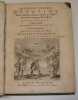
4to. (38),44,(2),46,140,36,32,212,(23),56 p. Overlapping vellum 20.5 cm (Ref: STCN ppn 840085141; Breugelmans 1652:10B; Schoenemann I,71; not in Brunet; Graesse 4,534; Ebert 14107) (Details: Title in red & black. Engraved printer's mark on the title depicting a farmer stamping a shovel into the ground, he is flanked by a woman holding a cornucopiae, and a woman holding an ancre, above the head of the farmer the motto: 'fac et spera'. According to Breugelmans there are 2 issues of this edition: 1652:10A and 1652:10B; 10A shows on the title 3 lines printed red, and 10B (our copy) has 5 lines printed red; 10B also has 2 cancels (leaves *2 and E4); in our copy these 2 leaves have not been cancelled; our copy is conform the copy in the University Library of Leiden, UBL 503 C 2) (Condition: Cover somewhat soiled. Small ink stain, only touching the top of the right upper corner of the first 30 pages; small ownership inscription on the title. Some gatherings browning. Some small spots of paper near the inner gutter of the front pastedown eaten away; our copy lacks leaf pi2, the leaf after the title, showing the table of contents) (Note: The Octavius is a dialogue in defence of the christian religion, and perhaps the oldest literary work of christian Latin. It was written by Minucius Felix, who lived in the second or third cent. A.D. In it he tries to prove that christian principles were not contrary to pagan culture, and that the Greek and Roman philosophers paved the path for christianity. The inspiration seems to come from Cicero's dialogue 'De Oratore'. The dialogue starts with Minucius recollections of the friendship he had with the recently deceased christian advocate Octavius. The setting is Ostia, 'amoenissima civitas' (1,2). Minucius, Octavius Januarius, and the heathen Caecilius have come there to enjoy their holiday, free from 'iudicariam curam'. Caecilius then launches a vehement attack upon the christians and their doctrines. It is the opinion of Octavius that no honorable Roman should leave a friend in the darkness of ignorance. He ridicules the folly of heathen fables, and proves the existence of providence and of God. Octavius warmly praises the purity, courage and other virtues of the christians. At the end Caecilius acknowleges himself vanquished and converted. Jacobus Ouzelius (Oiselius), 1631-1686, born as Jacques Oisel (Oesel) in Dantzig, was only 21 when he edited this book. Although destined for a commercial career, he chose to study classical literature in Leyden. Later he switched to law and became professor of law in Groningen. He also edited Gaius and Gellius. (Van der Aa, vol. 14, p. 59) Ouzelius says in the 'praefatio' that he hopes that the reader will forgive him any mistakes, without 'livor' and 'maledicentia'. He dedicates the book to Queen Christina of Sweden. Well, if we may believe Schoenemann, Christina had reason for complaint. Schoenemann is very critical about Ouzelius. He calls him a 'futilissimus commentator'. 'Omnia apta inepta incredibile stupore et imprudentia corrosa sunt'. The value of this edition lies in the printed commentaries of previous commentators. The reader should skip the 212 p. filled with notes by Ouzelius, and consult the presented notes of Nicolaas Rigaltius (32 p.), or Desiderius Heraldus, or the 'liber commentarius ad M. Minucii Felicis Octavium' by G. Elmenhorst (140 p.), or the notes of J.A. Wouwer (46 p.). Nic. Rigaltius, (Rigault) 1577-1624 (See Sandys 2,283); Desiderius Heraldus, ca. 1579-1649, professor of Greek at Sedan (See Sandys 2,287). J.A. Wowerius, 1574-1612, was a pupil of Scaliger, and helped him with his Petronius edition. Wowerius published his edition and commentary earlier in 1603 at Copenhagen (See Sandys 2,287). Elmenhorst published in 1612 at Hamburg a text and commentary on Minucius Felix (See Schoenemann I,71). At the end has been added 'De errore profanarum religionum' by Julius Firmicus Maternus, edited by Wowerius, with his commentary. Firmicus lived in the 4th century A.D. In this work he urges the emperors Constans and Constantius, both sons of Constantine the Great, the man who in 313 A.D. had declared christianity to be the state religion, to abolish paganism) (Provenance: Engraved armorial bookplate (with ducal coat of arms?) on the front pastedown: 'Bibliothek Oberherrlingen, 1839' with the initials 'E. M.' on it of Eugen, Freiherr von Maucler, 1783-1859. The name of Paul Friedrich Theodor Eugen Maucler is connected with the legislation of the kingdom of Württemberg under 'König Wilhelm'. In 1818 he became minster of justice. His legislative work gave him great influence. He was hated by the liberals and resigned in 1848. (ADB 20, p. 687-688) Having bought 'Schloss Herrlingen' Maucler had room enough to build a huge library. Libraries all over the world hold a host of valuable incunabula and 16th century books from his library. The incunabula were sold at the beginning of last century) (Collation: pi1 (lacking leaf pi2) *2, 2*-5*4, A-E4 F2; A2 B-F4, G2; a2 b-3k4; A-G4) (Photographs on request)
L'Octavius de Minucius Felix.
Paris, Claude Barbin, 1662. 1 vol. petit in-12, veau brun moucheté, dos à nerfs orné de caissons dorés, roulette dorée sur les coupes, tranches mouchetées de rouge. Reliure de l'époque, charnière sup. fendillée par endroits. Agréable exemplaire. Ex-libris héraldique au contreplat d'Antoinette de Morant, dame de Rupierre et de Biéville, et ms. d'Herville sur le titre. (6) ff., 129 pp., (3) pp. Quelques mouillures claires en début de volume.
La traduction de Perrot d'Ablancourt avait paru pour la première fois en 1637. Minutius Felix (IIIe siècle), l'un des premiers apologistes du christianisme fut imprimé pour la première fois en 1560. Son dialogue Octavius est l'un des premiers argumentaires sérieux qui défende la religion chrétienne face au polythéisme. Il emprunte aux platoniciens le style et la méthode pour emporter la conviction par une argumentation simple.
Marcus Minucius Felix met een Nederlandsche vertaling van P.H. DAMSTÉ.
Amsterdam, H.J. Paris, 1936.
XV,218 p. Half cloth. 20 cm (OiN 263; Hermeneus serie 1; Introduction, Latin text with opposing translation) (Head of the spine slightly chafed)
Marcus Minucius Felix met een Nederlandsche vertaling van P.H. Damsté.
Amsterdam, H.J. Paris, 1936.
XV,218 p. Cloth. 20.5 cm (OiN 263; Hermeneus serie 1; Latin text with parallel translation) (Head of the spine slightly chafed)
Marcus Minucius Felix met een vert. van P.H. DAMSTÉ.
Amst., Paris, 1936.
XV,218 p. H.cl. (OiN 263; Hermeneus serie 1; t. & tr.)
Quid Minucius Felix in conscribendo dialogo Octavio sibi proposuerit.
Amst., Kruyt, 1915.
(IX),188 p. Wrs. 24 cm (Diss., VU)
Quid Minucius Felix in conscribendo dialogo Octavio sibi proposuerit.
Amst., Kruyt, 1915.
(IX),188 p. Wrs. 24 cm (Diss., VU)
Apologetiek en christendom in den Octavius van Minucius Felix.
Maastricht, Boosten & Stols, 1935.
132 p. Wrs. 24 cm (Diss., Leiden)(Sl. worn at the corners)
[APPELMANS] - Marcus Minucius Felix - Jacques Oisel - Julius Firmicus Maternus - Johann van der Wowern - Francois Baudouin
Reference : 17207
(1672)
M. Minucii Felicis Octavius.
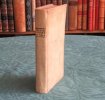
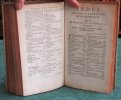
M. Minucii Felicis Octavius. Cum integris omnium notis ac commentariis, novaque recensione Jacobi OuzelI. Cujus et accedunt animadversiones. Insuper Johannis Meursii notæ. Et liber Julii Firmici Materni v.c. De errore profanarum religionum.Apologie de Marcus Minucius Félix en latin. Titre-frontispice de Appelmans.Lugduni Batavorum, Ex Officina Hackiana - 1672. Un titre frontispice, page de titre, 22 feuillets et 352 pages, suivi de : Julii Firmici Materni V.C. De Errore Profanarum Religionum ad Constantium et Constantem Augg. Joan A Wower recensuit 64 pages. Nomina Auctorum et Index.Reliure plein vélin ivoire à la hollandaise. Titre imprimé en noir au dos. Tranches rouges. Pas de rousseur. Très bon état. Format in-8°(20x12).
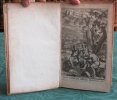
APPELMANS
L'OCTAVIUS de MINUCIUS FELIX.
Imprimerie De Z. Durand Lyon 1823 In-8 ( 210 X 130 mm ) de 238 pages, pleine basane fauve racinée, dos lisse orné de filets, palettes et fleurons dorés, pièce de titre de maroquin grenat, coupes et coiffes filetées d'or, guirlande dorée d'encadrement sur les plats, tranches marbrées ( Reliure de l'époque ). Texte latin avec traduction française en regard. Très minimes usures, bel exemplaire.
BIBLIOTHECA SANCTORUM PATRUM, SERIES TERTIA, SCRIPTORES LATINI ANTENICAENI, BIBLIOTHECAE SER. III, VOL. I, II, III
Ex Officina Typographica Forzani et Socii, Romae. 1902. In-8. Relié demi-cuir. Etat d'usage, Couv. convenable, Dos fané, Quelques rousseurs. 147 + 256 pages pour le vol. I et 636 pages pour le vol. II. Etiquettes de code sur les couvertures. Quelques tampons de bibliothèque.. . . . Classification Dewey : 470-Langues italiques. Latin
(Rare) 'Bibliotheca Sanctorum Patrum', Series Tertia, Scriptores Latini Antenicaeni. Curante Iosepho VIZZINI. M. Minucius Felix, Octavius. Tertullianus, Apologeticum, De Praescriptione Haereticorum, De Testimonio Animae, de Baptismo, De Poenitentia, De Oratione, De Pudicitia, Adversus Marcionem. Classification Dewey : 470-Langues italiques. Latin
L'OCTAVIUS DE MINUCIUS FELIX
Imprimerie de Z. Durand, Lyon. 1823. In-8. Broché. Etat d'usage, Couv. légèrement passée, Dos fané, Rousseurs. 238 pages. Texte en latin et en français en regard. Couverture muette détachée. Dos consolidé. Etiquette de code sur la couverture. Quelques tampons de bibliothèque. Pages de faux-titre et de titre partiellement jaunies. Annotations en page de faux-titre (ex-libris). Cahiers se détachant.. . . . Classification Dewey : 870-Littératures des langues italiques. Littérature latine
Nouvelle Traduction par Antoine Péricaud (Lyon), avec le Texte en regard et des Notes. Classification Dewey : 870-Littératures des langues italiques. Littérature latine
L'Octavius de Minucius Félix. Nouvelle traduction, par Antoine Péricaud. Avec le texte en regard et des notes.
Lyon, Imprimerie Z. Durand, 1823, in 8° broché, 239pp. ; non coupé ; couverture muette de l'époque ; des rousseurs ; large mouillure claire aux 130 premières pages ; dos cassé avec manques.
Texte latin avec la traduction en regard. ...................... Photos sur demande ...................


Phone number : 04 77 32 63 69
I)M. Minucii Felicis Octavius (Minucio Félix) - Marcus Minucius Félix, Ecrivain latin chrétien du IIe ou du IIIe siècle, Père de l'Église.II)(Thascius Caecilius Cyprianus) - Cyprien de Carthage, vers 200, Africain du Nord, converti au christianisme , décapité et martyr le 14 septembre 258. Evêque de Carthage, et Père de l'Église, Après saint Augustin, l'un des plus grands témoins de la doctrine de l'Église latine des premiers siècles.III)(Iulius Firmicus Maternus) - Julio Fírmico Materno - Ecrivain et Astrologue sicilien. Début du IVe siècle ap. J.-C.. Sénateur, abandonna la politique pour s'occuper "de l'humanisme".
Reference : 28126
(1709)
Cum integris Woweri, Elmenhorsth, Heraldi & Rigaltii notis aliorumque hinc inde collectis. Ex recensione Jacobi Gronovii qui emendatines ed explicationes suas adjecit. Accedunt Caecilius Cyprianus de idolorum vanitate - Julii Firmici Materni V. C. De errore profranarum religionum ad Constantium ad Constantem augg - Dissertatio francisci Balduini JC in M. Minucii Felicis Octavium
1709 Lugduni Batavorum, Cornelium Boutestein y Samuelsem Luchtmans, 1709 - In-8 - Reliure plein vélin de l'époque, avec au 1 er & 4 ème Plats : Représentation d'une Romaine en relief (dorée), des fleurons, entourés par des écoinçons dorés - Dos lisse, Titre écrit àla plume - Page de titre, vignette représentant une Scène d'agriculture - toutes tranches rouges quelques gravures - (20)- 496-(24) pages -Ex-libris manuscrit Gwelc'han Le scouezec - bon exemplaire - envoi rapide et soigné
Recueil de trois oeuvres importantes apologétiques. I) L'Octavio de Minucio Félix, célèbre dialogue philosophique ou la dispute que soutient le païen Cecilio, le chrétien Octavio et l'auteur qui se présente avec le nom de Marcos. Dans ce dialogue il montre que la foi chrétienne peut se concilier avec la culture traditionnelle, notamment avec la philosophie : les grands philosophes ont été les précurseurs de la doctrine chrétienne et ont approché de la vérité sans y parvenir pleinement.II) Le traité de l'inutilité des idoles, de Cipriano un évêque de Carthage.III) Enfin, l'ouvrage finit avec l'oeuvre de Firmicio Materno sur les erreurs des religions profanes. Cette oeuvre essaie de convaincre de la supériorité du christianisme sur les "religions superstitieuses et licencieuses des païens". Conformément à nos conditions générales de vente :Les frais de port sont affichés à titre indicatif. Il se peut que nous devions vous contacter pour vous informer du coût de laffranchissement supplémentaire en fonction du poids et du nombre de livres, surtout pour les envois internationaux Cependant vu l'augmentation des tarifs postaux à l'internationale, nous pouvons expédier les ouvrages en point relais MONDIAL RELAY pour les pays suivants : Allemagne, Autriche, Belgique, Espagne, Italie, Luxembourg, Pays-Bas, Pologne, et Portugal. Merci de nous indiquer en retour le point relais choisi ainsi que votre numéro de téléphone mobile & adresse Courriel pour assurer le suivi du colis.N'hésitez pas à nous interroger.In accordance with our general terms and conditions of sale:Shipping costs are displayed for informational purposes only. We may need to contact you to inform you of the additional postage costs depending on the weight and number of books, especially for international shipments.However, given the increase in international postal rates, we can ship books via Mondial Relay to the following countries: Germany, Austria, Belgium, Spain, Italy, Luxembourg, Netherlands, Poland, and Portugal. Please provide us with your chosen Mondial Relay point, as well as your mobile phone number and email address to ensure package tracking.Please feel free to contact us with any questions
I)M. Minucii Felicis Octavius (Minucio Félix) - Marcus Minucius Félix, Ecrivain latin chrétien du IIe ou du IIIe siècle, Père de l'Église.II)(Thascius Caecilius Cyprianus) - Cyprien de Carthage, vers 200, Africain du Nord, converti au christianisme , décapité et martyr le 14 septembre 258. Evêque de Carthage, et Père de l'Église, Après saint Augustin, l'un des plus grands témoins de la doctrine de l'Église latine des premiers siècles.III)(Iulius Firmicus Maternus) - Julio Fírmico Materno - Ecrivain et Astrologue sicilien. Début du IVe siècle ap. J.-C.. Sénateur, abandonna la politique pour s'occuper "de l'humanisme".Minucii Felicis Octavius, Thascius Caecilius Cyprianu, Iulius Firmicus Maternus
Reference : 48750
(1709)
Cum integris Woweri, Elmenhorsth, Heraldi & Rigaltii notis aliorumque hinc inde collectis. Ex recensione Jacobi Gronovii qui emendatines ed explicationes suas adjecit. Accedunt Caecilius Cyprianus de idolorum vanitate - Julii Firmici Materni V. C. De errore profranarum religionum ad Constantium ad Constantem augg - Dissertatio francisci Balduini JC in M. Minucii Felicis Octavium
1709 Lugduni Batavorum, Cornelium Boutestein y Samuelsem Luchtmans, 1709 - In-8 - Reliure plein vélin de l'époque, avec au 1 er & 4 ème Plats : Représentation d'une Romaine en relief (dorée), des fleurons, entourés par des écoinçons dorés - Dos lisse, Titre écrit àla plume - Page de titre, vignette représentant une Scène d'agriculture - toutes tranches rouges quelques gravures - (20)- 496-(24) pages -Ex-libris manuscrit Gwelc'han Le scouezec - bon exemplaire - Réf. 48750
Recueil de trois oeuvres importantes apologétiques. I) L'Octavio de Minucio Félix, célèbre dialogue philosophique ou la dispute que soutient le païen Cecilio, le chrétien Octavio et l'auteur qui se présente avec le nom de Marcos. Dans ce dialogue il montre que la foi chrétienne peut se concilier avec la culture traditionnelle, notamment avec la philosophie : les grands philosophes ont été les précurseurs de la doctrine chrétienne et ont approché de la vérité sans y parvenir pleinement.II) Le traité de l'inutilité des idoles, de Cipriano un évêque de Carthage.III) Enfin, l'ouvrage finit avec l'oeuvre de Firmicio Materno sur les erreurs des religions profanes. Cette oeuvre essaie de convaincre de la supériorité du christianisme sur les "religions superstitieuses et licencieuses des païens". Conformément à nos conditions générales de vente :Les frais de port sont affichés à titre indicatif. Il se peut que nous devions vous contacter pour vous informer du coût de laffranchissement supplémentaire en fonction du poids et du nombre de livres, surtout pour les envois internationaux Cependant vu l'augmentation des tarifs postaux à l'internationale, nous pouvons expédier les ouvrages en point relais MONDIAL RELAY pour les pays suivants : Allemagne, Autriche, Belgique, Espagne, Italie, Luxembourg, Pays-Bas, Pologne, et Portugal. Merci de nous indiquer en retour le point relais choisi ainsi que votre numéro de téléphone mobile & adresse Courriel pour assurer le suivi du colis.N'hésitez pas à nous interroger.In accordance with our general terms and conditions of sale:Shipping costs are displayed for informational purposes only. We may need to contact you to inform you of the additional postage costs depending on the weight and number of books, especially for international shipments.However, given the increase in international postal rates, we can ship books via Mondial Relay to the following countries: Germany, Austria, Belgium, Spain, Italy, Luxembourg, Netherlands, Poland, and Portugal. Please provide us with your chosen Mondial Relay point, as well as your mobile phone number and email address to ensure package tracking.Please feel free to contact us with any questions
Octavus. Lateinisch-Deutsch.
München, Kösel, 1965. In-8, rel. éd. pleine toile verte sous jaquette, 232 pp., texte en latin et traduction en allemand, bibliographie, index in fine.
Octavius est un dialogue philosophique dans lequel est démontré que la foi chrétienne peut se concilier avec la culture traditionnelle, notamment avec la philosophie. Très bon ex. - Frais de port : -France 5,7 € -U.E. 8 € -Monde (z B : 12 €) (z C : 22 €)
M. Minucii Felicis Octavius. Uitgegeven en van commentaar voorzien door G. Quispel. (Bound with:) Tertulliani de testimonio animae. In usum Academicum collegit G. Quispel.
Leiden, E.J. Brill, 1949 & 1952.
2 volumes in 1: XVIII,83;46 p. Half cloth 19.5 cm (Rebound; ad 1: Brill, Grieksche en Latijnsche Schrijvers met Aanteekeningen; ad 2: Textus Minores) (Ballpoint marks & underlinings on 3 p.)
Octavius. Digessit, vertit, adnotavit G. RAUSCHEN.
Bonn, Hanstein, 1913.
XIV,64 p. H.cl. (Florilegium Patristicum, 8) (Ex library copy)
Octavius. Emendavit et praefatus est. Æ. BAEHRENS.
Lpz., Tbn., 1886.
35,64 p. Hardbound 18 cm (Interleaved)(Cover worn; ink annotations on front flyleaves, and on some of the interleaved pages)
Octavius. Edidit W.A. BAEHRENS.
Leiden, Théonville, 1912.
XII,89 p. Wrappers. 20 cm (Back repaired with a strip of transparant acidfree paper)
Octavius. Lateinisch-Deutsch. (Herausgegeben, übersetzt und eingeleitet von Bernhard Kytzler).
München, Kösel-Verlag, 1965.
232 p. Cloth. 19.5 cm (Introduction, Latin text & parallel German translation, 'Anhang') (Including dustjacket)
Octavius. Uitgegeven en van commentaar voorzien door G. QUISPEL.
Leiden, Brill, 1949.
18,83 p. Wrs. 19 cm (BrGLS)(Pencil on first 20 p.)
Octavius. Van inleiding en aanteekeningen voorzien door J. VAN WAGENINGEN.
Utrecht, Ruys, 1923.
2 volumes: 80;202 p. Cloth. 21 cm
Octavius. Van inleiding en aanteekeningen voorzien door J. VAN WAGENINGEN.
Utrecht, Ruys, 1923.
2 vols: 80;202 p. Cl.

