 Write to the booksellers
6 books for « medina de pedro »Edit
-
Topics
History (1)
Illustrated books (1)
Liturgy (2)
Musicology (2)
Religions (1)
-
Countries
Belgium (3)
France (3)
-
Syndicate
ILAB (2)
SLAM (2)
L'art de naviguer de Maistre Pierre de Medine, Espaignol: contenant toutes les reigles, secrets, et enseignemens necessaires, à la bonne navigation.
<p>Facsimilé de «L'art de naviguer« 1554.</p> Milan, 1974 115 p., relié sous emboîtage. 21,5 x 33,5
Occasion
L’Art de naviguer de M. Pierre de Medine, espagnol, Contenant toutes les reigles, secrets & enseignemens necessaires à la bonne navigation. Traduict de Castillan en François, avec augmentation & illustration de plusieurs figures & annotations par Nicolas de Nicolai, du Dauphiné, Géographe du Très-chrestien Roy Henry II de ce nom & dédié à sa très Auguste Majesté. Exemplaire complet de la grande carte dépliante de l’Amérique et du Nouveau Monde de L’Art de naviguer de Medina, en fine condition.
Les bibliographes sont unanimes à souligner l’importance du traité et l’extrême rareté de toutes les premières éditions. Lyon, Guillaume Rouillé, 1569. In-4 de (4) ff., 225 pp., (6) pp. de table, (1) p.bl., nombreux bois dans le texte, 1 grande carte dépliante. Maroquin bleu janséniste, dos à nerfs, double filet or sur les coupes, double filet or intérieur, tranches dorées. Rivière & Son. 240 x 167 mm.
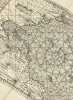
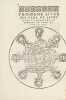
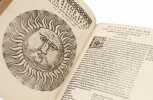
Troisième édition en français, rare, du célèbre « Art de Naviguer » de Médina, traité essentiel pour l’étude de la navigation dans les eaux américaines mais aussi pour l’histoire de la cartographie. Borba de Moraes, Bibliographia Brasiliana, p. 550 ; Sabin, Dictionary of books relating to America, 558-559; Medina, Bibliotheca Hispano-Americana, p. 189 ; Baudrier. IX, 280. La première avait été imprimée elle aussi par G. Rouillé à Lyon en 1554. Six exemplaires sont répertoriés de la seconde, Lyon, 1561, dont 5 dans des bibliothèques publiques : Cambridge, B.N.F., Angers, Beauvais, Lyon. Conçu comme un manuel d’instruction pour les navigateurs et explorateurs du nouveau monde, « l’Art de naviguer » est le premier traité donnant des informations fiables sur la navigation près des côtes Américaines. Il était basé sur les informations données par les navigateurs utilisant la route des Indes. Pedro de Medina (1493-1576) occupait le poste de bibliothécaire pour le Duc de Medina. Chargé de préparer l’élaboration de cartes et de précis de navigation par l’empereur Charles V, il fut nommé « cosmographe d'honneur » en 1549. « L’Art de naviguer », imprimé à Valladolid en 1545, connut un succès foudroyant et fut traduit dans les années suivantes en italien, français et allemand. Les bibliographes sont unanimes à souligner l’importance du traité et l’extrême rareté de toutes les premières éditions. « The first edition is very rare. When complete, and in good condition, it commands one of the highest prices for works on navigation. All of Medina’s editions are in fact rare ». Borba de Moraes. Edition imprimée en caractères italiques et illustrée de très nombreux diagrammes et figures sur bois précisant aux navigateurs la navigation en fonction des vents, en fonction du soleil, en fonction de l’étoile du Nord, en fonction de la lune. Deux cartes ornent en outre l’ouvrage. La première représente le monde, avec les 5 continents, insérée dans la ronde des vents (p. 38). La seconde, dépliante, et intitulée « Nouveau monde » (360 x 250 mm) représente l’Europe de l’Ouest, l’Afrique, les côtes Nord de l’Amérique du Sud avec le Brésil, l’Amérique centrale, et les côtes atlantiques de l’Amérique du Nord. Cette carte précieuse gravée sur cuivre est signée N. de Nicolay, géographe du Roi. Elle représente pour une grande partie les terres nouvellement découvertes en Amérique et elle est remarquable pour les détails portés sur l’Isthme de Panama et pour la frontière établie par le Pape entre les possessions outre-mer de l’Espagne et du Portugal. Ce fut l’une des premières cartes imprimées en Espagne au XVIe siècle. Exemplaire complet d’un traité majeur de voyage et de navigation. Un seul exemplaire de la seconde édition, Lyon 1561, a subi le feu des enchères depuis 30 ans : Christie 's New York, 8 octobre 1991, relié avec Thevet, La France Antarctique. Il fut adjugé $65,000. Relié en maroquin signé de Rivière et bien complet de la grande carte dépliante de l’Amérique du nouveau monde, le présent exemplaire est en parfaite condition.


Jo o Pedro d'Alvarenga, Manuel Pedro Ferreira, Alberto Medina de Sei a (eds)
Reference : 68509
Fragmenta Musicae Contemporary Perspectives
, Brepols - Harvey Miller, 2025 Paperback, Pages: 542 p. Size:178 x 254 mm, Illustrations:10 b/w, 67 col., 33 tables b/w., 2 tables col., 90 musical examples, Language English. nEW. ISBN 9782503613000.
Summary This volume stems from a research project on medieval and sixteenth-century fragments with music carried out at CESEM?Centre for the Study of the Sociology and Aesthetics of Music, Lisbon Nova University, between 2021 and 2024, as well as from an international colloquium on fragmentology held in Cascais, Portugal, in July 2023. It brings together twenty studies that address a varied range of disjecta membra, including loose folios from dismembered manuscripts, mutilated musical-liturgical codices, incomplete sets of part-books, truncated musical settings, and even the remains of a historic organ. The aim is to invest these materials with significance beyond their condition as fragmented cultural artefacts by exploring their texts, contexts, meanings, trajectories and, when appropriate, proposing methods for their reconstitution. TABLE OF CONTENTS Introduction I. Fragments in Collections Fragments at a Crossroad of Disciplines: The Case of the Liber Demetrii de Lasko Zsuzsa Czag ny Reflected and Refracted: A Fragment Collection from Trier Anna de Bakker Eighteenth-Century Musical Fragmentology and Early-Modern Musical Historiography Giovanni Varelli II. Fragments and Contexts Fragments and Places: Establishing Connections Manuel Pedro Ferreira Vestiges from the Time Before the Reformation of Subiaco-Melk David Merlin Contextualising a Polyphonic Fragment: The Salve regina by Dom Bento in Coimbra MM 12 Bernadette Nelson III. Wandering Fragments The Journey of Liturgical Fragments from England, France, Germany, and Italy to Coimbra: A Contribution to Book History in Portugal Oc ane Boudeau and Kristin Hoefener Lost, Then Found in Canada: Stories Behind Some Medieval Manuscript Fragments that Have Journeyed Across the Ocean Debra Lacoste IV. Studies on Fragments The Earliest Plainchant Fragments of Hungarian Provenance? Interpreting Two Twelfth-Century Troper-Proser Leaves from ?ibenik Gabriella Gil nyi New Insights into a Thirteenth-Century Fragmentary Breviary: The Case of MS Porto 1151 Diogo Alte da Veiga Fragments on the Margins of an Antiphoner Kathleen Nelson and Nathan Cox Fragmentary Motets in Coimbra Sources from the 1570s Jo o Pedro d?Alvarenga V. Studies with Fragments The Pentecost Responsory Erant omnes apostoli, its Borrowed Melismas, a Rare Prosula, and Portuguese Fragments Containing It Jo o Pedro d?Alvarenga Some Rare Responsory Verses in Portuguese Fragments: A CANTUS-based Assessment Giulio Minniti From London to Portugal: Musical Notation as a Marker of Identity Susan Rankin Iberian Liturgical Offices Celebrating Military Successes: Echoes of Victory in a Plainchant Fragment (Coimbra, Arquivo Hist rico Municipal, B60/36) Alberto Medina de Sei a Extrapolating from Fragments: A Portuguese Case Study Owen Rees VI. Reconstructing from Fragments A Data-Based Approach to the Reconstruction of Missing Voice-Parts in Seventeenth-Century Polyphony Ana Silva Sousa and Nuno de Mendon a Raimundo The Collection of Latin Sacred Music in P-BRad MS 964: Identification and Reconstitution of its Contents Andrew Woolley In Search of a Lost Sound: Intervention Options Towards the Fragmented Material of a Historic Organ Jo o Vaz and Andr Ferreira Contributors List of Manuscript and Archival Sources Bibliography Index
Jo o Pedro d'Alvarenga, Manuel Pedro Ferreira, Alberto Medina de Sei a (eds)
Reference : 68034
Fragmenta Musicae Contemporary Perspectives
, Brepols - Harvey Miller, 2025 paperback, 542 pages, Size:178 x 254 mm,Illustrations:10 b/w, 67 col., 33 tables b/w., 2 tables col., 90 musical examples, Language: English. *new. ISBN 9782503613000.
This volume stems from a research project on medieval and sixteenth-century fragments with music carried out at CESEM?Centre for the Study of the Sociology and Aesthetics of Music, Lisbon Nova University, between 2021 and 2024, as well as from an international colloquium on fragmentology held in Cascais, Portugal, in July 2023. It brings together twenty studies that address a varied range of disjecta membra, including loose folios from dismembered manuscripts, mutilated musical-liturgical codices, incomplete sets of part-books, truncated musical settings, and even the remains of a historic organ. The aim is to invest these materials with significance beyond their condition as fragmented cultural artefacts by exploring their texts, contexts, meanings, trajectories and, when appropriate, proposing methods for their reconstitution. TABLE OF CONTENTS Introduction I. Fragments in Collections Fragments at a Crossroad of Disciplines: The Case of the Liber Demetrii de Lasko Zsuzsa Czag ny Reflected and Refracted: A Fragment Collection from Trier Anna de Bakker Eighteenth-Century Musical Fragmentology and Early-Modern Musical Historiography Giovanni Varelli II. Fragments and Contexts Fragments and Places: Establishing Connections Manuel Pedro Ferreira Vestiges from the Time Before the Reformation of Subiaco-Melk David Merlin Contextualising a Polyphonic Fragment: The Salve regina by Dom Bento in Coimbra MM 12 Bernadette Nelson III. Wandering Fragments The Journey of Liturgical Fragments from England, France, Germany, and Italy to Coimbra: A Contribution to Book History in Portugal Oc ane Boudeau and Kristin Hoefener Lost, Then Found in Canada: Stories Behind Some Medieval Manuscript Fragments that Have Journeyed Across the Ocean Debra Lacoste IV. Studies on Fragments The Earliest Plainchant Fragments of Hungarian Provenance? Interpreting Two Twelfth-Century Troper-Proser Leaves from ?ibenik Gabriella Gil nyi New Insights into a Thirteenth-Century Fragmentary Breviary: The Case of MS Porto 1151 Diogo Alte da Veiga Fragments on the Margins of an Antiphoner Kathleen Nelson and Nathan Cox Fragmentary Motets in Coimbra Sources from the 1570s Jo o Pedro d?Alvarenga V. Studies with Fragments The Pentecost Responsory Erant omnes apostoli, its Borrowed Melismas, a Rare Prosula, and Portuguese Fragments Containing It Jo o Pedro d?Alvarenga Some Rare Responsory Verses in Portuguese Fragments: A CANTUS-based Assessment Giulio Minniti From London to Portugal: Musical Notation as a Marker of Identity Susan Rankin Iberian Liturgical Offices Celebrating Military Successes: Echoes of Victory in a Plainchant Fragment (Coimbra, Arquivo Hist rico Municipal, B60/36) Alberto Medina de Sei a Extrapolating from Fragments: A Portuguese Case Study Owen Rees VI. Reconstructing from Fragments A Data-Based Approach to the Reconstruction of Missing Voice-Parts in Seventeenth-Century Polyphony Ana Silva Sousa and Nuno de Mendon a Raimundo The Collection of Latin Sacred Music in P-BRad MS 964: Identification and Reconstitution of its Contents Andrew Woolley In Search of a Lost Sound: Intervention Options Towards the Fragmented Material of a Historic Organ Jo o Vaz and Andr Ferreira Contributors List of Manuscript and Archival Sources Bibliography Index
Doctrina cristiana para instruccion de los indios, redactada por Fr. Pedro de Cordoba O.P. y otros religiosos doctos de la misma orden. Impresa en Mexico, 1544 y 1548
Salamanca, Editorial San Esteban 1987 443pp., 21cm., softcover, in the series "Los Dominicos y America" volume 2, good condition, [Contains a.o. the two texts in facsimile edition, together with modern translation in Spanish], R105847
Cisterciensium seu verius Ecclesiasticorum Annalium a condito Cistercio, tomus secondus : Continens ab Anno M.C.XLV. usque ad M.C.LXXIII.
Lyon, héritiers de G. Boissart et Laurent Anisson, 1642. 1 vol. in-folio, maroquin La Vallière, dos à nerfs orné de caissons dorés aux petits fers, plats richement ornés d'un décor en trompe d'oeil composé de filets dorés droits et courbes et de spirales délimitant des compartiments polylobés comprenant des écailles stylisées, des bouquets de fleurs, des vases et des rameaux d'olivier, armoiries dorées au centre entourées des initiales S.B., tranches jaspées de rouge. Reliure de l'époque. Des listels spiralés ont été rehaussés postérieurement à la cire vieux rose, coins légèrement émoussés, petit accroc avec manque à la coiffe de queue. Titre-frontispice hors-texte gravé en taille-douce par Audran, (18) ff., 550 pp., (1) f. blanc; 52 pp., (60) ff. de table. Rousseurs, mouillures marginales aux feuillets de table.
Edition originale du second volume des Annales cisterciennes composées par Angel Manrique (Burgos 1577 - 1649), abbé du collège San Bernardo de Salamanque de 1626 à 1645, abbé général de l'ordre de Cîteaux, puis évêque de Badajoz jusqu'à sa mort. La publication des quatre volumes de ces Annales cisterciennes s'étala entre 1642 et 1659. Cet ouvrage est sans conteste l'une des meilleures historiographies des premiers temps de l'ordre de Cîteaux, même si on a reproché à son auteur d'avoir parfois consulté des sources peu fiables. Manrique a puisé dans les riches archives de Salamanque et avait fait venir de nombreux documents de France, des Flandres, d'Allemagne et d'Italie. Ce second volume couvre la période de 1145 à 1173. Exceptionnelle reliure baroque italienne, attribuable à un atelier romain de l'entourage de l'atelier des Rospigliosi. Les fers utilisés sont différents mais la source iconographique au décor architectural en trompe l'oeil en est très proche. Un premier volume du Cisterciensium Annalium, recouvert de la même reliure, fut présenté au Palazzo Braschi à Rome en 1991 lors de l'exposition consacrée à la reliure baroque romaine. Exemplaire de dédicace, probablement aux armes de l'auteur, abbé du collège San Bernardo de Salamanque. Les armoiries non identifiées lors de l'exposition de 1991 sont très vraisemblablement les siennes, les initiales S.B. portées de part et d'autre du blason désignant San Bernardo dont il était l'abbé. Graesse IV, 368; Legatura Romana Barocca, Rome, 1991, n°46.

