 Write to the booksellers
499 books for « maxwell w b »Edit
-
Type
Book (493)
Music sheets (9)
-
Latest
Last month (3)
Last week (2)
-
Language
English (9)
French (467)
Russian (26)
-
Century
16th (2)
17th (1)
18th (1)
19th (35)
20th (224)
21st (20)
-
Countries
Belgium (14)
Canada (3)
Côte d'Ivoire (1)
Denmark (28)
France (394)
Germany (1)
Switzerland (34)
United Kingdom (1)
United States of America (26)
-
Syndicate
ALAC (3)
ILAB (220)
NVVA (3)
SLACES (3)
SLAM (183)
Topics
- Agriculture (1)
- Aquitaine (2)
- Architecture (5)
- Asia - orient (3)
- Bordelais (3)
- Cartomancy (1)
- Children’s books (2)
- China (3)
- China (4)
- Christmas (2)
- Coetzee john maxwell (3)
- Constable (2)
- Contemporary look (2)
- Cooking (5)
- Criminology (3)
- Crosby bing (1)
- Dedication (3)
- Demonology (2)
- Detective novels (14)
- Earth (1)
- Electricity (2)
- England (5)
- English (27)
- English literature (2)
- Esotericism (3)
- Ethnology (3)
- Fine arts (3)
- First edition (3)
- Fishing (4)
- forensic medicine (1)
- French literature (2)
- Guide books (4)
- Health (3)
- Healthcare (4)
- Hermeticism (3)
- History (9)
- Home economics (1)
- Hunting (1)
- Hygienics (2)
- Journalism (1)
- Judith (3)
- Lamp (2)
- Law (4)
- Literature (36)
- Liturgy (2)
- Magnetism (3)
- Mathematics (3)
- Maxwell gavin (15)
- Medicine (8)
- Memories (3)
- Mollusks (1)
- Moore thomas (1)
- Moreno dario (1)
- Murder (2)
- Newspapers press (2)
- Philosophy (3)
- Physics (19)
- Policy (1)
- Popular novel (2)
- Psychology (5)
- Rose-croix (3)
- Sciences (2)
- Scores (6)
- Social sciences (1)
- Songs (6)
- Speeches (1)
- Spiritualism (1)
- Subconscious (2)
- Symbolism (4)
- Tarot (2)
- Tea (8)
- Telepathy (2)
- Theatre (3)
- Translation (2)
- United kingdom (3)
- Various (2)
- Vaucaire michel (1)
- War (1)
- Witchcraft (2)
- Youth (2)
- Zoology (1)
Apprends-moi à cuisiner
Manise Cartonné 1996 In-4 (26 x 33,6 cm), cartonné, 41 pages, illustrations en couleur ; premier plat décoloré, par ailleurs très bon état. Livraison a domicile (La Poste) ou en Mondial Relay sur simple demande.


J'ai recu le monde entier
Bibliothèque Amiot Dumont Toute la ville en parle Broché 1955 In-8 (16 x 21,5 cm), broché, 290 pages ; pliures au dos et dans les coins des plats, quelques traces au quatrième plat, état moyen. Livraison a domicile (La Poste) ou en Mondial Relay sur simple demande.
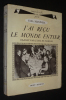
Martin Daltier, détective (Collection d'Aventures, n°438)
Edition de la Collection d'Aventures Collection d'aventures Fascicule In-12 (14,2 x 19 cm), fascicule agrafé, 48 pages, sans date, n°438 de la Collection d'Aventures ; quelques traces et marques d'usage sur le bord des plats, bon état général pour ce type de publication relativement fragile. Livraison a domicile (La Poste) ou en Mondial Relay sur simple demande.
"MAXWELL, JAMES CLERK. - THE ""MAXWELL-DISTRIBUTION""S FINAL FORM.
Reference : 41873
(1866)
""On the Dynamical Theory of Gases."" Received May 16, - 1866.
(London, Taylor and Francis, 1866). No wrappers, as extracted from""Proceedings of the Royal Society of London."", Vol. XV. May 16, 1866. Pp 167-171.
First appearance of this seminal paper (in the abstract-version from ""Proceedings""), representing the announcement of Maxwell's final ""Theory of Gases"" and introduces the ""Maxwell Distribution"" in its final form, a statistical means of describing aspects of the kinetic theory of gases, a theory, together with his electromagnetic theory, are considered to be some of the greatest advances in physics of all times. The paper offered, only 5 pages, is an abstract of a paper with the same title, which was printed in full in ""Philosophical Transactions"" in 1868. Everett considers this paper (1868) to be Maxwell's greatest single paper.The ""abstract"", which announces his discovery was printed the year before the larger paper. Maxwell's discoveries laid the foundations of special relativity and quantum mechanics.One of Maxwell's major investigations was on the kinetic theory of gases. Originating with Daniel Bernoulli, this theory was advanced by the successive labours of John Herapath, John James Waterston, James Joule, and particularly Rudolf Clausius, to such an extent as to put its general accuracy beyond a doubt" but it received enormous development from Maxwell, who in this field appeared as an experimenter (on the laws of gaseous friction) as well as a mathematician.In 1866, he formulated statistically, independently of Ludwig Boltzmann, the Maxwell-Boltzmann kinetic theory of gases. His formula, called the Maxwell distribution, gives the fraction of gas molecules moving at a specified velocity at any given temperature. In the kinetic theory, temperatures and heat involve only molecular movement. This approach generalized the previously established laws of thermodynamics and explained existing observations and experiments in a better way than had been achieved previously. Maxwell's work on thermodynamics led him to devise the Gedankenexperiment (thought experiment) that came to be known as Maxwell's demon.
"MAXWELL, JAMES CLARK. - THE ""MAXWELL-DISTRIBUTION""S FINAL FORM - A MAIN PAPER IN 19TH CENTURY PHYSICS.
Reference : 43456
(1867)
""On the Dynamical Theory of Gases."" Received May 16, - Read May 31, 1866.
London, Taylor and Francis, 1867. 4to. No wrappers as extracted from ""Philosophical Transactions"", Vol. 157 - Part I. Titlepage to volume 155 and pp. 49-88. Titlepage with minor light browning at corners. Internally clean. A small stamp on verso of titlepage.
First appearance of this seminal paper (in its full version from ""Transactions""), representing the announcement of Maxwell's final ""Theory of Gases"" and introduces the ""Maxwell Distribution"" in its final form, a statistical means of describing aspects of the kinetic theory of gases, a theory, together with his electromagnetic theory, are considered to be SOME OF THE GREATEST ADVANCES IN PHYSICS OF ALL TIMES. Everett considers this paper (1868) to be Maxwell's greatest single paper. Maxwell's discoveries laid the foundations of special relativity and quantum mechanics.One of Maxwell's major investigations was on the kinetic theory of gases. Originating with Daniel Bernoulli, this theory was advanced by the successive labours of John Herapath, John James Waterston, James Joule, and particularly Rudolf Clausius, to such an extent as to put its general accuracy beyond a doubt" but it received enormous development from Maxwell, who in this field appeared as an experimenter (on the laws of gaseous friction) as well as a mathematician.In 1866, he formulated statistically, independently of Ludwig Boltzmann, the Maxwell-Boltzmann kinetic theory of gases. His formula, called the Maxwell distribution, gives the fraction of gas molecules moving at a specified velocity at any given temperature. In the kinetic theory, temperatures and heat involve only molecular movement. This approach generalized the previously established laws of thermodynamics and explained existing observations and experiments in a better way than had been achieved previously. Maxwell's work on thermodynamics led him to devise the Gedankenexperiment (thought experiment) that came to be known as Maxwell's demon.
""On the Dynamical Theory of Gases."" Received May 16, - Read May 31, 1866. - [THE ""MAXWELL-DISTRIBUTION""S FINAL FORM - A MAIN PAPER IN 19TH CENTURY PHYSICS.]
London, Taylor and Francis, 1867. 4to. Extracted and rebound in recent green plain wrappers. Title-page of vol. 157 pasted on to front wrapper. A fine copy. Pp. 49-88.
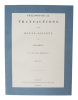
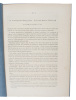
First appearance of this seminal paper (in its full version from ""Transactions""), representing the announcement of Maxwell's final ""Theory of Gases"" and introduces the ""Maxwell Distribution"" in its final form, a statistical means of describing aspects of the kinetic theory of gases, a theory, together with his electromagnetic theory, are considered to be SOME OF THE GREATEST ADVANCES IN PHYSICS OF ALL TIMES. Everett considers this paper (1868) to be Maxwell's greatest single paper. Maxwell's discoveries laid the foundations of special relativity and quantum mechanics.One of Maxwell's major investigations was on the kinetic theory of gases. Originating with Daniel Bernoulli, this theory was advanced by the successive labours of John Herapath, John James Waterston, James Joule, and particularly Rudolf Clausius, to such an extent as to put its general accuracy beyond a doubt" but it received enormous development from Maxwell, who in this field appeared as an experimenter (on the laws of gaseous friction) as well as a mathematician.In 1866, he formulated statistically, independently of Ludwig Boltzmann, the Maxwell-Boltzmann kinetic theory of gases. His formula, called the Maxwell distribution, gives the fraction of gas molecules moving at a specified velocity at any given temperature. In the kinetic theory, temperatures and heat involve only molecular movement. This approach generalized the previously established laws of thermodynamics and explained existing observations and experiments in a better way than had been achieved previously. Maxwell's work on thermodynamics led him to devise the Gedankenexperiment (thought experiment) that came to be known as Maxwell's demon.
On Faraday's Lines of Force. - [MAXWELL'S VERY FIRST PAPER ON ELECTROMAGNETISM]
London, Taylor and Francis, 1864. 4to. In plain white paper-wrappers with title-page of journal volume pasted on to front wrapper. In ""Transactions of the Cambridge Philosophical Society"", Volume 10. Fine and clean. Pp. (27)-83, (1) + the pasted on title-page.
First appearance of Maxwell's landmark - and his very first published on electromagnetism - paper in which he anticipates many of the fundamental ideas presented in his famous four-part paper ""On Physical Lines of Force"" (1861-2) in which he derived the equations of electromagnetism. The present paper ushered in a new era of classical electrodynamics and catalyzed further progress in the mathematical field of vector calculus. Because of this, it is considered one of the most historically significant publications in the field of physics and of science in general.Maxwell began his researches on electromagnetism following the completion of his studies at Cambridge in 1854. They were aimed at constructing, at a theoretical level, a unified mathematical theory of electric and magnetic phenomena that would express the methods and ideas of Faraday as an alternative to the theory of Weber."" This programme was announced in his first article, 'On Faraday's lines of force', in 1856, and continued in two other major texts, 'On physical lines of force' in 1861-1862 and 'A dynamical theory of the electromagnetic field' in 1865. According to a famous passage in its preface, the Treatise (1873) represented the outcome of this programme"" (Landmark Writings, p. 569). ""Maxwell's first paper, ""On Faraday's Line of Force"" (1855-1856), was divided into two parts, with supplementary) examples. Its origin may he traced in a long correspondence with Thomson, edited by Larmor in 1936. Part 1 was an exposition of the analogy between lines of force and streamlines in an incompressible fluid. It contained one notable extension to Thomson's treatment of the subject and also an illuminating opening discourse on the philosophical significance of analogies between different branches of physics. This was a theme to which Maxwell returned more than once. His biographers print in full an essay entitled ""Analogies in Nature,"" which he read a few months later (February 1856) to the famous Apostles Club at Cambridge" this puts the subject in a wider setting and deserves careful reading despite its involved and cryptic style. Here, as elsewhere, Maxwell's metaphysical speculation discloses the influence of Sir William Hamilton, specifically of Hamilton's Kantian view that all human knowledge is of relations rather than of things. The use Maxwell saw in the method of analogy was twofold. It crossfertilized technique between different fields, and it served as a golden mean between analytic abstraction and the method of hypothesis. The essence of analogy (in contrast with identity) being partial resemblance, its limits must be recognized as clearly as its existence" yet analogies may help in guarding against too facile commitment to a hypothesis. The analogy of an electric current to two phenomena as different as conduction of heat and the motion of a fluid should, Maxwell later observed, prevent physicists from hastily assuming that ""electricity is either a substance like water, or a state of agitation like heat. ""The analogy is geometrical: ""a similarity between relations, not a similarity between the things related."""" (DSB)The 1856 paper has been eclipsed by Maxwell's later work, but its originality and importance are greater than is usually thought. Besides interpreting Faraday's work and giving the electrotonic function, it contained the germ of a number of ideas which Maxwell was to revive or modify in 1868 and later an integral representation of the field equations (1868),the treatment of electrical action as analogous to the motion of an incompressible fluid (1869, 1873), the classification of vector functions into forces and fluxes (1870), and an interesting formal symmetry in the equations connecting A, B, E, and H, different from the symmetry commonly recognized in the completed field equations. The paper ended with solutions to a series of problems, including an application of the electrotonic function to calculate the action of a magnetic field on a spinning conducting sphere.
On the Theory of Compound Colours, and the Relations of the Colours of the Spectrum. - [MAXWELL ON THE RELATIONS OF COLOURS]
(London, Taylor and Francis, 1860). 8vo. In the original printed wrappers. In ""Proceedings of the Royal Society"", Vol. X [10], No. 39. Entire issue offered. Wrappers with a few brown spots, fine and clean. Pp. 404-408. [Entire issue: Pp. 319-494].
First printing of Maxwell's paper on a method of exhibiting the relations of colours.""Maxwell worked on the generation of white light by mixing different colors and in 1860, published the paper On the Theory of Compound Colours and its Relations to the Colours of the. In this paper, he extended the work of Thomas Young who first postulated only three colors, red, green and violet are necessary to produce any color including white and not all the colors of the spectrum are necessary as first illustrated by Newton. He also incorporated Hermann G?nther Grassman's concept that there are three variables of color vision (spectral color, intensity of illumination and the degree of saturation). Maxwell showed that these color variables can be represented on a color diagram based on three primary colors. While Newton distinguished his principal colors from the painters triad of primary colors (red, yellow and blue), he supposed the identity of mixing rule for lights and pigments. Even though Helmholtz explained that the mixture of color lights is an additive process while the mixture of pigments is a subtractive process as illustrated in Figure 2, Maxwell made experiments and developed a complete theory to explain how this happens by creating a color triangle which was originally suggested by James David Forbes and illustrated that any color can be generated with a mixture of any three primary colors and that a normal eye has three sorts of receptors as illustrated in his 1861 paper On the Theory of Three Primary Colours. He chose the three primary colors as red, green, and blue."" (Sarkar, Pp. 4-5). From 1855 to 1872, Maxwell published at intervals a series of valuable investigations concerning the perception of colour, colour-blindness and colour theory, for the earlier of which the Royal Society awarded him the Rumford Medal. The instruments which he devised for these investigations were simple and convenient to use. For example, Maxwell's discs were used to compare a variable mixture of three primary colours with a sample colour by observing the spinning ""colour top."".
On a Method of making a Direct Comparison of Electrostatic with Electromagnetic Force" with a Note on the Electromagnetic Theory of Light. (Read June 18, 1868). - [THE INTRODUCTION OF THE ""ELECTRICAL FORMULATION"" OF THE ELECTROMAGNETIC THEORY OF LIGHT.]
(London, Taylor & Francis, 1869) Large 4to. In recent blue wrappers with the title-page to vol. 158. Extracted from ""Philosophical Transactions of the Royal Society of London."", Vol. 158. Maxwell's paper: pp. 643-657. Clean and fine.
First appearance of this major paper on electromagnetic dynamics, in which Maxwell improves the groundbreaking equations he had set forth in his famous paper of 1865, the ""A dynamical Theory of Electro-Magnetic Fields"". In the paper offered here, he for the first time proposed to base the electromagnetic theory of light solely on 2 equations. The paper is one of Maxwell's 5 most importent contributions to electromagnetism.""Formulas for the forces between moving charged bodies may indeed de derived from Maxwell's equations, but the action is not along the line joining them and can be reconciled with a dynamical principle only by taking into account the exchange of momentum with the field. Maxwell remarked that the equations might be condensed, but ""to eliminate a quantity which expresses a useful idea would be rather a loss than a gain in this stage of our enquiry."" he had in fact simplified the equations in his fifth major paper, the short, but importent ""Note on the Electromagnetic Theory of Light."" (1868), writing them in an integral form without the function A, based on four postulates derived from electrical experiments. This may be called the electrical formulation of the theory, in contrast with the original dynamical formulation."" (C.W.F. Everitt in DSB).
Maxwell J. (Maxwell K.) The Theory of Heat in the Elementary Processing of Clerk
Maxwell J. (Maxwell K.) The Theory of Heat in the Elementary Processing of Clerk Maxwell. In Russian (ask us if in doubt)/Maksvell Dzh. (Maksuell K.) Teoriya teploty v elementarnoy obrabotke Klerk Maksuellya. Short description: In Russian (ask us if in doubt).Kyiv: Typography by I.N. Kushnarev 1888. 292 p. We have thousands of titles and often several copies of each title may be available. Please feel free to contact us for a detailed description of the copies available. SKUalbea69099f3be1d0fa

"MAXWELL, JAMES CLARK. - THE INTRODUCTION OF THE ""ELECTRICAL FORMULATION"" OF THE ELECTROMAGNETIC THEORY OF LIGHT.
Reference : 42029
(1869)
On a Method of making a Direct Comparison of Electrostatic with Electromagnetic Force"" with a Note on the Electromagnetic Theory of Light. (Read June 18, 1868).
(London, Taylor & Francis, 1869) Large 4to. Without wrappers. Extracted from ""Philosophical Transactions of the Royal Society of London."", Vol. 158. Maxwell's paper: pp. 643-657. Clean and fine, wide margins.
First appearance of this major paper on electromagnetic dynamics, in which Maxwell improves the groundbreaking equations he had set forth in his famous paper of 1865, the ""A dynamical Theory of Electro-Magnetic Fields"". In the paper offered here, he for the first time proposed to base the electromagnetic theory of light solely on 2 equations. The paper is one of Maxwell's 5 most importent contributions to electromagnetism.""Formulas for the forces between moving charged bodies may indeed de derived from Maxwell's equations, but the action is not along the line joining them and can be reconciled with a dynamical principle only by taking into account the exchange of momentum with the field. Maxwell remarked that the equations might be condensed, but ""to eliminate a quantity which expresses a useful idea would be rather a loss than a gain in this stage of our enquiry."" he had in fact simplified the equations in his fifth major paper, the short, but importent ""Note on the Electromagnetic Theory of Light."" (1868), writing them in an integral form without the function A, based on four postulates derived from electrical experiments. This may be called the electrical formulation of the theory, in contrast with the original dynamical formulation."" (C.W.F. Everitt in DSB).
The Bakerian Lecture. - On the Viscosity or Internal Friction of Air and other Gases. Received November 23, 1865 (+) Postscript.- Received December 7, 1865. - Read February 8, 1866.
(London, Taylor and Francis, 1866). Large 4to. Without wrappers. Extracted from ""Philosophical Transactions of the Royal Society of London."", Vol. 156 - Part I. Pp. 249-268 a. 1 lithographed plate. A few brownspots to the plate. Having the titlepage to vol. 156 - Part I. A few brownspots to lower margins.
First appearance of a major paper in the kinetic theory of gases, in which Maxwell proved that the viscosity was independent of pressure as predicted, and nearly a linear function of the absolute temperature T.One of Maxwell's major investigations was on the kinetic theory of gases. Originating with Daniel Bernoulli, this theory was advanced by the successive labours of John Herapath, John James Waterston, James Joule, and particularly Rudolf Clausius, to such an extent as to put its general accuracy beyond a doubt"" but it received enormous development from Maxwell, who in this field appeared as an experimenter (on the laws of gaseous friction) as well as a mathematician.""James Clerk Maxwell published a famous paper in 1866 (the paper offered) using the kinetic theory of gases to study gaseous viscosity. The internal friction (the viscosity) of the gas is determined by the probability a particle of layer A enters layer B with a corresponding transfer of momentum. Maxwell's calculations showed him that the viscosity coefficient is proportional to both the density, the mean free path and the mean velocity of the atoms. On the other hand, the mean free path is inversely proportional to the density. So an increase of pressure doesn't result in any change of the viscosity.
"MAXWELL, JAMES CLERK. - ESTABLISHING THE SCIENCE OF RAREFIED GAS DYNAMICS.
Reference : 42765
(1880)
On Stresses in Rarified Gases arising from Inequalities of Temperature. Recieved March 19, - Read April 11, 1878. (+) Appendix. (Added May, 1879).
(London, Harrison and Sons, 1880). 4to. No wrappers as extracted from ""Philosophical Transactions"", Year 1879, Vol. 171 - Part II. Pp. 231-256. Clean and fine.
First appearance of a major paper on Gas Dynamics, creating a whole new science. One of Maxwell's major investigations was on the kinetic theory of gases. Originating with Daniel Bernoulli, this theory was advanced by the successive labours of John Herapath, John James Waterston, James Joule, and particularly Rudolf Clausius, to such an extent as to put its general accuracy beyond a doubt"" but it received enormous development from Maxwell, who in this field appeared as an experimenter (on the laws of gaseous friction) as well as a mathematician.""Maxwell's last major paper on any subject was ""On Stresses in Rarified Gases arising from Inequalities of Temperature."" Between 1873 and 1876 the scientific world had been stirred by William Crooke's experiments with the radiometer, the well-known device composed of a partuially evacuated chamber containing a paddle wheel with vanes blackened on one side and silvered on the other, which spins rapidly when radiant heat impinges on it....Reynolds called this new effect ""thermal transpiration"". Maxwell gave a simple qualitative explanation in his report, and in an appendix added to his own paper in May 1879 he developed a semiempirical theory accounting for it and for the radiometer effect...Maxwell's paper created the science of rarified gas dynamics. His formulas for stress and heat flux in the body of the gas were contributions of permanent value, while his investigations of surface effects started a vast body of research extending to the present day...One other contribution of great beauty contained in notes added to the papwer in May and June 1879 was an application of the methods of spherical harmonic analysis to gas theory.""(DSB IX, p. 224-25).
Matter and Motion.
London, Society for Promoting Christian Knowledge, 1876. Small8vo. Original blind stamped brown cloth. End papers renewed and first two leaves reinforced in margin. Repair to lower part of title-page affecting year of printing and small label ( ""S.L.M."") to p. 128. Extremities slightly rubbed, internnaly fine and clean. Pp. viii, (9)-128, (4).
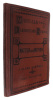
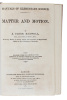
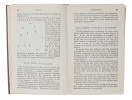
Rare first edition of Maxwell's ""masterpiece of natural philosophy, notable especially for introducing into physics the term relativity in a passage that combines strenuous scientific insight with a mystical awareness (...)"" (Routledge Encyclopedia of Philosophy, p. 209). ""Maxwell's Matter and Motion first appeared in 1876 and was reprinted before the year was out. The first American edition was printed in 1878. Following several reprints on both sides of the Atlantic, Sir Joseph Larmor added notes and appendices to produce a new edition in 1920. This edition was reprinted in 1925 and at least half-a-dozen times since 1952"" (Flood, McCartney & Whitaker, James Clerk Maxwell: Perspectives on his Life and Work (2014), p. 27). ""More light is thrown on Maxwell’s own opinions about the problem of relative and absolute motion and the connection between dynamics and other branches of physics by the delightful monograph Matter and Motion, published in 1876."" (DSB)
[J. Sereni] - Collectif ; [ SERENI ; MAXWELL, Sam ] ; DE RICCI, Seymour
Reference : 56598
(1913)
L'Art au XVIIIème Siècle. Une exposition dans les Salons du Grand Théâtre de Bordeaux. Mai 1913 [ Avec : ] Les Meubles à décoration en Angleterre 1680-1800 [ Avec : ] Le Style Louis XVI. Mobilier et Décoration
3 vol. à savoir : 1 vol. in-4 format à l'italienne br., J. Sereni, Bordeaux, 8 photos noir et blanc format 22,5 x 17 cm et 2 vol. in-4 reliure pleine toile verte éditeur, Hachette, Paris, s.d. et 1913 avec 12 autres photos jointes de l'exposition, montées sur support cartonné. Tites complets : L'Art au XVIIIème Siècle. Une exposition dans les Salons du Grand Théâtre de Bordeaux. Mai 1913 [ Avec : ] Les Meubles à décoration en Angleterre 1680-1800 [ Avec : ] Le Style Louis XVI. Mobilier et Décoration
![L'Art au XVIIIème Siècle. Une exposition dans les Salons du Grand Théâtre de Bordeaux. Mai 1913 [ Avec : ] Les Meubles à décoration en Angleterre ...](https://static.livre-rare-book.com/pictures/CDL/56598_thumb.jpg)
![L'Art au XVIIIème Siècle. Une exposition dans les Salons du Grand Théâtre de Bordeaux. Mai 1913 [ Avec : ] Les Meubles à décoration en Angleterre ...](https://static.livre-rare-book.com/pictures/CDL/56598_2_thumb.jpg)
![L'Art au XVIIIème Siècle. Une exposition dans les Salons du Grand Théâtre de Bordeaux. Mai 1913 [ Avec : ] Les Meubles à décoration en Angleterre ...](https://static.livre-rare-book.com/pictures/CDL/56598_3_thumb.jpg)
Bon et rare ensemble (mouill. marginale plus intense sur les deux derniers feuillets de l'abum, très bon état par ailleurs, ex-libris Sam Maxwell dans chacun des 3 volumes). Nous n'avons pas trouvé de traces de cet album dans les bibliothèques françaises ou étrangères. L'album propose, sans aucun commentaire ou légende, 8 vues photographiques au format 22,5 x 17 cm ; surtout, on découvre, conservées dans l'un des autres volumes, ces 8 photos ainsi que 4 photos supplémentaires (en parfait état) de la même exposition, toutes montées sur un support cartonné. Cet ensemble constitue un rare témoignage sur cette exposition. Avocat à la Cour de Bordeaux, Sam Maxwell est le fils cadet de James Maxwell, fondateur d'une dynastie de négociants bordelais d'origine irlandaise.
Current Directions in Eleventh- and Twelfth-Century Sculpture Studies.
, Brepols, 2011 XII 212 pages., 114 b/w ill., 220 x 280 mm, Languages: English,Paperback,. ISBN 9782503531656.
Robert A. Maxwell and Kirk Ambrose, Introduction: Romanesque Sculpture Studies at a Crossroads - Jerome Baschet, Iconography beyond Iconography: Relational Meanings and Figures of Authority in the Reliefs of Souillac - Martin Buchsel, The Status of Sculpture in the Early Middle Ages: Liturgy and Paraliturgy in the Liber miraculorum sancte Fidis - Thomas E. A. Dale, The Nude at Moissac: Vision, Phantasia and the Experience of Romanesque Sculpture - Ilene H. Forsyth, The Date of the Moissac Portal - Dorothy F. Glass, (Re)framing Early, Romanesque Sculpture in Italy - Klaus Niehr, Sculpturing Architecture, Framing Sculpture and Modes of Contextualizing the Arts in the Eleventh and Twelfth Centuries - Jose Luis Senra, Between Rupture and Continuity: Romanesque Sculpture at the Monastery of Santo Domingo de Silos - Andrea von
"MAXWELL, JAMES CLARK. - OPTICS, ELECTRICITY AND MAGNETISM UNITED
Reference : 41709
(1864)
""A Dynamical Theory of the Electromagnetic Field."" Received October 27, 1864. (Abstract)
(London, Taylor and Francis, 1864). No wrappers, as extracted from""Proceedings of the Royal Society"". From November 19, 1863, to December 22, 1864, inclusive."", Vol. XIII. Pp 531-536.
First printing of the first announcement of Maxwell unification of light-waves, electricity and magnetism, the most importent of the papers relating to his electromagnetic theory, in which he brought electro-magnetical phenomena on a clear mathematical form. The present paper is an abstract of the larger paper which was read to the Royal Academy in 1864, but only issued the year later (1865) in ""Philosophical Transactions of the Royal Society"" , where it was printed in full, and as an abstract in ""Philosophical Magazine"" (1865).""A generation later Einstein's work on relativity was founded directly oupon Maxwell's electromagnetic theory"" it was this that led him to equate Faraday with Galileo and Maxwell with Newton."" (PMM No 355, but only the paper from 1865). - Dibner. Heralds of Science No 68 (1865 paper).
"KENTON, MAXWELL [pseud., recte: TERRY SOUTHERN AND MASON HOFFENBERG].
Reference : 46276
(1958)
Candy. - [FIRST ISSUE OF ONE OF THE ""25 SEXIEST NOVELS EVER WRITTEN""]
Paris, The Olympia Press, (1958). Original printed green wrappers. Green border on title-page. Spine a bit worn, with minor loss of upper layer of paper to hinges and capitals. Light wear to extremities. Lower corner of front wrapper slightly bent. Internally nice and clean.
The scarce first edition, first issue (Traveler's Companion Series, number 64, printed October 1958, with the Francs 1.200 to back wrapper, not overstamped. - N.B. the 1.200 has been crossed out by hand, with a pen, but it is NOT stamped over) of Southern and Hoffenberg's greatly scandalous novel, which was confiscated by the Brigade Mondaine (i.e. ""La Brigade de répression du proxénétisme"" (BRP)) and officially banned in France. ""Candy"" not only caused an inevitable furor for its vulgar take on contemporary culture, but brought about landmark changes in how the First Amendment applied to erotic literature. The work, which constitutes the unison of three greatly provocative and time-changing minds (Southern, Hoffenberg, and Girodias), quickly gained classic status and is now one of the most famous ""Beat""-novels. It was famously made into an all-star film (starring Marlon Brando, Richard Burton, James Coburn, Charles Aznavour, John Huston, Ringo Starr, Walter Matthau, John Astin, and Ewa Aulin) by Christian Marquand in 1968, and in 2006 Playboy Magazine listed it among the ""25 Sexiest Novels Ever Written"", describing the story as a ""young heroine's picaresque travels, a kind of sexual pinball machine that lights up academia, gardeners, the medical profession, mystics and bohemians.""The work was published pseudonymously by Maurice Girodias, owner of the scandalous ""Olympia Press"", in October of 1958. Almost immediately noticed by the BRP, who seized copies of it in the Paris bookshops, ""Candy"" was officially banned in France in May of 1959 (under a statute called the ""1939 Decree"", an amendment to the law of 1881, which gave the French government more power to ban offensive publications in foreign languages).In December of 1958, Maurice Girodias changed the title of ""Candy"" and reissued it as ""Lollipop"" in order to fool sensors and sell the remaining copies of the work. This supposedly work quite well and many copies of the book survived thus, leaving the first edition with the original title quite a scarcity, both in the first (not-overstamped) issue and the second issue. Later on, ""Candy"" was published in North America, by Putnam, under the authors' own names, those being Terry Southern and Mason Hoffenberg. In an interview, Terry Southern explains the origin of the pseudonym as thus: ""Yeah. And the name of the author was Maxwell Kenton. A name I first used with David Burnett, of all people. He was the son of Martha Foley and Whit Burnett of The Best American Short Stories fame. We were collaborating on some short detective stuff, and even sold a couple to Argosy Magazine, and we used the pseudonym 'Maxwell Kenton'. So when Mason at one point had an attack of conscience and said, ""Man, I've decided I don't want my mother to know about this book,"" we took the name Maxwell Kenton so his mother would be spared anguish at her Mah-Jong parties."" (Smoke Signals).Terry Southern, though mostly famous for his bestseller ""Candy"", which greatly influenced popular culture of the 1960'ies, was known for a lot of things, including writing much of the film dialogue of the landmark films ""Dr. Strangelove"" and ""Easy Rider"". In his ""The Candy Men. The Rollicking Life and Times of the Notorious Novel ""Candy"""", Nile Southern tells the story of the book, the men behind it, and the furor that it caused: ""When I was in grade school in 1967, one of my six-year-old classmates, Daisy Friedman (now a writer), turned to me and said, ""Your father is a dirty old man!"" I asked how she knew that, and she said, ""He wrote a book called ""Candy"" - and it's a dirty, dirty book!"" Again, I asked how she knew all this, and she said, ""Because my parents told me - they have it on their bookshelf."" Not knowing what a ""dirty old man"" was, I came away with the impression that whatever my father was, he was a great Upsetter. I would later learn that young, literate New Yorkers had no issue about having a copy of ""Candy"" in their libraries, but this was certainly not the case across the country - censorship and prudishness were in fact still alive and well, not only in the United States but abroad.I first got the idea for ""The Candy Men"" after reading a letter in Terry's files from a British barrister advising how (even in 1968) the only way ""Candy"" could appear in England would be to undergo a ""pornectomy"" - eliminating about eighty instances of what was considered ""indecency,"" which the barrister had handily indexed in a kind of blueprint for the operation. The assessment featured page after page of cryptic references to offending words and passages to be excised or modified: Page 60 line 7 ""COME"" amend to ""come to you"" without capitals"" Line 15 ""jack-off"" amend to ""liberate"""" Page 93 line 2 ""exactly like an erection."" Delete.(...)There were three men responsible for bringing the erotic fantasy Candy to fruition - and they could not have been more different. The first, Maurice Girodias, was Europe's most infamous publisher and indefatigable survivalist. Girodias put out otherwise unpublishable works of (mostly) erotic literature in English when the English-speaking world needed them most: Lolita, Naked Lunch, Henry Miller's The Tropics, the Marquis de Sade. As Girodias wrote of himself, ""The connecting link is clear enough: anything that shocks because it comes before its time, anything that is liable to be banned by the censors because they cannot accept its honesty."" Girodias was also a seasoned gambler. ""A day out of court is a day wasted,"" he used to quip.Mason Hoffenberg, the second of the three, was one of the smartest, hippest, most undisciplined poets on the scene - whether it be Joe's Dinette, the Riviera bar in the Village, or the Old Navy on the Left Bank of Paris. A ""permanently kicking junkie"" as William Burroughs once described him, Mason the writer never really got started - though Terry, his best friend, described him as a ""Nobel Prize-type genius.""And Terry Southern, a writer with a destiny and a killer ear for dialogue. Terry's mandate was to take things as far out as they could go - with absolute credibility. A prose stylist gone Hollywood - his Texan, Irish, and Native American roots made him Trickster and Taurus bull - oblivious to the rules of the Game.""
Le peuple des roseaux.
Couverture rigide. Cartonnage de l'éditeur. 237 pages. 15 × 21 cm. Couverture légèrement défraîchie.
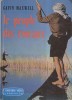
Livre. Titre original : A reed shaken by the wind. Traduit de l'anglais par Denise Meunier. Photos de Maxwell Gavin. Editions Flammarion, 1961.
Maxwell John. 21 minutes a day for leadership development. In Russian /Maksvell
Maxwell John. 21 minutes a day for leadership development. In Russian /Maksvell Don. 21 minuta v den na razvitie liderstva. Series: Success by O.G. Belosheev. Minsk Popurri 2004. We have thousands of titles and often several copies of each title may be available. Please feel free to contact us for a detailed description of the copies available. The delivery of this book might be delayed beyond the usual timeframe due to extended processing and preparation before shipment, and faster shipping options are not offered. Please inform us if you need the order by a certain date or have a deadline. SKUalbd5e4102172374d36
Maxwell John, Parrot Forest. 25 ways to win peoples favor. In Russian /Maksvell
Maxwell John, Parrot Forest. 25 ways to win peoples favor. In Russian /Maksvell Don,Perrot Les. 25 sposobov zavoevat raspoloenie lyudey. Priceless Lessons of Motivation. Minsk. Popurri. 2007. We have thousands of titles and often several copies of each title may be available. Please feel free to contact us for a detailed description of the copies available. The delivery of this book might be delayed beyond the usual timeframe due to extended processing and preparation before shipment, and faster shipping options are not offered. Please inform us if you need the order by a certain date or have a deadline. SKUalbc4bad42419727e65

Maxwell John. Motivation decides everything. In Russian /Maksvell Don. Motivats
Maxwell John. Motivation decides everything. In Russian /Maksvell Don. Motivatsiya reshaet vse. How to set yourself and others up for success. Minsk. Popurri. 2015. We have thousands of titles and often several copies of each title may be available. Please feel free to contact us for a detailed description of the copies available. The delivery of this book might be delayed beyond the usual timeframe due to extended processing and preparation before shipment, and faster shipping options are not offered. Please inform us if you need the order by a certain date or have a deadline. SKUalbbe7454a970ef2320

Trois saisons de chasse aux requins géants
AMIOT + DUMONT 1952 in8. 1952. Broché. Récit du naturaliste écossais Gavin Maxwell relatant trois saisons de chasse aux requins géants. Publié en 1952 par Amiot-Dumont c'est une traduction française de l'œuvre originale "Harpoon at a venture"
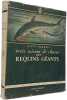
Bon état pages jaunies intérieur propre
Maxwell John. Leader on 360. In Russian /Maksvell Don. Lider na 360.
Maxwell John. Leader on 360. In Russian /Maksvell Don. Lider na 360. How to increase your influence in any position in any organization. Minsk. Popurri 2014. You are welcome to reach out to us for a detailed description of the copies currently available. Delivery of this book may take longer than usual including extended processing and pre-shipping time, no expedited shipping is available. Please advise us if you have a set date or a deadline to receive your order.SKUalb63b751e2425f33ea
Traité élémentaire d'électricité publié par W. Garnett précédé d'une notice sur les travaux en électricité du Professeur Maxwell, traduit de l'anglais par G. Richard -- PREMIERE EDITION FRANCAISE -- BON EXEMPLAIRE
P., Gauthier-Villars, 1884, un volume in 8, demi-basane marron, dos orné de filets dorés (reliure de l'époque), (cachet de bibliothèque), (2), 4pp., 44pp., 275pp., figures dans le texte
---- PREMIERE EDITION FRANCAISE -- BON EXEMPLAIRE ---- "Maxwell's electrical researches began a few weeks after his graduation from Cambridge and ended just before his death. They fall into two broad cycles : the first a period of five major papers on the foundations of electromagnetic theory, the second a period of extension with the treatise on electricity and magnetism, the elementary treatise on electricity...". (DSB XI, pp. 198/230)**3616/M3/M7AR

