Write to the booksellers
1051 books for « maury e a »Edit
-
Type
Books (1027)
Maps (1)
Music sheets (23)
-
Latest
Last month (9)
Last week (7)
-
Century
18th (10)
19th (116)
20th (495)
21st (34)
-
Countries
Belgium (39)
Brazil (1)
Côte d'Ivoire (1)
Denmark (18)
France (930)
Germany (1)
Netherlands (1)
Switzerland (60)
-
Syndicate
CLAM (6)
ILAB (500)
NVVA (6)
SLACES (6)
SLAM (469)
SNCAO (1)
Topics
- Africa (4)
- Age (7)
- Aquitaine (10)
- Arboriculture (6)
- Archaeology (19)
- Architecture (14)
- Army (9)
- Autographs (4)
- Auvergne (4)
- Biography (6)
- Botany (3)
- Children’s books (47)
- Christ (the) (3)
- Christianity (8)
- Collections (5)
- Comic strip (37)
- Dedication (4)
- Detective novels (6)
- Earth (3)
- Economics (16)
- Education (5)
- Education - morals (4)
- Essays (6)
- Ethnology (5)
- Fine arts (6)
- First edition (9)
- Fishing (30)
- Flags (5)
- Flora (8)
- Freemasonry (6)
- Geography (11)
- Geology (3)
- Guide books (4)
- History (60)
- homeopathy (10)
- Homeopathy (4)
- Industrial arts & crafts - fine arts (6)
- Law (4)
- Limousin (8)
- Literature (62)
- Magazine (15)
- Medicine (13)
- Middle ages (10)
- Military arts (4)
- Mosaic (3)
- Napoleon i (8)
- Navy (4)
- Newspapers press (16)
- Paris (6)
- Périgord (12)
- Philately (6)
- Philosophy (12)
- Poetry (8)
- Policy (8)
- Porcher jean (7)
- Prassinos (4)
- Prehistory (22)
- Protestantism (3)
- Provence (4)
- Psychology (9)
- Quercy (15)
- Religions (22)
- Review (9)
- Reviews (17)
- Revolution 1789 (8)
- Rhabdomancy (5)
- Romanic art (7)
- Rome (4)
- Rouergue (13)
- Rudder (6)
- School (4)
- Sciences (14)
- Scores (21)
- Sculpture (3)
- Sociology (3)
- Songs (17)
- Speeches (4)
- Speleology (4)
- Sports (6)
- Spyri johanna (14)
- Sweden (7)
- Theatre (3)
- Theology (10)
- Various (8)
- Vidal (24)
- Wagner richard (3)
- War (19)
- Willy (14)
- Wine (3)
- Woods & woods’ price lists (31)
- Xviii th century (4)
- Youth (8)
- Zodiac (7)
Explanations and sailing directions to accompany the wind and current charts : approved by Commodore Charles Morris, chief of the Bureau of Ordnance and Hydrography.
Washington, C. Alexander, 1852. 4to. In contemporary half calf. Title in contemporary hand to spine, old paper label to lower part of spine. Stamp to upper outer margin of title-page. Back board with library label. Binding with light wear, internally fine and clean. 413, (3) + 6 plates numered A - F and 13 plates and maps numbered I - XIII,
Fourth edition of this seminal work in the development of modern oceanography and scientific navigation. Based on extensive observations of winds, currents and ocean conditions, Maury’s work provided practical guidance for navigators and helped establish a systematic approach to the study of the oceans. Maury - often referred to as ""Pathfinder of the Seas"" and ""Father of Modern Oceanography and Naval Meteorology"" - was one of the first cartographers to study and show winds and currents systematically on charts. These maritime charts represents a major turning point in the history of maritime trading and oceanography in general. Using a creative set of symbols for winds (small brushes), currents (arrows), water temperatures (simple numerals), and adding color coding for the seasons Maury was able to present an enormous volume of data in a small area, data he had collected from numerous naval and commercial vessels. He distributed special logs, each with 12 blank pages in the back, to Navy and merchant captains to record data from their travels. Maury and his staff poured over the notes from the crossings and generated the first edition of ""Wind and Current Charts"" in 1847. ""Captains who were once reluctant to take part in Maury's study began to take notice when crossing times began to be dramatically reduced. One captain cut 35 days off a 110-day journey to Rio de Janeiro. Maury offered the charts for free to anyone who would send in data. Time was money for the sea captains."" (Annotated History of the Gulf Stream Current). Maury's work was only partly superseded once steamships replaced sailing vessels. He believed that his charts could be further improved if ships from all nations systematically collected and recorded details of wind and weather: ""As a result of his efforts, an international conference was held in Brussels in 1853 at which governments agreed to adopt a standardized scheme of observations. [...] The Brussel meeting was a milestone in the development of maritime meteorology."" (Thorpe, Oceanography). Maury's detailed charts eventually ended up being one of the very earliest successful attempts to map the Gulf Stream: """"There is a river in the ocean,"" wrote oceanographer Mathew Maury in 1855. ""In the severest droughts it never fails, and in the mightiest floods it never overflows" its banks and its bottom are of cold water, while its current is of warm" the Gulf of Mexico is its fountain, and its mouth is the Arctic Sea. It is the Gulf Stream. There is in the world no other such majestic flow of waters."".

Instructions nautiques destinées à accompagner les cartes de vents et de courants.
Paris, Firmin-Didot frères, 1859. Large 4to. In contemporary half calf with the original printed wrappers pasted on to boards. A few pencil annotations to front board and title-page. Binding with light wear. Stamp to lower part of half-title. Internally fine and clean. (4), 496 pp. + 23 plates, tables and folded maps.
First French translation of this seminal work in the development of modern oceanography and scientific navigation. Based on extensive observations of winds, currents and ocean conditions, Maury’s work provided practical guidance for navigators and helped establish a systematic approach to the study of the oceans. Maury - often referred to as ""Pathfinder of the Seas"" and ""Father of Modern Oceanography and Naval Meteorology"" - was one of the first cartographers to study and show winds and currents systematically on charts. These maritime charts represents a major turning point in the history of maritime trading and oceanography in general. Using a creative set of symbols for winds (small brushes), currents (arrows), water temperatures (simple numerals), and adding color coding for the seasons Maury was able to present an enormous volume of data in a small area, data he had collected from numerous naval and commercial vessels. He distributed special logs, each with 12 blank pages in the back, to Navy and merchant captains to record data from their travels. Maury and his staff poured over the notes from the crossings and generated the first edition of ""Wind and Current Charts"" in 1847. ""Captains who were once reluctant to take part in Maury's study began to take notice when crossing times began to be dramatically reduced. One captain cut 35 days off a 110-day journey to Rio de Janeiro. Maury offered the charts for free to anyone who would send in data. Time was money for the sea captains."" (Annotated History of the Gulf Stream Current). Maury's work was only partly superseded once steamships replaced sailing vessels. He believed that his charts could be further improved if ships from all nations systematically collected and recorded details of wind and weather: ""As a result of his efforts, an international conference was held in Brussels in 1853 at which governments agreed to adopt a standardized scheme of observations. [...] The Brussel meeting was a milestone in the development of maritime meteorology."" (Thorpe, Oceanography). Maury's detailed charts eventually ended up being one of the very earliest successful attempts to map the Gulf Stream: """"There is a river in the ocean,"" wrote oceanographer Mathew Maury in 1855. ""In the severest droughts it never fails, and in the mightiest floods it never overflows" its banks and its bottom are of cold water, while its current is of warm" the Gulf of Mexico is its fountain, and its mouth is the Arctic Sea. It is the Gulf Stream. There is in the world no other such majestic flow of waters."".
Explanations and sailing directions to accompany the Wind and current charts, approved by Captain D.N. Ingraham, chief of the Bureau of ordnance and hydrography, and pub. by authority of Hon. Isaac Toucey, secretary of the Navy. - [PRESENTATION-COPY ]
Washington, W.A. Harris, 1858. Large 4to. In the original printed wrappers. With author's presentation to top of title-page: ""With the author's compliments"". Wrappers with wear, spine with some loss of paper. ink annotation to lower part of front board. Front free end-paper with loss of paper. Stamp to lower part of spine. XXXVI, 383 pp. + 39 plates of which 7 are handcoloured and 24 maps.
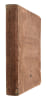
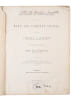
Presentation copy of the eights edition of this seminal work in the development of modern oceanography and scientific navigation. Based on extensive observations of winds, currents and ocean conditions, Maury’s work provided practical guidance for navigators and helped establish a systematic approach to the study of the oceans. Maury - often referred to as ""Pathfinder of the Seas"" and ""Father of Modern Oceanography and Naval Meteorology"" - was one of the first cartographers to study and show winds and currents systematically on charts. These maritime charts represents a major turning point in the history of maritime trading and oceanography in general. Using a creative set of symbols for winds (small brushes), currents (arrows), water temperatures (simple numerals), and adding color coding for the seasons Maury was able to present an enormous volume of data in a small area, data he had collected from numerous naval and commercial vessels. He distributed special logs, each with 12 blank pages in the back, to Navy and merchant captains to record data from their travels. Maury and his staff poured over the notes from the crossings and generated the first edition of ""Wind and Current Charts"" in 1847. ""Captains who were once reluctant to take part in Maury's study began to take notice when crossing times began to be dramatically reduced. One captain cut 35 days off a 110-day journey to Rio de Janeiro. Maury offered the charts for free to anyone who would send in data. Time was money for the sea captains."" (Annotated History of the Gulf Stream Current). Maury's work was only partly superseded once steamships replaced sailing vessels. He believed that his charts could be further improved if ships from all nations systematically collected and recorded details of wind and weather: ""As a result of his efforts, an international conference was held in Brussels in 1853 at which governments agreed to adopt a standardized scheme of observations. [...] The Brussel meeting was a milestone in the development of maritime meteorology."" (Thorpe, Oceanography). Maury's detailed charts eventually ended up being one of the very earliest successful attempts to map the Gulf Stream: """"There is a river in the ocean,"" wrote oceanographer Mathew Maury in 1855. ""In the severest droughts it never fails, and in the mightiest floods it never overflows" its banks and its bottom are of cold water, while its current is of warm" the Gulf of Mexico is its fountain, and its mouth is the Arctic Sea. It is the Gulf Stream. There is in the world no other such majestic flow of waters."".
Vents et Courants. Routes Générales. Extrait des Sailing Directions de Maury et de Travaux les plus récents.
Paris, Firmin Didot Frères, 1863. Large 4to. Orig. clothbacked printed blue boards. Small tears in joints at foot of spine. Stamp on title-page. VIII,248 pp., 13 folded plates (maps etc.).
First edition. This is a French translation and adaptation of Maury's pioneering work on ocean winds and currents.
The Physical Geography of the Sea. - [THE FIRST MAJOR TEXTBOOK OF MODERN OCEANOGRAPHY]
New York, Harper & Brothers, 1855. Royal8vo. Original cloth, gilt spine lettering and vignette on front cover. Rubbing and chipping to extremeties. Corners a little bumped. Some foxing throughout. XXIV,[25]-274 pp. and 8 folding engraved plates. 4 plates in the text.
First edition of ""the first major textbook of modern oceanography"" - Horblit/Grolier 71. ""Mathew Fontaine Maury, an American naval officer and hydrographer, laid the foundations of oceanography in 'The physical geography of the sea' (1855) which includes a general discussion about coastlines, tides currents, and other phases of the ocean and its life. In addition, Maury, with the help of three lines measured for the laying of the transatlantic cables, sketched the first section and the first map of the floor of the Atlantic Ocean."" - Sparrow: Milestones of Science 143. Honeyman 2184.
Notice to Mariners: by Lieut. M.F. Maury... and published by Authority of Lewis Warrington,..
Washington, Alexander, 1850. 4to. Original clothbacked blue boards. Handwritten title on upper board. Stamp on title-page. 24 pp.
Extremely scarce first edition (an expanded second edition published the same year) of one of Maury's sailing directions, based on his theories of oceanic currents, and published before his famous work ""The Physical Geography of the Sea"". In the offered work he gives instructions for sailors from N.Y. to Europe and Rio.Not in Sabin.
Notice to Mariners: by Lieut. M.F. Maury... and published by Authority of Lewis Warrington,.. Second Edition.
Washington, Alexander, 1850. 4to. Original clothbacked blue boards. Handwritten title on upper board. Stamp on title-page. 51 pp.
Scarce second edition (the expanded second edition published the same year as the first) of one of Maury's sailing directions, based on his theories of oceanic currents, and published before his famous work ""The Physical Geography of the Sea"". In the offered work he gives instructions for sailors from N.Y. to Europe and Rio.Not in Sabin.
Ensemble de 15 textes de ou sur l'abbé Maury.
15 textes in-8, dérelié.
Ensemble formé des textes suivants :- Panégyrique de Saint Louis, roi de France, prononcé dans la chapelle du Louvre, le 25 août 1772, en présence de l'Académie françoise. Par M. l'abbé Maury, chanoine, vicaire général et official de Lombez. A Paris, chez Le Jay, 1772, 103 pp.- Opinion de M. l'abbé Maury, député de Picardie, sur la propriété des biens ecclésiastiques ; prononcée dans l'Assemblée Nationale le mardi 13 octobre 1789. A Paris, chez Baudouin, 1789, 42 pp.Martin et Walter, III, 23598.- Copie d'une lettre écrite par M. l'abbé Maury, aux consuls de Valreas, sa patrie, dans le comtat Venaissen. S.l., Lejay Fils, s.d. (1789), 4 pp.Martin et Walter, III,23587 "Au sujet des droits du Saint-Siège sur le Comtat Venaissin".- Opinion de M. l'abbé Maury, député de Picardie, dans la cause des magistrats qui composoient ci-devant la chambre des vacations du Parlement de Bretagne : prononcée dans l'Assemblée Nationale, le lundi 11 janvier 1790. A Paris, chez Baudouin, s.d. (1790), 46 pp.Martin et Walter, III, 23599.- Opinion de M. l'abbé Maury, député de Picardie, sur le droit de faire la guerre, et de conclure les traités de paix, d'alliance et de commerce. Seconde édition. S.l., 1790, 68 pp., dernier feuillet détaché.Martin et Walter, III, 23600.- Opinion de M. l'abbé Maury, député de Picardie, sur les finances et sur la dette publique. Dont l'état a été présenté et discuté par lui en comité des finances, le 23 et 24 juillet 1790. A Paris, de l'Imprimerie Nationale, 1790, 66 pp. Qqs mouillures.Martin et Walter, III, 23601.- Réponse de M. l'abbé Maury à M. Anson, député de la ville de Paris. A Paris, de l'Imprimerie Nationale, 1790, 16 pp.Martin et Walter, III, 23618 "Contre l'administration de Necker."- Opinion de M. l'abbé Maury, député de Picardie, sur l'impôt du tabac, prononcée dans l'Assemblée nationale, le lundi 15 novembre 1790. A Paris, de l'Imprimerie Nationale, 1790, 74 pp. Deux feuillets détachés.Martin et Walter, III, 23607.- Opinion de M. l'abbé Maury, député de Picardie, sur la souveraineté d'Avignon, prononcée dans l'Assemblée Nationale le 20 novembre 1790. S.l., De l'Imprimerie de l'Ami du roi, 1791, 96 pp.Martin et Walter, III, 23608.- Opinion de M. l'abbé Maury, député de Picardie, sur la constitution civile du clergé, prononcée dans l'Assemblée Nationale, le samedi 27 novembre 1790. Cinquième édition. A Paris, de l'Imprimerie de l'Ami du Roi, s.d. (1790), 78 pp., Qqs mouillures.Martin et Walter, III, 23609.- [HEBERT]. Vie privée de l'abbé Maury, écrite sur des Mémoires fournis par lui-même, pour joindre à son Petit-Carême. S.l.n.d. (1790), 16 pp.Tourneux IV, 23996 et 23997.- Le retour de l'abbé Maury aux enfers, ou le massacre de Carpentras en Avignon. S.l.n.d., (1791), 8 pp. Mouillures. (2 exemplaires).- Opinion de M. l'abbé Maury, député de Picardie, sur la régence, prononcée dans l'Assemblée Nationale, le 22 mars 1791. A Paris, au Bureau de l'Ami du Roi, s.d. (1791), 40 pp.Martin et Walter, III, 23611. - Opinion de M. l'abbé Maury, député de Picardie, sur l'hôtel des Invalides, prononcée dans l'Assemblée Nationale, le mercredi 23 mars 1791. A Paris, au Bureau de l'Ami du roi, 1791, 73 pp. Un feuillet détaché.Martin et Walter, III, 23612.- Lettre de l'abbé Maury, à l'incomparable demoiselle Suzette Labrousse, prophétesse périgourdine, résidante à Paris, chez Madame la Duchesse de Bourbon. S.l., De l'Imprimerie de Crapart, s.d. (1792), 16 pp.Contre Clotilde-Suzanne Courcelles-Labrousse, célèbre visionnaire.Célèbre orateur, Jean-Siffrein Maury (1746-1817) fut ordonné prêtre en 1769 à l'âge de 23 ans. Il écrivit et prononça de célèbres panégyriques qui établirent sa réputation et le firent appeler à précher à Versailles, devant le roi. En 1777, il publia son Essai sur l'éloquence de la chair, et entra à l'Académie française en 1785. Lors des Etats-Généraux de 1789, il est élu député du clergé pour la circonscription de Péronne. Farouche opposant aux idées révolutionnaires, il défendit les intérêts du clergé et de la noblesse. Il combattit avec véhémence Mirabeau et protesta ardemment contre la Constitution civile du Clergé. A la dissolution de l'Assemblée Constituante, il émigra à Coblence, puis à Rome. En 1792, il est sacré archevêque de Nicée et reçoit le chapeau de cardinal en 1794. Plus tard, rallié à l'Empire, il rentra en France en 1806, retrouva un siège à l'Académie française, fut nommé cardinal français et archevêque de Paris. La Restauration lui fera payer cher son ralliement à l'Empire, il fuira vers l'Italie où il mourra. - - VENTE PAR CORRESPONDANCE UNIQUEMENT - LIEN DE PAIEMENT, NOUS CONSULTER.

Regarde, Maman !
Éditions Hemma Fantaisie Livre silhouette In-8 (18 x 23 cm), livre silhouette à découpage, 19 pages, illustrations en couleurs de Maury ; petites déchirures en tête et en queue du quatrième plats, quelques petites pliures et marques d'usage sur les plats, assez bon état. Livraison a domicile (La Poste) ou en Mondial Relay sur simple demande.
Résumé de la Partie Physique et descriptive des Sailing Directions du Lieutnant Maury, U.S.N., par E. Tricault.
Paris, P. Dupont, 1857. Contemp. hcloth. Spine with gilt lettering. Stamp on title-page. 208 pp., 5 folded lithographed maps and plates. Clean and fine. Offprint ""Extrait des Annales Hydrographiques, 2e Semestre 1857"".
Quercy Roman. " La Nuit des Temps".
La Pierre Qui Vire, Yonne Zodiaque 1959 1 Un volume de format in 8° de 344 pp. ; nombreuses planches hors texte en héliogravure ou en couleurs . Reliure de l'éditeur en pleine toile rose; titres en gris; jaquette illustrée. Etui cartonné muet.


Infimes défauts à la jaquette; sinon parfait état. Voir photos. Affiches.
Josette et Janou spéléologues
Hemma Album souple 1956 Album souple illustré en couleur, fines pliures, rousseurs internes, couverture de Gouppy J., illustrations couleur et noir et blanc de Maury, bon état. Livraison a domicile (La Poste) ou en Mondial Relay sur simple demande.

Discours prononcés dans la séance publique tenue par la classe de la langue et de la littérature françaises de l'Institut de France, le... 6 mai 1807, pour la réception de S. É. le cardinal Maury : ,... 3e édition revue, corrigée, et augmentée des discours prononcés lors de la réception de Son Éminence à l'Académie française en 1785.
Avignon : Séguin, 1807, 139 p. ; In-8 demi velin; dos lisse piece de titre maroquin rouge,tres bon etat


Discours prononcés dans l'Académie françoise, le Jeudi XXVII Janvier 1785 à la réception de M. l'abbé Maury,suivi de Discours prononcés dans la séance publique tenue par la classe de la langue et de la littérature françoises de l’Institut de France, le mercredi 6 mai 1807 pour la réception de S.E. Mgr. le Cardinal Maury Remise de 20% pour toutes commandes supérieures à 200 €
Correspondance diplomatique et mémoires inédits du Cardinal Maury (1792-1817).
Lille, Desclée de Brouwer, 1891. 2 tomes en 2 forts vol. in-8, rel. moderne pleine toile brune, étiquette de titre, LXXI-516, 576pp, portrait-frontispice du Cardinal Maury en tête de chaque vol.

"Ayant émigré dès 1791, Maury ne revoit la France qu'après la prise de pouvoir par Bonaparte. Il sera d'ailleurs archevêque de Paris vers la fin de l'Empire. Cardinal en 1794, il vit dans l'entourage du pape et décrit surtout les problèmes ecclésiastiques du temps. Ces mémoires ont été fabriqués à l'aide de documents réunis et mis en ordre par l'éditeur, reliés par un récit biographique, Maury n'ayant pas à proprement parler écrit de souvenirs" (Fierro, 978). "Source importante pour les dernières années de l'histoire religieuse de l'Empire" ( Tulard, 984). - Frais de port : -France 12,5 € -U.E. 12 € -Monde (z B : 19 €) (z C : 48 €)
L'Islamisme et le Christianisme en Afrique.
Hachette, 1906, in-12, vi-299 pp, une carte en 2 couleurs en dépliant in fine, reliure demi-percaline verte, dos lisse avec fleuron et doubles filets dorés, pièce de titre basane noire (rel. de l'époque), bon état
Première édition de l'étude de Bonet-Maury sur les religions abrahamiques en Afrique, soutenant à la fois le christianisme et l'islam comme alternatives supérieures aux croyances locales. Pasteur protestant et universitaire, Gaston Bonet-Maury (1842-1919) a beaucoup écrit sur les religions monothéistes et leur unité, les présentant comme un facteur important dans le développement de la civilisation occidentale. — "Ce livre aborde un des plus grands problèmes de l'histoire future. Il y a encore cent millions de fétichistes en Afrique, et les deux principales religions monothéistes, l'islamisme et le christianisme, se disputent avec acharnement la gloire de les civiliser. Qui l'emportera ? M. Bonet-Maury n'a pas voulu se livrer à des conjectures plus ou moins hasardeuses. Il a préféré chercher dans le passé le secret de l'avenir, et il nous a exposé avec la plus grande exactitude, et la plus grande impartialité, l'histoire très mouvementée et peu connue des succès alternatifs des deux grandes religions rivales. Une autre question se posait. Laquelle des deux solutions, la musulmane ou la chrétienne, serait la plus favorable au développement de la civilisation parmi les nègres, à leur bonheur et au progrès de leur moralité ? C'est ici que l'impartialité et la hauteur de vue de M. Bonet-Maury éclatent avec le plus d'évidence. Toutes ses sympathies sont évidemment pour les missions protestantes, et il ne s'en cache pas. Mais, toutes les fois qu'il a, sur certains points, à signaler la supériorité des missions catholiques, il ne s'en tait pas davantage. Il va même jusqu'à reconnaître que dans certaines questions, celle de l'alcoolisme, par exemple, qui est capitale en Afrique, l'avantage est à l'islamisme. Aussi ne souhaite-t-il pas la défaite complète de la religion de Mahomet, car, dit-il, si elle disparaissait brusquement de certains centres, la barbarie et l'alcoolisme reprendraient le dessus. Naturellement, il souhaite encore moins son triomphe, car la victoire exalterait son fanatisme et serait suivie de guerres sanglantes et peut-être de massacres d'Européens." (Journal des débats politiques et littéraires, 1906) Désormais les frais d'envoi sont de 6 € seulement pour les livres jusqu'à 1 kg (colissimo suivi), pour la France métropolitaine.
Explication et usage des wind and current charts (graphiques des vents et courants), extrait des Sailing Directions du Lieutenant Maury Surintendant de l’observatoire national de Washington - suivi de : Conséquences physiques de la compilation des documents nautiques : de l’athmosphère & de la mer
Revue coloniale, 1857 (mai, Juin, et Octobre Novembre). Grand in/8 reliure demi-chagrin marine, dos à nerfs à fleurons dorés et pièce de titre contenant 3 titres : Explication et usage des wind and current charts : 36 p., 8 planches rempliées ; Conséquences physiques de la compilation des documents nautiques : de l’athmosphère : 55 p., 1 planche ; Conséquences physiques de la compilation des documents nautiques de la mer : 85 p., 1 planche (n°2). Hormis quelques rousseurs éparses, ouvrage en bon état. Ouvrage rare.


Dans le présent ouvrage, TRICAULT selon ses propres dires se borne à puiser dans le texte de Maury “Wind and current charts” pour expliquer l’usage des cartes et pour faire comprendre la portée des travaux de ce dernier. Pour la rédaction de ses graphiques (charts) Maury (1806-1873) sollicita la coopération des marins de nombreux pays pour lui rapporter leurs observations régulières des vents et des courants. C’était l'ère des grands clippers, et leurs maîtres prisaient les cartes Maury, dont l’aide précieuse permit de réduire de nombreux jours leurs voyages en provenance des ports d'Amérique du Nord à l'Extrême-Orient, ainsi que les courses à New York et San Francisco. On lui doit également «La géographie physique de la mer» avec un diagramme représentant le profil du fond de l'Atlantique entre l'Europe et l'Amérique pour démontrer la faisabilité d'un câble sous-marin dans l'océan. Son système uniforme d'enregistrement des données océanographiques a été adoptée pour tous les marchands et navires de guerre.
Lettre autographe signée adressée à M. Costes de 4 pp. in-4, datée de Nîmes le 18 septembre 1788
L’abbé Maury (Valréas 1746 - Rome 1817) est un ecclésiastique et littérateur français. Élu du clergé aux États généraux, il fut un adversaire de la Révolution jusqu’à son exil à Coblence en 1792. Il se ralliera finalement à l’Empire.Cette lettre concerne les États généraux au sujet desquels le roi avait demandé, par voie de presse, aux intellectuels du pays de faire des recherches. L’abbé Maury dit avoir trouvé dans une bibliothèque nîmoise un manuscrit aux armes de Fléchier qui répondait à toutes les questions du gouvernement. M. Balainvillier, alors intendant de la province aurait promis de rétribuer Maury pour sa trouvaille après avoir fait transporter le manuscrit à Montpellier d’où il devait rejoindre la bibliothèque du roi. Maury n’ayant jamais touché les émoluments promis, il demande à son correspondant d’intercéder en sa faveur afin que Balainvilliers tienne sa promesse.
[Grévin, Forain, Draner, Crafty, Léandre, Caran d'Ache, Henriot, Stop, Josias, Léonnec, Baric, Léonce Petit, Gondinet, R. Maury, B. Gautier, etc. ] - COLLECTIF - VERON, Pierre, Rédacteur en chef - Dessins de Grévin, Forain, Draner, Crafty, Léandre, Caran d'Ache, Henriot, Stop, Josias, Léonnec, Baric, Léonce Petit, Gondinet, R. Maury, B. Gautier, etc.
Reference : 7480
Le Journal amusant. Journal illustré, journal d'images, journal comique, critique, satirique, etc.
PARIS, 1 vol. in-folio - 1/2 Reliure - Dos à nerfs - Filets & titre dorés - Année complète, N° 2105 à 2156, du 2 Janvier 1897 au 25 Décembre 1897, soit 52 Numéros de 8 pages - Nombreux dessins, PP à la une - Page 1 du N° 2105déchirée, mais entière - bon état général
Dessins de Grévin, Forain, Draner, Crafty, Léandre, Caran d'Ache, Henriot, Stop, Josias, Léonnec, Baric, Léonce Petit, Gondinet, R. Maury, B. Gautier, etc. Conformément à nos conditions générales de vente :Les frais de port sont affichés à titre indicatif. Il se peut que nous devions vous contacter pour vous informer du coût de laffranchissement supplémentaire en fonction du poids et du nombre de livres, surtout pour les envois internationaux Cependant vu l'augmentation des tarifs postaux à l'internationale, nous pouvons expédier les ouvrages en point relais MONDIAL RELAY pour les pays suivants : Allemagne, Autriche, Belgique, Espagne, Italie, Luxembourg, Pays-Bas, Pologne, et Portugal. Merci de nous indiquer en retour le point relais choisi ainsi que votre numéro de téléphone mobile & adresse Courriel pour assurer le suivi du colis.N'hésitez pas à nous interroger.In accordance with our general terms and conditions of sale:Shipping costs are displayed for informational purposes only. We may need to contact you to inform you of the additional postage costs depending on the weight and number of books, especially for international shipments.However, given the increase in international postal rates, we can ship books via Mondial Relay to the following countries: Germany, Austria, Belgium, Spain, Italy, Luxembourg, Netherlands, Poland, and Portugal. Please provide us with your chosen Mondial Relay point, as well as your mobile phone number and email address to ensure package tracking.Please feel free to contact us with any questions
[Grévin, Forain, Draner, Crafty, Léandre, Caran d'Ache, Henriot, Stop, Josias, Léonnec, Baric, Léonce Petit, Gondinet, R. Maury, B. Gautier, etc. ] - COLLECTIF - VERON, Pierre, Rédacteur en chef - Dessins de Grévin, Forain, Draner, Crafty, Léandre, Caran d'Ache, Henriot, Stop, Josias, Léonnec, Baric, Léonce Petit, Gondinet, R. Maury, B. Gautier, etc.
Reference : 7482
Le Journal amusant. Journal illustré, journal d'images, journal comique, critique, satirique, etc.
PARIS, 1 vol. in-folio - 1/2 Reliure - Dos à nerfs - Filets & titre dorés - Année complète, N° 1740 à 1790, du 4 Janvier 1890 au 20 Décembre 1890, soit 52 Numéros de 8 pages - Nombreux dessins, PP à la une - bon état général
Dessins de Grévin, Forain, Draner, Crafty, Léandre, Caran d'Ache, Henriot, Stop, Josias, Léonnec, Baric, Léonce Petit, Gondinet, R. Maury, B. Gautier, etc. Conformément à nos conditions générales de vente :Les frais de port sont affichés à titre indicatif. Il se peut que nous devions vous contacter pour vous informer du coût de laffranchissement supplémentaire en fonction du poids et du nombre de livres, surtout pour les envois internationaux Cependant vu l'augmentation des tarifs postaux à l'internationale, nous pouvons expédier les ouvrages en point relais MONDIAL RELAY pour les pays suivants : Allemagne, Autriche, Belgique, Espagne, Italie, Luxembourg, Pays-Bas, Pologne, et Portugal. Merci de nous indiquer en retour le point relais choisi ainsi que votre numéro de téléphone mobile & adresse Courriel pour assurer le suivi du colis.N'hésitez pas à nous interroger.In accordance with our general terms and conditions of sale:Shipping costs are displayed for informational purposes only. We may need to contact you to inform you of the additional postage costs depending on the weight and number of books, especially for international shipments.However, given the increase in international postal rates, we can ship books via Mondial Relay to the following countries: Germany, Austria, Belgium, Spain, Italy, Luxembourg, Netherlands, Poland, and Portugal. Please provide us with your chosen Mondial Relay point, as well as your mobile phone number and email address to ensure package tracking.Please feel free to contact us with any questions
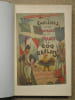
Les emblèmes et les drapeaux de la France : LE COQ GAULOIS.
Maury Arthur Maury, sans date (début XXe), 354 p., demi-basane bleu marine, environ 24x16cm, plats d'origine découpés et contrecollés, avec un hommage de l'auteur tamponné sur la page de garde. Quelques frottements d'usage sur le cuir de la reliure, une tache de liquide sur la pièce de titre, 6 pages découpées le long de leur bord supérieur avec un manque de papier 4 d'entre elle (sans atteinte au texte). Bon état pour le reste.

Merci de nous contacter à l'avance si vous souhaitez consulter une référence au sein de notre librairie.
S.O.S. Guadalcanal appelle...
Fleuve Noir Feu Dos carré collé 1973 "In-12 (11,1 x 17,5 cm), dos carré collé, 252 pages, n°214 de la collection ""Feu"" ; dos légèrement de biais, plats défraîchis, quelques rousseurs sur les premières et dernières pages, assez bon état. Livraison a domicile (La Poste) ou en Mondial Relay sur simple demande."
Les Origines de l'école laïque en France
Presses Universitaires de France Que sais-je Broché 1996 In-12 (11,3 x 17,5 cm), broché, 127 pages ; coiffes frottées, quelques légères marques d'usage sur les plats, bon état général. Livraison a domicile (La Poste) ou en Mondial Relay sur simple demande.