Write to the booksellers
992 books for « maury p »Edit
-
Type
Books (968)
Maps (1)
Music sheets (23)
-
Latest
Last 24h (1)
Last 3 days (3)
Last month (5)
Last week (4)
-
Century
18th (10)
19th (111)
20th (471)
21st (21)
-
Countries
Belgium (37)
Brazil (1)
Côte d'Ivoire (1)
Denmark (9)
France (882)
Germany (1)
Netherlands (1)
Switzerland (60)
-
Syndicate
CLAM (4)
ILAB (477)
NVVA (6)
SLACES (6)
SLAM (457)
SNCAO (1)
Topics
- Africa (3)
- Age (7)
- Aquitaine (10)
- Arboriculture (6)
- Archaeology (19)
- Architecture (13)
- Army (10)
- Autographs (4)
- Auvergne (4)
- Biography (5)
- Botany (3)
- Children’s books (44)
- Christ (the) (3)
- Christianity (9)
- Collections (4)
- Comic strip (37)
- Dedication (4)
- Detective novels (6)
- Devil (3)
- Early printed books (4)
- Earth (3)
- Economics (16)
- Education (5)
- Education - morals (4)
- Essays (6)
- Ethnology (5)
- Fine arts (6)
- First edition (9)
- Fishing (30)
- Flags (5)
- Flora (8)
- Freemasonry (6)
- Geography (11)
- Geology (3)
- Guide books (4)
- History (59)
- homeopathy (10)
- Homeopathy (4)
- Industrial arts & crafts - fine arts (5)
- Law (4)
- Limousin (8)
- Literature (45)
- Magazine (15)
- Medicine (13)
- Middle ages (9)
- Military arts (4)
- Mosaic (3)
- Napoleon i (8)
- Newspapers press (16)
- Paris (5)
- Périgord (12)
- Philately (6)
- Philosophy (12)
- Poetry (8)
- Policy (9)
- Porcher jean (7)
- Prassinos (4)
- Prehistory (22)
- Protestantism (3)
- Provence (4)
- Psychology (9)
- Quercy (14)
- Religions (22)
- Review (9)
- Reviews (17)
- Revolution 1789 (8)
- Rhabdomancy (5)
- Romanic art (6)
- Rome (4)
- Rouergue (13)
- Rudder (6)
- School (3)
- Sciences (14)
- Scores (21)
- Sculpture (3)
- Sociology (3)
- Songs (17)
- Speeches (4)
- Sports (6)
- Spyri johanna (11)
- Sweden (7)
- Theatre (3)
- Theology (10)
- Various (15)
- Vidal (22)
- Wagner richard (3)
- War (18)
- Willy (14)
- Wine (3)
- Woods & woods’ price lists (31)
- Xviii th century (4)
- Youth (4)
- Zodiac (7)

Spyri Johanna Maury Marie-josé Spyri Johanna Maury Marie-josé
Reference : 174265
(1980)
ISBN : 9782800601304

Dossiers d'initiation économique et sociale dix dossiers un lexique
Foucher 1981 71 pages in4. 1981. Agrafé. 71 pages.

Bon Etat
Ensemble de 15 textes de ou sur l'abbé Maury.
15 textes in-8, dérelié.
Ensemble formé des textes suivants :- Panégyrique de Saint Louis, roi de France, prononcé dans la chapelle du Louvre, le 25 août 1772, en présence de l'Académie françoise. Par M. l'abbé Maury, chanoine, vicaire général et official de Lombez. A Paris, chez Le Jay, 1772, 103 pp.- Opinion de M. l'abbé Maury, député de Picardie, sur la propriété des biens ecclésiastiques ; prononcée dans l'Assemblée Nationale le mardi 13 octobre 1789. A Paris, chez Baudouin, 1789, 42 pp.Martin et Walter, III, 23598.- Copie d'une lettre écrite par M. l'abbé Maury, aux consuls de Valreas, sa patrie, dans le comtat Venaissen. S.l., Lejay Fils, s.d. (1789), 4 pp.Martin et Walter, III,23587 "Au sujet des droits du Saint-Siège sur le Comtat Venaissin".- Opinion de M. l'abbé Maury, député de Picardie, dans la cause des magistrats qui composoient ci-devant la chambre des vacations du Parlement de Bretagne : prononcée dans l'Assemblée Nationale, le lundi 11 janvier 1790. A Paris, chez Baudouin, s.d. (1790), 46 pp.Martin et Walter, III, 23599.- Opinion de M. l'abbé Maury, député de Picardie, sur le droit de faire la guerre, et de conclure les traités de paix, d'alliance et de commerce. Seconde édition. S.l., 1790, 68 pp., dernier feuillet détaché.Martin et Walter, III, 23600.- Opinion de M. l'abbé Maury, député de Picardie, sur les finances et sur la dette publique. Dont l'état a été présenté et discuté par lui en comité des finances, le 23 et 24 juillet 1790. A Paris, de l'Imprimerie Nationale, 1790, 66 pp. Qqs mouillures.Martin et Walter, III, 23601.- Réponse de M. l'abbé Maury à M. Anson, député de la ville de Paris. A Paris, de l'Imprimerie Nationale, 1790, 16 pp.Martin et Walter, III, 23618 "Contre l'administration de Necker."- Opinion de M. l'abbé Maury, député de Picardie, sur l'impôt du tabac, prononcée dans l'Assemblée nationale, le lundi 15 novembre 1790. A Paris, de l'Imprimerie Nationale, 1790, 74 pp. Deux feuillets détachés.Martin et Walter, III, 23607.- Opinion de M. l'abbé Maury, député de Picardie, sur la souveraineté d'Avignon, prononcée dans l'Assemblée Nationale le 20 novembre 1790. S.l., De l'Imprimerie de l'Ami du roi, 1791, 96 pp.Martin et Walter, III, 23608.- Opinion de M. l'abbé Maury, député de Picardie, sur la constitution civile du clergé, prononcée dans l'Assemblée Nationale, le samedi 27 novembre 1790. Cinquième édition. A Paris, de l'Imprimerie de l'Ami du Roi, s.d. (1790), 78 pp., Qqs mouillures.Martin et Walter, III, 23609.- [HEBERT]. Vie privée de l'abbé Maury, écrite sur des Mémoires fournis par lui-même, pour joindre à son Petit-Carême. S.l.n.d. (1790), 16 pp.Tourneux IV, 23996 et 23997.- Le retour de l'abbé Maury aux enfers, ou le massacre de Carpentras en Avignon. S.l.n.d., (1791), 8 pp. Mouillures. (2 exemplaires).- Opinion de M. l'abbé Maury, député de Picardie, sur la régence, prononcée dans l'Assemblée Nationale, le 22 mars 1791. A Paris, au Bureau de l'Ami du Roi, s.d. (1791), 40 pp.Martin et Walter, III, 23611. - Opinion de M. l'abbé Maury, député de Picardie, sur l'hôtel des Invalides, prononcée dans l'Assemblée Nationale, le mercredi 23 mars 1791. A Paris, au Bureau de l'Ami du roi, 1791, 73 pp. Un feuillet détaché.Martin et Walter, III, 23612.- Lettre de l'abbé Maury, à l'incomparable demoiselle Suzette Labrousse, prophétesse périgourdine, résidante à Paris, chez Madame la Duchesse de Bourbon. S.l., De l'Imprimerie de Crapart, s.d. (1792), 16 pp.Contre Clotilde-Suzanne Courcelles-Labrousse, célèbre visionnaire.Célèbre orateur, Jean-Siffrein Maury (1746-1817) fut ordonné prêtre en 1769 à l'âge de 23 ans. Il écrivit et prononça de célèbres panégyriques qui établirent sa réputation et le firent appeler à précher à Versailles, devant le roi. En 1777, il publia son Essai sur l'éloquence de la chair, et entra à l'Académie française en 1785. Lors des Etats-Généraux de 1789, il est élu député du clergé pour la circonscription de Péronne. Farouche opposant aux idées révolutionnaires, il défendit les intérêts du clergé et de la noblesse. Il combattit avec véhémence Mirabeau et protesta ardemment contre la Constitution civile du Clergé. A la dissolution de l'Assemblée Constituante, il émigra à Coblence, puis à Rome. En 1792, il est sacré archevêque de Nicée et reçoit le chapeau de cardinal en 1794. Plus tard, rallié à l'Empire, il rentra en France en 1806, retrouva un siège à l'Académie française, fut nommé cardinal français et archevêque de Paris. La Restauration lui fera payer cher son ralliement à l'Empire, il fuira vers l'Italie où il mourra. - - VENTE PAR CORRESPONDANCE UNIQUEMENT - LIEN DE PAIEMENT, NOUS CONSULTER.


Explanations and sailing directions to accompany the wind and current charts : approved by Commodore Charles Morris, chief of the Bureau of Ordnance and Hydrography.
Washington, C. Alexander, 1852. 4to. In contemporary half calf. Title in contemporary hand to spine, old paper label to lower part of spine. Stamp to upper outer margin of title-page. Back board with library label. Binding with light wear, internally fine and clean. 413, (3) + 6 plates numered A - F and 13 plates and maps numbered I - XIII,
Fourth edition of this seminal work in the development of modern oceanography and scientific navigation. Based on extensive observations of winds, currents and ocean conditions, Maury’s work provided practical guidance for navigators and helped establish a systematic approach to the study of the oceans. Maury - often referred to as ""Pathfinder of the Seas"" and ""Father of Modern Oceanography and Naval Meteorology"" - was one of the first cartographers to study and show winds and currents systematically on charts. These maritime charts represents a major turning point in the history of maritime trading and oceanography in general. Using a creative set of symbols for winds (small brushes), currents (arrows), water temperatures (simple numerals), and adding color coding for the seasons Maury was able to present an enormous volume of data in a small area, data he had collected from numerous naval and commercial vessels. He distributed special logs, each with 12 blank pages in the back, to Navy and merchant captains to record data from their travels. Maury and his staff poured over the notes from the crossings and generated the first edition of ""Wind and Current Charts"" in 1847. ""Captains who were once reluctant to take part in Maury's study began to take notice when crossing times began to be dramatically reduced. One captain cut 35 days off a 110-day journey to Rio de Janeiro. Maury offered the charts for free to anyone who would send in data. Time was money for the sea captains."" (Annotated History of the Gulf Stream Current). Maury's work was only partly superseded once steamships replaced sailing vessels. He believed that his charts could be further improved if ships from all nations systematically collected and recorded details of wind and weather: ""As a result of his efforts, an international conference was held in Brussels in 1853 at which governments agreed to adopt a standardized scheme of observations. [...] The Brussel meeting was a milestone in the development of maritime meteorology."" (Thorpe, Oceanography). Maury's detailed charts eventually ended up being one of the very earliest successful attempts to map the Gulf Stream: """"There is a river in the ocean,"" wrote oceanographer Mathew Maury in 1855. ""In the severest droughts it never fails, and in the mightiest floods it never overflows" its banks and its bottom are of cold water, while its current is of warm" the Gulf of Mexico is its fountain, and its mouth is the Arctic Sea. It is the Gulf Stream. There is in the world no other such majestic flow of waters."".
Instructions nautiques destinées à accompagner les cartes de vents et de courants.
Paris, Firmin-Didot frères, 1859. Large 4to. In contemporary half calf with the original printed wrappers pasted on to boards. A few pencil annotations to front board and title-page. Binding with light wear. Stamp to lower part of half-title. Internally fine and clean. (4), 496 pp. + 23 plates, tables and folded maps.
First French translation of this seminal work in the development of modern oceanography and scientific navigation. Based on extensive observations of winds, currents and ocean conditions, Maury’s work provided practical guidance for navigators and helped establish a systematic approach to the study of the oceans. Maury - often referred to as ""Pathfinder of the Seas"" and ""Father of Modern Oceanography and Naval Meteorology"" - was one of the first cartographers to study and show winds and currents systematically on charts. These maritime charts represents a major turning point in the history of maritime trading and oceanography in general. Using a creative set of symbols for winds (small brushes), currents (arrows), water temperatures (simple numerals), and adding color coding for the seasons Maury was able to present an enormous volume of data in a small area, data he had collected from numerous naval and commercial vessels. He distributed special logs, each with 12 blank pages in the back, to Navy and merchant captains to record data from their travels. Maury and his staff poured over the notes from the crossings and generated the first edition of ""Wind and Current Charts"" in 1847. ""Captains who were once reluctant to take part in Maury's study began to take notice when crossing times began to be dramatically reduced. One captain cut 35 days off a 110-day journey to Rio de Janeiro. Maury offered the charts for free to anyone who would send in data. Time was money for the sea captains."" (Annotated History of the Gulf Stream Current). Maury's work was only partly superseded once steamships replaced sailing vessels. He believed that his charts could be further improved if ships from all nations systematically collected and recorded details of wind and weather: ""As a result of his efforts, an international conference was held in Brussels in 1853 at which governments agreed to adopt a standardized scheme of observations. [...] The Brussel meeting was a milestone in the development of maritime meteorology."" (Thorpe, Oceanography). Maury's detailed charts eventually ended up being one of the very earliest successful attempts to map the Gulf Stream: """"There is a river in the ocean,"" wrote oceanographer Mathew Maury in 1855. ""In the severest droughts it never fails, and in the mightiest floods it never overflows" its banks and its bottom are of cold water, while its current is of warm" the Gulf of Mexico is its fountain, and its mouth is the Arctic Sea. It is the Gulf Stream. There is in the world no other such majestic flow of waters."".
Explanations and sailing directions to accompany the Wind and current charts, approved by Captain D.N. Ingraham, chief of the Bureau of ordnance and hydrography, and pub. by authority of Hon. Isaac Toucey, secretary of the Navy. - [PRESENTATION-COPY ]
Washington, W.A. Harris, 1858. Large 4to. In the original printed wrappers. With author's presentation to top of title-page: ""With the author's compliments"". Wrappers with wear, spine with some loss of paper. ink annotation to lower part of front board. Front free end-paper with loss of paper. Stamp to lower part of spine. XXXVI, 383 pp. + 39 plates of which 7 are handcoloured and 24 maps.
Presentation copy of the eights edition of this seminal work in the development of modern oceanography and scientific navigation. Based on extensive observations of winds, currents and ocean conditions, Maury’s work provided practical guidance for navigators and helped establish a systematic approach to the study of the oceans. Maury - often referred to as ""Pathfinder of the Seas"" and ""Father of Modern Oceanography and Naval Meteorology"" - was one of the first cartographers to study and show winds and currents systematically on charts. These maritime charts represents a major turning point in the history of maritime trading and oceanography in general. Using a creative set of symbols for winds (small brushes), currents (arrows), water temperatures (simple numerals), and adding color coding for the seasons Maury was able to present an enormous volume of data in a small area, data he had collected from numerous naval and commercial vessels. He distributed special logs, each with 12 blank pages in the back, to Navy and merchant captains to record data from their travels. Maury and his staff poured over the notes from the crossings and generated the first edition of ""Wind and Current Charts"" in 1847. ""Captains who were once reluctant to take part in Maury's study began to take notice when crossing times began to be dramatically reduced. One captain cut 35 days off a 110-day journey to Rio de Janeiro. Maury offered the charts for free to anyone who would send in data. Time was money for the sea captains."" (Annotated History of the Gulf Stream Current). Maury's work was only partly superseded once steamships replaced sailing vessels. He believed that his charts could be further improved if ships from all nations systematically collected and recorded details of wind and weather: ""As a result of his efforts, an international conference was held in Brussels in 1853 at which governments agreed to adopt a standardized scheme of observations. [...] The Brussel meeting was a milestone in the development of maritime meteorology."" (Thorpe, Oceanography). Maury's detailed charts eventually ended up being one of the very earliest successful attempts to map the Gulf Stream: """"There is a river in the ocean,"" wrote oceanographer Mathew Maury in 1855. ""In the severest droughts it never fails, and in the mightiest floods it never overflows" its banks and its bottom are of cold water, while its current is of warm" the Gulf of Mexico is its fountain, and its mouth is the Arctic Sea. It is the Gulf Stream. There is in the world no other such majestic flow of waters."".
Philippe BOULET Raoul DEPRIT Marcel MAURY Jean NIZET Pierre TOBIE
Reference : 100159095
(1980)
Le cours de religion dont ils rêvent - enquête auprès de 860 élèves - provinces de Namur et de Luxembourg
Louvain-la-neuve 1980 in8. 1980. Agrafé.

Bon état intérieur propre
Dictionnaire familial des médecines naturelles
France loisirs 1978 in8. 1978. Cartonné jaquette. avec emboitage mais abîmé

Très Bon Etat intérieur jaquette déchirée en bas de la première de couverture
Mundaka Upanishad / Les Upanishad IV
Adrien-Maisonneuve 1955 in8. 1955. Broché. Il s'agit d'une édition critique et traduite de la Katha Upanishad par l'indianiste Louis Renou publiée par Adrien-Maisonneuve en 1943. Ce texte upanishadique presque entièrement en vers aborde les thèmes de l'âtman-brahman et se concentre sur les questions de la mort et du destin après la mort

Bon état
L'homme mystifié
Gallimard 1966 in12. 1966. Broché.
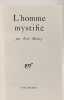
Bon Etat sous papier de soie intérieur propre bonne tenue quelques rousseurs
Panorama de la littérature suédoise contemporaine
Éditions du sagittaire 1940 243 pages in8. 1940. Broché. 243 pages. Couverture dos bruni intérieur bon non coupé
Bon Etat
Ma conspiration des decabristes
Del duca 1963 295 pages in8. 1963. broche avec jacquette. 295 pages. 17

Bon Etat
L'homme mystifié - les essais CXXI
Gallimard 1966 in12. 1966. Broché.


couverture un peu ternie intérieur propre
Sermons choisis de bossuet: suivis d'extraits de ses divers sermons et précédés du discours prliminaire sur les sermons de bossuet
Firmin didot et cie 498 pages in12. Sans date. Relié. 498 pages.

couv usagée-texte jauni
Quadrichromie
Le cri 1981 in12. 1981. Broché.

Bon état couverture défraîchie (légères rousseurs sur le premier plat) intérieur propre
L'apogée de l'effort militaire français
Union des grandes associations françaises 159 pages in8. Sans date. Broché. 159 pages.

Etat Correct couverture abîmée et tachée pages légèrement jaunies


Essai sur l'éloquence de la chaire
Firmin didot 1856 in12. 1856. Relié.
Bon Etat qq taches et inscriptions
Darwinisme et socialisme
Fr simon 1899 in8. 1899. Broché. une inscription première page

Bon Etat dos fragile qq rousseurs et écornures livre en bon état général
Initiation économique et sociale
Foucher 1981 190 pages in8. 1981. Relié. 190 pages.

Très Bon Etat
Le monde ou nous vivons leçons de géographie
Bibliothèque d'éducation et de récréation 1855 305 pages poche. 1855. Poche - Broché. 305 pages.
Etat Passable dos recollé intérieur impeccable texte frais et propre le prix tient compte de l'état
Darwinisme et socialisme
Imprimerie FR. simon 1899 in8. 1899. Broché.

Etat Correct rousseurs importantes sur la couverture un peu à l'intérieur ensemble jauni
Discours prononcés dans la séance publique tenue par la classe de la langue et de la littérature françaises de l'Institut de France, le... 6 mai 1807, pour la réception de S. É. le cardinal Maury : ,... 3e édition revue, corrigée, et augmentée des discours prononcés lors de la réception de Son Éminence à l'Académie française en 1785.
Avignon : Séguin, 1807, 139 p. ; In-8 demi velin; dos lisse piece de titre maroquin rouge,tres bon etat
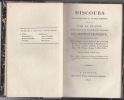

Discours prononcés dans l'Académie françoise, le Jeudi XXVII Janvier 1785 à la réception de M. l'abbé Maury,suivi de Discours prononcés dans la séance publique tenue par la classe de la langue et de la littérature françoises de l’Institut de France, le mercredi 6 mai 1807 pour la réception de S.E. Mgr. le Cardinal Maury Remise de 20% pour toutes commandes supérieures à 200 €