 Write to the booksellers
19077 books for « martin v »Edit
-
Type
Autograph (11)
Book (18851)
Disk (1)
Drawings (2)
Engraving (6)
Magazine (22)
Manuscript (1)
Maps (7)
Music sheets (159)
New book (9)
Old papers (2)
Photographs (10)
Postcards (2)
-
Latest
Last 24h (4)
Last 3 days (9)
Last month (661)
Last week (23)
-
Language
Bulgarian (1)
Dutch (6)
English (55)
French (18935)
German (15)
Greek (1)
Italian (2)
Latin (4)
Russian (57)
Spanish (6)
Swedish (1)
-
Century
16th (28)
17th (37)
18th (112)
19th (1849)
20th (7905)
21st (2027)
-
Countries
Belgium (1011)
Brazil (1)
Canada (162)
China (12)
Côte d'Ivoire (44)
Denmark (119)
France (15926)
Germany (16)
Greece (8)
Netherlands (18)
Switzerland (1678)
United Kingdom (25)
United States of America (63)
-
Syndicate
ALAC (149)
CLAM (45)
CLAQ (26)
CNE (3)
ILAB (8820)
NVVA (268)
SLACES (265)
SLAM (8056)
SNCAO (36)
Topics
- Alps (48)
- Alsace (120)
- Archaeology (127)
- Architecture (218)
- Autographs (76)
- Belgium (58)
- Biography (174)
- Brittany (70)
- Children’s books (200)
- Christianity (59)
- Christmas (50)
- Cinema (65)
- Collections (71)
- Comic strip (527)
- Cooking (97)
- Culinary art (45)
- Dedication (88)
- Detective novels (199)
- Drawings (83)
- Early printed books (61)
- Economics (80)
- Education (84)
- Education - morals (56)
- English (174)
- Engravings (50)
- Esotericism (48)
- Fine arts (180)
- First edition (274)
- Gard (487)
- Gaston-martin (50)
- Genealogy (56)
- Geography (165)
- Germanic languages (158)
- Germany (60)
- Greece (83)
- Guide books (47)
- Hackney (46)
- Heidegger martin (100)
- Helvética (213)
- History (983)
- Humour anecdotes (44)
- Hurlimann martin (55)
- Illustrated books (47)
- Industrial arts & crafts - fine arts (113)
- Journalism (52)
- Labiche (44)
- Latin (61)
- Law (120)
- Linnean society of lyons (43)
- Literature (1444)
- Lorrain (60)
- Luther (185)
- Lyons college pc (43)
- Magazine (66)
- Martin charles (50)
- Martin du gard maurice (62)
- Martin du gard roger (333)
- Martin henri (186)
- Martin jacques (337)
- Martin marie madeleine (55)
- Martin-mery gilberte (72)
- Mathematics (46)
- Medicine (153)
- Middle ages (43)
- Military arts (51)
- Monestier martin (60)
- Museums (67)
- Music (49)
- Navy (84)
- Newspapers press (1090)
- Nobility (50)
- Painting (76)
- Paris (89)
- Philosophy (293)
- Photography (179)
- Poetry (206)
- Policy (118)
- Popular literature (96)
- Psychology (77)
- Reading vocabulary (55)
- Regionalism (150)
- Religions (215)
- Review (124)
- Reviews (125)
- Sciences (128)
- Scores (237)
- Sociology (48)
- Songs (179)
- Spain (44)
- Switzerland (230)
- Symbolism (50)
- Theatre (124)
- Theology (130)
- Translation (43)
- Travel (70)
- Various (227)
- War (162)
- Youth (78)
- Zodiac (47)
Figures de l'histoire et du temps dans l'oeuvre de Rabelais
Genève, Droz, 2011. 735 g In-8, reliure éditeur, 342 pp., [1] ff.. De la collection des Travaux d'Humanisme et Renaissance, n° 487; Etudes Rabelaisiennes, n° LI. Annotations au crayon, dos passé. . (Catégories : Renaissance, Littérature, )
Répertoire des anciennes confréries et charités du diocèse de Rouen, approuvées de 1434 à 1610
Fécamp, L. Durand et fils, 1936. 265 g In-8 broché, xiv-[2]-208 pp., [2] ff., 4 planches hors-texte portant 6 reproductions. Introduction par M. Paul Le Cacheux, archiviste départemental de la Seine-inférieure, correspondant de l'Institut. Peu courant. Exemplaire en grande partie non coupé. Petites déchirures. . (Catégories : Normandie, )
Géographie historique et communale de la Charente
Paris, Librairie Bruno Sepulchre, 1984. 1060 g In-4 broché, 422 pp., [1] f., illustrations hors-texte. Réimpression tirée à 500 exemplaires de l'édition de 01914-1917. . (Catégories : Charentes, )
Cognac et les cognaçais pittoresques. Promenades et causeries historiques, archéologiques, économiques, touristiques et anecdotiques sur Cognac et les communes des alentours
Poitiers, P. Oudin et E. Beaulu, 1972. 390 g In-8 broché, 388 pp., illustrations. . (Catégories : Charentes, )
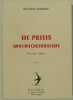
De Prelis Inventoribus
Angers, Edition du Martinet, 2002. 330 g In-8 broché, 222-[2] pp., illustrations.. Seconde édition corrigée et augmentée. Il s'agit d'une histoire du matériel d'imprimerie. Cachet ex-libris Dominique Messager. . (Catégories : Imprimerie, )
Les bonnes betises du temps nouveau et de temps passé, mises en ordre
Paris, Librairie Magnin, Blanchard et Compagnie, 1859. 455 g In-12, demi basane brune, [2] ff., 338 pp.. Frottements. Dessins amateurs au crayon sur les gardes. . (Catégories : Humour, )
MAISON ST-MARTIN , "A ST-MARTIN", 33 boulevard St Martin, paris 1856
Reference : 22838
(1856)
CARTE DE VISITE IMPRIMEE : MAISON ST-MARTIN , "A ST-MARTIN", 33 boulevard St Martin, Paris [1856](mention Honorable à l'Exposition Universelle de Paris 1855)
Paris 1856 une carte de visite avec nom et adresse et la déclinaison de ce que la MAISON ST-MARTIN , "A ST-MARTIN", 33 boulevard St Martin, Paris vend et peut fabriquer, imprimée en noir sur papier bristol crème et orné d'une vignette représentant "Saint-Martin fendant son manteau pour le donner à un pauvre" au centre en noir, médaillon en haut à gauche avec le profil de napoléon III gravé en noir, noté Exposition Universelle Paris, médaillon en haut à droite (côté pile) gravé en noir noté : "Mention Honorable 1855", et illustré sur l'envers d'une gravure de la vitrine du magasin gravée en noir, format : 11,3 x 7,9 cm, sans date (1856 environ), OBERTHÜR Rennes, Maison à Paris Rue des Blancs Manteaux Editeur,
Bel Exemplaire..en trés bon état (very good condition). en trés bon état
Félix Faure devant l'Histoire. De son berceau à l'Élysée (1841-1895).
P., Imprimerie Schneider et Bouillet, s.d. (1895), gr. in-8°, 404 pp, un portrait de Félix Faure héliogravé en frontispice, 2 autographes en fac-similé, reliure demi-chagrin carmin à coins, dos à 5 nerfs guillochés soulignés à froid, titres, filets et fleurons dorés, frise dorée et à froid sur les plats (rel. de l'époque), rousseurs (assez fortes par endroit), bon état. Très bien relié. Peu courant
Tome I (seul paru). Dans un autre ouvrage paru en 1905, l'auteur annonce comme étant “sous presse” le tome II : Trois ans de Présidence (1895 à 1898), mais il n'est jamais paru. — "La 5e Chambre du Tribunal civil avait à juger hier un petit procès fort amusant d'où il appert que, plus heureux que Louis XIV, M. Félix Faure a eu des historiens même avant d'être... Président. C'était la veille des dernières élections présidentielles de janvier 1895. Pendant qu'un peuple entier, debout, haletant, suivait une à une les péripéties de la course à l'Elysée où tantôt M. Charles Dupuy, tantôt M. Félix Faure tenaient la corde, deux hommes eurent une idée de génie : écrire d'avance les monographies des deux concurrents pour publier, le lendemain, celle de celui qui aurait décroché la timbale ! Ces deux hommes étaient l'un M. Martin-Ginouvier, secrétaire général du Crédit mutuel à prêts gratuits, et l'autre le docteur Genesteix, candidat lui-même aux dernières élections municipales du sixième arrondissement. Tous deux écrivirent donc à la fois une « Vie de M. Charles Dupuy, Président de la République » et une « Vie de M. Félix Faure, également Président de la République ». Et à ce moment, M. Félix Faure n'était encore rien. Le lendemain, on sait qu'il était tout. Aussi MM. Martin-Ginouvier et Genesteix s'empressèrent-ils, après l'élection, de déchirer la «Vie» du blackboulé et de porter chez l'éditeur la «Vie» de l'élu. La brochure fut appelée “Félix Faure devant l'histoire”, avec, pour sous-titre : “De son berceau à l'Elysée, 1841-1895”. Malheureusement, avant la publication, un dissentiment s'éleva entre les deux collaborateurs. Le docteur Genesteix accusa M. Martin-Ginouvier d'avoir fait, en cours d'impression, des retouches à la brochure, retouches personnelles et qu'il jugeait de fort mauvais goût. De quel droit M. Martin Ginouvier avait-il ajouté, par exemple, des phrases comme celles-ci ? “M. Brisson est la pintade du parti radical. ... M. Godefroy Cavaignac apparaît comme l'âne de Buridan des partis avancés.” Cela, au dire du docteur Genesteix, ne regardait en rien Félix Faure et cela pouvait compromettre la vente de l'ouvrage : il y aurait au moins deux acheteurs de moins, MM. Brisson et Godefroy Cavaignac..., sans compter leurs amis. Et le docteur demanda à son collaborateur de supprimer ses retouches. Celui-ci ayant refusé, la discussion tourna à l'aigre et l'on se sépara un peu froidement. La rupture éclata définitivement le soir du vendredi saint. M. Martin-Ginouvier faisait prendre l'air à son chien sur la place Saint-Germain-des-Prés, lorsqu'il crut apercevoir, sortant de l'église avec sa femme, le docteur Genesteix, président, comme on sait, du Comité socialiste du sixième arrondissement et, paraît-il, laïcisateur à outrance. Altercation très vive à la suite de laquelle M. Martin-Ginouvier publia seule la brochure présidentielle. D'où procès devant la 5e Chambre civile, où le docteur Genesteix reprochait hier à M. Martin-Ginouvier de lui avoir enlevé sa part de collaboration et surtout d'avoir supprimé sur la couverture le nom de Genesteix, qui y eût fait si bien. Et pour ce préjudice tant matériel que moral il lui demandait, par l'organe de Me Lemarinier, son avocat, 10,000 francs de dommages-intérêts. Après une très spirituelle plaidoirie de Me Deligand pour M. Martin-Ginouvier, le Tribunal a renvoyé les deux plaideurs dos à dos. Certes M. Martin-Ginouvier a eu tort de ne mettre que son nom sur le livre, au mépris des droits de son collaborateur mais, d'un autre côté, M. le docteur Genesteix n'a éprouvé aucun préjudice, puisque la fabrication de la monographie de Félix Faure (c'est dur à constater) s'est traduite par des pertes et non par des bénéfices, et puisque, en définitive, M. Martin-Ginouvier n'a pas eu plus que le docteur Genesteix le moindre bout de ruban que ces Mécènes eussent pu cependant attendre d'Auguste. Et c'est bien là le côté le plus triste de cet amusant procès : MM. Martin-Ginouvier et Genesteix, oubliés à l'Officiel, en ont été pour leur frais avec leur littérature, et ils n'en ont pas moins été condamnés hier chacun à la moitié des dépens du procès. M. Félix Faure, au nom de son Histoire, leur devrait bien un décret spécial les graciant tous deux de ces malencontreux dépens !" (Le Figaro, 13 février 1897) Désormais les frais d'envoi sont de 6 € seulement pour les livres jusqu'à 1 kg (colissimo suivi), pour la France métropolitaine.
[ NALLIERS - VENDÉE ] ROLE DE LA COMMUNE POUR 1836/1838 + DÉCISION DE LA PRÉFECTURE AU SUJET DU PARTAGE DES MARAIS ENTRE LES COMMUNES DE NALLIERS, MOUZEIL ET SAINT MARTIN SOUS MOUZEIL 1809-1810
Reference : 28676
ROLE COMMUNAL DE LA COMMUNE DE NALLIERS POUR LES ANNÉES 1836 A 1838 [A PARTIR DU 31 JUILLET JUSQU'AU 1ER FÉVRIER 1838] + PRÉFECTURE DE LA VENDÉE - EXTRAIT DU REGISTRE DE L'ARRETÉ DU PRÉFET DE LA VENDÉE DU 1 ER FÉVRIER 1809 + UN EXTRAIT DE DECISION DU CONSEIL DE PRÉFECTURE A NAPOLEON VENDÉE DU 23 SEPTEMBRE 1810 A PROPOS DU PARTAGE DES MARAIS ENTRE NALLIERS, MOUZEIL ET SAINT MARTIN SOUS MOUZEIL + 13 DOCUMENTS D'EPOQUE AU SUJET DU JUGEMENT DU PARTAGE DES MARAIS ENTRE LES COMMUNES DE NALLIERS, MOUZEIL ET SAINT MARTIN SOUS MOUZEIL DE L'AN 2 A L'AN 12 (DU 11 AOUT 1794 AU 4 DECEMBRE 1803)
NALLIERS de 1656 à 1672 un CAHIER DE ROLE COMMUNAL ORIGINAL DE LA COMMUNE DE NALLIERS , manuscrit à l'encre brune de 20 pages, sur papier vergé ligné bleuté et filigrané : "grappe de raisin", format : 41 x 25 cm, ROLE COMMUNAL DE LA COMMUNE DE NALLIERS POUR L'ANNEE 1836, A PARTIR D 31 JUILLET JUSQU'AU 1ER FEVRIER 1838, document paraphé par le maire et son conseil A LA FIN DE CHAQUE RÉUNION, + 2 LIASSES de 4 pages, manuscrites à l'encre brune sur papier vergé crème, ligné et filigrané "VANDERLEY" - A LA "GRAPPE DE RAISIN", signatures manuscrites à l'encre brune in-fine pour le conseil de Préfecture : BRISSON, BARANTE (Préfet), ROYAUD, SAVARY DE L'EPINERAIE et BERNARD (sous Préfet) + signatures manuscrites in-fine du Préfet BARANTE et du sous préfet BERNARD pour les décisions du Préfet + 13 documents : ........1- Conseil de Nalliers examinant le Jugement du 26 Brumaire par les Tribunaux de Fontenay dans l'Affaire DU PARTAGE DES MARAIS ENTRE LES COMMUNES DE NALLIERS, MOUZEIL ET SAINT MARTIN SOUS MOUZEIL, 1 cahier de 8 pages, format : 35 x 23 cm, manuscrite à l'encre brune sur papier vergé bleuté signé Pervinquière, Fontenay le Peuple, le 2 Frimaire an 9, -+ ........2- Consultation de la Previnquière, déliberation à fontenay - 14 Brumaire an 9, 1 cahier de 8 pages, format : 20 x 31,6 cm, manuscrit à l'encre brune sur papier vergé crème, signé : Prévinquière, ......3- Extrait des Minutes du greffe du tribunal du district de Fontenay : Affaire DU PARTAGE DES MARAIS ENTRE LES COMMUNES DE NALLIERS, MOUZEIL ET SAINT MARTIN SOUS MOUZEIL, au Langon, le 12 Fructidor an 6, 1 cahier de 10 pages sur papier vergé crème, format : 32 x 19,5 cm, signé Labre pour le Président et Bernard Secrétaire, ........4- Aux citoyens Administrateurs du Département de la Vendée (Affaire DU PARTAGE DES MARAIS ENTRE LES COMMUNES DE NALLIERS, MOUZEIL ET SAINT MARTIN SOUS MOUZEIL) , un cahier de 4 pages, sur papier vergé crème, manuscrit à l'encre brune, format : 32 x 19,5 cm, signé Gauvrain et adjoints minicipaux de Nalliers, .......5- Observations par Mr Cardin Avocat pour les Habitants de Nalliers dans l'affaire qui était pendante entre eux et Jugée àn Fontenay et Jugée par Artbitres par Sentence du 24 Thermidor, An 2, 1 cahier de 8 pages, format : 32 x 20 cm, manuscrites à l'encre brune sur papier vergé crème, filigrané : "Grappe de Raisin" "Van der Ley", ............6- Lettre estrait du Registre des Délibérations de la Préfecture du Département de la Vendée, Séance du 9 Vendémiaire An 9, autorisant la Commune de Nalliers à se défendre par tous les moyens de droit dans l'azffaire des Marais, contre Mouzeil et Mouzeil Saint Martin, 1 document , lettre brochée de 4 pages, manuscrites à l'encre brune, sur papier vergé bleuté, format : 20 x 16,5 cm, avec tampon noir de la "Préfecture du Département de la Vendée - République Française", signé le Secrétaire Général : CAVOLEAU, ............7- Extrait des Minutes du greffe du Tribunal de Fontenay, le 24 Thermidor An 2, à propos du paccage immemorial des communes de Mouzeil et Nalliers pour leurs Bètes dans les Marais, 1 cahier de 6 pages, manuscrites à l'encre brune sur papier vergé crème filigrané, format : 24 x 19 cm, Tampon Noir : "Minute-4 Sols" en haut de page, signature de Jean Martin, Huissier à Fontenay, .......8- Decision du tribunal d'Appel de Poitiers (affaire des MARAIS ENTRE LES COMMUNES DE NALLIERS, MOUZEIL ET SAINT MARTIN SOUS MOUZEIL), 1 cahier de 80 pages, format : 24,7 x 18 cm, manuscrit à l'encre brune sur papier vergé bleuté filigrané "Republique Francaise", tampon noir "Republique Française - Vendée - 50 cent.", signée in-fine DELAUNAY, exemplaire copie de MACHEREAU DE L'ETAUDIERE Père, ..............9- Le Même mais Exemplaire Copie de CHARRIER GOUGUETRIE, ................10- Extrait des Registres des Audiences du Tribunal Civil de l'Arrondissement de Fontenay-le-Peuple, Jugement Rendu le 12 Frimaire An 12, signé Duclos, un cahier de 26 pages, sur papier bleuté filigrané vergé, manuscrit à l'encre brune, Tampon noir "Republique-Française - 75 Cent", tampon à froid du "Domaine de l'enregistrement _ Republique Française " en tête de page à gauche, .................11- 2 Frimaire An 9, Consultation Previnguère, 1 cahier de 8 pages, format 32 x 20 cm, manuscrit à l'encre brune sur papier vergé crème , ...............12- 14 Brumaire an 9, Consultations de la Prévinguère sur la demande des Habitants de Mouzeil, un cahier de 8 pages, format : 20 x 32 cm, manuscrit à l'encrez brune sur papier vergé crème, ..................13- Déliberations des Habitants de Nalliers dans l'affaire des Marais du 13 Vendémiaire An 9, 1 cahier broché de 16 pages manuscrites à l'encre brune sur papier veregé crème, filigrané : "République Française", signé : GAUVRAIN Notyaire, format : 29,2 x 22 cm,
Beaux DOCUMENTS ORIGINAUX HISTORIQUES D'ÉPOQUE .................... RARETÉ ..... en bon état (good condition). en bon état
[Charles Martin] - LA FONTAINE, Jean de | MARTIN, Charles (illustrateur)
Reference : AMO-4515
(1930)
Les Contes et Nouvelles en vers de Jean de La Fontaine. Illustrés de soixante-quatre hors-texte par Charles Martin.
Librairie de France, 110, Boulevard Saint-Germain, Paris, 1930 2 volumes grands in-4 (28,5 x 13 cm) brochés de (6)-XXI-249-(6) et (6)-361-(1) et (17) pages d'introduction signée André Fontainas. Avec 64 illustrations hors-texte de Charles Martin dont 32 rehaussées en couleurs au pochoir à l'aquarelle, les 32 autres étant en noir. Les aquarelles originales de l'artiste ont été reproduites par la photogravure (non interprétées donc). Couvertures imprimées en brun et bleu à rabats. Le texte est imprimé en noir avec encadrements, ornements et décors imprimés en bleu ciel. Exemplaire encore protégé par son papier cristal d'origine et dans son emboîtage spécial en papier bleu titré imprimé. Partiellement non coupé (presque entièrement). Petites amorces de fente du papier au dos du premier volume, sans aucune gravité. Beau papier d'Arches fort resté bien blanc sans rousseurs. Le tirage a été de 3.000 exemplaires. Celui-ci est un des 350 exemplaires sur papier d'Arches. Il a été tiré 15 ex. sur Japon, 50 ex. sur Hollande, 350 ex. sur Arches, 1500 ex. sur vélin pur fil Lafuma et 1500 ex. sur vélin d'alfa Navarre. Notre exemplaire porte le numéro CCCXVII. Notre exemplaire contient livré à part la suite des 15 eaux-fortes libres tirées à très petit nombre. Elles sont tirées en noir sur papier d'Arches également. Notre exemplaire contient livré à part la suite complète des 64 hors-texte (32 coloriés et 32 en noir). Enfin, notre exemplaire contient livré à part 8 aquarelles originales ayant servies à l'impression de l'ouvrage (dont une seule est signée et est l'aquarelle définitive ayant servie au clichage pour l'impression) et une esquisse d'une illustration de la suite libre. Soit un total de 9 oeuvres originales de l'artiste présentes avec cet exemplaire.
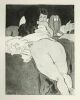
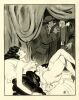
Inutile de revenir sur le texte des Contes et Nouvelles en vers de La Fontaine, paru pour la première fois entre 1665 et 1671 (sans illustrations) et pour la première fois illustré en 1685. Aquarelle originale monogrammée Aquarelle originale signée (définitive) ayant servi au clichage De nombreux artistes ont illustré ces Contes et Nouvelles en vers, toujours lestes ou grivois, avec ou sans l'inspiration délibérément érotique que chacun a pu y mettre depuis la première édition illustrée de 1685. Aquarelle originale monogrammée Les Contes et Nouvelles en vers de La Fontaine, inspirés de plusieurs œuvres françaises et italiennes des XVe et XVIe siècles, dont le Décaméron de Giovanni Boccace, Orlando furioso de Ludovico Ariosto, le recueil anonyme des Cent Nouvelles Nouvelles et l'œuvre de Bonaventure Des Périers, sont mille fois plus réjouissant à lire que les célèbres Fables dont on a rebattu les oreilles de tout élève en devenir d'être un homme. Les Contes et Nouvelles avaient sans l'ombre d'un doute mille fois plus de raisons pour forger un homme près à affronter son destin croisant celui des dames. Chacun cherche son chat ... Aquarelle originale monogrammée Cette édition est à tort négligée des bibliophiles du fait d'un tirage trop important. Il faut rechercher comme ici les exemplaires de luxe. Aquarelle originale monogrammée Les aquarelles originales de Charles Martin sont très prisées des amateurs. Il fut un des grands illustrateurs de la période Art Déco. Charles Martin est né à Montpellier en 1884 et mort à Paris en 1934 à l'âge de 50 ans seulement. Sa production est très importante. Il a contribué à l'illustration de nombreuses revues d'art et de mode depuis 1912 (Gazette du Bon Ton, Femina, etc). La guerre où il sert comme simple soldat d'infanterie stoppe nette sa carrière mais il continue malgré tout à dessiner et à envoyer ses travaux à la presse, tant qu'il peut. Lors d’une permission, il montre son travail à Lucien Vogel, le créateur de la révolutionnaire Gazette du Bon Ton. Enthousiaste, l’éditeur lui propose d’en tirer un album. Sous les Pots de Fleurs (le terme désigne le casque Adrian qui équipe l’armée française) paraît le 1er décembre 1917. Comme un Laboureur ou un Chas Laborde, Martin refuse de se soumettre à la « culture de guerre ». On ne trouve chez lui aucune des outrances et conventions du dessin naturaliste et de son pseudo réalisme. Il revient de la guerre. Le style de Charles Martin, au trait délicat, excelle dans les techniques de l'eau-forte et du pochoir rehaussé d'un trait typographique. Influencé par le cubisme, son style devient épuré et se caractérise par un trait précis, efficace et joyeux. Il s'oriente rapidement vers le luxe et l'art décoratif. Il exerce son talent dans les domaines les plus variés : mode, flacons de parfumerie, meubles, papiers peints, affiches, etc. Charles Martin a illustré une vingtaine de livres dont les Contes et Nouvelles de La Fontaine que nous présentons ici. Nous soupçonnons par ailleurs Charles Martin d'avoir illustré un clandestin totalement érotique en 1926 dont le trait est vraiment typique de l'artiste (mais ...). Aquarelle originale monogrammée Exceptionnel exemplaire contenant 8 aquarelles originales abouties et 1 esquisse pour une composition libre, une suite libre de 15 eaux-fortes en noir et une suite complète des 64 compositions hors-texte (soit 143 estampes au total). Très bon exemplaire tel que paru.
L'Enide. Traduite par Jacques Delille.
Paris chez Giguet et Micha 1804 - An XII 4 volumes in-8, demi-maroquin vert bouteille, plats entirement recouverts d'une laque rouge fonc et orns d'un personnage vtu l'antique, diffrent sur chaque plat, trait or et bronze dans un encadrement de deux filets dors; dos finement recouverts d'or, laissant ressortir en rserve le titre de l'ouvrage, la tomaison, des filets et des arabesques; doublures et gardes de papier marbr, tranches lisses dores (reliures au vernis Martin).Exceptionnel exemplaire de cette premire traduction de l'Enide par Jacques Delille, publie en quatre volumes, chacun illustr d'un frontispice grav sur acier par Pierre-Charles Baquoy, Jean Baptiste Simonet et Jean Louis Delignon d'aprs Jean-Michel Moreau. L'ouvrage a t reli selon la technique du vernis Martin avec un dcor excut en partie l'aide de gravures et les huit plats ont t illustrs d'une composition diffrente reprsentant un ou deux personnages antiques traits or et bronze et les dos de maroquin vert ont t recouverts d'or en laissant en rserve une trs dlicate ornementation. Les reliures au vernis Martin sont extrmement rares. Trs prcieux exemplaire portant sur la premire doublure l'tiquette du relieur donnant ces prcisions: Brevet d'invention. Reliures au vernis sans odeur tablies au Grand Chtelet, Quai de la Mgisserie, vis--vis le Quai aux Fleurs.Une tude publie par la Bibliothque nationale de France, rvle que Thodore-Pierre Bertin (1751-1819) est l'inventeur des reliures au vernis sans odeur, improprement appel vernis Martin par rfrence au vernis mis au point Paris en 1728 par les frres Martin pour imiter la laque orientale dcorant les meubles et les objets d'art. Ce procd fut utilis jusqu'au XIXe sicle. Le secret des frres Martin consistait coller des feuilles de papier, les passer au four pour les durcir, les peindre de toutes les couleurs, les vernir la rsine copal et les glacer la gomme arabique.Thodore-Pierre Bertin fit breveter ses reliures en vernis Martin en mai 1811.Il semblerait que nos quatre reliures in-8 constituent l'ensemble le plus important parmi toutes les reliures au vernis Martin dpistes et qui sont trs souvent d'un format plus petit. Exemplaire d'autant plus remarquable qu'il renferme l'dition originale de la traduction par Delille d'un des grands textes de la littrature.Des bibliothques Serrigny (ex-libris) et Ren Descamps-Scrive (ex-libris).


MARTIN, Jacques - COUTEAU-BEGARIE, Olivier (Commissaire-Priseur)
Reference : 238
(2003)
Collection Jacques Martin. Vente aux enchères, Hôtel Drouot. Dimanche 18 mai 2003
2003 - broché - Catalogue de vente aux enchères du Dimanche 18 mai 2003 - Olivier COUTAU-BEGARIE, commissaire-priseur - In-4 (29,5 x 22 cm) broché - 63 pages - Très nombreuses photographies et illustrations en couleurs - Vente aux enchères publiques de Dessins originaux, planches, couvertures, sérigraphies, albums, objets, de Jacques MARTIN. Rencontre avec Jacques MARTIN le vendredi 16 mai à 16h à l'Institut d'Etudes Supérieures des Arts - Exposition publique à Drouot Richelieu le samedi 17 mai de 11h à 18h et le matin de la vente de 11h à 12h30.
Bon état
Le Crocodile ou la guerre du bien et du mal arrivée sous Louis XV ; poème épiquo-magique en 102 chants. Oeuvre posthume d'un Amateur des choses cachées.
Paris, De l'Imprimerie - Librairie du Cercle Social, 1799. In-8 de (4)-460 pp. et 16 pp. (Catalogue Veuve Courcier), demi-basane bleue, dos lisse orné de filets dorés (relié vers 1850).
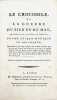

Édition originale rare du seul roman de Louis-Claude de Saint-Martin (1743 – 1803), publié sous la fausse mention Oeuvre posthume d'un Amateur des choses cachées, Saint-Martin, alors vivant, ne se reconnut jamais publiquement comme auteur de cet ouvrage.L'ouvrage se présente comme un étrange poème épiquo-magique, mêlant prose et vers, aventures merveilleuses, satire et enseignement ésotérique. Saint-Martin en annonce lui-même le programme dans une formule devenue célèbre : un récit « dans lequel il y a de longs voyages, sans accidens qui soient mortels ; un peu d'amour sans aucune de ses fureurs ; de grandes batailles, sans une goutte de sang répandu ; quelques instructions sans le bonnet de docteur » et qui, « parce qu'il renferme de la prose et des vers pourrait bien en effet n'être ni en vers, ni en prose ». Sous la forme d'un récit fantastique et volontairement déroutant, Saint-Martin met en scène la lutte du Bien et du Mal à travers une succession d'épisodes merveilleux, de combats symboliques et de personnages allégoriques, Sédir, Ourdec, Mme Jof, Éléazar, le Crocodile, la Société des Indépendants, directement liés aux principes de la doctrine martiniste (J.-M. Vivenza). Derrière l'apparente fantaisie du récit se déploie une construction philosophique et initiatique, héritière de la tradition martinésiste et de la théosophie chrétienne.L'un des passages les plus remarquables est constitué par la Suite de la description d'Atalante, Réponse du psychographe sur la question de l'Institut : Quelle est l'influence des signes sur la formation des idées ? Saint-Martin y oppose à l'analyse purement rationnelle une conception spirituelle et métaphysique du signe, « réflexion sur châtiment et rédemption par la langue » dans le contexte révolutionnaire. Ce texte, connu sous le titre de Traité des signes, fut publié séparément en 1799 puis en 1801, ce qui confère à sa présence dans l'édition originale du Crocodile un intérêt particulier.Très bon exemplaire. Petit défaut de papier dans la marge de la p. 417, sans atteinte au texte.Caillet, 9766 ; Dorbon-Aîné, 4304 ; Jean-Marc Vivenza, Louis-Claude de Saint-Martin, le philosophe inconnu (1743-1803) ; Dix-huitième siècle, « Châtiment et rédemption par la langue, Le Crocodile et la Lettre à un ami sur la Révolution française de Louis-Claude de Saint-Martin ».
Jean Barois.
Paris, Nouvelle Revue Française, 1913. In-4 (215 x 163 mm), 514 pp., 1 f. n. ch. Maroquin noir, dos à nerfs, auteur et titre dorés, coupes filetées, doublure de maroquin citron, gardes de soie moirée noire, tranches dorées sur témoins, couvertures et dos conservés, étui bordé (P. L. Martin).

Édition originale. Elle est ornée en frontispice d’une photographie de L’Esclave enchaîné de Michel-Ange, symbolisant pour l'auteur "la vie de Barois, l’homme prisonnier des mythes et qui ne parvient pas à s’évader de ses liens". Un des 30 exemplaires sur vergé d’Arches, seul tirage de tête. Dans un projet de préface, Roger Martin du Gard décrivait ainsi son troisième roman: "L’auteur s’est efforcé de présenter, sous un jour impartial, la courbe psychologique d’une âme qui, façonnée par les croyances de son enfance, s’étant librement développée et dégagée de toute croyance, revient à la fin de sa vie aux espérances consolantes de sa jeunesse." C’est dans la forme que réside une grande part de l’originalité de Jean Barois: l’ouvrage est presque entièrement composé de scènes dialoguées, à la manière du découpage cinématographique. La mise en scène du procès de Zola – une des premières apparitions littéraires de l’affaire Dreyfus – enthousiasma André Gide et Jean Schlumberger. Présenté dans la Nouvelle Revue française en juillet 1913 et publié en décembre, le roman rencontra le succès et fit de Roger Martin du Gard un auteur de premier plan dans la galaxie Gallimard. Pierre-Lucien Martin (1913-1985) fut l’un des artisans les plus remarquables du XXe siècle. Formé à l’école Estienne, il a d’abord travaillé comme ouvrier dans plusieurs ateliers avant de s’installer à son compte après guerre. Ses pleines reliures furent vite remarquées pour leur qualité d’exécution et, encouragé par les bibliophiles, il se lança dans les décors modernes où s’exerça pleinement son talent. Il reçut en 1948 le Prix de la reliure originale. Deux ans après sa mort, la Bibliotheca Wittockiana lui consacra une grande exposition. Ex-libris de Marcel de Merre, un des grands noms de la bibliophilie belge (vente, 2007, n°381). Parfait exemplaire en maroquin doublé de Pierre-Lucien Martin. Talvart & Place, Bibliographie des auteurs modernes…, XIII, p. 196. «Histoire d’un livre : Jean Barois de Roger Martin du Gard» [en ligne sur: www.gallimard.fr]]. Laffont-Bompiani, Dictionnaire des œuvres, III, p. 779. Jean Toulet, «Pierre-Lucien Martin», Encyclopedia Universalis.
[Martin Van Maele] - [Martin VAN MAELE] [Charles BAUDELAIRE]
Reference : AMO-4501
(1917)
LES FLEURS DU MAL. Suite complète de 12 eaux-fortes gravées par Martin Van Maele en double-état avec remarques, avant la lettre tirées sur papier du Japon.
S.d. (1917) [pour l'éditeur J. Chevrel] 12 planches (frontispice et 11 planches) en deux états soit un ensemble de 24 planches. En feuilles. 29 x 20 ou 20,5 cm pour les feuilles 15 x 10 cm pour les cuivres (mesuré à la cuvette) - 12 planches tirées sur Japon avant la lettre avec remarque. Etat définitif. - 12 planches tirées sur Japon avant la lettre avec remarque. Etat non terminé, eau-forte pure. Le frontispice de l'état définitif est signé au crayon par l'artiste Martin Van Maele (en bas à droite). Chaque planche de l'état définitif est légendée au crayon en bas à droite. - 12 planches tirées sur vergé d'Arches avant la lettre (remarques grattées. Chaque planche, à l'exception du frontispice (ce qui est normal), est légendée à l'encre à la plume par l'artiste. Le tirage courant est sur vélin de Rives. Celui-ci, un des rares exemplaires sur Japon (quelques exemplaires seulement) avant la lettre, état définitif et eau-forte pure, avec remarque. Avec le rare tirage avant la lettre légendée sur Vergé d'Arches.
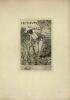
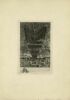
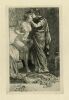
Cette suite a été faite pour compléter l'édition des Fleurs du Mal donnée par l'éditeur Chevrel en 1917. Les poèmes de Baudelaire illustrés sont les suivants : Litanies de Satan - Femmes damnées - La Beauté - Le Revenant - Un Fantôme - Les Bijoux - Le Léthé - Métamorphose du Vampire - Les deux Bonnes Soeurs - Le Vin de l'Assassin - Une Martyre. Martin Van Maele, alias Maurice François Alfred Martin (1863-1926) est l'un des illustrateurs emblématiques du premier quart du XXe siècle. On lui doit de nombreuses illustrations originales pour la littérature classique comme pour la littérature érotique. Sa carrière jusqu'en 1901 est mal connue. À partir de cette date, il débute en illustrant Les Premiers Hommes dans la Lune d'Herbert George Wells édités par Félix Juven. L'année suivante, Van Maele illustre quelques couvertures d'aventures de Sherlock Holmes publiées par le même éditeur. En 1901 également, il commence à travailler pour l'éditeur érotique Charles Carrington, illustrant des ouvrages sadomasochistes, mais aussi Anatole France et Apulée. Van Maele y publie également, en 1905, un ouvrage plus personnel, La Grande Danse macabre des vifs, quatre séries de dix dessins satiriques et humoristiques, dans lesquels la sexualité s'offre comme premier aperçu de la mort. Après l'expulsion de France de Carrington, en 1907, il travaille pour Jules Chevrel et illustre Choderlos de Laclos, Jules Michelet et Denis Diderot. De 1909 à 1919, Van Maele ne publie que cinq livres. À partir de 1920, il travaille avec Jean Fort et continue à illustrer des classiques de l'érotisme littéraire (l'Arétin, Paul Verlaine, Charles Sorel, etc.), en parallèle à des ouvrages de Pierre Mac Orlan, principalement sadomasochistes, mais laissant aussi place à des pratiques plus rarement évoquées en littérature, comme la klysmaphilie. En 1903, Van Maele s'installe à Varennes-Jarcy avec sa femme, sa mère et sa grand-mère. De 1904 à 1926, ils habitent une maison de la rue de Mandres. Il y meurt en 1926 alors qu'il achevait d'illustrer les Dialogues de l'Arétin. Référence : Luc Binet, Martin Van Maële ou le diable se cache dans les détails, éditions Humus, 2017, page 403 ; à propos de Martin Van Maele lire l'excellente étude publiée par Jean-Marc Barféty, Van Maele, in Une histoire familiale de Jean Genet (en ligne). Cette suite est rare et très recherchée sur papier vélin de Rives ; ce tirage de grand luxe sur papier Japon est pour ainsi dire devenu introuvable. Le tirage sur Arches est également très rare. Excellent état de l'ensemble et rarissime (double) tirage sur Japon complété par la rare suite sur vergé d'Arches avant la lettre. Puissante interprétation graphique des Fleurs du Mal, sublime évocation de l'Eros et Thanatos.
ELDER (Marc) [TENDRON (Marcel Auguste)] ; MARTIN (Antoine-Marius, ill.)
Reference : 1148
Le Peuple de la Mer. La Barque
Paris : René Kieffer, 1924. UNE RELIURE ÉDITEUR LUXE, EXEMPLAIRE DE LA BIBLIOTHÈQUE PERSONNELLE DE RENÉ KIEFFER
![Le Peuple de la Mer. La Barque. ELDER (Marc) [TENDRON (Marcel Auguste)] ; MARTIN (Antoine-Marius, ill.)](https://static.livre-rare-book.com/pictures/QNG/1148_1_thumb.jpg)
![Le Peuple de la Mer. La Barque. ELDER (Marc) [TENDRON (Marcel Auguste)] ; MARTIN (Antoine-Marius, ill.)](https://static.livre-rare-book.com/pictures/QNG/1148_2_thumb.jpg)
![Le Peuple de la Mer. La Barque. ELDER (Marc) [TENDRON (Marcel Auguste)] ; MARTIN (Antoine-Marius, ill.)](https://static.livre-rare-book.com/pictures/QNG/1148_3_thumb.jpg)
Grand in-8° (277 x 208 mm) [2] ff. bl. - [3] ff. - 106 pp. - [2] ff. - [1] f. bl. - [107] pl. - [3] f. bl., maroquin vert sapin, dos à 4 faux-nerfs orné mosaïqué, décor à la plaque doré et mosaïqué de maroquins brun, gris bleu et vert sur les plats, charnières cuir, encadrement intérieur avec fleurons en écoinçons, contregardes et gardes de brocard, gardes de papier marbré doré et argenté, tête dorée, couvertures et dos conservés, étui bordé (reliure signée RENÉ KIEFFER au contreplat supérieur et avec son étiquette dorée estampée à la première garde blanche). Exemplaire sur Japon, non numéroté, portant à la justification la mention autographe : « Réservé / à ma bibliothèque personnelle / René Kieffer ». Il est agrémenté d'une suite en noir des 111 bois sur fin japon collé, à l'instar des 50 exemplaires du tirage de tête. Suivent 450 exemplaires sur papier vergé blanc de cuve, pour un tirage total de 500 exemplaires numérotés. Il lui est adjoint un dessin original inédit de Martin au crayon et à l'aquarelle, accompagné d'une note autographe signée : « Le hasard qui amène l'échange de nos exemplaires de ''La Barque'' me permet de vous offrir ce dessin qui complètera votre documentation sur l'Herbaudière de Noirmoutier. Il reproduit la façade du cabaret du père Raballand - au XXè siècle - dont il est beaucoup question dans l'ouvrage de Marc Elder. / Recevez en même temps, cher Monsieur Kieffer, l'assurance de ma sympathie cordiale. / A. M. Martin / Aubusson, 28 juin 1925 ». L'ouvrage est truffé d'une lettre autographe signée de Marc Elder à Antoine-Marius Martin, louant son travail sur les bois (« Depuis 24h je feuillette vos « bois » et je les trouve sans cesse plus beaux dans leur sobriété, leur pittoresque, leur composition et leur habileté. [...] Peut-être les scènes de la cloche gravées, je crois, les premières, ont-elles moins de sobriété, moins de simplification que les autres. Mais c'est là une misérable chicane. [...] ») et de 3 lettres autographes signées d'Antoine Marius-Martin à René Kieffer (1926-1927) concernant les épreuves qu'il souhaite exposer au Salon d'Automne, sa participation au Salon des artistes décorateurs (encouragée par Kieffer), et la commande de l'illustration pour La Messe de l'Athée. Il est habillé d'une reliure éditeur « luxe » recouverte de maroquin dont le décor à la plaque est doré et mosaïqué. Elle présente en outre des gardes de brocard multicolore à motif végétal. L'exemplaire est décrit par Sanjuan. Première nouvelle du recueil Le Peuple de la Mer (prix Goncourt 1913) illustrée de 111 bois en couleurs par Antoine-Marius Martin (Arles : 1869 - Saint-Rémy-de-Provence : 1955), aquarelliste, graveur, médaillé de bronze à l'Exposition universelle de 1900, expose au Salon des Artistes français, au Salon des Indépendants puis au Salon d'automne. Il devient en 1917 directeur de l'École Nationale des Arts décoratifs d'Aubusson. Pour Le Peuple de la Mer, Martin dessine et grave des bois inspirés par l'imagerie populaire vendéenne, d'une facture volontairement rustique ; les scènes de jour, gravées de manière « traditionnelle », y alternent avec des scènes de nuit représentées par creusage de traits. Il illustrera, dans un style radicalement différent, un second ouvrage pour Kieffer : La messe de l'Athée d'Honoré de Balzac (1928). Bibliographie : Monod 4184 ; Sanjuan 49 (planche LXV). Dos insolé.
MARTIN (John). Auguste Jean Baptiste DEFAUCONPRET, translator.
Reference : 4234
(1817)
Histoire des naturels des îles Tonga ou des Amis, situées dans locéan Pacifque, depuis leur découverte par le capitaine Cook; redigee par John Martin, sur les details fournis par William Mariner.
Paris, Gide Fils and Nicolle, November 1817. 1817 2 vol. in-8° (250 x 125 mm) de : 398 pp. (dont les xxii pp. du début), [1] ff.; 398 pp. Demi-veau d'époque, dos lisse orné, plats recouverts de papier à la colle bleu, tranches jaspées. (Reliure et corps d'ouvrage très frais).
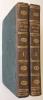
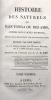
Première édition française du récit de John Martin sur les quatre années de William Mariner aux îles Tonga entre 1806 et 1810, premier récit détaillé de la vie dans ces îles, bien qu'elles aient été découvertes par Schouten en 1616, avec un premier contact avec les Européens lors des voyages de Cook en 1773 et 1777. Cette version française, parue la même année que lédition en anglais, est rare et absente de la plupart des collections (pas dans « Hill » ni « Kroepelien »). Mariner était un jeune marin britannique sur le baleinier « port au prince ». Armé à la course en 1806, il captura deux navires espagnols : le brick « Santa Isidora » et la « Santa Maria », qui furent ensuite envoyés à Port Jackson pour être vendus. Le « Port-au-Prince » visita Hawaii à la fin de 1806, puis navigua avec un équipage en partie hawaïen. A Tonga, l'équipage se mutina, et la plupart des marins furent massacrés par les indigènes. Mariner en réchappât grâce à la protection du roi des Tonga et y vécut comme son fils adoptif pendant quatre ans. L'histoire de Mariner a été citée par Byron comme l'une des inspirations de son poème « The Island, or Christian and his Comrades (1823), un récit romantique sur la mutinerie Bounty. Louvrage comporte une grammaire et un dictionnaire tongan-anglais, avec un autre appendice important "sur les compétences chirurgicales du peuple Tonga", avec des références à des pratiques similaires à celles dHawaii. C'est l'un des premiers récits sur les pratiques médicales indigènes dans le Pacifique. John Martin, était médecin et météorologue. La traduction française est due à Auguste-Jean-Baptiste Defauconpret, également à lorigine de la première édition française du premier voyage de Sir John Franklin (même éditeur, 1824). Superbe exemplaire, très frais. Martin, "Catalogue d'ouvrages relatifs aux Iles Hawaii", p. 18; Judd, "Voyages to Hawaii before 1860", 117. Forbes, "Hawaiian National Bibliography", 468. 2 vol. 8vo. Contemp. half calf. First French edition of Martin's account of William Mariner's four years in Tonga between 1806 and 1810, which provided the first account of life in the islands , visited by Cook in 1773 and 1777. Published same year as the English, this version is rare ( not in Hill and Kroepelien). Mariner was a young British sailor on board the Port au Prince, a whaler that visited Hawaii in 1806, and then sailed with a number of Hawaiian crew. At Tonga the crew mutinied, and most were massacred by the natives, but Mariner came under the protection of the King and lived there for four years. Mariner's story inspired Byron for his poem The Island, or Christian and his Comrades, a romantic narrative of the Bounty mutiny. The work includes a grammar and a Tongan-English dictionary, with a further important appendix "on the surgical skills of the Tonga people", with references to similar practices in Hawaii. This is one of the earliest accounts of indigenous medical practices in the Pacific. John Martin, Mariner's ghost-writer, was a physician and meteorologist of some note. This French translation was by Auguste-Jean-Baptiste Defauconpret, who also prepared the first French edition of the first voyage of Sir John Franklin (same publisher, 1824). Fine fresh copy.
[ESCRIME] L'Art de faire des armes réduit à ses vrais principes. Contenant tous les principes nécessaires à cet art, qui y sont expliquées d'une manière claire et intelligible. Cet ouvrage est composé pour la jeune noblesse et pour les personnes qui se destinent au métier de la guerre, ainsi que pour tous ceux qui portent l'épée. On y a joint un traité de l'espadon, où l'on trouve les vrais principes de cet art, si utile et nécessaire aux militaires, qui y sont expliqués d'une façon aisée, et qui est rempli de découvertes vraiment nouvelles. Dédié à S.A.R. Monseigneur l'Archiduc Charles
Janne Schrämble | Wien 1804 | 20.2 x 24.3 cm | Broché
Très rare édition originale, apparemment seule édition ancienne recensée, de cet important traité d'escrime publié à Vienne en 1804 par Janne Schrämble. L'illustration, complète, comprend un portrait-frontispice gravé de l'auteur et 72 planches hors texte, dont deux dépliantes : 44 accompagnent L'Art de faire des armes et 28 le Traité de l'Espadon, soit les 73 pièces gravées annoncées par la collation. Exemplaire grand de marges, demeuré broché sous couverture d'attente de papier bleu, dos renforcé. Quelques petites rousseurs ; légers manques angulaires aux plats de la couverture muette ; claire mouillure dans l'angle inférieur gauche de la page de titre ; manque à la dernière page de la table des matières, sans atteinte au texte. Aucun exemplaire au CCF. * Le titre livre presque tout ce que l'on sait avec certitude de son auteur. J. de Saint-Martin s'y présente comme « Maître d'Armes Impérial de l'Académie Thérésienne, et ancien Officier de Cavalerie ». Dans son Discours préliminaire, il précise qu'il sert depuis sept ans la monarchie autrichienne et qu'il a reçu la charge de professeur impérial d'escrime à l'Académie Thérésienne. Aucun ensemble documentaire suffisamment précis ne permet encore de restituer son parcours antérieur. Français ayant quitté son pays après la Révolution ou maître d'armes ayant simplement choisi de faire carrière dans les États des Habsbourg, son itinéraire reste donc largement à écrire. Saint-Martin revendique en revanche très clairement sa formation. Dans les premières pages du traité, il affirme : « J'ai été moi-même élève de Danet, le premier maître de Paris ». Guillaume Danet avait été syndic de la compagnie des maîtres d'armes de Paris et avait publié en 1766-1767 son important Art des armes. La filiation est donc donnée par Saint-Martin lui-même ; faute de document extérieur aujourd'hui identifié, elle doit être comprise comme une déclaration de l'auteur, même si la tradition historiographique de l'escrime l'a depuis retenue. La première partie de l'ouvrage s'inscrit dans cette tradition française de l'escrime. Elle expose avec méthode les positions, gardes, attaques, parades et ripostes, tandis que les 44 planches transposent en images les mouvements décrits par le texte. Saint-Martin ne destine toutefois pas son livre aux seuls maîtres et amateurs de salle : le titre annonce expressément un ouvrage composé « pour la jeune noblesse et pour les personnes qui se destinent au métier de la guerre, ainsi que pour tous ceux qui portent l'épée ». La transmission d'un art aristocratique s'y confond déjà avec la préparation pratique du futur officier. Cette orientation devient encore plus nette dans la seconde partie, consacrée à l'espadon. Saint-Martin prend soin d'y distinguer son enseignement de celui qu'il dit avoir reçu de Danet : cette nouvelle méthode, affirme-t-il, résulte de sa propre expérience. Le terme d'« espadon » désigne ici l'arme de taille militaire que les études modernes rapprochent du sabre ; les 28 planches montrent son maniement aussi bien à pied qu'à cheval. Saint-Martin traite notamment du combat entre cavaliers, de l'emploi des moulinets, des feintes et de la défense contre un adversaire armé d'une baïonnette. Le livre fait ainsi se rencontrer deux expériences revendiquées par son auteur : celle du maître d'armes formé dans la tradition parisienne et celle de l'ancien officier de cavalerie désormais au service de la monarchie autrichienne. La première partie transmet les principes d'une école dont Danet demeure pour lui la grande référence ; la seconde cherche à adapter l'escrime aux nécessités du combat militaire et particulièrement à celles du cavalier. La dédicace donne à cette ambition un destinataire particulièrement significatif : « Dédié à S.A.R. Monseigneur l'Archiduc Charles ». Il ne s'agit donc nullement d'une attribution conjecturale. Frère de l'empereur François II, l'archiduc Charles était alors l'une des principales figures militaires de la m
Affaire Dumollard. L'assasin des servantes. Assassinats et viols sur des filles domestiques attirées dans les bois.
Lyon, Impr. Porte et Boisson, 1862.
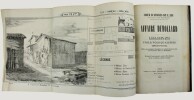
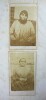
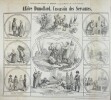
Exceptionnelle réunion de pièces sur le premier tueur en série (répertorié !) en France, et sans doute même en Europe. Martin Dumollard attirait des jeunes femmes en leur promettant un emploi bien rémunéré, les assassinait et les enterrait dans les bois. Et cela pour les voler. Il les frappait toujours à la tête pour ne pas abîmer les vêtements et les bagages de ces malheureuses. 648 effets personnels ont ainsi été retrouvés chez les Dumollard. Une des victimes de ce "sympathique" individu a tout de même été violée avant d'être enterrée vivante. On lui a attribué trois assassinat durant son procès, mais il y en avait certainement beaucoup d'autres. L'affaire fit grand bruit : elle est est évoquée dans "Les Misérables" de Victor Hugo. En écrivant "Bouvard et Pécuchet", Gustave Flaubert, très marqué par cette affaire, nomme dans un premier temps l'un des personnages "Dumolard", qui devint par la suite "Dubolard", et finalement "Bouvard". Relié à la suite : - Affaire Dumollard. Assassinats, viols, vols qualifieés, complicité par recel, filles domestiques étranglées et enfouies dans les bois de Tramoyer, Pizay et Montmain. Lyon, Darmet et Guérin, 1862. In-8 de 198 pp., 1 gravure dépliante, 2 portraits, une carte dépliante. A la suite : - Confession de Martin Dumollard assassin de Dagneu. Dialogue acrostiche. Lyon, Imp. de Porte et Boisson, (1862). 1 feuillet in-4. A la suite : - Véritable et authentique complainte de Dumollard par un gone de Lyon. Paris, Typo. Morris et compagnie, 1862. In-4 de 4 pp. A la suite : - Grande Complainte au sujet des crimes nombreux commis par Martin Dumollard, surnommé l'assassin des servantes, condamné à mort par la cour d'assises de Bourg le 1er février 1862. Lyon, Darmet et Guérin, 1862. In-8 de (8) pp. A la suite : - La plus longue, la plus vraie et la plus bête des complaintes sur Dumollard ... Les crétins et les idiots sont instamment priés de ne pas acheter cette complainte, qui est dédiée spécialement aux gens d'esprit et aux académiciens. (Lyon), Imp. de Porte et Boisson, (1862). 1 feuillet in-folio. - On trouve aussi dans ce volume deux photographies originales de Dumollard et de sa femme. Certaines de ces pièces sont très rares. Très bel exemplaire. /// In-8 de portrait, (4), 84 pp., 2 planches dépliantes Demi-chagrin vert, dos à nerfs orné (Reliure de l'époque.) //// An exceptional collection of pieces about the first (recorded!) serial killer in France, and probably even in Europe. Martin Dumollard lured young women with the promise of a well-paid job, then murdered and buried them in the woods. And all to rob them. He always hit them on the head so as not to damage their clothes and luggage. 648 personal belongings were found at the Dumollard home. One of the victims of this likeable individual was raped before being buried alive. Three murders were attributed to him during his trial, but there must have been many more. The affair caused quite a stir: it is mentioned in Victor Hugo's Les Misérables. When writing "Bouvard et Pécuchet", Gustave Flaubert, deeply affected by the case, initially named one of the characters "Dumolard", which later became "Dubolard", and finally "Bouvard". Bound with : - Affaire Dumollard. Meurtres, viols, vols, complicité de recel, filles domestiques étranglées et enterrées dans les bois de Tramoyer, Pizay et Montmain. Lyon, Darmet et Guérin, 1862. 8to, 198 pp, 1 folging engraving1 folding map, 2 portraits. With : - Confession de Martin Dumollard assassin de Dagneu. Dialogue acrostiche. Lyon, Imp. de Porte et Boisson, (1862). 4to, 1 f. With : - Véritable et authentique complainte de Dumollard par un gone de Lyon. Paris, Typo. Morris et compagnie, 1862. 4to, 4 p. With: - Grande Complainte au sujet des crimes nombreux commis par Martin Dumollard, surnommé l'Assassin des servantes, condamné à mort par la cour d'assises de Bourg le 1er février 1862. Lyon, Darmet et Guérin, 1862. 8vo, (8) pp. With : - La plus longue, la plus vraie et la plus bête des plaintes sur Dumollard ... Les crétins et les idiots sont priés de ne pas acheter cette complainte, qui est dédiée spécialement aux gens d'esprit et aux académiciens. (Lyon), Imp. de Porte et Boisson, (1862). 1 folio. - Two original photographs of Dumollard and his wife. Some of these items are very rare. A very fine copy.
[Photographie] Portrait photographique de Lamartine
Alexandre Martin | Paris 1865 | 6 x 10.50 cm | une feuille
Photographie en pied de Alphonse de Lamartine à l'albumine au format carte de visite, réalisé par Adolphe Alexandre Martin. Photographie montée sur carton au nom de A. Martin. Publicité du photographe au dos. Belle épreuve. Cette séance de pose chez Martin fournit plusieurs photographies de l'écrivain, à la pose légèrement différente. On trouve cette même photographie au musée Lamartine, l'écrivain dans une pose différente, assis sur le fauteuil que l'on voit en arrière plan, avec un plaid sur les genoux ; le musée d'orsay en possède une, l'écrivain toujours assis, mais sans le plaid. Cette séance de poses est la dernière de Lamartine, elle le montre peu avant son décès. Par ailleurs on ne connait pas exactement la date de la séance chez Martin. Les différentes épreuves que nous avons rencontrées dans des poses différentes possèdent la même adresse au dos : rue Nve Saint Augustin. Adolphe Alexandre Martin fut un pionnier de la photographie, il est l'inventeur du ferrotype en 1853, remplaçant les plaques de verre par des plaques de fer recouvertes d'un vernis au collodion. - Photographies et détails sur www.Edition-Originale.com -
Martin McNamara MSC, Caoimh n Breatnach, P draig A. Breatnach, John Carey, U it ar Mac Gearailt, M ire Herbert, Caitr ona Dochartaigh, Erich Poppe, Charles D. Wright (eds)
Reference : 65916
Apocrypha Hiberniae II, Apocalyptica 2
, Brepols, 2019 Hardback, xxiv + 589 pages, Size:155 x 245 mm, Illustrations:3 b/w, 3 tables b/w., Languages: Latin, English. ISBN 9782503585352.
Summary The present volume comprises editions, by several of the major scholars now working in the field of medieval Irish apocrypha, of a selection of important eschatological texts. Two of these, edited by John Carey, are works original to Ireland: The Vision of Adomn n, an account of the afterworld notable for its vividness and complexity; and The Two Sorrows of the Kingdom of Heaven, a shorter text which describes the judgement of souls and the end of the world with reference to the destinies of Enoch and Elijah. Caoimh n Breatnach provides editions of the Irish versions of some of the fundamental texts of Christian apocalyptic: The Assumption of Mary (supplemented by a closely related Latin variant, edited by Joseph Flahive), and one of the Redactions of The Vision of Saint Paul. Professor Breatnach also contributes a series of accounts of Antichrist: these belong to a type that has long been regarded as typically Irish, but for which Charles D. Wright here supplies a broader context in an innovative and important study. Fr Martin McNamara MSC introduces the collection with a discussion of "Some Aspects of Medieval Irish Eschatology". This is the first volume of a two-part collection: the texts edited in the sequel (CCSA 22) are concerned with the events of the end time, and in particular with the theme of the signs before the Day of Judgement. TABLE OF CONTENTS General Introduction: Some Aspects of Medieval Irish Eschatology by Martin McNamara F s Adomn in - The Vision of Adomn n Introduction, Edition, Translation, and Commentary John Carey D Br n Flatha Nime - The Two Sorrows of the Kingdom of Heaven Introduction, Edition, Translation, and Commentary John Carey TRANSITUS MARIAE General Introduction Martin McNamara Udhacht Mhuire - The Testament of Mary Introduction, Edition, Translation, and Commentary Caoimh n Breatnach Trinity College Latin Version Introduction by Martin McNamara and Joseph Flahive Edition and Translation by Joseph Flahive VISIO SANCTI PAULI Introduction Martin McNamara Aisling Ph il - Recension IV of The Vision of Paul Introduction, Edition and Translation Caoimh n Breatnach THE IRISH LEGENDS OF ANTICHRIST Introduction Martin McNamara A Revelation of John about Antichrist Introduction, Edition, Translation, and Commentary Charles D. Wright Three Irish Texts of A Revelation of John about Antichrist: "Sg l Ainntecr sd" - The Story of Antichrist Do thoighiocht an bhreitheamhnais d anaidh - Concerning the Coming of the Final Judgement Do theacht Anticr osd - Concerning the Coming of Antichrist Introduction, Edition, Translation, and Commentary Caoimh n Breatnach
MARTIN (Thomas-Henri) - FAUGERE (M.P.) - WOEPCKE (F.) - STEINSCHNEIDER (M.)
Reference : 6799
MARTIN (Thomas-Henri). Les signes numéraux et l'arithmétique chez les peuples de l'Antiquité et du Moyen-Age. Examen de l'ouvrage allemand intitulé : Mathematische Beiträge zum Culturleben der Völker von dr. Mortiz CANTOR. Rome, Fide, 1864, (3), 103pp. -- MARTIN (Th. Henri). Observations et théories des Anciens sur les attractions et les répulsions magnétiques et sur les attractions électriques. Rome, 1865, 42pp. --- MARTIN (Th. Henri). Textes anciens sur les verres comburants par réfractions. Extrait de deux lettres adressées par M. T.H. Martin à D.B. Boncompagni, 4pp. -- FAUGERE (P.). Défense de B. Pascal et accessoirement de Newton, Galilée, Montesquieu, etc. contre les faux documents présentés par M. Chasles à l'Académie des sciences; avec plusieurs fac-similé. P., Hachette, 1868, 116pp. + fac-similé -- WOEPCKE (F.). Introduction au calcul Gobari et Hawai ; Traité d'arithmétique traduit de l'arabe par François Woepcke et précédé d'une notice de M. Aristide Marre sur un manuscrit possédé par M. Chasles et contenant le texte arabe de ce traité. Rome, 1866, 19pp. -- WOEPCKE (F.). Recherches sur plusieurs ouvrages de Leonard de Pise découverts et publiés par M. Le Prince Balthasar Boncompagni et sur les rapports qui existent entre ces ouvrages et les travaux mathématiques des Arabes. Première partie II. Traduction du traité d'arithmétique d'Aboul Haçan Ali Ben Mohammed Alkalçâdi. Rome, 1859, 66pp. -- STEINSCHNEIDER (M.). Brani della'aritmetica d'Elia MISRACHI tradotti dall'Ebraico con alcune note. Lettera IV di M. Steinschneider à D.B. Boncompagni. Rome, 1866, 67pp. -- [BONCOMPAGNI]. STEINSCHNEIDER (M.). Les ouvrages du Prince Boncompagni concernant l'histoire des sciences mathématiques. Notice bibliographique. Rome, 1859, 9pp ---- Soit 8 mémoires ORIGINAUX relatifs à l'HISTOIRE DES SCIENCES CHEZ LES ANCIENS par T.H. Henri MARTIN, M.P. FAUGERE, F. WOEPCKE et STEINSCHNEIDER publiés entre 1854 et 1868
Un volume in 4 relié en demi-chagrin vert (reliure de l'époque)
---- HUIT mémoires ORIGINAUX relatifs à l'HISTOIRE DES SCIENCES CHEZ LES ANCIENS par T.H. Henri MARTIN, M.P. FAUGERE, F. WOEPCKE et STEINSCHNEIDER publiés entre 1854 et 1868**6799/L6DE
Contes vénitiens. Avec une préface inédite de l'auteur et douze aquarelles et des vignettes de Charles Martin.
Paris, Société d'édition "Le Livre", Emile Chamontin, directeur, 1927, in-8° de 3 ff. (bl., fx-t., t.)-241 pp.-4 ff. (table, ach., 2 bl.) ; relié pleine basane maroquinée havane, titre or sur dos lisse, vague de 3 forts filets dorés courant d'un plat à l'autre en passant par le dos, contreplat doublé encadrant une plaque illustrée, double garde papier à la colle, tranches dorées, couvertures et dos conservés. Sont incrustées aux contreplats deux grandes compositions traitées à l'encre ou au feutre sur papier vieil or, rehaussées en rouge ou rose à la gouache, non signées, dans un listel mosaïqué gris, et légendées à l'or sur un fond crème, Le Départ pour la fête ; Le Retour de la fête : personnages, gondole et colonne sur fond de décor vénitien. Chemise à petits rabats, titre or sur dos passé, étui cartonné légèrement fané, papier à la colle identique pour la chemise et l'étui. Reliure signée et datée M. Bernard, 1929.
Edition illustrée de 22 compositions de Charles Martin, 13 aquarelles coloriées au pochoir par Saudé dont une en couverture et 9 culs-de-lampe tirés en ocre comme les lettrines. Tirage limité à 530 exemplaires numérotés (20 + 30 + 450, et 30 hors commerce), l'un des 450 sur vélin, le n° 230. Le raffinement et l'élégance des compositions de Charles Martin répondent admirablement à l'atmosphère qui se dégage des contes vénitiens d'Henri de Régnier. Les deux fines compositions qui ornent les contreplats et qui ne paraissent pas attribuables à Martin complètent harmonieusement l'exemplaire. Carteret IV, p. 334 - Monod, 9538.
Martin Battersby. The Art of Deception
Pel, Martin: Martin Battersby. The Art of Deception. New Haven: 2026. 288 pages, 158 colour illustrations. Hardback. 24 x 17cms. A look at the life and work of Martin Battersby. Five chapters trace Battersby's career from growing an early career in a decorating firm; his move to stage-set designer during the inter-war years; his turn to trompe l'oeil, his life as a collector and curator, and his homo-erotic work of the 1980s, and lastly the dispersal of his collection. .
A look at the life and work of Martin Battersby. Five chapters trace Battersby's career from growing an early career in a decorating firm; his move to stage-set designer during the inter-war years; his turn to trompe l'oeil, his life as a collector and curator, and his homo-erotic work of the 1980s, and lastly the dispersal of his collection.
Histoire de Manon Lescaut et du Chevalier des Grieux.
Paris La Méridienne 1934 1 vol. Relié in-8, plein maroquin orange, dos à quatre nerfs, doublures de maroquin vert bordées d'un filet doré en encadrement, tête dorée, étui bordé, couvertures et dos conservés (Jeanne Huck), 211 pp. Premier tirage des 18 gravures de Charles Martin, dont 13 hors-texte, toutes délicatement coloriées au pochoir. Tirage unique sur vélin de Navarre. Précieux exemplaire enrichi de toutes les aquarelles originales ayant servi à l'illustration, dont 5 sont signées par l'artiste. Il s'agit du dernier livre illustré par Charles Martin (1884-1934), parfaitement représentatif de son goût des sujets frivoles et de son sens des couleurs et de la composition. En très belle condition.
![Histoire de Manon Lescaut et du Chevalier des Grieux.. MARTIN]. PREVOST (Abbé).](https://static.livre-rare-book.com/pictures/VIG/116863_1_thumb.jpg)
![Histoire de Manon Lescaut et du Chevalier des Grieux.. MARTIN]. PREVOST (Abbé).](https://static.livre-rare-book.com/pictures/VIG/116863_2_thumb.jpg)
![Histoire de Manon Lescaut et du Chevalier des Grieux.. MARTIN]. PREVOST (Abbé).](https://static.livre-rare-book.com/pictures/VIG/116863_3_thumb.jpg)

