 Write to the booksellers
13 books for « mao zedong »Edit
-
Latest
Last 3 days (1)
Last month (1)
-
Century
20th (10)
21st (1)
-
Topics
China (3)
China (1)
Communism (2)
Economics (2)
Economics (2)
Espéranto (1)
First edition (1)
Policy (2)
Socialism (1)
-
Countries
Denmark (3)
France (9)
Switzerland (1)
-
Syndicate
ILAB (12)
SLAM (8)
Citat ur ordförande Mao Tse-Tungs Verk (Swedish) (i.e. Quotations of Chairman Mao). - [FIRST SWEDISH EDITION OF MAO'S LITTLE RED BOOK]
Göteborg, Danelius Bokförlag, (1967). Small 8vo. Pages measuring 130 x 90 mm. Original red vinyl binding with blindstamped lettering and star to front cover. Includes black and white portrait of Chairman Mao and Lin Biao's corrected endorsement leaf in facsimile. (12), 274, (1) pp. Near mint condition. Ex libris ""H. Skottes Bibliotek"" to inside of front board.
![Citat ur ordförande Mao Tse-Tungs Verk (Swedish) (i.e. Quotations of Chairman Mao). - [FIRST SWEDISH EDITION OF MAO'S LITTLE RED BOOK]. "MAO ZEDONG.](https://static.livre-rare-book.com/pictures/LLX/63258_1_thumb.jpg)
![Citat ur ordförande Mao Tse-Tungs Verk (Swedish) (i.e. Quotations of Chairman Mao). - [FIRST SWEDISH EDITION OF MAO'S LITTLE RED BOOK]. "MAO ZEDONG.](https://static.livre-rare-book.com/pictures/LLX/63258_2_thumb.jpg)
![Citat ur ordförande Mao Tse-Tungs Verk (Swedish) (i.e. Quotations of Chairman Mao). - [FIRST SWEDISH EDITION OF MAO'S LITTLE RED BOOK]. "MAO ZEDONG.](https://static.livre-rare-book.com/pictures/LLX/63258_3_thumb.jpg)
First edition of the first Swedish translation of ""Quotations of Chairman Mao"" published in 1967, being the authorized translation from the English by Niels G. and Marika Holmberg. The Swedish translation has 33 chapters (as per the complete Chinese edition from 1965). In 1972, several editions of many languages were redone to remove the endorsements of Lin Biao. Lin Biao wrote an endorsement, choosing three sentences from the diary of Lei Feng, which he wrote in calligraphic script. This endorsement leaf is lacking in most copies due to political reasons: By heavily promoting the LRB, Lin Biao had greatly risen in importance within the Mao-hierarchy, and he was actually designated to become Mao's successor, however, rumours occurred that Lin Biao was planning to assassinate Mao and take over power immediately, and thus he was killed. Due to the close relationship between Lin Biao and Mao, the betrayal was considered the more disgraceful, in fact so disgraceful that it was decided that he had to be erased from modern history. Thus it was decided and commanded that the endorsement leaf was to be removed from all copies of the LRB, and getting caught with not having torn this leaf out might very well have meant the death penalty.The idea of publishing the little book of quotations, which are taken from the first official edition of Mao's writings (his selected works vols. 1-4, printed 1951-60), came to Lin Biao in late 1963 or early 1964, by which time the four volumes of Mao's works had become the chief reading and source of knowledge within China. The little (red) book was meant as inspirational reading for the public, and for several years a campaign was promoted urging (or perhaps commanding) everyone to study the thoughts of Chairman Mao in this form. The short quotation form made the thoughts more easily accessible, and even uneducated people (like the soldiers) were able to become acquainted with the thoughts and philosophy of their leader.""The LRB continued to be printed in huge quantities for mass distribution up until the time of Mao's death on September 9th, 1976. This brought about an official end to the Cultural Revolution (which had used the LRB as a frequent symbol). By the late 1970s a change in government discouraged its further circulation and millions upon millions of copies were collected and destroyed as obsolete paper even while the cult of Maoism continued. It was during the centenary of Mao Tse-tung's birth (1993) that copies were once again printed, this time as facsimiles in English, French and German being exact replicas dated 1966 and with ""First Edition"" printed behind each title-page. They can be easily distinguished by their bright shiny red laminated covers and the presence of colored photograph portraits near the front. As they can still be found all over China, most likely they have been printed again even more recently. No one denies Mao is the Father of his country, truly the last Emperor, a symbol of power and reverence who has been exonerated for the mistakes of his reign and consequently recognized for his achievements as hope for the future. His ideology forms a brilliant concept that is still readable and admired today for its political theories and strategies, and no doubt he would be very proud to know the effect he has had on his own country and the world will never forget him."" (Oliver Lei Han, Sources and Early Printing History of Chairman Mao's ""Quotations).

Citater fra formand Mao Tse-Tungs (Danish) (i.e. Quotations of Chairman Mao). - [FIRST DANISH EDITION OF MAO'S LITTLE RED BOOK]
København, Forlaget Futura, 1967. Small 8vo. Pages measuring 129 x 93 mm. Original red vinyl binding with blindstamped lettering and star to front cover. Includes black and white portrait of Chairman Mao and Lin Biao's corrected endorsement leaf in facsimile. (16), 309, (1) pp. In near mint condition.
![Citater fra formand Mao Tse-Tungs (Danish) (i.e. Quotations of Chairman Mao). - [FIRST DANISH EDITION OF MAO'S LITTLE RED BOOK]. "MAO ZEDONG.](https://static.livre-rare-book.com/pictures/LLX/63288_1_thumb.jpg)
![Citater fra formand Mao Tse-Tungs (Danish) (i.e. Quotations of Chairman Mao). - [FIRST DANISH EDITION OF MAO'S LITTLE RED BOOK]. "MAO ZEDONG.](https://static.livre-rare-book.com/pictures/LLX/63288_2_thumb.jpg)
![Citater fra formand Mao Tse-Tungs (Danish) (i.e. Quotations of Chairman Mao). - [FIRST DANISH EDITION OF MAO'S LITTLE RED BOOK]. "MAO ZEDONG.](https://static.livre-rare-book.com/pictures/LLX/63288_3_thumb.jpg)
The surprisingly scarce first edition, first printing of the first Danish translation of ""Quotations of Chairman Mao"", with 33 chapters (as per the complete Chinese edition from 1965). The publication was a a success for the publisher Futura (founded by Gotfred Appel (1924-1992) ), and 5000 copies were made of the first printing. According to OCLC, only four libraries worldwide have a copy of this edition (unclear whether they are first printings or later printings from the same year) - National Library of China, Yale, and two in Denmark (Odense and Copenhagen). In 1972, several editions of many languages were redone to remove the endorsements of Lin Biao. Lin Biao wrote an endorsement, choosing three sentences from the diary of Lei Feng, which he wrote in calligraphic script. This endorsement leaf is lacking in most copies due to political reasons: By heavily promoting the LRB, Lin Biao had greatly risen in importance within the Mao-hierarchy, and he was actually designated to become Mao's successor, however, rumours occurred that Lin Biao was planning to assassinate Mao and take over power immediately, and thus he was killed. Due to the close relationship between Lin Biao and Mao, the betrayal was considered the more disgraceful, in fact so disgraceful that it was decided that he had to be erased from modern history. Thus it was decided and commanded that the endorsement leaf was to be removed from all copies of the LRB, and getting caught with not having torn this leaf out might very well have meant the death penalty. The idea of publishing the little book of quotations, which are taken from the first official edition of Mao's writings (his selected works vols. 1-4, printed 1951-60), came to Lin Biao in late 1963 or early 1964, by which time the four volumes of Mao's works had become the chief reading and source of knowledge within China. The little (red) book was meant as inspirational reading for the public, and for several years a campaign was promoted urging (or perhaps commanding) everyone to study the thoughts of Chairman Mao in this form. The short quotation form made the thoughts more easily accessible, and even uneducated people (like the soldiers) were able to become acquainted with the thoughts and philosophy of their leader.""The LRB continued to be printed in huge quantities for mass distribution up until the time of Mao's death on September 9th, 1976. This brought about an official end to the Cultural Revolution (which had used the LRB as a frequent symbol). By the late 1970s a change in government discouraged its further circulation and millions upon millions of copies were collected and destroyed as obsolete paper even while the cult of Maoism continued. It was during the centenary of Mao Tse-tung's birth (1993) that copies were once again printed, this time as facsimiles in English, French and German being exact replicas dated 1966 and with ""First Edition"" printed behind each title-page. They can be easily distinguished by their bright shiny red laminated covers and the presence of colored photograph portraits near the front. As they can still be found all over China, most likely they have been printed again even more recently. No one denies Mao is the Father of his country, truly the last Emperor, a symbol of power and reverence who has been exonerated for the mistakes of his reign and consequently recognized for his achievements as hope for the future. His ideology forms a brilliant concept that is still readable and admired today for its political theories and strategies, and no doubt he would be very proud to know the effect he has had on his own country and the world will never forget him."" (Oliver Lei Han, Sources and Early Printing History of Chairman Mao's ""Quotations).
Mao Zhu Xi Yu Lu (Chinese) (i.e. Quotations of Chairman Mao). - [THE ""LITTLE RED BOOK"" - THE ""CHINESE BIBLE""]
Sichuan Provincial Government edition. Likely Chongqing: May 1964 Pages measuring 137 x 102 mm. Original red vinyl with blindstamped lettering and star to front cover. The cover is made to fit around original blank paper-boards. Remains of light blue paint to spine and some soiling and staining to the inner flaps. Half-title printed in red, title-page in red and green with double-line imprint, tissue guard and portrait of Chairman Mao, Lin Biao's uncorrected endorsement leaf in facsimile, + 2, 2, 250 pp. Marginal notes on table of contents and strikethrough passage on pp. 192/3. With rare variant form (?) of the first character in the Chinese word for ""masses"" (??) – for example in chapter 1, p. 1, l. 11 (fourth character from the end).
![Mao Zhu Xi Yu Lu (Chinese) (i.e. Quotations of Chairman Mao). - [THE ""LITTLE RED BOOK"" - THE ""CHINESE BIBLE""]. "MAO ZEDONG.](https://static.livre-rare-book.com/pictures/LLX/63168_1_thumb.jpg)
![Mao Zhu Xi Yu Lu (Chinese) (i.e. Quotations of Chairman Mao). - [THE ""LITTLE RED BOOK"" - THE ""CHINESE BIBLE""]. "MAO ZEDONG.](https://static.livre-rare-book.com/pictures/LLX/63168_2_thumb.jpg)
![Mao Zhu Xi Yu Lu (Chinese) (i.e. Quotations of Chairman Mao). - [THE ""LITTLE RED BOOK"" - THE ""CHINESE BIBLE""]. "MAO ZEDONG.](https://static.livre-rare-book.com/pictures/LLX/63168_3_thumb.jpg)
First edition, slightly later variant issue, printed by the Sichuan provincial government. With the rare endorsement-leaf, which is usually lacking. The present copy has the uncorrected endorsement leaf but text pages 82/3 correctly printed. Bespoke derivatives of the first edition appeared soon after its release in 1964, this being one of the rare provinicial government ones. This edition is distinguishable from later editions by its slightly larger page size, by only containing 30 chapters, and by ending with page 250. This edition has a green double-line imprint on the title-page (schiller 4), which localizes it to Sichuan, and includes a rare variant form of the word ""masses"". There is no other publishing data, as the simultaneous production of the book at different locations in China made local distribution easier. The idea of publishing this little book of quotations, which are taken from the first official edition of Mao's writings (his selected works vols. 1-4, printed 1951-60), came to Lin Biao in late 1963 or early 1964, by which time the four volumes of Mao's works had become the chief reading and source of knowledge within China. The little (red) book was meant as inspirational reading for the public, and for several years a campaign was promoted urging (or perhaps commanding) everyone to study the thoughts of Chairman Mao in this form. The short quotation form made the thoughts more easily accessible, and even uneducated people (like the soldiers) were able to become acquainted with the thoughts and philosophy of their leader.Lin Biao wrote an endorsement, choosing three sentences from the diary of Lei Feng, which he wrote in calligraphic script. This endorsement leaf is lacking in most copies due to political reasons: By heavily promoting the LRB, Lin Biao had greatly risen in importance within the Mao-hierarchy, and he was actually designated to become Mao's successor, -however, rumours occurred that Lin Biao was planning to assassinate Mao and take over power immediately, and thus he was killed. Due to the close relationship between Lin Biao and Mao, the betrayal was considered the more disgraceful, in fact so disgraceful that it was decided that he had to be erased from modern history. Thus it was decided and commanded that the endorsement leaf was to be removed from all copies of the LRB, and getting caught with not having torn this leaf out might very well have meant the death penalty. ""The LRB continued to be printed in huge quantities for mass distribution up until the time of Mao's death on September 9th, 1976. This brought about an official end to the Cultural Revolution (which had used the LRB as a frequent symbol). By the late 1970s a change in government discouraged its further circulation and millions upon millions of copies were collected and destroyed as obsolete paper even while the cult of Maoism continued. It was during the centenary of Mao Tse-tung's birth (1993) that copies were once again printed, this time as facsimiles in English, French and German being exact replicas dated 1966 and with ""First Edition"" printed behind each title-page. They can be easily distinguished by their bright shiny red laminated covers and the presence of colored photograph portraits near the front. As they can still be found all over China, most likely they have been printed again even more recently. No one denies Mao is the Father of his country, truly the last Emperor, a symbol of power and reverence who has been exonerated for the mistakes of his reign and consequently recognized for his achievements as hope for the future. His ideology forms a brilliant concept that is still readable and admired today for its political theories and strategies, and no doubt he would be very proud to know the effect he has had on his own country and the world will never forget him."" (Oliver Lei Han, Sources and Early Printing History of Chairman Mao's ""Quotations). See:Schiller, Justin: Quotations of Chairman Mao, A Short Bibliographical Study. Peter Harrington. The Quotations of Chairman Mao: From single spark to prairie fire.
[Mao zhu xi yu lu]. Citations du président Mao Tsé Tung
Le Petit livre rouge en français Zhong guo ren min jie fang jün zong zheng zhi bu bian zhu [Pékin, Département de politique générale de l'Armée populaire de libération], 1966. 1 vol. (100 x 138 mm). Broché, jaquette vinyle rouge. Edition originale de la traduction française. Premier tirage, premier état.
![[Mao zhu xi yu lu]. Citations du président Mao Tsé Tung. Mao Zedong [Mao Tse-Toung]](https://static.livre-rare-book.com/pictures/WLD/32537_1_thumb.jpg)
![[Mao zhu xi yu lu]. Citations du président Mao Tsé Tung. Mao Zedong [Mao Tse-Toung]](https://static.livre-rare-book.com/pictures/WLD/32537_2_thumb.jpg)
![[Mao zhu xi yu lu]. Citations du président Mao Tsé Tung. Mao Zedong [Mao Tse-Toung]](https://static.livre-rare-book.com/pictures/WLD/32537_3_thumb.jpg)
D'abord conçu comme un instrument de formation politique destiné à l'Armée populaire de libération, le recueil des Citations du président Mao devint bientôt l'un des livres les plus diffusés et les plus immédiatement reconnaissables du XXe siècle. Son format de poche, sa couverture de vinyle rouge et sa diffusion massive pendant la Révolution culturelle lui valurent en Occident le nom de « Petit Livre rouge ». L'idée du recueil revient au contexte militaire et idéologique du début des années 1960. Lin Piao, ministre de la Défense et chef de l'Armée populaire de libération, encourage alors l'étude systématique de la pensée de Mao au sein des troupes. Il s'agit de fournir aux soldats un manuel portatif, simple, maniable, composé d'extraits des écrits et discours du président Mao, classés par thèmes. D'abord réservé aux cadres et aux unités militaires, l'ouvrage sort rapidement de ce cadre pour devenir un emblème politique, brandi lors des rassemblements, mémorisé, cité, exhibé comme signe d'adhésion révolutionnaire. L'édition française de 1966 participe directement à cette diffusion internationale. Publiée à Pékin par les Éditions en langues étrangères, elle donne au public francophone l'un des objets centraux de l'imaginaire maoïste. À la fois livre de propagande, manuel politique, objet militant et icône graphique, les Citations circulent alors bien au-delà de la Chine, dans les milieux communistes, marxistes-léninistes, étudiants et tiers-mondistes. La présence du fac-similé de Lin Piao ajoute une forte dimension historique : longtemps présenté comme le plus proche compagnon d'armes de Mao et son successeur désigné, Lin Piao fut brutalement effacé de la mémoire officielle après sa disgrâce et sa mort en 1971, et les éditions postérieures à cette date ne conservent plus ces éléments.

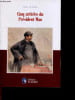
Cinq articles du Président Mao 1929 / 1945 - Mao Zedong - Collection Cahiers du peuple
FILLES DE LA COMMUNE. MARS 2025. In-8. Broché. Bon état, Couv. convenable, Dos satisfaisant, Intérieur frais. 26 PAGES. . . . Classification Dewey : 320-Science politique
Classification Dewey : 320-Science politique
insignes de Mao Zedong 毛澤東像章图谱
Librairie chinoise, 中国书店 1993 Livre en chinois. In-4 reliure éd. sous jaquette 29,2 cm sur 21,7. 400 pages. Attention: la page de titre présente un manque angulaire. Jaquette effrangée. Jaquette en état moyen. État correct d’occasion.
![insignes de Mao Zedong 毛澤東像章图谱. [Mao Zedong]](https://static.livre-rare-book.com/pictures/AVE/125348_1_thumb.jpg)
![insignes de Mao Zedong 毛澤東像章图谱. [Mao Zedong]](https://static.livre-rare-book.com/pictures/AVE/125348_2_thumb.jpg)
![insignes de Mao Zedong 毛澤東像章图谱. [Mao Zedong]](https://static.livre-rare-book.com/pictures/AVE/125348_3_thumb.jpg)
Etat correct d’occasion
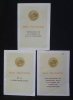
Lot de 3 ouvrages de Mao Tse-Toung (3 volumes)
Editions en langues étrangères, Pékin Broché 1960 Trois volumes in-12 (13 x 18,5 cm.), brochés, portrait en médaillon de Mao au 1er plat, I. Problèmes de la guerre et de la stratégie (32 pages) / II. Les questions de stratégie dans la guerre de partisans antijaponaise (75 pages) / III. De la guerre prolongée (156 pages) ; coiffes, mors et coins un peu frottés, intérieur frais, bon état d'ensemble pour cette série de 3 tomes peu courante. Livraison a domicile (La Poste) ou en Mondial Relay sur simple demande.
Causerie pour les rédacteurs du 'Quotidien du Chansi-Soueiyuan'
Editions en langues étrangères, Pékin Plaquette In-12 (10,5 x 15 cm), plaquette en feuilles, 9 pages ; rousseurs aux plats, quelques traits de crayon à papier à l'intérieur, assez bon état général. Livraison a domicile (La Poste) ou en Mondial Relay sur simple demande.
(Gedichte, Faksimile der Handschrift).
Beijing, Wenwu-Verlag (Cultural Relics Publishing House) . 1973. 43x31,5 cm. 90 n.n. S. Traditionell chinesische Broschur mit Fadenbindung und montiertem Deckeltitel.
Originalausgabe. - Noch in der Zeit der Kulturrevolution erschienene Sammlung der Gedichte in der Handschrift von Mao. Überraschend bibliophiler Druck und Gestaltung. - Broschurumschlag leicht fleckig und mit schwachem Lichtrand. Die ersten 4 Blätter am Unterrand mit leichter Verfärbung.
????? ???????? ???? [Sur la Nouvelle Démocratie : Politique, Économie, Culture]
[Xinmin Publishing House] [Jincheng Printing Company] | [Hong Kong] [15 octobre 1949] | 12.9 x 18.8 cm | Agrafé
Brochure publiée à Hong Kong 15 jours après la proclamation de la République populaire de Chine, reproduisant l'essai rédigé par Mao Zedong en 1940. La ville, longtemps sous domination coloniale britannique, constituait alors un espace où la presse de gauche bénéficiait d'une relative tolérance, permettant la diffusion d'ouvrages proches du Parti communiste chinois (PCC). Exemplaire complet de sa couverture imprimée en rouge et noir et de sa page de titre ornée d'une gravure représentant Mao Zedong en buste, coiffé d'une casquette. Petits accrocs au dos, petit pli affectant légèrement le coin inférieur gauche. Brunissures marginales. - Photographies et détails sur www.Edition-Originale.com -
Vortoj de prezidanto Mau Zedong
Fremdlingva Eldonejo. 1967. In-18. Relié. Bon état, Couv. convenable, Dos satisfaisant, Papier jauni. 343 pages. Texte en . Une illustration en noir et blanc, hors texte. Un signet.. . . . Classification Dewey : 499.99-Espéranto

Classification Dewey : 499.99-Espéranto
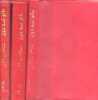
Oeuvres - Tome 1 + Tome 2 + Tome 3 - 3 volumes - Livres en persan.
Editions en langues etrangeres. 1969. In-12. Broché. Bon état, Couv. convenable, Dos satisfaisant, Intérieur frais. 526+705+438 pages - signet conservé - sens de lecture inversé.. . . . Classification Dewey : 490-Autres langues
Livres en persan. Classification Dewey : 490-Autres langues
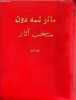
Monuments sélectionnés - premier tome (livre en persan).
Administration des publications en langues étrangères. 1969. In-12. Broché. Bon état, Couv. convenable, Dos satisfaisant, Intérieur frais. Environ 300 pages - signet conservé - livre en persan - photo en noir et blanc sous serpente en frontispice - sens de lecture inversé.. . . . Classification Dewey : 490-Autres langues
livre en persan. Classification Dewey : 490-Autres langues

