 Write to the booksellers
19 books for « m mostert »Edit
-
Language
Dutch (1)
French (18)
-
Century
20th (5)
21st (1)
-
Countries
Belgium (12)
Denmark (1)
France (6)
-
Syndicate
CLAM (1)
ILAB (6)
SLAM (4)
Topics
- Architecture (1)
- Boats - ships (1)
- Christmas (6)
- Ecology (1)
- English (1)
- Epigraphy (1)
- Europe (1)
- History (7)
- Language (2)
- Latin (1)
- Law (1)
- Literature (7)
- Manuscripts (1)
- Maps (1)
- Middle ages (1)
- Painting (1)
- Painting (1)
- Palaeography (2)
- Philosophy (1)
- Psychology (1)
- Romance (1)
- Sciences (1)
- Sociology (1)
- Tea (1)
- Theology (1)
Graffiti in Medieval and Early Modern Societies. Italy and Beyond
, Brepols, 2026 Hardback, Pages: xviii + 375, Size:156 x 234 mm, Illustrations:9 b/w, 103 col., Language: English. ISBN 9782503625126.
Summary Graffiti is increasingly being recognised as an important historical source that can provide first-hand information on the written cultures of past societies. This book presents a wide variety of approaches to the how and why of graffiti production in medieval and early modern societies. Geographically, the book ranges from Italy to Russia, by way of the insular and Nordic worlds, and beyond, to the Holy Land and early medieval Nubia. Attention is given to information which will lead to the development of the historical criticism of graffiti, including the best practices for photography. A bibliography of the publications on medieval graffiti which have come out since 2000 is hoped to further the development of future scholarship. While there is extensive scholarship on graffiti in classical Antiquity, other historical graffiti remains understudied. This volume provides an overview of studies on graffiti for medieval and early modern cultures as well as a platform for future research. TABLE OF CONTENTS Preface By Way of an Introduction: Some Thoughts on Graffiti as a Historical Source CARLO TEDESCHI Graffiti, Margins, and Palimpsests V RONIQUE PLESCH At the Margins of Graffiti: 'Fixed' Writings in Pilgrimage Sites in the Holy Land CL MENT DUSSART and ESTELLE INGRAND-VARENNE Inscriptions and Graffiti from the Courtyard of the Armenian Monastery of Sts. James in Jerusalem KHACHIK HARUTYUNYAN Devotional Graffiti in Christian Nubia (Based on the Material from the So-Called North Church within the Monastery on Kom H in Dongala) ADAM ?AJTAR From the Pillar to the Page: Historic Graffiti in British Churches and Medieval Graphic Practice WENDY SCASE Memorial Graffiti and Libri vitae: An Intersection? LAURA PANI Graffiti and the History of the Italian Language: Some Case Studies from "Italia Mediana" ALICE DI COCCO Connections between the 'Global' and the 'Local': Exploring Marginality through Late Fourteenth-Century Graffiti near Verona GIULIA SACCOMANI Cavernae solertes inquisitores: Graffiti on a Sixteenth-Century Speleological Exploration in Martina Franca CRISTINA COMASIA ANCONA and ROBERTO ROTONDO Digital Photographic Reproduction Techniques for Studying Graffiti ROCCO D'ERRICO "Thorgrim Owns Me": Runic Graffiti of Lydvaloftet, a Medieval Farmhouse at Voss, Norway KRISTEL ZILMER The Place of Graffiti in the Graphic Environment of Medieval Rus JOS SCHAEKEN Graffiti in Medieval Written Culture and in the Graphosphere MARCO MOSTERT After Kraack and Lingens: An Additional Bibliography on Medieval Graffiti MARCO MOSTERT Notes on Contributors
Les Super-tankers : Menace sur les océans (Collection Réponses) [Paperback] Mostert, Noël; Ouvaroff, Jacqueline and Ouvaroff, Serge
broche
Merci de nous contacter à l'avance si vous souhaitez consulter une référence dans notre boutique à Authon-du-Perche.
SUPERSHIP
Penguin Books. 1975. In-12. Broché. Etat d'usage, Couv. légèrement pliée, Dos plié, Intérieur acceptable. 368 pages. Dos frotté.. . . . Classification Dewey : 420-Langue anglaise. Anglo-saxon
Noël Mostert's controversial bestseller. Classification Dewey : 420-Langue anglaise. Anglo-saxon


Les Super-tankers : Menace sur les océans (Collection Réponses)
Robert laffont 1975 in8. 1975. Broché.
Bon Etat couverture défraîchie intérieur propre
Spelen in de Middeleeuwen over schaken, dammen, dobbelen en kaarten
Hilversum 2001 Verloren Soft cover 1st Edition
Couverture souple, 22 x 15 cm, 208 pages, Néerlandais, Première édition, Illustrations, état : Comme Neuf [Cette description peut avoir été traduite par une IA.]
Les super-tankers - Menace sur les océans - Collection réponses/écologie.
Robert Laffont. 1975. In-8. Broché. Etat d'usage, Coins frottés, Dos satisfaisant, Papier jauni. 382 pages.. . . . Classification Dewey : 577-Ecologie
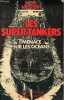
Collection réponses/écologie - traduit de l'américain par J. et S. Ouvaroff. Classification Dewey : 577-Ecologie
Les Super-Tankers : Menace sur les océans
Editions Robert Laffont Réponses/Ecologie Broché 1975 In-8 (13,6 x 21,5 cm), broché, 382 pages ; couverture jaunie, marques d'usage dont quelques petits chocs sur les plats, frottements au mors supérieur, ex-libris manuscrit en première garde, par ailleurs assez bon état général. Livraison a domicile (La Poste) ou en Mondial Relay sur simple demande.
Spoken and Written Language, Relations between Latin and the Vernacular Languages in the Earlier Middle Ages. Papers from the Second Utrecht Symposium on Medieval Literacy, 24-26 June 1999.
, Brepols, 2013 Hardback, XII+364 p., 8 b/w ill. + 4 colour ill., 156 x 234 mm, Languages: English, German, French Utrecht Studies in Medieval Literacy (USML 24 ISBN 9782503507705.
News Catalogue Contact & About Partners Downloads Scroll up Scroll down Scroll up Scroll down Scroll up Scroll down Scroll up Scroll down The linguistic situation of medieval Europe has sometimes been characterized as one of diglossia: one learned language, Latin, was used for religion, law, and documents, while the various vernaculars were used in other linguistic registers. Informing the relationship between Latin and the vernaculars was the choice of Latin as the language of the Western Roman Empire and the Roman Church. This choice entailed the possibility of a shared literary culture and heritage across Europe, but also had consequences for access to that heritage. Scholarship on the Romance languages has contested the relevance of the term diglossia, and the divergence between written or spoken Latin and Romance is a subject of energetic debate. In other linguistic areas, too, questions have been voiced. How can one characterize the interaction between Latin and the various vernaculars, and between the various vernaculars themselves? To what extent could speakers from separate linguistic worlds communicate? These questions are fundamental for anyone concerned with communication, the transmission of learning, literary history, and cultural interaction in the Middle Ages. This volume contains contributions by historians, cultural historians, and students of texts, language, and linguistics, addressing the subject from their various perspectives but at the same time trying to overcome familiar disciplinary divisions. Table of Contents; abbreviations Trace Elements of Obliterated Vernacular Languages in Latin Texts - MICHAEL RICHTER Qu?une femme ne peut pas etre appelee homme: Questions de langue et d?anthropologie autour du concile de Macon (585) - A. DEMYTTENAERE Wie gross war der Einfluss des Griechischen auf die Sprache der (ersten) lateinischen Christen? - ARPAD ORBAN Die Figur des Dolmetschers in der biographischen Literatur des westlichen Mittelalters (IV.-XII. Jh.) - WALTER BERSCHIN Nordic Digraphia and Diglossia - INGER LARSSON The Non-Classical Vocabulary of Celtic Latin Literature: An Overview - ANTHONY HARVEY The Cena Adamnani or Seventh-Century Table Talk - MICHAEL W. HERREN Latin and Old English in Ninth-Century Canterbury - NICHOLAS BROOKS A Sociophilological Study of the Change to Official Romance Documentation in Castile - ROGER WRIGHT L?ancien francais (archaique) et le fonctionnement de la communication verticale latine en Gaule (VIIe-VIIIe siecles) - MARC VAN UYTFANGHE Quelques exemples de compromis morphologiques au VIIIe siecle en Francia - MICHEL BANNIARD Latin Grammars and the Structure of the Vernacular Old Irish Auraicept na nEces - RIJCKLOF HOFMAN From Monks? Jokes to Sages? Wisdom: The Joca Monachorum Tradition and the Irish Immacallam in daThuarad - CHARLES D. WRIGHT Writing in Latin and the Vernacular: The Case of Old High German - DENNIS GREEN Volkssprachige Glossen fur lateinkundige Leser? - ROLF BERGMANN Rustice vel Teodisce appellatur oder: Warum schreibt man Glossen? - AREND QUAK Typen und Funktionen volkssprachiger (althochdeutschen) Eintragungen im lateinischen Kontext - ELVIRA GLASER Liturgical Latin in Early Medieval Gaul - ELS ROSE Sprach Ludwig der Deutsche deutsch? - DIETER GEUENICH Latin and Three Vernaculars in East Central Europe from the Point of View of the History of Social Communication - ANNA ADAMSKA
Bibliography of Works on Medieval Communication
, Brepols - Harvey Miller, 2012 Hardcover. 658 p., 156 x 234 mm, Languages: English. Fine copy. Including an index. ISBN 9782503544779.
This bibliography of works on medieval communication offers a survey of work in a field of study which, from the 1960s onwards, has seen an ever-increasing number of monographs, collections of miscellanies and articles in learned journals being published every year. It provides a guide to this astonishing output by offering a list of more than 6.700 publications under sixteen headings. Because of the overlap of these headings, a comprehensive Index of subjects, place names and personal names is provided, which will allow the user to quickly find publications relevant to his research. A short Introduction precedes the bibliography. Progress in the field of study over the past two decades is outlined, with attention to those recent developments which have proved the most productive. At the same time, something is said about the growing insights which have led the bibliography?s organisation to be changed substantially since its previous edition in 1999, which already numbered 1.580 items. Not only the more than fourfold increase in the number of items made a new edition necessary therefore, but also new ideas about the best ways of organising the knowledge that is to be gained from the contents of studies of medieval communication.
Reading Images and Texts <br>Medieval Images and Texts as Forms of Communication. Papers from the Third Utrecht Symposium on Medieval Literacy, Utrecht, 7-9 December 2000
, Brepols - Harvey Miller, 2005 Hardcover. X 546 p., 141 b/w ill. 19 colour ill., 160 x 240 mm, Languages: English, Latin, Fine copy. Including an index. ISBN 9782503514376.
The interactions between non-verbal and verbal forms of communication, more in particular the relations between visual symbols other than writing and the recording of speech in writing, are important for the evaluation of both images and texts.<br>In recent years the relations between images and texts have benefitted from an increase in scholarly attention. In medieval studies, art historians, historians, codicologists, philologists and others have applied their methods to the study of illuminated manuscripts and other works of art. These studies have shifted from a concern about the contents of the messages contained in the artefacts (e.g. in iconography) to an interest in the ways in which they were communicated to their intended audiences. The perception of texts and images, their reception by contemporaries and by later generations have become topics in their own right. The analysis of individual manuscripts and works of art remains the basis for any consideration of their transmission and uses. Yet the time has come for an evaluation of the results of recent work on medieval communication. The interactions between non-verbal and verbal forms of communication, more in particular the relations between visual symbols other than writing and the recording of speech in writing, are important for the evaluation of both images and texts.<br>According to some, medieval images may be ?read?. According to others, the perception of images is fundamentally different from that of texts. Do images have a morphology (colours, lines, planes), a syntax and semantics of their own? In other words: do both texts and images have a ?grammar?? Is it useful to speak of ?visual literacy?? Can texts be considered as images? How are texts and images perceived? Do they communicate different kinds of messages? Can an image?s message be put into words? In which social contexts does medieval man prefer the visual to the textual? What about the interplay of texts and images (e.g. in rituals and ceremonies)? Do we observe an evolution in the perception of images due to the development of a literate mentality? These are some of the questions discussed in the contributions to this volume.
Development of Literate Mentalities in East Central Europe
, Brepols - Harvey Miller, 2004 Hardcover. VIII 546 p., 15 b/w ill. 12 colour ill., 7 b/w line art, 160 x 240 mm, Languages: English, Fine copy. Including an index. ISBN 9782503514499.
Compared with most of Continental Europe North of the Alps, the introduction of writing in East Central Europe (Bohemia, Poland and Hungary) took place with a considerable delay. Much is known about East Central European uses of writing, although only a fragment of this knowledge is known outside the region. Gathered by historians, palaeographers and codicologists, diplomatists, art historians, literary historians and others, this knowledge has hardly ever been studied in the light of recent discussions on medieval literacy and communication. Work done in the Czech, Polish and Hungarian traditions of scholarship has never been subjected to a comparative analysis. Furthermore, the question of the relation between writing and other forms of communication in the region remains largely unexplored. The volume serves a double purpose. For the first time, a collection of contributions on medieval literacy in East Central Europe is put before the forum of international scholarship. It is also hoped to further discussions of modes of communication, literate behaviour and mentalities among scholars working in the region.
Strategies of Writing Studies on Text and Trust in the Middle Ages: Papers from ?Trust in Writing in the Middle Ages? (Utrecht, 28-29 November 2002)
, Brepols - Harvey Miller, 2008 Hardcover. XIV 414 p., 36 b/w ill., 160 x 240 mm, Languages: English, German, Fine copy. Including an index. ISBN 9782503517582.
Trust is the basis of all social relations. A society in which trust is not assured, will not, in the end, endure. Trust presupposes the concordance of word and deed. Rather than an emotion, trust is an attitude based on experience. It is not created spontaneously, but requires a process of observation and socialization. This implies that the preconditions for trust are culturally determined and subject to change. Trust is expressed through communication. Writing may engender trust, and trust may be placed in written texts. The contributions to this volume address the complex relationships between ?trust? and ?writing? in the Middle Ages. They deal with charters, historiography, letters, political communication, and the possibilities of trust in writing. Some of the questions addressed are: Does writing as a medium engender trust irrespective of the contents of the written text? Was trust in writing dependent on trust in an authority? Are there suggestions that the written form of the text was meant to confer trust on its contents? Did rituals take place (before or during the writing of the text, or during its handing over to the recipient) that were meant to enhance the text?s trustworthiness? Can changes be observed in the strategies of engendering trust? Was trust considered food for reflection in written texts? What was considered to constitute a breach of trust? The volume is dedicated to Michael Clanchy, whose work inspired much of its contents.
Seeing the Invisible in Late Antiquity and the Early Middle Ages <br>Papers from "Verbal and Pictorial Imaging: Representing and Accessing Experience of the Invisible, 400-1000" (Utrecht, 11-13 December 2003)
, Brepols - Harvey Miller, 2005 Hardcover. XII 546 p., 99 b/w ill. 11 colour ill., 160 x 240 mm, Languages: English, Fine copy. Including an index. ISBN 9782503517599.
Limiting itself to the vital centuries when the late Roman West reshaped itself into a first "Europe," the conference explored the dominant conception of human nature in that era: that human existence was both body (in the visible world of material things) and soul (in the invisible world of spirit). This was a legacy of pre-Christian elements handed down from Greek philosophy and Hebrew Scriptures. Assimilating it to indigenous cultures in the Roman West, many alien to the ancient Mediterranean world, precipitated sea-changes in the understanding of human psychology. Ensuing frictions sparked extraordinary expressions of creativity in words and visual images. It also created dangerously subversive disequilibriums in the collective mentality within elites and between them and majority cultures. The papers in this volume investigate numerous configurations of a new culture taking shape in that volatile environment. They contribute to continuing debates about the cognitive co-ordination of words and pictorial images, and to cross-disciplinary dialogues in such disparate fields as art history, religious literature, mysticism, and cultural anthropology.
Medieval Legal Process Physical, Spoken and Written Performance in the Middle Ages<br>
, Brepols - Harvey Miller, 2011 Hardcover. IX 299 p., 5 b/w ill., 5 b/w tables, 156 x 234 mm, Languages: English, Fine copy. Including an index. ISBN 9782503541747.
In medieval legal transactions the use of the written word was only one of many ways of conducting business. Important roles were played by the spoken word and by the ?action? of ritual. The relationship between ?rituals? and literacy has been the focus of much recent research. Medieval societies which made extensive use of written instruments in legal transactions have been shown to employ rituals as well. This has led to investigation of the respective functions of written instruments and legal rituals. What is the nature of legal rituals? If they included oral verbalization, how did the spoken words relate to those of the written instruments that played a role in the same legal transactions? Usually, we only have the written documents to answer these questions, and they are often silent about the rituals and oral elements of the transactions they document. Furthermore, the importance attached to written instruments and rituals may not have been the same at all levels of a society, differing, for example, between princely and local courts. The contributors to this volume discuss fifteen cases, ranging from the early Middle Ages to the eighteenth century, and from England to Galician Rus?.
Spoken and Written Language Relations between Latin and the Vernacular Languages in the Earlier Middle Ages<br>
, Brepols - Harvey Miller, 2013 Hardcover. XII 364 p., 8 b/w ill. 4 colour ill., 156 x 234 mm, Languages: English, German, French, Fine copy. Including an index. ISBN 9782503507705.
The linguistic situation of medieval Europe has sometimes been characterized as one of diglossia: one learned language, Latin, was used for religion, law, and documents, while the various vernaculars were used in other linguistic registers. Informing the relationship between Latin and the vernaculars was the choice of Latin as the language of the Western Roman Empire and the Roman Church. This choice entailed the possibility of a shared literary culture and heritage across Europe, but also had consequences for access to that heritage. Scholarship on the Romance languages has contested the relevance of the term diglossia, and the divergence between written or spoken Latin and Romance is a subject of energetic debate. In other linguistic areas, too, questions have been voiced. How can one characterize the interaction between Latin and the various vernaculars, and between the various vernaculars themselves? To what extent could speakers from separate linguistic worlds communicate? These questions are fundamental for anyone concerned with communication, the transmission of learning, literary history, and cultural interaction in the Middle Ages. This volume contains contributions by historians, cultural historians, and students of texts, language, and linguistics, addressing the subject from their various perspectives but at the same time trying to overcome familiar disciplinary divisions.
Writing and the Administration of Medieval Towns Medieval Urban Literacy I<br>
, Brepols - Harvey Miller, 2014 Hardcover. XVI 366 p., 26 b/w ill., 156 x 234 mm, Languages: English, Fine copy. Including an index. ISBN 9782503549590.
In medieval towns, written statements of law and administration appear more prevalent than in non-urban spaces. Certain urban milieus participating in written culture, however, have been the focus of more scholarship than others. Considering the variety among town dwellers, we may assume that literacy skills differed from one social group to another. This raises several questions: Did attitudes towards the written word result from an experience of the urban educational system? On which levels, and in which registers, did different groups of people have access to writing? The need and the usefulness of written texts may not have been the same for communities and for individuals. In this volume we concentrate on the institutional written records that were most indispensable to communal order, including collections of written law, charters of liberties, and municipal registers.
Uses of the Written Word in Medieval Towns Medieval Urban Literacy II
, Brepols - Harvey Miller, 2014 Hardcover. XX 453 p., 25 b/w ill., 9 b/w line art, 156 x 234 mm, Languages: English, Fine copy. Including an index. ISBN 9782503549606.
In medieval towns, examples of personal writing appear more prevalent than in non-urban spaces. Certain urban milieus participating in written culture, however, have been the focus of more scholarship than others. Considering the variety among town dwellers, we may assume that literacy skills differed from one social group to another. This raises several questions: Did attitudes towards the written word result from an experience of the urban educational system? On which levels, and in which registers, did different groups of people have access to writing? The need and the usefulness of written texts may not have been the same for communities and for individuals. In this volume we will concentrate on the town dwellers? personal documents. These documents include practical uses of writing by individuals for their own professional and religious ends, including testaments and correspondence. Besides written records belonging to the domain of ?pragmatic literacy?, other kinds of texts were also produced in town. Was there any connection between practical literacy, literary (and historical) creativity and book production?
LES SUPER-TANKERS. MENACE SUR LES OCEANS.
ROBERT LAFFONT .. 1975.. In-8. Broché. Bon état, Couv. convenable, Dos satisfaisant, Intérieur frais. 382 pages. 1ère de couverture illustrée en noir et blanc.. . . . Classification Dewey : 810-Littérature américaine
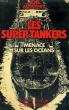
Traduit de l'américain par J. et S. Ouvaroff. Classification Dewey : 810-Littérature américaine

