 Write to the booksellers
19252 books for « m l christian »Edit
-
Type
Artists book (2)
Autograph (6)
Book (18964)
Drawings (1)
Engraving (2)
Magazine (13)
Maps (2)
Music sheets (248)
New book (3)
Object book (1)
Photographs (8)
Posters (2)
-
Latest
Last 24h (11)
Last 3 days (3)
Last month (118)
Last week (43)
-
Language
Albanian (1)
Czech (1)
Dutch (20)
English (5)
French (18841)
German (40)
Greek (1)
Latin (6)
Romanian (1)
Russian (335)
Spanish (1)
-
Century
16th (8)
17th (49)
18th (274)
19th (354)
20th (8228)
21st (3311)
-
Countries
Belgium (816)
Brazil (1)
Canada (67)
China (5)
Côte d'Ivoire (56)
Denmark (410)
France (16212)
Germany (13)
Greece (10)
Switzerland (1316)
United Kingdom (8)
United States of America (338)
-
Syndicate
ALAC (60)
CLAM (61)
CLAQ (3)
CNE (6)
ILAB (8003)
NVVA (164)
SLACES (164)
SLAM (7096)
SNCAO (16)
Topics
- Africa (46)
- Alsace (156)
- Andersen hans christian (528)
- Aquitaine (86)
- Archaeology (146)
- Architecture (165)
- Artists (44)
- Autographs (70)
- Belgium (57)
- Bernadac christian (194)
- Biography (185)
- Brittany (73)
- Children’s books (302)
- Christmas (48)
- Cinema (86)
- Civilisation (59)
- Collections (52)
- Comic strip (249)
- Concentration camp (51)
- Cooking (184)
- Culinary art (52)
- Dedication (147)
- Detective novels (68)
- Drawings (59)
- Economics (110)
- Education (131)
- Education - morals (63)
- Egypt (233)
- Esotericism (59)
- Ethnology (47)
- Fine arts (179)
- First edition (155)
- Football (50)
- Football (48)
- Freemasonry (53)
- Genealogy (52)
- Genet jean (53)
- Geography (120)
- Germanic languages (96)
- Germany (78)
- Guide books (90)
- Helvética (149)
- History (706)
- Hitler (54)
- Humour anecdotes (45)
- Industrial arts & crafts - fine arts (84)
- Jacq christian (514)
- Journalism (50)
- Laborde christian (64)
- Law (162)
- Legends (43)
- Literature (2002)
- Magazine (150)
- Mathematics (56)
- Medicine (145)
- Megret christian (52)
- Military arts (52)
- Millau christian (61)
- Montaignac christian (81)
- Motor vehicle (45)
- Music (51)
- Navy (65)
- Nazism (48)
- Newspapers press (224)
- Painting (56)
- Paris (102)
- Petitfils jean-christian (61)
- Philosophy (211)
- Photography (233)
- Plume christian (47)
- Poetry (391)
- Policy (145)
- Psychology (91)
- Regionalism (181)
- Religions (174)
- Review (216)
- Reviews (189)
- Rock (129)
- Scandinavian literature (60)
- Sciences (95)
- Scores (250)
- Social sciences (46)
- Sociology (57)
- Songs (225)
- Sports (64)
- Sudan (78)
- Switzerland (163)
- Tales (108)
- Tea (56)
- Teaching (67)
- Theatre (81)
- Theology (64)
- Travel (89)
- Various (140)
- War (314)
- Wine (53)
- Youth (120)
- Zuber christian (128)
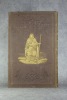
Eventyr, fortalte for born. Rare recueil réunissant l’édition originale de deux des principaux contes d’Andersen : "La petite sirène" et "Les Habits neufs de l’empereur."
Véritables créations littéraires, dans un style très personnel, ces contes sont remarquables par leur ironie et l’absence des morales traditionnelles. Copenhague, Bianco & Schneider for C.A. Reitzel, 1842-1844-1837.3 parties en 1 volume in-16 de : VIII pp. avec le titre général, la table générale et la préface (« Til de aeldre Laesere »), (2) ff., 61 pp., (1) f. de table, pp. 3 à 76 (sans le faux titre de cette partie), (1) f., 60 pp. et (1) f. Relié en chagrin rouge, dos lisse. Quelques feuillets roussis.126 x 77 mm.
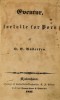

L’un des rares exemplaires du recueil réunissant pour la premiere fois 9 des principaux contes d’Andersen.Le premier opuscule regroupe 4 contes en second tirage (1842) : « Fyrtoiet »(Le Briquet), « Lille Claus og store Claus » (Grand Claus et petit Claus), « Prindsessen paa Aerten » (La Princesse au petit pois) et « Den lille Idas Blomster » (Les fleurs de la petite Ida).La seconde partie présente 3 contes également dans le deuxième tirage (1844) : « Tommelise » (La petite Poucette), « Den uartige Dreng » (Le vilain garçon) et « Reisekammeraten » (Le compagnon de route). Le troisième recueil comporte l’édition originale de deux des contes les plus celebres d’Andersen : « La petite sirène » et « Les habits neufs de l’empereur » (« Den lille Havfrue » et « Kejserens nye Klaeder »). Les premiers contes d’Andersen furent seulement publiés à 200 exemplaires, ce qui explique leur grande rareté sur le marché. Les quelques exemplaires qui sont parvenus jusqu’à nous présentent presque tous une compilation des différents tirages de ces contes ; d’autre part, ils sont rarement complets de tous les feuillets de titre, de faux titre et de table.Le collectionneur Jean Hersholt écrivait d’ailleurs en 1954 que « no copy with all its title-pages and tables of contents has ever been offered for sale by any dealer or at any auction sale”. « The tales of Hans Christian Andersen are unique. Unlike Perrault’s and Grimm’s, his stories were original inventions […] The “Eventyr” are fairy tales of supernatural creatures and fantastic happenings. […] Over and above their intrinsic merit Andersen’s stories signalized a new and fundamentally different approach to the writing of books for children. Mawkishness, didacticism, and moral proselytizing were totally abjured and he was the harbinger of a new era in this genre” (Printing and the Mind of Man, n°299). Hans Christian Andersen (1805-1875) est un écrivain danois qui, grâce à ses nouvelles et à ses Contes, incarne le génie populaire nordique. C’est à trente ans, après le traditionnel voyage en Italie que se doit d’accomplir tout jeune écrivain romantique, qu’il publie un court recueil de « Contes pour les enfants » (Eventyr fortalte for Born). D'autres parties, complétant le premier volume, apparurent en 1837.Après un départ hésitant, le succès fut foudroyant et, en quelques années, le petit vagabond d’Odense allait devenir l’un des écrivains les plus fêtés du monde. Véritables créations littéraires, dans un style très personnel, ces contes sont remarquables par leur ironie et l’absence des morales traditionnelles. Bon exemplaire de ce recueil rare et recherché qui comporte la première impression de deux des contes les plus importants d’Andersen : « La petite sirène » et « Les habits neufs de l’empereur ».


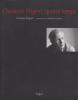
Christian Prigent, quatre temps,
Argol, 2009, 250 pp., illustrations, broché, passages signalés au stylo page 92, état général très correct.
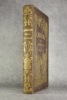
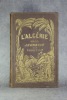
L'ALGERIE DE LA JEUNESSE. ILLUSTRATIONS PAR L. LASSALLE
PARIS. ALPH. DESESSERTS, EDITEUR. DE LA LIBRAIRIE A L'ILLUSTRATION POUR LA JEUNESSE. SANS DATE. (1847). IN-8 (16 X 24,5 X 3 CENTIMETRES ENVIRON) DE (4) + 362 ET (1) PAGES, RELIURE DE L'EDITEUR PLEINE PERCALINE MARRON, PLATS ET DOS ORNES DE COMPOSITIONS DOREES PAR HEROU, TITRE ET TRANCHES DORES. ILLUSTRE DE QUELQUES GRAVURES EN NOIR ET DE 14 BELLES PLANCHES HORS TEXTE SOUS SERPENTE, LITHOGRAPHIEES, COLORIEES ET GOMMEES, DONT 12 DE TYPES ET COSTUMES. (L'HISTOIRE DE L'ALGERIE ET DE LA COLONISATION FRANCAISE, A TRAVERS LES AVENTURES D'UN JEUNE BRETON EMBARQUE POUR L'ALGERIE, FAIT PRISONNIER PAR LES ARABES ET DEVENU UN FAMILIER D'ABD-EL-KADER). PREMIER TIRAGE POUR CE BEAU CARTONNAGE ROMANTIQUE. ROUSSEURS SUR CERTAINES PAGES DE TEXTE, PETITES TRACES D'USURE EXTERIEURE SANS GRAVITE, SINON BON EXEMPLAIRE.
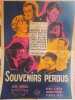
Souvenirs perdus
1950 60 x 80 LES SECRETS DES OBJETS : Affiche originale (1950) du film Souvenirs perdus. Le grand Christian-Jaque orchestre une pléiade de stars, de Gérard Philipe à Edwige Feuillère, dans ce chef-d'œuvre de poésie et d'humour. Une composition graphique envoûtante, véritable mosaïque d'émotions et de destins croisés. Présentée dans un état exceptionnel, cette affiche est un témoignage précieux de l'élégance du cinéma français des années 50.
Très bon état Disponibilité sous réserve de vente en boutique, prix valable, frais de port en plus, La Poste ou Mondial Relay
ARMANDO armando / druk 1
Rotterdam 2015 Christian Ouwens Hardcover 1st Edition


Couverture rigide, 23 x 23 cm, 300 pages, Néerlandais, Première édition, Illustrations, état : Très Bon [Cette description peut avoir été traduite par une IA.]
Antiquités de la Nubie, ou Monumens inédits des bords du Nil, situés entre la première et la seconde cataracte. Dessinés et mesurés en 1819, par F.C. Gau, architecte. Ouvrage faisant suite au grand ouvrage de la commission d’Egypte dédié au roi. Première et unique édition de cet impressionnant « ouvrage de référence sur l’art, la culture et l’architecture antiques de la vallée du Nil ».
Précieux exemplaire sur papier vélin, très grand de marges car non rogné, conservé dans son cartonnage d’origine. Stuttgart, Paris, imprimerie et librairie de Firmin Didot, 1822-1827. In-plano de viii pp., 20 pp., 13 ff. d’explication des planches, 64 planches numérotées à pleine page dont 5 en couleurs, 29 pp. de texte, 14 planches à pleine page. Cartonnage vert d’éditeur, dos lisse avec une pièce de titre en maroquin rouge, non rogné. Reliure de l’époque. 710 x 517 mm.
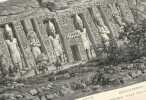
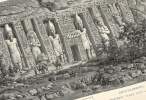
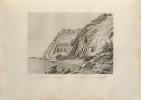
Première et unique édition de cet « ouvrage de référence sur l’art, la culture et l’architecture antiques de la vallée du Nil » selon le catalogue du Royal Institute of British Architects. Graesse, Trésor de livres rares, 34 ; Blackmer 656 (avec 4 planches en couleurs seulement). Cet ouvrage aux dimensions impressionnantes, proposant « le relevé le plus complet de son temps des antiquités nubiennes », parut en treize livraisons entre 1822 et 1827. « Ce bel ouvrage a été publié en 13 livrais., dont la dernière est double : chaque livrais. coûtait 18 fr. – Pap. vél. 36 fr. » (Brunet, II, 1501). « The standard work on the ancient art, culture and architecture of the Nile Valley, and the most complete pictorial record of Nubian antiquities of its day'; 'most of the engravers whose work is seen here also worked on Description de l'Egypte, to which the present work was intended to be an informal adjunct” (RIBA 1180). « Le principal mérite de cet ouvrage - la suite de la ‘Description de l’Egypte’ – c’est d’être le complément nécessaire de toutes les études sur les anciens habitants de la vallée du Nil ; le second, c’est d’indiquer, avec une précision toute nouvelle, le lien qui unit les évolutions du goût en architecture et la marche de la civilisation chez un peuple ; joignez à cela la reproduction de dessins fidèles, accompagnés d’un texte rédigé par deux grands érudits, Letronne et Niebuhr. Né à Cologne le 14 juin 1790, Francisque-Christian Gau vint à Paris en 1809, pour y étudier l’architecture. Ses maîtres furent Debret et Lebas. En 1817, il saisit l’occasion qui lui était offerte d’aller en Egypte, et, grâce à la protection d’un médecin allemand et de notre consul Drovetti, il trouva moyen de pénétrer en Nubie ; là, il put mettre à exécution le projet, conçu depuis longtemps, de donner une continuation aux travaux archéologiques de la commission d’Egypte, en dessinant les monuments qui bordent le Nil au-dessus de la seconde cataracte. De retour en France, et après avoir terminé les deux derniers volumes du grand ouvrage de Mazois sur Pompéi, il abandonna la théorie et l’histoire pour la pratique, et, s’étant fait naturaliser, il obtint de la ville de Paris d’importants travaux,. Nous ne citerons que l’église Sainte-Clotilde, dans le faubourg Saint-Germain... Gau est mort à Paris en 1853. » (Vinet, 215). « Prix de la livraison : 16 fr. papier fin, et 36 fr. papier vélin. L’existence de monumens égyptiens dans la Nubie était connue depuis longtemps : quelques relations de voyages, principalement celle de Norden, n’avaient laissé aucun doute à cet égard. Lors de l’expédition d’Egypte, des circonstances impérieuses empêchèrent les savans français de s’avancer au-delà de Philé, et de compléter ainsi leur belle et inestimable collection des monumens égyptiens, en fournissant des moyens précieux de comparaison entre ceux de l’Egypte et ceux de la Nubie. Depuis, quelques voyageurs se sont avancés plus ou moins dans la vallée supérieure du Nil ; mais ils se sont contentés de décrire les monumens sans les reproduire par le dessin ; or, un monument qui n’est que décrit est connu bien imparfaitement... M. Gau, architecte habile, élève de l’école française, plein d’ardeur et de courage, conçut le projet de remplir l’importante lacune que la commission d’Egypte avait été contrainte de laisser dans son travail. Après s’être bien familiarisé, par l’étude des monumens de la haute Egypte, avec le caractère de l’architecture égyptienne, il remonta le Nil jusqu’à la seconde cataracte ; et c’est en descendant ce fleuve qu’il dessina et mesura vingt-un monumens du plus haut intérêt. Les trois premières livraisons de cet ouvrage ont paru, et justifient pleinement l’opinion qu’en avaient conçue tous ceux auxquels M. Gau avait montré ses beaux dessins, faits avec un choix, un goût remarquables, touchés avec une finesse singulière, et, par-dessus tout, offrant ce caractère de naïveté qui garantit une fidélité parfaite. Il était facile de voir que l’auteur, habitué à rendre exactement ce qu’il a sous les yeux, n’avait point mis des formes de convention à la place de celles des figures originales. Sous son crayon, les sculptures égyptiennes ne ressemblaient point à des sculptures grecques ; c’étaient bien là ces profils, souvent hardis, presque toujours incorrects, cette roideur, cette uniformité constante, cette absence totale de formes justes et gracieuses, caractères auxquels on reconnait sur-le-champ les découpures monotones qu’on appelle ‘bas-reliefs égyptiens’. La perfection des dessins de M. Gau a passé dans les gravures que contiennent les trois premières livraisons de son ouvrage ; les artistes distingués auxquels il en a confié l’exécution, ont répondu à son attente. Les planches ombrées sont d’un effet harmonieux ; le burin en est ferme et sûr : les vues pittoresques, si bien choisies par M. Gau, sont rendues avec goût et esprit ; et les dessins d’architecture et de sculpture offrent une précision et un fini qu’on ne saurait trop louer. Voilà pour la partie matérielle ; si le reste de l’ouvrage se continue comme il est commencé, ce sera un des mieux exécutés qui existent en ce genre... M. Gau a pris Philé pour point de départ, et il remonte le Nil du nord au sud ; ainsi les derniers dessins de son ouvrage seront des vues de la seconde cataracte... Le texte de cet ouvrage sera en grande partie rédigé par M. Niebuhr, qui doit donner l’explication des inscriptions nombreuses que M. Gau a recueillies dans son voyage. L’échantillon que ce savant distingué a donné de son travail dans ses ‘Inscriptions nubienses’, fait désirer vivement d’en voir la totalité. D’après un prospectus récemment publié, M. Gau annonce qu’il développera dans son texte plusieurs propositions importantes pour l’histoire de la philosophie des arts ; il croit pouvoir établir que toute l’architecture d’Egypte a ses types dans les monumens de la Nubie, depuis les premières ébauches grossièrement taillées dans le roc, jusqu’aux derniers édifices construits sous les Ptolémées... M. Gau annonce son ouvrage comme ‘pouvant faire suite’ à la grande description de l’Egypte : nous ne craignons pas d’affirmer qu’il en est une ‘suite indispensable’. Sans prétendre établir aucun parallèle entre deux ouvrages, dont l’un a été publié avec tous les moyens et toute la magnificence qu’un gouvernement seul pouvait déployer, l’autre entrepris par un seul homme, et avec les simples ressources de particuliers amis des arts, nous pouvons assurer que celui de M. Gau, parfaitement bien conçu, disposé dans des proportions plus petites et commodes, réduit aux objets essentiels et d’un intérêt véritable, présente, avec plus d’unité dans le plan, une exécution non moins parfaite et jusqu’ici beaucoup plus égale ». (Letronne, Journal des Savans, Janvier 1822, pp. 285 à 293). Le présent ouvrage renferme 64 planches à pleine page montrant plus de 180 vues, plans, coupes, élévations, détails architecturaux, dont 5 coloriées, ainsi que 14 planches d'inscriptions accompagnées d'une étude épigraphique de Niebuhr complétée par Letronne, et 13 belles vignettes placées en tête de l'explication des planches, dont 2 en couleurs. La plupart des artistes qui gravèrent ces dessins, réputés très fideles, participèrent également à l'illustration de la Description de l'Egypte, dont le présent volume constitue une suite officieuse. Précieux exemplaire sur papier vélin, très grand de marges car non rogné, conservé dans son cartonnage d’origine.
LA CIVILISATION HELLENIQUE. TOME I. XI EME- VIII EME S. PARIS. EDITIONS CAHIERS D'ART. 1969.
1969 1969 GRAND IN-4 DE VII + 320 PAGES, RELIURE DE L'EDITEUR PERCALINE BLANCHE, TITRE IMPRIME EN BLEU, SOUS JAQUETTE IMPRIMEE. ILLUSTRE DE 262 REPRODUCTIONS.
PETITES TACHES SUR LA JAQUETTE, SINON BEL EXEMPLAIRE.
L'invention du racisme: Antiquité et Moyen-Âge,
Fayard, 1982, 353 pp., broché, couverture un peu défraîchie, état correct.
Sebastiao Salgado
Centre National de la Photographie, 1994, non paginé, 63 photographies, poche, bon état.
Sous un autre jour
Traduit du danois, Gallimard Du monde entier, 2005, 373 pp., broché, plis de lecture sur le dos, état correct.
Une bibliothèque de nuages
Lettres vives, 2006, édition originale non justifiée, ENVOI autographe de l'auteur, 63 pp., broché, non coupé, très bon état.
Guide du Tibet
Peuples du Monde, Domaine tibétain, 1991, 623 pp., broché, plis de lecture sur le dos, localités surlignées au feutre transparent sur la carte au début du volume, état correct.

Les Fragonard de Grasse
2017 Editions Campanille Hardcover Very Good 1st Edition
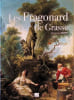
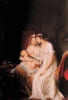
Reliure rigide: Très bon, jaquette: Très bon, 30 x 23 cm, 177 pp., français, 1ère édition, illustrations, état du livre: Très bon Couverture rigide illustrée avec jaquette en tissu. [Cette description peut avoir été traduite par une IA.]
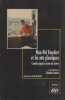
Max-Pol Fouchet et les arts plastiques: Conduire jusqu'au secret des oeuvres
Editions Universitaires de Dijon, EUD, 2011, 269 pp., broché, bon état.
Roger Gilbert - Lecomte,
Seghers, Poètes d'Aujourd'hui, 1988, 188 pp., broché, traces d'usage, état correct.
Christian Angelet , Jan Herman n Fernand Hallyn
Reference : 030405
(1999)
ISBN : 9789042907201
Le topos du manuscrit trouvé - actes du colloque international, Louvain-Gand, 22-23-24 mai 1997
Louvain Paris 1999 Peeters Publishers Soft cover 1st Edition
Broché, état reliure: Très bon, 24 x 17 cm, 588 pp., français, 1ère édition, illustrations, état du livre: Très bon Ces actes d'un colloque international qui a réuni en mai 1997 une quarantaine de spécialistes autour du topos séculaire du manuscrit trouvé dans la littérature française, présentent l'état de la question le plus récent sur le sujet. Les différentes contributions interrogent, par ordre chronologique, les occurrences les plus diverses d'un cliché dont la naissance coïncide avec celle de la littérature même : des premiers textes en langue française aux romans de Philippe Sollers, en passant par Chrétien de Troyes, Rabelais, Marivaux, Sade, Stendhal, Proust, Roussel, ... et sans oublier les textes-clés de la littérature mondiale que sont le Don Quichotte ou les contes de Borges. Trois études d'une portée plus générale - synthétique, historique et typologique - assurent à ces études de cas une indispensable cohérence. Le tout est complété d'un index très détaillé. [Cette description peut avoir été traduite par une IA.]
Kinderen bij de Romeinen: zes eeuwen dagelijks leven
2006 Davidsfonds Uitgeverij Soft cover Good
Langue: néerlandais. Enfants chez les Romains : six siècles de vie quotidienne 240 x 165 mm, Broché, avec de nombreuses illustrations en noir et blanc 343 pages, très bon état [Cette description peut avoir été traduite par une IA.]
Kinderen bij de Romeinen: zes eeuwen dagelijks leven
Leuven 2006 Davidsfonds Uitgeverij Soft cover Good
Enfants chez les Romains : six siècles de vie quotidienne 240 x 165 mm, Broché, avec de nombreuses illustrations en n/b 343 pages, très bon état [Cette description peut avoir été traduite par une IA.]
Alfred Rosmer (1877-1964) et le mouvement révolutionnaire international
François Maspero, Bibliothèque socialiste, 1971, 531 pp., broché, couverture un peu défraîchie, tache brune sur la première page et la tranche latérale, état satisfaisant.
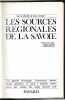
Les sources régionales de la Savoie. Une approche ethnologique : alimentation, habitat, élevage, agriculture, vie sociale et familiale, métiers, danses, jeux, musique, fêtes, langue, littérature orale
Fayard, 1979, 661 pp., relié toile rouge, sans jaquette, un nom en première page, bon état.
Storytelling, la machine à fabriquer des histoires et à formater les esprits,
La Découverte, 2008, 239 pp., broché, traces d'usage, passages signalés au crayon,état correct.
Dessiner, écrire, penser - Marthe Wéry ; les dessins de la première période, 1952 - 1958
2008 Couper ou pas couper Soft cover
Couverture souple, 23 x 16 cm, 168 pp., français, illustrations, état du livre: Bon Par quoi commencer un travail de présentation de ces dessins qui datent des années 1952-53? D'où viennent-elles, ces suites de croquis? D'une demande de ma part parce que je trouvais que quelqu'un qui se disait artiste devait être en permanence avec un carnet et prête à transcrire sur ses feuilles ce qu'elle voyait dans la rue ou n'importe où. Ces dessins résultent évidemment aussi de la gentillesse d'avoir accepté de le faire, sans se poser de problèmes alors que je lui forçais d'une certaine manière la main. Elle s'est prise au jeu, et ce fut le départ de ce qui s'est progressivement constitué: les dessins au jardin du Luxembourg ou dans le 6e arrondissement du temps où elle vivait à Paris. [Cette description peut avoir été traduite par une IA.]

